
Stand at the rear quarter of an early Chevelle and look down the beltline toward the front fender. You'll see it before you can name it: the body pinches in through the doors, then flares back out over the rear wheel arch. That pinch-and-flare is the coke-bottle shape, and it's the single sheetmetal decision that made the A-body Chevelle look like it was moving even parked at the curb.
Car Features
6 min read
The Coke-Bottle Shape: How the A-Body Redefined Muscle Car Curves
How the coke-bottle waist and flared quarter panels defined the Chevelle A-body's look, and why the shape still matters for panel authenticity today.
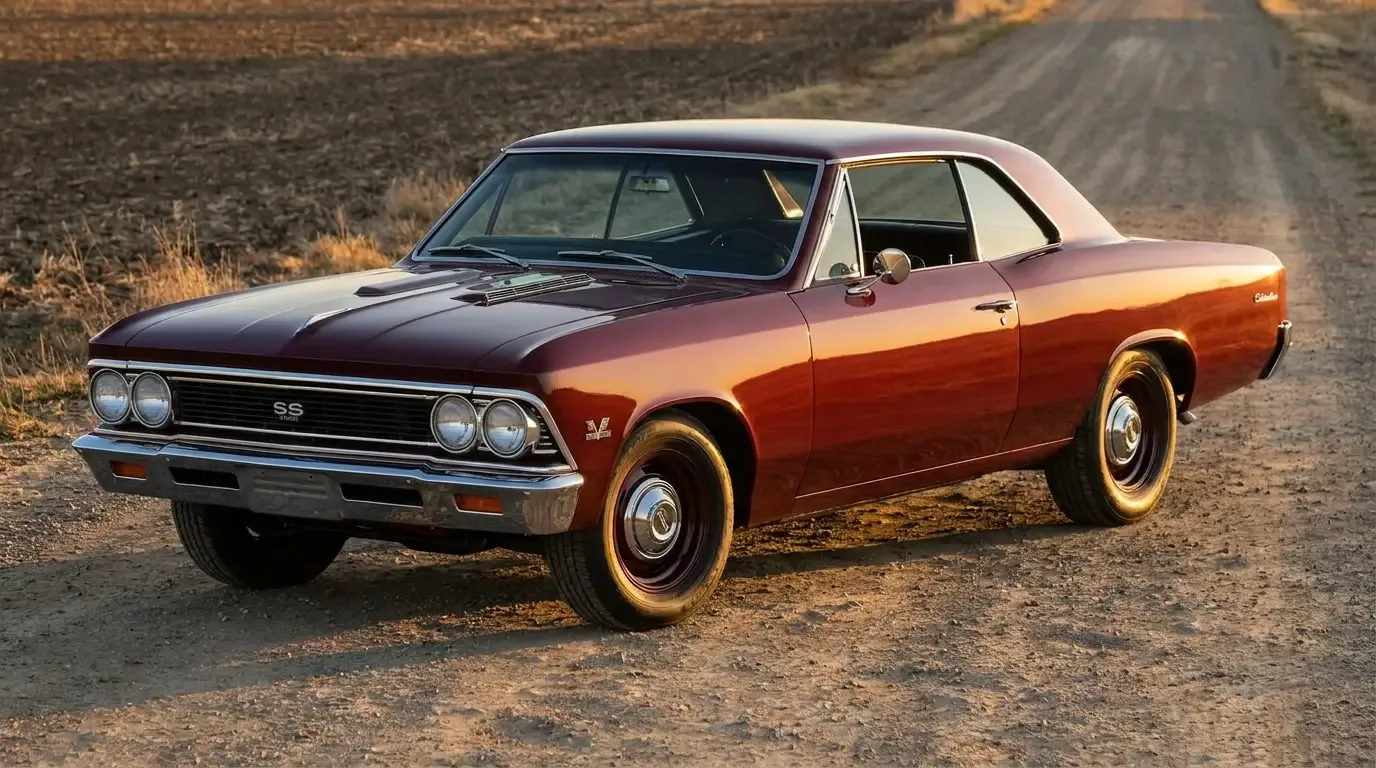
I've spent enough time running a hand down a fender to know when a body panel is doing something on purpose. The coke-bottle shape isn't a styling flourish tacked onto a box. It's a whole-car proportion exercise, and once GM's studios committed to it in the early 1960s, it changed how every mid-size car on the market got drawn for the next decade.
Where the shape came from
GM's design language in the early 1960s was moving away from the flat-sided, finned cars of the previous decade. Bill Mitchell's studios were pushing toward tauter, more sculpted bodies, and the Corvette Sting Ray's tucked waist and flared hips, introduced on the 1963 Sting Ray under designer Larry Shinoda, became a reference point that filtered down into the intermediate lineup by the mid-1960s. When Chevrolet needed a shape for the new 1964 Chevelle, the coke-bottle profile, a term borrowed straight from the glass bottle's narrow waist and wider shoulders, gave the design studio a way to build visual tension into a fairly conservative-sized car.
The genius of it is that the pinch happens right at the door handles, roughly the car's visual midpoint, so your eye reads the whole body as a single continuous curve rather than a series of flat stamped panels bolted together. That's a harder trick to pull off in sheetmetal than people give it credit for. A flat door skin is cheap to stamp. A door skin that tucks in three-eighths of an inch and then releases into a flared quarter panel takes real tooling investment and a die shop that knows what it's doing.
How the panels actually do the work
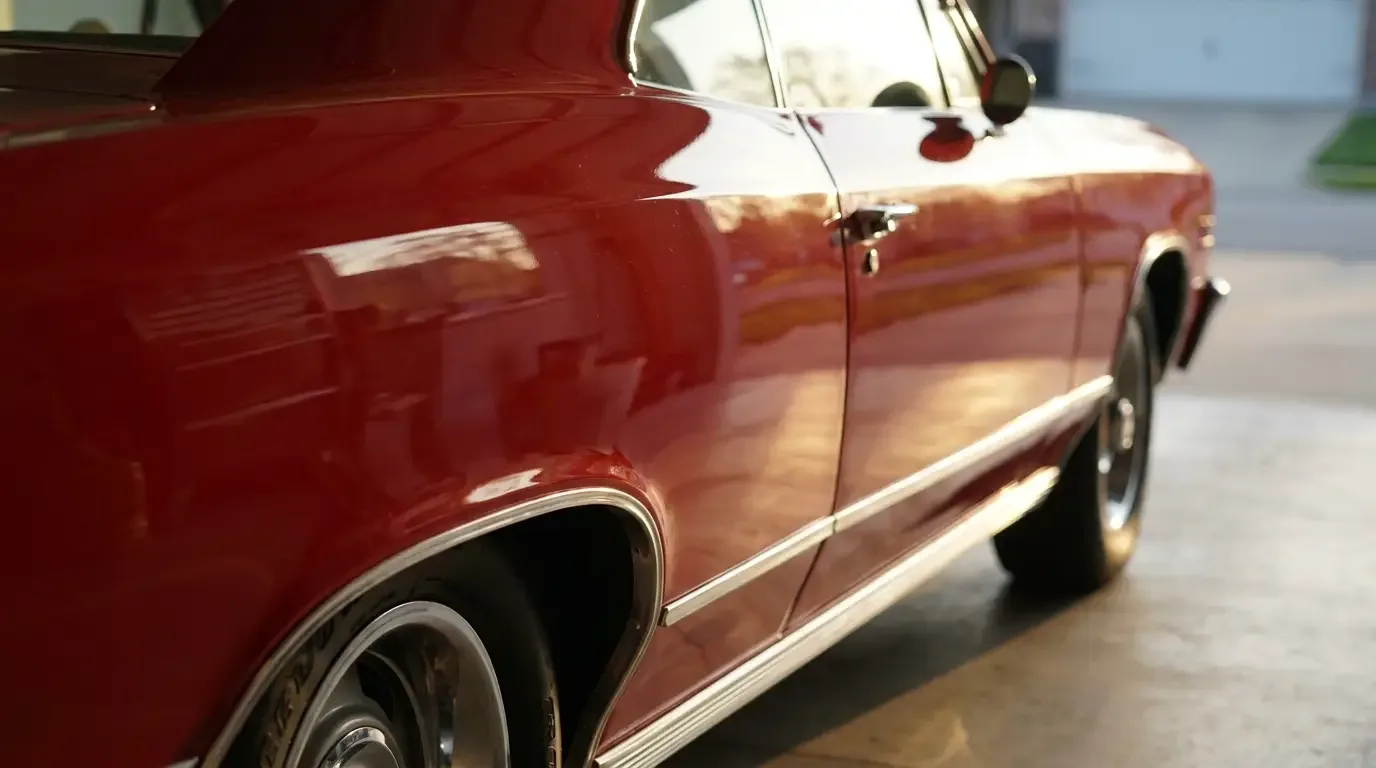
Look at the character line that runs from the front fender, through the door, and into the rear quarter. On a well-preserved early Chevelle, that line isn't just decorative, it's structural to the visual read. It catches light differently depending on the angle you're standing at, which is exactly why these cars photograph so differently in overcast light versus direct sun. The rear quarter panel does the heaviest lifting. It has to flare out wide enough to visually anchor the rear wheels without looking bulbous, then taper back in at the tail panel so the rear end doesn't look like it's wearing saddlebags.
Compare that to a lot of competitors from the same years, cars that kept a straighter beltline with less waist definition. Those cars can look perfectly proportioned in isolation, but parked next to a coke-bottle Chevelle they read as flatter, more slab-sided, less alive. That's the whole point of the shape: it makes mass look like motion.
Reading the shape across the A-body years
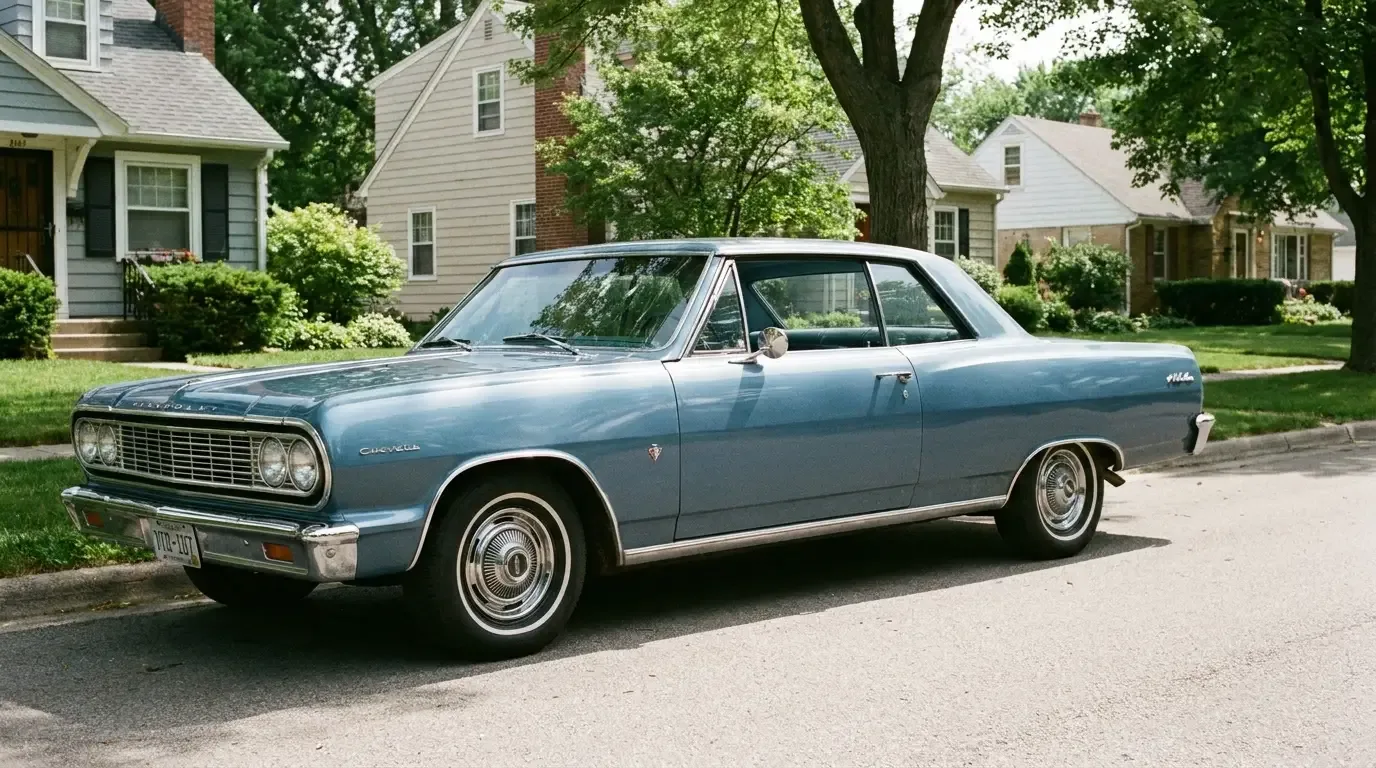
The coke-bottle theme didn't stay static through the Chevelle's run. The earliest cars, covered in next: 1964-65 Clean Slab Styling, kept the waist pinch relatively subtle, more suggestion than statement, because the whole body was still working through a cleaner, less aggressive design language. By the back half of the decade the pinch got more pronounced and the rear flare got wider, tracking the era's growing appetite for muscle-car theater over understated elegance. Wheel arch shape, quarter panel width, and how far the shoulder line kicked out over the rear tire all shifted year to year, and each of those changes is really just a variation on the same coke-bottle idea.
That's the throughline worth understanding before you get into the year-by-year specifics. If you want the full arc of how those changes stacked up across every model year, the Chevelle's design story lays it out chronologically. Or go straight to the Chevelle's complete history if you want the model's whole story, not just the sheetmetal.
What it means for a car in front of you today
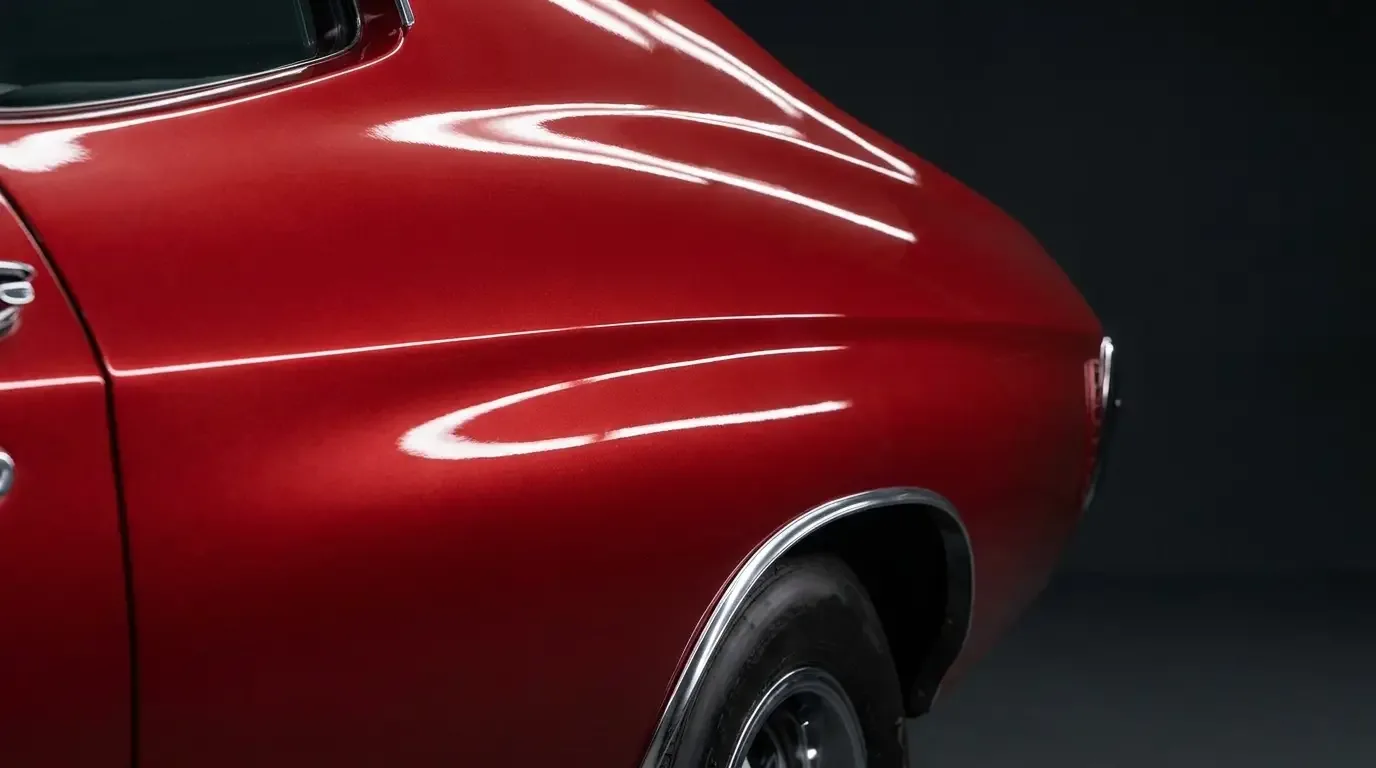
If you're evaluating an original quarter panel versus a replacement, the coke-bottle contour is one of the fastest tells for panel authenticity. Aftermarket quarter skins, especially older reproduction stock, sometimes soften the flare because it's easier to stamp a shallower curve. Stand at the rear three-quarter angle and sight down the character line. If it goes soft or wanders anywhere along its length, that's either poor bodywork history or a panel that isn't hitting the original contour. On a numbers-focused restoration that matters as much as any mechanical spec, because the coke-bottle shape is what the car is supposed to look like doing nothing at all.
It also matters for anyone doing bodywork repair rather than full panel replacement. Metal-finishing a dent in the flare zone of a rear quarter is unforgiving work. You're not just filling a low spot, you're trying to restore a compound curve that changes direction in two planes at once. Get the crown wrong by even a little and the character line goes flat right where it should be tensioning hardest.
"You can tell a shop that understands the coke-bottle shape from one that doesn't just by how they metal-finish a quarter panel repair. Guys who don't get it flatten the crown to make the dent disappear, and the panel looks fixed but dead. The curve has to keep moving through the repair or the whole side of the car reads wrong from ten feet back."
Jim Vasquez
Why the shape still gets copied
Modern retro-styled cars keep borrowing this exact language because it works regardless of decade. A tucked waist with a flared hip reads as athletic in any era, on any body size. The Chevelle wasn't the only GM product to run the coke-bottle profile, but the A-body execution is one of the cleanest examples of the idea because the car's proportions, not too long, not too heavy through the greenhouse, let the shape do its job without fighting the rest of the design. That's a harder balance than it looks, and it's the reason this particular body style still gets referenced by designers sketching new cars decades later.
Sources and notes
Related Reading
Have a
Chevrolet Chevelle
for Sale?
Reach thousands of serious classic car collectors across the US.
Sell It Here →
Are You a Classic Car Dealer?
List your full inventory and connect with targeted classic car buyers.
Join as a Dealer →

About the author
Jim Vasquez
Southern California hot rod and custom car builder with roots in the traditional kustom kulture scene.
Related Listings - Chevrolet Chevelle

Comments (1)
M
Mike Ferrano
1 month ago
Appreciate the honest take on condition grades. Too many sellers call a driver-quality car 'show quality' and it wastes everyone's time.