
Ask ten guys at a show what year a Chevelle is and half of them will tell you before they've looked at the taillights. That's the grille doing its job. It's the first thing you see coming down the street and the first thing a builder studies before he decides whether a car gets left stock or gets a nose job. I've stood in front of enough of these front clips to know the face changed more than most people give it credit for, and not one of those changes was an accident.
Car Features
7 min read
Grille Evolution: Tracing the Changing Face
How the Chevrolet Chevelle's grille changed year by year from 1964 to 1972, from the honest horizontal bar to the blacked-out SS grille and single-headlamp face.
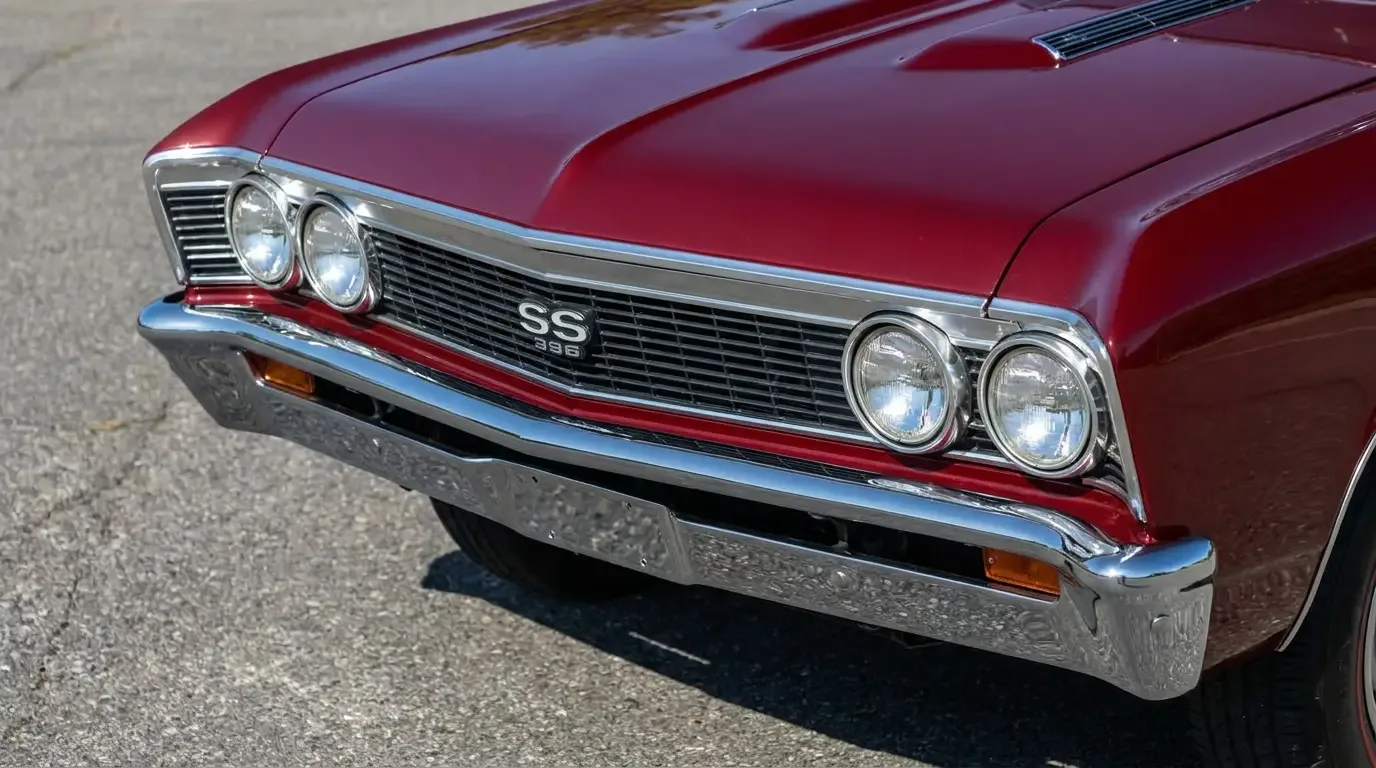
A grille is sheet metal and trim, sure, but it's also the one panel that tells you exactly what year you're looking at without popping the hood. From 1964 to 1972, Chevrolet reworked that face almost every single year, and each version carries its own personality. Some of them get more respect from builders than others. Here's how the face actually moved.
1964-65: the honest, horizontal face
The first Chevelle grille was simple on purpose. A wide horizontal bar split into segments, mounted low, flanked by single headlamps in chrome bezels that sat flush with the fenders. There's nothing flashy about it and that's the point. GM wanted a mid-size car that looked clean and proportional next to the full-size Impala, not a scaled-down muscle statement. The '64 grille reads almost conservative. The '65 tightened up the pattern and added a little more brightwork around the edges, but the basic shape held.
Builders who work on early Chevelles will tell you this grille doesn't get chopped or reworked much. It's already minimal. There's not a lot of extra metal to remove, and the honesty of the shape is exactly why guys leave it alone. You want to see the Chevelle's design story from the start, this is where it begins. Clean lines, no ornament for its own sake.
1966-67: sharper edges, a real face
The second-generation restyle brought a completely different attitude to the nose. The grille got a heavier horizontal theme with a more pronounced center bar, and the whole front end picked up sharper creases that matched the new body's harder-edged fenders. This is the year the Chevelle started looking like it had somewhere to be. The grille opening got wider and lower, more aggressive without going overboard on chrome.
The SS396 cars wore this face best. There's a proportion to the '66-67 nose, the way the grille width matches the hood's power bulge and the bumper wraps clean around the corners, that a lot of custom guys respect enough to leave stock. When something's already right, you don't touch it just to prove you can.
1968-69: the second-generation redesign
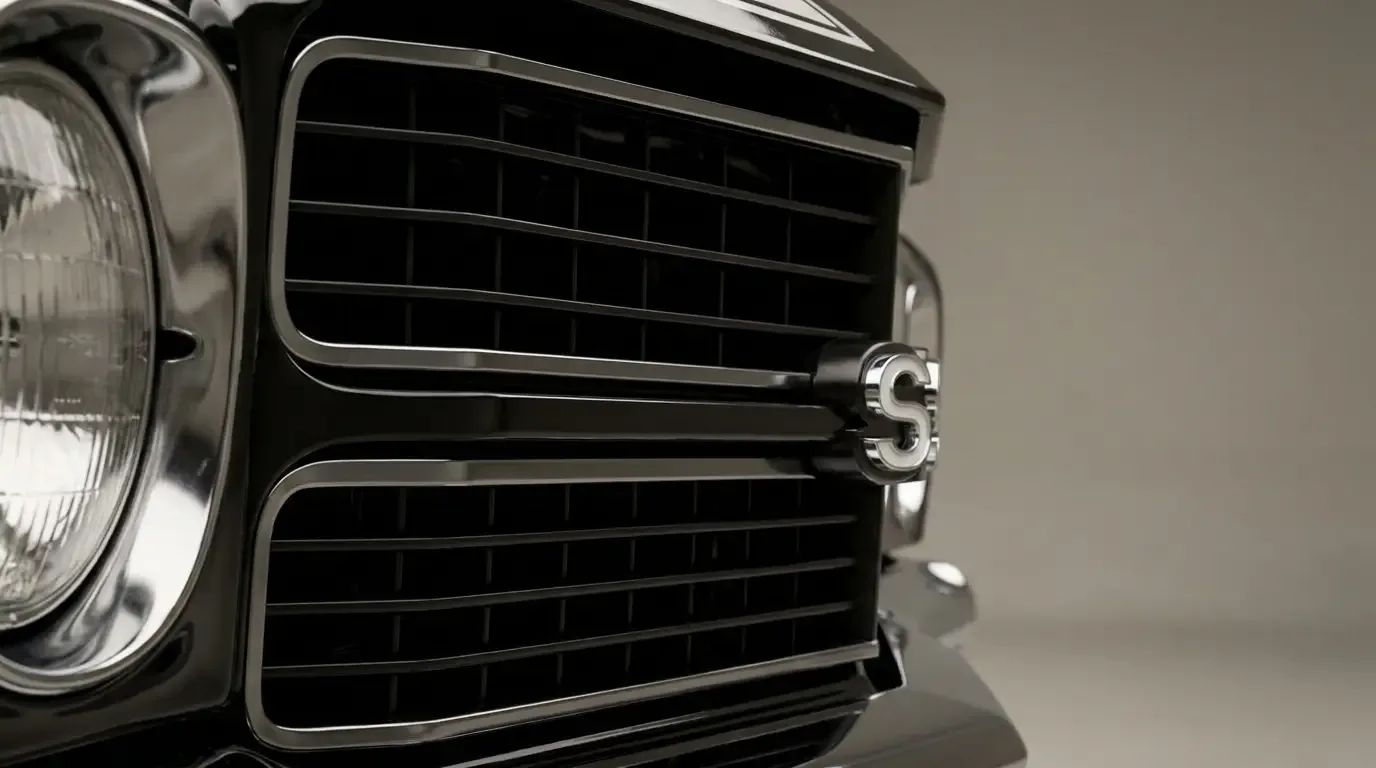
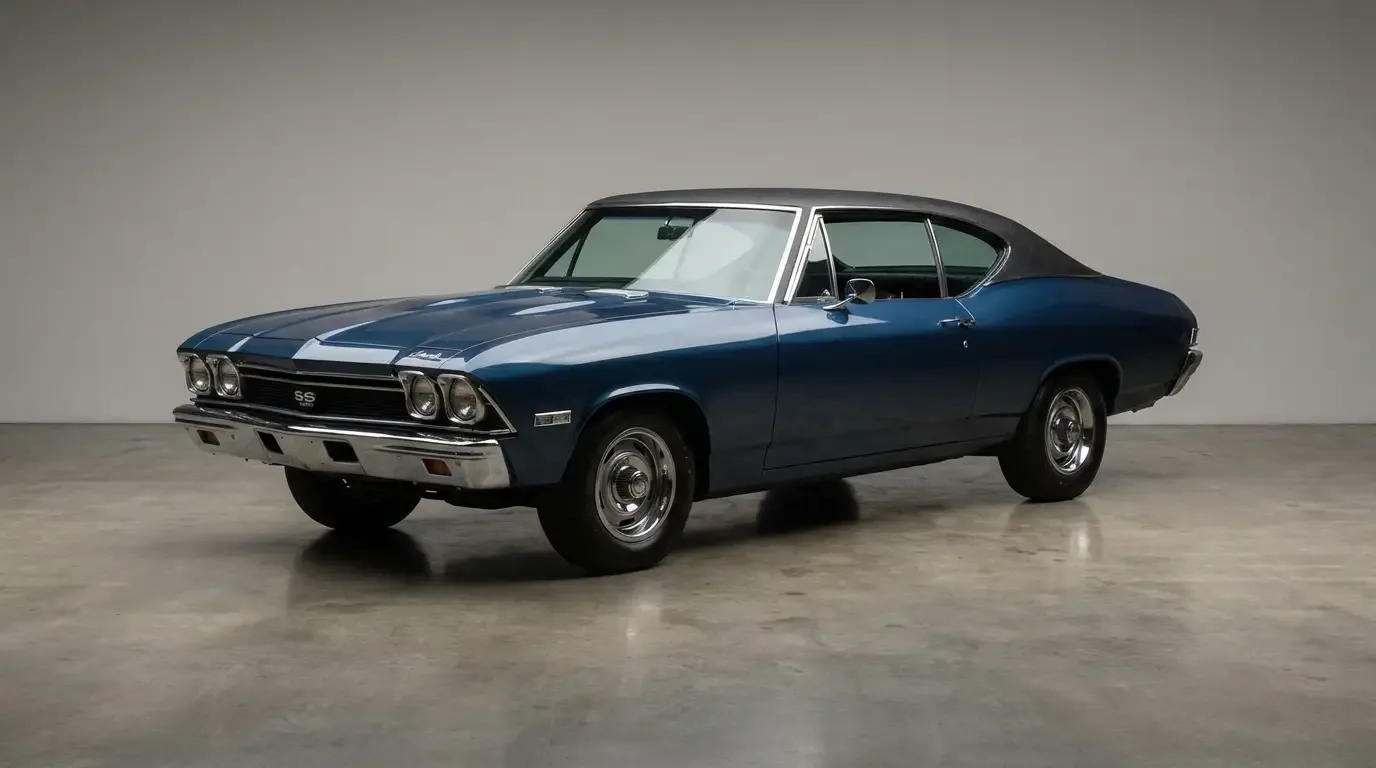
1968 brought a full second-generation body on a longer wheelbase, and the grille changed with it. Chevrolet dropped the sharp-edged '66-67 face for a wide, full-width opening filled with a cross-hatched insert, blacked out on the SS396 with SS396 emblems centered in the grille and on the rear cove. It's a cleaner, more integrated look than people give it credit for. The whole nose reads wider and lower because the body underneath it actually is wider and lower.
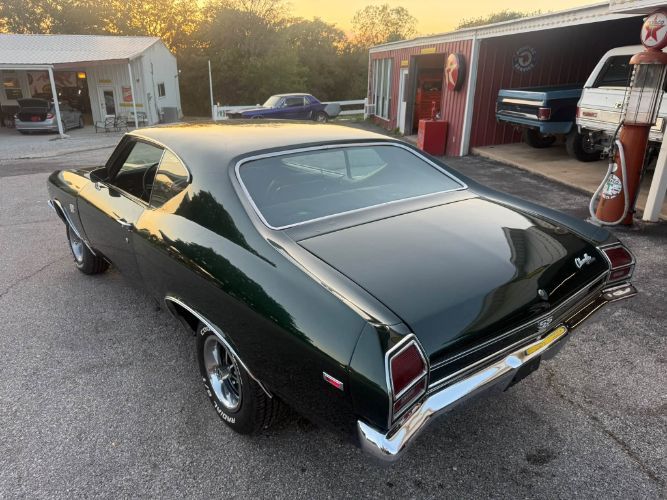
1969 tightened the design again. A bright horizontal bar now ran across the grille connecting the quad headlamps, and the grille itself moved to cast ABS plastic, a material change most guys never notice but that shop hands who've replaced enough of them absolutely do. The bar gives the '69 face a two-tier look, top section and bottom section, without actually splitting into separate openings the way some enthusiasts describe it. On SS396 cars the bar and surround stayed blacked out, same as before.
1970-71: individual lamps and the single-headlamp pivot
1970 kept the quad-headlamp layout but moved each lamp into its own chrome housing instead of the shared bezel treatment from '69. Non-SS Malibus ran a silver grille with a bowtie centered on the bright horizontal bar. Order the SS396 or SS454 package and that bar and surround went black, the bowtie swapped for an SS emblem. Some early-production '70 cars carried extra bright trim under the headlamps that Chevrolet quietly dropped partway through the model year. None of this involved hidden or flip-up headlamps, that party trick belonged to the Camaro RS, not the Chevelle.
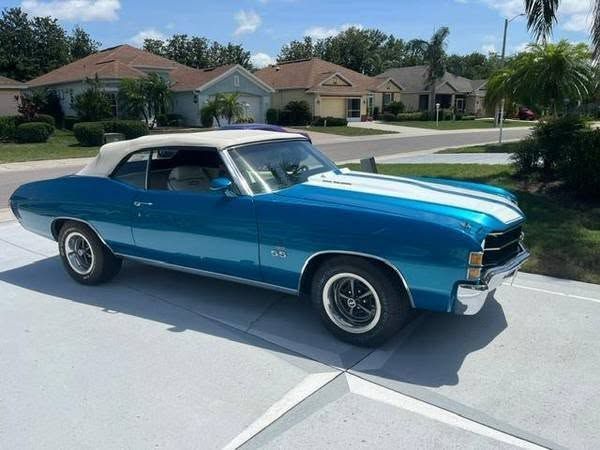
1971 is the real pivot. For the first time on a Chevelle, a single Power-Beam headlamp combined high and low beam on each side, replacing the quad setup entirely. The grille kept the two-section look with a bright bar and bowtie down the middle, but the parking and turn signal lamps moved out to the fenders for better visibility. It's a calmer face than '70, and some guys read that as GM losing nerve right as insurance companies started squeezing the muscle car market. I don't fully buy that read. I think it's just a different mood, cleaner instead of aggressive, and it's aged fine on its own terms.
| Model year | Grille layout | Signature detail |
|---|---|---|
| 1964-65 | Single wide horizontal bar | Flush chrome headlamp bezels |
| 1966-67 | Heavier single grille, sharper crease | Wider, lower opening; SS396 gets blacked-out treatment |
| 1968 | Full-width grille, cross-hatched insert | Second-gen body; blacked out on SS396 |
| 1969 | Bright bar linking quad headlamps | Grille material switches to cast ABS plastic |
| 1970 | Quad headlamps, individual chrome housings | SS grille blacked out, bowtie swapped for SS emblem |
| 1971 | Single Power-Beam headlamp per side | First Chevelle with combined hi/lo beam in one lamp |
| 1972 | Revised twin-bar grille | Bowtie dropped from grille center; last first-gen face |
1972 and the door it closed
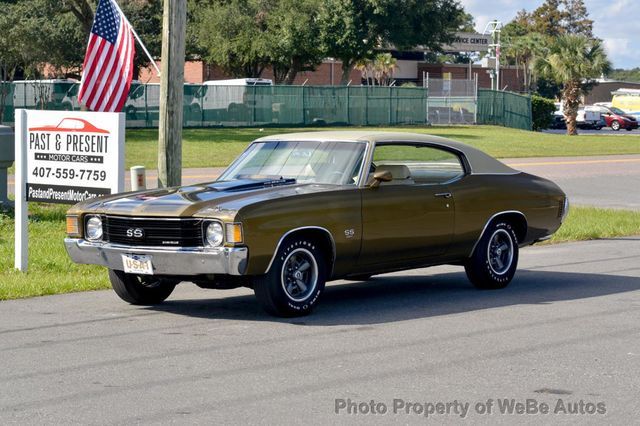
1972 wrapped up the first-generation Chevelle with a face that refined the '71 theme rather than reinventing it. It's the last grille in that coke-bottle body before the Colonnade cars showed up in '73 with a completely different, more formal front end and a bigger, more upright grille opening that fit the new federal bumper requirements coming down the pipe. That's a different story for a different write-up, but it's worth knowing the '72 nose is the last one that belongs to the original shape language.
When I'm asked which grille I'd put on a build, I don't have one answer. It depends on the body and what the car's supposed to say. A '70 SS nose on a pro-touring build says something different than a '66 single-bar face on a period-correct resto. Both are right. That's the mark of a design that had real thought behind it every single year, not a company just changing trim for the sake of changing trim.
"A grille tells you what a car wants to be before you've even opened the door. The Chevelle changed its face six times in nine years and every single one of them still looks like it belongs on the same car. That's not luck. That's a design team that knew what they were building."
Jim Vasquez
For the bigger picture on how these front-end changes fit into the rest of the car's evolution, next: How the Chevelle Shaped GM's A-Body Design Language covers where that influence spread across the rest of General Motors' intermediate lineup.
Sources and notes
- Chevrolet Chevelle: Wikipedia
- How to Identify a 1970-1972 Chevelle by its Headlights and Taillights: Chevy DIY
- 1966 Chevelle SS396: ChevelleStuff.net
- 1967 Chevelle SS396: ChevelleStuff.net
- 1970 Chevelle's "SS" options (Malibu series): ChevelleStuff.net
- 1970 Chevelle Parts and Restoration Information: SS396.com
Related Reading
Have a
Chevrolet Chevelle
for Sale?
Reach thousands of serious classic car collectors across the US.
Sell It Here →
Are You a Classic Car Dealer?
List your full inventory and connect with targeted classic car buyers.
Join as a Dealer →
About the author
Jim Vasquez
Southern California hot rod and custom car builder with roots in the traditional kustom kulture scene.
Related Listings - Chevrolet Chevelle




Comments
Be the first to comment on this article.