
Ask a short-track guy and a superspeedway guy what makes a great NASCAR Chevelle, and you'll get two different answers, and they'll both be right. That's the thing about this car's run through NASCAR's Grand National era. It wasn't one story. It was two, running at the same time, on tracks that demanded completely different things from the same basic machine.
Car Features
6 min read
Chevelle NASCAR: Short-Track Grit vs Superspeedway Aero
Why a NASCAR Chevelle built for a bullring and one built for Daytona barely felt like the same car, and what that split reveals about the era.
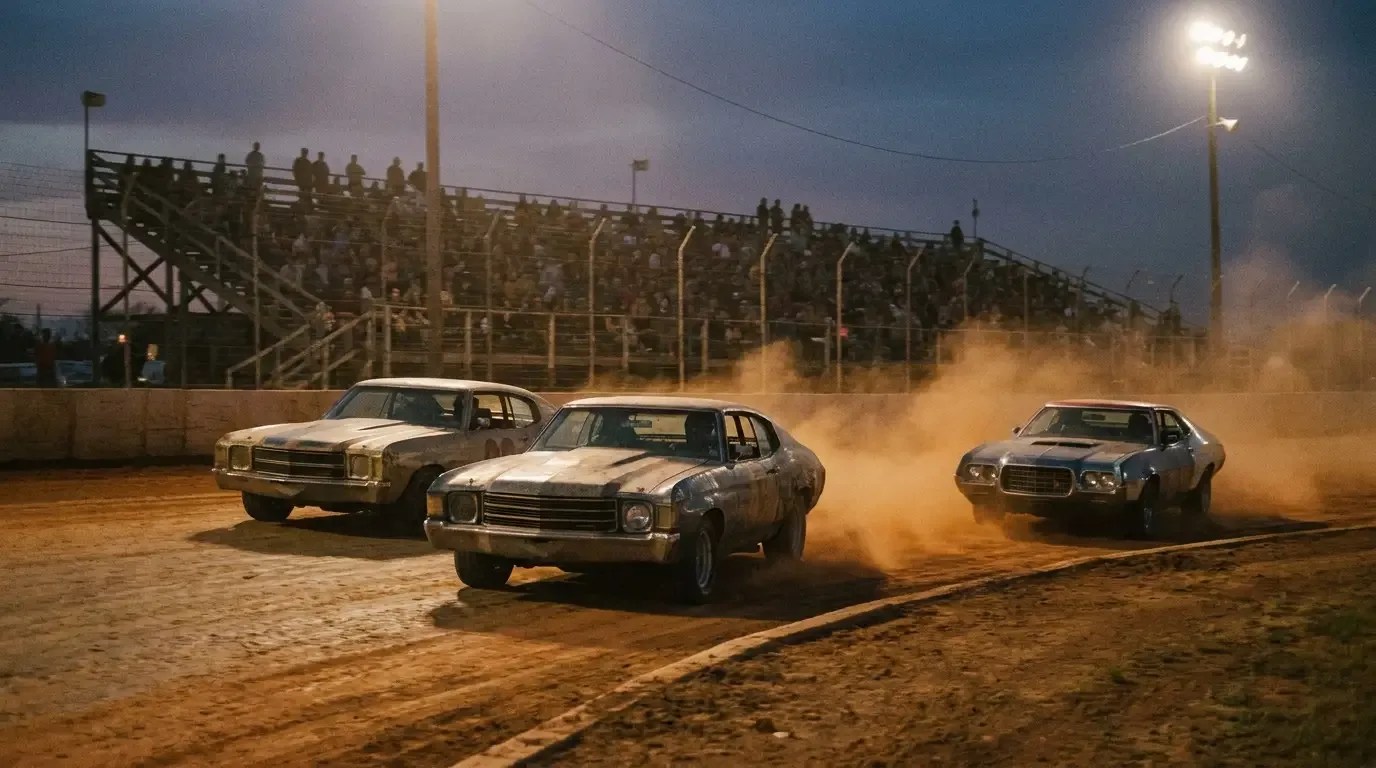
I've spent enough weekends at short tracks around the Southeast to know the difference is real, not just folklore. A Chevelle that could bull its way through three-wide traffic at Bowman Gray or Hickory needed something a Daytona or Talladega car didn't need at all, and vice versa. This is the split that defined the Chevelle's competition history more than any single win or driver.
The short-track case for the Chevelle
Short tracks reward torque, grip, and a driver willing to bang doors. A Chevelle's chassis, stiff for its era and reasonably light compared to some of the bigger Ford and Mercury entries, suited that style of racing. On a half-mile bullring, aerodynamics barely matter. What matters is getting off the corner first and having a car that survives contact, because on a short track there's always contact.
Drivers running Chevelles at short tracks through the late sixties into the early seventies leaned on the car's mechanical grip and its relatively forgiving handling balance. It wasn't the fastest car in a straight line necessarily, but it didn't need to be, not when the straights were short and the corners came every few seconds. A short-track Chevelle earned its keep through consistency, not outright speed.
Where superspeedways changed everything
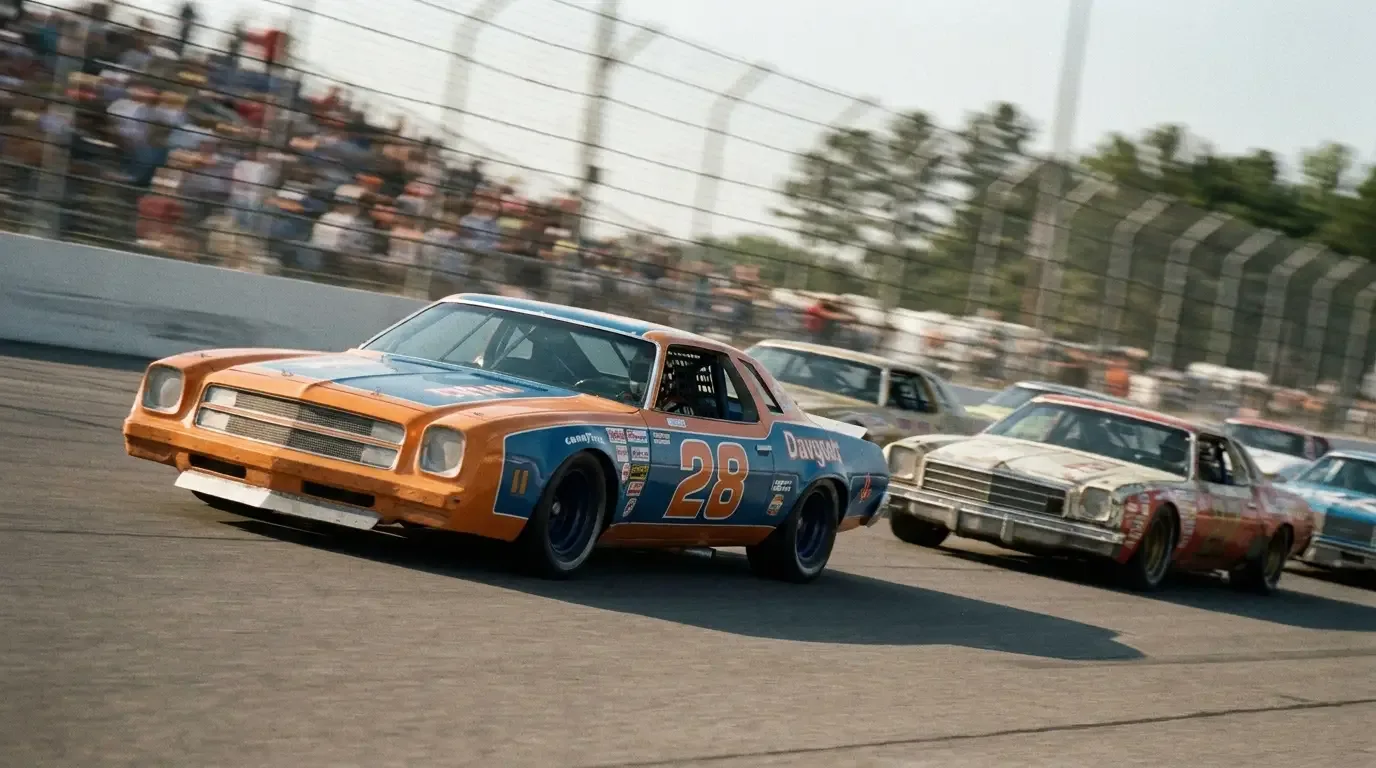
Daytona and Talladega are a different sport entirely. At those speeds, aerodynamics decide races more than horsepower does, and this is exactly where the Chevelle ran into trouble against the fastback bodies Ford and Dodge were fielding. A notchback intermediate like the standard Chevelle punched a bigger hole in the air at 190 mph than a sloped fastback did, and that difference is worth several miles per hour of straightaway speed, which on a superspeedway is the whole ballgame.
That aerodynamic gap is exactly why Chevrolet built the Laguna S-3 with its distinctive sloped nose. It was a direct answer to the aero problem, purpose-built to close the gap the standard Chevelle couldn't close on its own. Cale Yarborough and Benny Parsons both ran versions of it at the superspeedways, chasing every fraction of drag reduction they could find, because on those tracks a fraction of drag reduction was the difference between leading and trailing.
The engines behind both approaches
NASCAR's Grand National rules through this era generally required something close to a production-based big-block, and Chevelle teams ran versions of Chevrolet's 427 and later 454 big-blocks, tuned within NASCAR's specifications for the class. The engine itself didn't change dramatically between a short-track car and a superspeedway car. What changed was gearing, the final drive ratio tuned for the top-end speed a given track demanded, and the aerodynamic package wrapped around that engine.
| Track type | Priority | Chevelle's strength | Chevelle's weakness |
|---|---|---|---|
| Short track (under 1 mile) | Grip, torque, durability in traffic | Stiff chassis, mechanical grip | Minimal, aero barely matters here |
| Superspeedway (Daytona, Talladega) | Top speed, drafting, aero drag | Strong big-block power | Notchback body shape, high drag |
"You could hand the same driver two Chevelles, one set up for a bullring and one set up for Daytona, and he'd tell you they barely felt like the same car. That's not an accident. That's what it took to be competitive at both ends of NASCAR in that era."
Patrick Walsh
The drivers who lived this split every weekend
NASCAR's Grand National schedule in this era didn't separate short-track specialists from superspeedway aces the way modern racing series often do with regional or support classes. The same drivers, and often the same teams, ran both kinds of tracks within the same season, sometimes within the same month. That meant a crew chief might spend a Tuesday tuning a car for maximum bite at a bullring and then spend the following week's practice sessions chasing drag coefficient numbers for a 500-mile superspeedway race.
Cale Yarborough built his reputation partly on that versatility, running hard at short tracks and then adapting to the very different demands of Daytona and Talladega within the same points-chasing season. Benny Parsons did the same, and both drivers understood something a lot of fans miss: winning a NASCAR championship in this era meant being genuinely competitive across two disciplines that had almost nothing in common except the number of wheels on the car.
Two eras, one lineage
By the mid-1970s, NASCAR's rules had shifted enough, and the aero wars had escalated enough, that the standard notchback Chevelle became a harder sell at the superspeedway level, while short-track competition for intermediates like it continued a while longer at the regional level before the sport consolidated around later-generation cars. That split, short-track survivor versus superspeedway specialist, tells you something honest about what stock car racing actually demanded from a production-based platform, and why the Laguna S-3 mattered so much when it did show up.
This gap between two racing disciplines using nominally the same car is part of the Chevrolet Chevelle story, a car built for the street that found itself pulled in opposite directions the moment it hit a race track. Whichever version speaks to you more, short-track brawler or superspeedway aero fighter, both are chapters worth knowing before you go looking at what survives today.
The story of NASCAR-bred performance didn't stay confined to factory teams. Read next: Yenko and Other Dealer-Tuned Racing Chevelles for how independent dealers took what the factory learned on track and built it into cars regular customers could buy off the lot.
Sources and notes
Related Reading
Have a
Chevrolet Chevelle
for Sale?
Reach thousands of serious classic car collectors across the US.
Sell It Here →
Are You a Classic Car Dealer?
List your full inventory and connect with targeted classic car buyers.
Join as a Dealer →

About the author
Patrick Walsh
Automotive journalist covering classic car shows, events, and the enthusiast community across North America.
Related Listings - Chevrolet Chevelle
Comments
Be the first to comment on this article.