
I've stripped enough race cars down to bare metal to know that a livery isn't just decoration. It tells you what era a car ran in, sometimes what team owned it, and if you know what you're looking at, roughly what class it competed in. A Chevelle wearing period-correct paint isn't just a good-looking car. It's a document, if you can read it right.
Car Features
6 min read
Chevelle Racing Liveries and Paint Schemes
How NASCAR and drag-strip Chevelles wore their colors, and why getting a period livery right takes more than a single photo.
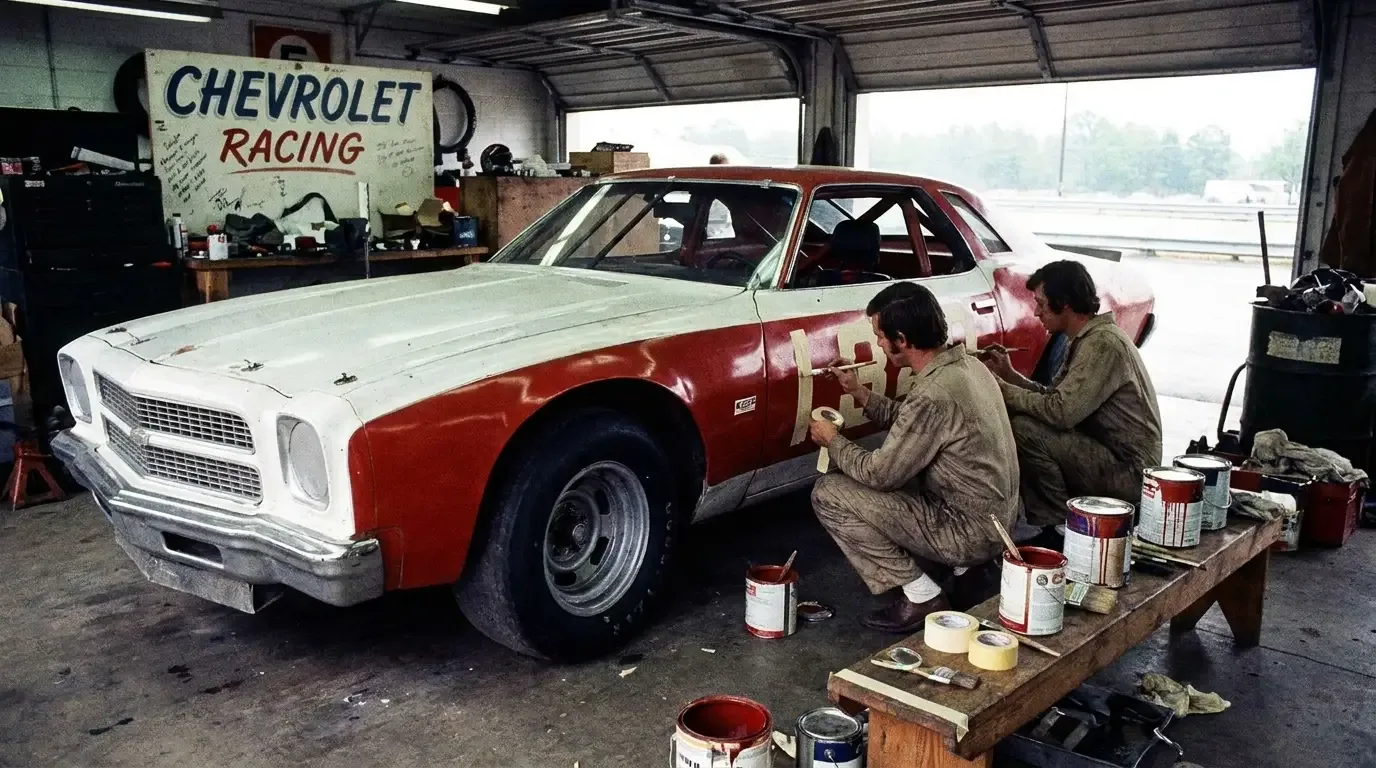
Most guys buying a race-history Chevelle today get excited about the engine and the drivetrain, and that's fair, that's where the money usually went. But the paint and graphics on these cars carry information too, and getting that part wrong on a restoration is one of the most common mistakes I see in Chevelle in racing circles.
NASCAR liveries and what they signaled
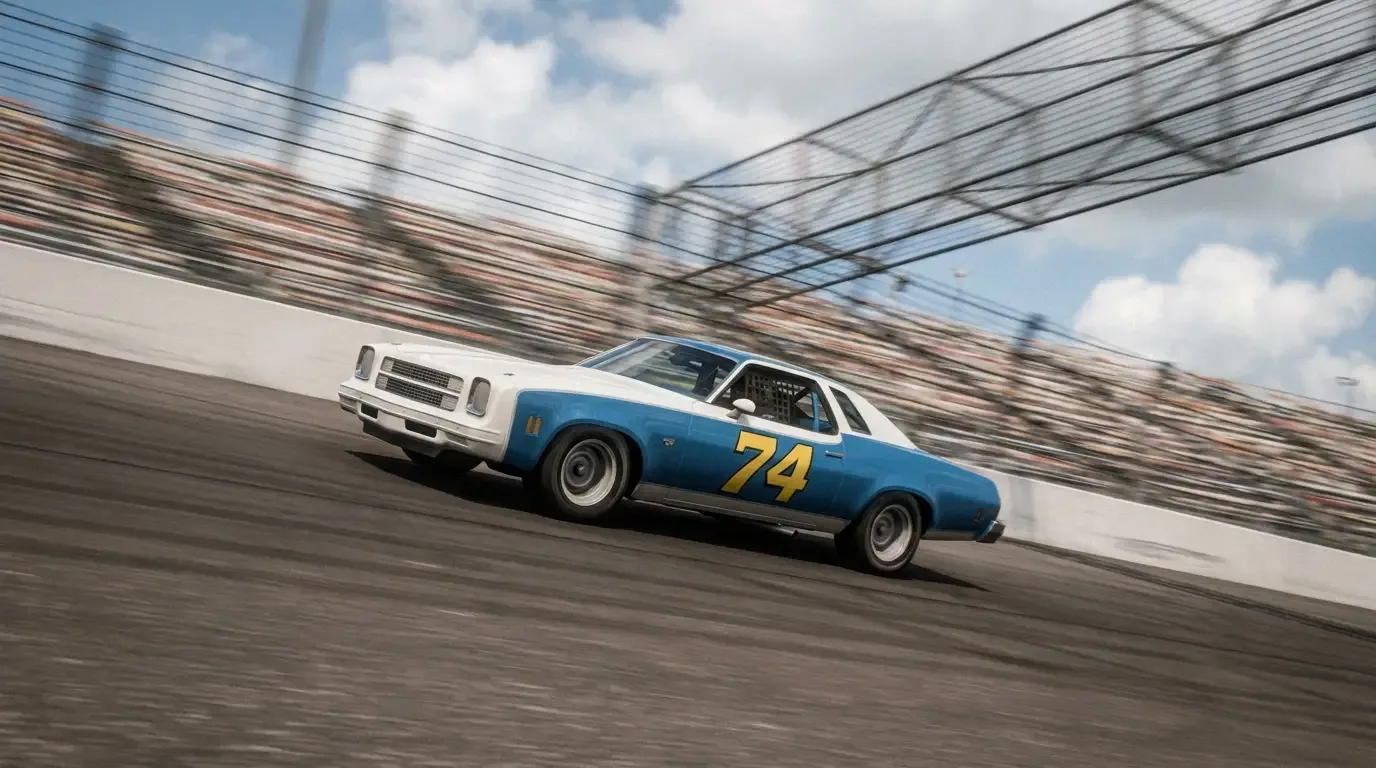
Factory-backed and dealer-sponsored NASCAR Chevelles through the late sixties and early seventies followed a pretty consistent visual logic: bold single or dual-tone base colors, large hood and door numbers in a contrasting color, and sponsor decals kept relatively minimal compared to what came later in stock car racing's history. The Laguna S-3 cars campaigned by drivers like Cale Yarborough and Benny Parsons carried team-specific color schemes that changed from season to season as sponsorships shifted, which is exactly why matching a car's paint to a specific season matters if you're trying to verify its history.
Number placement and font style also shifted by sanctioning body and era. NASCAR Grand National cars in this period generally ran large block numbers on the doors and roof, sized for visibility from the grandstands and from a TV camera at a distance, a very different approach from the smaller, more stylized numbering you'd see on an SCCA road-racing entry from the same years.
Drag strip colors were a different language entirely
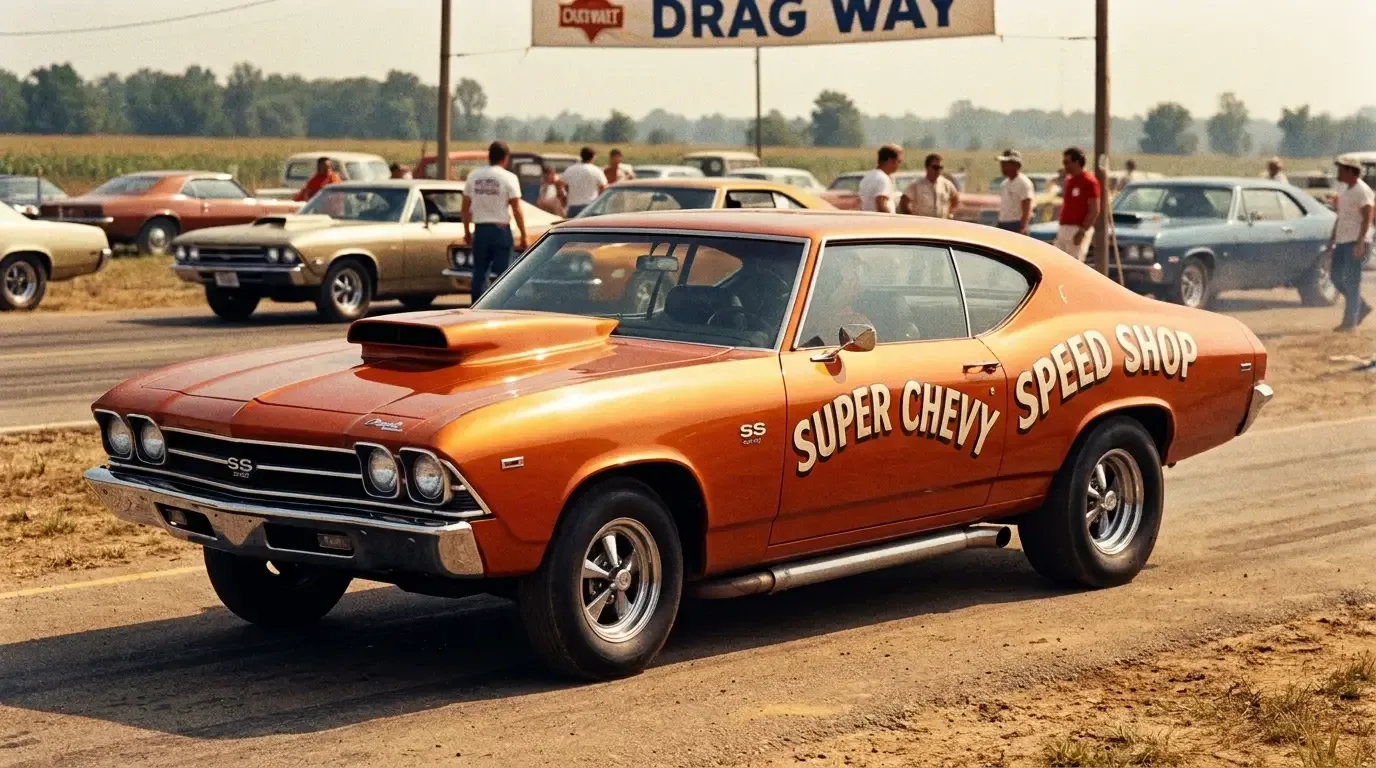
Drag racing liveries, whether factory Super Stock cars or dealer-tuned Chevelles from shops like Baldwin-Motion, tended toward loud, saturated colors and hand-lettered or vinyl team names down the doors and quarter panels. Where a NASCAR car's paint scheme communicated speed and sponsorship, a drag car's paint communicated attitude, and sometimes a fair amount of showmanship, since a strip car spent as much time sitting in the staging lanes being looked at as it did actually running down the track.
Factory Super Stock Chevelles often carried minimal graphics beyond required class markings and a car number, since these were closer to production-spec entries running in a class-based structure rather than heavily sponsored exhibition cars. Independently campaigned drag Chevelles, on the other hand, frequently carried elaborate custom paint, team names, and sponsor decals that reflected the driver's own personality more than any factory template.
Restoring a livery without guessing
The biggest mistake I see on a livery restoration is somebody working from a single grainy photo and filling in the gaps with assumptions. Race car colors faded, got repainted mid-season after crash repairs, and sometimes changed entirely between one race and the next depending on sponsorship deals that fell through or came together last minute. If you're restoring a specific car to a specific race, you need photo documentation from that specific event, not just "the team ran blue that year."
Paint codes matter here the same way they matter on any restoration, but with an added wrinkle: race team paint wasn't always mixed to factory codes. Teams sometimes used whatever automotive paint was available and close enough, which means matching a modern restoration to period-correct color can require working from paint chip analysis on surviving cars or components rather than trusting a factory code alone.
"I've seen guys spend a fortune on a numbers-matching engine and then slap on a livery that never actually raced on that car, in that color, in that year. If you're going to claim race history, get the paint right too. It's half the story, and it's the half everybody can see from across the parking lot."
Mike Sullivan
Sponsorship changed the visual language too
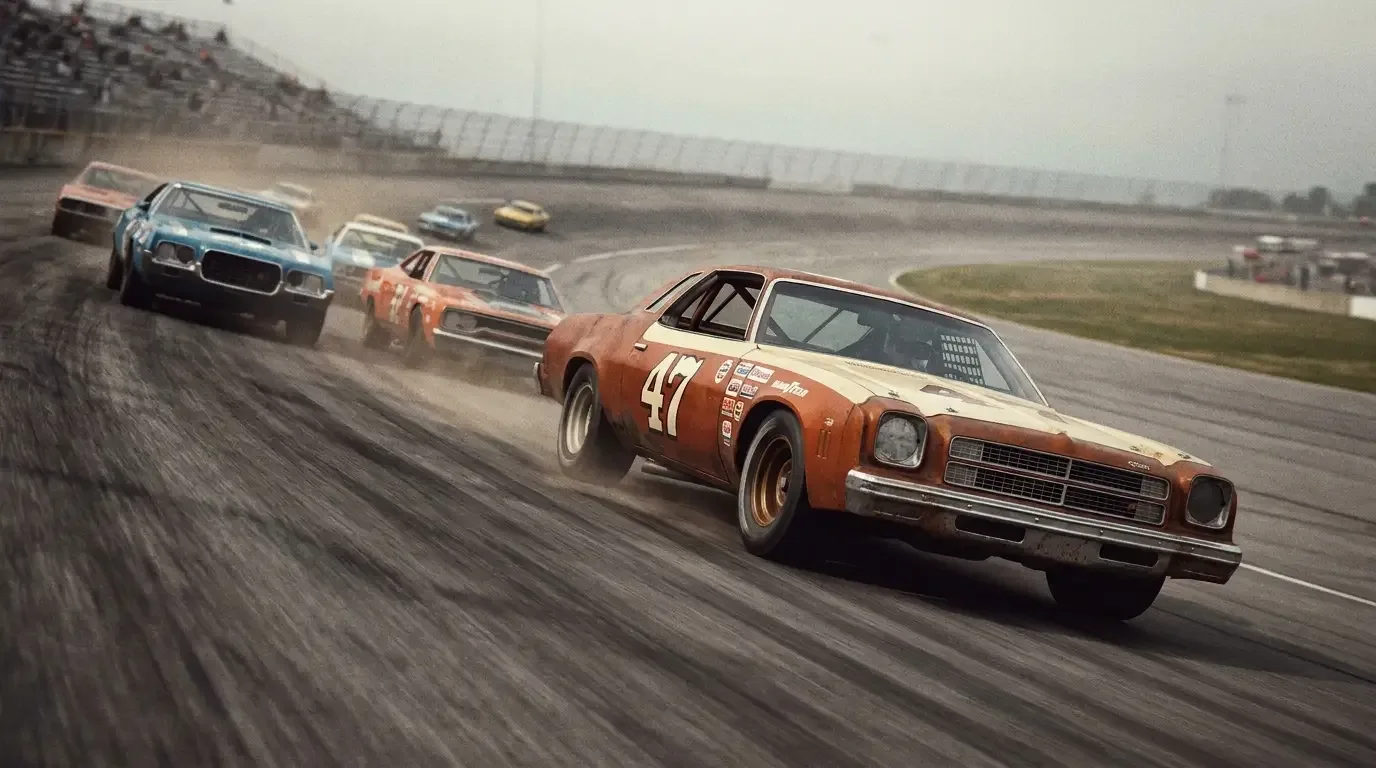
As NASCAR moved through the seventies, sponsorship deals started dictating more of a car's paint scheme than the team's own preferences did. A car that ran a clean two-tone scheme one season might carry a completely different look the next, driven entirely by whichever sponsor signed on for that year. This is where researching a specific car gets genuinely tricky, because the same chassis, the same team, and even the same driver could look like an entirely different car from one season to the next.
Drag racing sponsorship worked differently, more personal and less corporate in most cases through the sixties and seventies. A dealer-tuned Chevelle running out of a shop like Baldwin-Motion often carried the dealer's own name prominently, sometimes alongside a driver's name or nickname, functioning as much as a rolling advertisement for the shop as a competition livery. That's part of why so many surviving dealer-tuned drag Chevelles still carry the original shop's name today, owners treat that connection as part of the car's identity, not something to paint over.
What this means for buyers today
A well-documented race livery adds real value to a Chevelle with genuine competition history, but it also raises the bar for what counts as accurate. Buyers should expect sellers to back up a specific livery claim with period photos, not just a general assertion that "this car raced." The gap between a car that genuinely wore a documented scheme and one that's been painted to look the part after the fact is exactly the kind of detail that separates a real find from a good story.
This attention to visual detail is part of what makes race-history Chevelles such a specific corner of the hobby. The engineering gets most of the attention, but the paint is what made these cars instantly recognizable to anyone standing at the fence.
The organized factory and dealer racing programs eventually gave way to something more accessible, cars built and raced by regular enthusiasts rather than professional teams. Read next: Grassroots Chevelle Racing Today for where that tradition lives on.
Sources and notes
Related Reading
Have a
Chevrolet Chevelle
for Sale?
Reach thousands of serious classic car collectors across the US.
Sell It Here →
Are You a Classic Car Dealer?
List your full inventory and connect with targeted classic car buyers.
Join as a Dealer →

About the author
Mike Sullivan
Detroit-area muscle car enthusiast and restoration specialist with three decades of hands-on experience working on American iron.
Related Listings - Chevrolet Chevelle




Comments
Be the first to comment on this article.