
I've had both of these on the lift, and I'll tell you the thing nobody puts in the brochures: the Chevelle SS and the Olds 442 came off almost the same bones, and the differences that matter aren't the ones people argue about online. They're not fighting about badges. They're fighting about who built the better engine for the money, and that's a fight worth having.
Car Features
6 min read
SS vs Oldsmobile 442: GM's Other Mid-Size Brawler
The Olds 442 doesn't get the credit the GTO and Chevelle SS get. A wrench-turner's honest read on which A-body brawler is the smarter buy today.
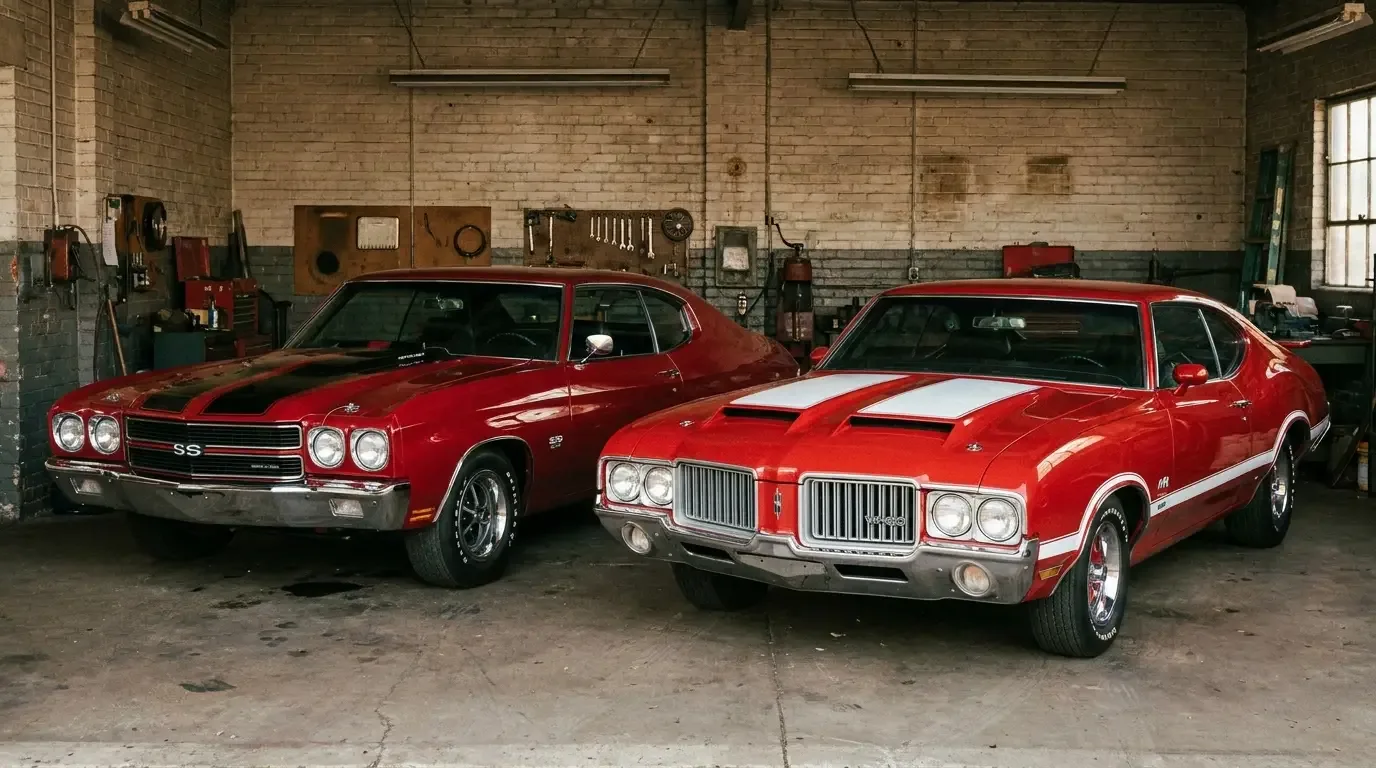
The 442 gets overlooked next to the GTO and the Chevelle SS because Oldsmobile never had the marketing machine Pontiac had, and Chevy always had the bigger dealer network moving more iron. But anybody who's actually wrenched on a 442 knows Oldsmobile's engineers weren't playing around. This one's part of the full muscle-war story, and it's the one most people skip past without knowing what they're missing.
Where the 442 actually came from
Oldsmobile put the 442 package together in 1964, the same year the GTO landed, mostly as a handling-and-suspension answer rather than a straight horsepower play at first. The name comes from four-barrel carb, four-speed transmission, dual exhaust, which tells you Oldsmobile was thinking about the whole package, not just torque numbers on paper. By 1965 the 442 had a bigger V8 under the hood, and by the late sixties it had grown into a legitimate big-block competitor with the W-30 package pushing it into serious performance territory.
The Chevelle SS took a different road to get to the same neighborhood. Chevy's SS 396 arrived in limited form for 1965 as the Z16, then went full production for 1966, riding on a big-block that Chevrolet had already proven out in full-size cars. Chevy wasn't inventing anything new mechanically. It was taking a known-good engine and dropping it into a lighter body. That's a Detroit move I respect. Don't overthink it if the parts already work.
What to actually look at under the hood
If you're comparing a Chevelle SS 396 to an Olds 442 for a driver, here's what I look at first. The Chevy big-block is simpler to source parts for today. Every parts house in the country stocks reproduction pieces for the 396 because there were so many built, and that keeps ownership costs down. The Olds 350 and 400 blocks in the 442 are good engines, arguably more sophisticated in some of the head design, but the parts network is thinner. You'll pay more and wait longer for the right piece when something breaks.
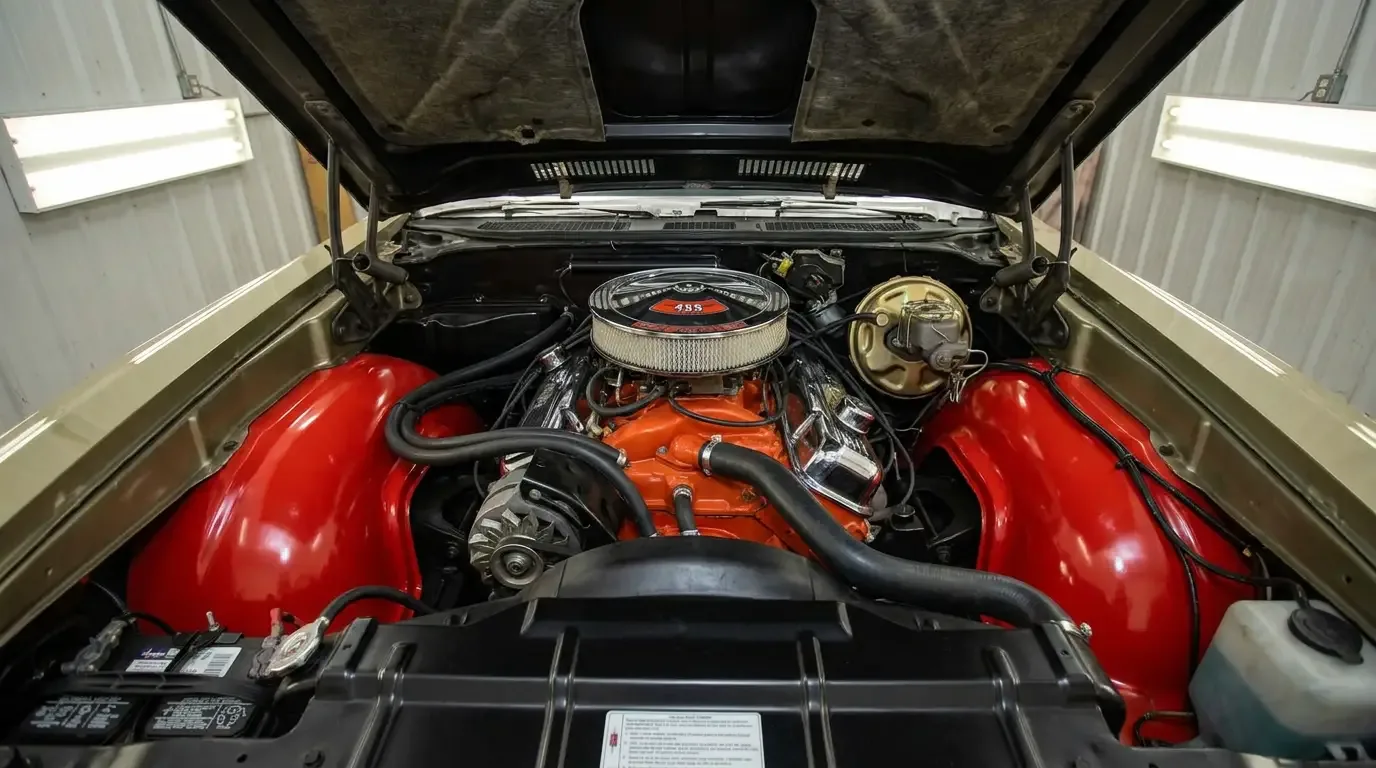
The W-30 package is where the 442 gets serious, with functional fiberglass hood scoops feeding cold air instead of the decorative stuff a lot of other manufacturers were bolting on around the same time. That's a real engineering decision, not a styling gimmick, and it tells you Oldsmobile's people cared about function over flash. I respect that even on a car I don't own.
🔧 Inspection Priorities
- Matching numbers on the block and heads. Both cars get engine swaps constantly. A 396 or a W-30 400 that doesn't match the trim tag costs you real money at resale, so verify before you fall in love with the car.
- Cowl tag and build sheet. On the Olds especially, documentation is what separates a real 442 from a base Cutlass somebody dressed up later. Don't take the seller's word for it.
- Rust in the trunk floor and rear frame rails. Both platforms share the same weak spots. Bring a flashlight and get under the car yourself, not just a walk-around in the driveway.
What these cars cost to own today
Money talks here more than nostalgia does. A solid driver-quality Chevelle SS 396 has a broader price band than most people expect, mostly because there were enough built that condition, not rarity, drives the number. A rough one you can bring back yourself costs a lot less than a documented, numbers-matching car somebody already sorted out. The 442, especially a W-30, sits on a tighter band because there just aren't as many out there to set the market. When a genuine W-30 with the right paperwork comes up for sale, it tends to move fast and it tends to move for real money, more than a comparable SS 396 in similar condition.
That price gap isn't the market being irrational. It's supply doing what supply does. Chevrolet built the SS 396 in numbers that make it one of the more accessible big-block muscle cars from this era to actually own and drive regularly. Oldsmobile built the 442, and especially the W-30, in numbers small enough that scarcity alone pushes the price up regardless of which car is objectively the better piece of engineering. I've told guys looking for a first big-block muscle car to start with the Chevelle for exactly that reason. Easier entry, easier exit if your plans change.
Two different personalities, same generation
Drive them back to back and the difference shows up fast. The Chevelle SS 396 feels like a car built for straight-line confidence, predictable, torquey, forgiving if you're a little heavy on the throttle out of a corner. The 442 feels more buttoned down through a turn, which was Oldsmobile's whole original pitch with that name. If you're the kind of buyer who cares more about how a car handles a back road than how fast it clears the quarter mile, the 442 earns a longer look than the badge recognition usually gets it.
Neither car is the wrong answer. That's the honest truth here. Guys who tell you one absolutely beats the other usually haven't spent real time under both hoods. I have, and my take is simple: buy the SS 396 if parts availability and resale liquidity matter most to you. Buy the 442 if you want something a little less common at the local cruise night and you're willing to hunt a little harder for parts when you need them. If you're shopping right now, go browse SS models and see what condition and pricing actually look like this week.
"I've pulled apart enough of both of these to tell you the 442 doesn't get the credit it deserves. It's not the flashier car. It's the more thoughtfully engineered one in a few spots, and that matters more once you're the one paying for parts."
Mike Sullivan
Chevrolet's real challenger wasn't Oldsmobile though, at least not in total sales. Up next is the one that gets left out of the conversation more than any of them: next: SS vs Buick GS/GSX.
Sources and notes
Related Reading
Have a
Chevrolet Chevelle
for Sale?
Reach thousands of serious classic car collectors across the US.
Sell It Here →
Are You a Classic Car Dealer?
List your full inventory and connect with targeted classic car buyers.
Join as a Dealer →

About the author
Mike Sullivan
Detroit-area muscle car enthusiast and restoration specialist with three decades of hands-on experience working on American iron.
Related Listings - Chevrolet Chevelle
Comments (1)
L
Lou Vincenzo
2 months ago
This is the kind of article you send to someone thinking about their first classic car. Covers the right basics without being condescending.