
Pontiac started it. That's the part people forget when they argue about which A-body ruled the mid-1960s. John DeLorean and his team at Pontiac dropped a big-inch V8 into a mid-size Tempest, called it a GTO, and by the time Chevrolet's own brass figured out what had happened, Pontiac had already sold the idea to a generation of buyers who wanted a car that looked like a family sedan and ran like something else entirely. Chevrolet had the corporate muscle to respond, and it did, but for a couple of years the GTO owned the conversation at every drive-in and stoplight in the country.
Car Features
7 min read
Chevelle SS vs Pontiac GTO: The Original A-Body War
Pontiac's GTO started the muscle car war in 1964. Chevrolet's Chevelle SS answered two years later. Here's how the original rivalry began.
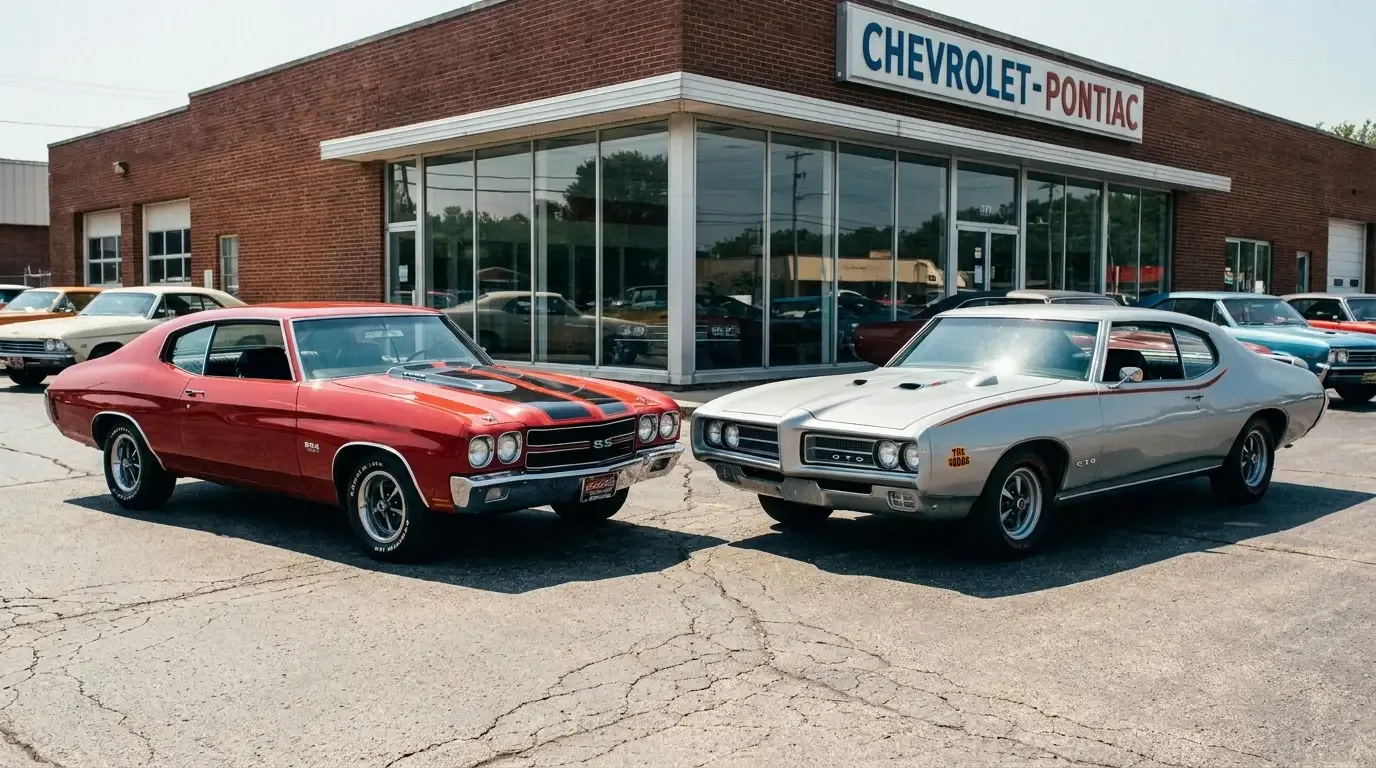
That's the real story behind the A-body muscle war: five divisions building on the same GM platform, each one trying to out-muscle a corporate sibling. The Chevelle and the GTO were the first two into the fight, and the rivalry between them set the terms for everything that came after.
How Pontiac got there first
The GTO wasn't supposed to happen, at least not the way GM's official policy read it. General Motors had an internal cap limiting mid-size cars to smaller engines, a holdover from a corporate agreement meant to keep the big-inch stuff in full-size cars where it belonged. DeLorean's team got around it by making the GTO's 389 cubic-inch V8 an option package on the Tempest rather than a factory-built model in its own right, which was technically within the letter of the rule even if it obliterated the spirit of it. The 1964 GTO launched with that 389, offered with a four-barrel carburetor or the Tri-Power triple two-barrel setup, and the numbers were serious for a car that still looked like something your neighbor might drive to church.
Pontiac didn't just build a fast car. It built a fast car with an image, backed by ad copy that talked directly to young buyers instead of their parents, and a name lifted from a Ferrari that told everyone exactly what kind of statement Pontiac was making. Sales took off. Other divisions inside GM watched the GTO become a cultural phenomenon almost overnight, and Chevrolet, which had the biggest dealer network and the most to lose by sitting still, had to answer.
Chevrolet's answer arrives
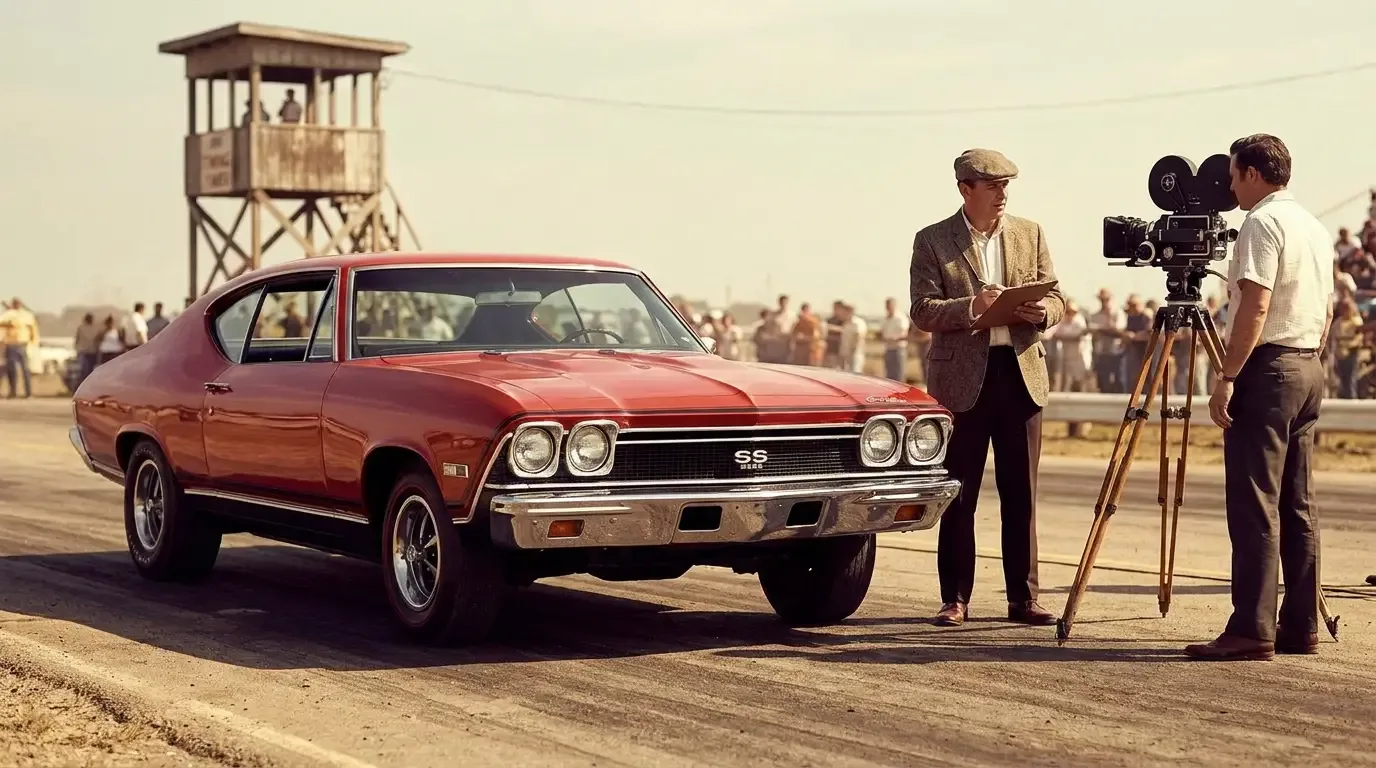
Chevrolet's response wasn't instant. The Chevelle had launched for 1964 as a solid, unremarkable mid-size car, and it took until partway through the 1965 model year for Chevrolet to field a genuine muscle package, the Z16 SS 396, built in tiny numbers and mostly there to prove the concept. The real answer came for 1966, when the SS 396 became a regular production option with real volume behind it, and Chevrolet finally had a car that could stand across the showroom aisle from the GTO and not look like it was bringing a butter knife to a gunfight.
What Chevrolet had going for it was scale. Chevy dealers were everywhere, the Chevelle's base price undercut a comparably equipped GTO in a lot of configurations, and the SS 396 came with a big-block that Chevrolet's engineers already understood inside and out from years of full-size car development. The GTO had the head start and the cachet. The Chevelle had the numbers game, and in Detroit, the numbers game usually wins eventually. Anyone who wants the full arc of how the SS badge developed from that first Z16 through the 454 era should read the Chevrolet Chevelle story.
The showroom fight, not just the strip fight
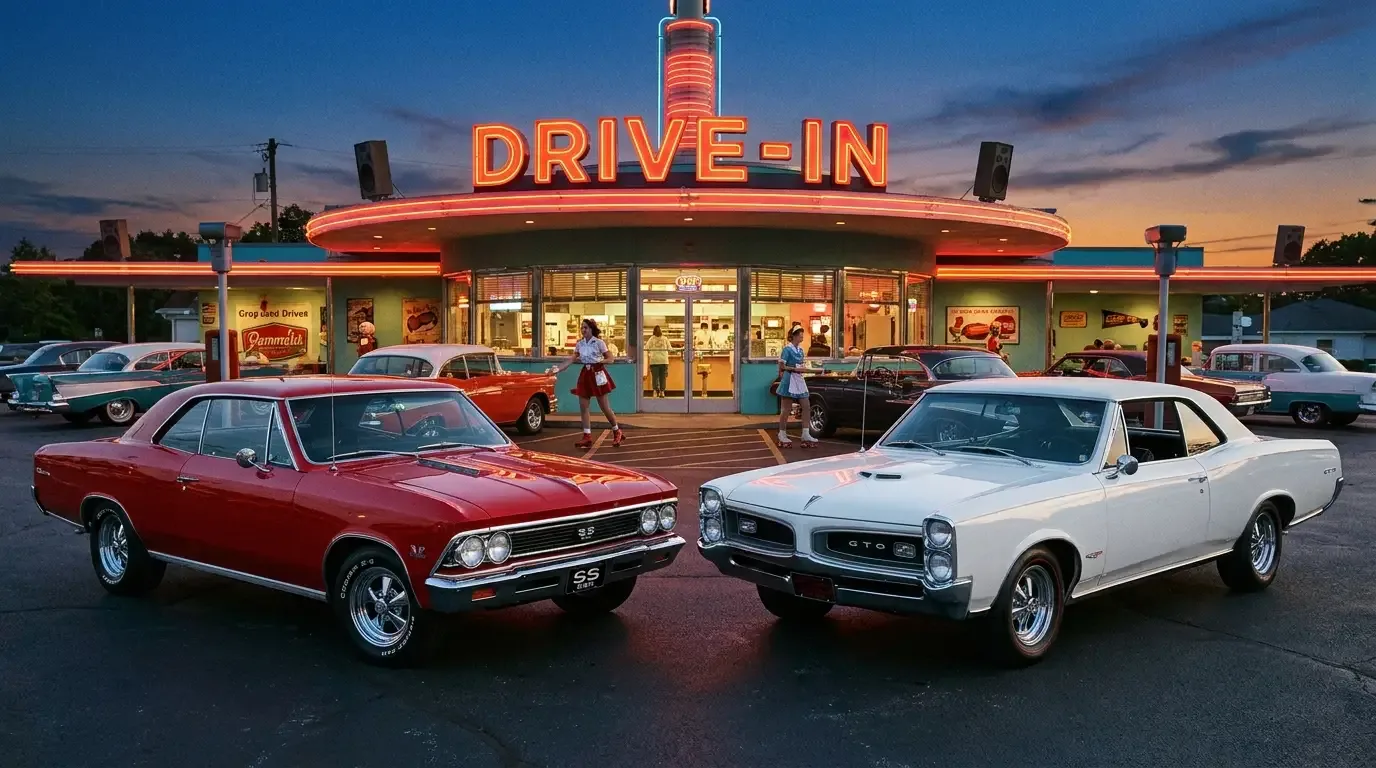
People tend to remember this rivalry as a drag strip argument, quarter-mile times and horsepower claims traded back and forth in magazine road tests. It was that. But it was just as much a showroom fight, fought over trim levels, hood scoops, and which division could make its version of a mid-size performance car feel like the one to be seen in. Pontiac leaned into styling flourishes, hood-mounted tachometers, and an aggressive marketing voice that treated the GTO almost like a character rather than a car. Chevrolet leaned into its reputation for building honest, mechanically straightforward performance, the kind of car a guy could work on himself in a driveway on a Saturday.
Both approaches worked, which is why the rivalry lasted as long as it did. Buyers who wanted image and flash tended toward Pontiac. Buyers who wanted a big-block that felt like it came from the same lineage as their dad's truck tended toward Chevy. The GTO and the Chevelle SS weren't really selling the same customer a choice between two nearly identical products. They were selling two different ideas of what a muscle car should feel like, wrapped around remarkably similar underlying architecture.
| Year | GTO headline engine | Chevelle SS headline engine |
|---|---|---|
| 1964 | 389 cu in V8, Tri-Power optional | No SS package yet |
| 1965 | 389 cu in V8, Tri-Power optional | Z16 SS 396 (limited production) |
| 1966 | 389 cu in V8, Tri-Power optional | SS 396 (full production) |
| 1970 | 455 H.O. V8, 360 hp (400 Ram Air IV also offered) | SS 454 (LS5/LS6) |
GM's corporate cap limiting intermediates to 400 cubic inches was rescinded for 1970, which is why both the GTO and the Chevelle SS jumped to big-inch engines that year. Horsepower ratings varied by carburetor and compression combination and reflect factory gross ratings of the period.
Why the rivalry still gets argued about
Ask a room full of GM guys which car actually won and you'll get a fight, not an answer, which is part of why this stays interesting fifty-plus years later. GTO people point to the head start, the cultural footprint, the fact that Pontiac essentially invented the modern muscle car category before Chevrolet had anything to compete with it. Chevelle people point to the sales totals, the engineering depth Chevrolet eventually brought to the SS 396 and SS 454, and the way the Chevelle outlasted the GTO as a nameplate once the muscle car era started winding down in the early 1970s.
There's no tidy resolution to that argument, and there shouldn't be. What's true is that neither car would be remembered the way it is without the other pushing it. The GTO forced Chevrolet to build something it might have taken longer to get to otherwise. The Chevelle SS forced Pontiac to keep innovating instead of resting on having gotten there first. Anyone shopping either badge today, or thinking about where to start, can go shop Chevelle SS listings and see what's actually out there on the market right now.
"You talk to guys who cross-shopped these new, back in '66 or '67, and they'll tell you it wasn't really about the spec sheet. It was about which car felt like you. The GTO guys wanted people to notice them coming. The Chevelle guys wanted a car that would run all day and not ask for attention doing it. Fifty years on, that's still basically the divide."
Patrick Walsh
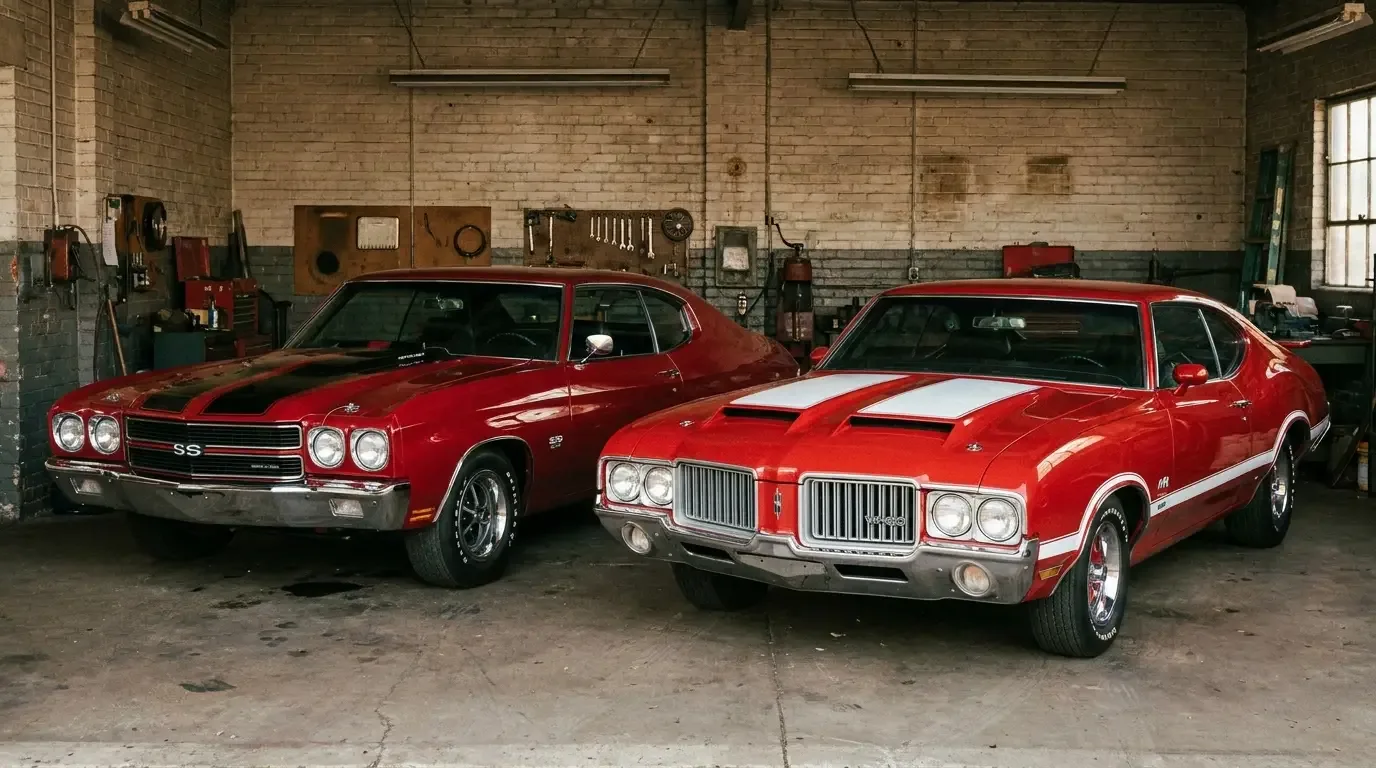
The GTO-Chevelle fight was round one of a bigger story that eventually pulled in Oldsmobile and Buick too. For the next chapter, next: SS vs Oldsmobile 442 picks up where this one leaves off.
Sources and notes
Related Reading
Have a
Chevrolet Chevelle
for Sale?
Reach thousands of serious classic car collectors across the US.
Sell It Here →
Are You a Classic Car Dealer?
List your full inventory and connect with targeted classic car buyers.
Join as a Dealer →

About the author
Patrick Walsh
Automotive journalist covering classic car shows, events, and the enthusiast community across North America.
Related Listings - Chevrolet Chevelle




Comments
Be the first to comment on this article.