
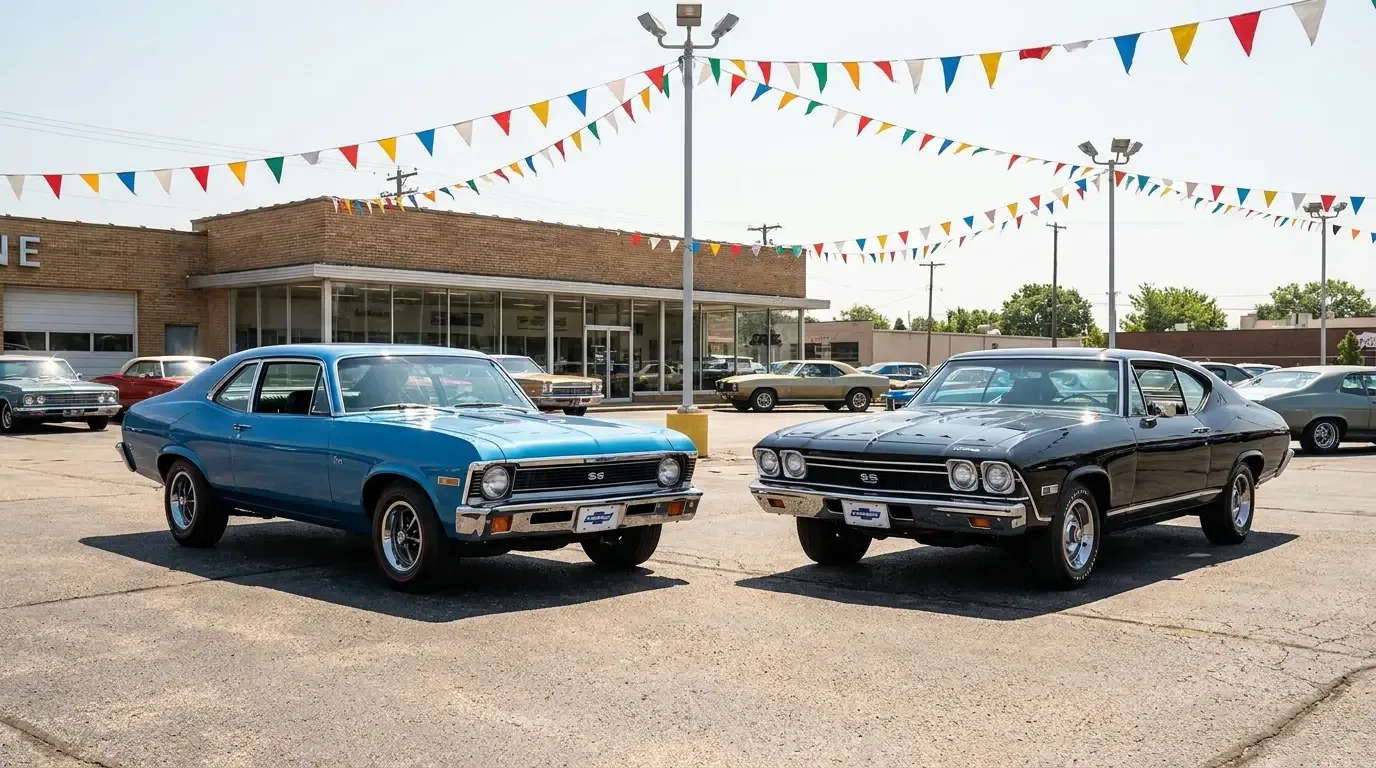
Somewhere in every mid-size American town in 1968, there was a stretch of road where the Ford guys parked on one end and the Chevy guys parked on the other, and nobody needed a magazine to tell them who was faster because they settled it themselves most Friday nights. The Chevelle SS and the Mustang were not built to fight each other on a spec sheet. They were built to fight each other in exactly that parking lot, between two companies that had been trading customers back and forth since Model T days.
Car Features
6 min read
Chevelle vs Mustang: Crosstown Rivals
Mid-size muscle against the original pony car: how badge loyalty made the Chevelle SS and Mustang cross-town rivals.
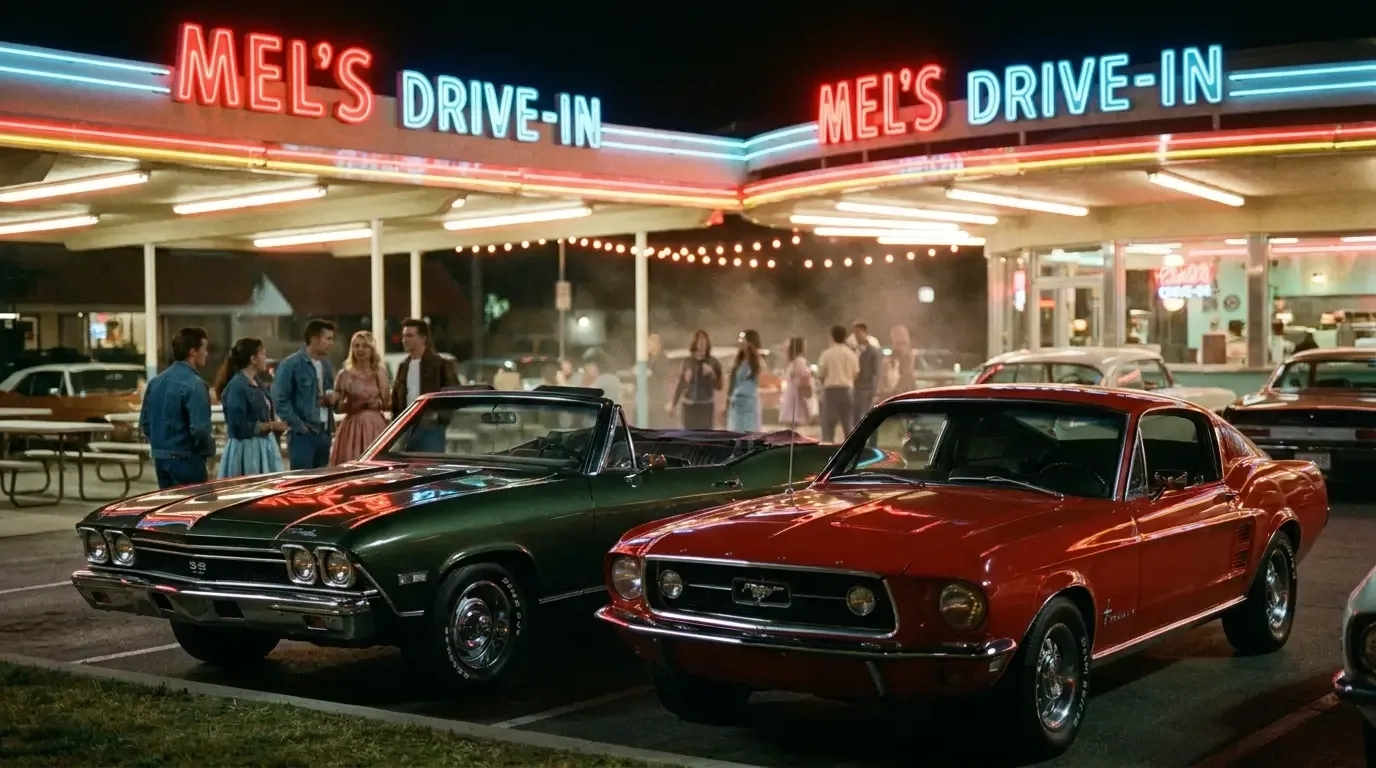
I have talked to enough owners on both sides of this argument to know it is not really about horsepower. It is about which badge your father put on his truck, and that loyalty runs deeper than any dyno chart.
Two different cars aimed at the same wallet
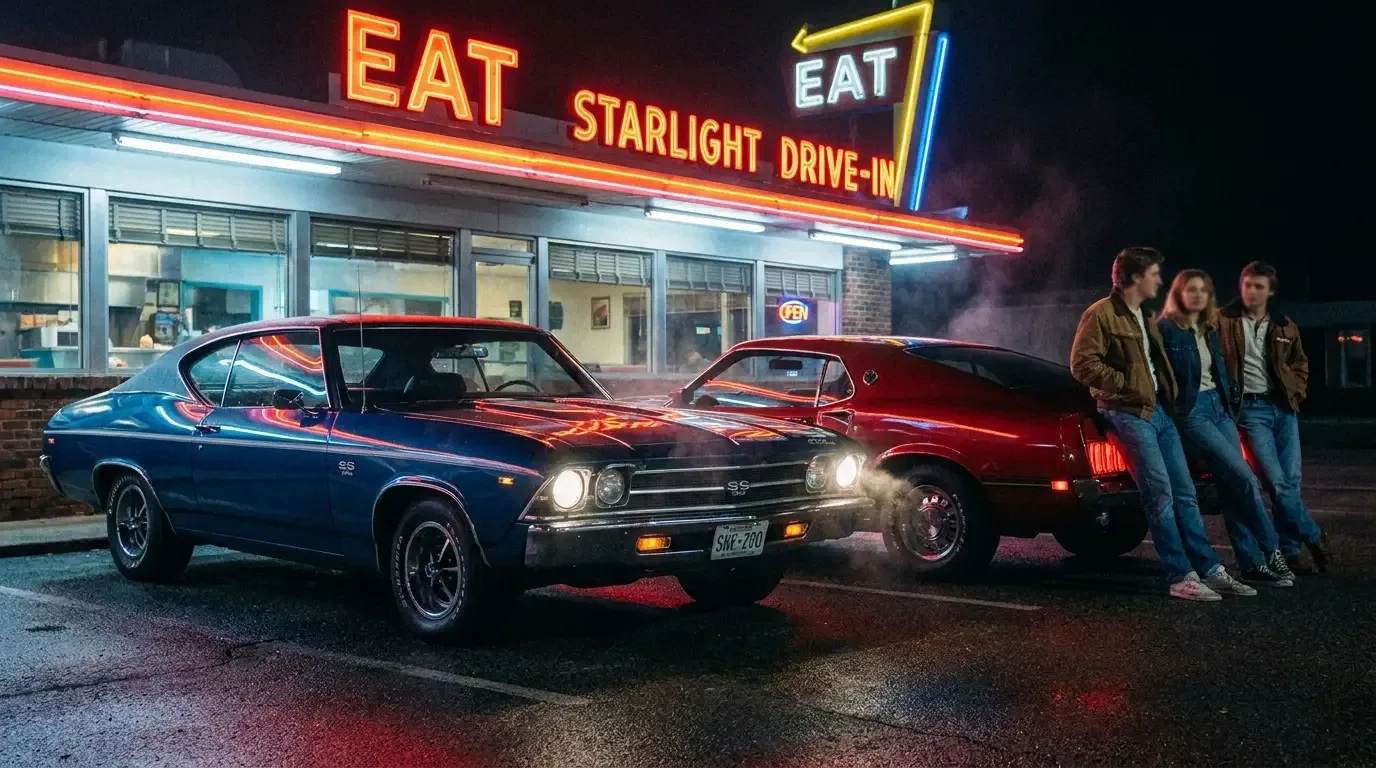
The Mustang, launched in April 1964, created the pony car segment almost by accident, a compact, sporty coupe built cheap enough for a young buyer and styled aggressively enough to feel like more car than it was. The Chevelle SS, arriving for the 1964 model year as well and getting its SS 396 muscle in 1965, was a genuinely different animal: a mid-size intermediate with a back seat that could actually hold four adults and a trunk that could hold a family's luggage, wearing a big-block engine most pony cars of the era could not physically fit under their hood.
These two cars were not really direct competitors in the strict sense. The Mustang competed more directly against the Camaro and the Barracuda. But on the street, where most buyers were choosing based on badge loyalty and monthly payment rather than platform category, the Chevelle and the Mustang absolutely competed for the same customer, and that is the A-body muscle war's quieter, cross-town cousin.
What each car actually offered
A Mustang buyer got lighter weight, sharper reflexes and a lower price of entry, especially with the six-cylinder or small V8 options that made up the bulk of Mustang sales despite what the magazine covers suggested. A Chevelle SS buyer got a bigger available engine, more interior room, and a car that could plausibly serve as the family's only vehicle while still running low-14-second quarter miles with the right big block ordered. The Boss 302 and Mach 1 Mustangs sharpened Ford's answer considerably by the late 1960s, closing the gap on straight-line performance while keeping the Mustang's inherent weight advantage on a road course.
Neither camp fully conceded the argument, because neither car was actually trying to be the other. That did not stop the parking lot debates, and it does not stop them now.
| Spec | Chevelle SS 396 | Mustang Mach 1 |
|---|---|---|
| Segment | Mid-size muscle | Pony car |
| Approx. base curb weight | 3,600+ lbs | 3,150-3,300 lbs |
| Top engine availability | Big-block 396/402/454 | Big-block 428/429 depending on year |
| Practicality | Full back seat, larger trunk | Cramped rear seat, smaller trunk |
The badge loyalty is the real story
Ask a lifelong Ford family why they never bought a Chevelle and the answer is rarely about horsepower. It is about a grandfather who worked a Ford plant, or a first truck that never let them down, or a hundred small loyalties that have nothing to do with a quarter-mile time slip. The same is true walking into it from the other side. Chevrolet families stayed Chevrolet families for reasons that predate the muscle car era entirely, going back to Model A versus Model T arguments their grandparents had.
That loyalty is why this rivalry outlived the muscle car era itself and still shows up at every cruise night in the country. It is not really a Chevelle story or a the classic Chevelle story alone, it is a Chevrolet-versus-Ford story that the Chevelle and Mustang happened to be standing in for during the years both companies fought hardest for the same customer.
The showroom numbers never actually lined up
Ford outsold Chevrolet on the Mustang nameplate specifically for years running, but that comparison flatters the Mustang more than it should, because Chevrolet was answering with two nameplates instead of one, splitting its pony-car and mid-size muscle response between the Camaro and the Chevelle SS. Add both Chevrolet lines together against the Mustang alone and the picture looks a lot more even than a straight Mustang-versus-Chevelle sales chart suggests. That is a detail that rarely makes it into the parking lot argument, mostly because nobody wants to complicate a good rivalry with an accounting lesson.
How this plays out in the collector market today
Both nameplates carry strong, distinct collector followings today, and the values do not track each other cleanly. A well-documented Boss 429 Mustang can outprice a comparable big-block Chevelle at auction, while a numbers-matching LS6 Chevelle SS commands money the Mustang lineup rarely reaches outside its rarest fastback variants. If you are cross-shopping the two, the honest answer is that you are not really cross-shopping two competitors, you are choosing between two different kinds of ownership experience: a lighter, sportier pony car versus a roomier, harder-hitting intermediate. You can shop Chevelle SS inventory today and feel that difference the moment you sit in either car.
"Nobody at Carlisle is having a rational conversation about this one. It's not really Chevelle versus Mustang, it's whichever company your family trusted first, argued out through two cars that happen to be excellent examples of what each side was capable of. That's what makes it fun. Nobody's actually trying to change anybody's mind."
Patrick Walsh
A rivalry that was never really about specs
The Chevelle and the Mustang solved different problems for different buyers, and the argument between them has always run on loyalty as much as lap times. For the fuller picture of how the Mustang built its own legend outside this cross-town fight, the full Mustang story is worth the read.
The badge rivalries do not end there. Chevrolet had one more intramural fight worth telling, closer to home than Ford ever was, and that story is next: Chevelle vs Nova.
Sources and notes
- Ford Mustang sales figures by year
- CJ Pony Parts: Mustang sales throughout the years
- Ford Muscle Cars Tech Forum: 1969 Mustang Mach 1 curb weight
- Team Chevelle forum: 1969 Chevelle SS 396 factory weight
- HowStuffWorks: 1969 Mustang Mach 1 428 Cobra Jet profile
- Ford Mustang: Wikipedia, launch and early production history
Related Reading
Have a
Chevrolet Chevelle
for Sale?
Reach thousands of serious classic car collectors across the US.
Sell It Here →
Are You a Classic Car Dealer?
List your full inventory and connect with targeted classic car buyers.
Join as a Dealer →

About the author
Patrick Walsh
Automotive journalist covering classic car shows, events, and the enthusiast community across North America.
Related Listings - Chevrolet Chevelle




Comments
Be the first to comment on this article.