
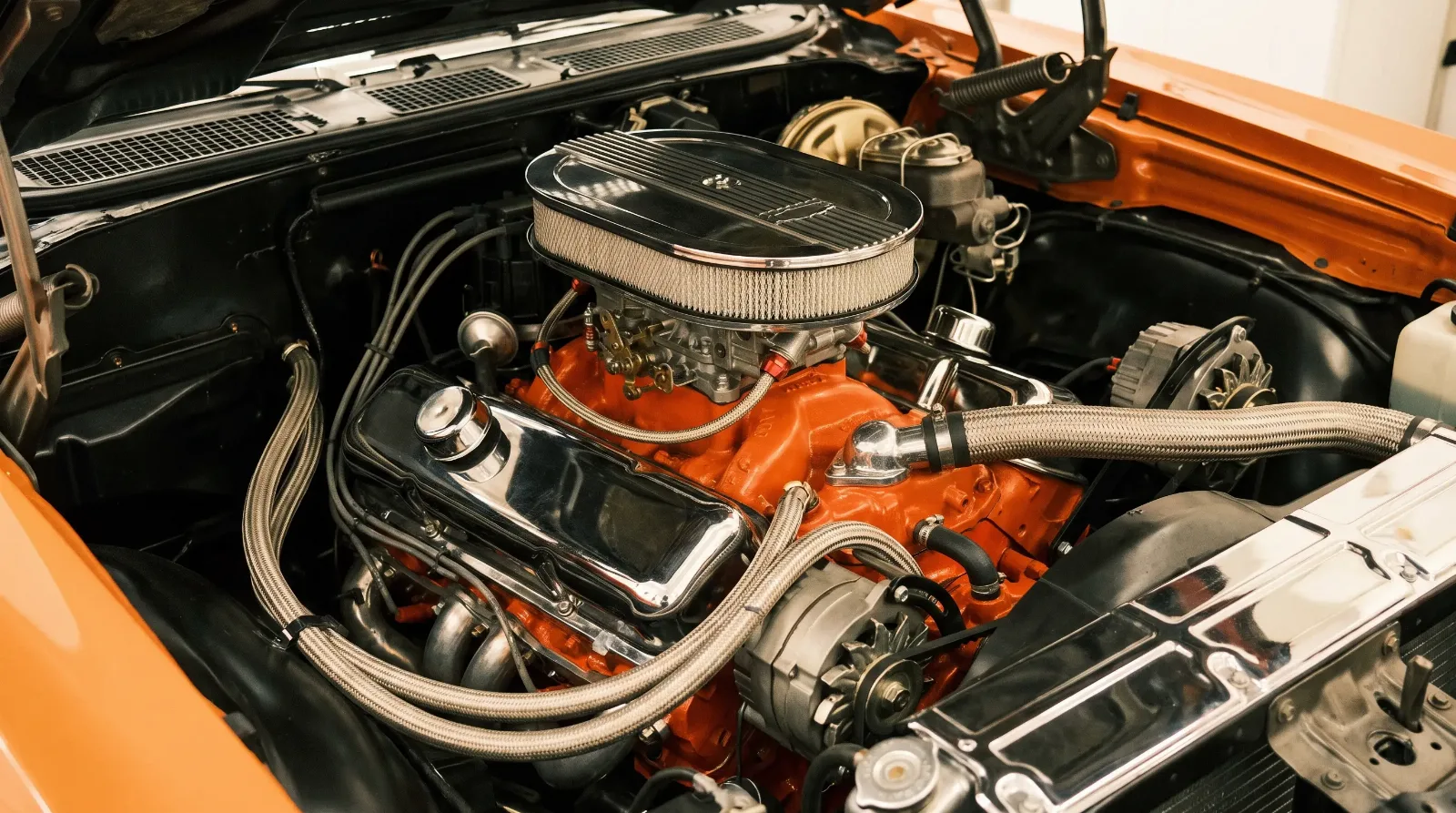
People hear "Mopar big block" and their brain jumps straight to the 426 Hemi. Fair enough, but that engine was the exception, built in tiny numbers for cars most buyers never touched. The engines that actually put Dodges and Plymouths in the winner's circle and on the street were the wedge big blocks: the B and the RB. I've pulled apart enough of these to tell you they were built to last, and once you understand how the family is laid out, decoding one gets a lot simpler.
Car Features
5 min read
The Chrysler B and RB Big-Blocks Explained
How to tell Chrysler B and RB big-blocks apart: deck height, the 383, 413, 426 Wedge and 440. Specs and buying tips for Mopar muscle.
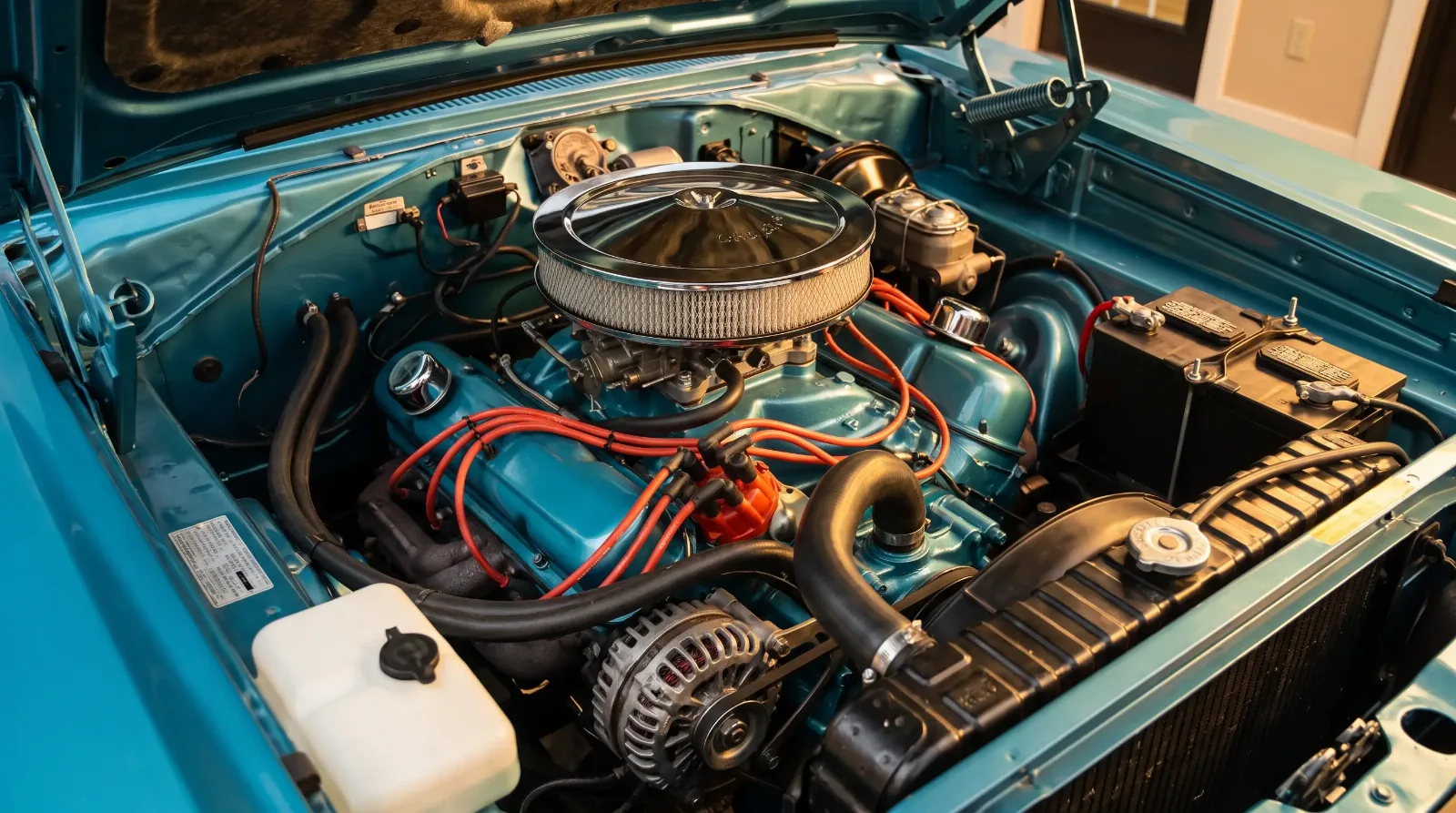
The whole thing starts with two deck heights. That's the entire trick to keeping the B and RB straight. Get that, and the displacements fall into place. Miss it, and you'll spend an afternoon arguing with a guy at a swap meet about whether a block is a 383 or a 400 when a tape measure would settle it.
B versus RB, the short version
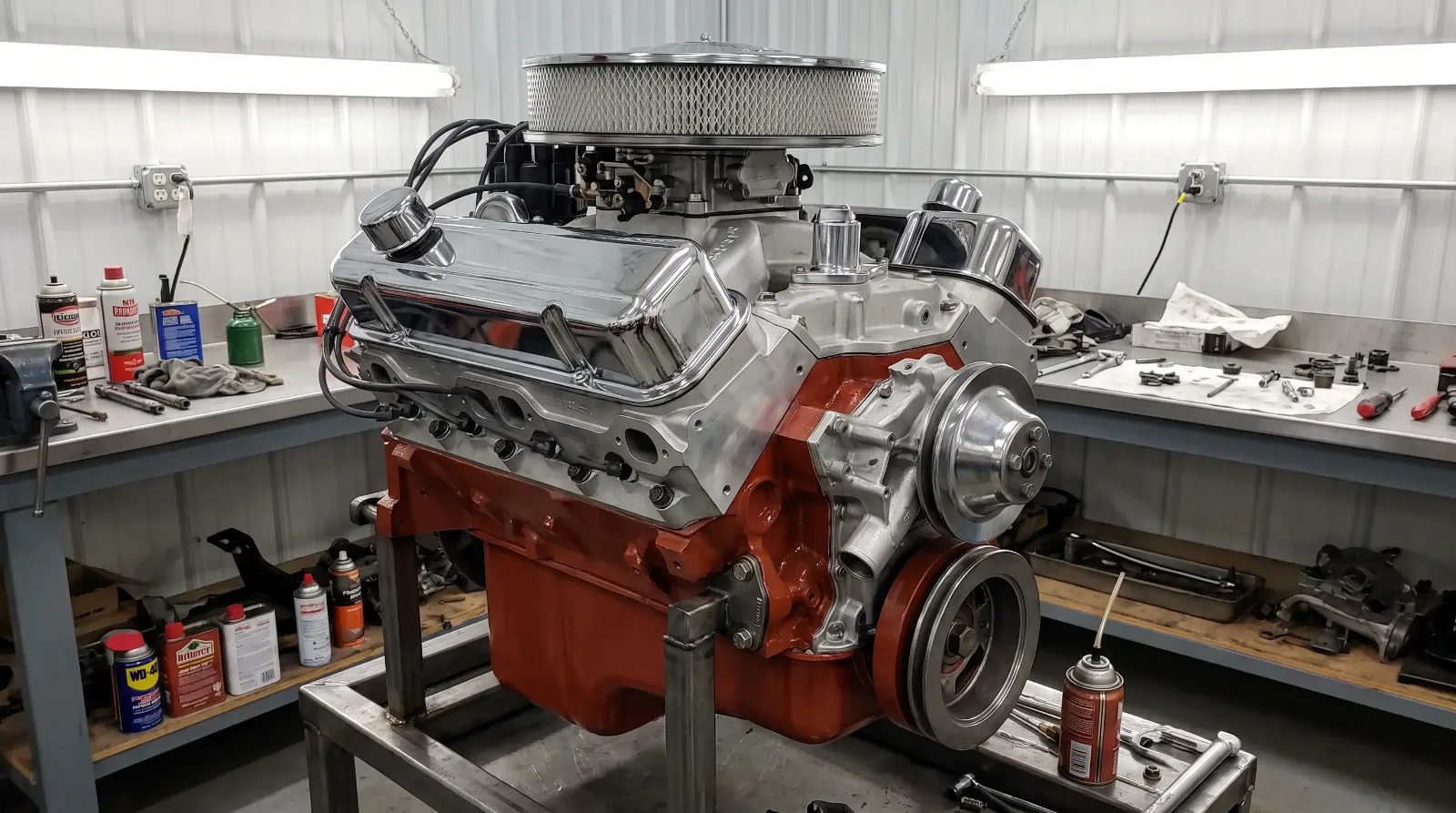
The B engine arrived for 1958 as Chrysler's low-deck wedge. Low deck means a shorter distance from the crank centerline to the top of the block, roughly ten inches. The RB, which stands for raised B, came a year later with a taller deck, closer to ten and three-quarter inches. Same bore spacing of 4.80 inches across both, same basic architecture, different deck height. That taller deck is what let the RB swing a longer stroke and make bigger displacements.
The B family gave you the 350, 361, 383, and later the 400. The RB family gave you the 413, the 426 Wedge, and the 440. The 383 is the one most people know, because it went into everything from Road Runners to station wagons. The 440 is the one everybody wants, because it's the biggest and the torquiest of the bunch. For the wider picture on how these stacked up against the competition, the horsepower wars feature has the full engine story, but the family map above is what you need at the swap meet.
| Engine | Family | Deck | Notes |
|---|---|---|---|
| 383 | B | low | the volume big block, Magnum around 335 hp |
| 400 | B | low | 1972 on, replaced the 383 |
| 413 | RB | raised | early performance and heavy-duty use |
| 426 Wedge | RB | raised | Max Wedge race motor, 415 to 425 hp |
| 440 | RB | raised | top wedge, Magnum around 375 hp, Six Pack near 390 hp |
The 383 did the heavy lifting
The 383 is the engine that mattered most to the most people. In Magnum and Super Commando tune it was rated around 335 horsepower, and it filled the engine bay of the Road Runner, the Super Bee, the Charger, and plenty of Barracudas and Coronets. It made honest torque, it wasn't fussy, and it cost less than a 440. If you're looking at a mid-level Mopar muscle car, odds are good there's a 383 under the hood, and there's nothing wrong with that.
What kills a 383 in a buyer's mind is when somebody's dropped in a later 400 and stamped it to look correct. The 400 replaced the 383 for 1972 and shares the low deck, so the swap is easy and the fraud is common. Check the casting numbers and the pad. Don't take a fender emblem as proof of anything.
The 440 is the one everybody wants
The 440 showed up for 1966 as the biggest wedge Chrysler built. In base four-barrel form it moved the big cars around just fine. In Magnum and Super Commando tune it was rated near 375 horsepower. The one collectors chase is the 440 Six Pack, which put three two-barrel carburetors on top and bumped the advertised figure to around 390 horsepower. That triple-carb setup is the difference between a nice car and an expensive one.
Here's the thing about the 440 that people forget. It made its power on torque, not on revving. It was never trying to be a Hemi, and it didn't need to be. On the street a good 440 would run with almost anything, and it did it while costing the factory a fraction of what a Hemi cost to build. That's why Chrysler put so many of them out the door.
"Everybody wants a Hemi car until they see the invoice. A 440 Six Pack does most of what a Hemi does on the street, it costs a lot less to keep running, and there are enough of them left that you can actually find one."
Mike Sullivan
What to check before you buy
Start with the deck height if you can get to it, because that alone tells you B from RB. After that it's casting numbers, the stamped pad, and the date codes. Mopar documentation runs deep when the car has its fender tag and broadcast sheet, so chase those down. A Six Pack car without paperwork is a Six Pack car you should price like a four-barrel until proven otherwise.
The B and RB wedges are the backbone of Mopar muscle, and they're a smarter buy than most people realize once the Hemi premium is off the table. If you want to see how the crosstown competition built its big blocks, you can read the full story on the Chevrolet 396-to-454 family, but for durability and value the Chrysler wedge is hard to beat.
Related Reading
Have a
Classic Car
for Sale?
Reach thousands of serious classic car collectors across the US.
Sell It Here →
Are You a Classic Car Dealer?
List your full inventory and connect with targeted classic car buyers.
Join as a Dealer →

About the author
Mike Sullivan
Detroit-area muscle car enthusiast and restoration specialist with three decades of hands-on experience working on American iron.
Comments
Be the first to comment on this article.