
The Chevrolet big block is one engine family wearing four different displacement badges. Once you understand that the 396, the 402, the 427, and the 454 all come from the same Mark IV architecture, the whole thing stops being confusing. I've had all of them apart on the bench, and the family resemblance is right there in the canted-valve heads that gave the engine its "porcupine" nickname. When people talk about muscle car engines from the General, this is the block they mean.
Car Features
5 min read
The Chevy Big-Block Family: 396 to 454
The Chevrolet Mark IV big-block from 396 to 454: the L78, L72 427, and LS6 454. Specs, power ratings, and how to spot a clone.
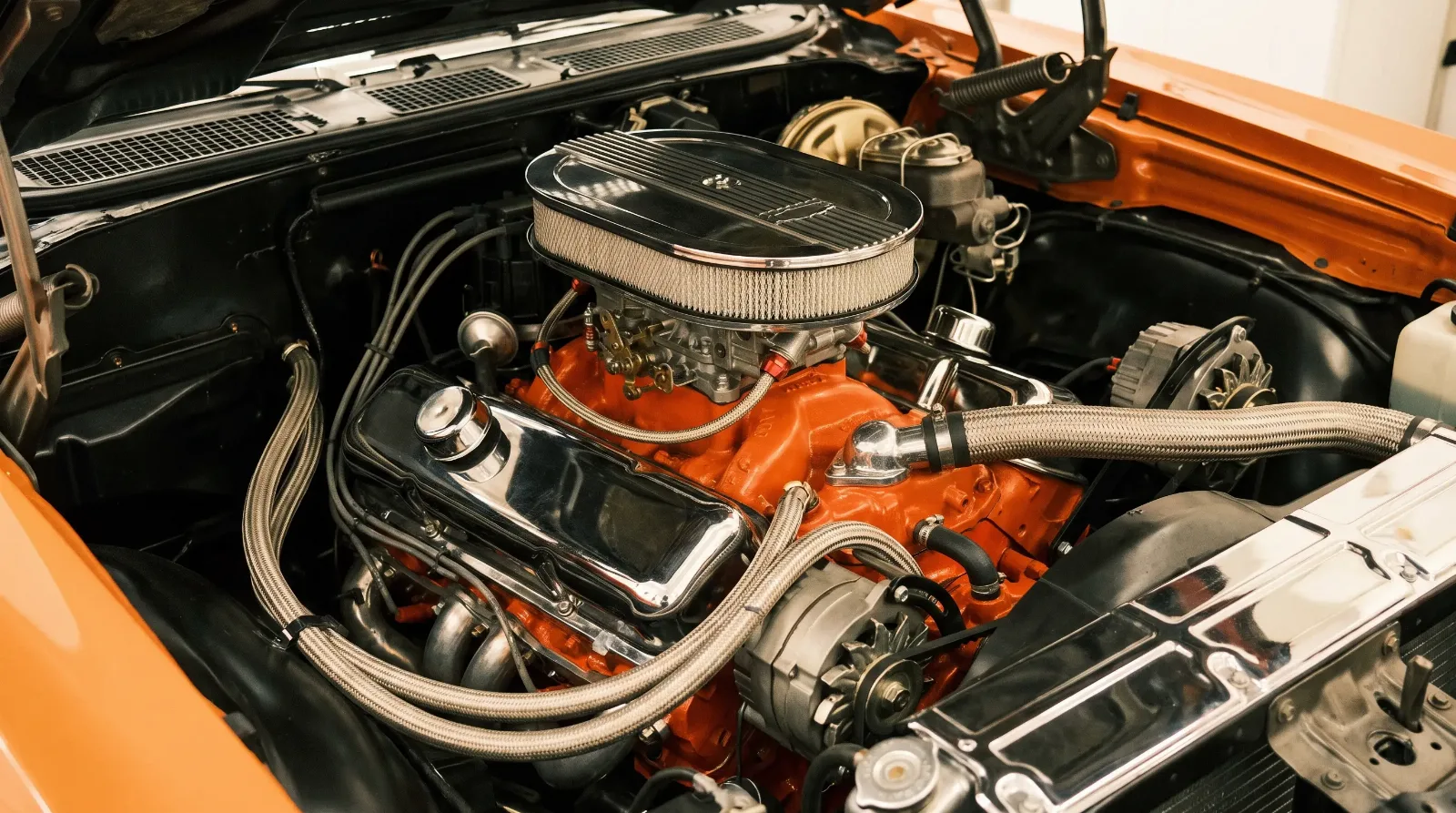
The Mark IV arrived for 1965 and stayed in production for decades. Same 4.84-inch bore spacing across the range, same basic block, same valvetrain layout with valves splayed at angles to unshroud them and let the heads flow. What changed over the years was bore and stroke, which is how one design covered everything from a 396 in a Chevelle to a 454 in a truck.
The 396 started it all
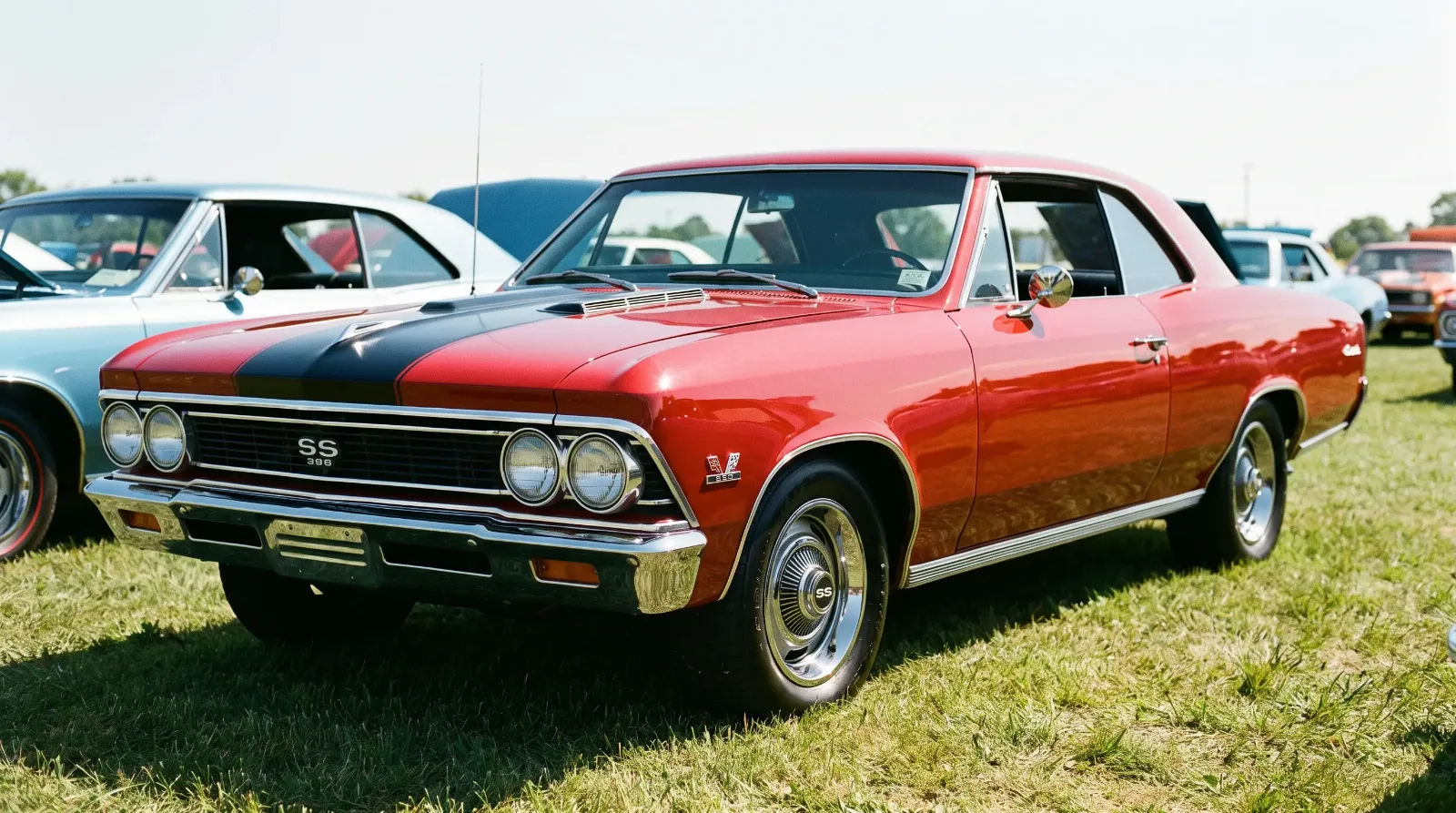
The 396 came out in 1965 and it came out swinging. It debuted in the Corvette and in the limited Z16 Chevelle, and by 1966 it was the big-block option across the Chevelle and Camaro lines. The one to know is the L78, rated at 375 horsepower with solid lifters, big-valve heads, and an aggressive cam. That was a genuine performance engine, not a marketing number.
Here's a detail that trips people up. In 1970 Chevrolet bored the 396 out slightly to 402 cubic inches but kept calling it a 396 on most cars, and badged it as a 400 on others. Same engine, three different numbers depending on the year and the model. If you're looking at a 1970 or later car wearing 396 badges, it's very likely a 402 underneath, and that's factory correct.
| Engine | Years (muscle era) | Notable version | Rated power |
|---|---|---|---|
| 396 | 1965 to 1969 | L78 solid-lifter | 375 hp (gross) |
| 402 | 1970 to 1972 | badged 396 or 400 | 350 to 375 hp |
| 427 | 1966 to 1969 | L72 | 425 hp (gross) |
| 454 | 1970 on | LS6 | 450 hp (gross) |
| 454 | 1970 on | LS5 | around 360 to 365 hp (gross) |
The 427 and the 454
The 427 ran from 1966 through 1969 and it's the engine that built the legend. In L72 form it was rated at 425 horsepower, and it went into full-size Chevys, Corvettes, and the Central Office cars that dealers turned into drag weapons. The 427 is where the Mark IV earned its reputation for making serious power, and correct 427 cars carry real money today. There were exotic aluminum variants too, the ZL1 and the L88, built in tiny numbers for racing and priced today like the rarities they are.
What ties all of these together is the shared architecture. The same block casting philosophy, the same canted-valve heads, and the same bore spacing carried from the 396 all the way up to the 454. That commonality is a blessing and a curse. It means parts are plentiful and the engines are easy to work on, but it also means a 396 can be bored, stroked, or simply swapped for a bigger sibling without much trouble. A big block wearing the right badges is not automatically the big block the car left the factory with.
For 1970 Chevrolet stroked the block to 454 cubic inches. The two names to know are the LS5 and the LS6. The LS5 was the softer, more livable version rated around 360 to 365 horsepower. The LS6 was the one that mattered, rated at 450 horsepower and dropped into the 1970 Chevelle SS. That LS6 Chevelle is a blue-chip muscle car, and if you want the deep dive on that specific engine you can read the full story on the LS6 454 legend.
What separates a real one from a clone
Big-block Chevys are among the most cloned muscle cars on the planet, and it's because the swap is so easy. Any Mark IV bolts into any Chevelle or Camaro that could have had one from the factory, so a small-block SS gets a 454 dropped in and suddenly wears the wrong badges. The engine being a real big block doesn't make the car a real big-block car.
"A 454 in a Chevelle doesn't make it an SS454. Anybody can bolt a big block into one of these. What makes it real is the paperwork, the cowl tag, and the numbers matching up. Everything else is just an engine somebody found."
Mike Sullivan
Check the block casting numbers, the stamped pad behind the passenger-side head, and the suffix code that tells you what car and application the engine was built for. Match that against the cowl tag and any documentation. An LS6 without a build sheet is a conversation you should have before you write the check, not after.
Where the family stands today
The Mark IV big block is one of the cornerstone muscle engines, and values run the full range. A driver-grade 396 car is attainable, a documented L72 427 is expensive, and a real LS6 Chevelle sits near the top of the whole muscle market. Values move with documentation more than with the badge on the fender, so buy the paperwork as much as the car. You can browse a slice of the market and explore muscle cars for sale to see how the numbers shake out across conditions.
Chevrolet wasn't the only one building big-inch iron in these years. Ford came at the same problem from a different direction, and if you want to see how the crosstown answer stacked up you can read the full story on the Ford FE and 385-series big blocks. The rivalry between these families is a big part of why the horsepower wars got as heated as they did, and there's more on that in our muscle car story.
Related Reading
Have a
Classic Car
for Sale?
Reach thousands of serious classic car collectors across the US.
Sell It Here →
Are You a Classic Car Dealer?
List your full inventory and connect with targeted classic car buyers.
Join as a Dealer →

About the author
Mike Sullivan
Detroit-area muscle car enthusiast and restoration specialist with three decades of hands-on experience working on American iron.
Comments
Be the first to comment on this article.