
Park a 1971 SportsRoof next to a 1965 coupe and the difference hits you before you open a door. The newer car is almost 8 inches longer and close to 6 inches wider. On a tape measure, the 1971 Mustang size works out to 189.5 inches long and 74.1 inches wide on a 109-inch wheelbase. The original brief for the car said no more than 180 inches and under 2,500 pounds. So how did a pony car end up the size of a small Clydesdale?
Car Features
7 min read
Why the 1971 Mustang Grew So Big
The 1971 Mustang was 8 inches longer and 6 inches wider than the 1965. The 429, Bunkie Knudsen and a decade of creep explain how it got there.
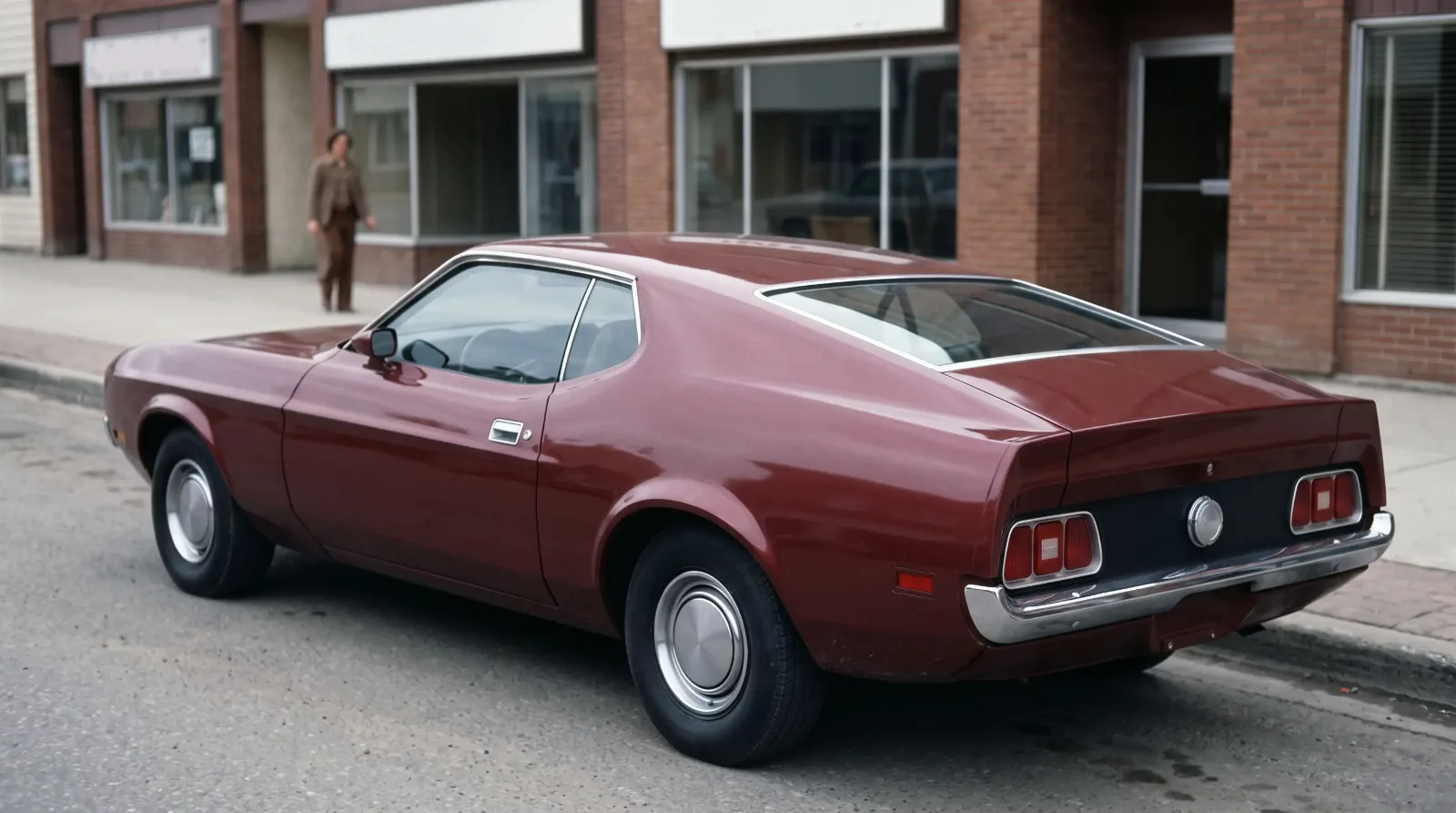
Short answer: nobody decided to make it fat. It got there one reasonable decision at a time, and then one man pushed it over the line. Here is how that went, with the numbers. If you want the whole first-gen arc around it, start with the first generation Mustang story.
It didn't happen in one jump
People talk about 1971 like Ford woke up one morning and inflated the car. Wrong. The Mustang grew at every redesign. The 1967 body got 2 inches longer and 2.7 inches wider, and the reason was mechanical: Ford pushed the V8 front track out from 56.0 to 58.1 inches so an FE big block would fit. The 1969 restyle added another 3.8 inches of length and about half an inch of width, still on the original 108-inch wheelbase.
Then 1971 added a bit over 2 inches of length, about 2.4 inches of width and an inch of wheelbase. Read the table top to bottom and you see a car that had been putting on weight every two years since it was born.
| Body | Wheelbase | Length | Width | Curb weight |
|---|---|---|---|---|
| 1964½ to 1966 | 108 in | 181.6 in | 68.2 in | 2,445 lb (base) |
| 1967 to 1968 | 108 in | 183.6 in | 70.9 in | 2,758 lb (base hardtop) |
| 1969 to 1970 | 108 in | 187.4 in | about 0.5 in more than 1968 (sources differ) | 3,122 lb (base) |
| 1971 to 1973 | 109 in | 189.5 in | 74.1 in | 3,560 lb (SportsRoof), 3,590 lb (hardtop) |
Over seven years that is about 8 inches of length, 6 inches of width and, on the published curb weights, more than 1,100 pounds. The 1971 figure is not labeled as a base-car weight, so the like-for-like gap is probably a bit smaller. One source puts the jump from 1970 to 1971 alone at over 400 pounds, which squares with the 1969 to 1970 base figure in the table.
The 429 needed a bigger hole
Here's the part that matters to anyone who has ever had a fender off one of these. For 1969 and 1970, Ford squeezed the 429 into the Boss 429. It did not fit. Kar Kraft in Brighton, Michigan, had to cut out the shock towers and relocate them to make room. That is fine for a homologation special built in hundreds. It is no way to build a regular-production option.
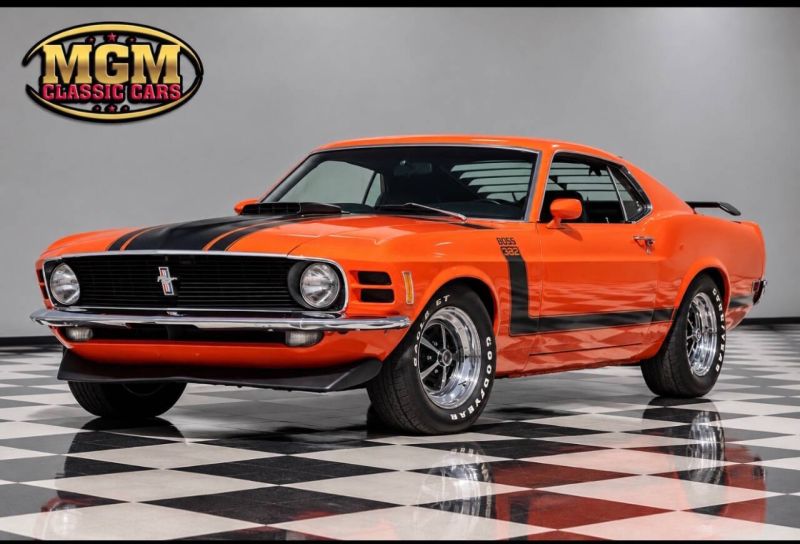
So for 1971 Ford fixed the problem from the outside in. The body was widened, by about 3 inches in the usual telling and closer to 2.5 on the measured figures, so the 429 big block would drop in without Boss 429-style shock-tower surgery. Two versions went into the 1971 car: the 429 Cobra Jet at 370 hp and 450 lb-ft, and the Super Cobra Jet with the Drag Pack at 375 hp, solid lifters and a Holley carb. Both ratings are SAE gross. The 1971 car also got the Boss 351, with a 330-hp R-code 351 Cleveland HO, SportsRoof body and four-speed only. Ford built 1,806 of them.
That's the ugly irony. Ford spent a full redesign making room for a big block, and the big block was gone before the second model year started. What was left was a large car with the 302, the 351s and a six. If you want to see how the body looks with that extra width, the design and styling side is covered here.
Bunkie Knudsen and the 1971 Mustang size
Engines explain the width. They don't explain everything else. For that you need a name: Semon E. "Bunkie" Knudsen.
Knudsen left General Motors in February 1968 to become president of Ford. At Ford he approved Gale Halderman's proposal for the 1971 Mustang, the long hood, the wide stance and the SportsRoof with a rear window so flat it is nearly horizontal. Halderman headed the Ford design studio during the 1971 to 1973 development, the same designer whose sketch had started the original car. Knudsen gets the credit for the 1971 shape. He also gets the blame.
Here's the kicker. He never saw it launch. Henry Ford II fired Knudsen on September 11, 1969 with the line "Things just didn't work out." Larry Shinoda, who had followed him over from GM, was out days later. The car Knudsen signed off on made its public debut on August 20, 1970 and went on sale that September, almost a year after he was gone. Ford built it anyway.
Lee Iacocca, who had led the team behind the original small Mustang, is usually quoted calling the result a "fat pig." That line gets repeated everywhere, but I have never seen it tied to a dated interview or to his own book. Treat it as legend until somebody does. What is on record is that he complained later about how much the Mustang had grown.
What all that size bought, and cost
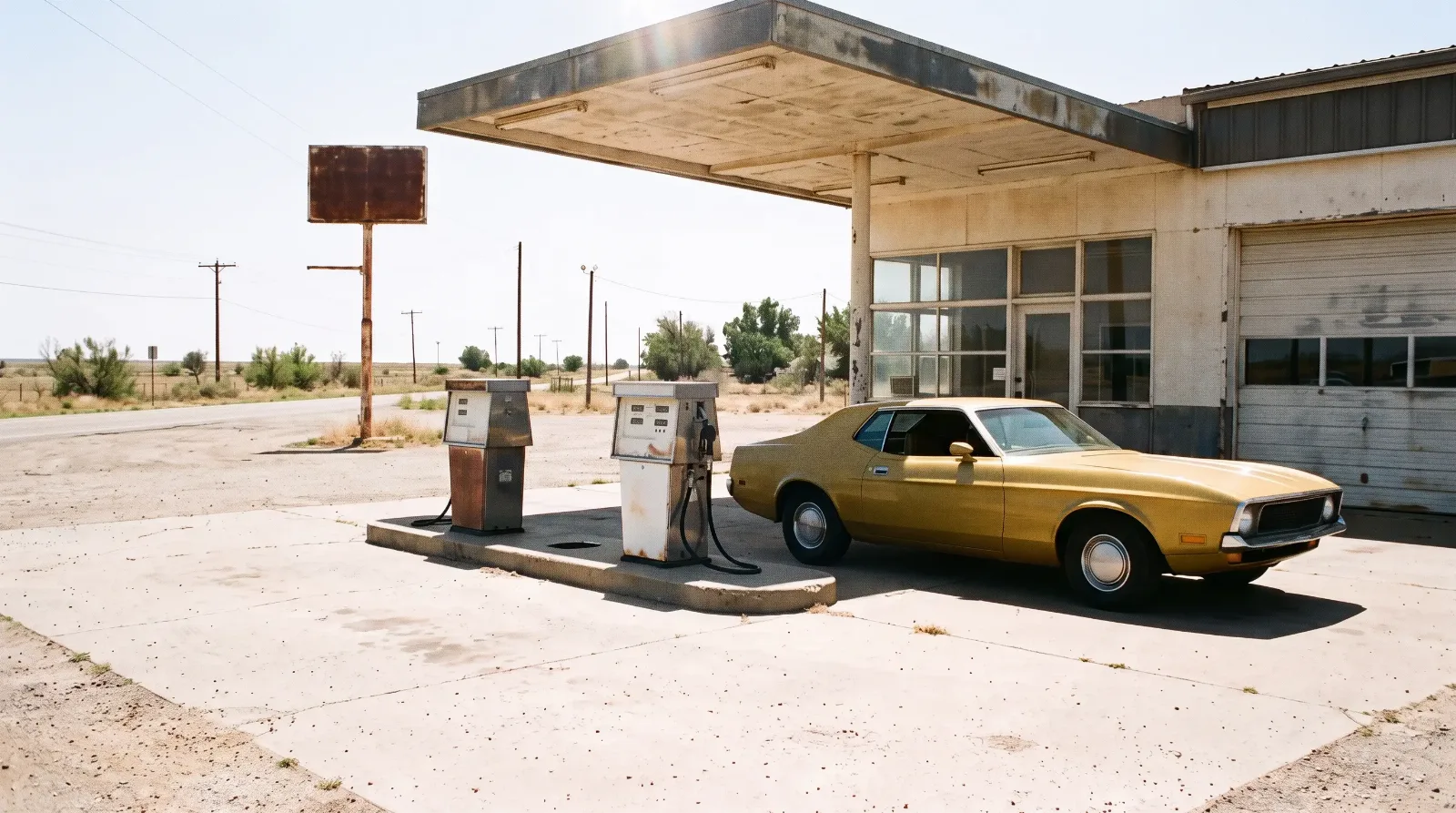
Where did the inches go? Stand next to one and it's obvious: a long hood and a long, nearly flat rear deck. The width went where Ford wanted it, around the engine. That is the one thing a wrench-turner can thank Knudsen for. Anybody who has fought spark plugs on a big-block 1967 will take the 1971 engine bay. The flat SportsRoof glass is another matter. Looking back through it is more of a suggestion than a view. The same big body carried the convertible, which got a standard power top and a one-piece glass rear window for 1971 to 1973, and 1973 was the last Mustang ragtop until 1983.
The market voted too. Production went from 299,824 in 1969 to 190,727 in 1970, then 149,678 in 1971 and 125,093 in 1972, before a small bounce to 134,867 in 1973. The slide had started before the big car showed up, so size is not the only culprit. But a bigger, heavier Mustang did nothing to stop it.
The numbers on paper fell harder still. For 1972 Ford switched to SAE net ratings: the 302 two-barrel went down as 140 hp and the 351 HO, now built in only 398 cars, as 275 hp. Those figures don't compare directly with the 1971 gross ratings. On a window sticker, though, they made a car that had just grown look like it had also gone soft. Fair or not.
"The 1971 car isn't a bad car. It's a good car built for an engine that got canceled. Judge it as a big, comfortable 351 cruiser and it makes sense. Judge it as a pony car and it never will."
Mike Sullivan
Buying one today
The upside of being the unloved one is simple. The big cars have never carried the glow of a 1969 or 1970, and to my eye that makes the ordinary 302 and 351 cars the sensible way into a first-generation Mustang. The 1971 Mach 1 with a 429 and the Boss 351 are a different conversation, and the paperwork on those needs a hard look.
Start browsing 1971 Mustangs with the table above in mind and you'll know what you are looking at. Ford's answer to the size problem came in 1974, and it was the most dramatic shrink in Mustang history. That is a different chapter, and if you want the whole road from 1964 to now, read the full story.
Sources and notes
Related Reading


Have a
Ford Mustang
for Sale?
Reach thousands of serious classic car collectors across the US.
Sell It Here →
Selling a classic? Here's how: the best sites to sell a classic car
Are You a Classic Car Dealer?
List your full inventory and connect with targeted classic car buyers.
Join as a Dealer →
#Ford Mustang
#first generation Mustang
#1971 Mustang
#429 Cobra Jet
#Boss 351
#Bunkie Knudsen
#Mustang dimensions

About the author
Mike Sullivan
Detroit-area muscle car enthusiast and restoration specialist with three decades of hands-on experience working on American iron.
Related Listings - Ford Mustang

Comments
Be the first to comment on this article.