
Cold air makes more power. That's the whole idea behind every scoop, cowl, and shaker the factories bolted onto muscle cars, and it's real physics, not marketing. Cooler air is denser air, denser air carries more oxygen, and more oxygen means you can burn more fuel and make more power. I've measured the difference on enough engines to tell you it's worth having. What confuses people is that every manufacturer had its own name and its own hardware for doing the same basic job.
Car Features
6 min read
Cold-Air Induction: Cowl, Ram Air, Shaker and Scoops
How muscle car cold-air induction worked: Chevy Cowl Induction, Pontiac Ram Air, Ford Shaker, Air Grabber and Ramcharger. Specs and buyer checks.
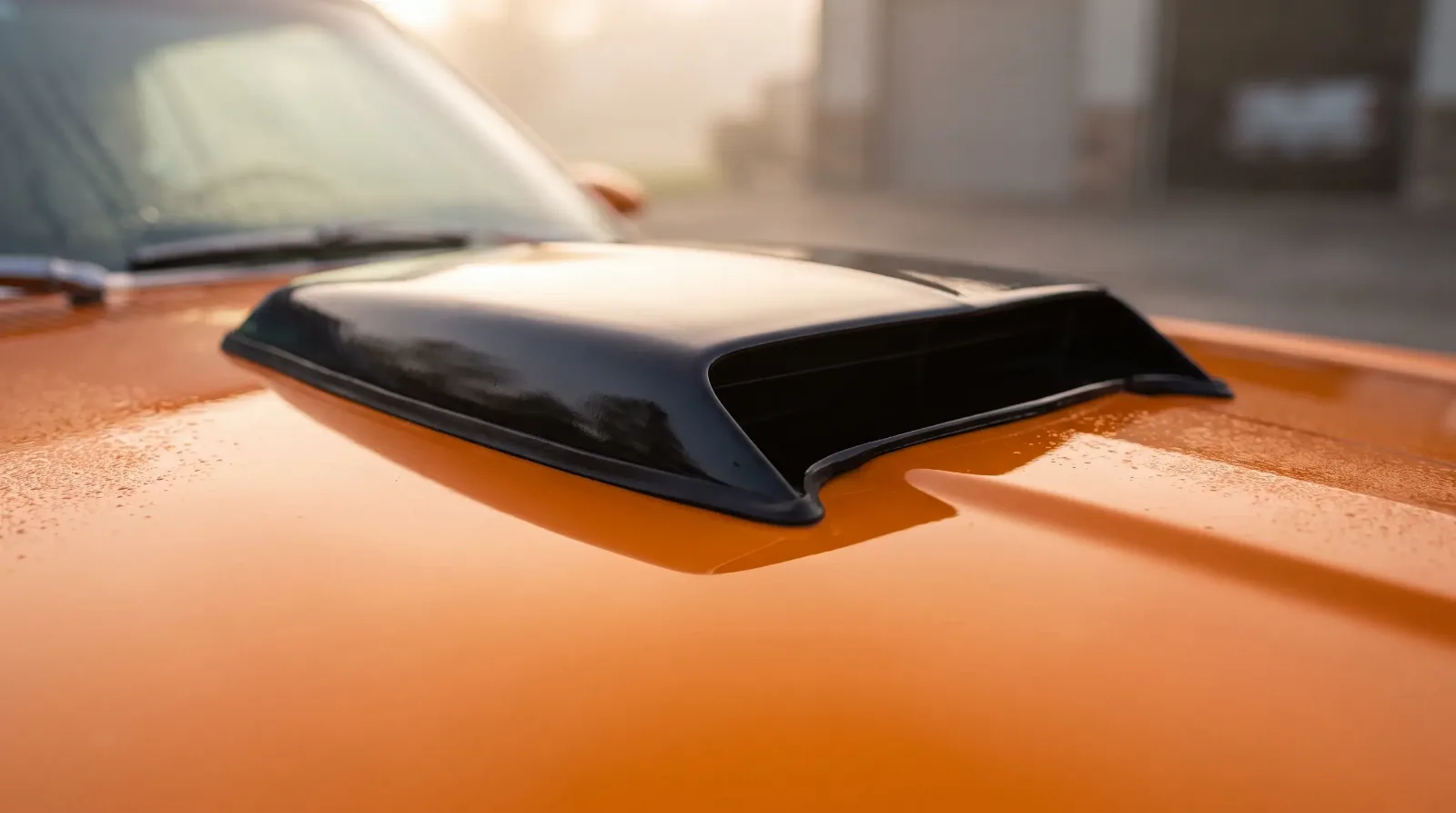
The trick every one of these systems pulls is grabbing air from somewhere cooler than the engine bay. Under the hood, air heats up fast and loses density, which costs you power on a hot day. Pull the intake charge from outside the engine bay, from the base of the windshield or through a hole in the hood, and you hand the engine a denser charge. A lot of it comes down to understanding muscle car engines and how they breathe, and induction is where a big part of that story lives.
Cowl induction, the Chevrolet way
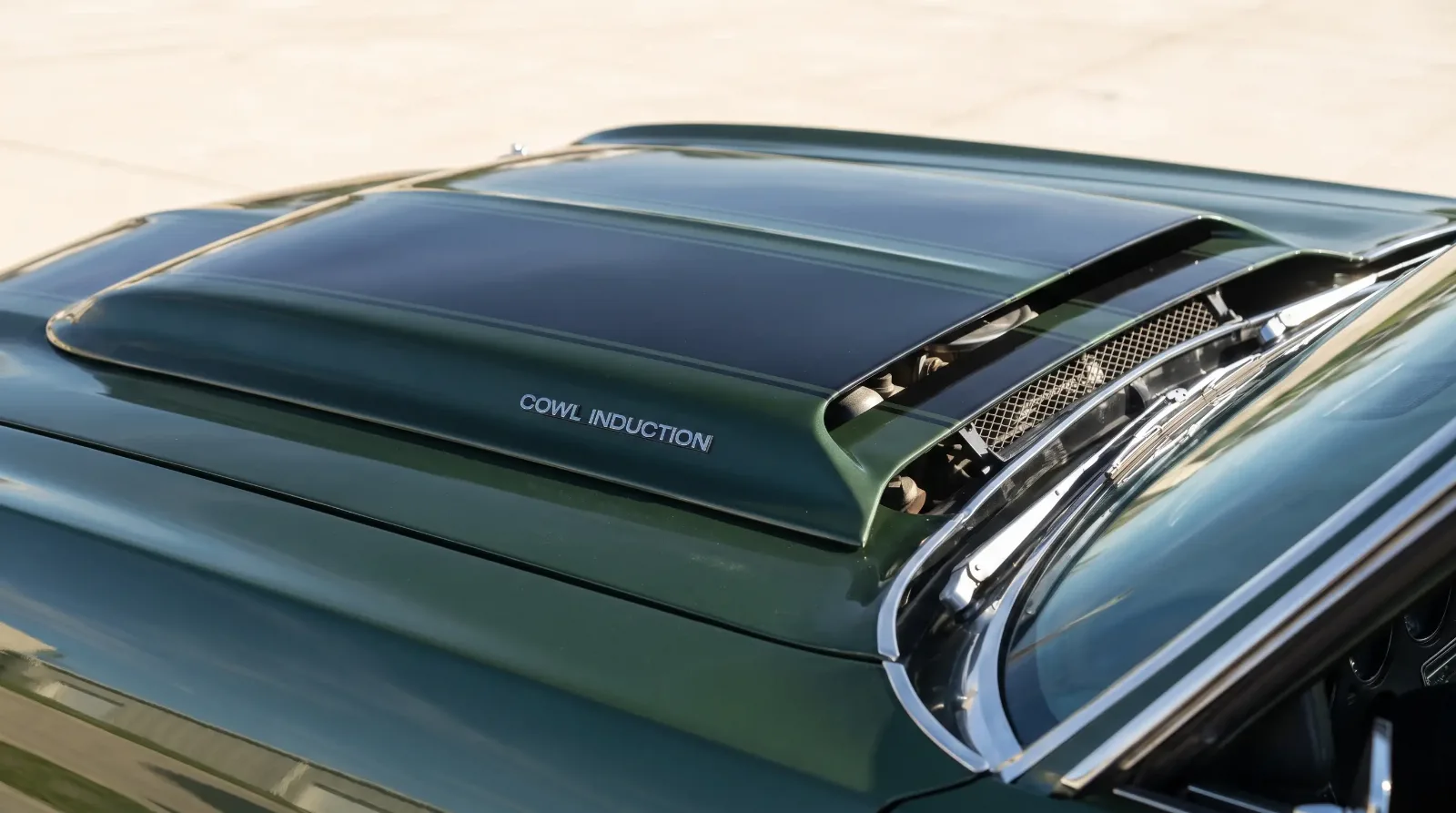
Chevrolet's answer was cowl induction, and it's a clever one. The base of the windshield sits in a high-pressure zone when the car is moving, and the air there is cooler than what's cooking under the hood. The cowl induction hood, the ZL2 on Chevelles and Camaros, has a rearward-facing opening near the back edge that feeds off exactly that spot. A flap opens at wide-open throttle and lets the cold air in.
What I like about cowl induction is that it's honest engineering. It isn't a scoop stuck on for looks. The high-pressure area at the cowl is genuinely there, the cooler air is genuinely denser, and the flap only opens when you're actually asking the engine for everything. The gains were modest, usually in the single digits of horsepower, but they were real and they cost nothing to run.
Ram Air, scoops, and the Pontiac approach
Pontiac called its functional-scoop system Ram Air, and the name became so famous that people use it as a catch-all. On a Pontiac, Ram Air meant hood scoops that fed outside air to the air cleaner, but the Ram Air packages were about more than the scoop. They usually came bundled with hotter cams, better heads, and freer exhaust, so the power increase attributed to Ram Air was often mostly the rest of the package doing the work.
That's the part buyers get wrong. A functional scoop by itself adds a little. A Ram Air package that includes the scoop plus the cam and heads adds a lot. When you're evaluating a car, figure out which one you're actually looking at, because the badge and the real hardware don't always match after fifty years and several owners.
| System | Maker | How it grabs air |
|---|---|---|
| Cowl Induction | Chevrolet | rearward hood opening at the cowl, flap opens at WOT |
| Ram Air | Pontiac / Ford | functional hood scoops feeding the air cleaner |
| Shaker | Ford / Mercury | scoop bolted to the air cleaner, pokes through the hood |
| Air Grabber | Plymouth | pop-up hood scoop, driver or throttle actuated |
| Ramcharger | Dodge | twin hood scoops feeding a sealed air cleaner |
The Shaker and the Mopar scoops
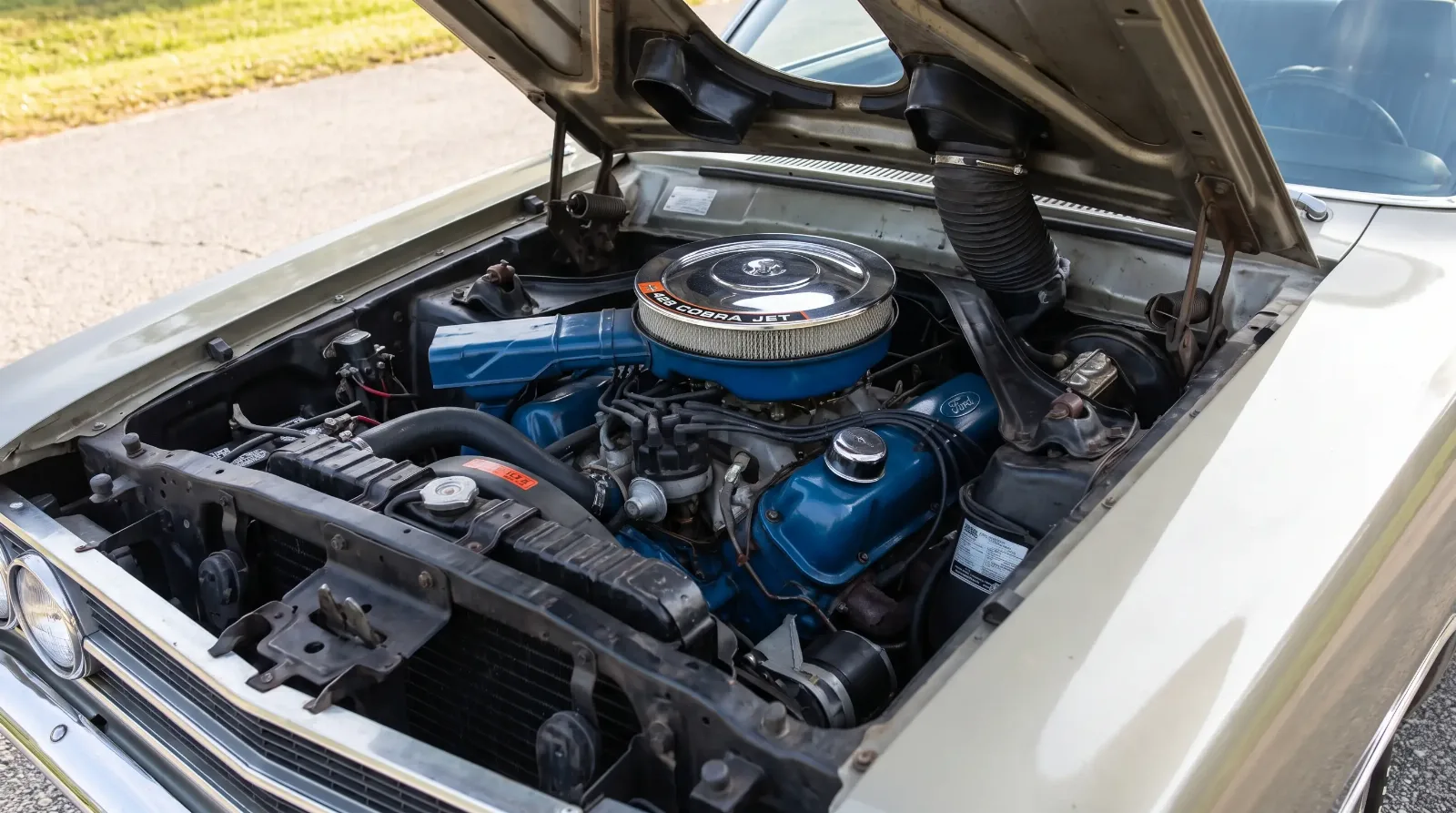
Ford's Shaker is the one everybody remembers, because you can watch it work. The scoop bolts directly to the air cleaner instead of the hood, and it sticks up through a hole in the hood. Since it's mounted to the engine, it shakes and jumps with every blip of the throttle, which is where the name comes from. It fed cold air the same as any other scoop, but it did it with a show.
Chrysler ran two named systems. Plymouth's Air Grabber used a pop-up scoop that opened to reveal cold air, and Dodge's version was the Ramcharger with twin hood scoops feeding a sealed air cleaner. Both did the same job as everyone else's setup, sealing the air cleaner to the hood so the engine drew only outside air instead of hot underhood air. The pop-up Air Grabber even gave the driver a lever to raise it on demand, which was as much theater as it was function, but the sealing and the cold-air path underneath were the real work.
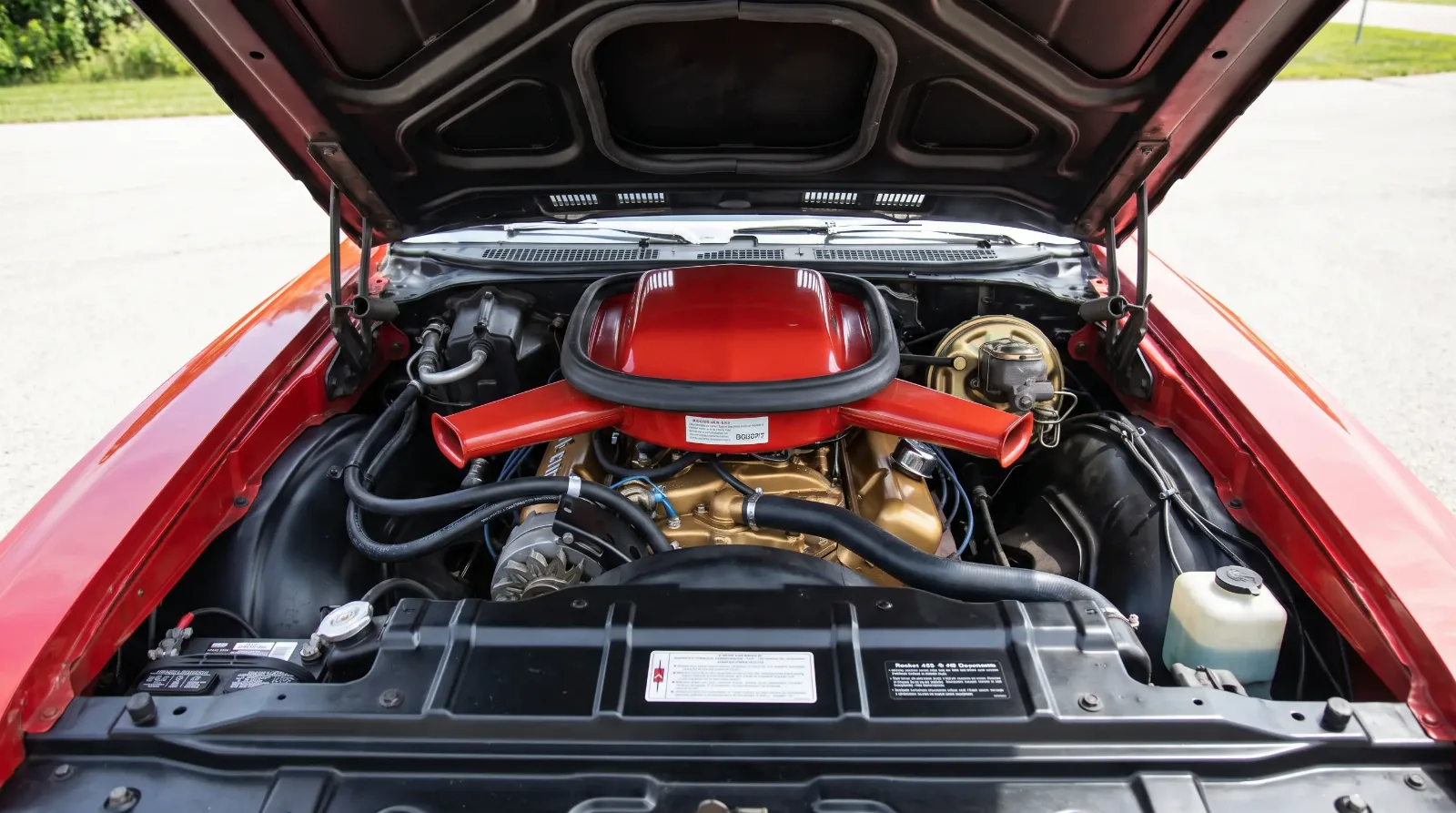
The common thread across every brand is the seal. A scoop that points into cold air does nothing if the air cleaner underneath it still breathes hot underhood air through a gap. The systems that worked, whatever the badge on the hood, all closed off the engine bay and forced the intake to draw only from outside. That sealing hardware is exactly what tends to go missing over the decades, which is why a complete original setup is worth confirming piece by piece.
What buyers need to check
Here's the blunt truth about these systems. A lot of them have been faked, un-faked, and re-faked over the decades, because a functional scoop adds value and the parts are reproduced. The question isn't whether the scoop is there. The question is whether it's functional, whether it's correct for the car, and whether the sealing hardware and flapper mechanism are complete.
"A scoop that doesn't actually feed the engine is a hood ornament. I've seen plenty of cars with a nice-looking Ram Air setup where the flapper was disconnected and the air cleaner wasn't sealed to anything. Follow the ductwork and make sure the cold air has a path all the way in."
Mike Sullivan
Cold-air induction was one of the smartest cheap tricks the factories had, and it mattered most on the biggest engines that were already breathing hard. If you want to understand which engines benefited most and why, you can read the full story on big-block versus small-block muscle. Some of the most extreme induction work went onto the race-homologation engines, and the wildest of them all is covered by the the boss 429 fords nascar hemi killer story.
Related Reading
Have a
Classic Car
for Sale?
Reach thousands of serious classic car collectors across the US.
Sell It Here →
Are You a Classic Car Dealer?
List your full inventory and connect with targeted classic car buyers.
Join as a Dealer →

About the author
Mike Sullivan
Detroit-area muscle car enthusiast and restoration specialist with three decades of hands-on experience working on American iron.




Comments
Be the first to comment on this article.