
Ford's big-block history splits cleanly into two chapters, and knowing where the line falls saves a lot of confusion. The first chapter is the FE, an engine family that ran from the late 1950s into the 1970s and gave Ford its famous 427 and 428. The second is the 385-series, the taller, more modern design that replaced it with the 429 and 460. These are the two families that anchor any study of Muscle Car Engines from Dearborn, and they answer very different questions.
Car Features
5 min read
Ford FE and 385-Series Big-Blocks
Ford's two big-block families: the FE 390, 427 and 428, and the 385-series 429 and 460. Specs, history, and how to tell them apart.
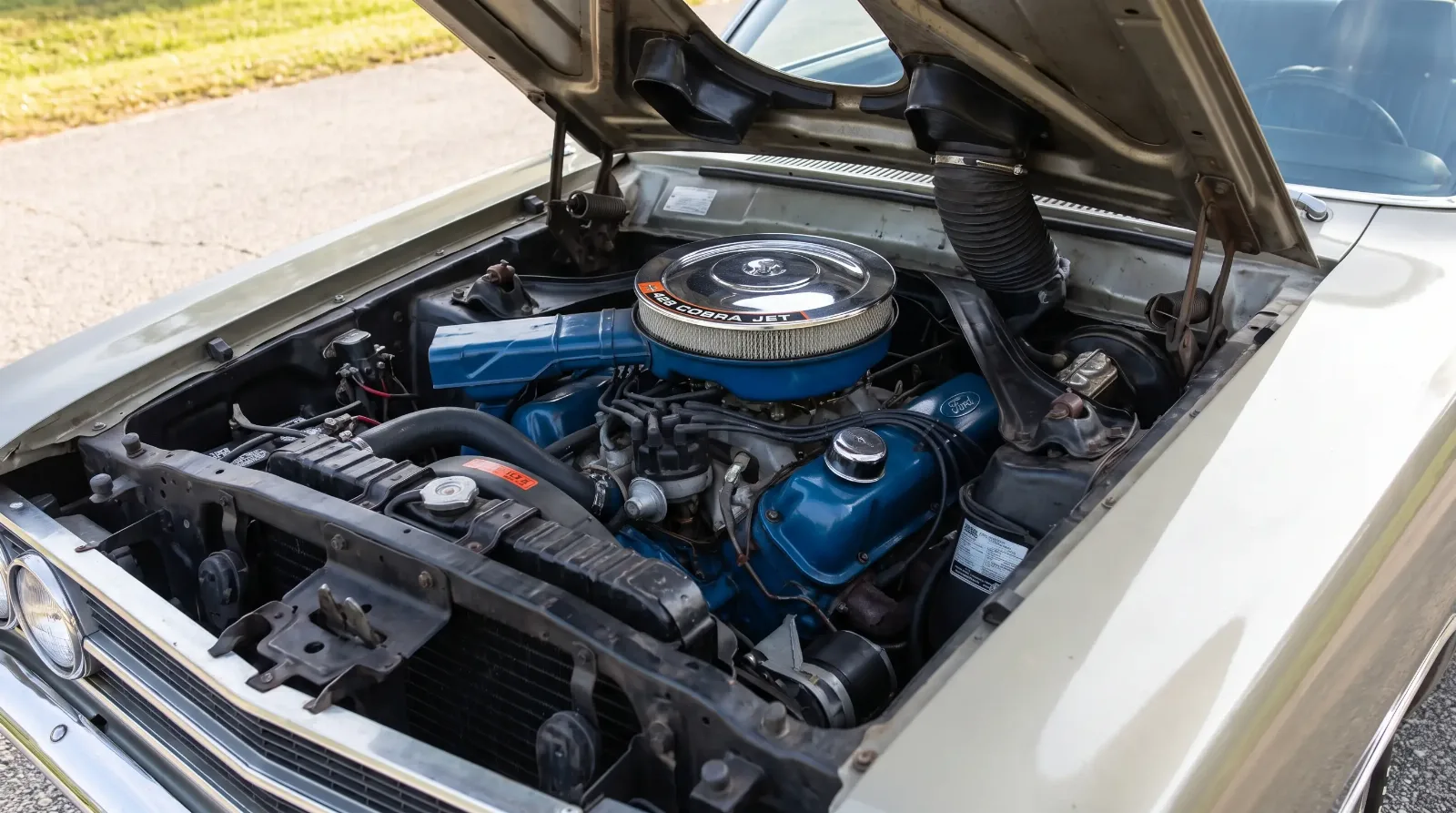
The FE and the 385 were never the same engine with a bigger bore. They were separate architectures built years apart, and the switch from one to the other tells you a lot about where Ford was heading at the end of the muscle era. Get the two families straight and the whole Ford big-block picture comes into focus.
The FE family and its legends
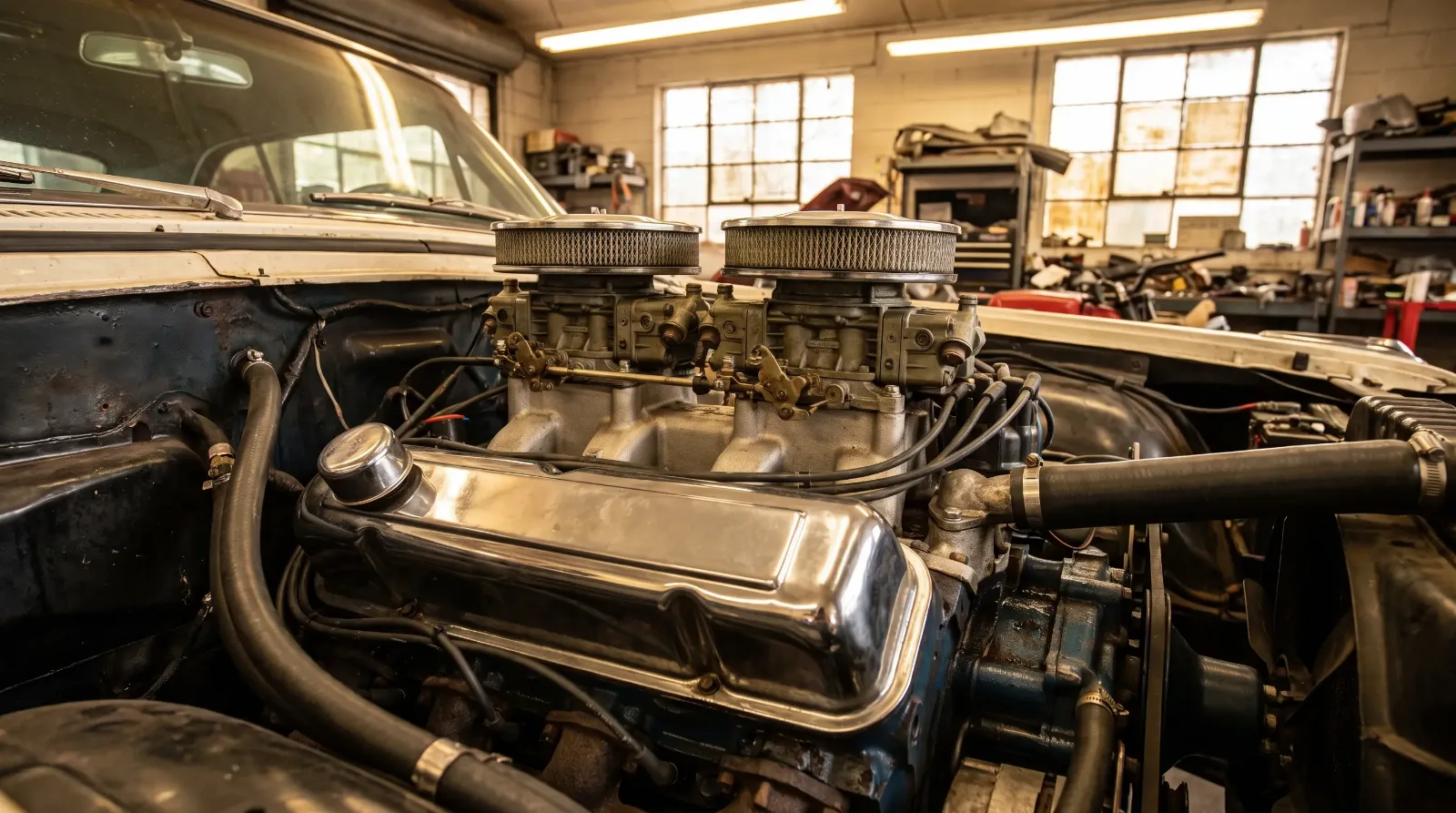
FE stands for Ford-Edsel, a nod to the divisions the engine was designed to serve when it launched in 1958. The family included the 332, 352, 390, 406, 427, and 428 across its life. The 390 was the volume engine, appearing in everything from full-size Fords to the GT-badged cars, and in performance tune it was rated around 335 horsepower. It was a good street engine that got overshadowed by its bigger brothers.
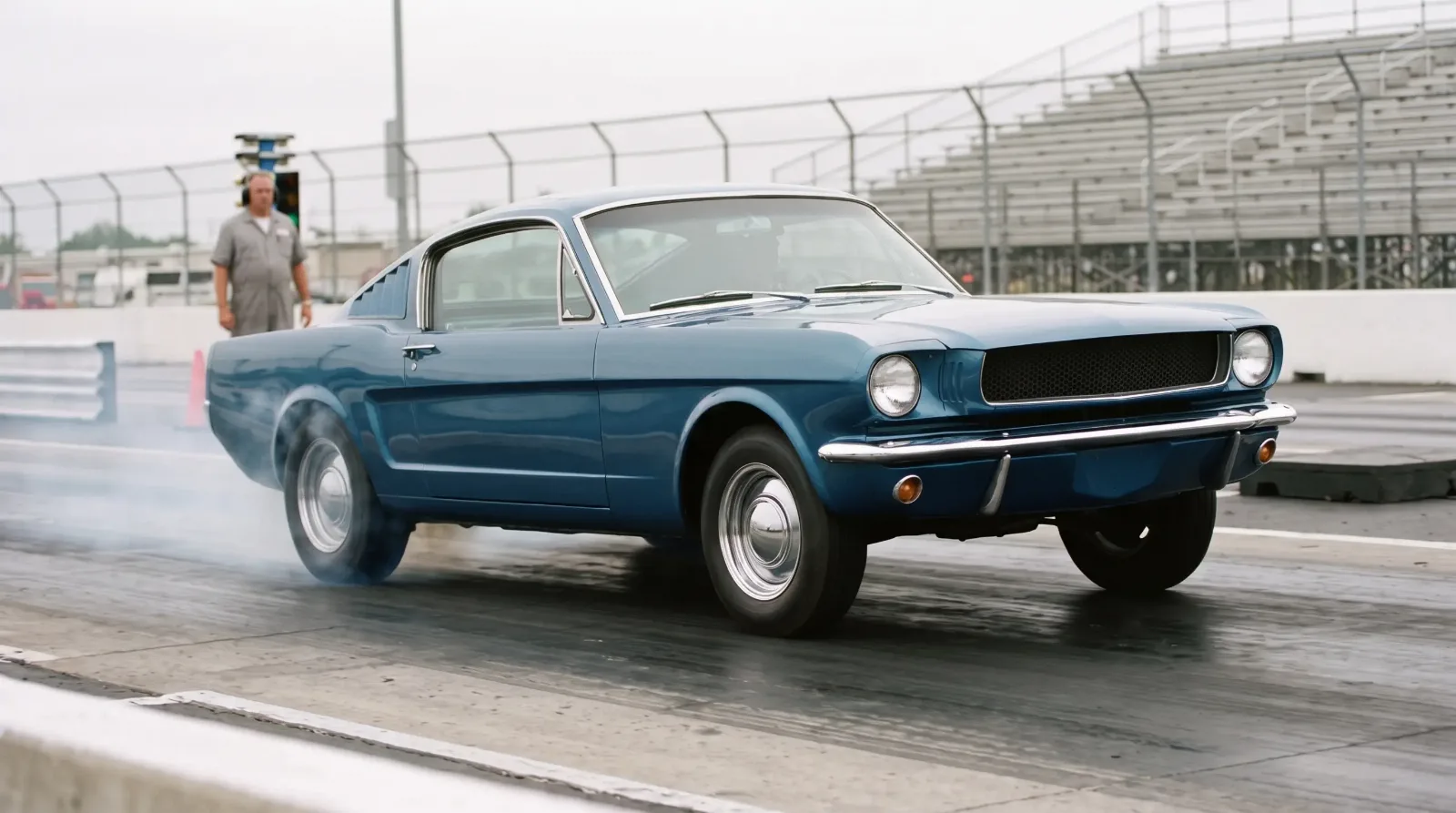
The 427 is the FE that built the reputation. It was a race-bred engine, offered with a side-oiler block that improved lubrication to the main bearings under sustained high load, and in dual-quad form it was rated around 425 horsepower. This is the engine tied to Ford's assault on Le Mans and the drag strip. The 428 came later as a torquier, more streetable big inch, and in Cobra Jet form it became one of the most underrated engines of the era. Its 335-horsepower rating was widely believed to be conservative, a claim examined by the the 428 cobra jet drag strip legend story.
One thing that separates the FE from most rivals is how many jobs it did. The same basic family powered economy full-size sedans, medium-duty trucks, and a Le Mans-winning race program, with only internal parts and tuning setting them apart. That breadth is why FE casting numbers matter so much. A 390 truck block and a 390 GT block can look similar at a glance, yet they were never built for the same duty, and the buyer who assumes they are interchangeable learns an expensive lesson. The performance versions used stronger cranks, better heads, and bigger valves, and confirming those pieces is the only way to know what you actually have.
| Engine | Family | Era | Notable rating |
|---|---|---|---|
| 390 | FE | 1961 on | around 335 hp (GT, gross) |
| 427 | FE | 1963 to 1968 | around 410 to 425 hp (gross) |
| 428 Cobra Jet | FE | 1968 on | 335 hp (gross, widely seen as underrated) |
| 429 | 385-series | 1968 on | Cobra Jet around 370 hp (gross) |
| 460 | 385-series | 1968 on | varies by application |
The 385-series takes over
The 385-series arrived for 1968 and got its name from the 3.85-inch stroke of the 460. It was a cleaner design than the FE, with a taller deck and a thin-wall block, and it was built to carry Ford into the 1970s. The two displacements were the 429 and the 460. The 429 was the performance-oriented member of the pair during the muscle years, and in Cobra Jet and Super Cobra Jet tune it was rated around 370 horsepower.
Then there's the Boss 429, which is a 385-series block wearing a set of enormous semi-hemispherical heads that Ford developed to homologate the engine for NASCAR. It's technically part of this family, but it's so specialized that it stands almost on its own. The standard 429 and 460 are the engines that did the everyday work, and the 460 in particular soldiered on for years in trucks and full-size cars long after the muscle era ended.
Telling the two families apart
The easiest tell is the era and the car. If you're looking at a mid-1960s Galaxie, Fairlane, or early Mustang with a big block, you're almost certainly dealing with an FE. If it's a 1970s full-size Ford or a late Torino, the 385-series is far more likely. Beyond that, the FE has a distinctive appearance with its intake and valve covers, while the 385 looks more like the modern V8s that followed it.
"People mix these up all the time, and I understand why, but the records make it simple. An FE and a 385 were built for different jobs in different years. The casting numbers will tell you exactly which one you have, and they don't lie the way a fender emblem does."
Tom Ramirez
For authentication, casting numbers and date codes are the primary sources, the same as any period engine. FE parts and 385-series parts do not interchange, so a rebuild or a numbers-matching claim has to respect the family line. Confirm which engine you have before you buy parts, plan a restoration, or accept a seller's story. A seller who cannot point to the casting number and the date code is a seller telling you a story, and stories are not documentation.
Why both families still matter
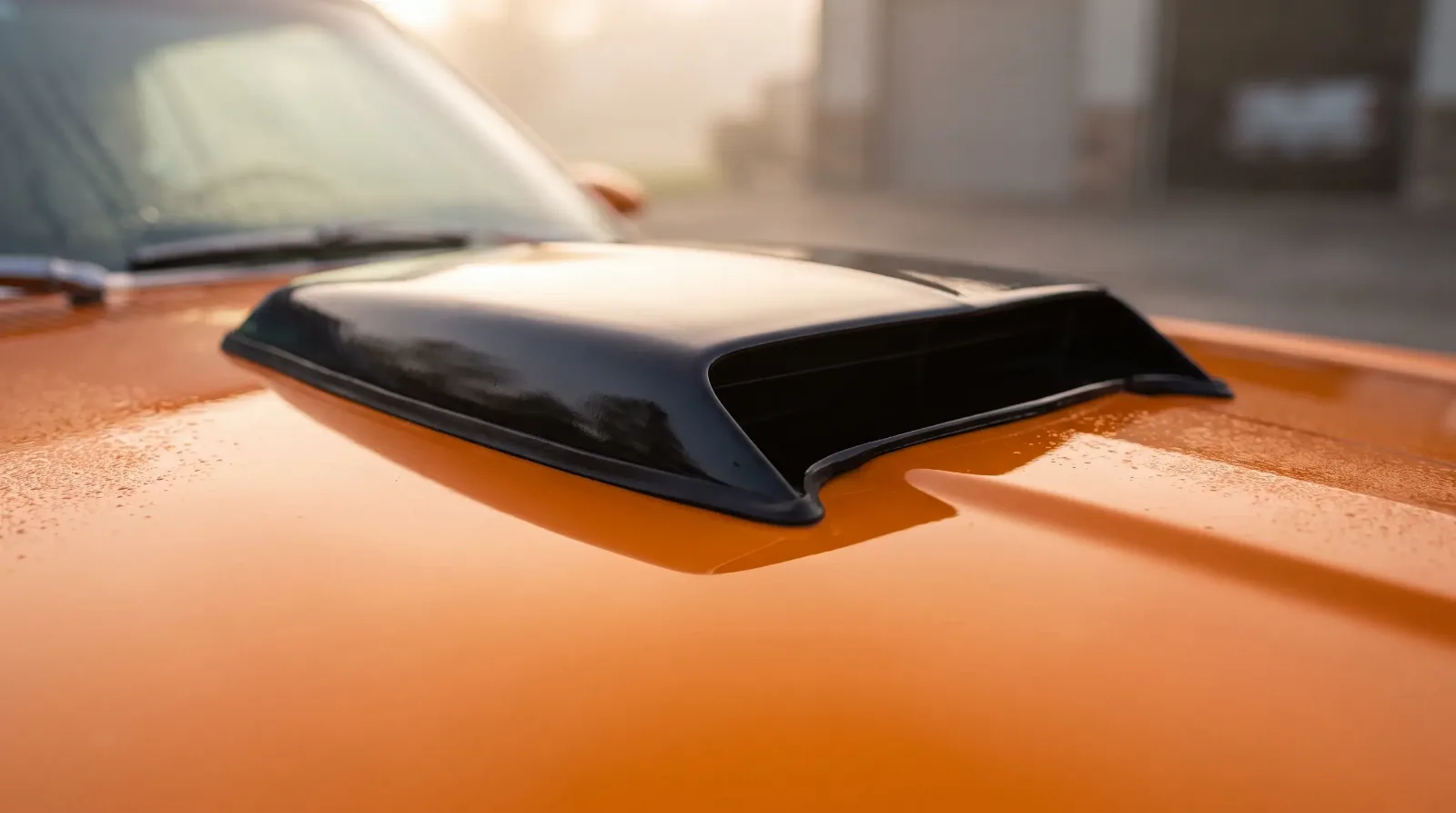
The FE gave Ford its motorsport credibility and its most collectible street engines, and the 385-series gave it a modern big block that outlived the muscle era by decades. Together they cover the full arc of Ford performance from Le Mans to the emissions years. Many of these engines wore functional hood scoops and cold-air setups that added their own layer of complexity, and if you want to understand how those systems worked you can read the full story on cold-air induction. Between the induction hardware and the two-family split, the Ford big block rewards the buyer who does the homework.
Related Reading
Have a
Classic Car
for Sale?
Reach thousands of serious classic car collectors across the US.
Sell It Here →
Are You a Classic Car Dealer?
List your full inventory and connect with targeted classic car buyers.
Join as a Dealer →

About the author
Tom Ramirez
Corvette researcher and historian based in Bowling Green, Kentucky. Two decades documenting Corvette production history from original factory records.
Comments
Be the first to comment on this article.