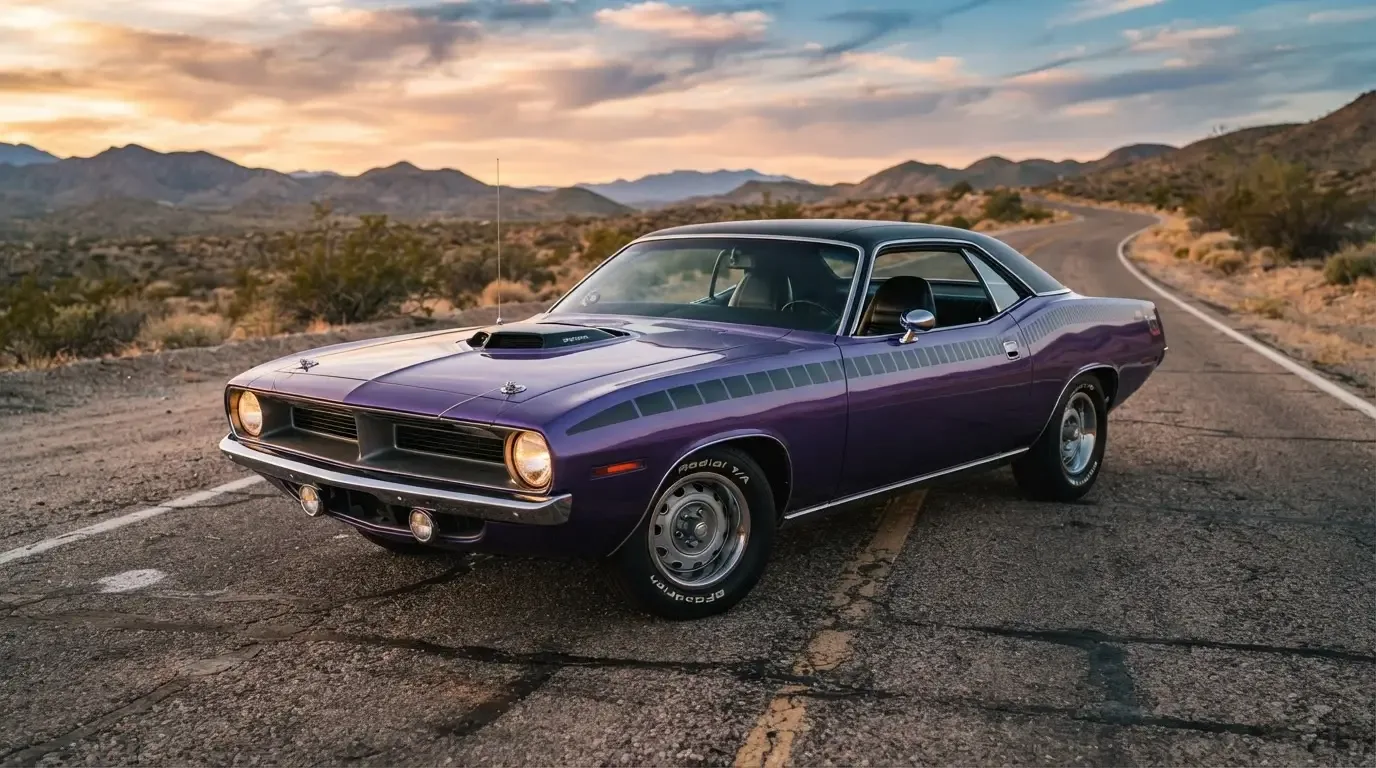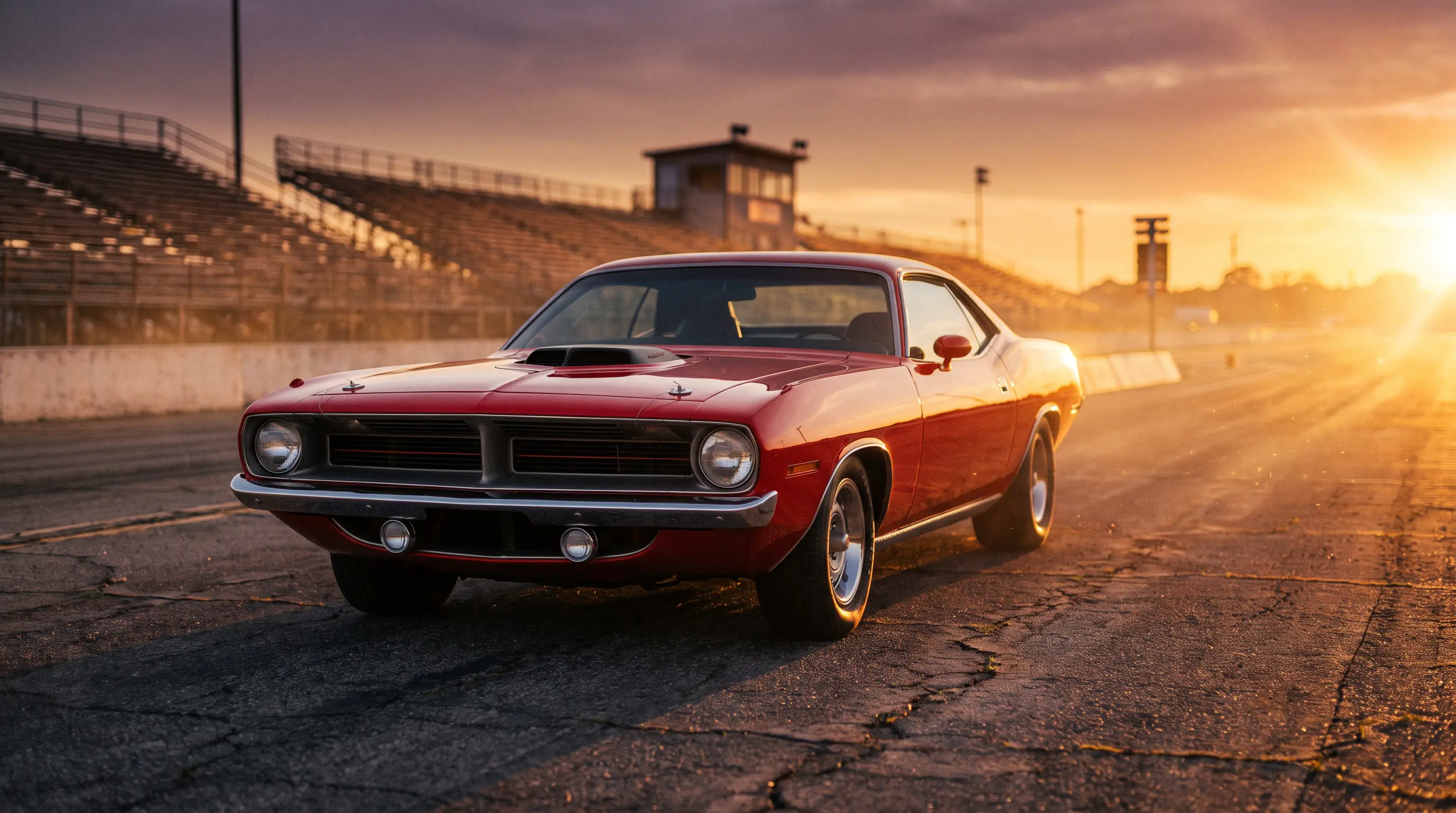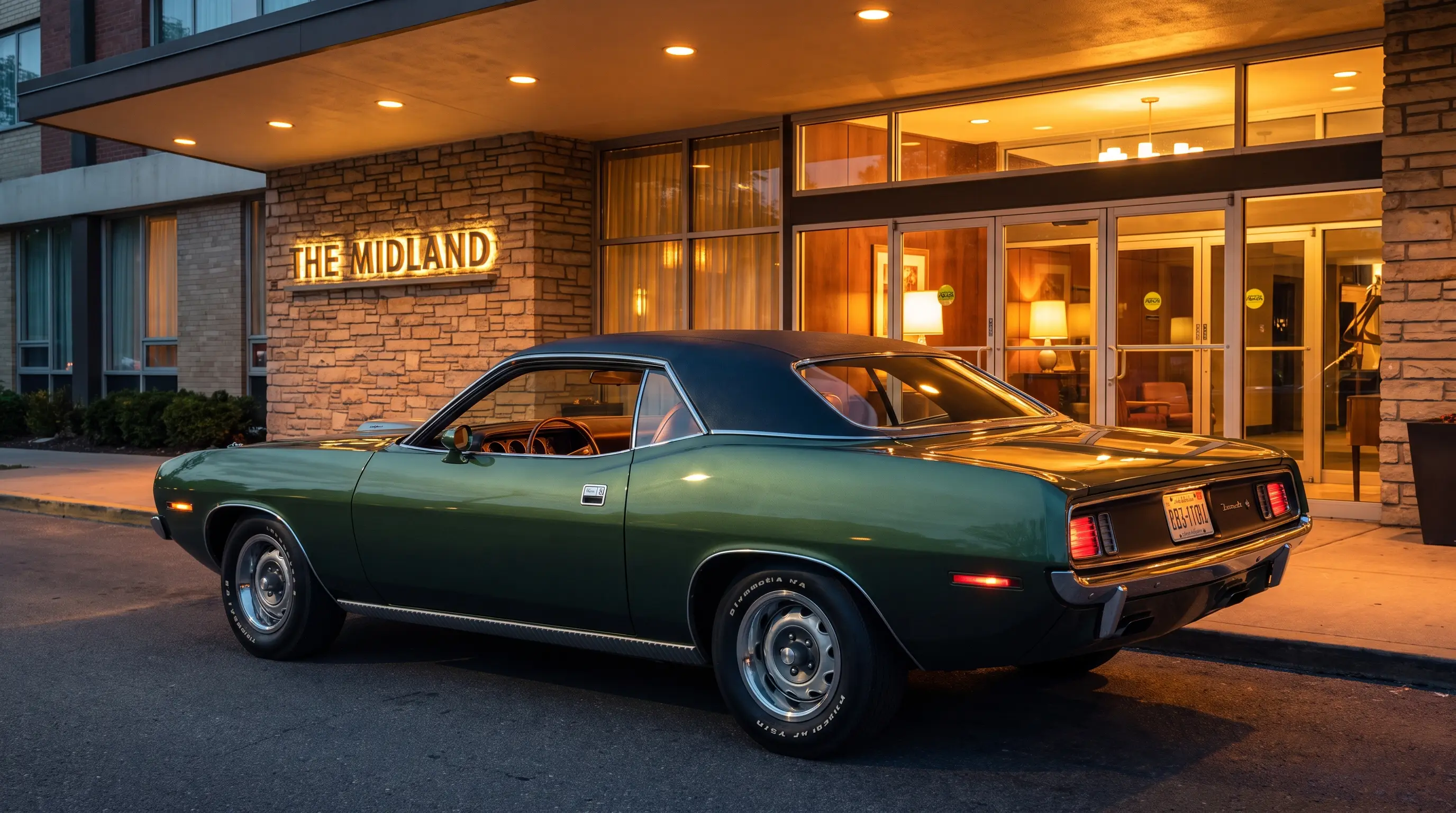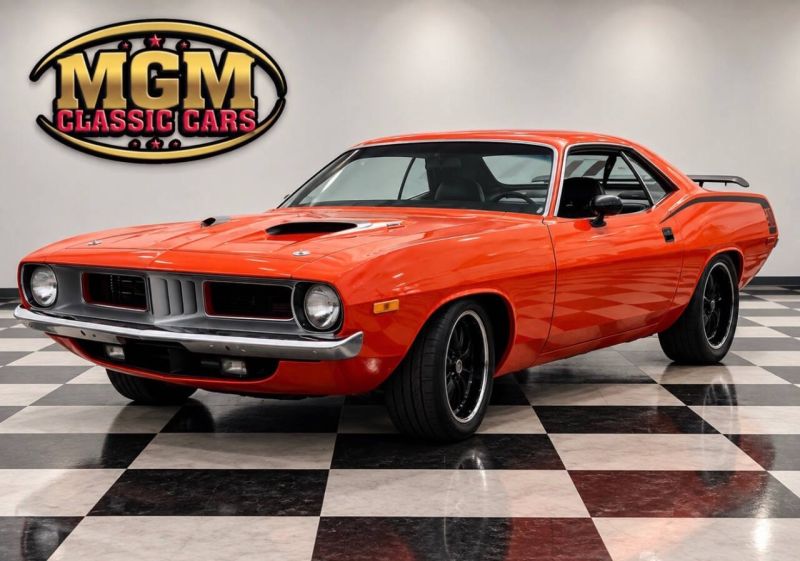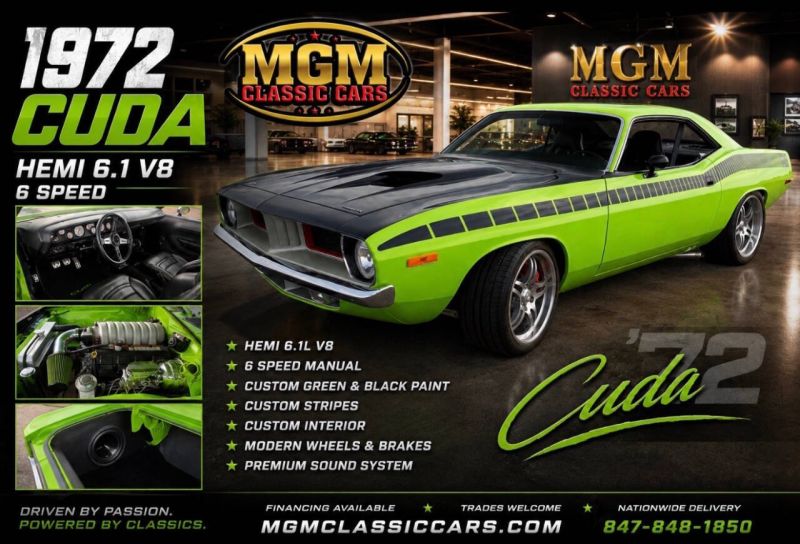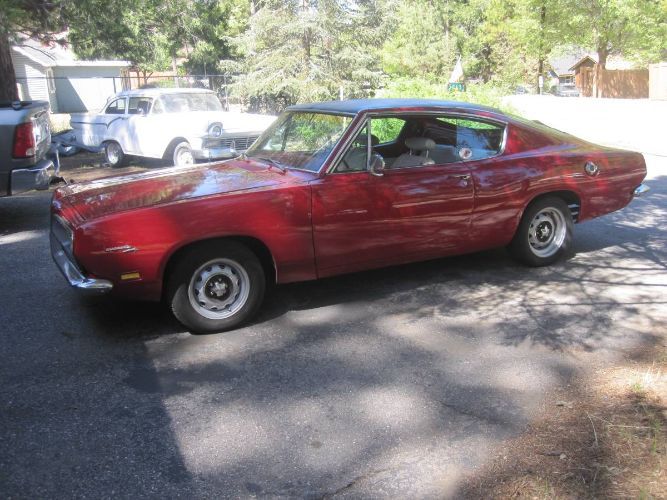
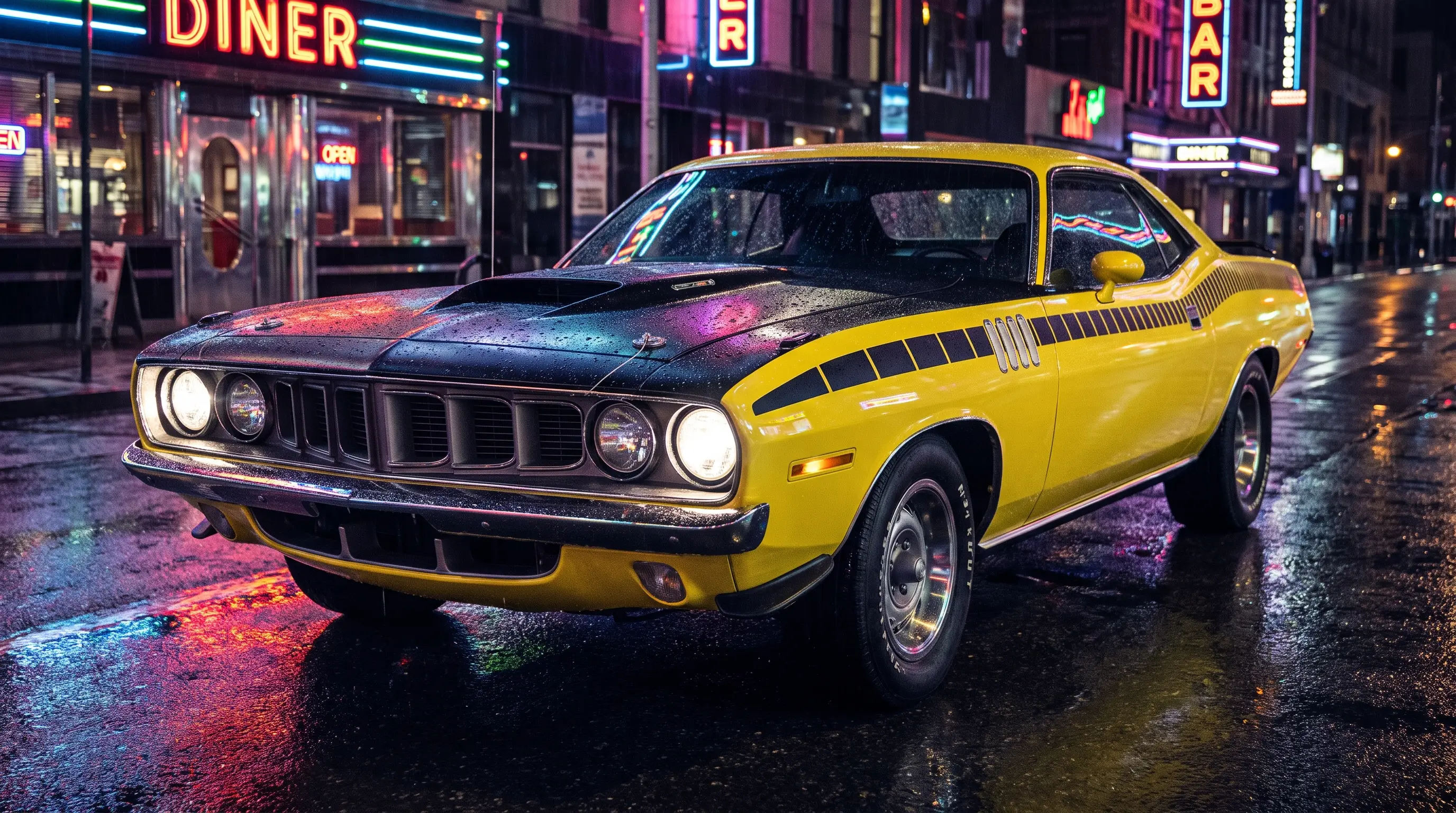
The 440 Cuda is where Plymouth stopped being subtle. Between the standard four-barrel 440 and the triple-carbureted 440 Six Barrel, this engine turned the Barracuda from a good handling small block car into something closer to a straight-line weapon, and it did so by stuffing as much displacement and induction as reasonably possible under a hood that was never designed with a big block in mind to begin with.
Plymouth positioned the 440 as the practical alternative to the 426 Hemi, a way to get most of the big block drama without the Hemi's reputation for finicky tuning and its considerably higher price tag. That positioning worked. The 440 became the engine of choice for buyers who wanted genuine muscle car credibility without committing to the Hemi's maintenance demands, and it remains one of the most requested big block configurations among collectors today for exactly the same reasons.
An engine that barely fit and did not care
Squeezing the 440 into the E-body's engine bay required real engineering effort, since the Barracuda's chassis was not originally drawn around a big block at all. Plymouth's engineers reworked the front frame rails and shock towers to make the fit work, and the result was a genuinely tight engine bay where routine service tasks became noticeably harder than on a small block car. None of that mattered to buyers standing in a showroom looking at the horsepower figures, and it still does not matter much to owners today who accept the tradeoff for what the engine delivers.
Standard 440 four-barrel output landed at 375 horsepower, a number that alone put the Cuda solidly in the top tier of period muscle cars before the Six Barrel version even entered the conversation.
The Six Barrel changes the conversation entirely
Plymouth's 440 Six Barrel used three two-barrel carburetors instead of the standard single four-barrel, and it pushed output to 390 horsepower, though the more meaningful gain was in throttle response and mid-range pull rather than peak numbers alone. The center carburetor handled normal driving duty while the two outer units opened under harder throttle, giving the car genuine tractability around town and a serious surge once the driver committed to the throttle. It is one of the more theatrical induction setups Detroit ever put into regular production, and it remains one of the most requested configurations among collectors specifically chasing the big block Cuda experience.
How it compares against the rest of the lineup
The gap between the standard 440 and the Six Barrel version was not just a matter of a handful of extra horsepower on paper. Owners who drove both back to back consistently described the Six Barrel as feeling noticeably stronger through the midrange, the point where the two outer carburetors came into play under harder acceleration, even when the peak output difference between the two configurations looked modest on a spec sheet. That subjective gap is a large part of why the Six Barrel commands such a strong following today, since the number alone understates how different the two engines actually feel from behind the wheel.
Against the 383, the 440 offers a clear step up in outright output and a noticeably different character under load, trading some of the smaller engine's easy livability for outright shove. Against the Hemi, the 440 gives up peak horsepower and mystique but costs meaningfully less to buy, insure, and maintain, which made it the more practical choice for period buyers who wanted big block performance without the Hemi's premium and its notoriously particular tuning requirements. Readers wanting the full context on how the 440 fit alongside the other engines Plymouth offered in these years should read the background on the complete Cuda engine lineup.
| Spec | 440 Four-Barrel | 440 Six Barrel |
|---|---|---|
| Rated output | 375 hp | 390 hp |
| Induction | Single four-barrel carburetor | Three two-barrel carburetors |
| Character | Strong, linear power | Mild around town, aggressive under load |
Living with a big block Cuda day to day
Owning a 440 Cuda meant accepting a different set of compromises than a small block owner faced. The tight engine bay made routine maintenance more time-consuming, spark plug access on certain cylinders required real patience, and the added front weight meant brakes and suspension components wore faster than on a 340 car covering the same mileage. None of that discouraged period buyers, and it does not discourage collectors today either, since the tradeoff for that extra weight and complexity is a driving experience the smaller engines simply cannot replicate. The 440's exhaust note alone, deep and unmistakable even at idle, was enough to justify the extra effort for plenty of owners who never once complained about the harder-to-reach spark plugs.
What buyers should know before chasing one today
Documented 440 Cudas, particularly Six Barrel cars, command real premiums at auction, and the market has only grown more particular about verifying originality as prices have climbed. Numbers-matching engines, correct carburetion setups, and factory-original induction hardware separate a genuinely valuable example from a car that has been upgraded or modified to look the part without the paperwork to back it up. Buyers should expect to pay for that documentation and should treat any 440 Six Barrel car lacking clear provenance with appropriate caution rather than taking a seller's word for it.
For anyone shopping this segment specifically, it is worth taking the time to find a classic Barracuda and compare documented big block cars against their asking prices before committing to a purchase.
"The 440 was never subtle, and the Six Barrel version is the least subtle version of an already unsubtle engine. That is exactly why people still want one."
- Emily Chen
Sorting original cars from later builds
The 440's popularity as a swap target means plenty of Cudas on the market today wear a 440 that did not come from the factory in that particular car. Verifying originality starts with the fender tag's engine code, cross-referenced against the block's casting number and date code, and extends to confirming the correct carburetor configuration for whichever variant, standard four-barrel or Six Barrel, the car is claimed to have. Six Barrel cars in particular attract close scrutiny, since the triple-carburetor setup can be replicated on a standard 440 block relatively easily, making a genuine factory Six Barrel car meaningfully more valuable than a well-executed later conversion that looks correct but lacks the original documentation.
The lasting appeal
What keeps the 440 relevant decades later is not just the horsepower figure, which plenty of modern engines exceed without effort. It is the specific character of a big, torquey engine crammed into a chassis that was not originally built around it, running through an induction system as theatrical as the Six Barrel setup. That combination of raw output and mechanical drama is exactly what period buyers wanted, and it remains exactly what serious collectors continue to chase today.
A 440 Cuda was never meant to be subtle, and nothing about how it drives, sounds, or gets discussed at a show has softened that fact over the decades. That is the whole point of the engine, and it is exactly why it still draws a crowd every time one rolls onto a show field.