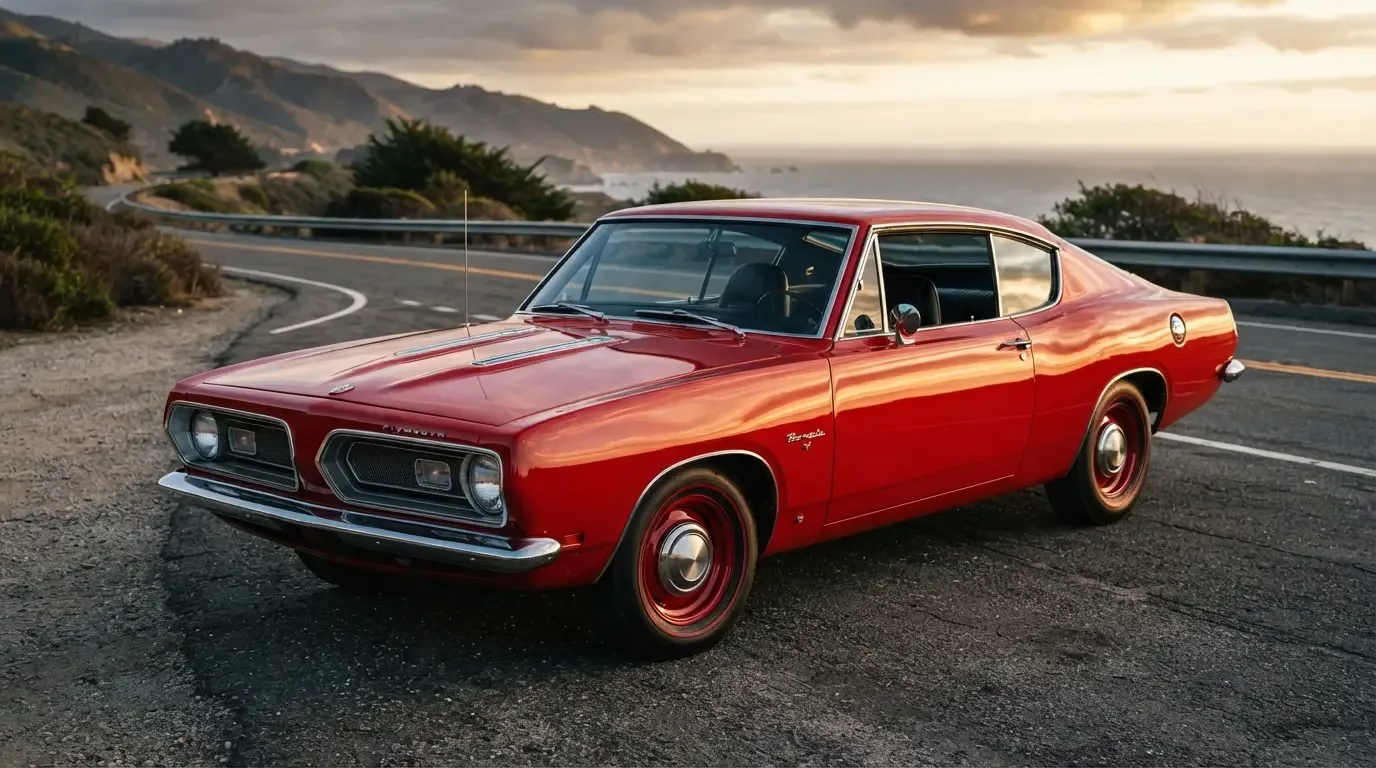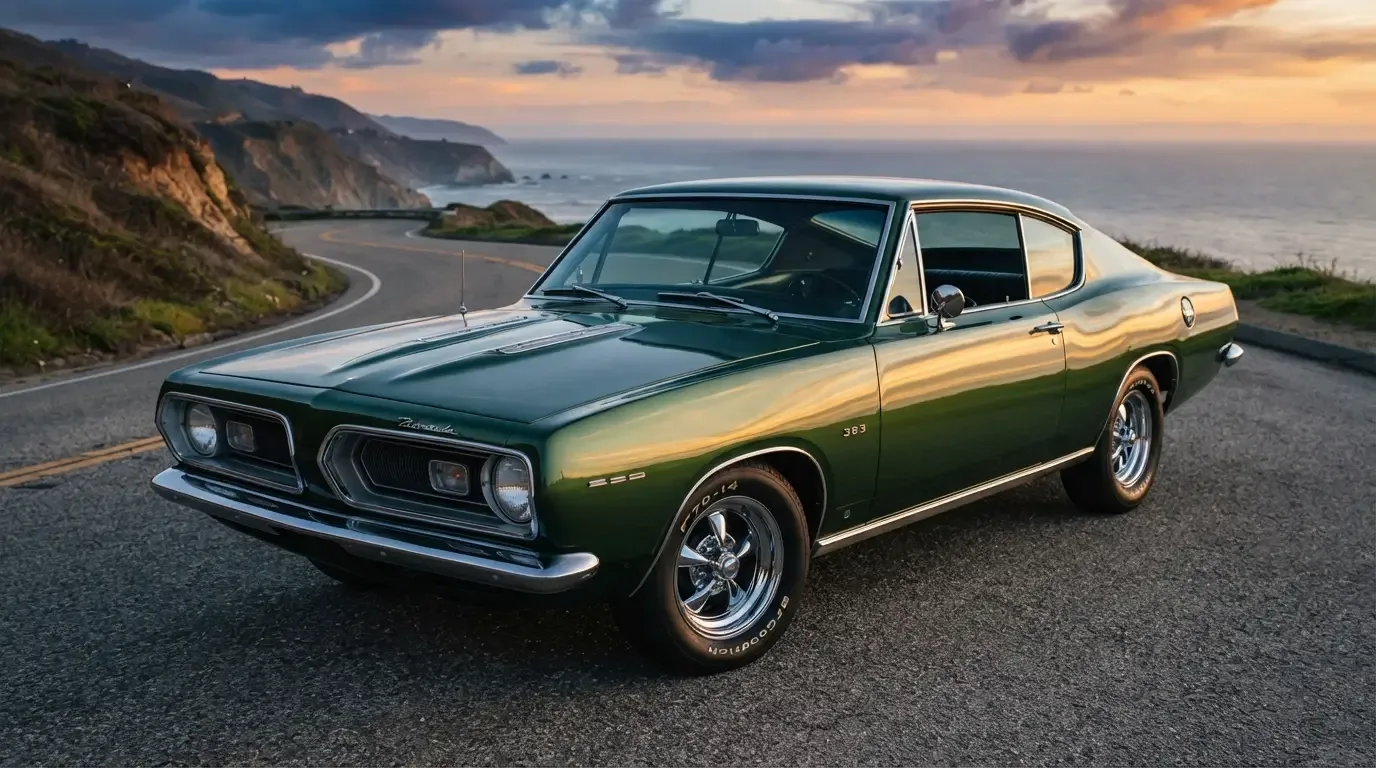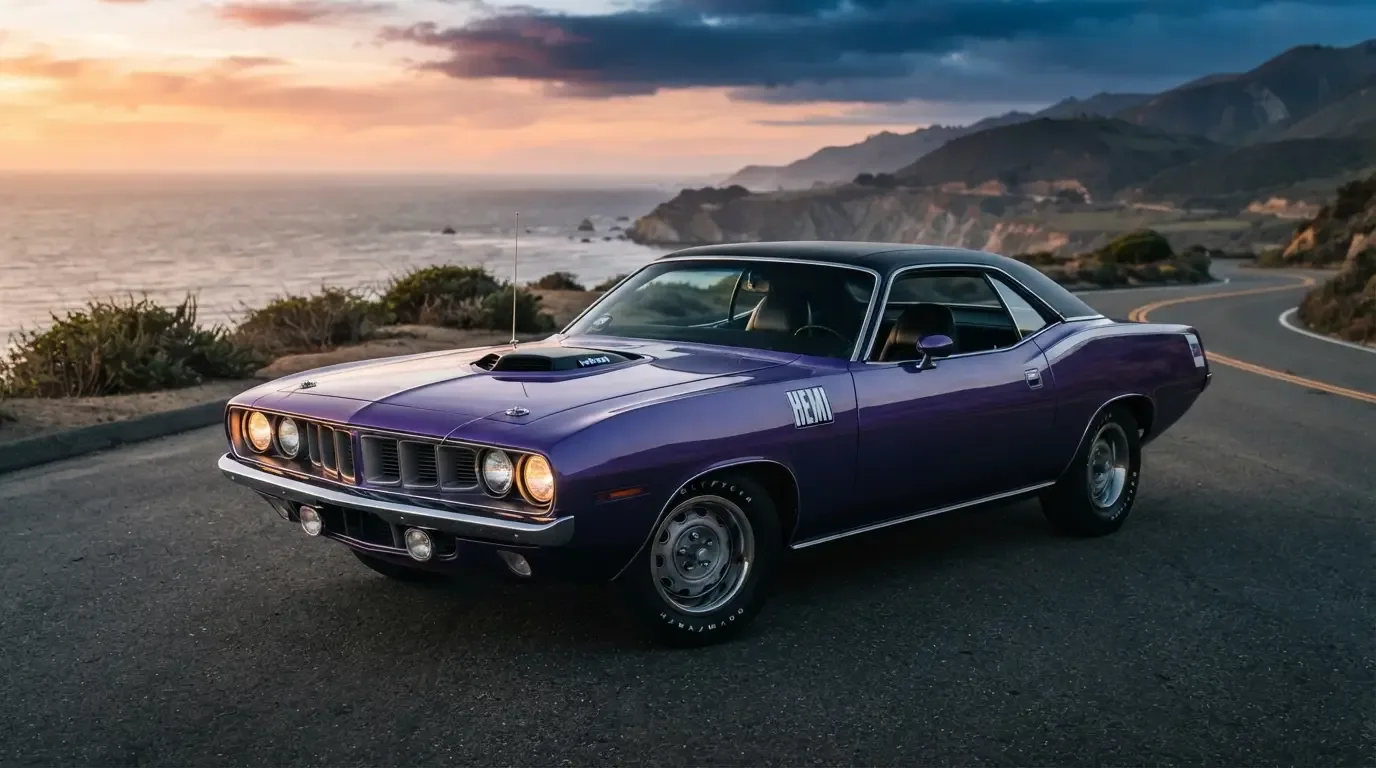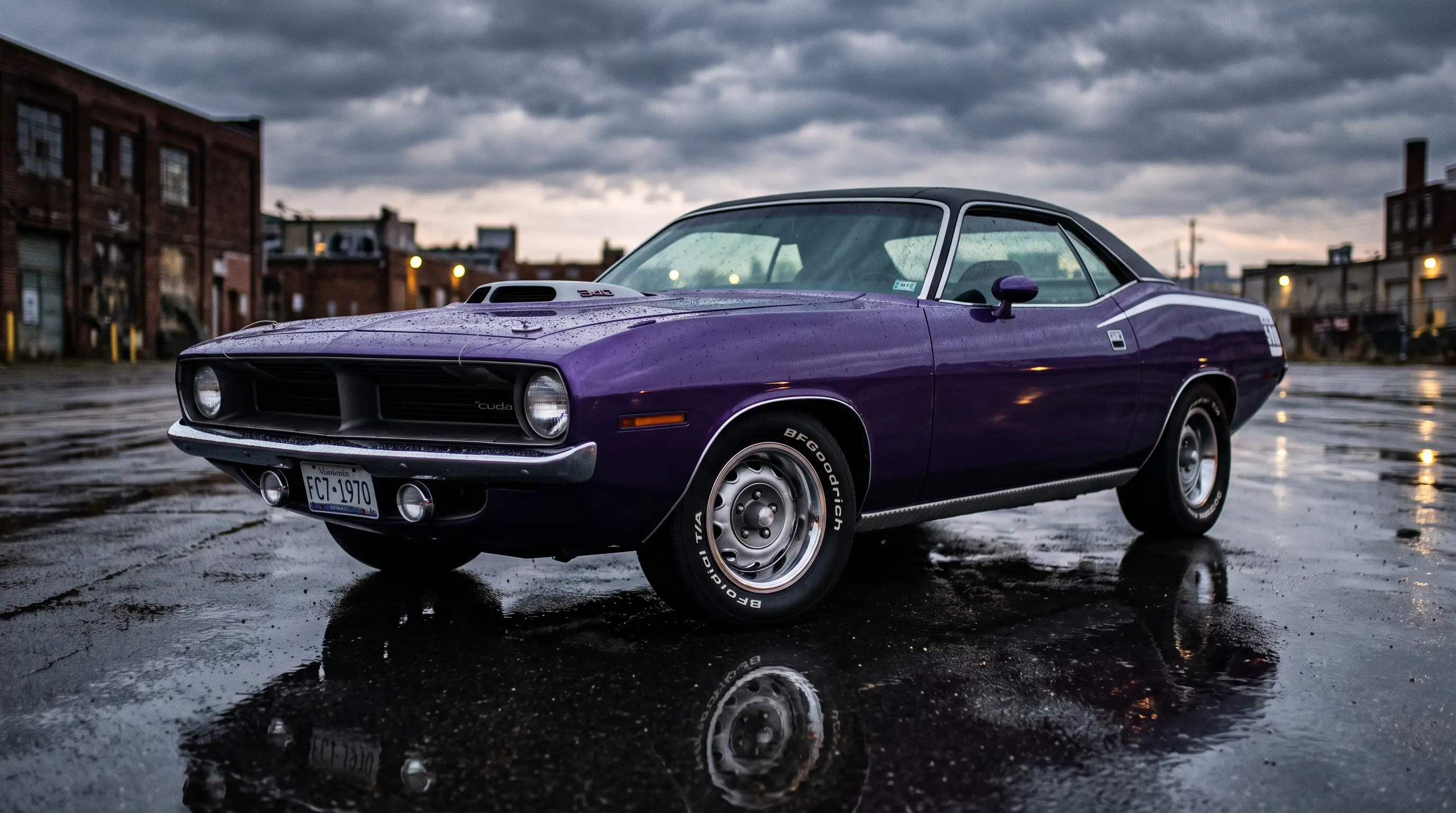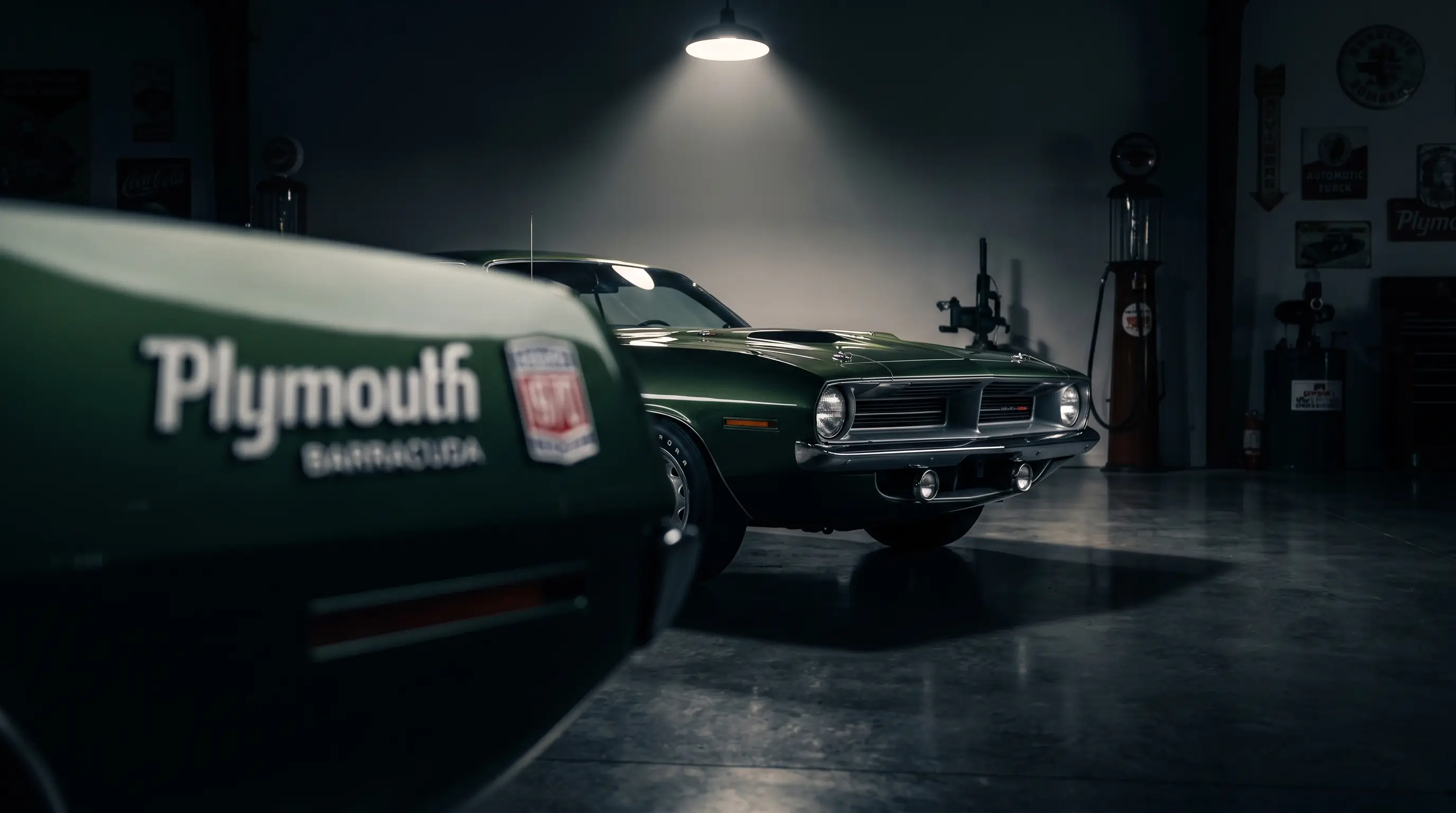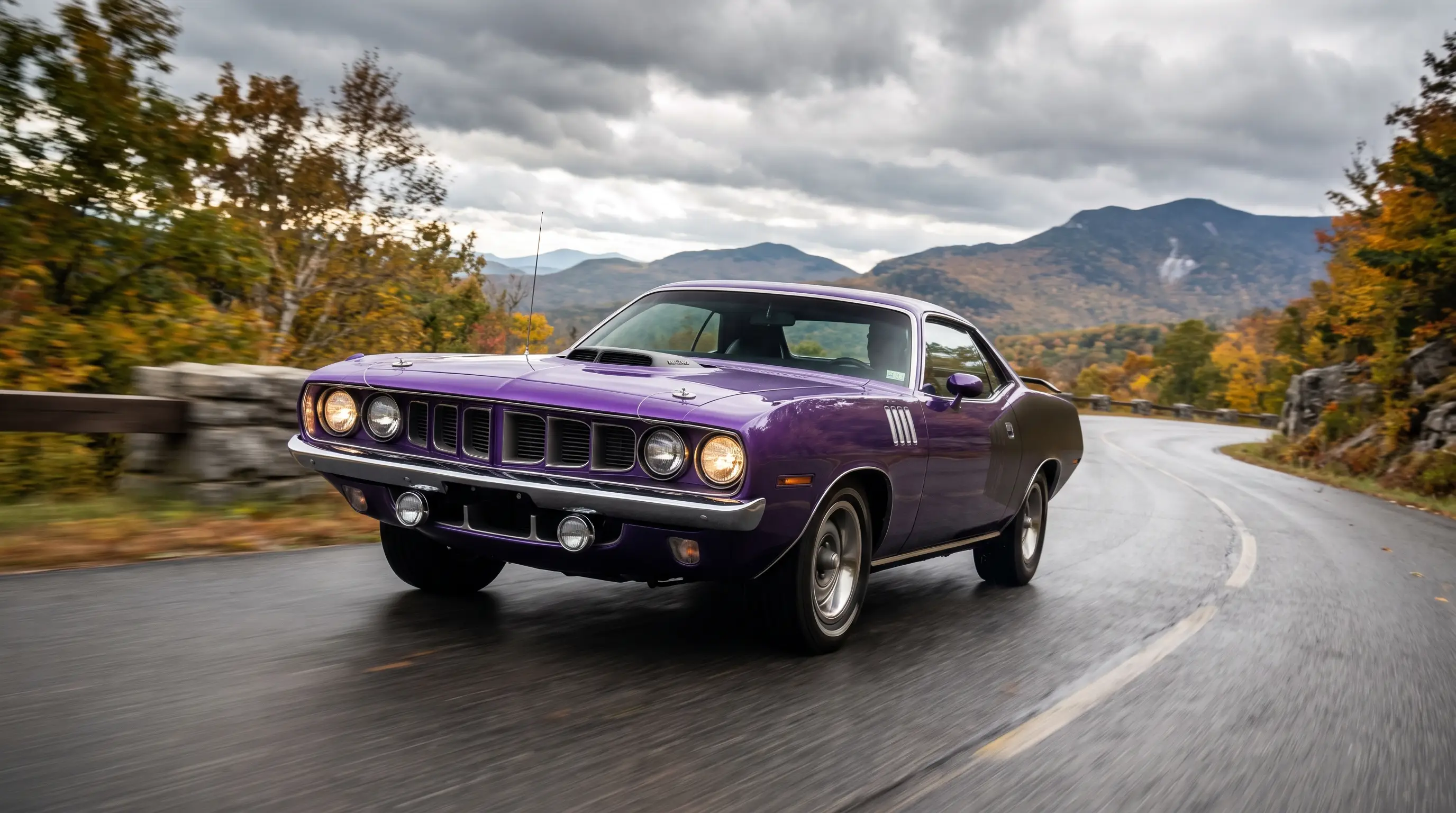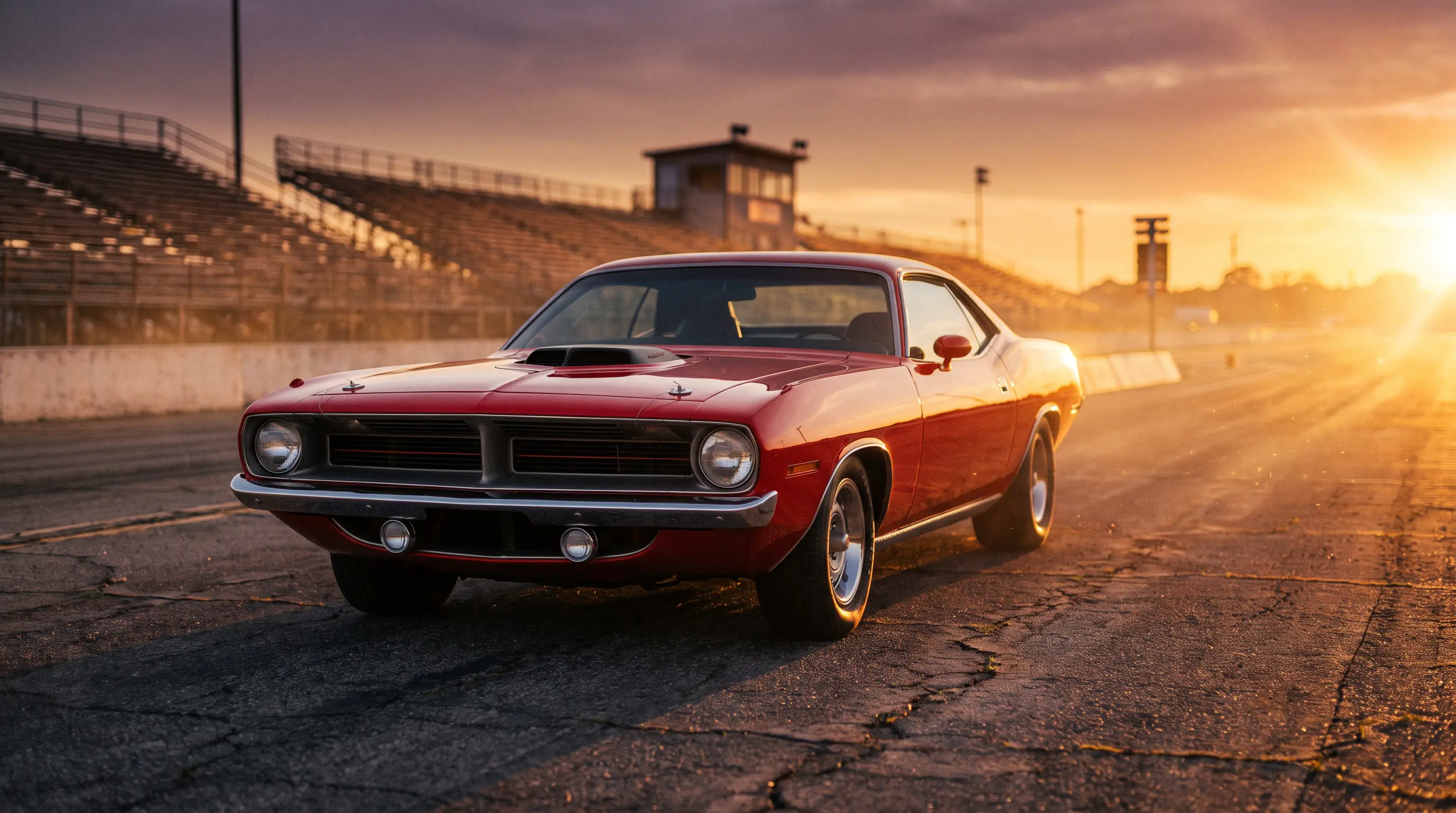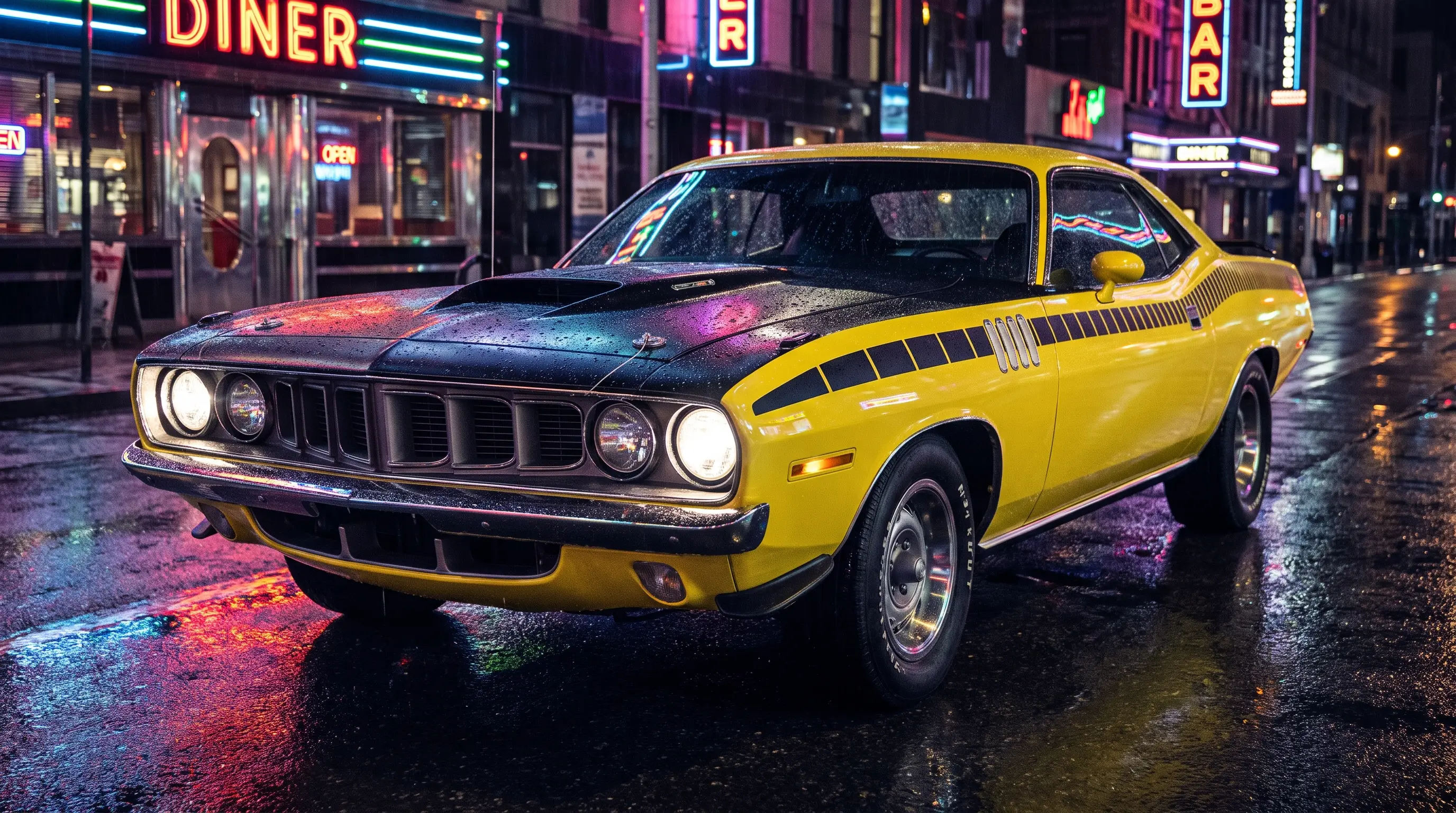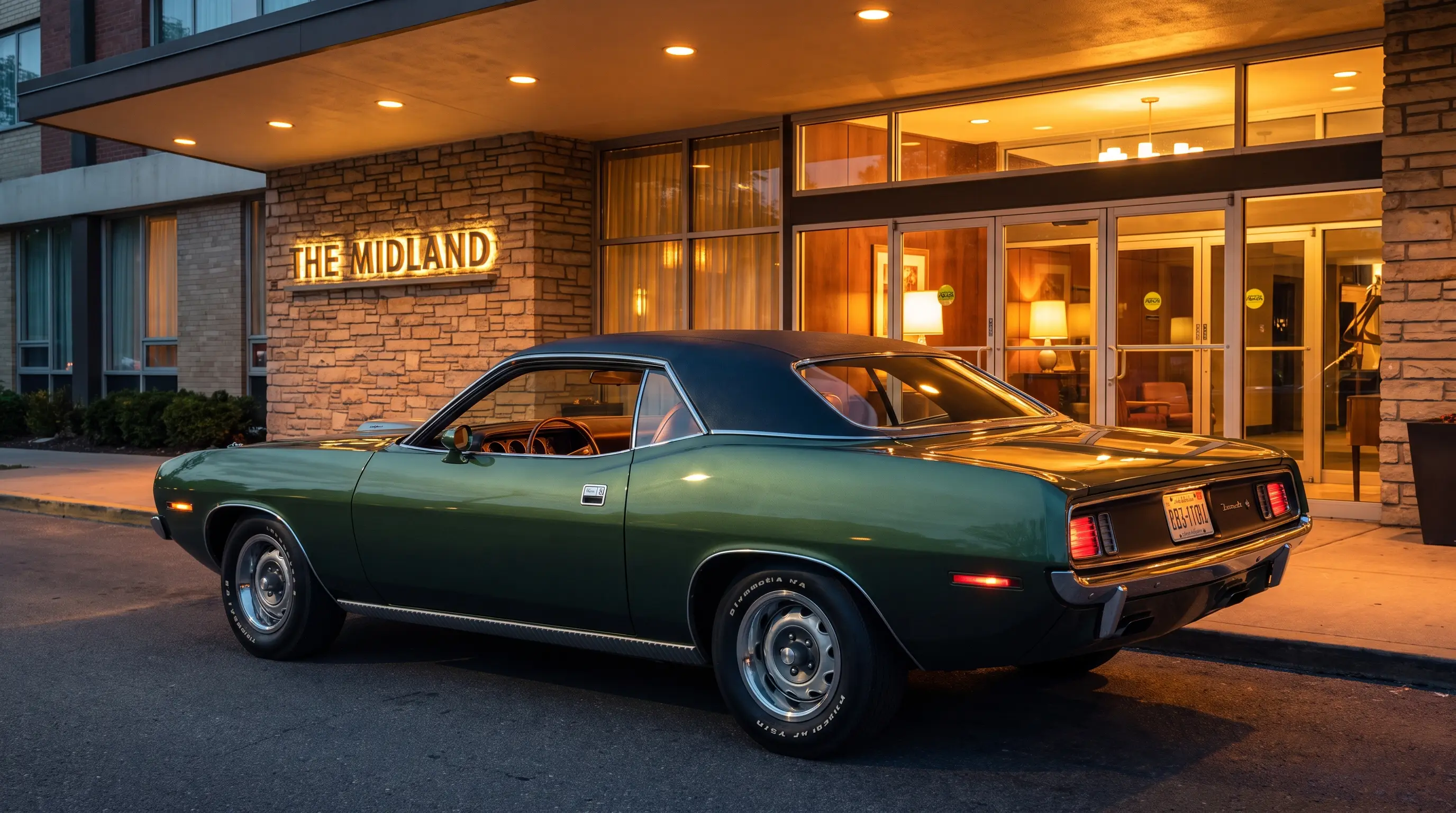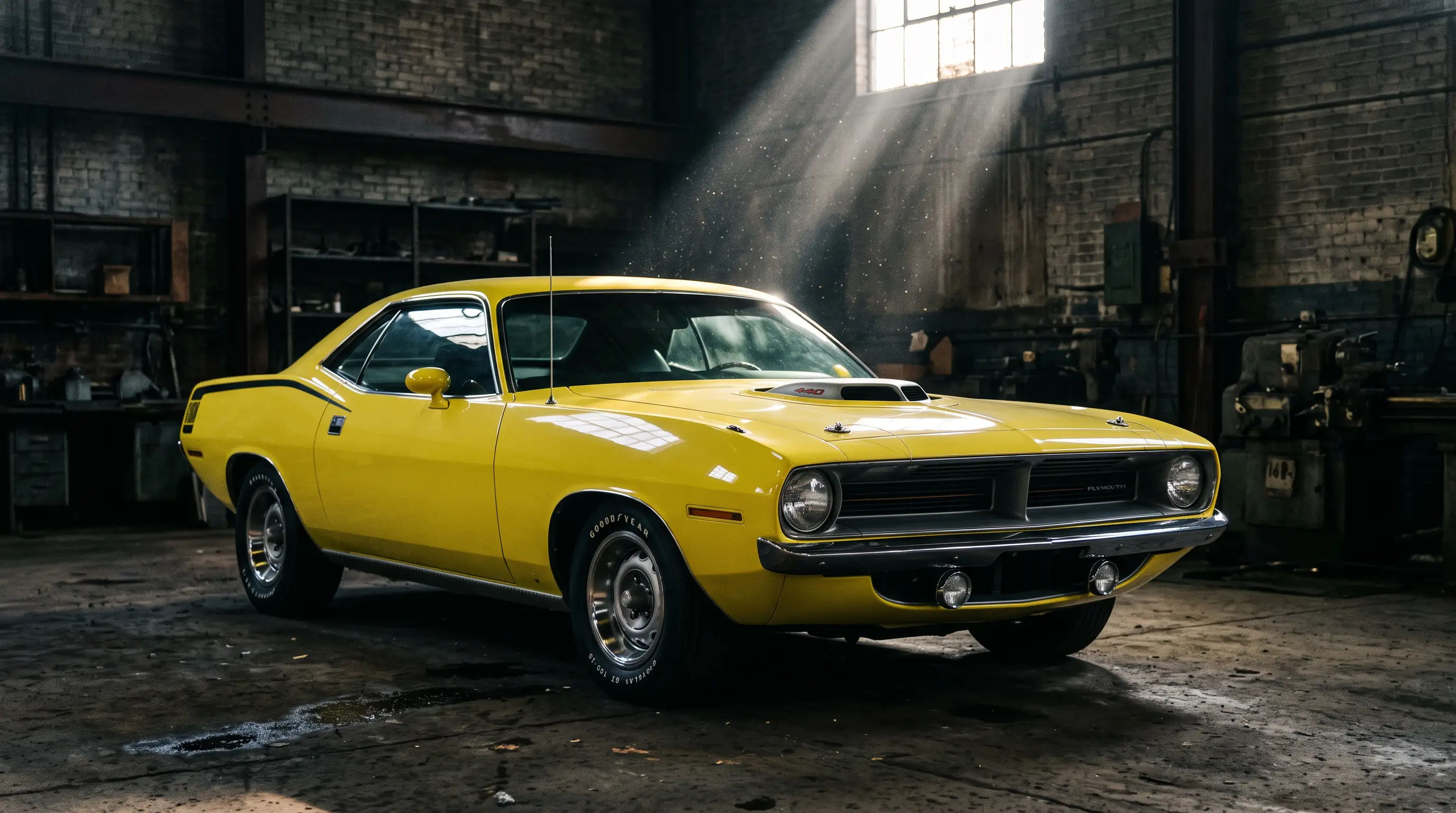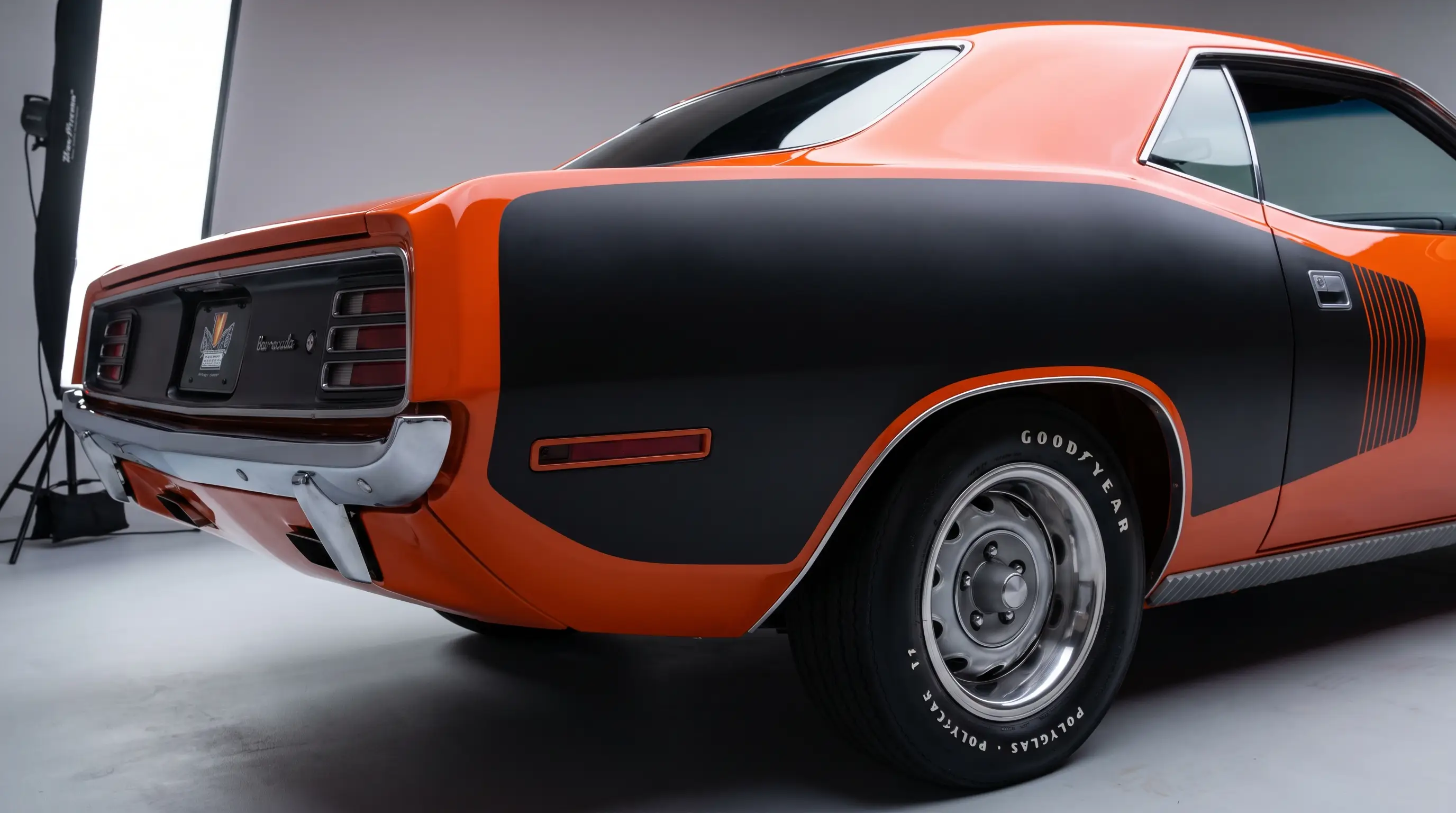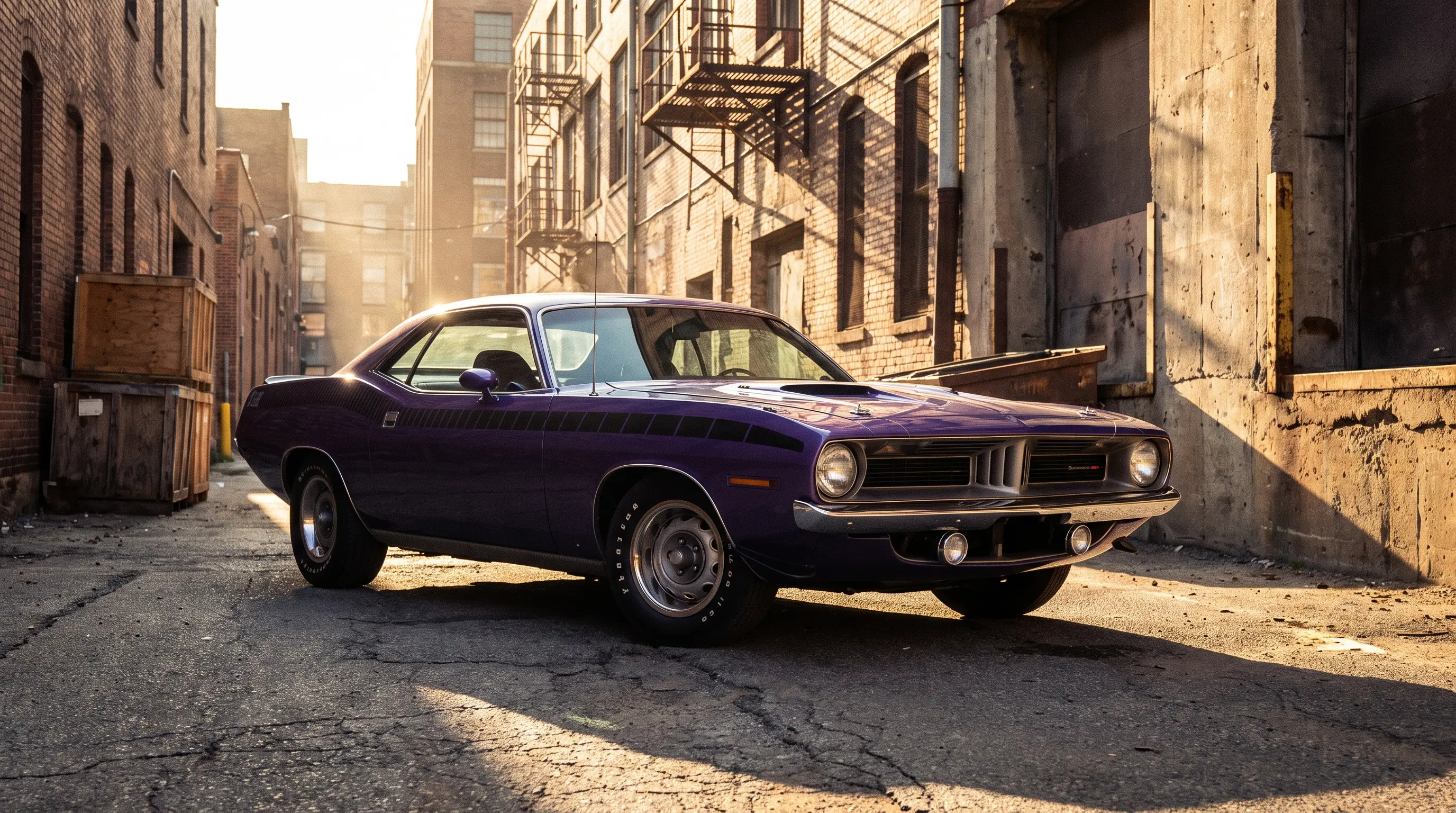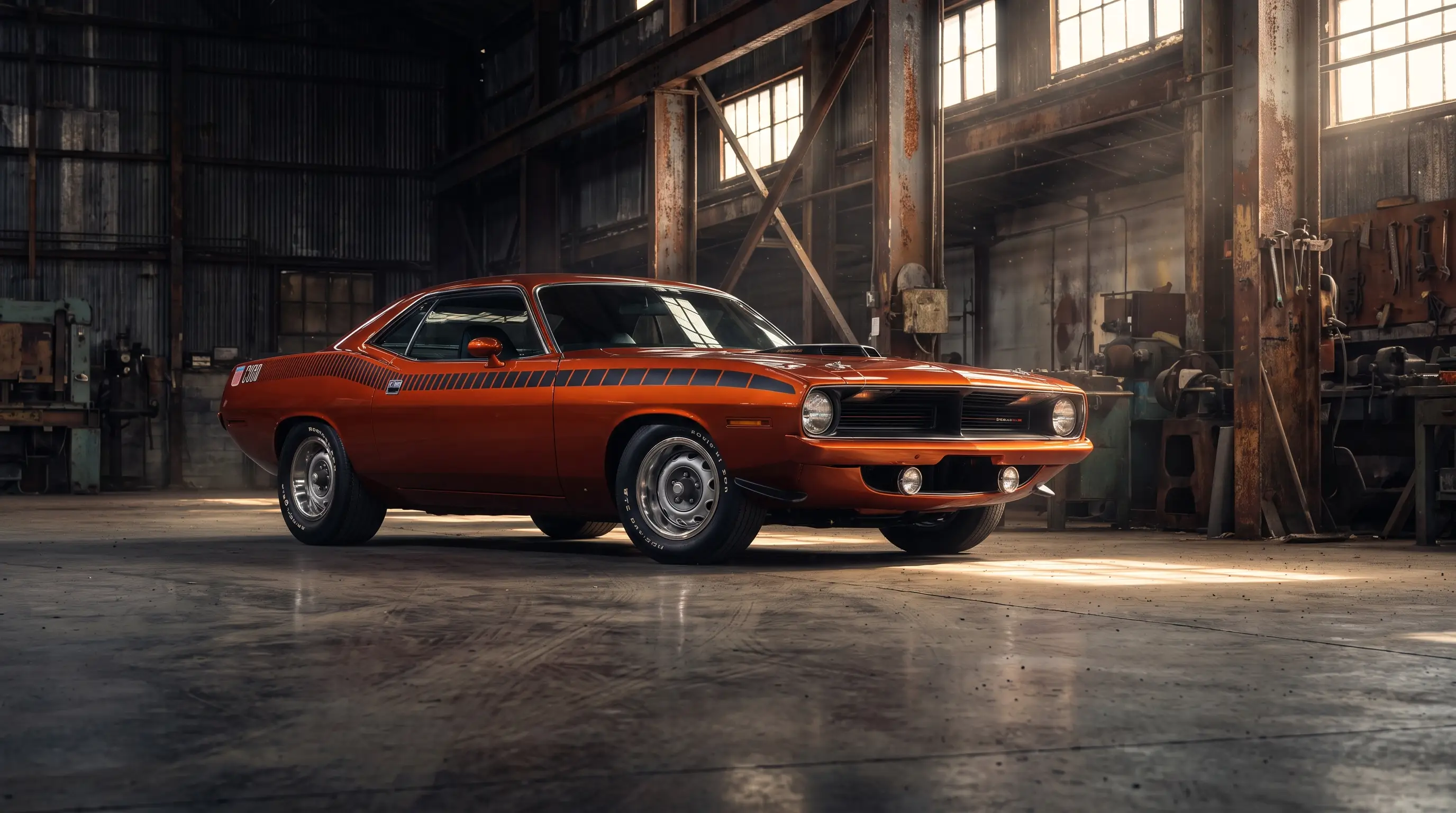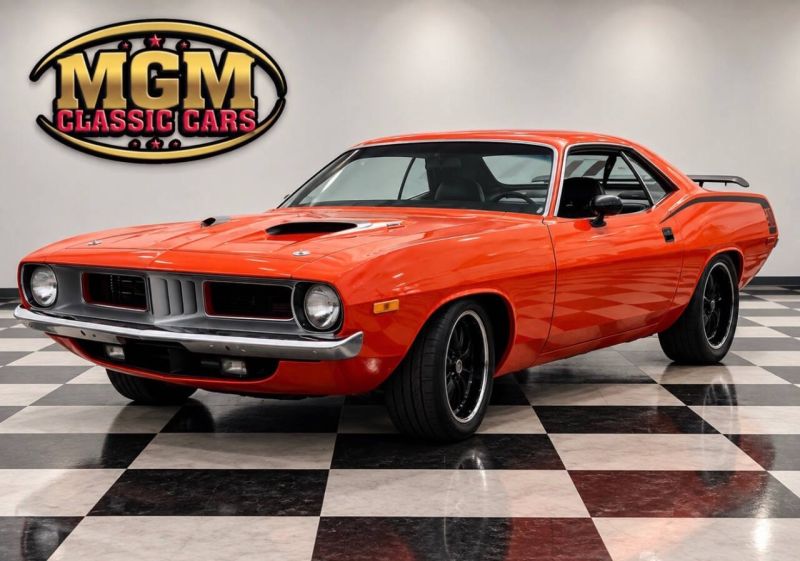
The 1970 Barracuda is the one everybody means when they say Cuda. Two model years, one platform, and the highest prices in the entire Plymouth catalog. Here is the blunt version. Plymouth moved the car onto a new body, opened the engine bay wide enough for anything Chrysler built, and the result was the shortest and most valuable chapter in the model's history. The E-body Cuda ran for 1970 and 1971 only. Then the big blocks were gone. That is the whole window, and it is why these cars cost what they cost.
New body, and the engine bay is the point
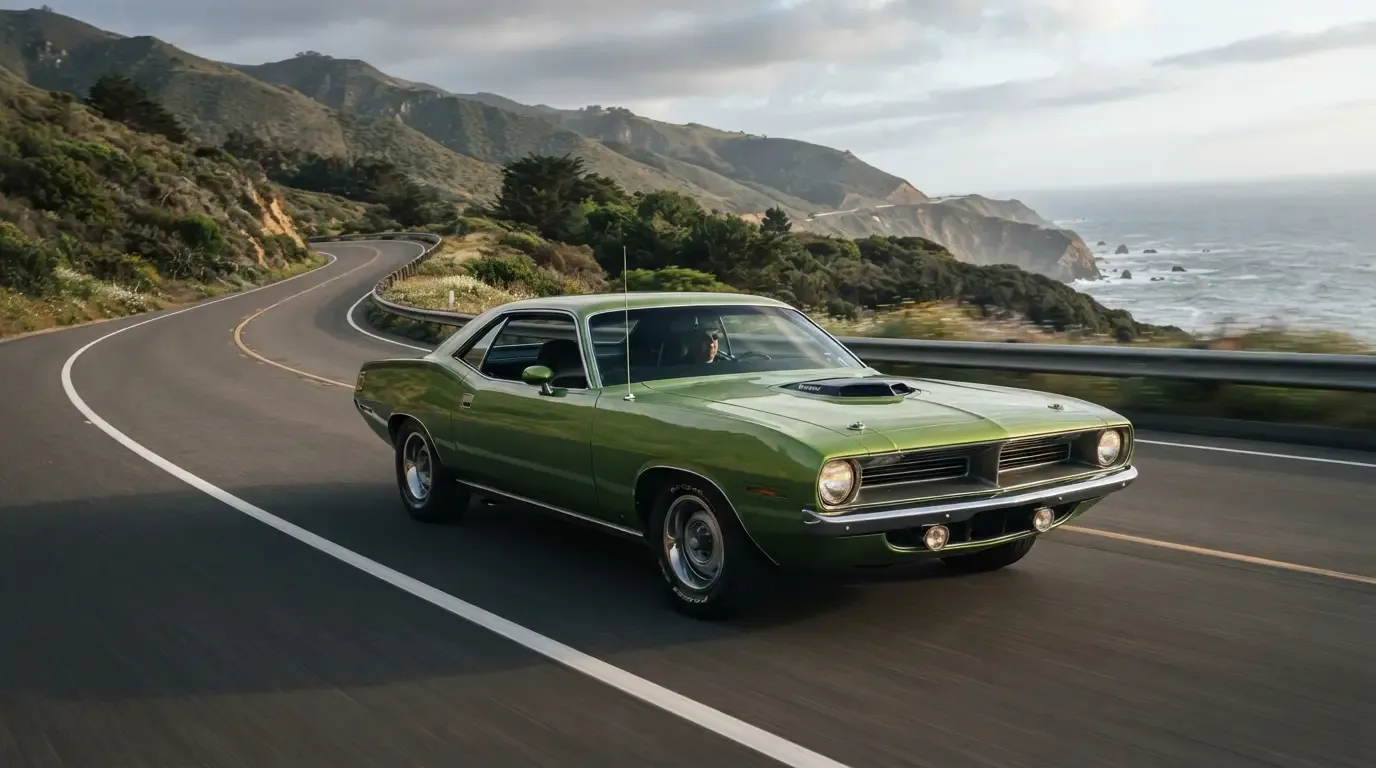
The E-body arrived for 1970. It shared its structure with the Dodge Challenger, which is why the two cars feel like cousins. Forget the styling for a second. The number that matters is the width of the engine bay. The old A-body choked on a big block. The E-body did not. You could order a slant six or you could order a 426 Hemi, and the same shell took both. That flexibility is the engineering headline of the generation.
The name split matters too. Barracuda was the base and mid-range car. Cuda was the performance package. People blur the two. Do not. A Cuda is a specific trim with specific engine availability, and the value gap between a base Barracuda six and a Cuda 440 is enormous. If you want the long arc of how the model got here, our our plymouth barracuda retrospective lays out the full history.
The engine list is the whole story
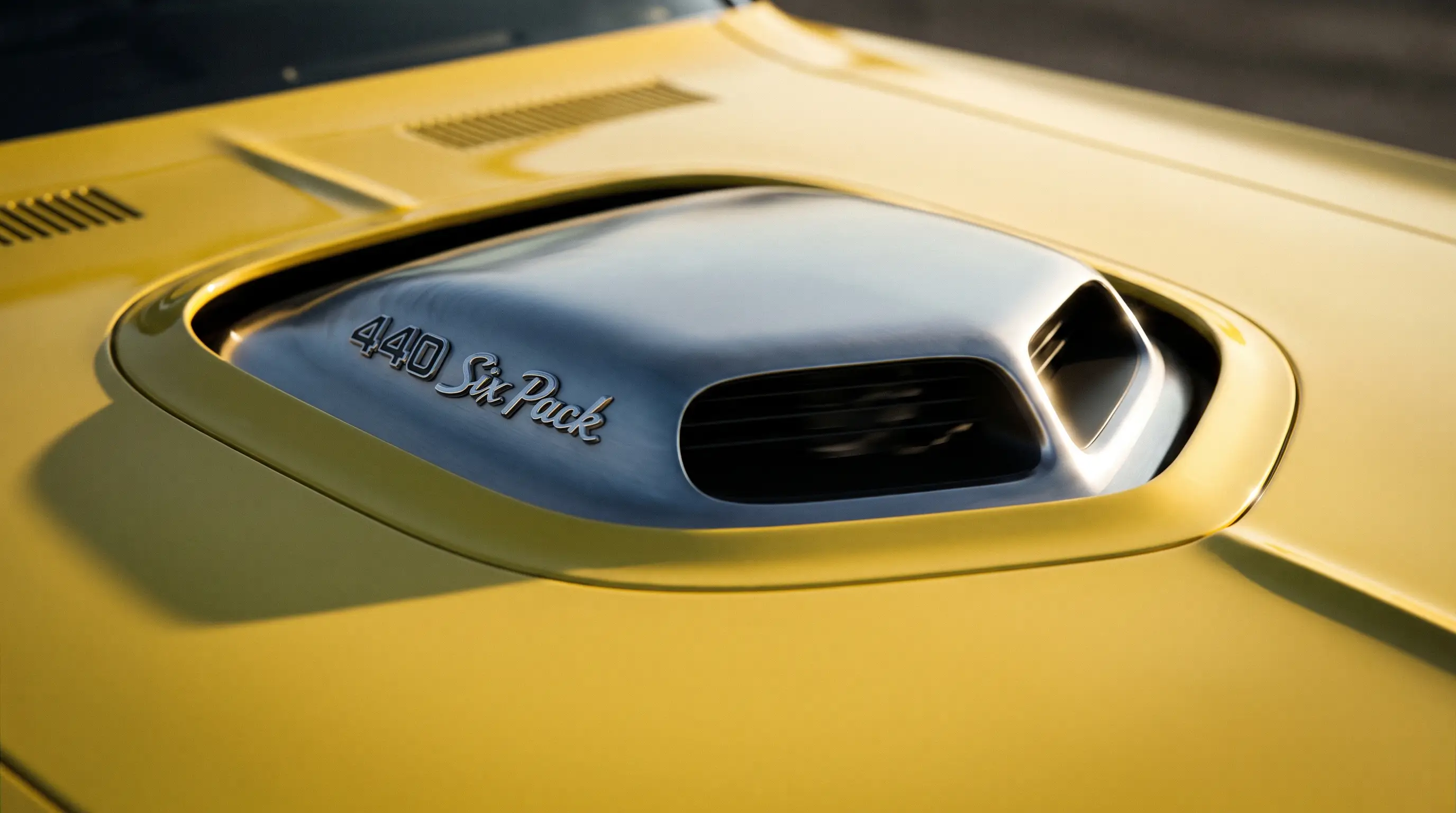
Here is what a Cuda buyer could order. The 340 small block. The 383 big block. The 440 four-barrel. The 440 Six Barrel, three two-barrel carburetors, rated at 390 hp. And the 426 Hemi at 425 hp. Five performance engines in a two-year car. No pony car needed a longer list.
The 440 Six Barrel is the sleeper of the group. It made nearly the power of the Hemi for a fraction of the price, then and now. The Hemi got the fame. The 440 Six Barrel got the job done and cost less to buy and less to maintain. On the street the gap between them was small. In the auction results the gap is a decimal point. That is a hype problem, not an engineering one.
Consider what the buyer actually faced in 1970. The Hemi was a race engine sold with a warranty it rarely kept. It ran hot, it needed frequent valve adjustment, and it fouled plugs in traffic. The 440 Six Barrel asked for none of that. It made big torque from low revs, it started every morning, and it did not punish an owner who wanted to drive the car instead of tend it. Most buyers who did the math ordered the 440. That was the rational choice then and the historical record proves it, because the 440 cars outsold the Hemi cars by a wide margin.
The 340 is the other honest engine in the range. It was the small block, it was lighter, and it turned the Cuda into a car that could corner instead of just accelerate in a straight line. A 340 Cuda is the driver's car of the lineup. It does not carry the value of the big blocks, but it delivers the best balance, and for an owner who wants to use the car on real roads it is often the smartest engine in the catalog.
| Specification | 1970 to 1971 Cuda |
|---|---|
| Platform | E-body (shared with Dodge Challenger) |
| Body styles | Hardtop coupe, convertible |
| Small block | 340 cu in V8 |
| Big blocks | 383, 440, 440 Six Barrel 390 hp |
| Top engine | 426 Hemi, 425 hp |
| Special model | 1970 AAR Cuda, 340 Six Barrel |
| Big block final year | 1971 |
The AAR Cuda was a homologation car
The 1970 AAR Cuda exists because of racing. Plymouth built it to homologate a car for the Trans-Am series, where it ran under the All American Racers banner tied to Dan Gurney. The street version got the 340 fitted with three two-barrel carburetors, a fiberglass hood, side-exit exhaust, and a raised rear deck to clear the bigger back tires. It was built for 1970 only.
The number to remember is the production run. Plymouth built 2,724 AAR Cudas, exceeding the 2,500-unit Trans-Am homologation minimum. That is scarce but not vanishingly rare, and it means a genuine AAR is attainable in a way a Hemi car is not. The AAR is the enthusiast's Cuda. It handles better than the big block cars, it looks the part, and it carries a real competition story. Verify the details before you buy, because the side exhaust and the fiberglass hood are easy to add to a plain 340.
The AAR earns its place for a reason beyond the street car. The Trans-Am program it homologated put Plymouth against Ford, Chevrolet and the rest in one of the most competitive road-racing series of the era. The team did not take the championship, but the effort produced a real competition car and a street version built to a rulebook, not a marketing brief. That rulebook is why the AAR carries genuine engineering. The staggered tire sizes, the raised rear suspension and the 340 Six Barrel induction were there to satisfy the homologation, not to sell a stripe kit. Few American performance specials of the period can make that claim as cleanly, and it is why a documented AAR holds its value against cars with bigger engines and louder reputations.
"Everybody wants the Hemi. Fine. But the 440 Six Barrel made almost the same power, cost thousands less new, and it still does today. The Hemi premium is a name tax. If you want to drive the car instead of insure it, the Six Barrel is the smarter number every single time."
- Dan Reeves
The colors were part of the product
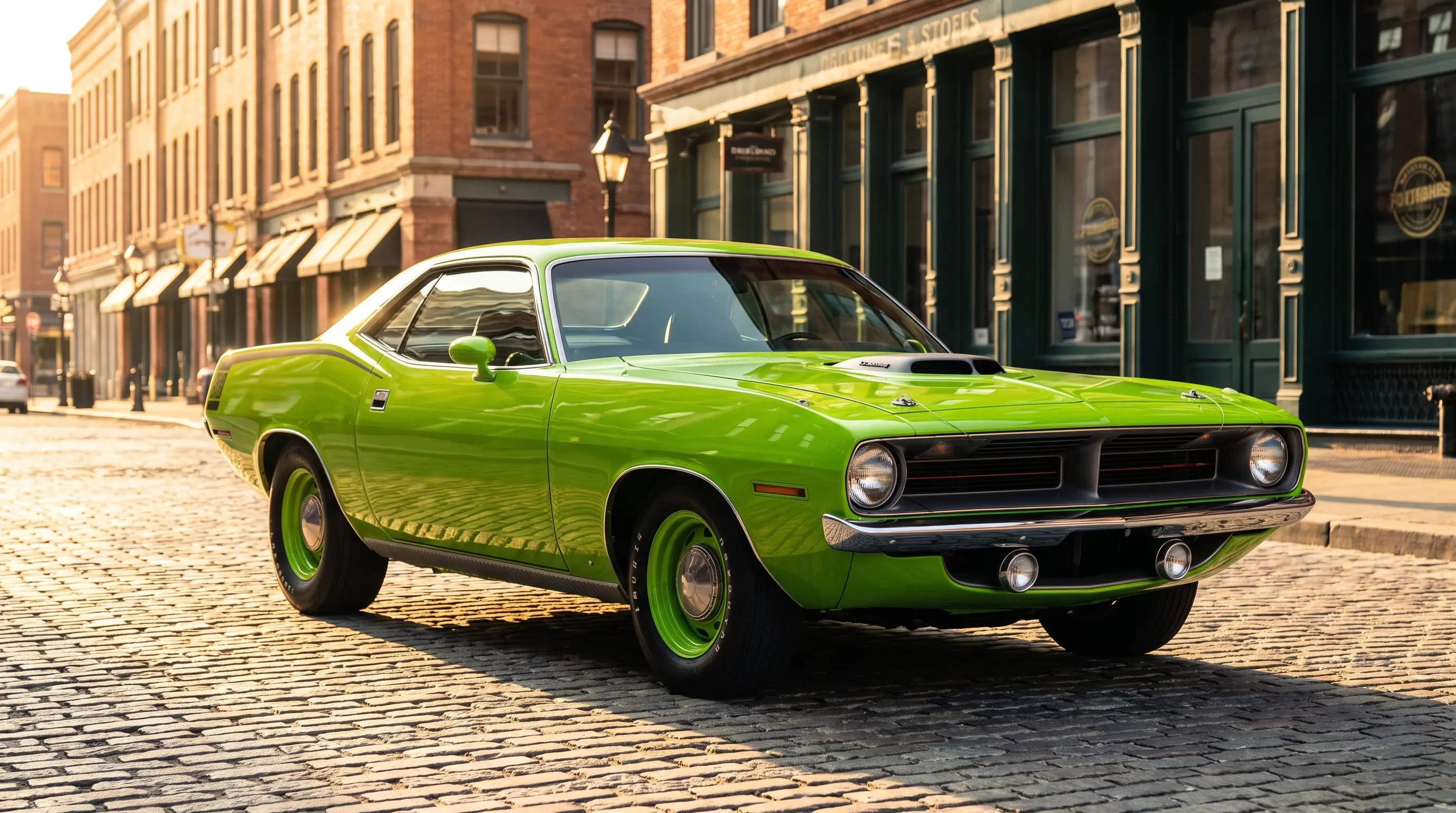
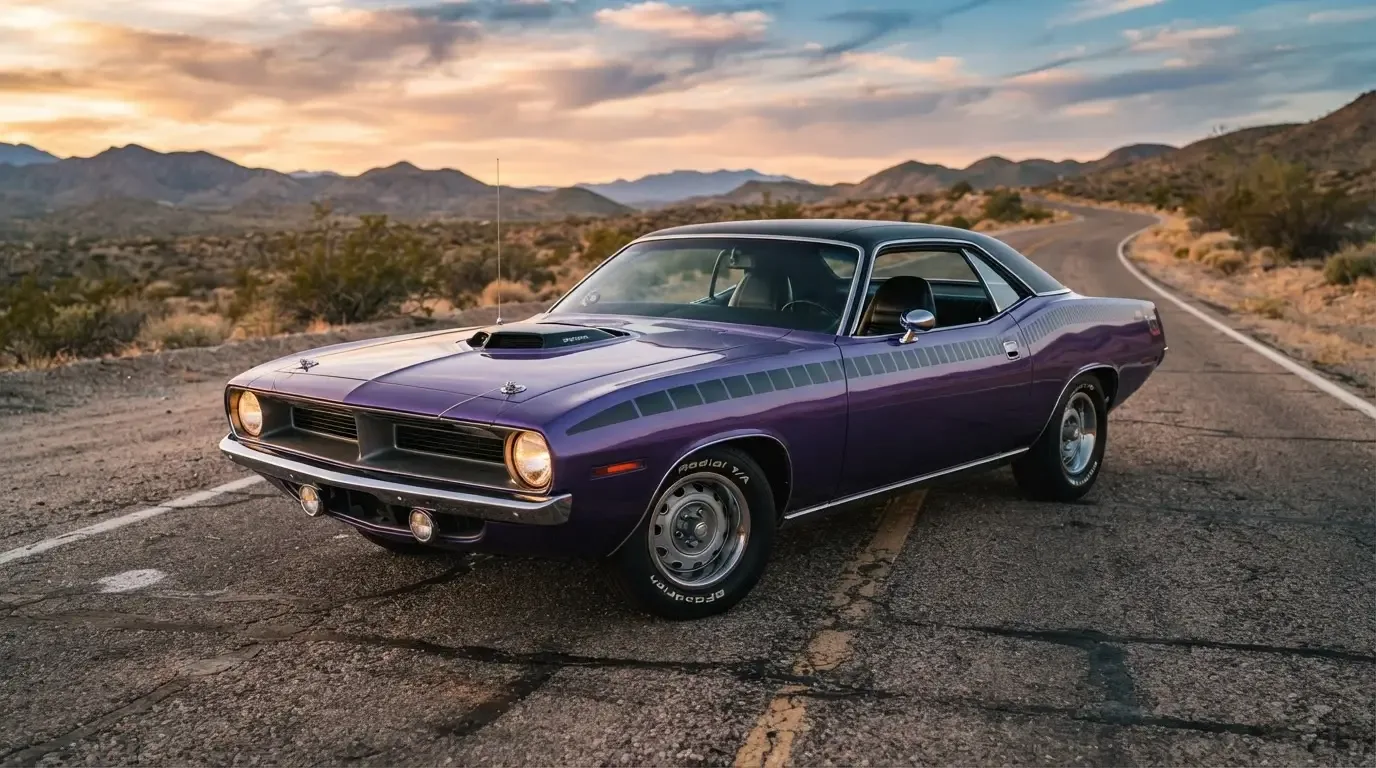
The E-body Cuda arrived with a paint chart that did as much for the car's image as the engines did. Plymouth ran its High Impact color program on these cars, and the names were the point. Plum Crazy purple. Sublime green. Lemon Twist yellow. Vitamin C orange. In-Violet. Tor-Red. These were not subtle finishes and they were not meant to be. They were built to sell a young, loud car to a young, loud market, and they did.
Here is the collector angle, stated plainly. A Cuda in an original documented High Impact color is worth more than the same car in white or black. The premium is real and it shows up in results. The colors were a factory option, they were ordered in known quantities, and a car that still wears its correct original code is a stronger asset than a repaint. On a car this valuable the paint code on the fender tag is not decoration. It is money.
The Shaker hood belongs in the same conversation. The functional cold-air scoop that shook with the engine was one of the defining options of the two-year run, and a documented Shaker car carries a premium of its own. It is also, like the colors and the engines, frequently added later. Confirm it against the build documentation the same way you confirm everything else on these cars.
1971 changed the face and then it ended
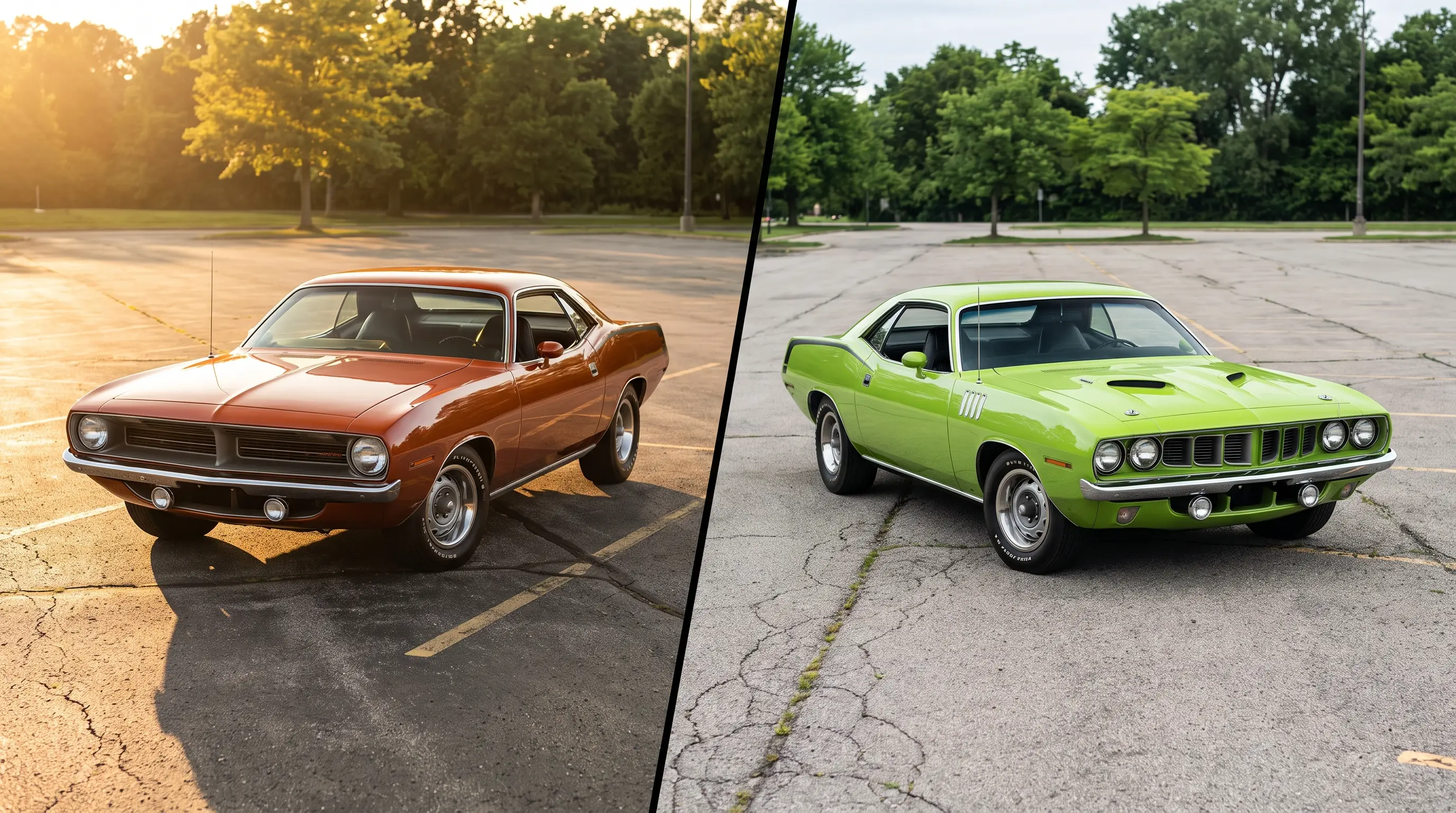
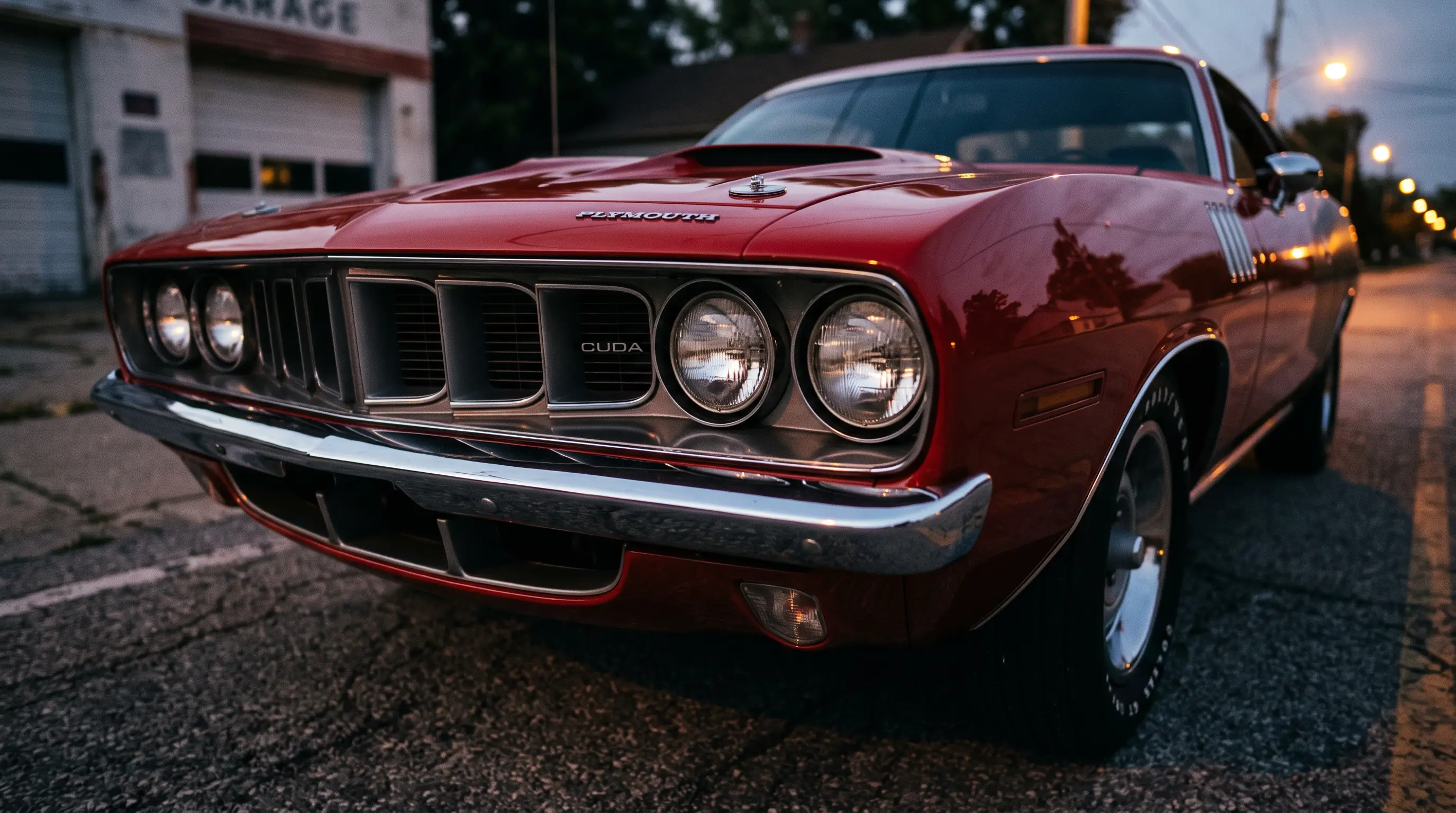
Tell 1970 and 1971 apart by the front and the fenders. The 1970 car has two headlights and clean flanks. The 1971 car has four headlights, a distinct grille, and non-functional gills stamped into the front fenders. That is the quick visual test. It works every time.
1971 was the end of the important stuff. It was the last year for the convertible. It was the last year for the big blocks. Emissions rules, insurance surcharges and a collapsing muscle car market did the rest. After 1971 the Cuda name stayed but the engines that made it matter were gone. So the two-year window is not an accident of styling. It is the entire high-performance life of the E-body car, and 1971 is the harder year to find because production fell sharply.
What the numbers do to the price
Scarcity drives this market and the scarcity is real. The 1971 Hemi convertible is the extreme case. Plymouth built a handful, with sources citing 11 or 12 cars including export, and documented examples have changed hands in the millions. That is not a typo. A single body style, a single engine, a single year, produced in tiny numbers, and the result is one of the most valuable American cars ever built.
Below that peak the market is more sensible but still steep. A numbers-matching 440 Six Barrel hardtop is a strong car for a fraction of Hemi money. A 340 or an AAR is the affordable end of a very expensive line. The lesson is simple. On an E-body Cuda, the engine code and the documentation set the price, not the paint. Anyone shopping should watch the range on real cars, and the current Barracudas for sale now listings show how far apart the specifications sit.
One more number explains the whole market. The tribute cars outnumber the real ones. Because the E-body was sold with cheap engines in large volume, thousands of plain bodies exist that can be dressed as a Cuda, and many have been. That flood of look-alikes is what makes the genuine, documented cars so valuable. Rarity is only half the story. The other half is that the fakes are everywhere, so proof becomes the product. A car with the right codes and the paper to back them is not just rare. It is verified, and verification is what the money buys.
Short run, long shadow
Two model years. That is all the E-body Cuda got with its full engine list. It is also all it needed. The car put every Chrysler performance engine into one body, produced a homologation special and a Hemi flagship, and then the era closed around it. The result is a machine whose value is set almost entirely by production numbers and paperwork.
The Hemi cars sit at the top and they earn their own coverage. There is a related story in the a related story chapter for anyone chasing the million-dollar end of the market. But the honest take on the 1970 Barracuda is this. The 340, the AAR and the 440 Six Barrel are the cars most people should want, they cost a fraction of the Hemi, and they deliver most of what made this two-year window the most important in the model's history.
Sources and notes
- Plymouth Barracuda - Wikipedia
- 1970 Plymouth Cuda 440 Six-Barrel Specs - Automobile Catalog
- 1970 Hemi Cuda Horsepower and Value - SlashGear
- Car of the Week: 1970 AAR Cuda - Old Cars Weekly
- The Unicorns of Auburn Hills: 1970-1971 Hemi Cuda Convertibles - Classic Industries
- 1970 Plymouth Cuda AAR - Hagerty Media