
Of every shade Plymouth ever put on a Barracuda, none causes quite the reaction that a panther pink cuda still does when it rolls into a parking lot. Plymouth's own paperwork actually called this color Moulin Rouge, a name that leaned into romance rather than attitude. Dodge sold the identical formula under the tougher-sounding Panther Pink, and the two names have blurred together in the hobby to the point that most people, including sellers of genuine Cudas, now call the whole family Panther Pink. Either way the color remains, decades later, the rarest and most argued-about entry in the entire High Impact palette.
Car Features
7 min read
Panther Pink and Moulin Rouge: The Rarest Cuda Colors
Why Panther Pink became the rarest color in the Cuda's High Impact lineup, who actually ordered it, and what documentation genuinely proves on a car this uncommon.
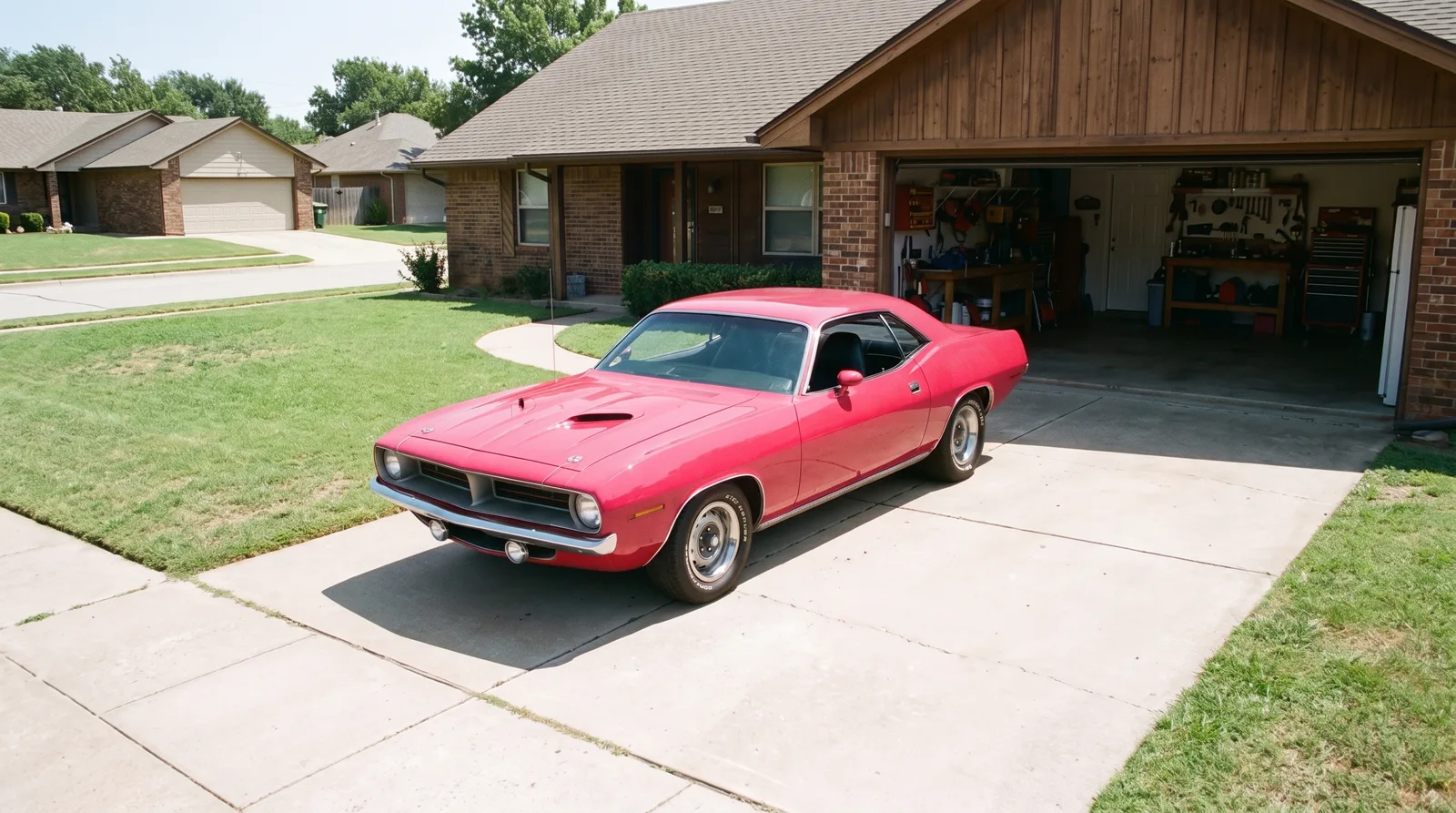
A color almost nobody ordered
Pink was never going to be a volume seller in a lineup built around muscle car bravado, and dealers knew it the moment the color sheet crossed their desks. Production numbers on pink Cudas are small enough that a genuine, documented survivor is treated as an event rather than just another find at a swap meet. Most Mopar researchers put total 1970 Barracuda and Cuda production in Moulin Rouge, FM3, at right around 255 cars across every body style and trim, with true Cuda convertibles in the color numbering in the single digits. Whatever the precise figure turns out to be, everyone who has spent time around these cars agrees on the same basic fact: nobody was ordering this color by accident, and nobody who bought one was trying to blend in.
That scarcity was baked in from the start. A salesman in 1970 talking a customer into pink was working against every instinct the muscle car market had trained into buyers that year, and the fact that any orders came through at all says something about who was willing to stand out on purpose.
The people behind the color
Stories about who actually ordered these cars tend to fall into two categories. Some were bought by young men leaning fully into the joke of it, daring anyone at the drag strip to say something about a pink car that could still embarrass a faster-looking machine off the line. Others were bought by people, often women, who simply liked the color and were not interested in apologizing for that preference to a salesman or anyone else standing around the showroom floor.
I have heard both versions from actual owners and former owners over the years, and I have stopped trying to decide which story is more common. The truth is probably that both were happening at the same time, in the same showrooms, for reasons that had very little to do with each other beyond a shared willingness to order something loud.
Why survivors carry so much weight
A car this rare in its original color tends to collect a longer paper trail than most, simply because so few people who have owned one wanted to be the person who repainted it into something more conventional. Every subsequent owner inherits not just a car but a small piece of custodianship, an unspoken agreement to keep something intact that would be very easy, and arguably very tempting given how polarizing the color remains, to quietly paint over.
That custodianship shows up in how these cars get talked about at shows. Owners of a panther pink Cuda tend to have a rehearsed answer ready for the question they know is coming the second someone walks up, something between a defense and a small speech about why the color stayed. It becomes part of owning the car, almost a performance in its own right.
"Nobody walks past a pink Cuda without saying something. After thirty years of owning mine, I still have not gotten tired of the conversation that starts."
- Nora Beckett
What the color does at auction
Rarity alone does not guarantee a strong result, and pink Cudas have shown mixed outcomes at public sale over the years depending heavily on documentation and condition rather than color alone. A genuinely documented example with a clean history draws real competitive bidding, but a car merely claimed to be original pink, without a fender tag to back it up, tends to sell closer to a standard color car with an unusual respray, which is a meaningfully different number. Buyers here are paying for the intersection of rarity and proof, not for rarity by itself.
That distinction gets lost sometimes in casual conversation about these cars, where the word rare does a lot of work that a careful buyer should not let it do unchecked. Ask specifically how the color has been verified, not just whether the seller says it is original, and ask to see the actual tag rather than a transcription of it typed into a listing.
Living with a color this loud
Owning a car this visible changes small things about daily life around it that owners of quieter colors rarely think about. Parking lot conversations happen constantly, whether the owner is in the mood for one or not. Photographs of the car end up circulating on social media and forums without much control over where they go, simply because a genuinely pink Cuda is rare enough that anyone who spots one tends to take a picture and share it. Some owners lean into that visibility as part of the fun of the car. Others find it exhausting after a while, another quiet cost of ownership that never shows up on a bill of sale, but shows up plainly enough in how tired an owner sounds answering the same question for the thousandth time.
Understanding the color in context
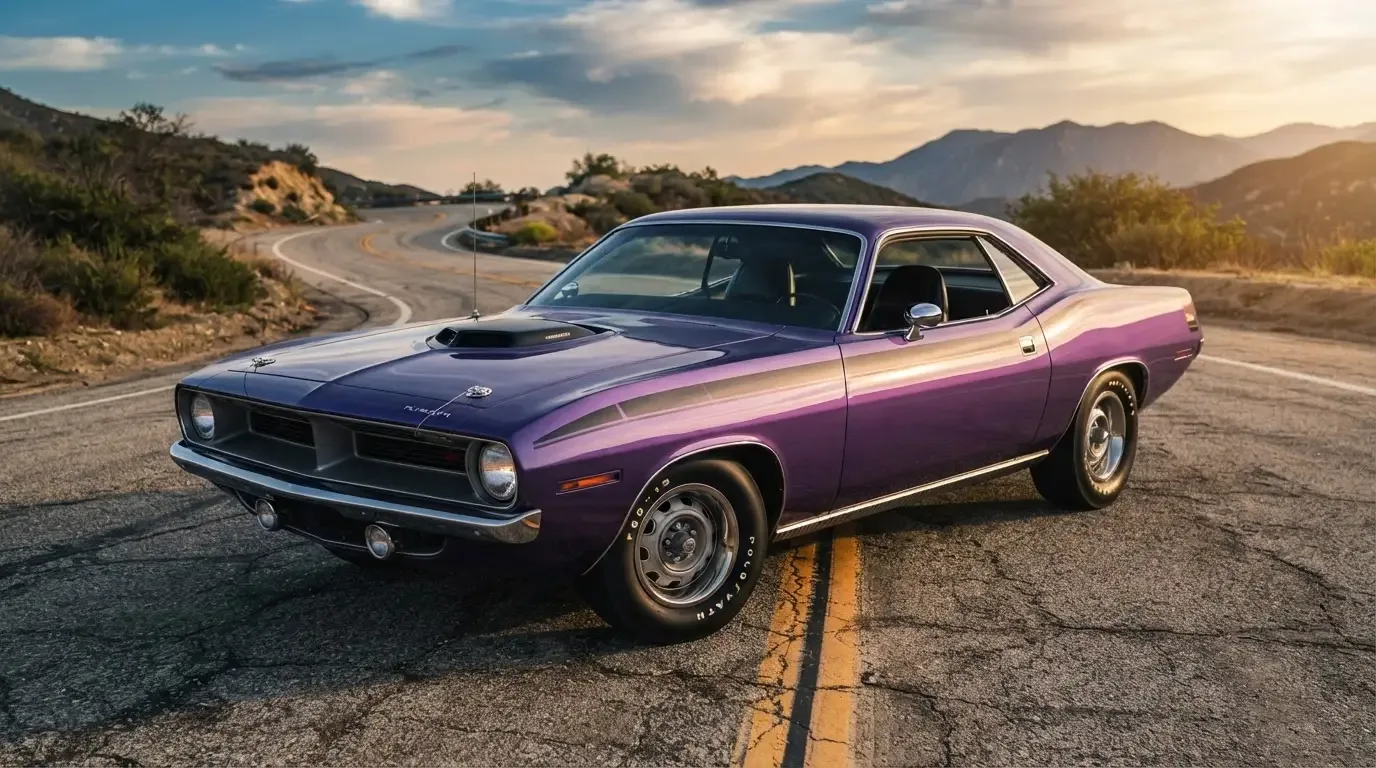
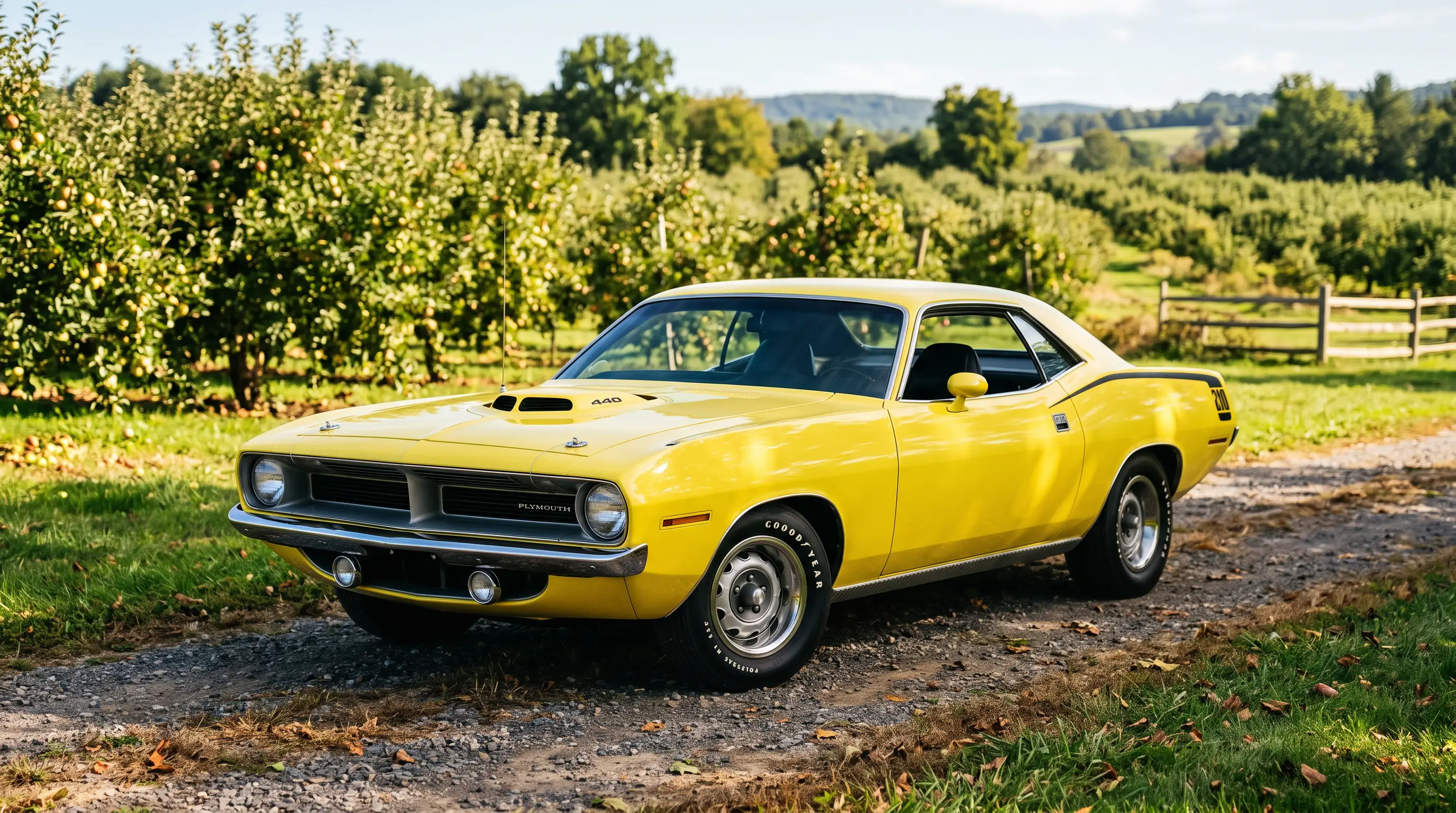
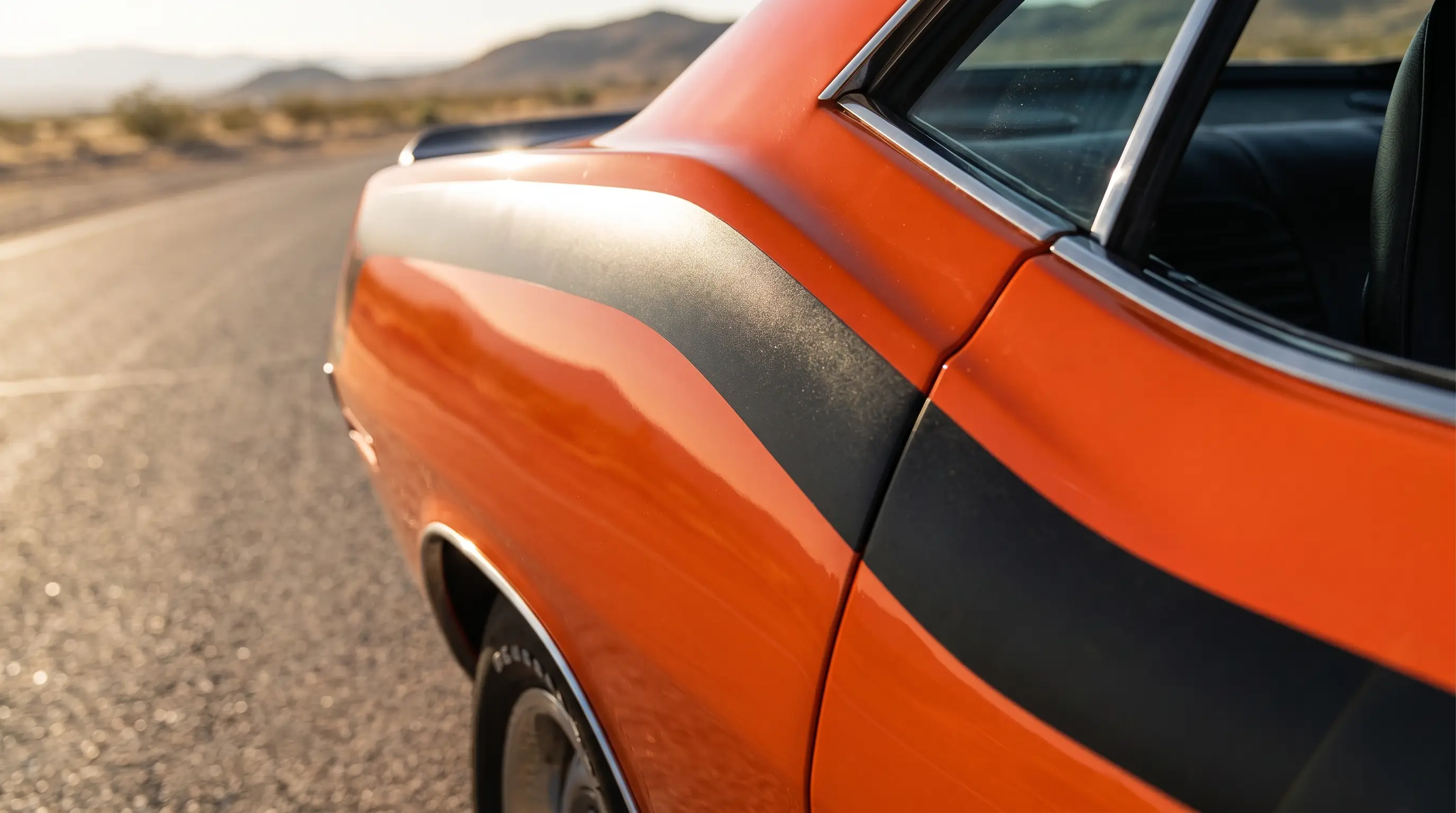
Panther Pink did not exist as an isolated oddity. It sat on the same order sheet as purples, oranges, and yellows equally committed to standing out, part of a genuine strategy rather than one dealer's fluke special order. The full story covers how this shade fit into that broader push and why Plymouth was willing to offer something this commercially risky in the first place.
The rarity here is real, but so is the risk that comes with it. A car this uncommon attracts sellers eager to claim originality that a fender tag cannot always support, so verifying the paint code against factory documentation matters more on a pink car than on almost any other Barracuda you might consider.
If this particular shade of defiance has found its way into your own search, browse classic Barracuda listings with patience. A genuine one does not turn up often, and when it does, it tends to know exactly what it is.
Whatever brings you to this color, curiosity, memory, or the simple appeal of owning something that nobody else at a show can match, the search itself tends to take longer than shopping for almost any other Barracuda variant. That is not a flaw in the process. It is more or less the whole point of a color this uncommon.
Sources and notes
Related Reading
Have a
Plymouth Barracuda
for Sale?
Reach thousands of serious classic car collectors across the US.
Sell It Here →
Are You a Classic Car Dealer?
List your full inventory and connect with targeted classic car buyers.
Join as a Dealer →

About the author
Nora Beckett
Automotive features writer and photographer who tells the human stories behind the cars, from show fields to cross-country road trips.
Related Listings - Plymouth Barracuda
Comments
Be the first to comment on this article.