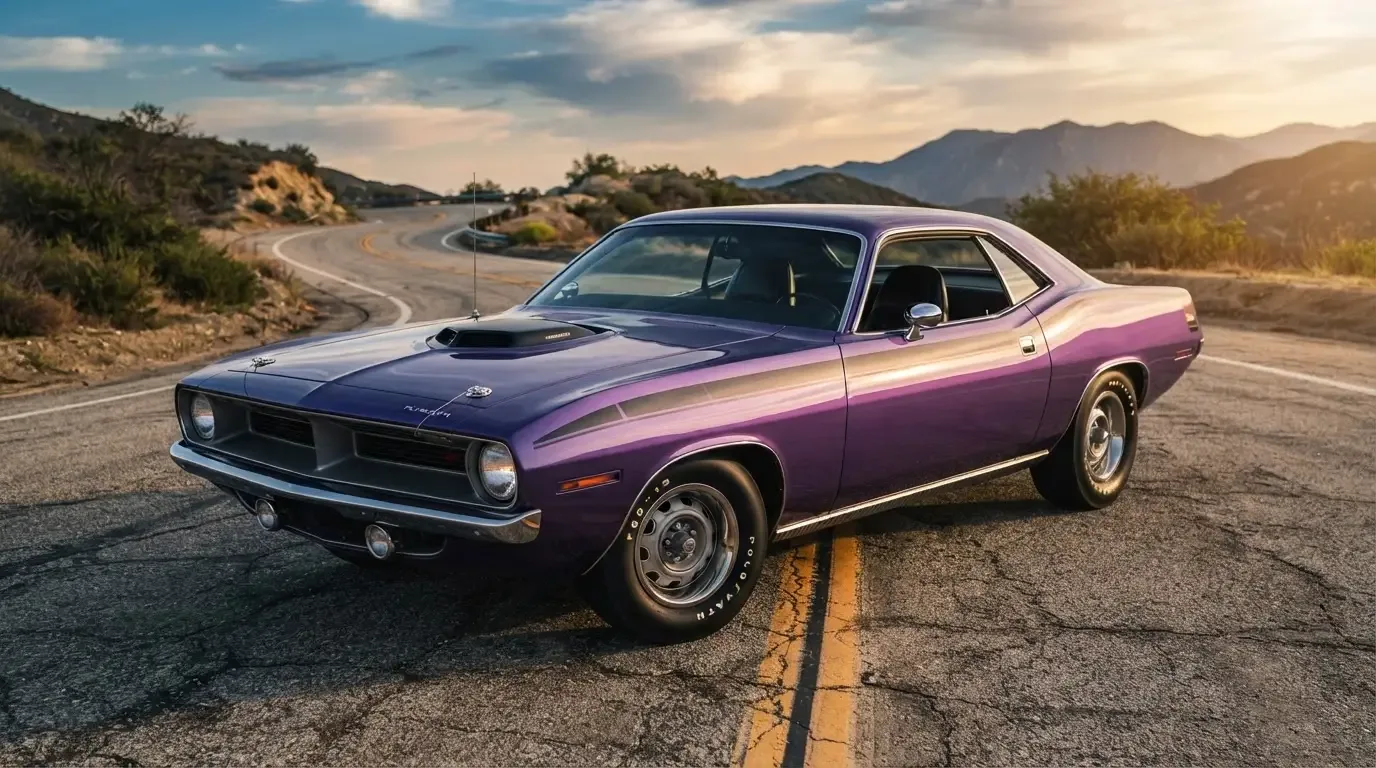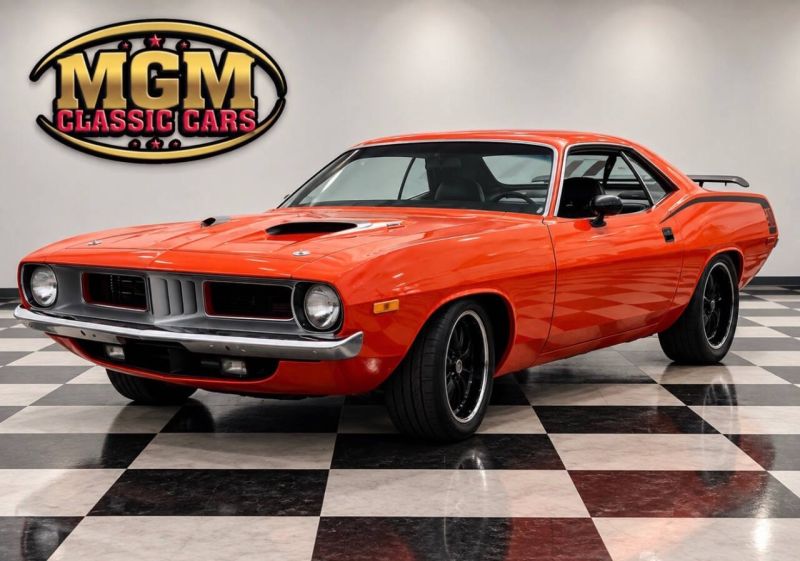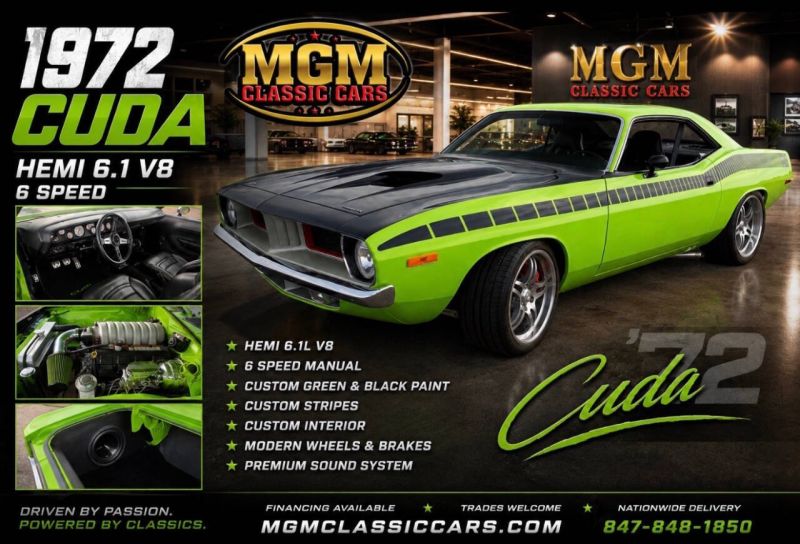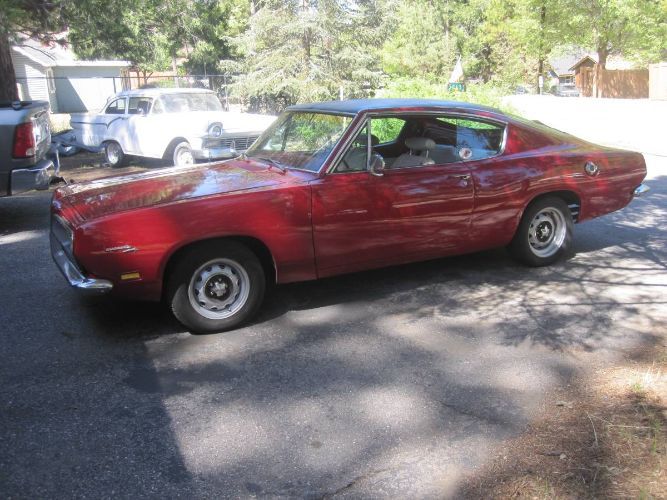
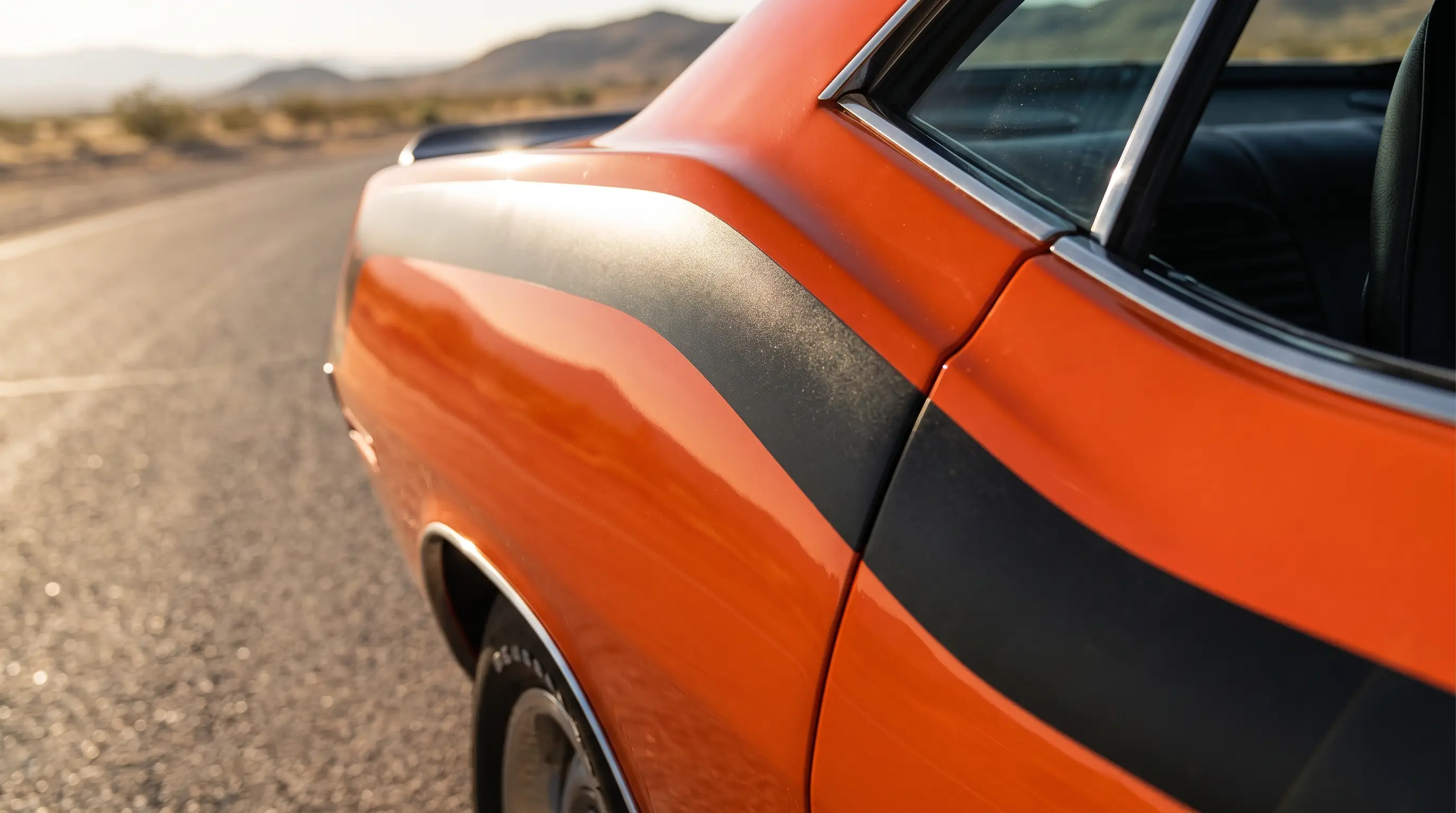
Ask anyone who has worked on a 1970 Cuda what makes the side profile instantly readable from across a parking lot, and most builders will point to the same detail before they mention the engine or the paint underneath it. The cuda hockey stripe is one of the few graphic elements from this entire era that still gets recognized by people who could not otherwise tell you a single spec about the car.
What the stripe actually is
The design runs from the front fender back along the rocker area before kicking upward toward the rear quarter, tracing a shape close enough to an actual hockey stick that the nickname stuck immediately and never got replaced by anything more formal. Plymouth offered it in several colors depending on the base paint, most commonly in black or white for contrast, though certain High Impact color combinations called for less obvious pairings to avoid the whole car reading as visual noise.
From a builder's perspective, this is not a simple decal job. Getting the proportions and the exact kick point right matters enormously, because a stripe laid even slightly off the original template changes the entire visual rhythm of the car's side profile in a way that is obvious to anyone who has looked at enough correct examples.
Why this detail gets botched so often
I have seen more incorrect hockey stripe jobs than correct ones on cars that came through my shop for other work entirely. The most common mistake is treating the stripe as a generic template that can be resized to fit any car, when in reality the proportions shift depending on the specific body style and model year involved. A stripe pulled from a reproduction kit not matched to the exact car will often sit slightly too high or too low along the rocker, throwing off the whole kick angle at the rear quarter.
The second common mistake is rushing the alignment on both sides of the car independently instead of using consistent reference points front to back. Even a small mismatch between the driver and passenger side stripe becomes obvious in photographs taken straight on, the kind of flaw that never shows up standing next to the car but jumps out immediately online.
| Detail | Note |
|---|---|
| Common name | Hockey stick stripe |
| Typical colors | Black or white, occasionally color-matched to trim |
| Common error | Incorrect kick point or mismatched side-to-side alignment |
| Years most associated | 1970 only, replaced in 1971 by the "billboard" stripe design |
Our cuda high impact colors retrospective covers how this stripe was designed to work alongside the loud base colors of the same era, which is useful context if you are trying to decide what stripe color actually belongs on your specific car.
Getting the layout right in the shop
I start every stripe job by locating the same reference points Plymouth's original tooling used, working from body lines and panel gaps rather than eyeballing a proportion off a photograph, since a proportion that looks fine in a snapshot can still be measurably wrong once it is laid onto the actual sheet metal. Painters tape gets laid in stages, checked from multiple angles before any color goes down, and I will pull tape and start over rather than commit to a line I am not fully confident in, even if that means losing an afternoon I had budgeted for something else entirely. This is not a job you fix easily after the fact. Removing an incorrectly placed stripe and repainting underneath it to redo the job correctly costs far more time than getting the layout right the first pass.
"A stripe that is off by even a quarter inch at the kick point looks wrong to everyone, even people who could not tell you why it looks wrong."
- Jim Vasquez
Materials and modern reproduction quality
The vinyl and adhesive quality of reproduction stripe kits has improved a lot over the years, but not every supplier is equal, and I have seen kits from the same era of reproduction manufacturing vary wildly in how well they hold up to sun and heat cycling. A stripe that lifts at the edges after two summers is not just an eyesore, it invites moisture underneath that can cause paint problems on the panel below it. I test a small sample from any new supplier on a scrap panel before committing an entire kit to a customer's car, checking adhesion after a heat cycle before I trust it on anything real.
Original factory application used different tooling than what any home garage or even most professional shops have access to today, which is part of why hand-applying a modern kit to factory-correct proportions takes real skill rather than just careful measuring. I have trained more than one apprentice specifically on stripe layout because getting this one detail wrong undoes an otherwise excellent restoration in a way that is instantly visible to anyone who knows what to look for.
How this connects to the wider performance story
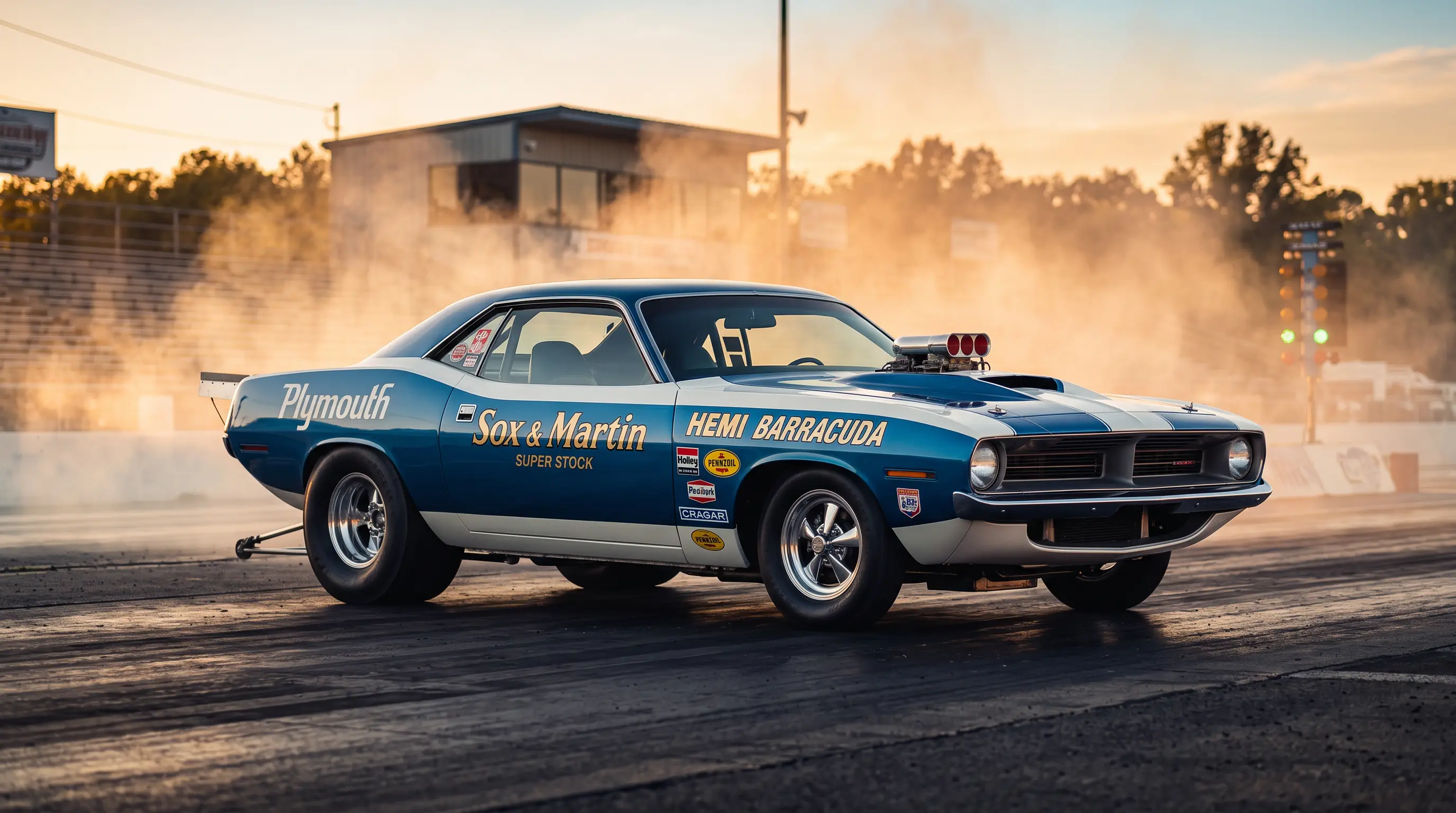
Graphics like this one were never purely decorative. They were part of how Plymouth signaled performance intent on a car that, depending on engine choice, ranged from a mild six-cylinder commuter to something genuinely quick. The stripe did visual work that the engine bay alone could not, telling a passerby at a glance that this particular Cuda meant business, regardless of what was actually sitting under the hood. That signaling tradition runs through a lot of the era's fastest cars, including the story of a related story about drag racing's own use of graphics to announce intent before the car ever left the line.
If you are shopping for a car that wears this detail correctly, Barracudas for sale now are worth a close look at the stripe alignment before anything else, since it is one of the fastest ways to judge how carefully the rest of the car has been handled.
A crooked stripe on an otherwise beautiful restoration tells me the shop that did the work either did not know what correct looked like, or did not care enough to check. Either way, that same shortcut mentality tends to show up elsewhere on the car once you start looking, under the carpet, behind the dash, in places a casual buyer never thinks to inspect. The stripe is the tell. Trust it.