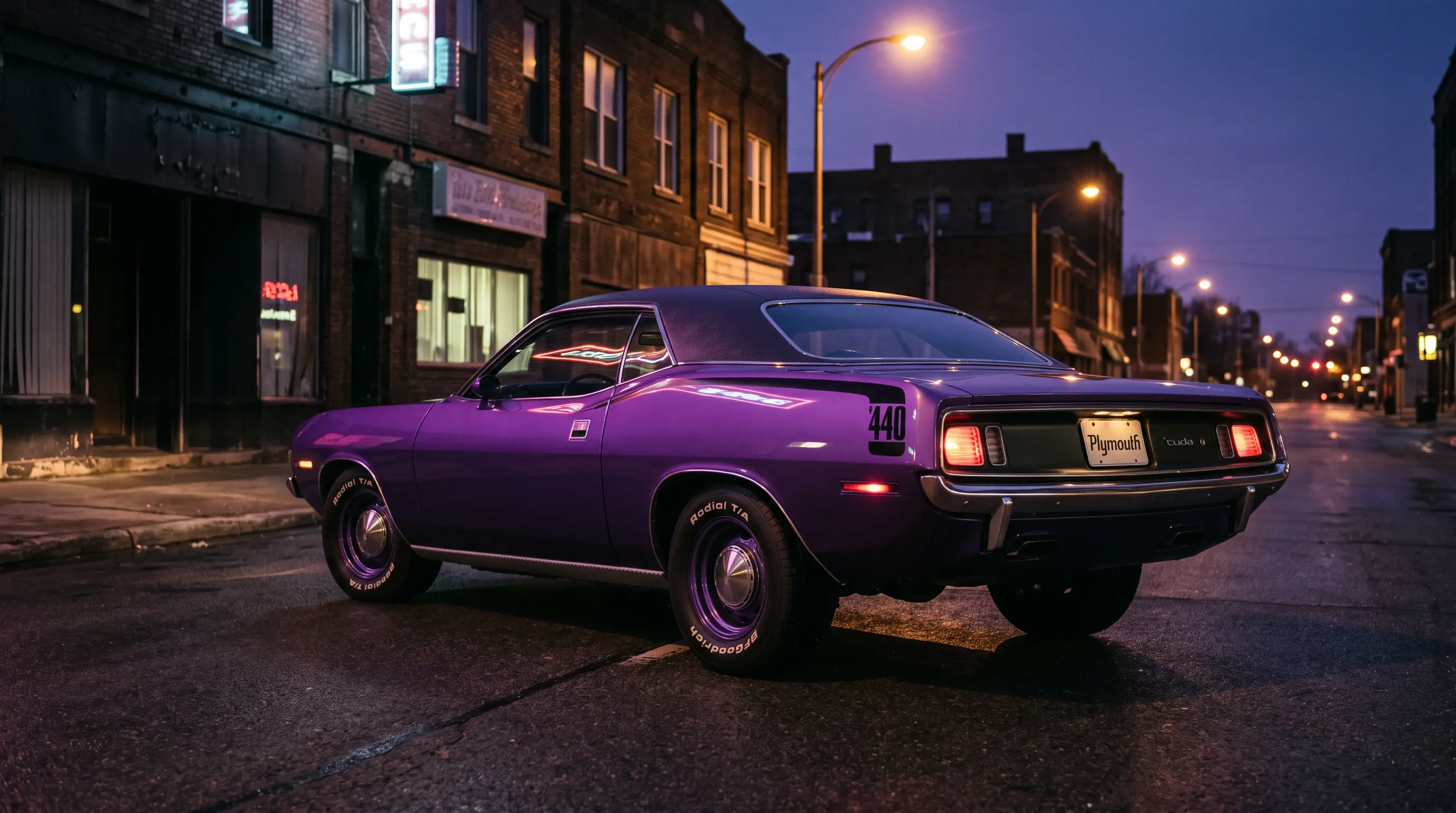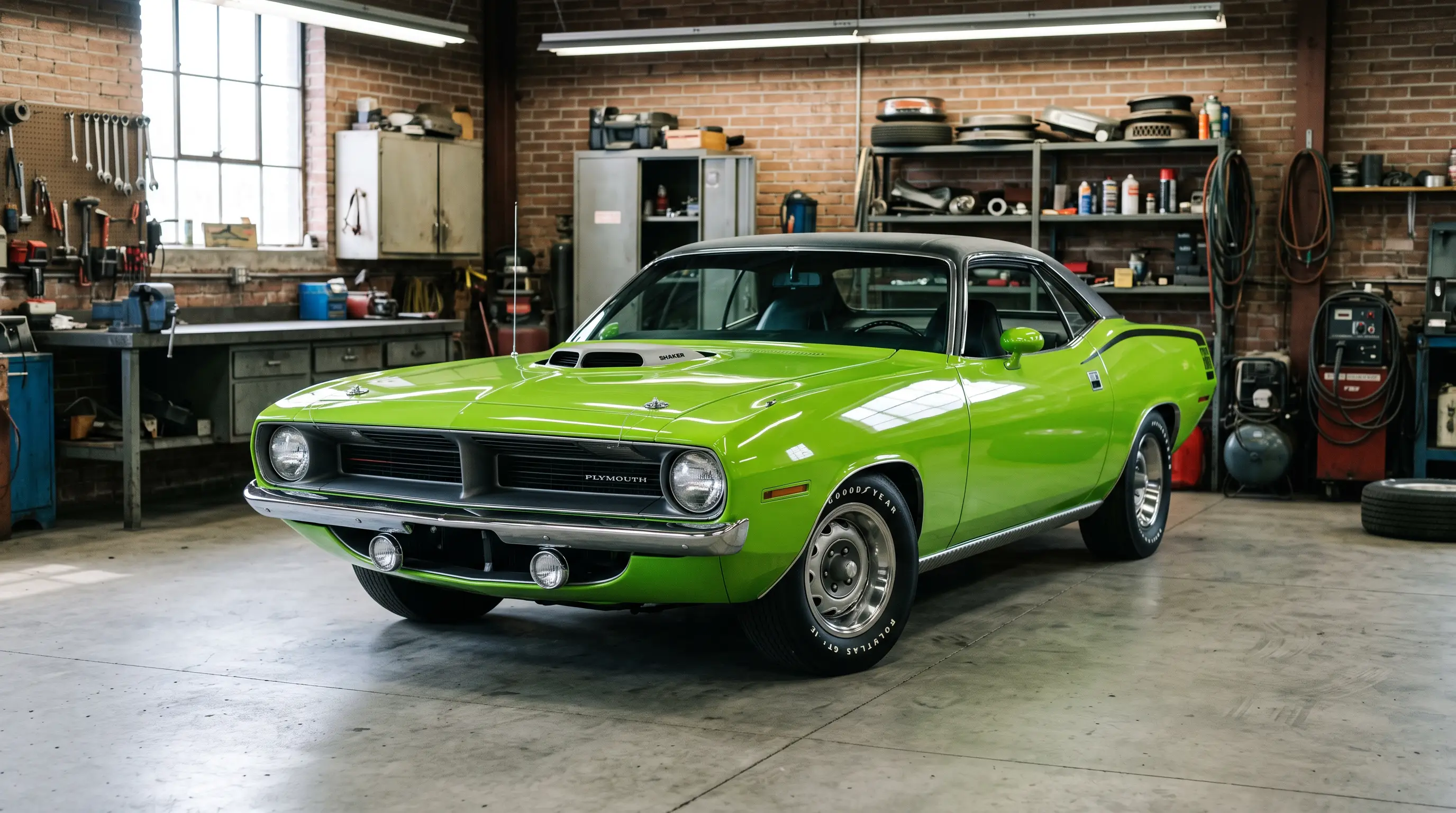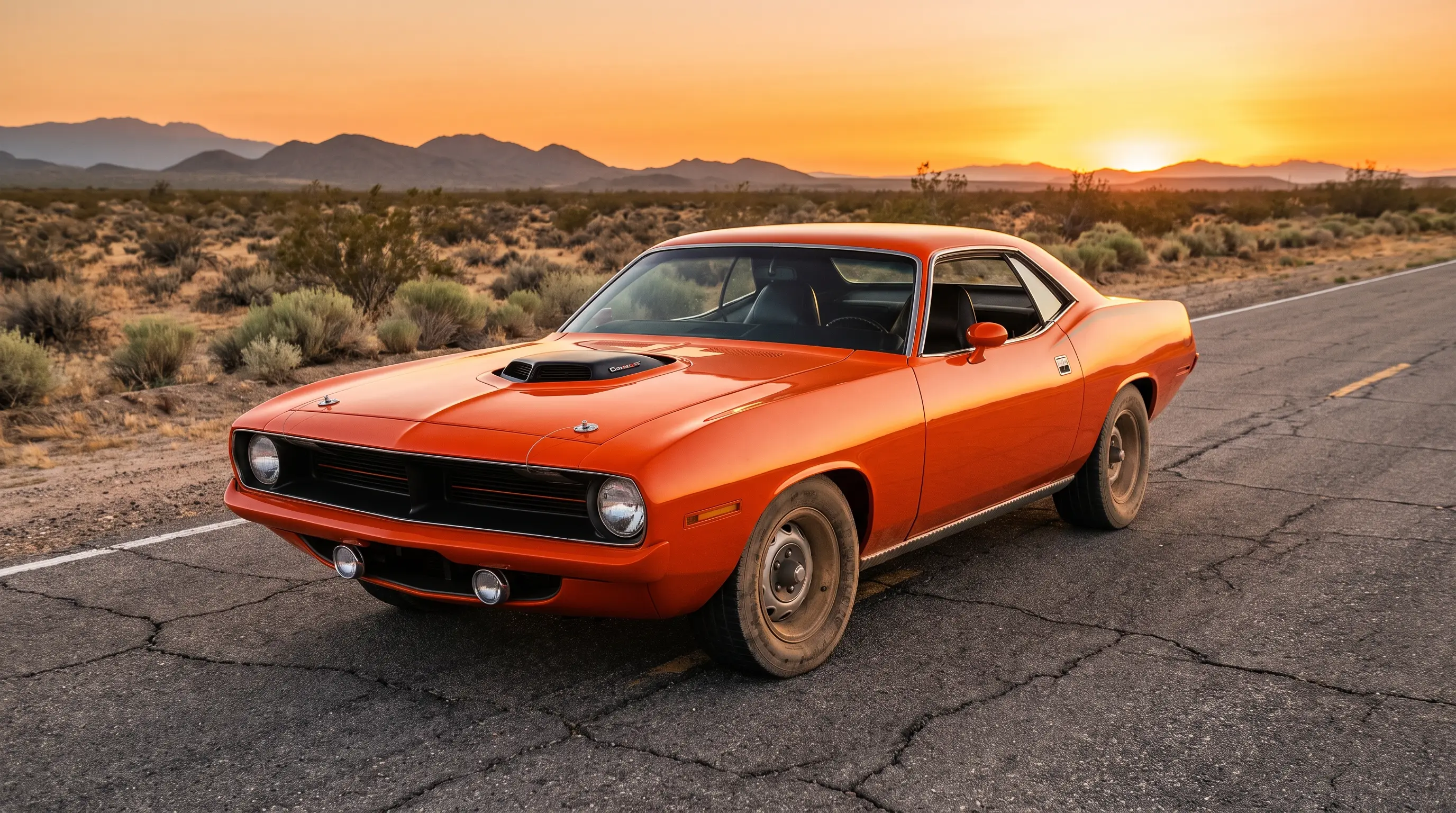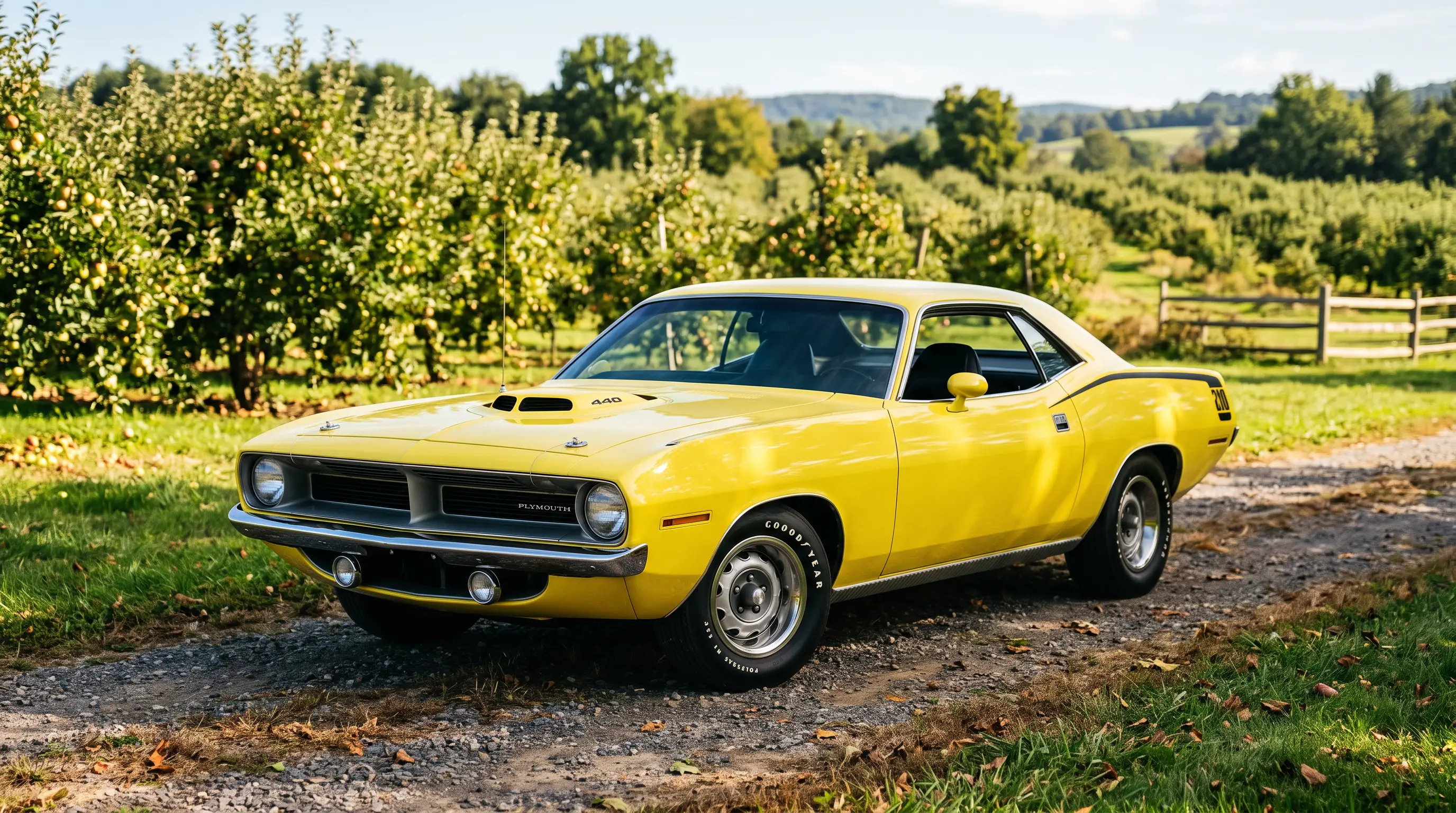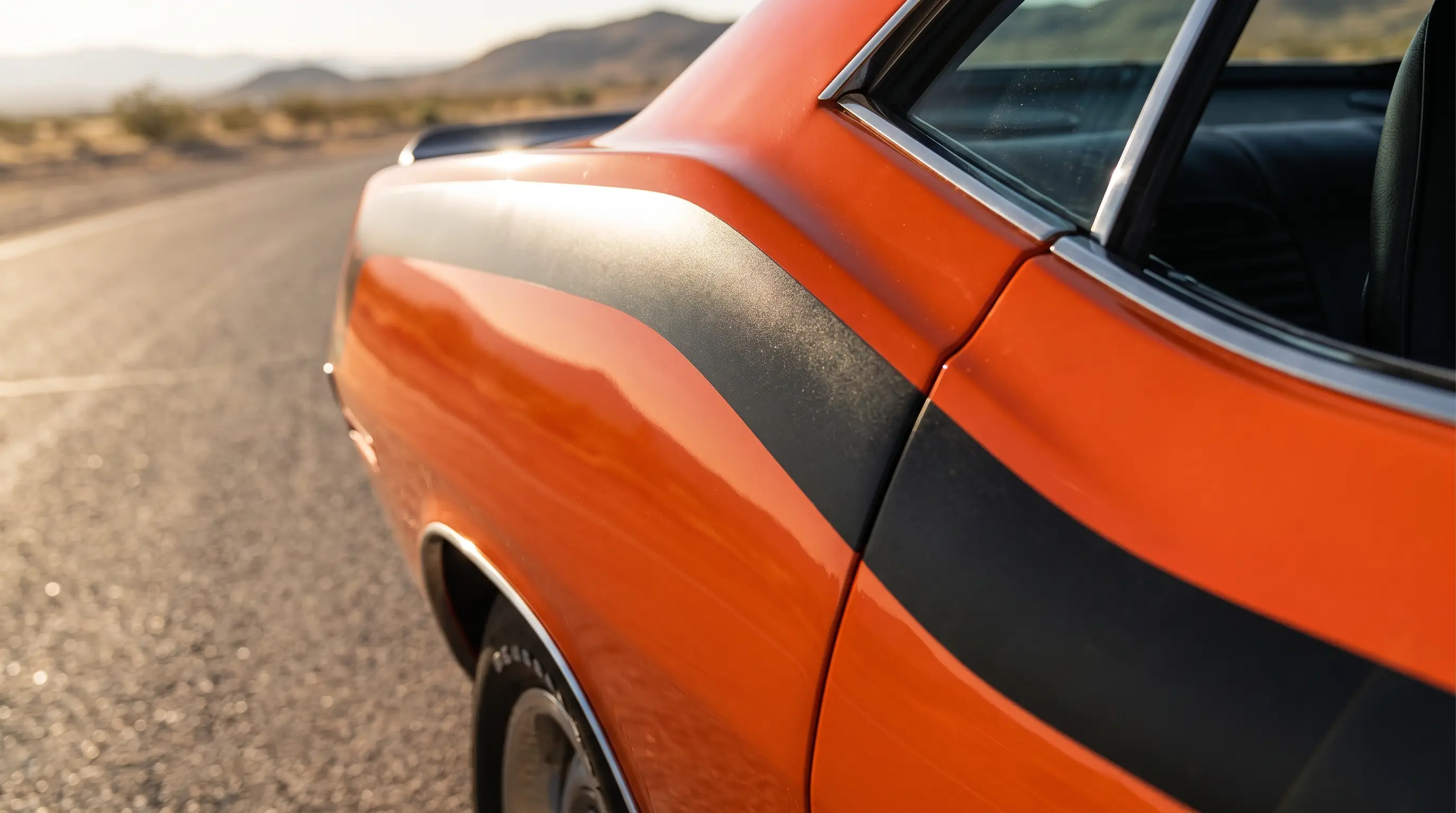
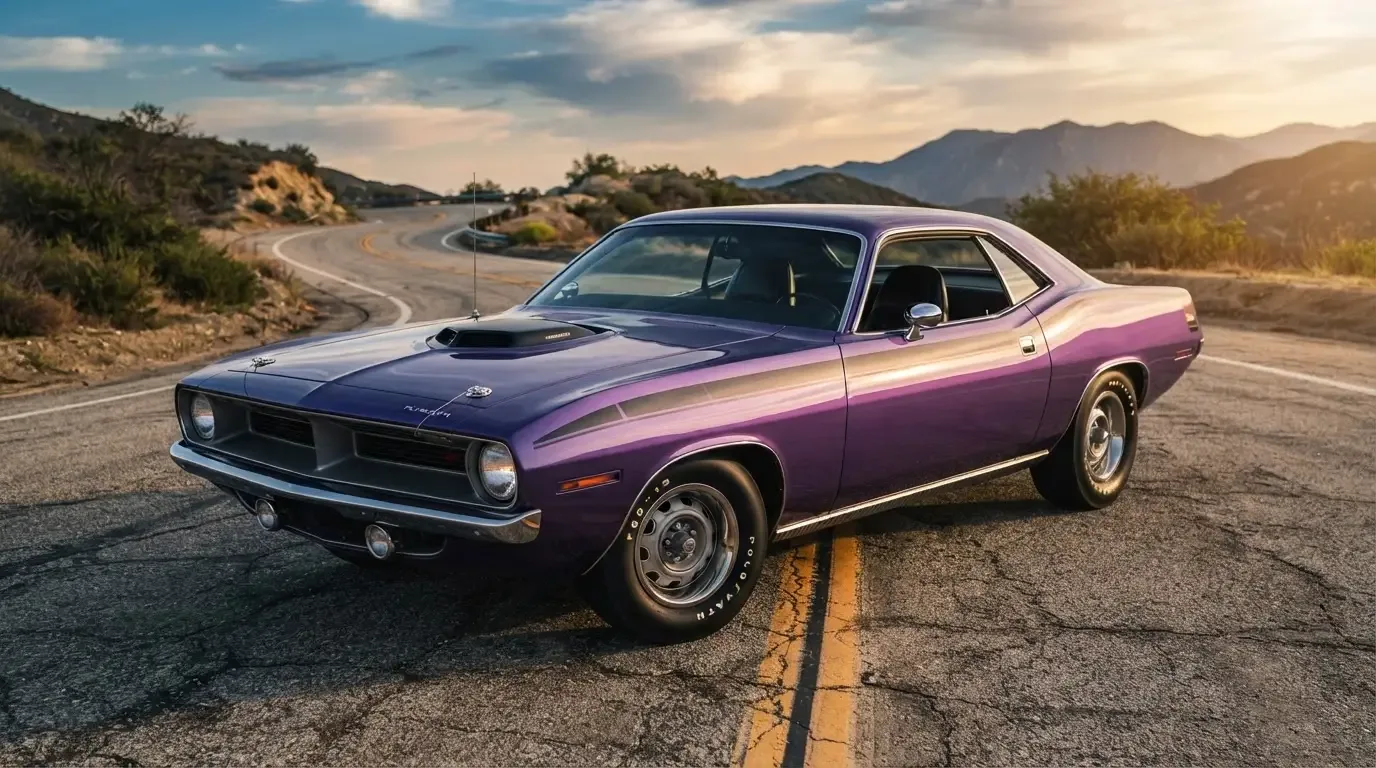
Somewhere in 1970, a young buyer stood in a Plymouth showroom and chose a color called Vitamin C Orange, and in doing so said something about who they wanted to be. That is the thing about the Cuda high impact colors. They were never only paint. They were a decision made out loud, in a decade that was learning to shout, and the Barracuda gave people a vocabulary for it. This is a story about color, about two men named Sox and Martin who made the car fast on Sunday, and about the strange afterlife the Cuda found on screen once the showrooms had moved on.
Start with the paint, because the paint is where most people fall in love, and because the names alone tell you what Plymouth was up to.
The names on the paint chips
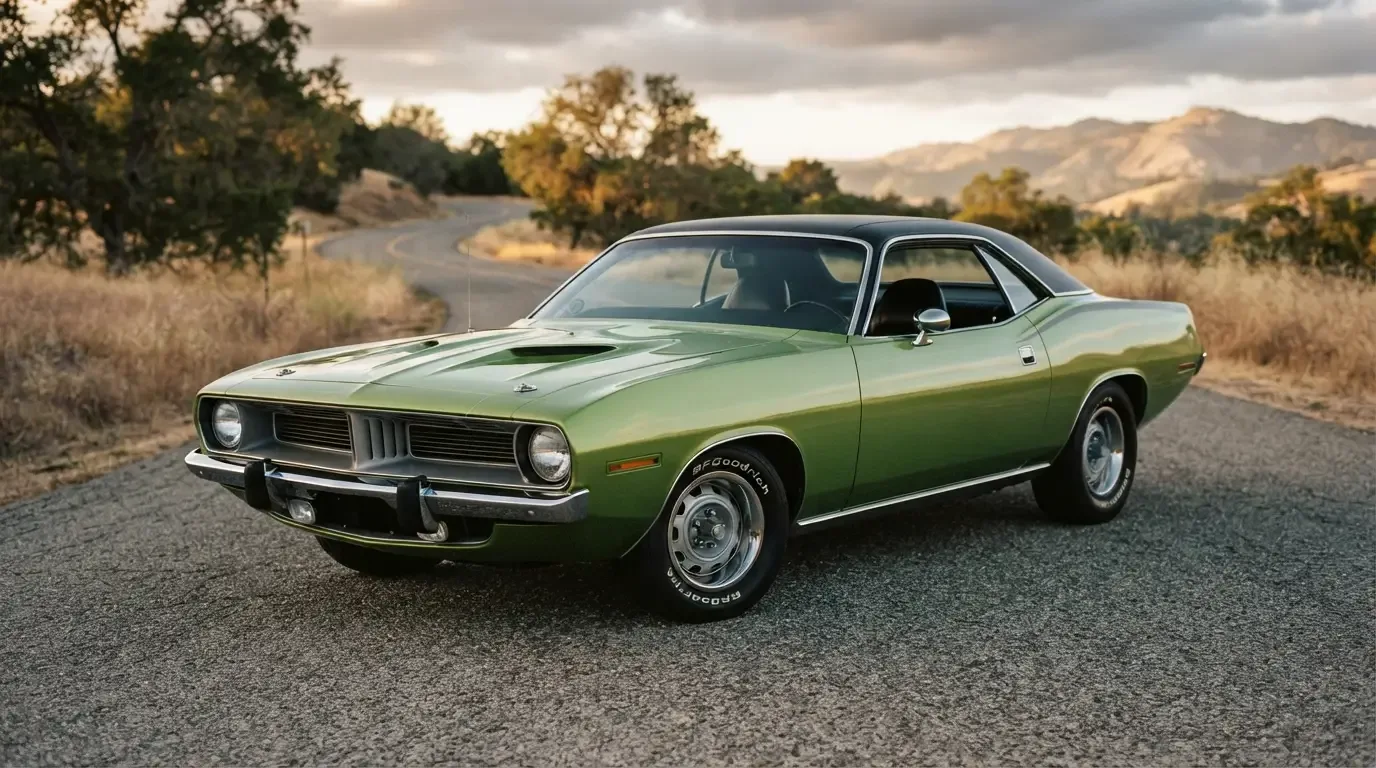
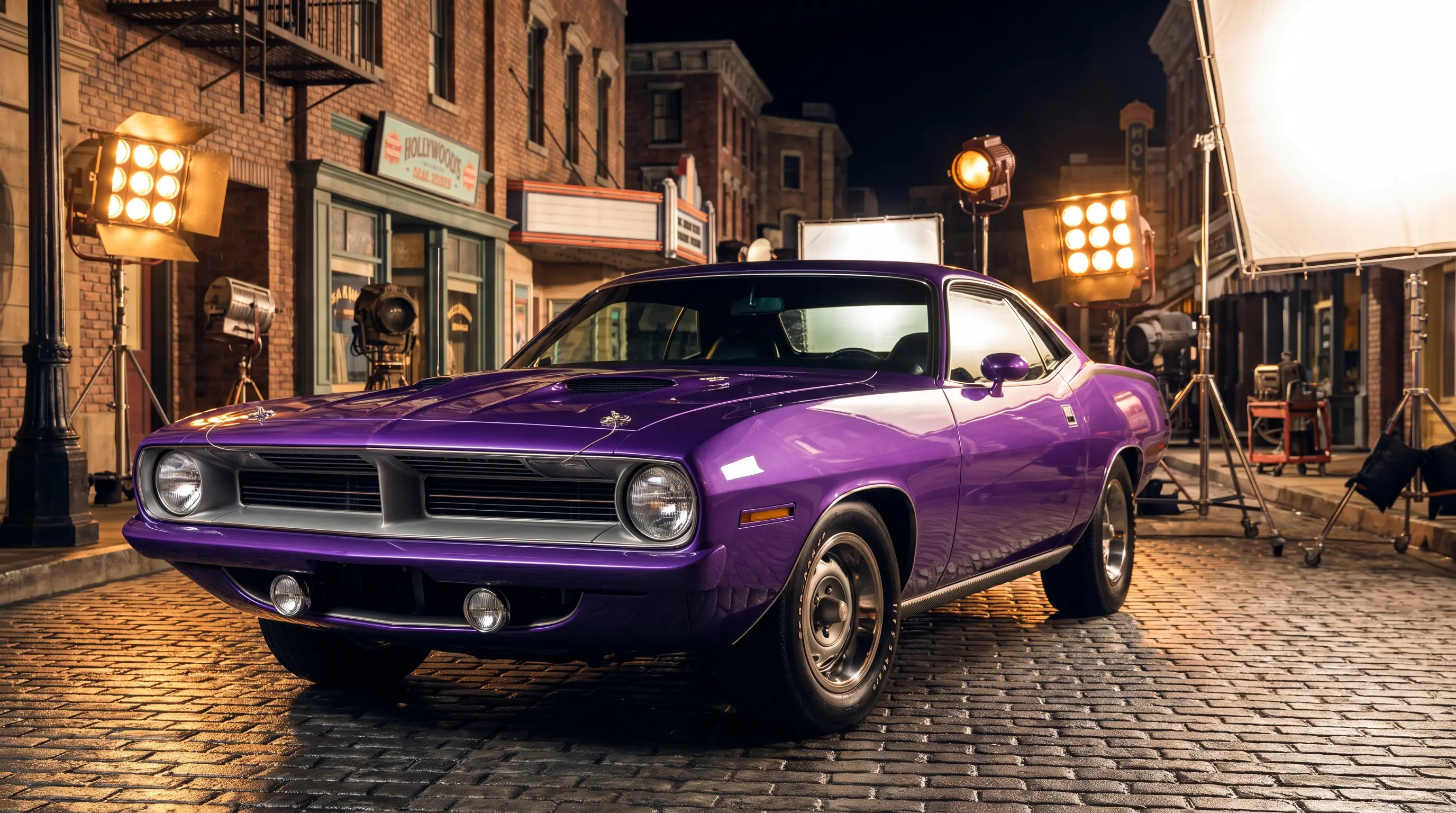
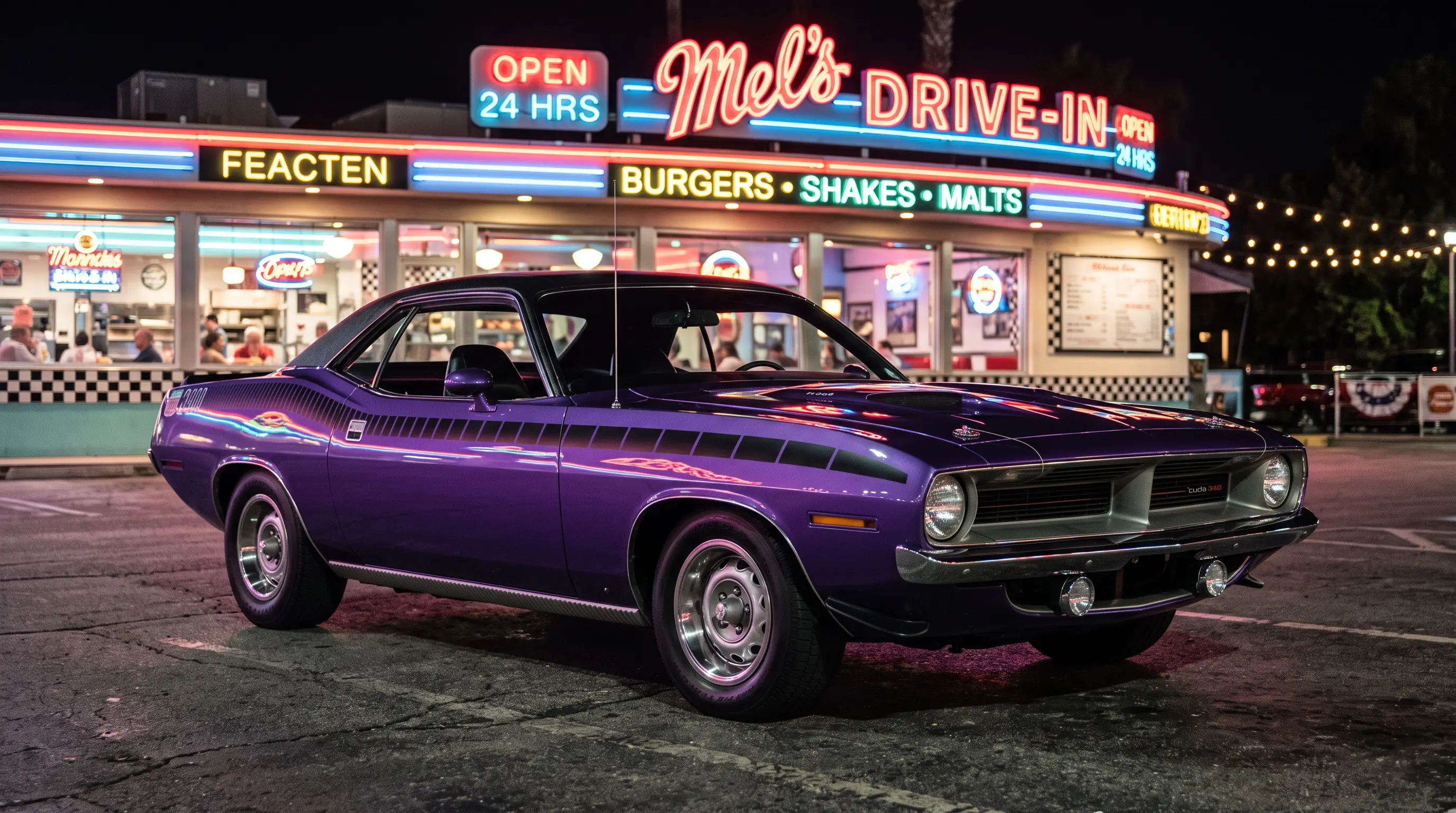
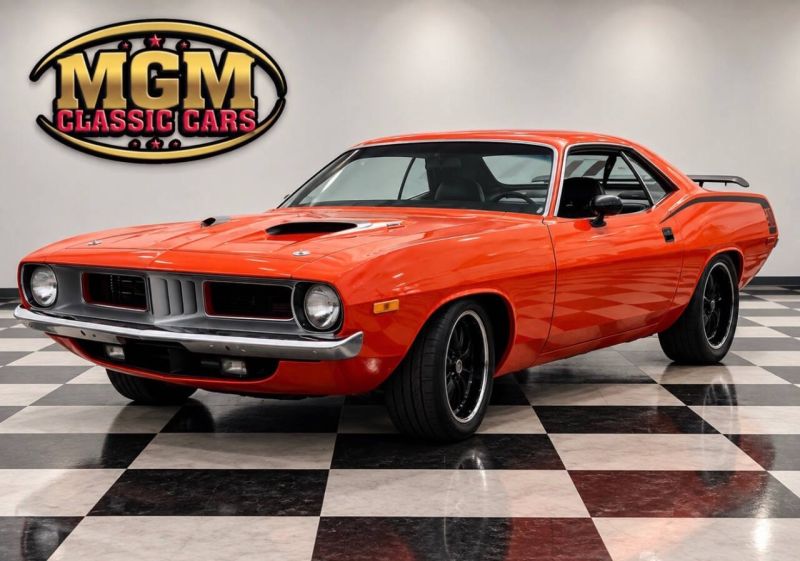
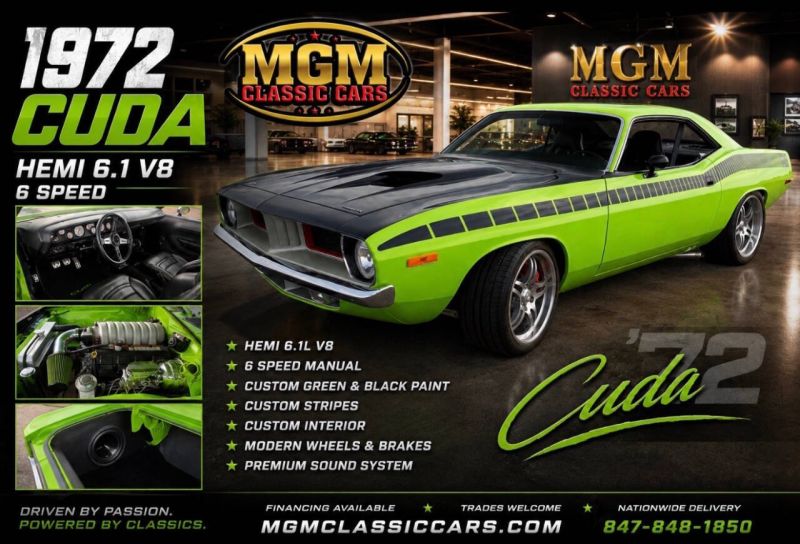
Plymouth's high impact colors arrived at the turn of the 1970s with names that read like a dare. Tor-Red. Lemon Twist. Lime Light. Vitamin C Orange. Sassy Grass Green. And the one everyone remembers, the purple that Plymouth called In Violet, the same shade Dodge marketed as Plum Crazy. These were not the sober blues and greys of the previous decade. They were loud on purpose, and the marketing leaned into it rather than apologizing for it.
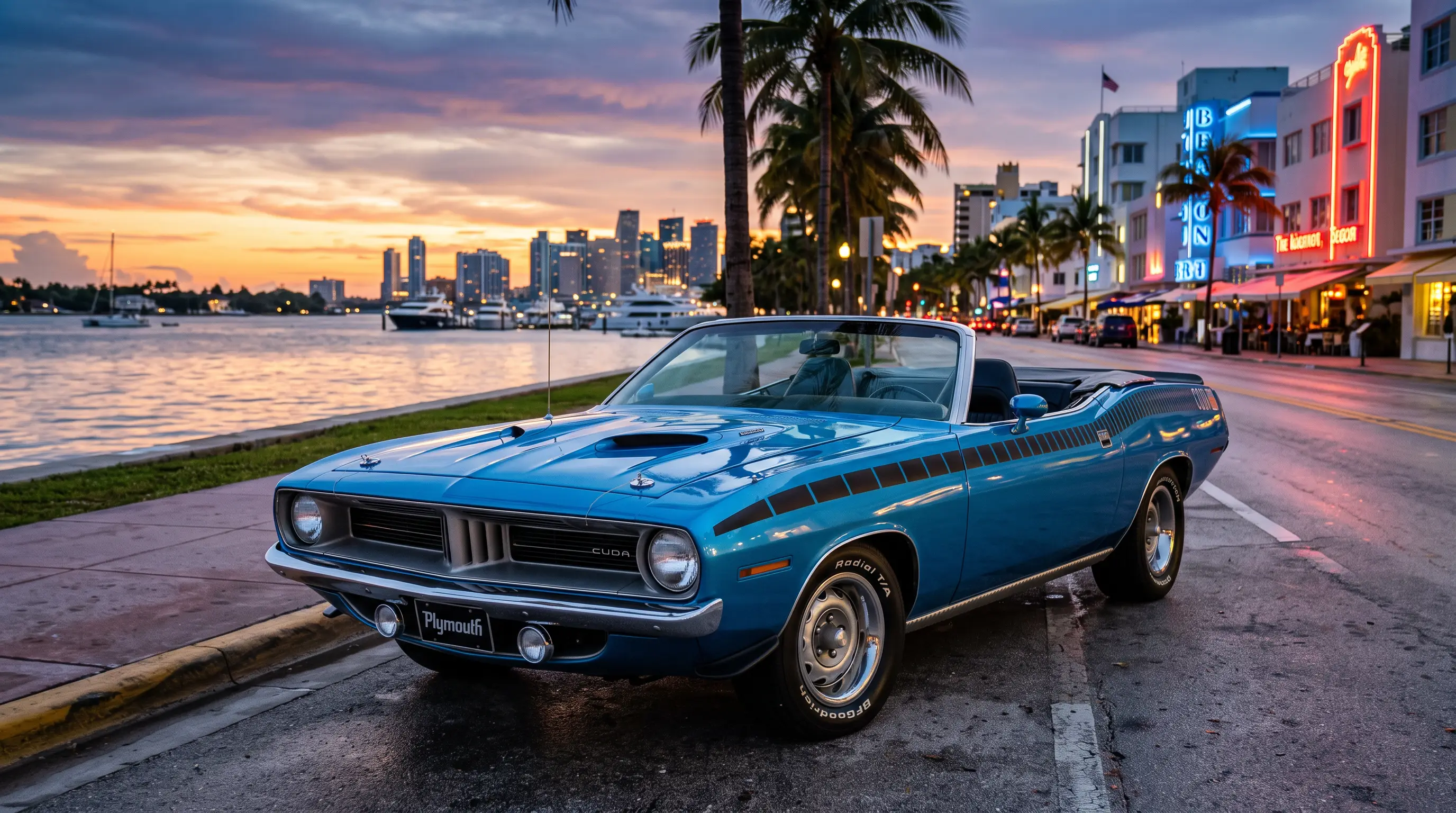
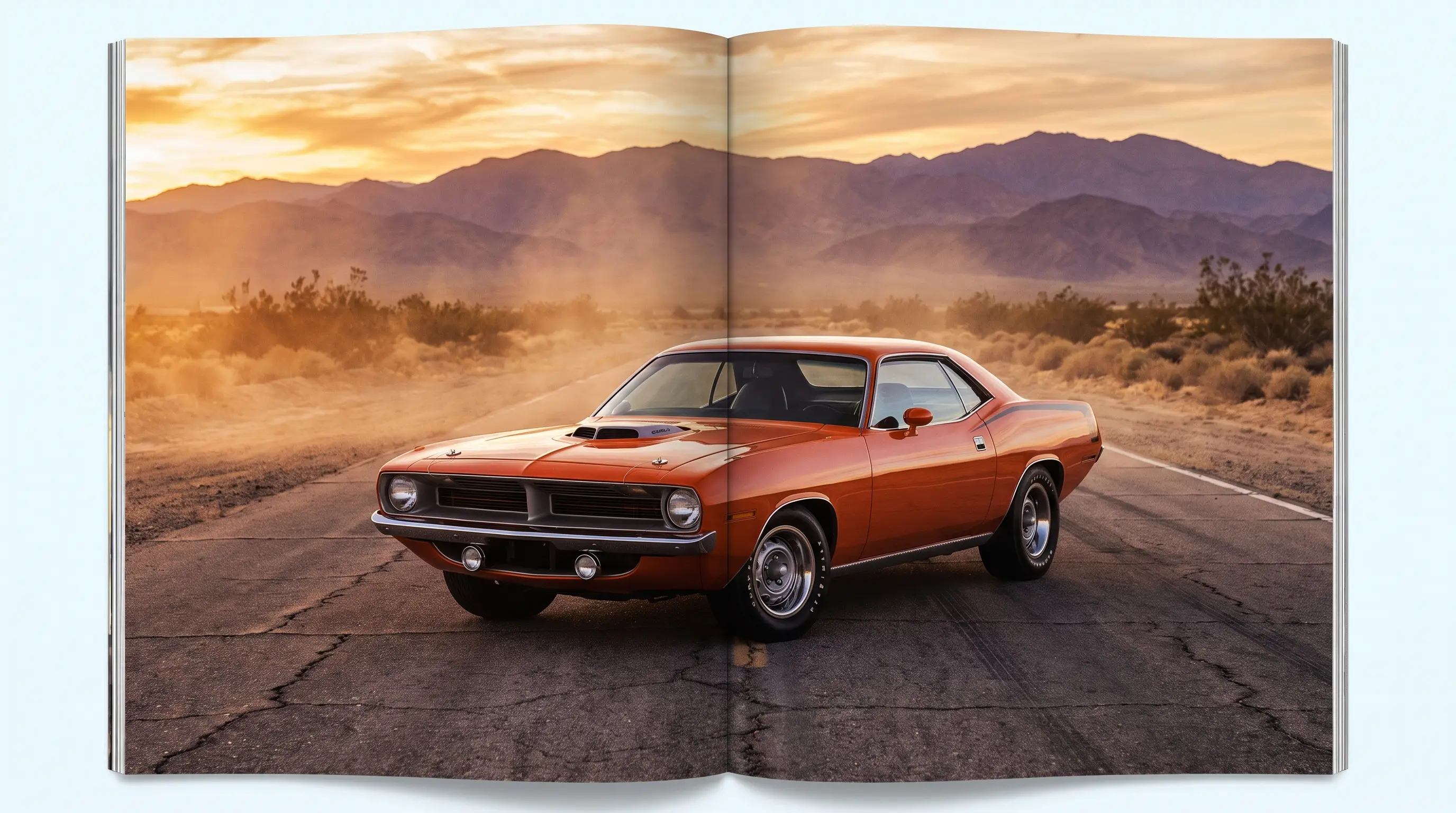
What makes the Cuda high impact colors matter is that they were not a gimmick bolted onto an ordinary car. They landed on the E-body Barracuda exactly when the car itself was at its most aggressive, and the two things amplified each other. A Hemi Cuda in a screaming citrus orange is a complete sentence. The color tells you the car is not being modest, and the car agrees. People who owned them at the time will tell you the paint drew a crowd before the engine ever turned over. The full model story behind those cars lives in more on the plymouth barracuda, but the colors are where the culture starts.
| Marketing name | Color |
|---|---|
| Tor-Red | Bright red-orange |
| In Violet | Purple, the same color Dodge sold as Plum Crazy |
| Lemon Twist | Vivid yellow |
| Vitamin C Orange | Bright orange |
| Sassy Grass Green | High-visibility green |
| Lime Light | Yellow-green |
Sox and Martin, and the car on Sunday
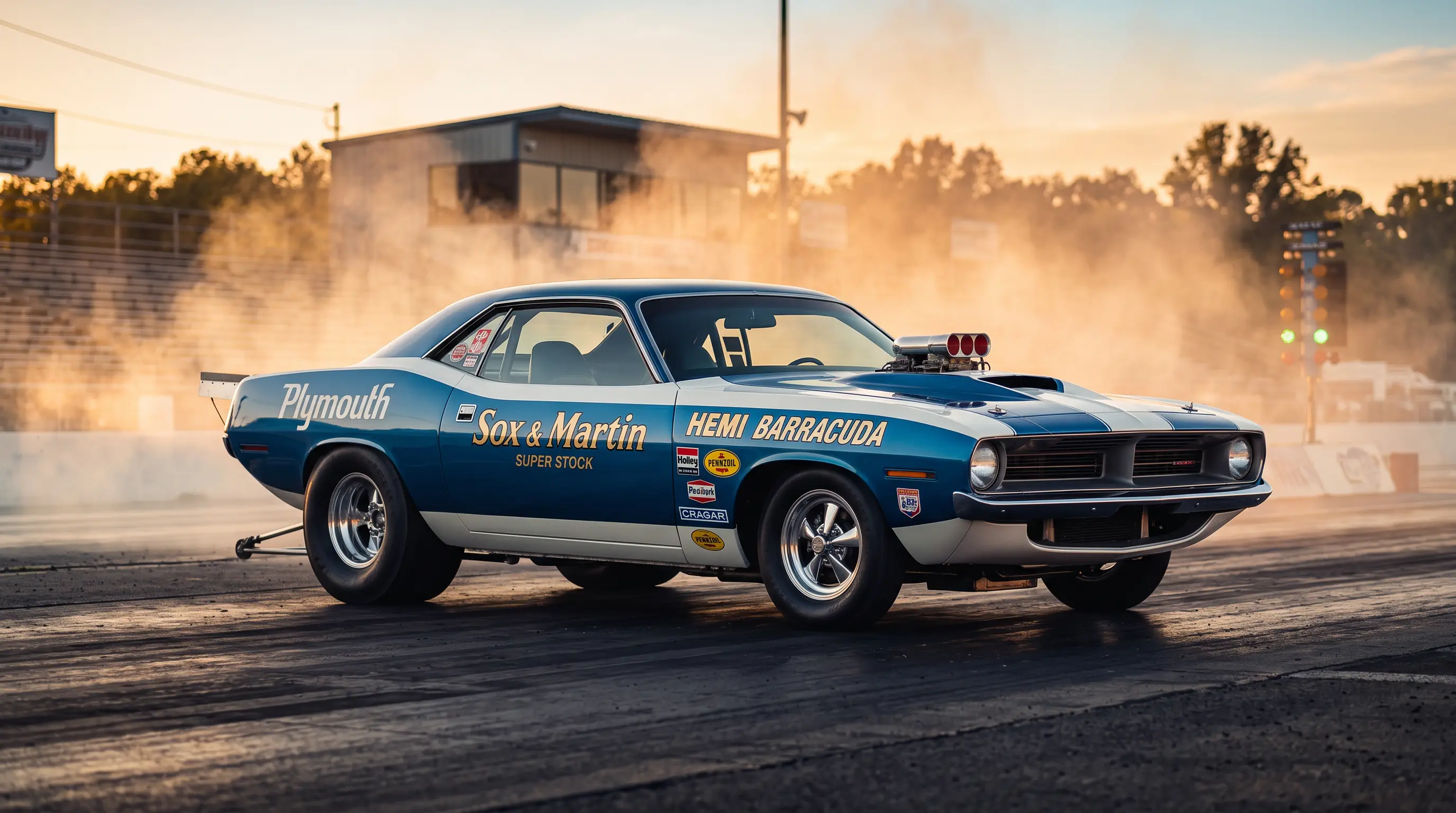
Color got people into the showroom. Racing kept the Barracuda's name in the newspaper. Ronnie Sox and Buddy Martin ran one of the most recognized drag racing operations in the country under the Plymouth banner, and their cars, finished in Plymouth colors and covered in sponsor lettering, did more for the brand's performance image than any brochure could. Sox was the driver, famous for a clutch and shifter technique that beat cars with more power, and Martin ran the business and the strategy.
What set the pair apart was that they were not just fast, they were teachers. Sox and Martin ran clinics around the country, showing ordinary enthusiasts how to launch a car and work a manual gearbox at the strip, and that grassroots contact built a loyalty that pure winning never could. A young person who watched Ronnie Sox demonstrate a shift at a local event carried that memory into the showroom. The team did not just represent Plymouth performance. It taught a generation what Plymouth performance felt like in their own hands, and that is a deeper kind of marketing than any billboard.
The Sox and Martin cars turned the Barracuda into something a kid could believe in. When a Hemi car in the team's livery went down a quarter mile and won, the ordinary Cuda parked outside the local diner borrowed a little of that glory. This is how performance image actually worked in the era. It was not built in a wind tunnel. It was built on a Sunday, at a strip, by two men whose names became shorthand for Plymouth going fast. Owners understood the connection, and the connection is a large part of why these cars carry the weight they do now.
Curious Yellow and the strange advertising
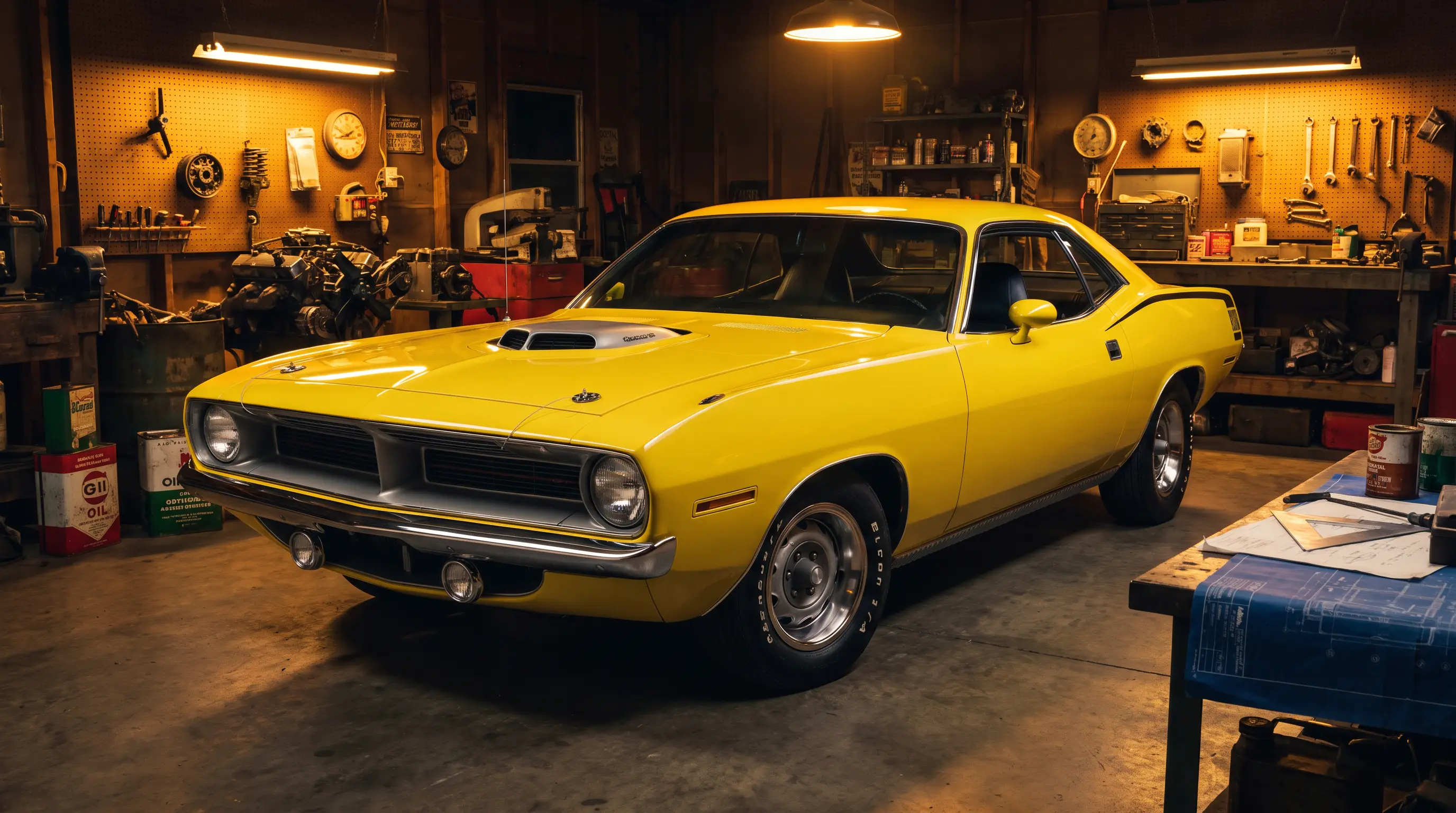
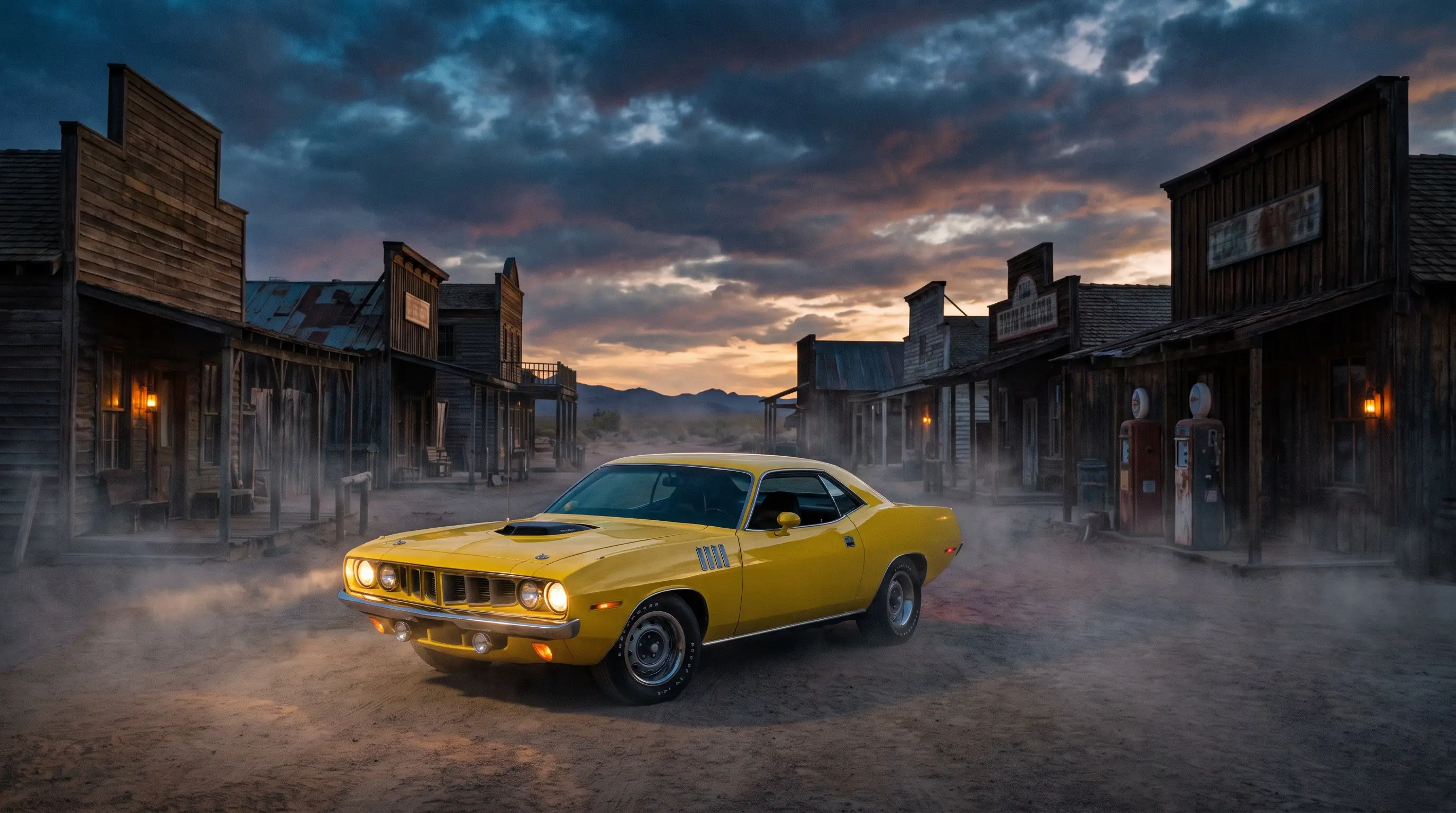
Plymouth's willingness to be odd deserves its own moment. One of the high impact colors was called Curious Yellow, a name borrowed from a film that had been a talking point at the time, and the whole naming exercise showed a company comfortable being a little irreverent. The advertising matched. Plymouth was selling attitude as much as horsepower, and it knew its buyer was young and did not want a car that looked like something a parent would approve of.
It is worth remembering how unusual this was for a major car company. Detroit in the 1960s had generally sold cars on respectability, on the idea that a car said something reassuring about your place in the world. Plymouth's high impact campaign threw that instinct out. It sold the Cuda on the promise of not being respectable, of standing out rather than fitting in, and it trusted that a young buyer would find that promise irresistible. The gamble paid off, and it changed how performance cars were marketed for years afterward. The color was the message, and the message was rebellion at a manageable monthly payment.
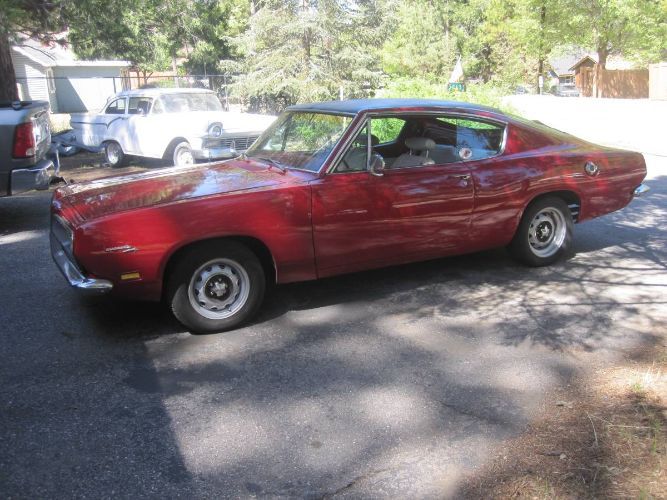
That irreverence dated the cars in the best way. You can look at a high impact Cuda and know the year within a season, because nothing about it belongs to any other moment. The colors are a timestamp. They fix the car to a short window when American performance and American self-expression were briefly, loudly, the same thing. If you like knowing the neighbors in a story, another Barracuda chapter worth reading is another one worth knowing, which covers the quieter early cars that came before all this noise.
The showroom as a stage
Picture the showroom floor for a moment, because that is where the colors did their real work. A dealer in 1970 did not have to say much when a Sassy Grass Green Cuda sat under the lights. The car made the pitch on its own. Salesmen of the era have described how the high impact cars pulled foot traffic off the sidewalk, and how a buyer who came in for a sensible sedan sometimes left having signed for something the color of a traffic cone. That is marketing that works before a word is spoken.
The buyers who chose those colors were making a statement about age as much as taste. A young person picked Lemon Twist precisely because their father would not have. The paint drew a line between generations, and Plymouth understood that line was worth money. The company was not selling transportation to these buyers. It was selling a way to be visible, and it priced the option accordingly and watched it move.
There is a tender side to this that shows up at car shows now. The people who own the loud cars today are often the same people who could not afford them at seventeen, or who had one and lost it, and the color is the thing that brings the memory back whole. You can watch a grown adult go quiet in front of a Plum Crazy Cuda, and it is never really about the paint chemistry. It is about who they were, or wanted to be, the year that color was new.
The Cuda finds a second life on screen
Cars this photogenic do not stay off camera for long. The Barracuda, and the convertible Cuda in particular, became a recurring presence in film and television long after production ended. The best-known example is the television series Nash Bridges, where Don Johnson's character drove a bright yellow convertible presented on screen as a 1971 Hemi Cuda, painted in a deep shade the production called Curious Yellow, and the car became almost a second lead over the show's run. The screen cars were actually built from modified 1970 Barracuda and 'Cuda convertibles standing in for the genuine, far rarer 1971 Hemi Cuda convertible, a common and sensible practice given how few real Hemi convertibles existed to risk on a film set. For a generation that never saw one new, that car was the introduction.
The reason a director reaches for a Cuda is the same reason a buyer reached for one in 1970. The car photographs as an attitude. Park it in a frame and the audience reads menace or freedom or trouble before a line of dialogue is spoken, and a good director knows how to spend that for free. The high impact colors only sharpen the effect, because a car that was designed to be seen from across a parking lot is a car that reads instantly across a movie theater. The paint that sold the car new is the same paint that keeps it working on camera decades later.
The Cuda showed up elsewhere too, in horror and in action, wherever a filmmaker needed a car that looked dangerous just sitting still. That is the payoff of the high impact era. The design and the color made these cars read instantly on screen, so directors reached for them, and each appearance renewed the legend for a new audience. A car that was loud in 1970 kept being loud on television decades later, which is a rare kind of longevity for any machine.
Why the color outlasted the car
The Barracuda stopped being built in 1974, but the cuda high impact colors never really went away. Chrysler has revived several of the names on later cars precisely because they carry so much memory, and collectors still speak the old vocabulary fluently. The paint became a language, and languages outlive the things that first spoke them.
That is the quiet truth at the center of all this. The engineering mattered, and Sox and Martin mattered, and the screen appearances mattered. But when people close their eyes and picture a Cuda, they see a color first. They see that impossible purple, or that citrus orange, sitting in a showroom in 1970 waiting for someone brave enough to sign for it. The car gave a whole generation a way to be seen.
"You can talk horsepower all day, but the first thing anyone remembers about a Cuda is the color. The cuda high impact colors were how a quiet buyer told the whole street exactly who they meant to be."
- Nora Beckett
If the paint has done its work on you, and it usually does, you can see what has survived and how it is priced when you browse classic Barracuda listings. The loud ones still turn heads in a parking lot the same way they turned heads in the showroom, which is, in the end, the whole point of a color that was never trying to be subtle.
Sources and notes
- Hagerty Media: High-Impact Colors, When Hot Muscle Cars Got Some Crazy Paint
- Classic Industries: Mopar Paint, Dodge and Plymouth High-Impact Colors
- Motorious: What Happened To Nash Bridges' Plymouth Hemi 'Cuda
- Street Muscle Magazine: The 1971 Plymouth 'Cuda From Nash Bridges
- Wikipedia: Plymouth Barracuda