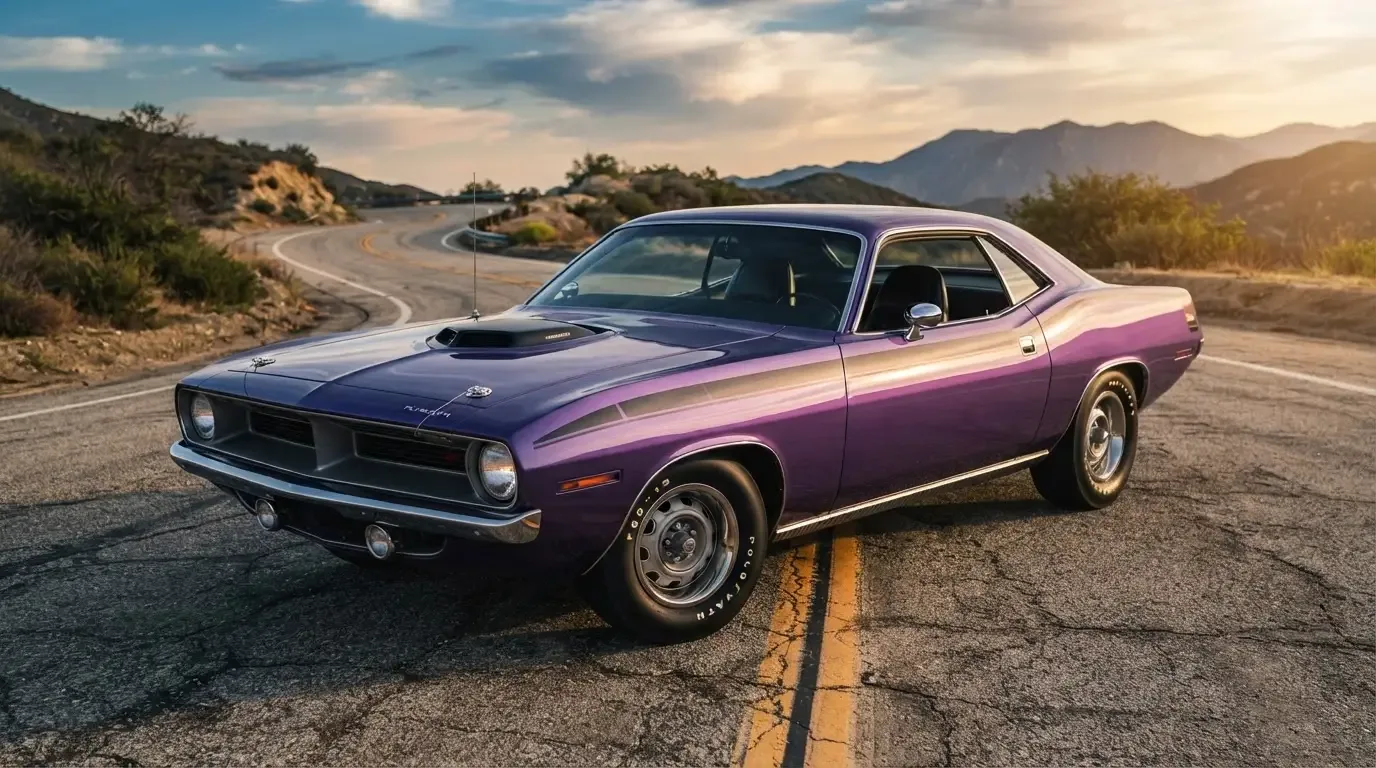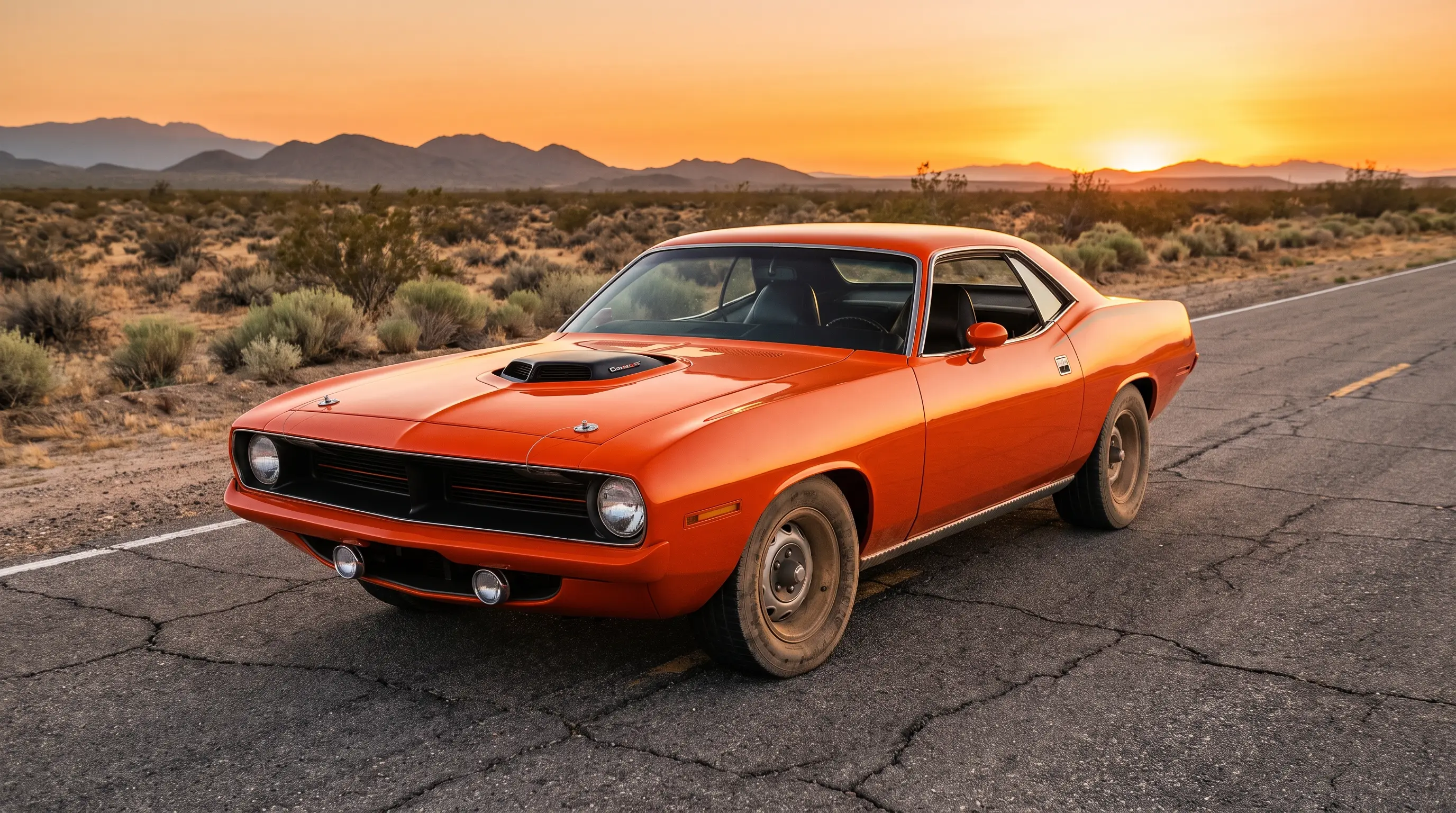
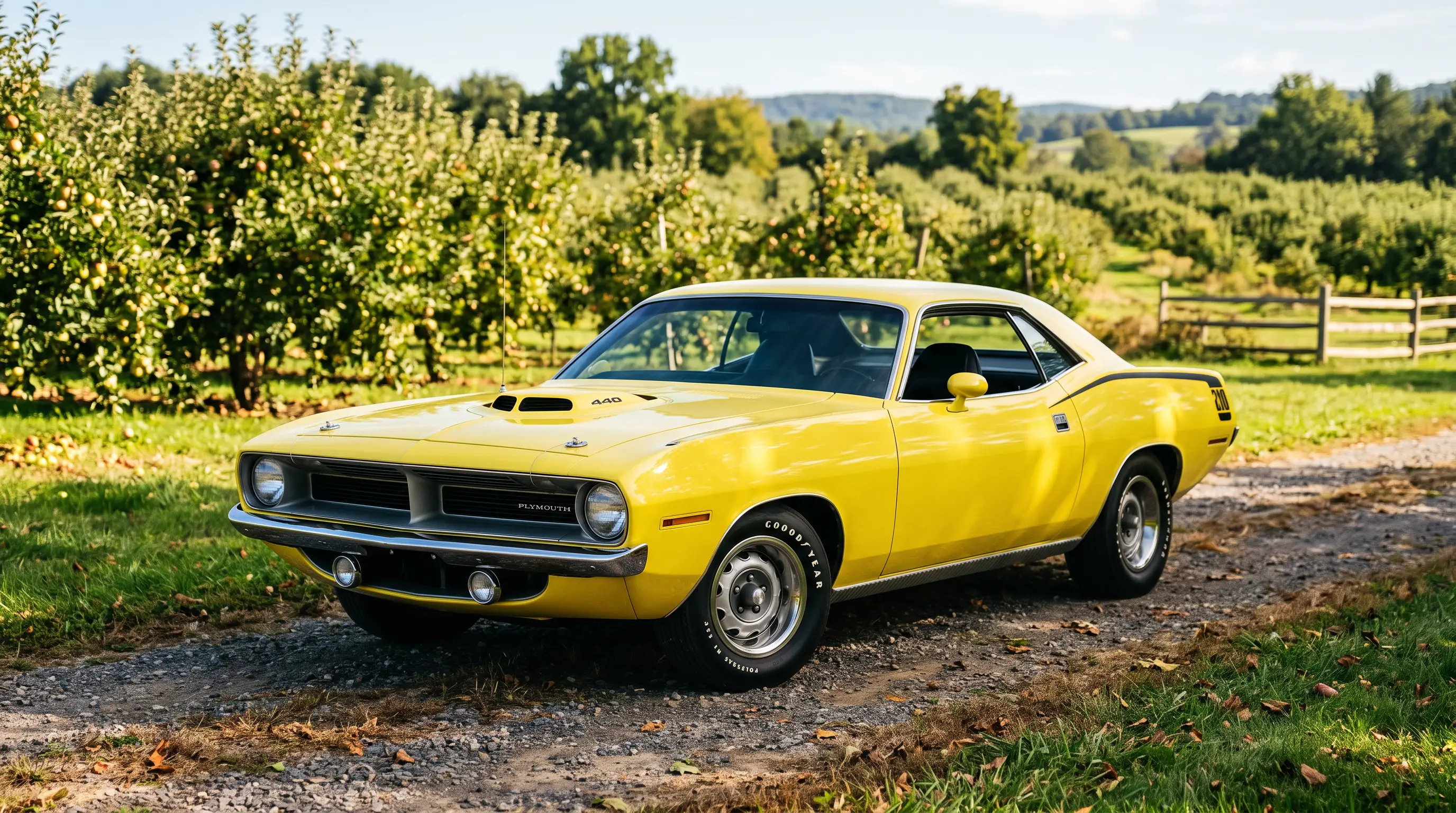
Yellow is a color most shops treat as easy, and most shops are wrong about that when the yellow in question is a lemon twist cuda. This particular shade is bright enough to expose every flaw in prep work that a darker color would hide, and I have learned that the hard way more than once early in my career.
Two yellows, often confused
Plymouth called its main bright yellow Lemon Twist, paint code FY1, which Dodge sold under its own name, Top Banana. Curious Yellow is a different Plymouth color entirely, paint code GY3, a one-year-only 1971 shade that shifts between yellow and yellow-green depending on the light, badged Citron Yella on the Dodge side. People shopping these cars mix the two names up constantly, treating Lemon Twist and Curious Yellow as interchangeable when they are two distinct factory formulas with different codes and different production windows. On the Barracuda specifically, Lemon Twist became one of the more common High Impact choices, common being a relative term for a palette that was always a minority option on the order sheet to begin with.
The two names get mixed up constantly by people who are not paying close attention, and on a fender tag it does not matter what a seller calls it. The paint code either matches or it does not, and that is the only conversation worth having when you are trying to verify a car's history.
Why this color is deceptively hard to spray
Bright yellows show undertone shifts that most other colors mask entirely. If your base coat has even a slightly warmer or cooler mix than the original formula, the difference is obvious under direct sun in a way it simply would not be on a car painted black or dark green. I keep a dedicated test panel just for yellow jobs because I do not trust my eye under shop lighting alone anymore, not after getting burned on a blend that looked perfect indoors and wrong the second it rolled outside.
Surface prep matters more here too. Sand-through marks, uneven primer coverage, any inconsistency in the substrate telegraphs through a bright yellow topcoat far more readily than it would through a darker color. I block these panels with an extra pass specifically because of this, the same discipline I use on Sublime jobs, another color in this same family of unforgiving brightness.
| Detail | Note |
|---|---|
| Plymouth name | Lemon Twist (FY1) |
| Dodge equivalent | Top Banana (FY1) |
| Related but distinct color | Curious Yellow, Plymouth's 1971-only yellow-green (GY3) |
| Common stripe pairing | Black hockey stick or bumblebee stripe |
| Shop difficulty | High, exposes undertone and prep inconsistencies |
The wider story behind why Chrysler committed to a palette this loud in the first place is worth your time before you commit shop hours to matching it. The story of where this started covers the High Impact push as a whole and helps explain why yellow ended up sitting alongside purple and orange on the same order sheet.
Interior pairing and what looks factory correct
Chrysler paired specific interior color families with Lemon Twist to keep the overall package coherent, and a builder sourcing replacement upholstery without checking that pairing ends up with a car that reads wrong even when the exterior paint code is dead on. I keep period brochure photos on hand specifically to check this, because a black interior on a Lemon Twist car looks correct at a glance but is not always the combination Plymouth actually offered depending on the model year and trim level in question.
Dash pads, door panels, and other interior plastics from this era also fade and discolor in ways that can clash badly with a freshly matched exterior. I have had customers insist on a bright, perfectly matched Lemon Twist respray while ignoring a sun-faded, chalky dash that undercuts the whole effort the moment you sit inside the car. Interior restoration is not optional if you actually want the car to read as a coherent factory package rather than a good paint job wrapped around tired plastic.
Stripes and trim on a Lemon Twist car
Most surviving Lemon Twist Cudas carry a black hockey stick or bumblebee stripe package, and the contrast between the bright yellow base and a properly laid black stripe is part of what made these cars pop on a dealer lot in period. Getting that stripe edge crisp matters even more here than on most colors, because a soft or wavy line reads immediately against a base this bright. I have redone stripe work on customer cars more than once because a previous shop rushed the tape job and the result looked amateur under any real light.
"A bad blend hides on a dark car. On Lemon Twist it announces itself from across the shop floor."
- Jim Vasquez
Storage and part sourcing headaches
Any original Lemon Twist trim pulled off a car during disassembly needs careful cataloging, because replacement pieces in this exact shade are harder to source correctly than in more common factory colors. I have had customers wait months for a reproduction stripe kit that actually reads correctly against a genuine Lemon Twist base rather than a slightly-off yellow that looked fine on a supplier's website and wrong on the actual car. Bag parts by location as they come off, label everything, and do not assume a generic supplier's yellow stripe kit will match without a side-by-side check against an original sample.
What to verify before you buy
As with any High Impact color, the fender tag is the only reliable source of truth. Sellers occasionally describe a car as Lemon Twist when it is actually a more generic yellow from a later model year, and the difference in both rarity and value between the two is significant. Confirm the paint code before you get attached to a listing photo, especially since yellow can photograph inconsistently depending on lighting and camera settings.
I have also seen sellers use "Lemon Twist" loosely to describe any bright factory yellow, including later, less collectible shades that never carried the High Impact designation at all. That kind of loose labeling is not usually malicious, most sellers are repeating what they were told rather than verifying it themselves, but it means the burden falls on the buyer to check the paint code directly rather than trust the listing copy.
If a bright yellow Cuda has caught your eye, a classic Barracuda for sale search is worth doing with the paint code question ready before you make an offer. The color alone will not tell you what you actually own, and a five minute conversation with the seller about the fender tag will tell you more than any photograph ever could.