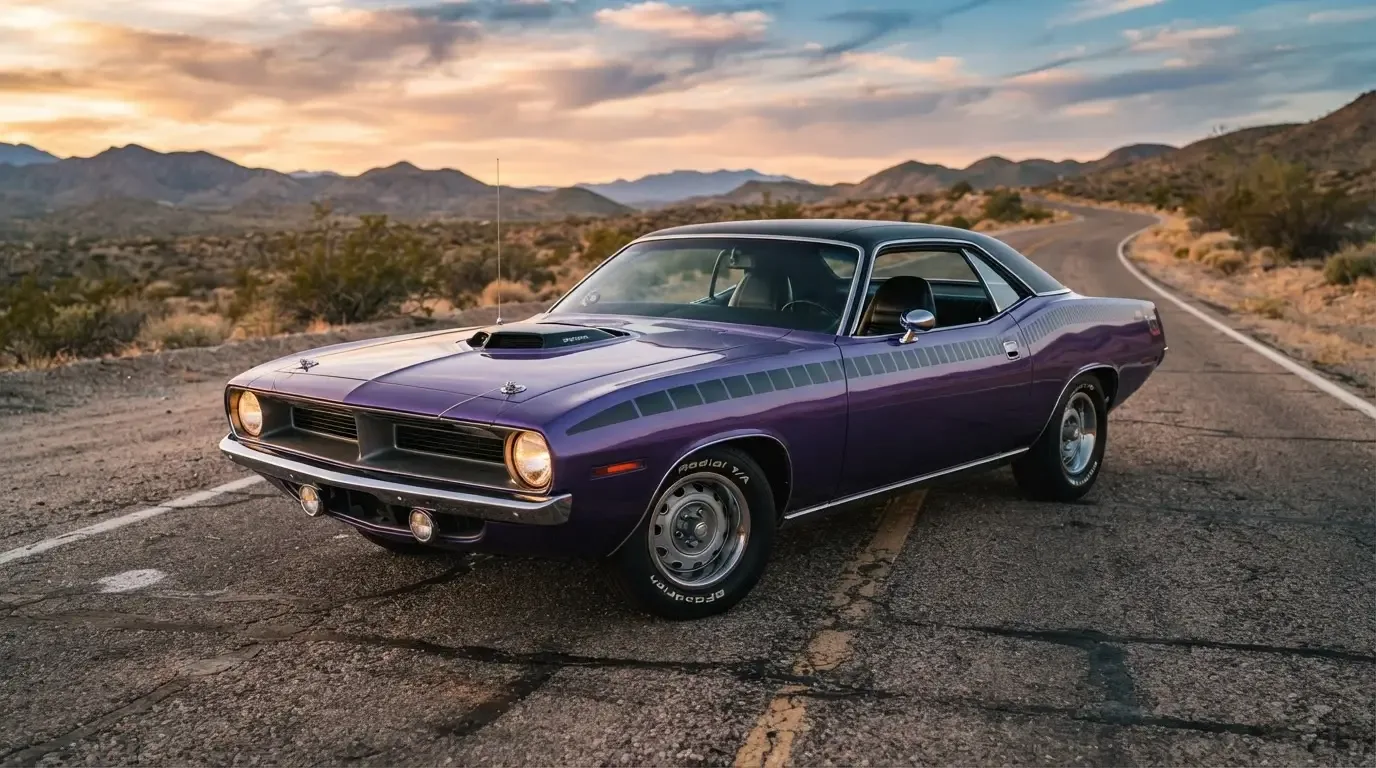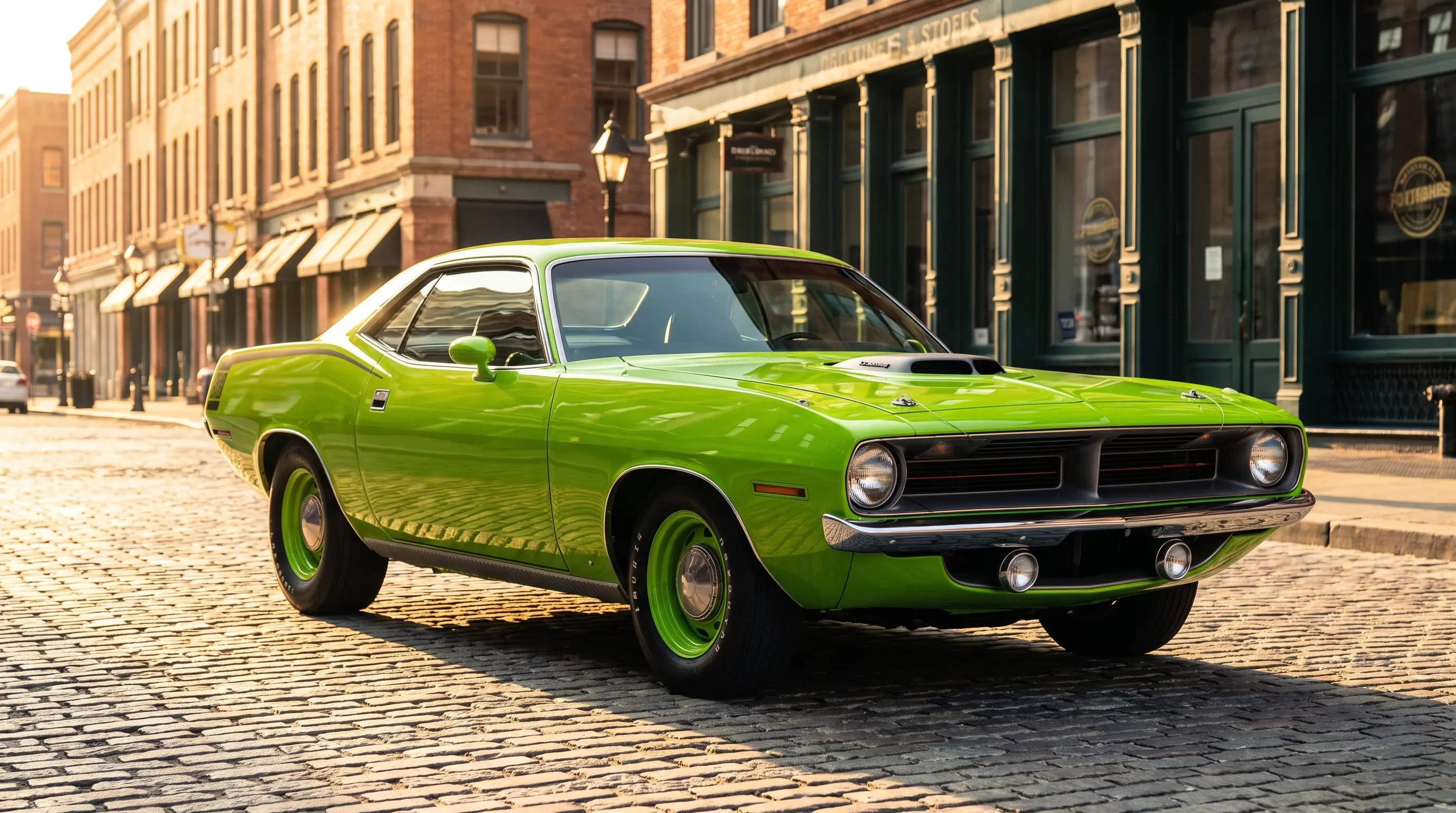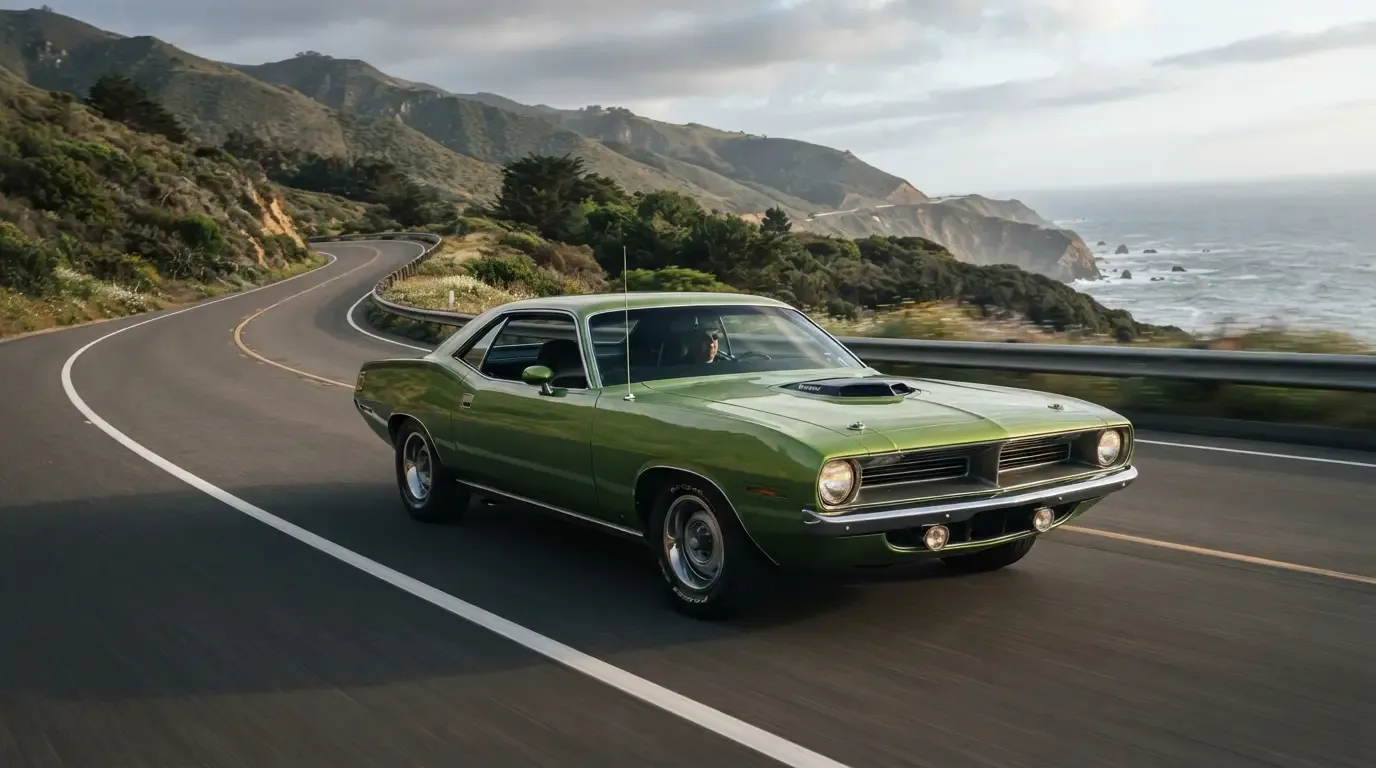
The Plymouth Rapid Transit System sounds like it should have been a subway line, and that confusion was half the point. Plymouth built a marketing program in the late 1960s that borrowed a name from mass transit and welded it onto the Barracuda, the Road Runner, and the rest of its muscle car lineup, and for a few strange years the whole thing worked because nobody had seen anything quite like it before.
Plymouth's regular ad budget in the mid 1960s could not compete with what Pontiac and Chevrolet were spending on their performance images. The division needed a way to bundle its scattered muscle offerings into one recognizable identity, something a teenager flipping through a magazine could spot in half a second. The Rapid Transit System, launched in 1970 and carried through 1971, did exactly that. It gave the Barracuda a place inside a bigger story instead of leaving it to compete alone.
A traveling circus of engines
The centerpiece of the campaign was not a showroom display. It was a caravan, sometimes called the Rapid Transit Caravan, that hauled a rotating fleet of Plymouth performance cars to drag strips, fairgrounds, and dealer lots across the country. The Barracuda rode alongside a Duster and a Road Runner, the Superbee's Dodge cousin was kept separate since Dodge ran its own Scat Pack promotion, and a GTX joined the lineup for its 1970 New York Auto Show debut. Crowds got to see the cars up close, hear them run, and in some cases watch exhibition passes down a quarter mile.
Plymouth commissioned a color brochure to match, a glossy piece nicknamed by collectors today as the Rapid Transit System book, filled with illustrations of the cars in bold, almost psychedelic settings. It leaned into the counterculture aesthetic of the era rather than fighting it, which was an unusual choice for a conservative Detroit brand. The company that once sold Valiants to commuting families was suddenly speaking the visual language of concert posters.
Why the Barracuda needed the boost
By the time the Rapid Transit System hit full stride, the Barracuda had just been redesigned for 1970 onto the E-body platform, sharing its bones with the Dodge Challenger. It was a genuinely new car with a genuinely big engine bay, capable of holding the 426 Hemi for the first time in the model's history. Plymouth needed buyers to know that. A marketing umbrella that put the Barracuda next to the already-famous Road Runner did some of that work for free, borrowing credibility from a car that had sold well beyond expectations since its own 1968 debut.
Reading through plymouth rapid transit system history makes it clear how tightly the marketing and the engineering decisions were tied together that year. The E-body redesign gave Plymouth something worth promoting loudly, and the Rapid Transit System gave it a loud enough megaphone.
The dealer's side of the story
Dealers were not always thrilled. A traveling caravan is exciting for a Saturday, but it also meant a lot line, a lot of noise, and a lot of kids leaning on hoods they were not supposed to touch. Some dealer letters from the period, preserved in Mopar club archives, complain about crowd control more than they celebrate foot traffic. Still, the sales numbers for the redesigned Barracuda in 1970 suggest the exposure mattered. Plymouth moved far more Barracudas that year than it had in the previous generation's best season.
"You can hear a Rapid Transit System car before you see it, and that was the entire strategy in one sentence. Plymouth wanted the sound to do the selling, and for a couple of summers, it did."
- Nora Beckett
How the campaign faded
The Rapid Transit System did not survive the early 1970s in any recognizable form. Insurance surcharges on high-performance cars were climbing, emissions regulations were tightening, and the muscle car era that the whole campaign depended on was contracting fast. By 1972 the Hemi was gone from the Barracuda lineup entirely, and Plymouth's marketing had shifted toward economy and value messaging as gas prices and public mood changed direction. The caravan quietly stopped touring, the brochures stopped printing, and the name slipped into the background of Plymouth's history.
What is left behind is mostly paper. Original Rapid Transit System brochures, dealer promotional posters, and the occasional iron-on transfer still surface at swap meets, and they carry a premium among collectors who care as much about the marketing artifacts as the cars themselves. A well-preserved brochure can fetch real money, not because it is rare in an absolute sense but because so few survived a decade of garage cleanouts.
Why it still matters to collectors today
For anyone researching a specific 1970 or 1971 Barracuda, knowing whether a car was originally part of a Rapid Transit System promotional push, or simply built during the era, can shape how the story around that car gets told. Some cars used in the caravan were later sold to the public, and a documented promotional history adds a layer of provenance that pure production numbers cannot. It is a small niche inside a small niche, but it is the kind of detail that turns a car into a story.
Verifying that kind of connection is not always straightforward. Plymouth did not keep a public master list of which specific cars toured with the caravan, and dealer records from fifty years ago have mostly been lost to time, sold off, or simply thrown away when a dealership changed hands or closed. What survives tends to be regional, a local newspaper photo of a caravan stop, a dealer's own scrapbook passed down through a family, or a name scratched into a glovebox by a mechanic who worked on the car during its touring days. Piecing together a caravan history usually means combining several of these fragments rather than relying on any single document.
The people who chased the caravan
Some of the richest material about the Rapid Transit System does not come from Plymouth's own files at all. It comes from people who were teenagers in 1970, who remember standing in a dealer lot on a Saturday morning listening to a Hemi idle, and who kept a program, a photo, or a ticket stub from the event without ever imagining it would matter decades later. Mopar club newsletters from the 1990s and 2000s are full of these firsthand accounts, and they add texture that no factory paperwork ever could. A brochure tells you what Plymouth wanted people to think. A firsthand memory tells you what actually happened when the caravan rolled into town.
That distinction matters for anyone trying to understand this campaign honestly rather than nostalgically. The Rapid Transit System was, at its core, an advertising strategy built to move product during a specific and narrow window in Detroit's history. It succeeded because it matched a car worth talking about with a promotional format loud enough to make people talk. The people who remember it fondly are remembering something real, even if the marketing behind it was calculated from the start.
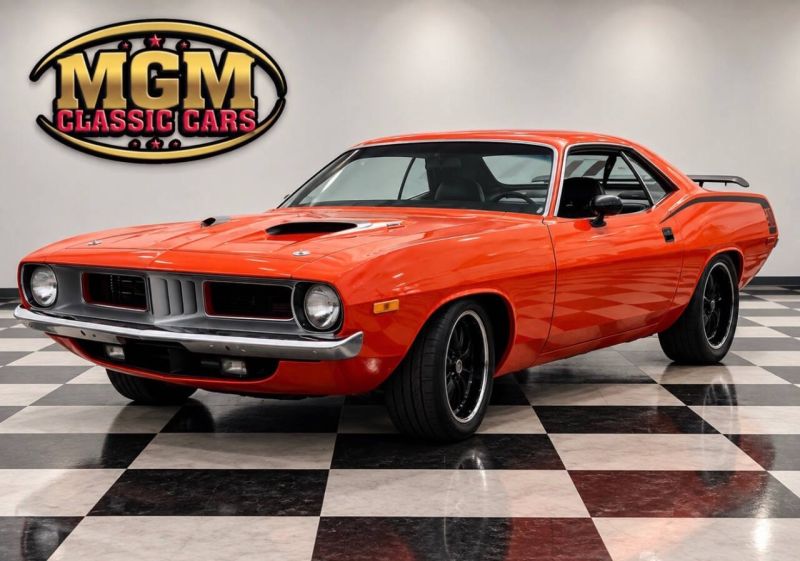
If this bit of Plymouth's advertising history has you curious about what else was happening around the Barracuda in that window, it is worth taking a moment to keep exploring the year that made the Rapid Transit System necessary in the first place. And if the era itself has you thinking about ownership rather than just history, there is a classic Barracuda for sale waiting for someone who wants the real thing rather than the brochure.
The Plymouth Rapid Transit System never had the staying power of the cars it promoted. It was a campaign built for a moment, and the moment passed. But the moment it captured, a Barracuda parked next to a Road Runner in front of a crowd that had never seen either one in person, is a small window into how muscle cars were actually sold, not just built. That context is worth remembering even after the caravan stopped rolling.