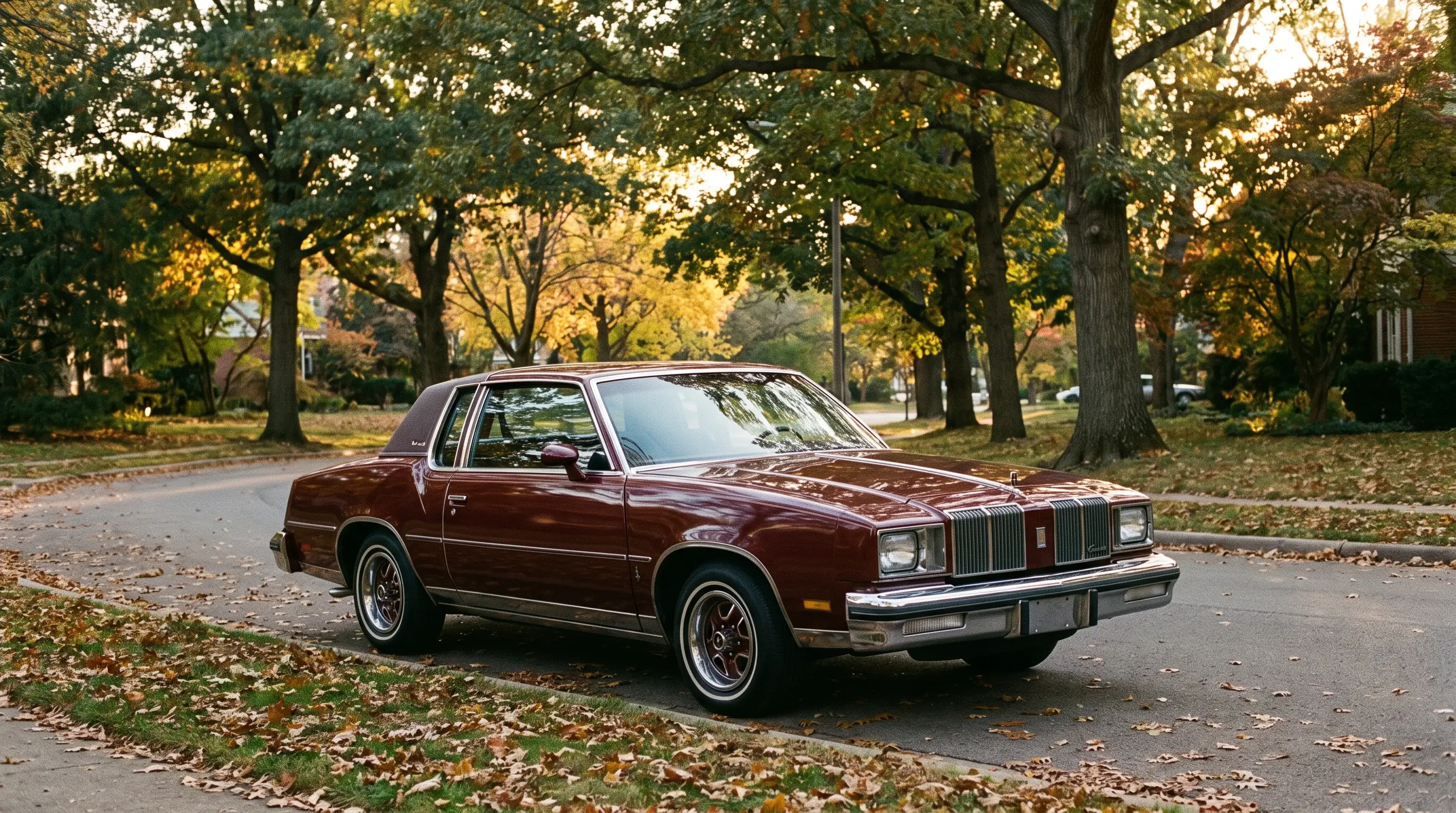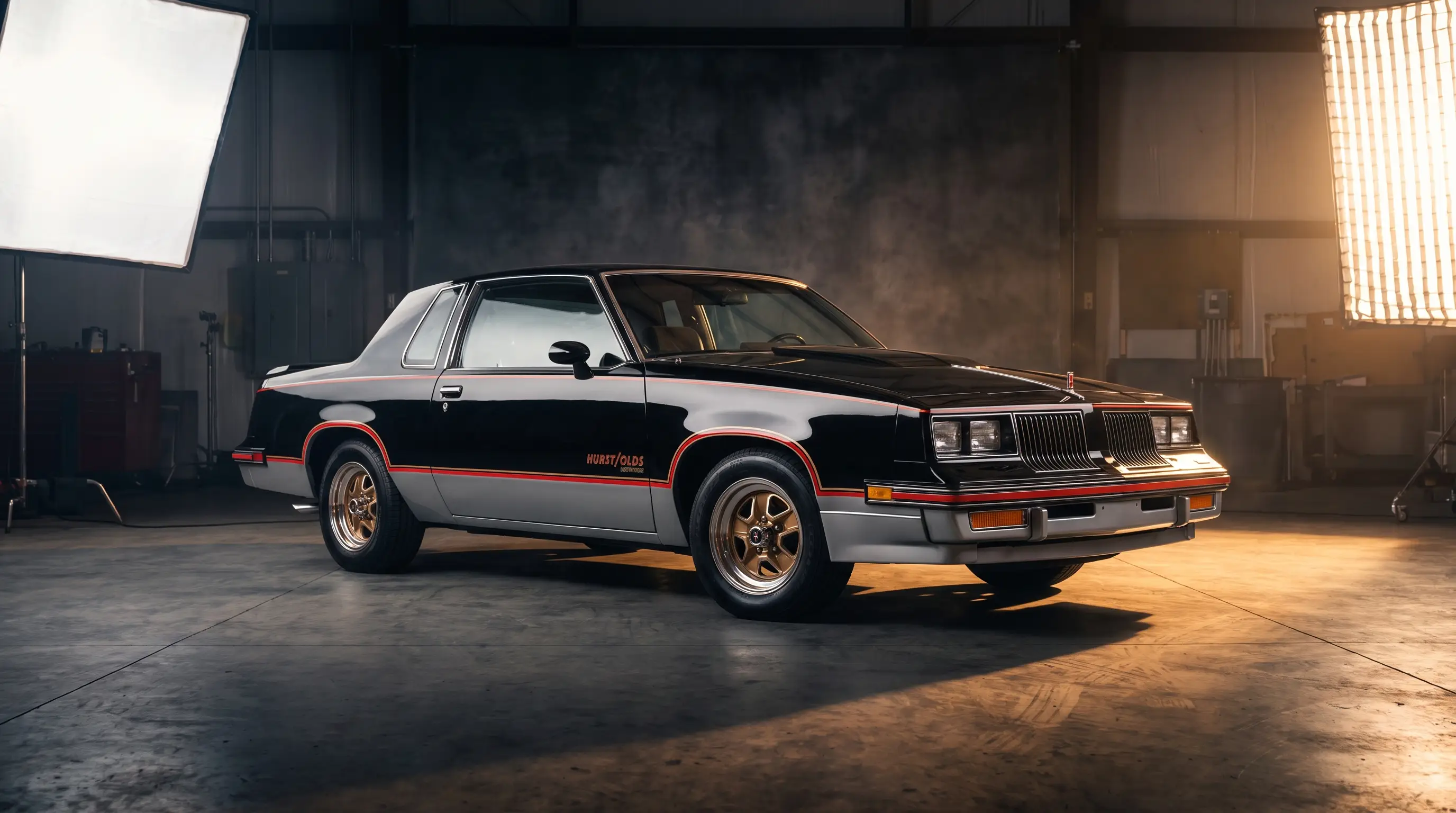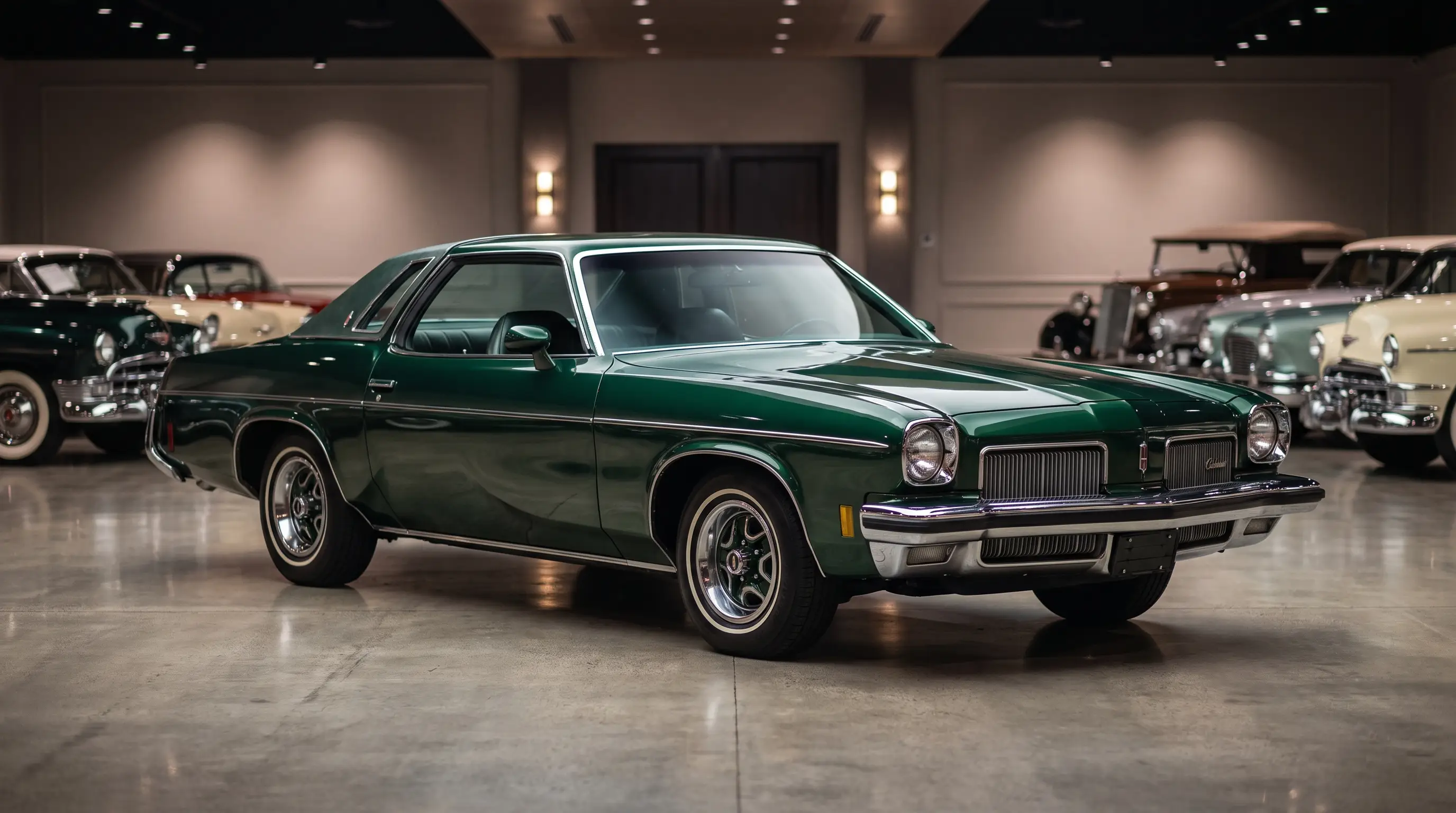
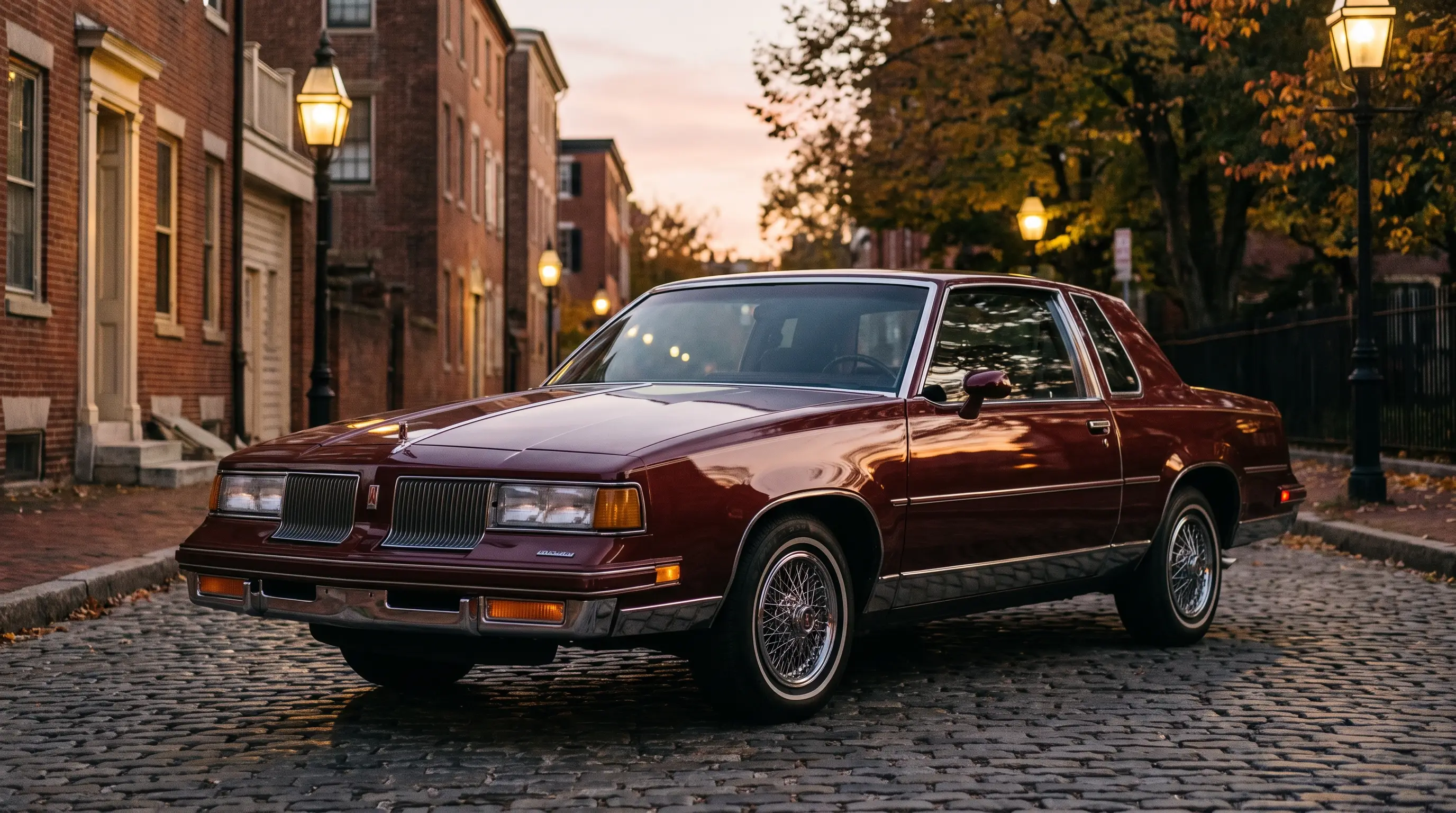
For one strange model year, Oldsmobile sold two completely different cars called the Cutlass Supreme at the same dealership. One had its engine up front driving the rear wheels the way Cutlasses had since 1961. The other had front-wheel drive, a modern unibody, and nothing underneath it shared with the car it was supposedly replacing. That overlap, in 1988, marked the last chapter of the rear-wheel-drive Cutlass, and it happened not because the old car was failing in the showroom, but because it refused to stop selling.
The G-body Cutlass Supreme coupe had already outlived its logical replacement by several years. Oldsmobile introduced the front-wheel-drive Cutlass Ciera back in 1982, built on GM's new A-body platform, and it took over the Cutlass Supreme sedan and wagon body styles almost immediately. The two-door Cutlass Supreme coupe, though, kept its V8-capable, rear-wheel-drive G-body chassis and just kept selling. Buyers who wanted a traditional American coupe, not a boxier front-drive sedan wearing a familiar badge, made it clear which car they actually wanted.
Why GM let the coupe run so long
Oldsmobile's own sales figures made the decision for them. The Cutlass Supreme coupe was frequently the best-selling model in the entire Oldsmobile lineup through the mid-1980s, and at points the best-selling two-door car in America, full stop. Killing a car that popular to make room for a redesign that hadn't even earned its stripes yet would have been a strange bet, so GM let the downsized Cutlass keep its rear-drive underpinnings for six full years past the point where the rest of the mid-size Oldsmobile range had already gone front-wheel drive.
There was also a practical business reason the coupe survived so long past its stablemates. Retooling an entire assembly line for a new platform costs real money, and the G-body coupe's tooling was already paid for many times over by the early 1980s. As long as the two-door Cutlass Supreme kept moving off dealer lots at the pace it did, there was no financial case for rushing a front-wheel-drive replacement into a segment that was still working exactly as intended. GM's own internal numbers backed up what the sales charts already showed everyone.
NASCAR and the final rear-drive body
The G-body Cutlass Supreme's rear-wheel-drive layout wasn't just a preference for traditionalist buyers, it also happened to be the last shape Oldsmobile campaigned on NASCAR ovals before the sport moved toward more aerodynamically optimized, purpose-built stock car bodies. The notchback coupe's fastback-style rear window option, the "aeroback" style offered briefly on Salon models, and later revisions to the standard notchback roofline were shaped as much by what worked at speed on a superspeedway as by what looked good on a dealer lot, a dual purpose that had defined Oldsmobile's intermediate coupes since the muscle car era.
What actually changed in the final years
The last rear-drive Cutlass Supremes, built through the 1987 model year with a handful carrying into early 1988 production, weren't dramatically different from the cars that came before them. Fuel injection had replaced the carburetor on most V8 applications by the mid-1980s, emissions equipment had grown more sophisticated, and the interior trim had been quietly refreshed more than once. But the core formula, a body-on-frame-adjacent G-body platform with a live rear axle and a choice of V6 or V8 power, stayed remarkably consistent from 1978 to the very end.
| Detail | Final rear-drive Cutlass Supreme years |
|---|---|
| Platform | G-body, rear-wheel drive |
| Body styles remaining | Two-door coupe only (sedan, wagon already moved to Ciera) |
| Typical engines | 3.8L Buick V6, 5.0L Olds 307 V8 |
| Successor nameplate | Front-wheel-drive W-body Cutlass Supreme, launched 1988 |
What made the last rear-drive cars special wasn't a spec sheet change, it was the knowledge that this was it. Dealers and buyers alike understood, by 1986 and 1987, that the traditional Cutlass Supreme's days were numbered. That awareness didn't slow sales down. If anything, it gave the final production years a sense of closing out a two-decade run of Oldsmobile's most successful nameplate on its own terms, rather than being quietly discontinued mid-cycle.
"Most cars get killed off because nobody wants them anymore. The rear-drive Cutlass Supreme is the rare one that got killed off while it was still outselling half the showroom. That's not a car that failed. That's a car GM simply ran out of reasons to keep building once the rest of the industry had moved on."
— Patrick Walsh
The legacy of the final G-body coupes
Today, those last rear-drive Cutlass Supremes occupy a specific niche in the collector world: late enough to have fuel injection and slightly better build quality than the earliest G-bodies, but early enough to still carry a genuine V8 option and the driving character that made the nameplate famous in the first place. They're often the easiest G-body Cutlass Supremes to actually drive on a regular basis, which has made them a quiet favorite among buyers who want the look and the history without babying a fussier early car.
There's also a practical honesty to these final rear-drive cars that a lot of buyers appreciate once they've owned one for a while. Parts commonality with the rest of the G-body family, shared with the Buick Regal, Pontiac Grand Prix, and Chevrolet Monte Carlo, means mechanical repairs on a late Cutlass Supreme are rarely a hunt for unobtainium. That's a real advantage over some other collector coupes from the same era, where a broken trim piece or a worn suspension bushing can turn into a months-long search.
The rear-drive Cutlass Supreme's closing chapter also sets up the value conversation that follows it. As Oldsmobile's badge fully disappeared from American roads by the mid-2000s, the G-body cars that carried the name through its final rear-drive era became some of the most sought-after examples of the whole run. For where that story goes next, keep reading the series, and for the earlier history that set all of this in motion, see how the Cutlass legend began.