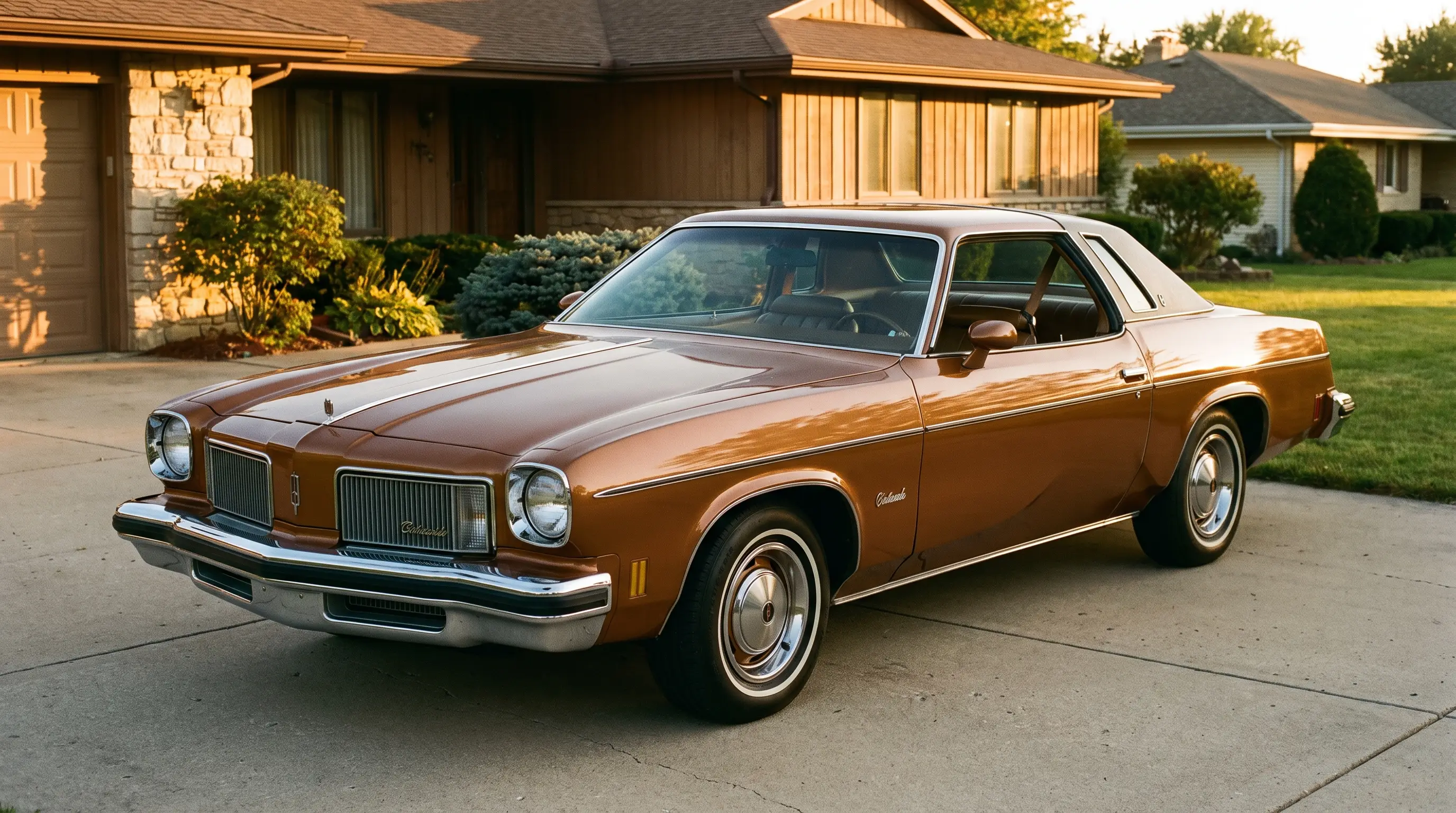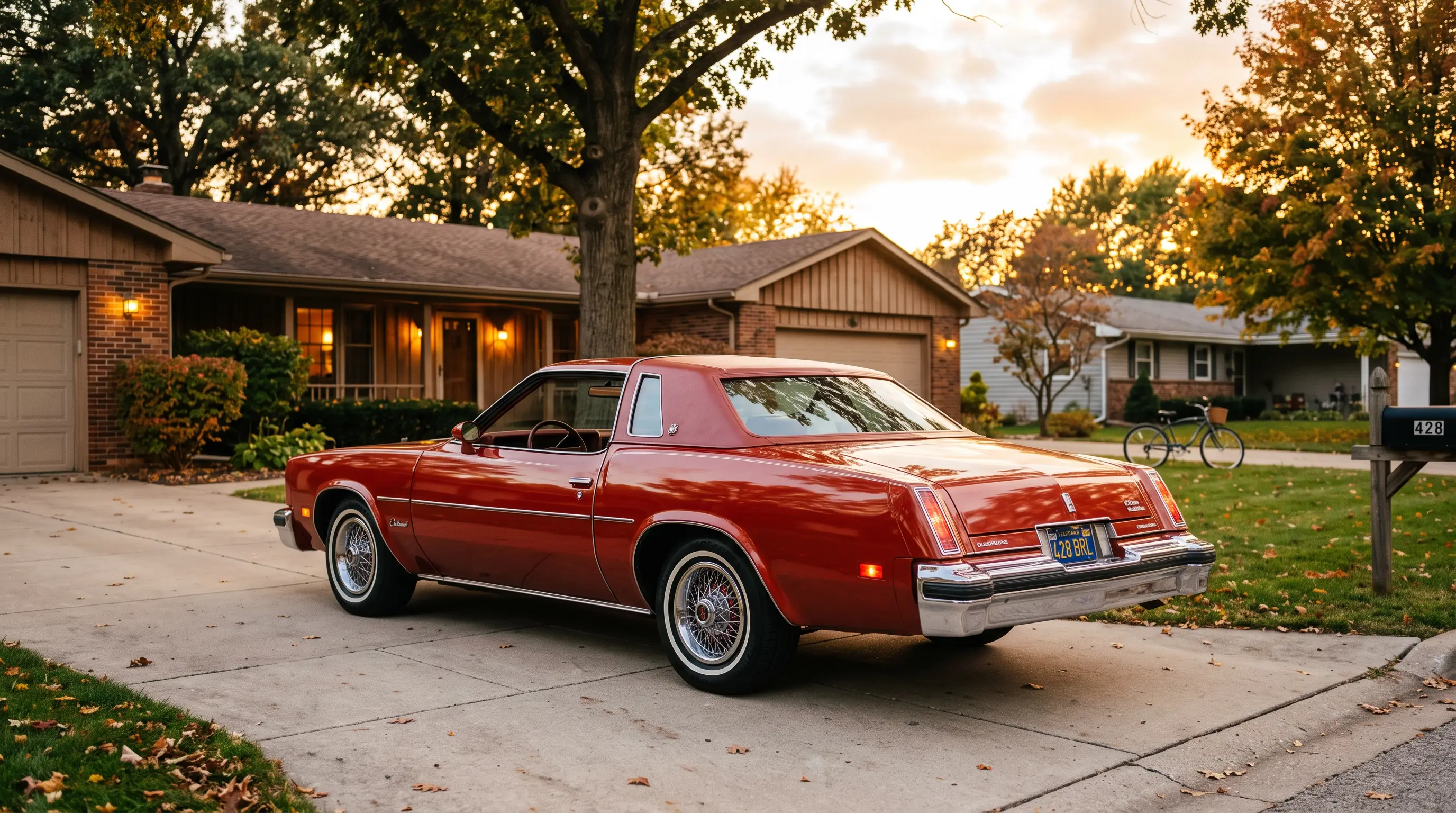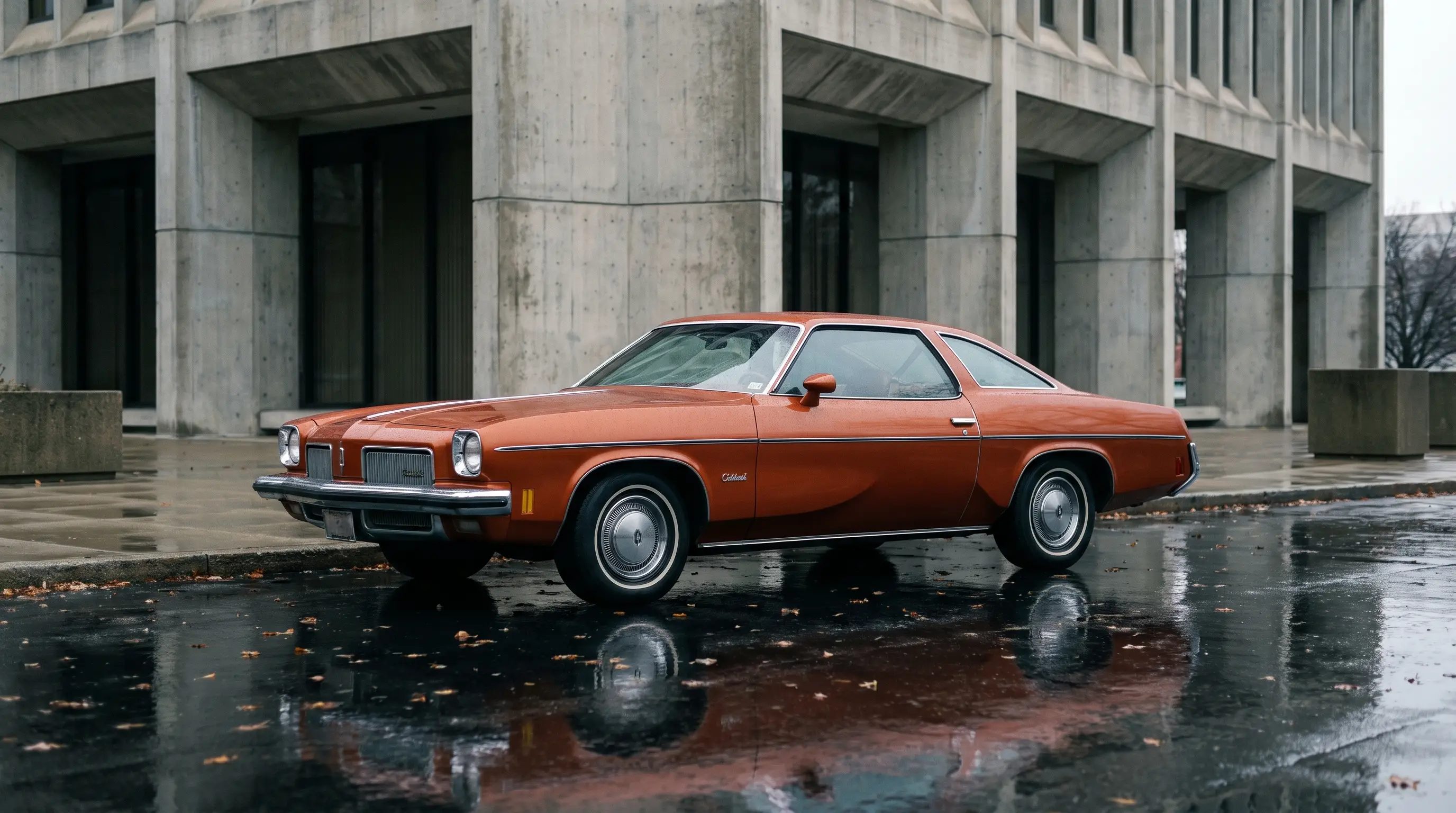
Every club has one member who demonstrates the swivel bucket seats to anybody who has never seen them work, and every time, the reaction is the same: a laugh, then a question about why nobody builds seats like this anymore. The Cutlass swivel seats were a genuine piece of engineering theater, not just an interior gimmick, and the story of how they got into the car is better than most people assume.
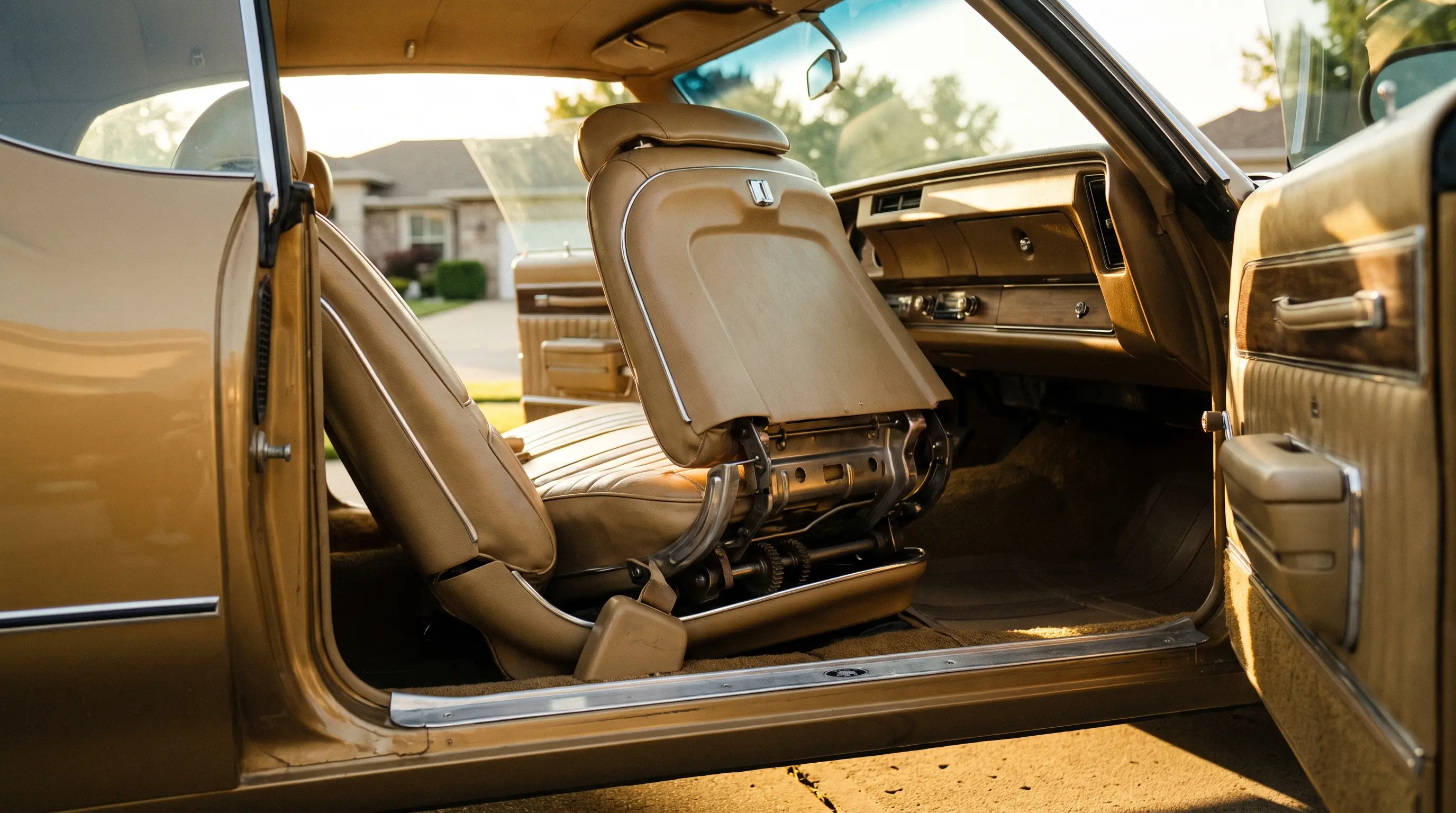
Oldsmobile offered the Strato bucket swivel seats on the Cutlass Supreme starting with the 1973 Colonnade redesign that would define the nameplate for the rest of the 1970s. Open the door, the seat rotated outward on its own, and getting in or out of a low, wide personal-luxury coupe suddenly took a lot less effort than it did in every other coupe on the lot. It sounds like a small thing until you have actually used one on a cold morning in a parking lot.
How the mechanism actually worked
The swivel action was tied to the door latch. Open the door and the seat rotated outward a full 90 degrees, swinging the seat cushion toward the opening so a driver or passenger could slide in or out without the usual twist-and-duck required by a fixed bucket in a low coupe. Close the door and the seat returned to its normal forward-facing position, ready to drive. No buttons, no switches. The whole thing ran off simple mechanical linkage tied to the door itself.
That simplicity is part of why surviving examples still work as well as they do, decades later, when the mechanism has not been abused or left to rust. It is also why a seized or sticking swivel mechanism is one of the more common issues a buyer runs into on an original car, since the linkage depends on lubrication and hardware that owners often ignore for years at a time.
Why the option disappeared
By 1977, the last year of the Colonnade Cutlass, seat design across the industry had already started moving toward simpler, lower-maintenance buckets, and the added mechanical complexity of a swivel mechanism became harder to justify against changing tastes and rising manufacturing costs. The option was dropped after 1976, and later Cutlass Supreme interiors kept the plush, wide bucket look buyers wanted without the moving parts underneath.
That timing puts the swivel seats squarely in the 1973-1976 Colonnade Cutlass Supreme years, which is worth knowing if you are shopping specifically for the feature. A buyer chasing this option needs to be looking at the right generation of car, not just any Cutlass Supreme with bucket seats, since later interiors dropped the mechanism entirely even when the seats still looked similar from a few feet away.
What to check before you buy a car with this option
A functioning swivel mechanism is a genuine point of pride on a restored or original car, and it is also one of the easier things to fake ignorance about at a sale. Test the seat with the door open and closed, more than once, and listen for grinding or watch for a seat that hangs up partway through its rotation. A mechanism that has sat unused for years often needs nothing more than cleaning and fresh lubrication, but a seized one that someone has forced can bend the linkage, and that repair is not simple once the parts are damaged.
Upholstery condition on these seats also carries more weight than on a fixed bucket, since the swivel base and mounting hardware are harder to service without removing the whole seat, and a shop unfamiliar with the mechanism can do real damage trying to reupholster around it without disassembling it correctly first.
"People treat the swivel seats like a novelty, and I understand why, since it looks like a parlor trick the first time you see it. But it is real engineering built to solve a real problem, getting in and out of a low coupe gracefully. Our club members who have one working correctly never stop showing it off, and I don't blame them."
— Wayne Coburn
Where this fits in the bigger Cutlass story
The swivel seats belong to the Cutlass Supreme's rise as a personal-luxury coupe, a chapter that set up everything the nameplate became once the Colonnade chapter arrived and pushed the Supreme formula to its sales peak. If you want to see how Oldsmobile's design choices across this whole period connect, another angle on the Colonnade years covers the styling decisions that came after this feature quietly left the option sheet.
For the complete arc of the nameplate, from the swivel-seat years through the Colonnade sales records and beyond, our Cutlass retrospective ties the whole story together. The swivel seats are a small detail in that larger history, but they are the kind of detail that tells you Oldsmobile was willing to try something genuinely different to win a buyer over, and that willingness shows up again and again across the Cutlass story.
Sources and notes
- Oldsmobile Cutlass, Wikipedia
- Swivel Seats: 1975 Oldsmobile Cutlass, Barn Finds
- Swivel seat year identification, 73-77 Oldsmobile Forums
- 1975 Olds Cutlass Reversible Swivel Seats, GM Inside News Forum
- Oldsmobile Cutlass Seat Brackets 1973-1977, Corbeau
- Remembering the 1966 Oldsmobile Toronado, The Labor Tribune