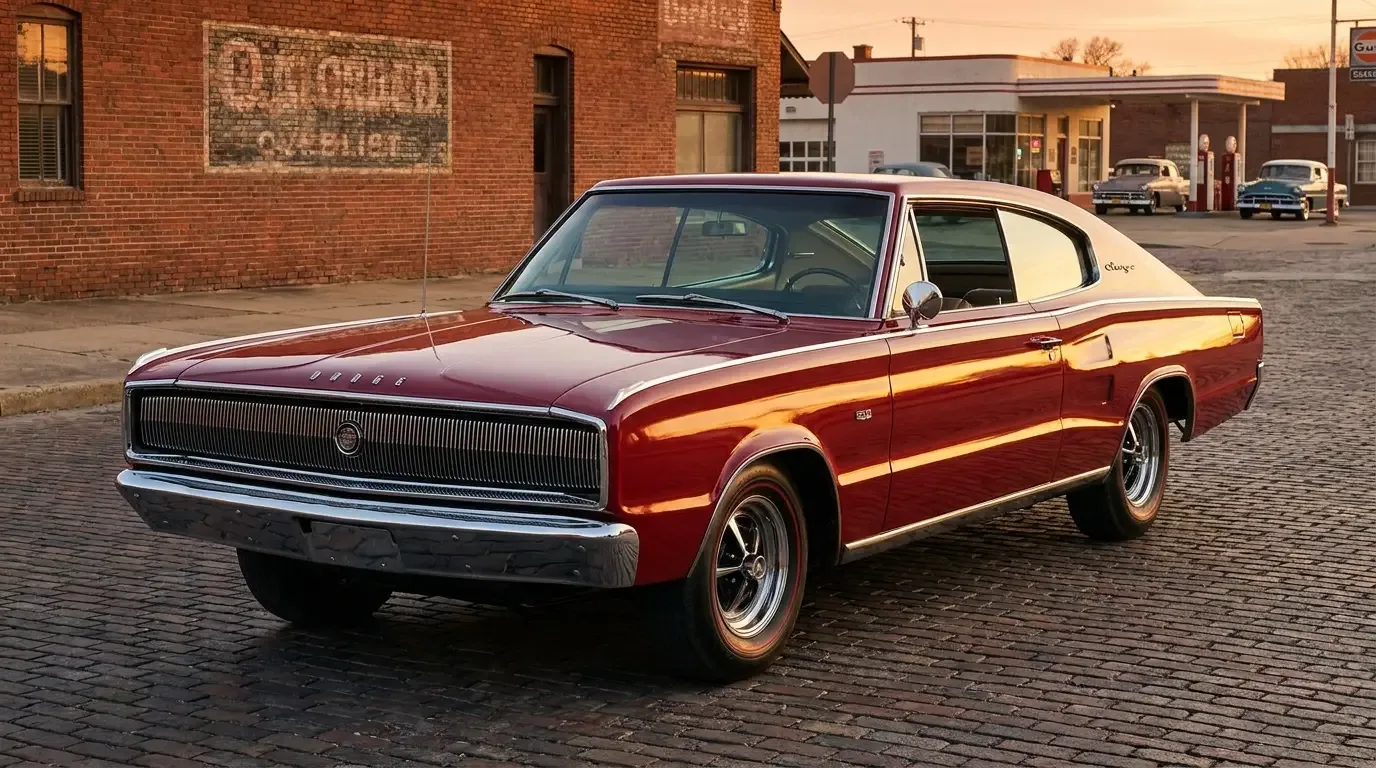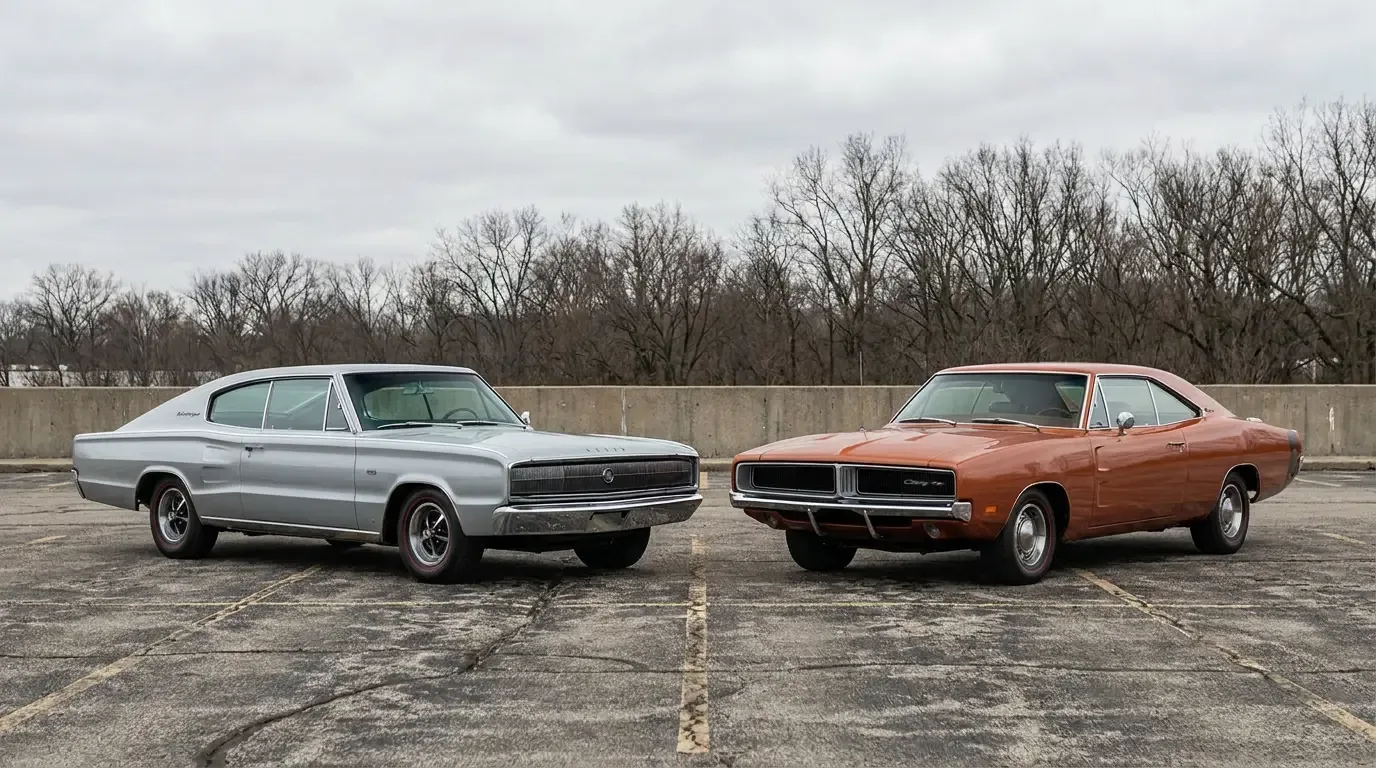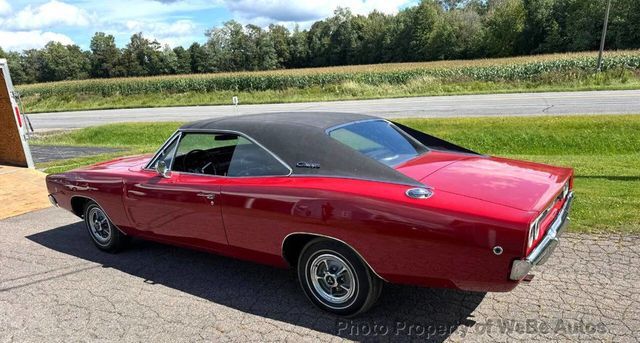
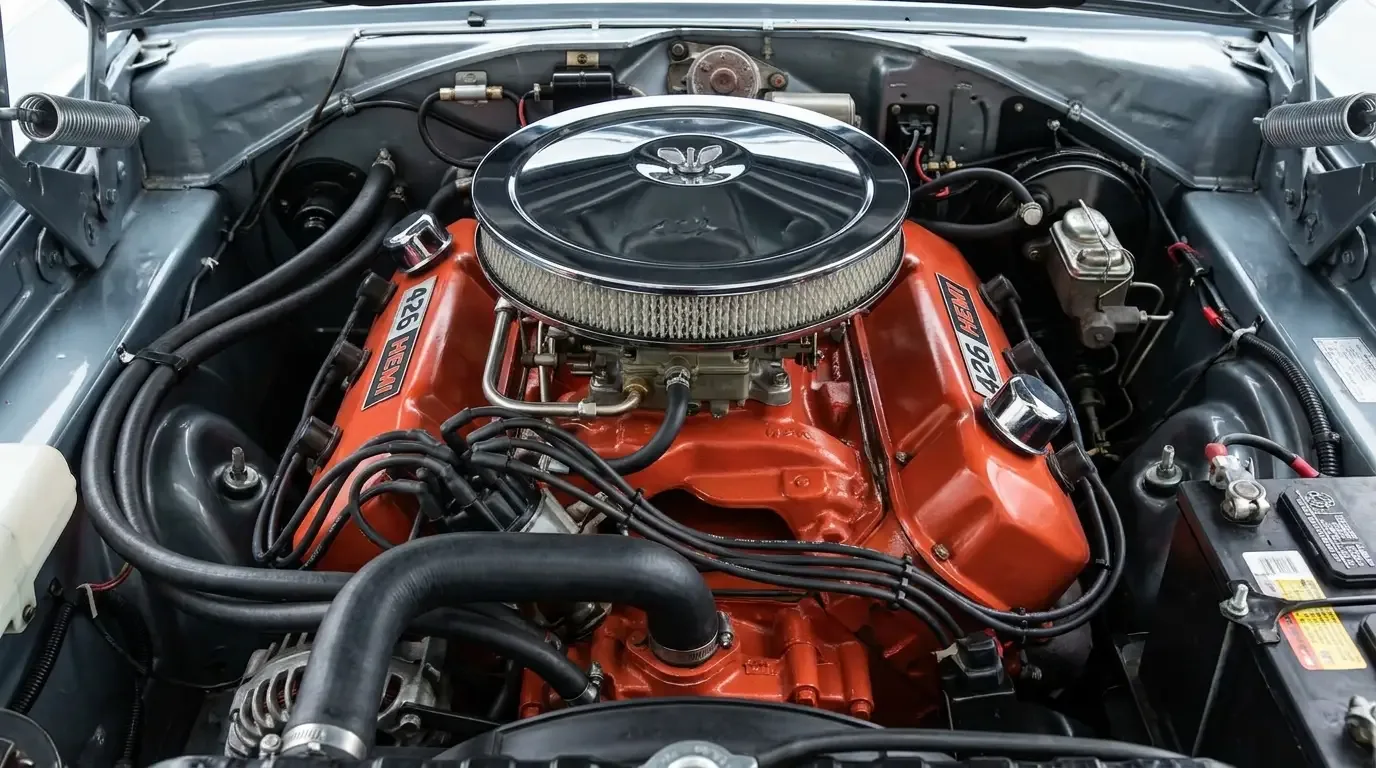
Everybody wants to talk about the Hemi. Fair enough, it's the number that gets attention. But the drivetrain story on a 1966 or 1967 Charger is really a story about three transmissions and five engines, and which combination you're looking at changes the car completely, not just on paper, at the pedals.
The engine lineup, straight facts first
The standard engine on the 1966 Charger was the 318 cubic inch V8, rated at 230 horsepower, which is a fine engine for a cruiser and a genuinely underwhelming one for a car wearing this body. Move up the list and you hit the 361, then the 361, then the 383, with the four-barrel 383 putting out 325 horsepower. At the top sat the 426 Hemi, factory rated at 425 horsepower, a number everybody quotes and almost nobody questions, even though real-world dyno pulls on well-tuned Hemis of this era regularly show more than that at the flywheel. The factory number was conservative for insurance and marketing reasons. That's not a controversial statement in Mopar circles, it's just accepted history.
Here's the part that actually matters if you're buying one of these cars: the gap between a 318 Charger and a Hemi Charger isn't a gap. It's a different car. Weight distribution changes, the whole front clip gets heavier, cooling demands go up, and the transmission that backs the engine has to be built for a completely different load case. That's where the real decision-making happens, not at the engine, but at what's bolted behind it.
TorqueFlite versus the four-speed
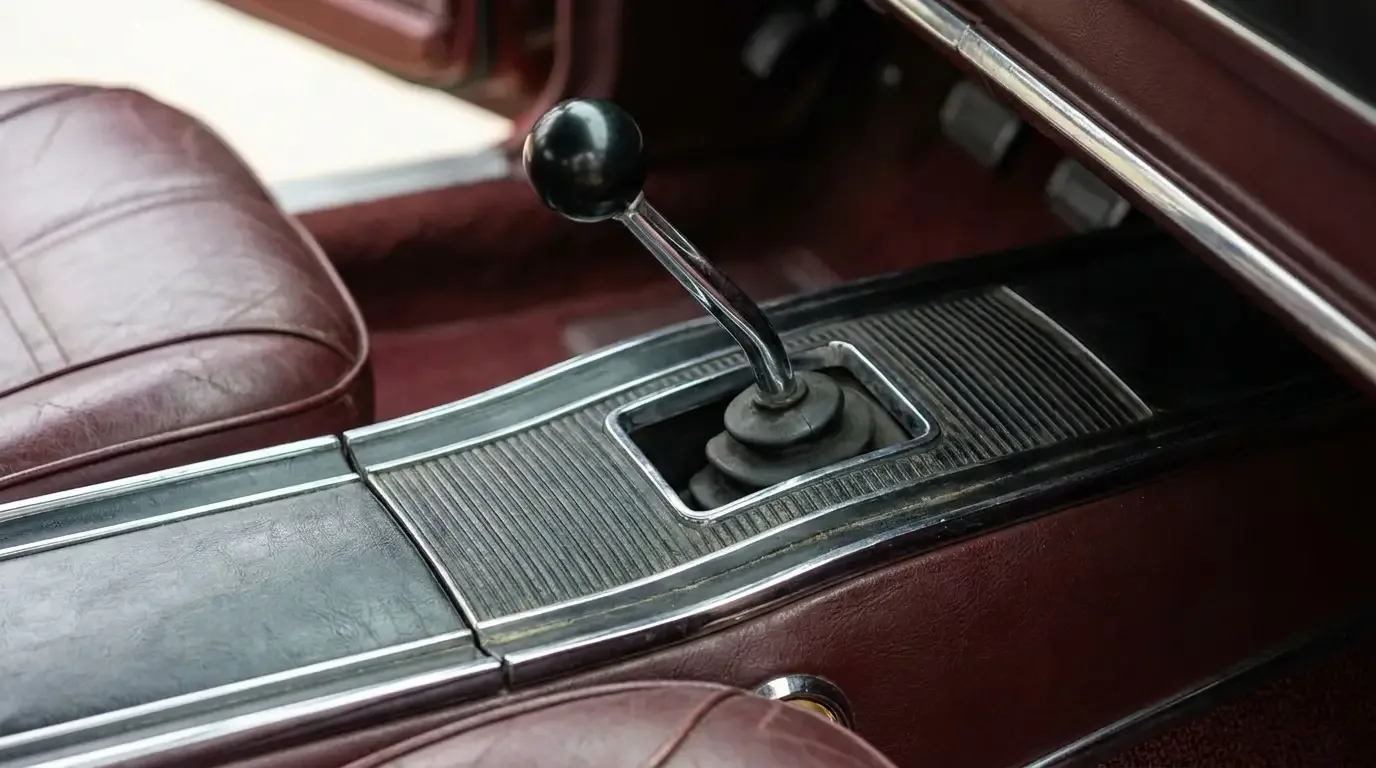
Three transmission paths existed for the first-gen Charger. A three-speed manual came standard behind the smaller engines, and almost nobody wants one of these today, it's a workmanlike gearbox with no upside for a performance car. The real choice buyers cared about, then and now, was TorqueFlite automatic versus the A833 four-speed manual.
The TorqueFlite is, flat out, one of the best automatic transmissions Detroit built in the 1960s. It shifts firmly, it's been proven under Hemi torque loads for decades, and a well-built TorqueFlite behind a big-block will outlast most owners' patience for driving the car hard. The four-speed A833 gives you more control and, arguably, a better connection to what the engine is doing, but it demands a driver who actually wants to row gears, and it's less forgiving of a sloppy clutch or a worn synchro. On the dyno and at the strip, the numbers tell a clear story: a well-driven four-speed car can be quicker in a straight line in the right hands, but the TorqueFlite car is more consistent, run after run, because it removes driver error from the shift points.
| Drivetrain combo | Character | Best for |
|---|---|---|
| 318 + 3-speed manual | Basic, low-cost cruiser | Budget entry, not performance driving |
| 383 4bbl + TorqueFlite | Strong, consistent, easy to live with | Regular driving, dependable performance |
| 426 Hemi + A833 4-speed | Maximum control, demands a skilled driver | Strip use, purists who want to row gears |
| 426 Hemi + TorqueFlite | Brutal, repeatable, less driver-dependent | Consistent quarter-mile numbers, street/strip use |
What the numbers actually say about real performance
Factory Hemi Charger quarter-mile figures from period magazine tests generally landed in the low-to-mid 14-second range at around 96 to 97 miles an hour, depending on tune, tires, and driver. That's respectable for 1966, but it's not the number that impresses me. What impresses me is how repeatable those runs were in TorqueFlite cars compared to four-speed cars in the same magazine tests, where shift technique visibly moved the trap speed run to run. The blower looks great on the invoice, and the four-speed looks great on paper too. But consistency is what wins races and what makes a car actually usable, and that's where the TorqueFlite earns its reputation.
"The four-speed car with the better driver beat the TorqueFlite car by two tenths at the strip. The same four-speed car with an average driver lost by four tenths. That's the number that matters when you're deciding which transmission is actually right for you, not which one sounds more serious at a cruise night."
— Dan Reeves
Rear axle and gearing, the part people forget
Nobody asks about the rear axle until it's already a problem, but the numbers matter as much as the engine and transmission choice. The 8.75 inch axle backed most Charger applications, with the Dana 60 reserved for the heaviest-duty combinations, typically Hemi cars ordered with certain performance axle ratios. Gearing ranged widely depending on how the original buyer optioned the car, from tall highway ratios intended for cruising down into the low 4s for cars ordered specifically for strip use. A numerically higher rear gear makes a Hemi car feel considerably quicker off the line at the cost of highway manners, and buyers today should match the gearing to how they actually intend to drive the car, not to whatever number sounds most aggressive on paper.
Sure grip, Chrysler's factory limited-slip option, is worth checking for specifically if you're buying a big-block or Hemi car intended for any kind of spirited driving. A car without it will happily light up one rear tire under hard acceleration while the other sits there doing nothing useful, which isn't just slower, it's a real handling hazard on anything but a dead straight strip.
What breaks, and what to check
On the TorqueFlite side, look for a transmission that shifts firmly without shuddering, and get underneath to check for fluid weeping around the pan gasket and the front seal, both common wear points after decades of service. On four-speed cars, a worn synchro on second gear is the classic tell, along with a clutch that's been abused by an owner who liked to launch hard without giving the linkage proper attention. Either way, budget for a rebuild if the car's history is unclear, because a fresh TorqueFlite or a properly rebuilt A833 changes the whole ownership experience for the better, and it's not the kind of repair you want to discover you need after you've already bought the car.
The drivetrain is where the real character of a first-gen Charger gets decided, more than paint color or trim level. If you want the numbers to back up your buying decision instead of just the story, read more here for the full context on how these cars were built and optioned, and check out first gen charger survivors to understand how few of the higher-performance drivetrain combinations actually made it to today intact and unmolested.
Sources and notes
- Dodge Charger (1966) - Wikipedia - confirmed the engine lineup: 318 (230 hp), 361, 383 4-barrel (325 hp), and the 426 Street Hemi (425 hp).
- Ate Up With Motor - 1966-1967 Charger history - confirmed 425 gross hp and 490 lb-ft for the Hemi, low-14-second quarter miles, and the five-engine lineup.
- automobile-catalog - 1966 Charger 426 Street Hemi 4-speed - confirmed the 425 hp Hemi rating and drivetrain specifications.
- Street Muscle - Rare Rides: 1966 Charger 426 Hemi - background on the Hemi Charger's rarity and performance.
- Old Cars Weekly - 1966 Dodge Hemi Charger - period context on Hemi Charger equipment, TorqueFlite and four-speed options.
- Muscle Car Facts - 1966 Charger - cross-checked axle, gearing, and drivetrain option details.