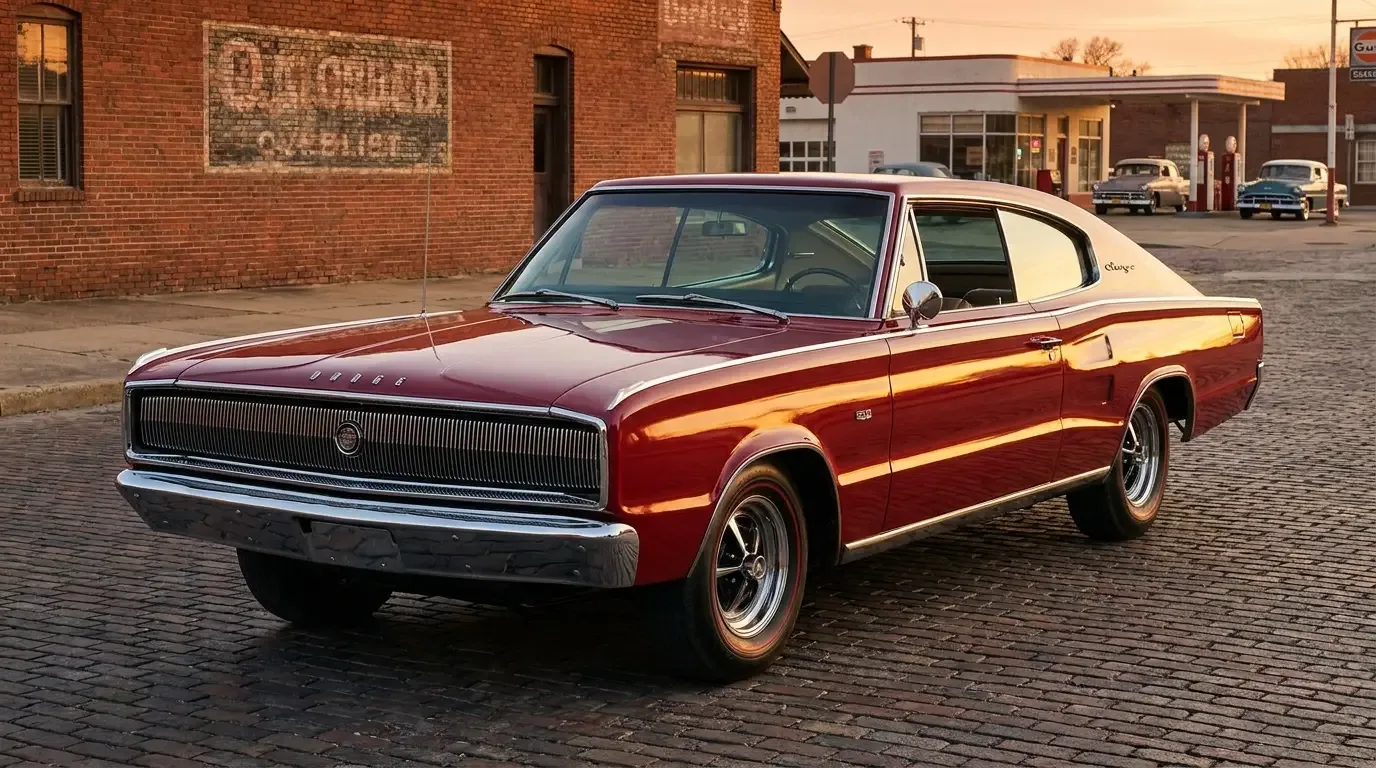
The build sheets tell you more than the brochures do. When you line up production records for the 1967 Charger against the first cars that came off the line for 1968, you're not looking at a facelift. You're looking at a different car wearing a name Dodge decided was worth keeping. The B-body platform underneath carried over, largely, but almost everything you could see or touch changed, and the reasons why are documented well enough that we don't have to guess.
What actually stayed the same
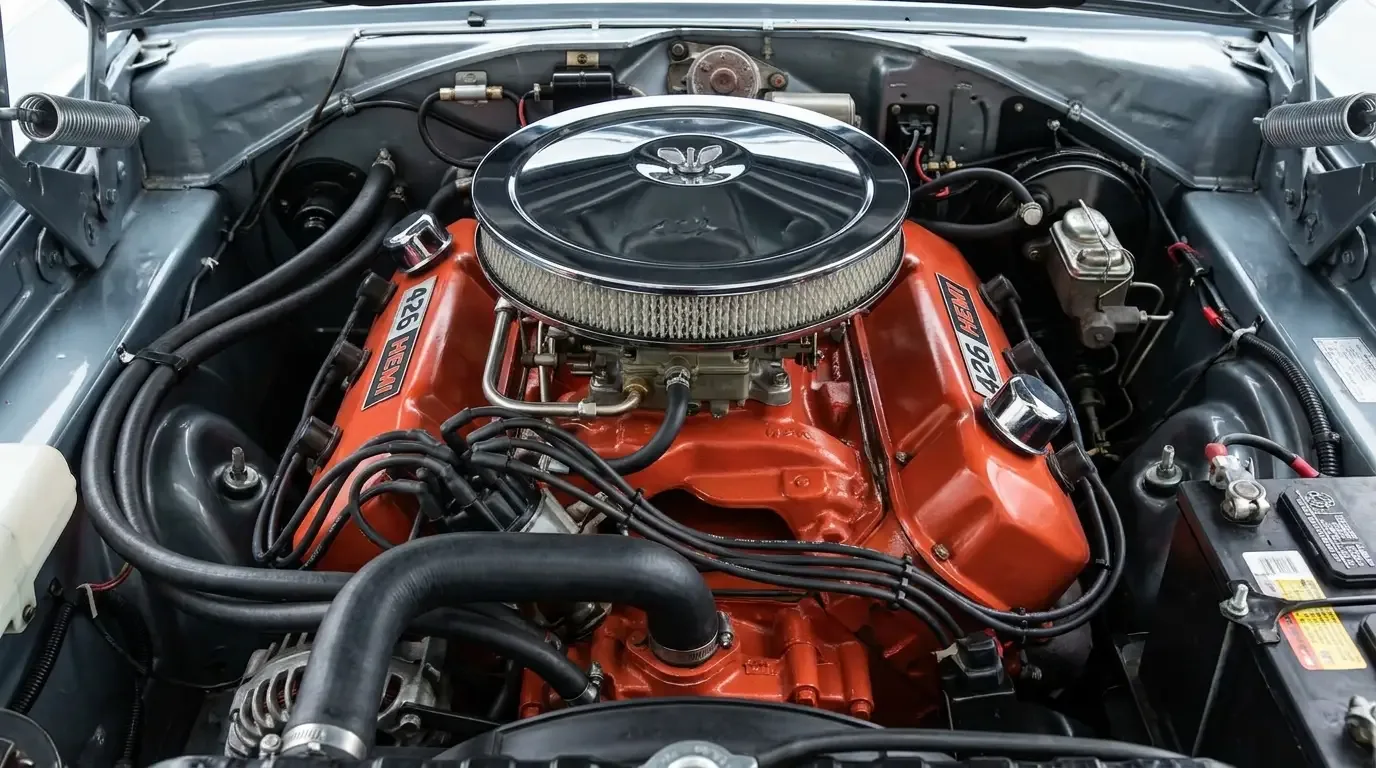
Start with what didn't change, because it's a shorter list than people expect. Both generations rode on Chrysler's B-body platform, sharing a wheelbase and much of the basic chassis engineering with the Coronet and, later, the Super Bee. The range of available engines carried forward in spirit, from small-block 318s and 383s up through the 440 Magnum and the 426 Hemi at the top. The idea of the Charger as Dodge's fastback-flavored performance flagship also carried through, even as the actual roofline changed dramatically.
That's about where the similarities end. The build record for the two generations diverges almost everywhere else, and the factory's own reasoning, as best it's been documented, comes down to one problem: the 1966-67 car sold well below what Dodge had projected.
Why Dodge redesigned it after two years
The first-gen Charger's fastback roofline and formal, angular greenhouse were distinctive, but sales for 1967 fell sharply, to 15,788 cars from the 37,344 built for the 1966 introduction year, and Dodge's product planners concluded the styling wasn't connecting with enough buyers relative to the investment in the platform. the first-gen Charger chapter covers the specifics of that first run in more depth, but the short version is that Dodge went back to the studio for 1968 with a mandate to make the car look faster standing still, more aggressive, less formal.
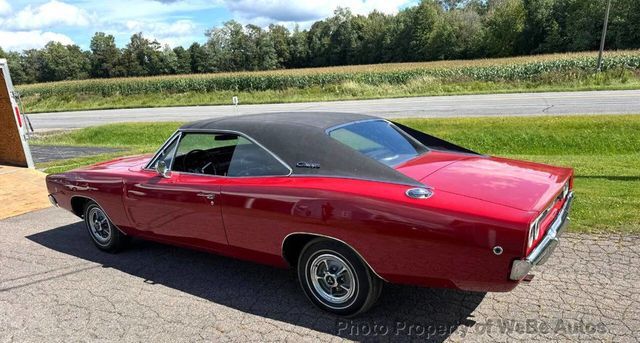
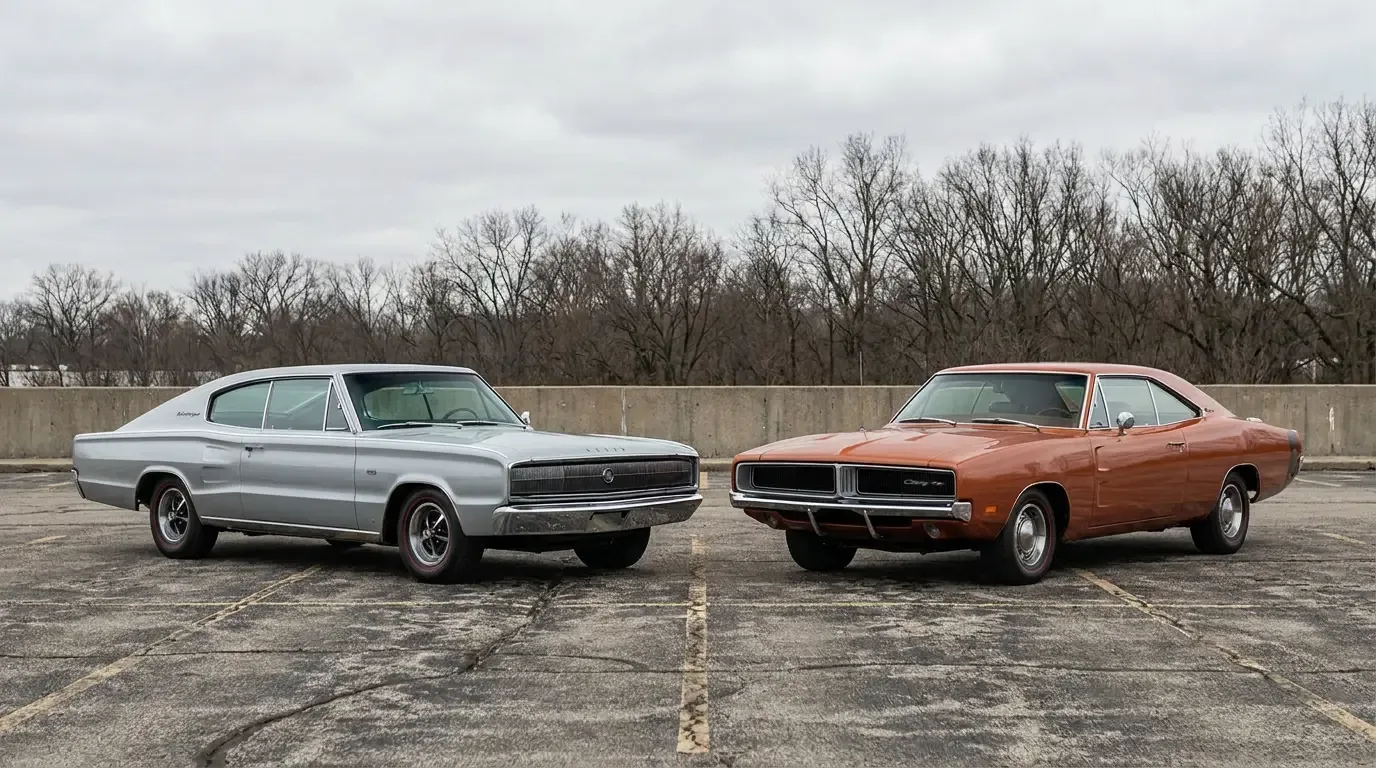
What came back was the coke-bottle body familiar to most people who picture a Charger today: a tunnel-back rear window recessed into flying buttresses, a split grille with hidden headlights carried forward but reworked, and a wider, lower stance than the first-gen car had. It's the version that appeared in film and television through the following decades, and it's the version that drove the Charger's reputation into the muscle car mainstream in a way the more understated first-gen car never quite managed while it was new.
Interior and equipment changes
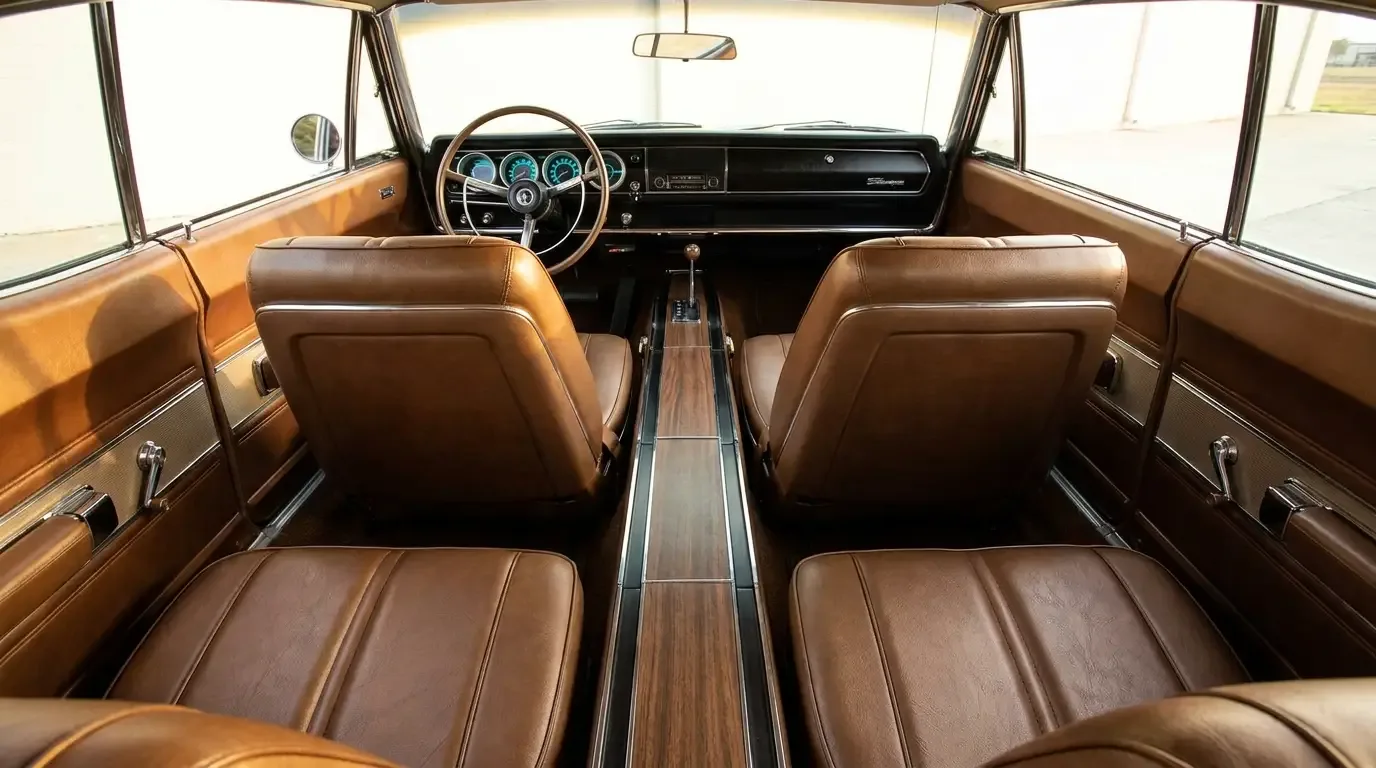
The first-gen car's signature four-bucket-seat layout with a full-length console didn't carry forward as the standard configuration. The 1968 redesign offered a bench seat option that the original Charger never had, which broadened the car's appeal to buyers who wanted the performance and styling without the four-passenger-only layout. That's a meaningful shift in who Dodge was trying to sell the car to. The first-gen car had been positioned toward a buyer who wanted something a step removed from the typical muscle car crowd. The second-gen car widened that net considerably.
Engine availability also expanded in practical terms. The R/T package, introduced for 1968, bundled the 440 Magnum as standard equipment with the 426 Hemi as the only factory option, giving Dodge a cleaner performance-model story than the first-gen car's more scattered option sheet had offered. Production records from Chrysler show this packaging approach paid off immediately. Charger volume for 1968 jumped to roughly 96,100 cars, well past what the first-gen car had managed in either of its two years on sale, and more than the 1966 and 1967 runs combined.
| Trait | First-gen (1966-67) | Second-gen (1968-70) |
|---|---|---|
| Roofline | Formal fastback, flat greenhouse | Tunnel-back window, flying buttresses |
| Seating | Four bucket seats standard, no bench option | Bench seat available alongside buckets |
| Performance package | No single unified R/T-style package | R/T with 440 Magnum standard, Hemi optional |
| Sales trend | Fell from 37,344 (1966) to 15,788 (1967) | Rose sharply to ~96,100 in 1968 |
Exterior details that signal which generation you're looking at
For anyone still learning to tell the two generations apart at a glance, the fastest tell is the greenhouse. The first-gen car has a flat, formal rear window set nearly vertical behind a straight roofline, while the second-gen car's tunnel-back window sits recessed between two raised buttresses that flow into the rear fenders. The grille tells the same story from the front. First-gen cars carry a single full-width grille opening with hidden headlights integrated into a continuous horizontal band, while the 1968 redesign split the grille into two distinct halves separated by a center divider, a look that became closely associated with the nameplate going forward.
Taillights differ too, though less dramatically. Both generations use a horizontal theme across the rear panel, a detail Dodge clearly considered part of the car's identity worth carrying forward even through a full redesign, but the specific lens shapes, trim, and integration with the bumper changed enough between years that a fender-tag or build-sheet check is still worthwhile if you're trying to confirm exactly which model year you're looking at, since running changes happened within each generation as well as between them.
Reading the two generations from a documentation standpoint
For anyone trying to authenticate or research a car from either generation, the paperwork trail looks different too. First-gen build sheets and fender tags follow the coding conventions Chrysler used across the mid-1960s Coronet-based lineup, since the Charger hadn't yet been split out as its own distinct production line in the factory's internal accounting. By 1968, with volume up substantially, Charger-specific documentation becomes somewhat more standardized, though still following the same broad fender tag and broadcast sheet conventions used across Chrysler's B-body cars of the period.
I don't think either generation is more "correct" than the other from an engineering standpoint. They're answers to different questions. The first-gen car answered "what if Dodge built a fastback performance car with a formal, almost luxury-adjacent cabin." The second-gen car answered "what does the market actually want to buy in volume," and the sales figures suggest Dodge got that second answer right, at least commercially. For the full arc of how the nameplate evolved across both eras and into the 1970s, dodge charger history traces the complete production run.
Which one is right for a collector today
That's less a factory-documentation question and more a personal one, but the record does tell you something useful. First-gen cars are considerably rarer today simply because fewer were built to begin with, and that scarcity is only recently starting to be reflected in what people ask for them. If you want to dig into that specifically, read more here for a closer look at how the first-gen drivetrains hold up mechanically, which matters as much as body style when you're deciding which generation actually fits what you want to own and drive. The second-gen car remains the more recognized, more collected version of the nameplate, and the second-gen Charger story is worth reading on its own terms, but recognition and rarity aren't the same measurement, and the build records make clear the first-gen car was always the smaller, more unusual production run of the two.
Sources and notes
- Dodge Charger (1966) - Wikipedia - confirmed 1966 production of 37,344 and 1967 of 15,788, the shared B-body platform, and the engine lineup.
- Ate Up With Motor - 1966-1967 Charger history - confirmed the 50%-plus sales drop for 1967 and the reasoning behind the 1968 redesign.
- Muscle Car Facts - 1966 Charger - cross-checked first-gen production and equipment against the second-gen car.
- Horsepower Memories - 1966-1967 Dodge Charger - background on the styling and market reception that prompted the redesign.
- automobile-catalog - 1966 Charger 426 Street Hemi - reference for first-gen specifications and roofline dimensions.