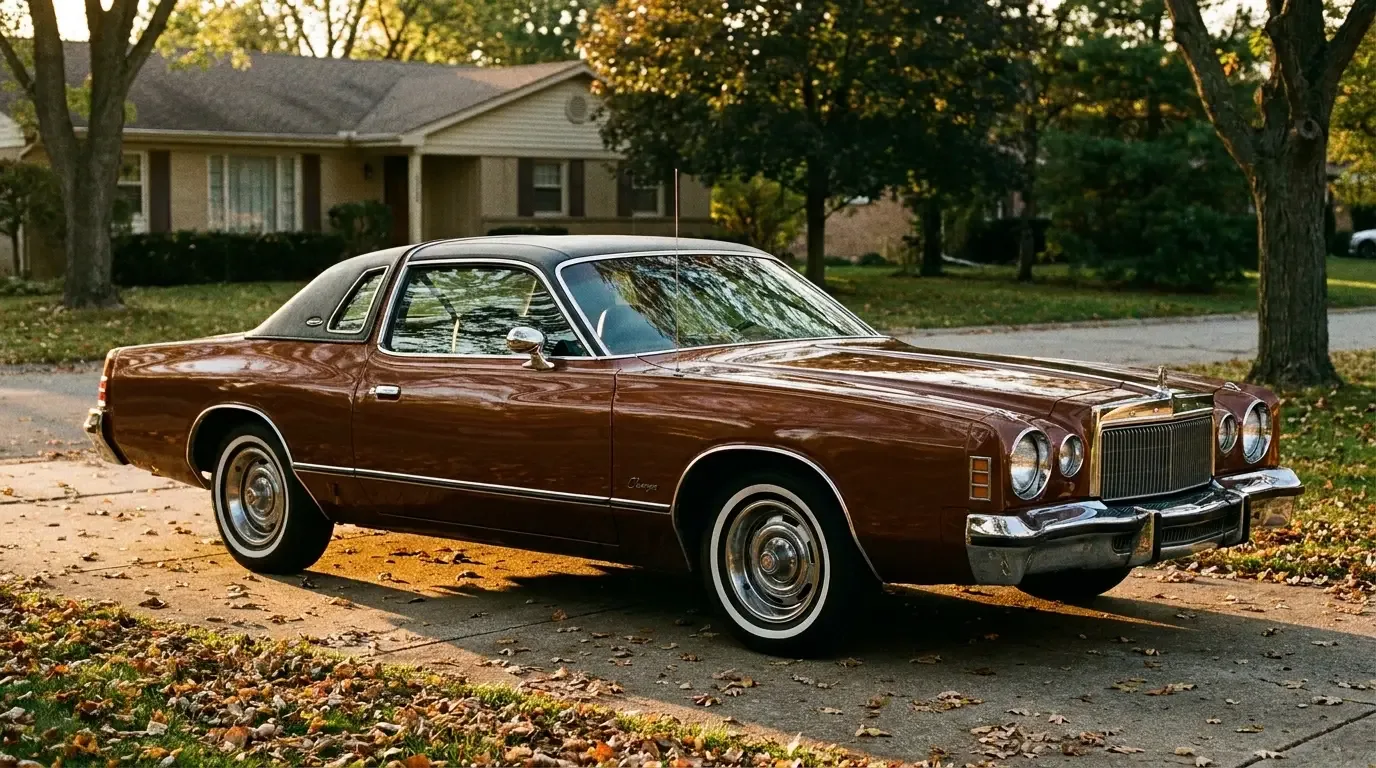
A woman at a car show in Ohio once told me she bought her 1976 Charger because of the little window behind the door. Not the engine, not the options list, just that small oval of glass set into the vinyl roof, catching light like a porthole on a ship that never left dry land. She'd wanted one since she was nine years old, riding in her aunt's identical car to church on Sunday mornings. That window meant something to her long before she understood a single thing about horsepower or trim codes.
Opera windows are the single most recognizable design signature of the fourth generation Charger, and they arrived at exactly the moment American car buyers decided formality mattered more than speed. Understanding why takes more than a glance at a brochure photo. It takes understanding what the whole car was trying to say.
Where the opera window came from
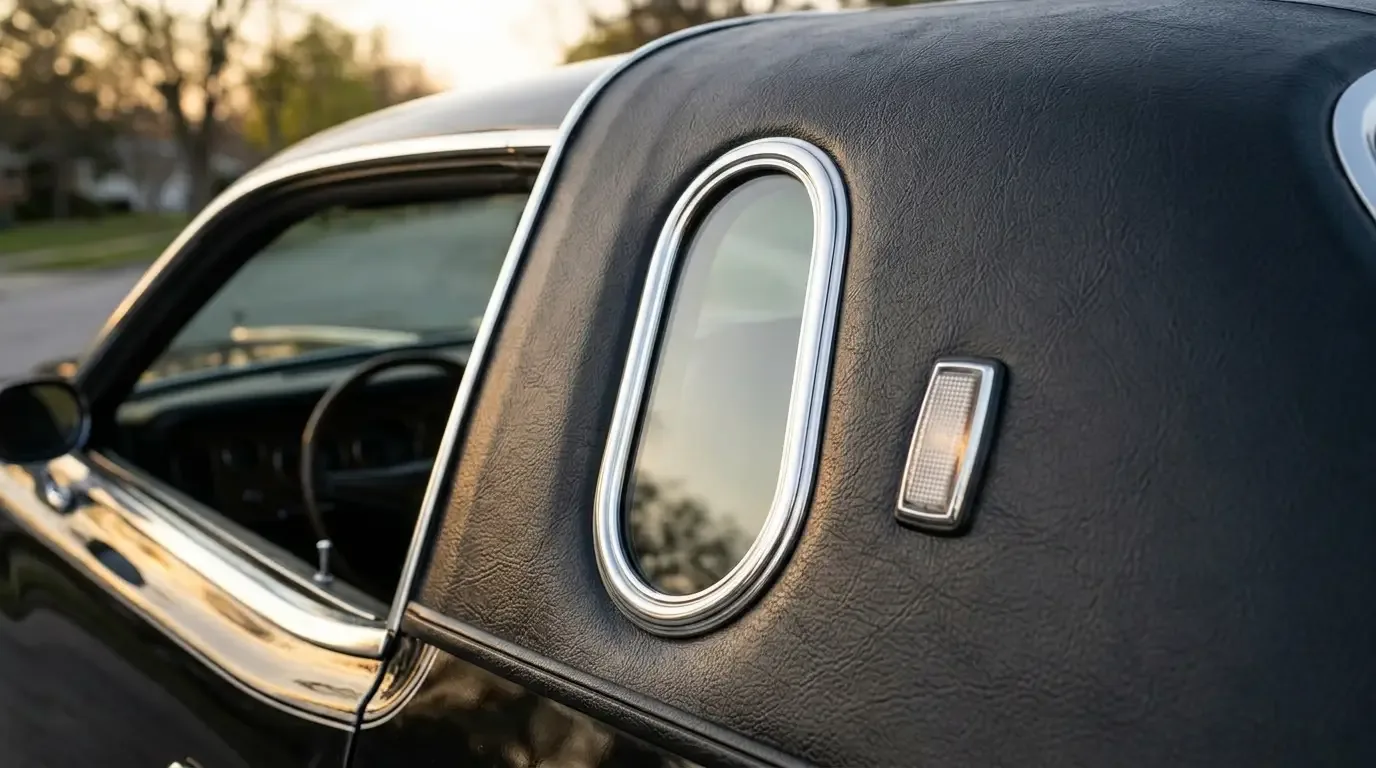
The small fixed window set into a car's rear roof pillar wasn't a Dodge invention. Ford and General Motors had already popularized the look on their own personal luxury coupes earlier in the decade, and by the time Chrysler's B body platform arrived for 1975, the opera window had become close to a requirement for any car hoping to compete in that segment. Buyers associated the small window with formal coachbuilt cars of an earlier American era, a visual shorthand for craftsmanship and distinction even when the window itself served no practical function beyond allowing a sliver of light into the rear seat.
Dodge's design team placed the window into a padded, usually vinyl covered, roof section that visually shortened the greenhouse and lengthened the car's beltline. The effect, intentional and effective, made the Charger look longer, lower, and more substantial than it actually was. It's a trick as old as automotive design itself, and on this car it worked.
The vinyl roof as a statement, not a cover
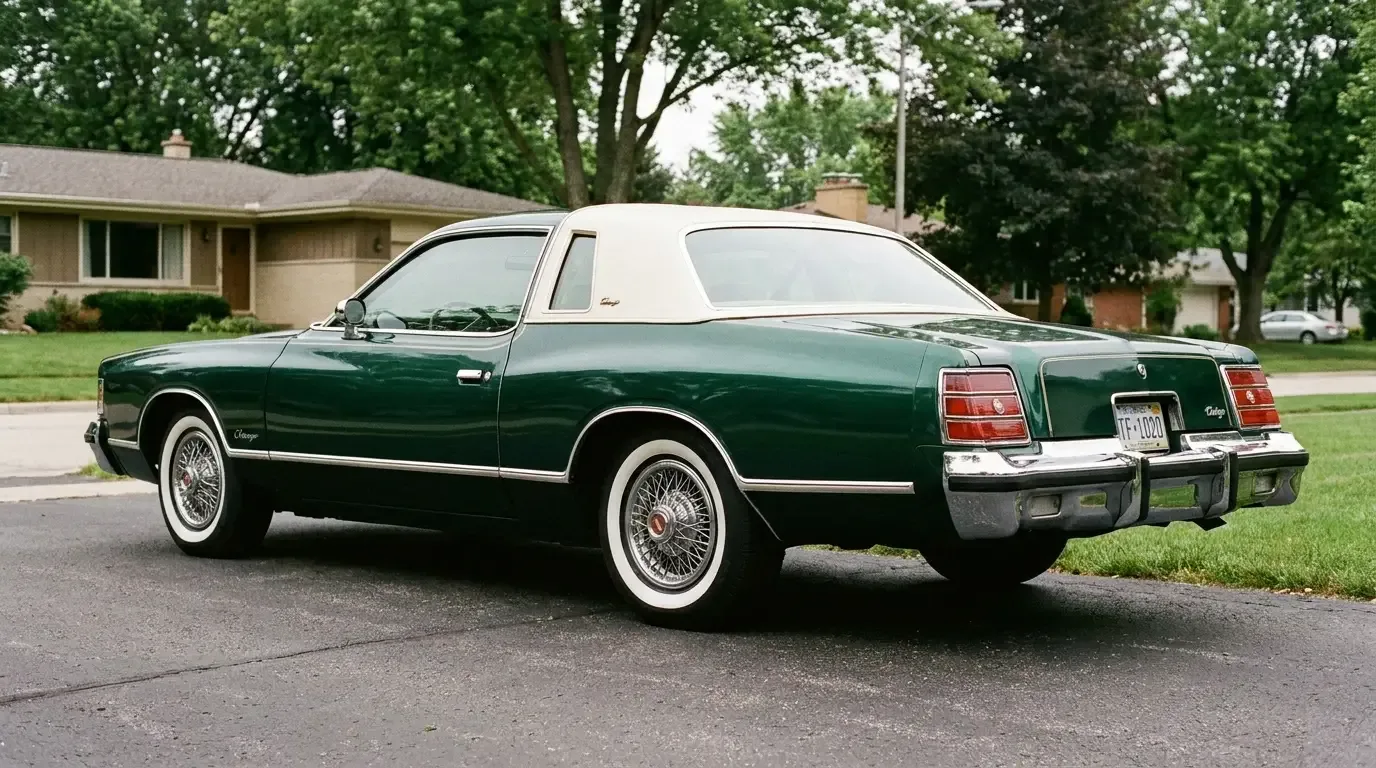
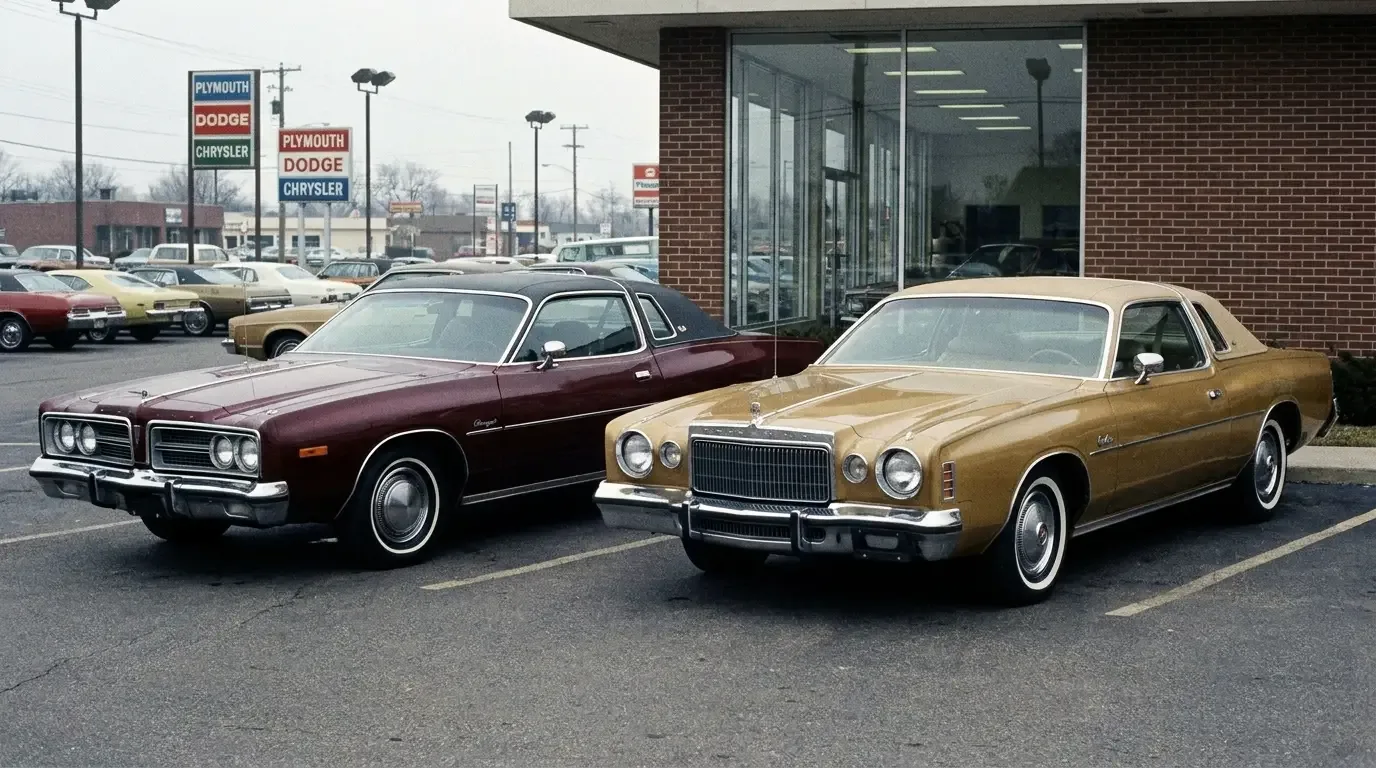
Pair the opera window with a half or full vinyl roof, and you get the defining silhouette of the entire malaise era Charger lineup. The vinyl roof wasn't hiding anything structural, contrary to a myth that circulates among casual buyers. It was a styling choice, applied over a standard steel roof, meant to visually break up the car's proportions and evoke the padded, tufted look of a formal town car. Available in colors that ranged from basic black through more elaborate options depending on the model year, the vinyl roof became as central to the SE's identity as the opera window itself.
What the look was chasing
Every design element on the fourth generation Charger pointed toward the same audience: buyers who wanted their car to read as expensive and composed, sitting in a driveway or a church parking lot, more than buyers who wanted it to read as fast. Woodgrain dash trim, plush upholstery, opera lamps mounted into the C pillar alongside the window itself, wide chrome wheel opening moldings. Taken together, these details built a coherent visual language that had almost nothing in common with the Charger of 1969, and that was entirely the point.
"She kept the car in the barn for eleven years before she could sell it. When the new owner started it, she cried in the driveway."
— Nora Beckett
Cars like this one carry a particular kind of emotional weight for the people who grew up around them. They weren't dream cars in the poster-on-the-wall sense. They were family cars, the ones that drove kids to school and grandparents to church, and that ordinariness is exactly what makes them feel so vivid decades later. A full account of the corporate reasoning behind this styling shift lives in the Charger feature on Classic Cars Arena, which traces the personal luxury pivot across the whole model run.
The Daytona name gets recycled into this look
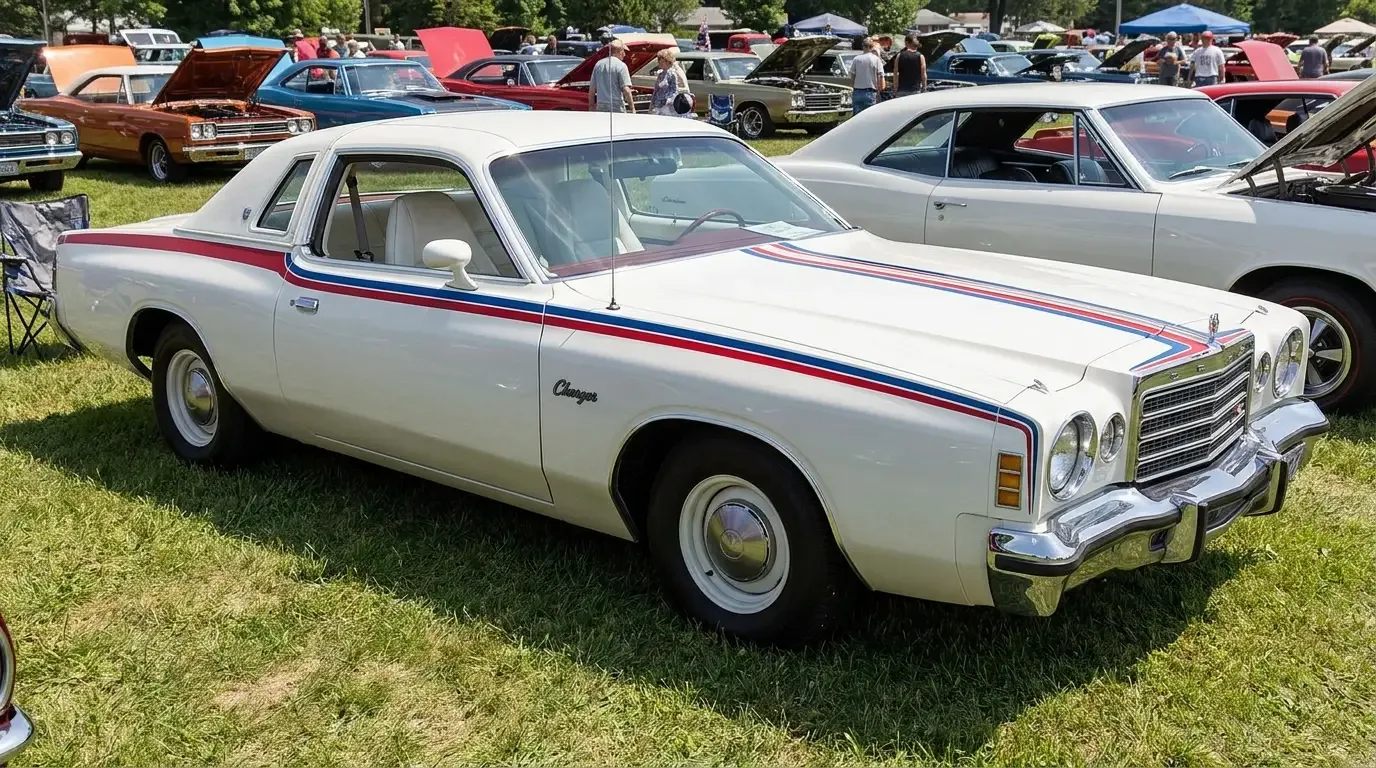
Perhaps the strangest twist in this whole era involves what Dodge did with a legendary name. The Daytona badge, which had meant a genuine aerodynamic winged racer in 1969, returned in 1976 as an appearance package layered onto this same personal luxury body. No wing, no nose cone, just stripes and trim on a car built entirely around opera windows and vinyl roofs. the 1976 Charger Daytona story covers exactly how that badge got attached to a car so far removed from its own history, and it's a strange enough tale that it deserves its own telling.
What to look for today
Original opera window trim and vinyl roof material have both become genuinely hard to source in factory correct patterns. Reproduction vinyl exists, but matching the exact grain and color of a 1975 versus a 1977 roof takes patience and a supplier who actually specializes in this era rather than general Mopar reproduction parts. The window trim rings themselves, small chrome pieces easily damaged during roof replacement, are frequently the last detail a restoration gets right, and often the first detail that gives away a rushed job.
| Feature | Detail |
|---|---|
| Roof options | Half vinyl, full vinyl, painted steel |
| Window placement | Fixed, set into rear roof pillar |
| Common failure point | Rust beneath vinyl at roof edges and drip rails |
| Trim material | Chrome ring surrounds, factory specific patterns |
These are not showy restorations to chase, and that's exactly their appeal. A well preserved opera window Charger, roof intact and trim unbroken, tells a story about a specific American decade that no amount of horsepower could tell better. It asks to be looked at slowly, the way that Ohio woman looked at hers, remembering a Sunday morning ride from decades before she owned the car herself.
Sources and notes
- Dodge Charger (B-body), Wikipedia - confirmed the 1975 personal-luxury redesign and the opera-window, vinyl-roof styling of the fourth-generation Charger.
- Chrysler Cordoba, Wikipedia - confirmed the shared B body and the formal personal-luxury styling context of the segment.
- Mac's Motor City Garage: Cordoba Clone - confirmed the SE's vinyl-roof and opera-window trim differentiated it from the muscle-era Charger.
- Hagerty: 1976 Dodge Charger SE - confirmed the formal styling language and the Ford/GM personal-luxury coupes it chased.
- Motales: 1975 Dodge Charger SE - confirmed the SE's styling priorities and common vinyl-roof rust issues.