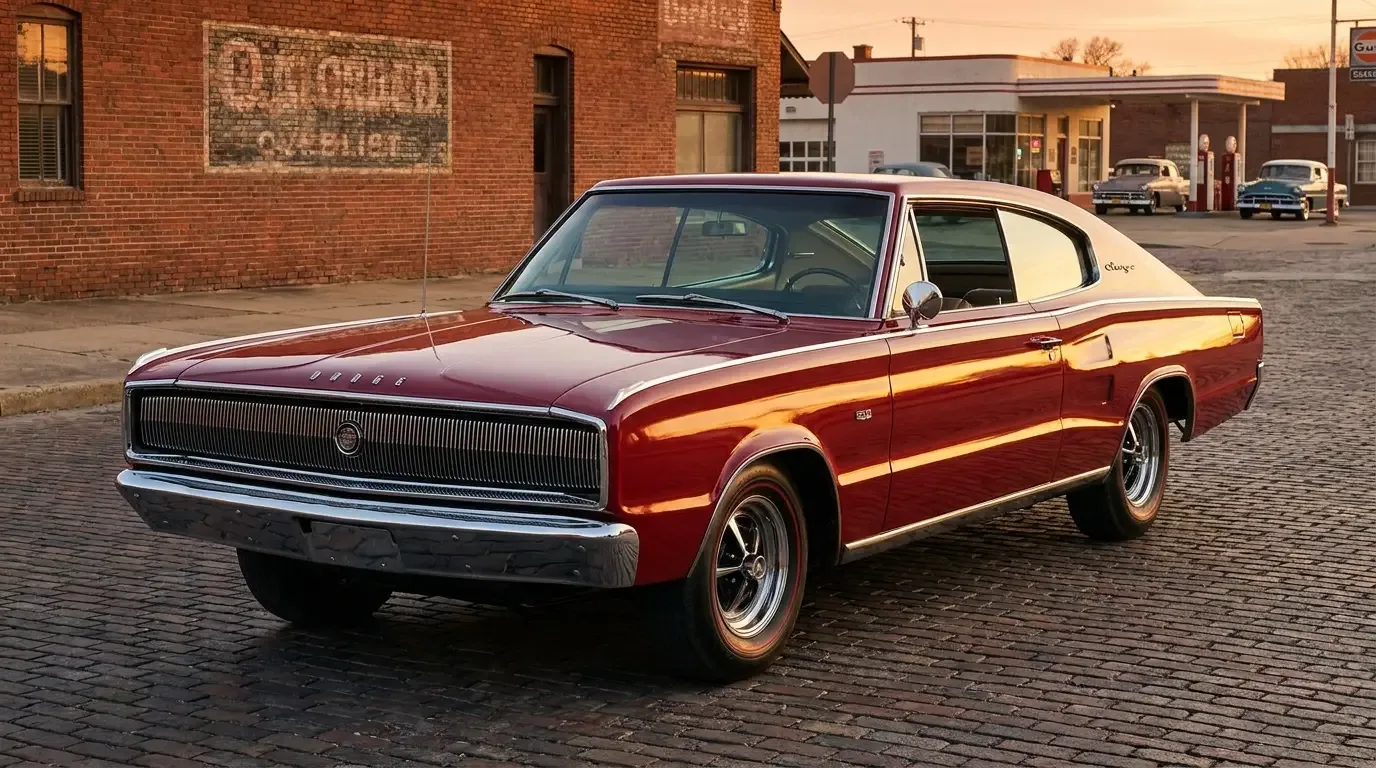
I've had my hands in enough 1966 Charger grilles to know exactly where people give up on this car. It's not the fastback roof and it's not the interior. It's the electric-motor headlight assemblies that rotate out of the back of that split grille, and half the "restored" examples I look at have a system that's been fought with, patched, or quietly disconnected by a previous owner who got tired of dealing with it.
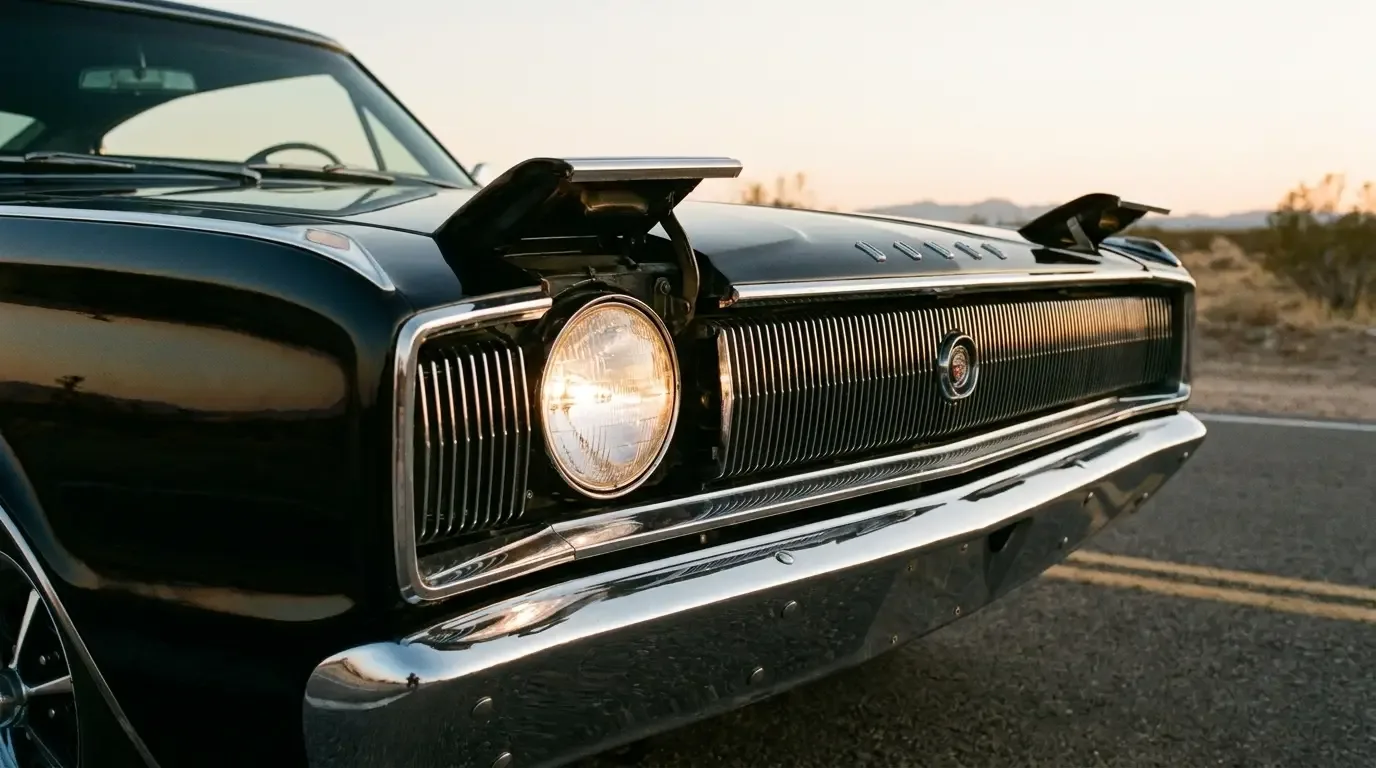
One thing to get straight up front: the first-generation 1966-67 Charger hid its lights with electric motors that spin the whole headlight pod around, not the vacuum-operated doors people often assume. Dodge didn't switch to vacuum-actuated headlight doors until the 1968 redesign. So let's talk about what's actually back there, why Dodge built it that way, and what actually breaks.
Why Dodge hid the headlights at all
The 1966 Charger's face was built around a full-width grille split down the middle by a thin center bar, and Dodge wanted that grille to read as one continuous element with no headlight bezels breaking it up. Hidden headlights had already shown up on the 1965 Buick Riviera and a handful of other cars chasing the same clean-face look, and Dodge's stylists clearly wanted the Charger to look more expensive and more purposeful than a Coronet with a new roof. With the lights off, each headlight pod rotated face-in so its blank back panel matched the grille, making the whole nose look like one uninterrupted piece until you flipped the switch and the pods spun around.
It worked. Nothing else at a Dodge dealer in 1966 had a face like it, and it's still the detail that makes people do a double take at a car show sixty years later.
I've talked to a few old-timers who sold these new, and they all say the same thing: customers walked up to the grille first, not the fastback roof, and asked how the lights worked before they asked about the engine. That's a pretty good sign the styling department got exactly the reaction they were after. It's also why so many of these systems got worked hard over the decades, cycled thousands of times by owners showing the trick off to anybody who'd stand still for it.
How the system actually works
Each headlight rides in a rotating housing driven by its own 12-volt electric motor, one per side. Flip the dash switch and current runs to both motors, which spin the pods a half-turn so the lamps face forward; switch off and the motors drive them back the other way until a limit switch cuts power at the closed position. Instead of a conventional gear train, these Chrysler motors use a clever orbiting-cup drive: a serrated plastic cup is deformed by rollers on a central shaft so it walks around a matching toothed housing, multiplying torque without a stack of gears. It's an unusual little mechanism, and when it's healthy it swings a pod around with real authority.
The catch is current. Each motor pulls something on the order of ten-plus amps while it's turning, and that load runs from a dash switch out through the firewall to both sides of the nose. Factory wiring and connectors were marginal for that draw when new, so voltage drop and a limit switch that stops the motor cleanly at each end are what separate a system that works from one that stalls halfway. A healthy setup rotates both pods together, symmetrically, with no hesitation or straining on one side.
What actually fails, in order of how often I see it
Corroded connectors and bad grounds come first, almost always where the wiring passes the firewall and reaches the motors up front. That's the cheap fix, and it cures a surprising share of "dead" systems on its own. Next up is the limit switch, the little contact that's supposed to cut the motor at each end of travel. When it fails, a pod either stops short, runs past its stop, or, worst of all, never shuts off, which quietly drains the battery overnight because the motor keeps drawing current trying to move a pod that's already home.
The motor and its orbiting-cup drive are the expensive failure. Shafts seize, the plastic cup wears, and a stalled motor pulling locked-rotor current will pop the integrated circuit breaker or cook the wiring if nobody catches it. Good rebuilt motors exist through a small network of specialists, but they are not as plentiful as they should be for a car this well known.
I've also seen owners chase a mystery battery drain for weeks without realizing the culprit was a headlight motor that never got the signal to stop, its limit switch worn just enough to leave the circuit live. It's easy to overlook because nobody thinks to check the headlight system when the complaint is a battery that's flat every Monday morning, but on this car a stuck motor circuit will absolutely show up as a parasitic draw.
"Somebody always tells me their headlight pods 'mostly work.' Mostly working on these motors means something in that circuit is already failing, you just haven't found which part yet."
— Mike Sullivan
What to check before you buy one
With the ignition on, cycle the headlight switch and watch both pods from outside. They should rotate together, not one after the other, and each should stop cleanly facing forward without grinding or hunting past its stop. Cycle them closed and open a few times and listen for a motor that keeps running after a pod has arrived, which points to a worn limit switch and a battery-draining circuit. If it fails those checks, budget for connector and ground repair at minimum, and be ready to source a rebuilt motor while you're in there.
| Component | Common failure | Typical cost to address |
|---|---|---|
| Connectors and grounds | Corrosion, voltage drop near firewall | Low, straightforward DIY |
| Limit switch | Won't cut motor at stop, drains battery | Moderate |
| Circuit breaker / wiring | Trips or overheats on a stalled motor | Moderate |
| Headlight motor / cup drive | Seized shaft, worn cup, motor stall | Higher, rebuilt units are scarce |
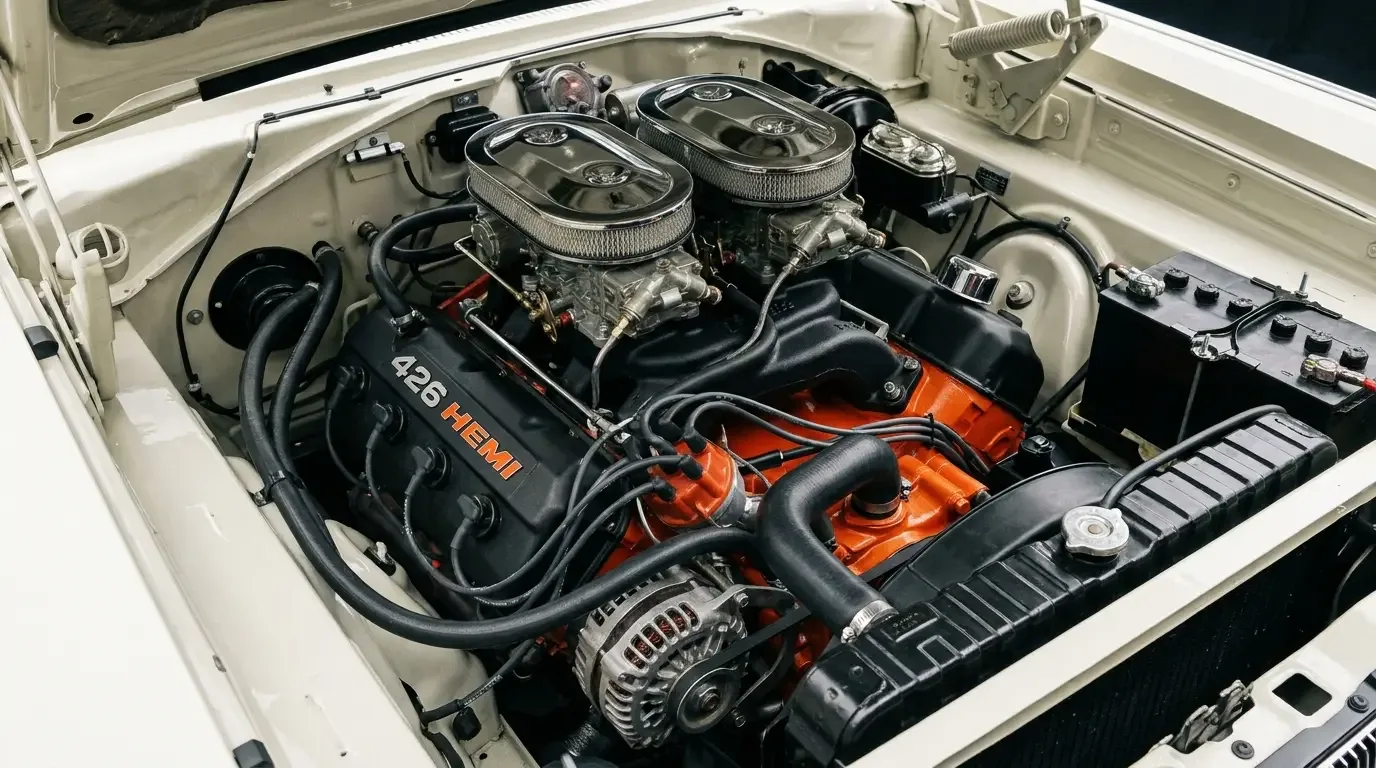
If you want the full picture on how this feature fit into the car's overall design, the the first-gen Charger story covers the fastback roof and the rest of the exterior thinking that led to this grille. And if you're the type who wants the fast car to go with the good looks, the 1966 Hemi Charger story is worth your time too. None of it matters if the face doesn't open right, so start there.
Sources and notes
- Wikipedia - Dodge Charger (1966) - confirmed the 1966-67 Charger used electrically rotating headlights, a feature unseen on a Chrysler product since the 1942 DeSoto.
- For B Bodies Only - 66/67 Charger headlight motors - detail on the orbiting-cup motor drive, ~10+ amp current draw and limit-switch failures.
- Mopar Connection - 1968-69 Charger hideaway headlights - confirmed Dodge switched to vacuum-operated doors only with the 1968 redesign.
- Headlight Motor Man - parts and rebuilds - corroborates the scarcity and specialist rebuilding of first-gen electric headlight motors.
- Ate Up With Motor - Dodge's 1966-1967 Charger - background on the clean-face grille and hidden-headlight styling goal.