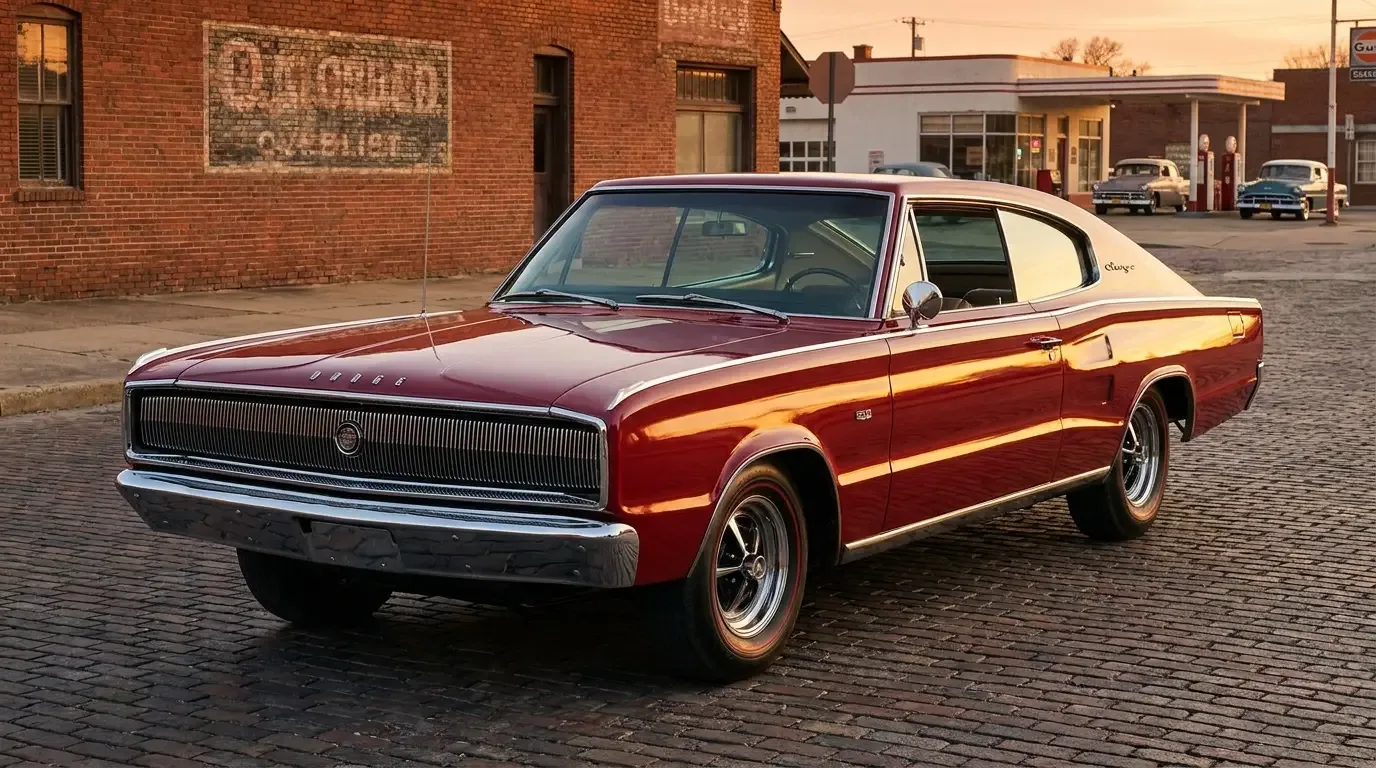
He kept the ashtray in the console spotless, that's what his daughter told me, years after he'd passed the car down to her and she'd finally decided to sell it. Not the engine bay, not the paint. The ashtray. Because that little chrome-lined console between the four bucket seats was the thing he'd been proudest of when he drove the 1966 Charger off the lot, and some habits outlive the person who started them.
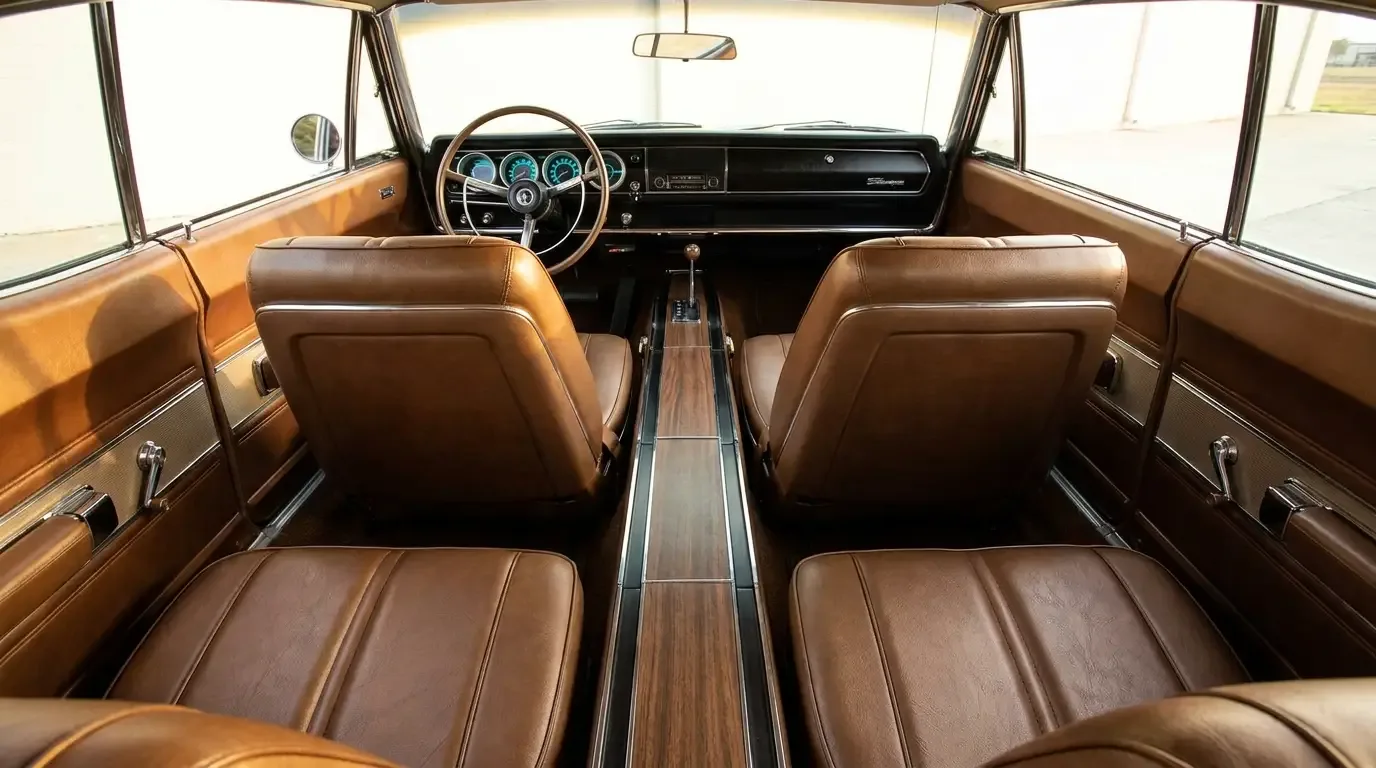
That's the part of the first-gen Charger story that gets lost when people only talk about the 426 Hemi and the fastback roofline. Underneath the muscle car reputation, Dodge built something that felt like a small luxury car wearing a performance suit. Four individual bucket seats, front and rear, with a console running the full length of the cabin between them. No bench seat option for six across. It was a car for two couples, or for a man who wanted his passengers to feel like they'd been invited somewhere nice, not just picked up for a drag run down the boulevard.
A cabin built for four, not a crowd
The rear bucket seats are the detail most people miss when they first sit in one of these cars. Most muscle cars of the era treated the back seat as an afterthought, a bench you'd fold a friend into if you had to. Dodge gave the Charger's rear passengers their own individual seats, separated by that console, with their own sense of place in the car. It changed the whole feel of a Sunday drive. You weren't hauling people around. You were driving them somewhere, the way a driver in a much more expensive car might.
The dashboard carried that same intention. Dodge fitted the Charger with an electroluminescent instrument panel, four deep-set gauges lit from behind rather than by a single bulb thrown across the face, so at night the whole cluster glowed evenly instead of casting shadows across half the dials. It's a small thing until you're driving one after dark and you realize how much more finished it feels than the harsh single-bulb clusters in a lot of its contemporaries.
Where the console actually mattered
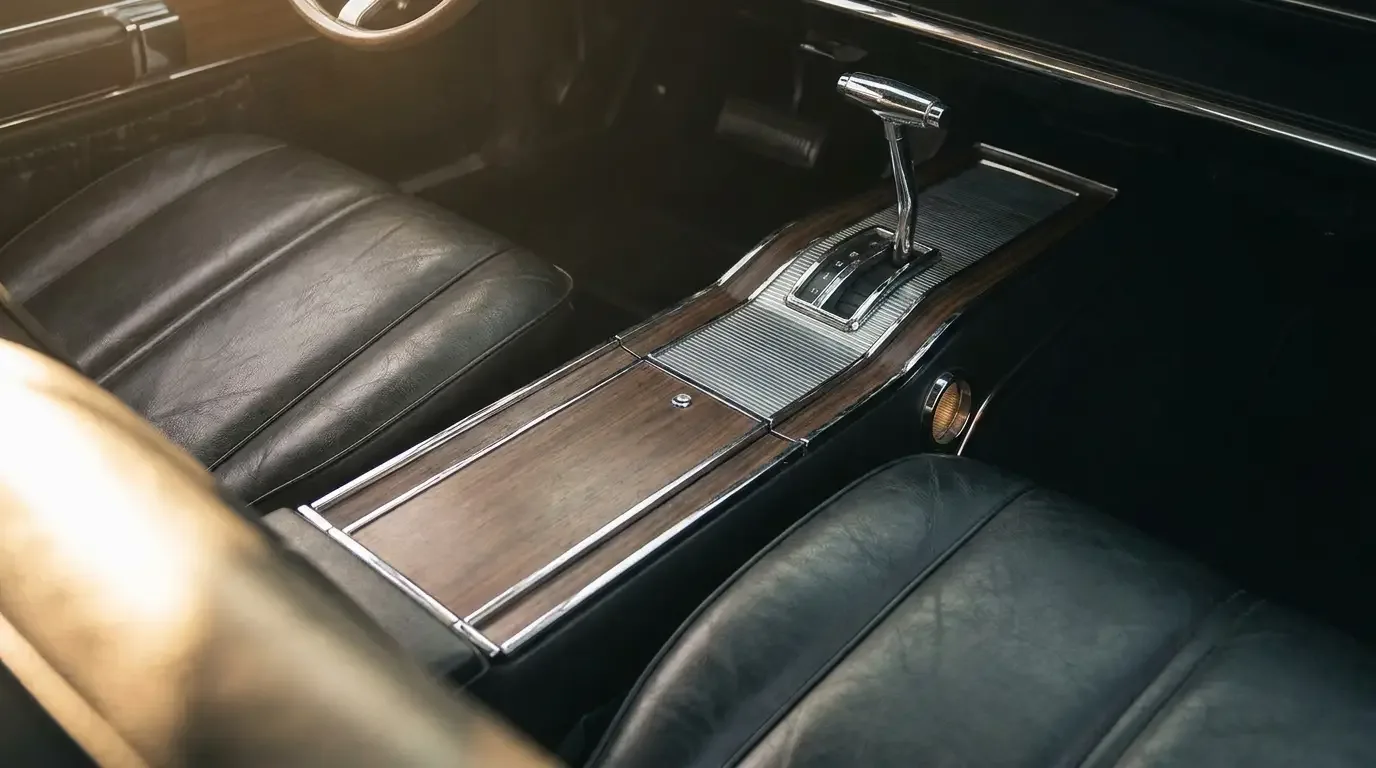
The full-length console did more than look expensive. It housed the shifter, whether you'd ordered the TorqueFlite automatic or the four-speed manual, and carried storage and, on some cars, a rear-seat armrest and vents that fed climate control back to the second row. For 1966 and 1967, that level of attention to rear passenger comfort in what was being marketed as a performance car was unusual enough that period reviewers noted it specifically, describing the Charger less as a stripped-down muscle car and more as something aimed at a buyer who wanted both the engine and the experience.
That's why I keep coming back to the phrase gentleman's muscle car when I think about the first-gen Charger. It wasn't trying to be the cheapest way into a big engine. Dodge already had cars for that buyer. The Charger was aimed at someone a little further along, someone who wanted the 383 or the Hemi under the hood but also wanted a cabin that didn't feel like an afterthought once the initial thrill of the acceleration wore off.
| Interior feature | What made it unusual for 1966-67 |
|---|---|
| Four bucket seats | Individual rear seating instead of a bench, front and rear |
| Full-length console | Ran between all four seats, housed shifter and storage |
| Electroluminescent gauges | Even backlighting across all four dials, unusual for the class |
| Available rear vents | Extended cabin comfort to rear passengers on equipped cars |
"She kept the console spotless for decades after her father passed the car to her, not because anyone told her to, but because that's what he'd cared about most. Some cars get remembered for their engines. This one got remembered for how it made two couples feel on a Friday night."
— Nora Beckett
Small comforts that added up
Beyond the seats and the console, the details kept accumulating in the same direction. Door panels carried padded armrests positioned to actually be useful rather than decorative. The optional woodgrain trim on the dash and console wasn't just applied for show, it ran continuously enough to feel considered, not slapped on as an afterthought the way some contemporaries treated interior trim upgrades. Even the sound of the doors closing was something dealers pointed out to prospective buyers, a solid, muted thunk rather than the tinny clap you'd get from a stripped-down econobox trim level.
None of these things show up on a spec sheet next to horsepower and quarter-mile times, and none of them get discussed at cruise nights the way engine builds do. But they're a huge part of why people who owned these cars kept them for decades instead of trading them in after a few years the way owners of more single-minded muscle cars often did. A car that feels finished inside earns a different kind of loyalty than a car that's just fast.
How this shaped who bought the car
Dodge dealers in 1966 found themselves selling the 1966 dodge charger to a slightly different buyer than the one walking in for a stripped-down Coronet with a big engine. Some were younger men who wanted the performance but also wanted a car their date wouldn't complain about riding in. Others were older buyers trading up from a sedan, drawn to the styling and the idea of something faster without giving up the comfort they were used to. The four-bucket layout, more than any single spec sheet number, is what made that pitch work.
A woman I spoke with a few years back told me her father bought his Charger specifically because her mother refused to ride in the back of his friend's GTO, calling it "a car for teenagers." The Charger's rear seats changed her mind. That's not a detail you'll find in a brochure, but it's the kind of story that explains why this particular car sold to households that other muscle cars of 1966 never reached.
What changed by the second generation
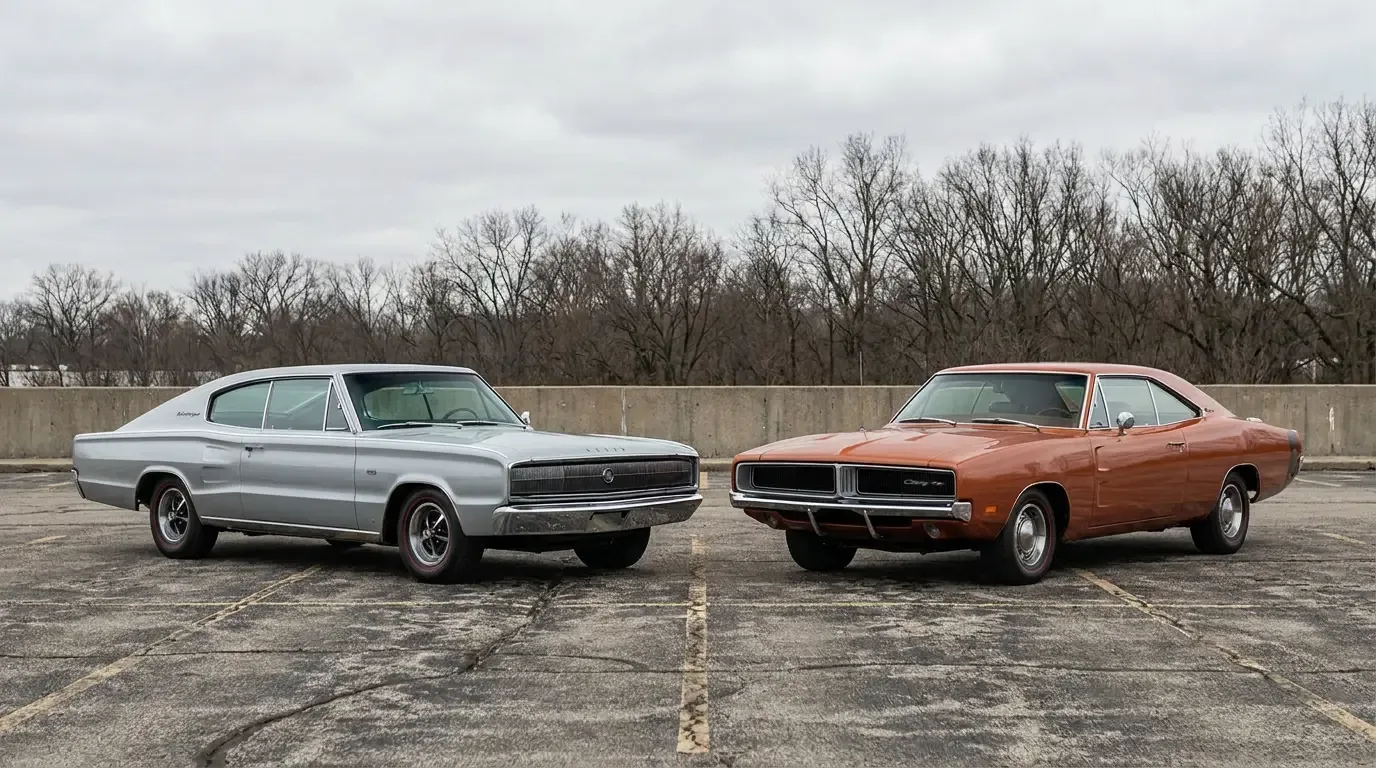
By the time Dodge redesigned the Charger for 1968, some of that emphasis shifted. The car got wider, the styling got more aggressive, and while the essential idea of a well-finished cabin carried forward, the four-bucket-seat configuration wasn't quite as central to the pitch anymore. If you want to understand exactly how the personality of the car evolved from that first generation into the version most people picture when they hear the name Charger, the Charger First Vs Second Generation story lays out what stayed and what didn't.
What stayed constant, at least for the people who bought and kept these cars for decades, was the sense that this particular Charger had been built for someone who wanted more than raw speed. He wanted an ashtray he could be proud of. That's not nothing. That's a car doing exactly what it was designed to do, long after the people who designed it stopped paying attention.
Sources and notes
- Dodge Charger (1966) - Wikipedia - confirmed the standard four bucket seats and full-length console, and that the console was revised and a buddy seat added for 1967.
- Ate Up With Motor - 1966-1967 Charger history - confirmed bucket seats front and rear, the elongated console, full instrumentation, and fold-flat rear seats as a period novelty.
- Muscle Car Facts - 1966 Charger - cross-checked interior appointments and options for the first-gen car.
- Horsepower Memories - 1966-1967 Dodge Charger - background on the Charger's upmarket cabin positioning.
- automobile-catalog - 1966 Charger 426 Street Hemi - reference for first-gen equipment and specifications.