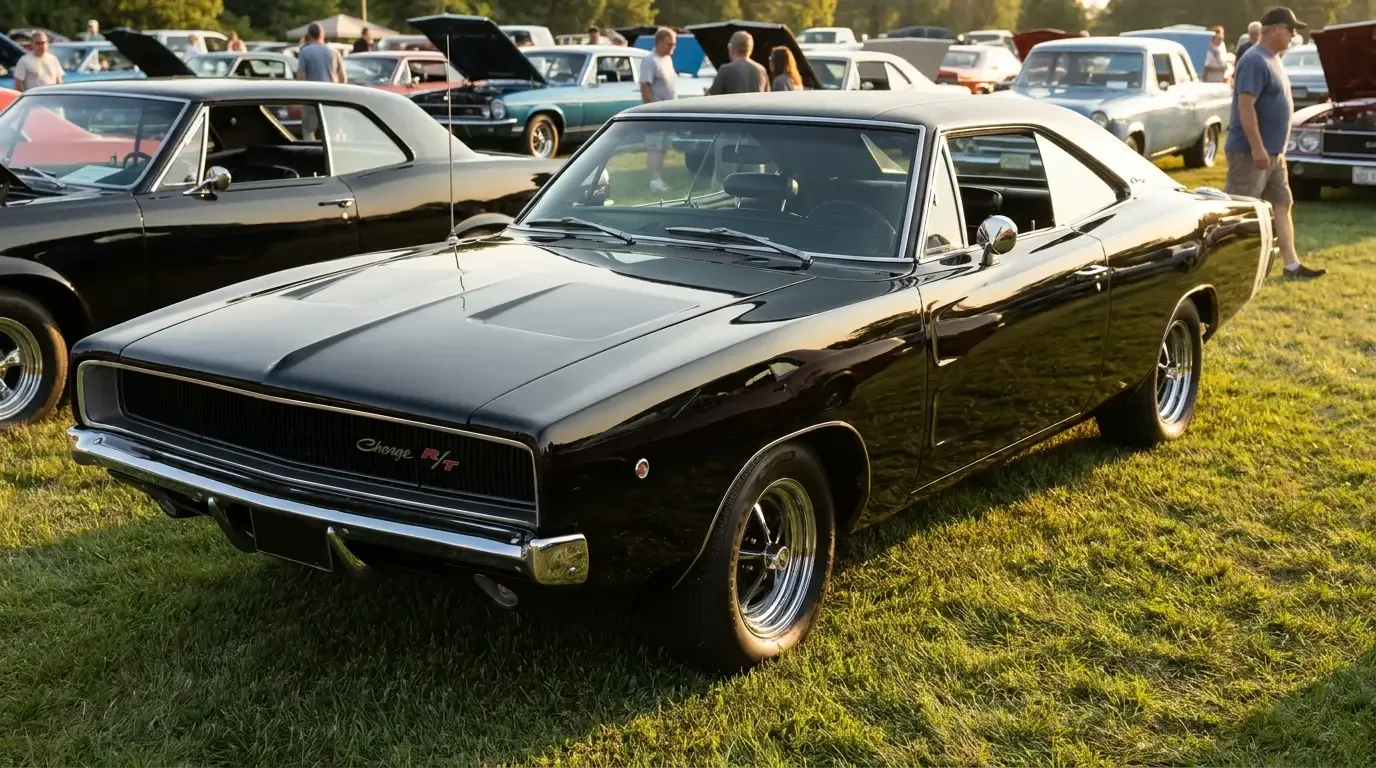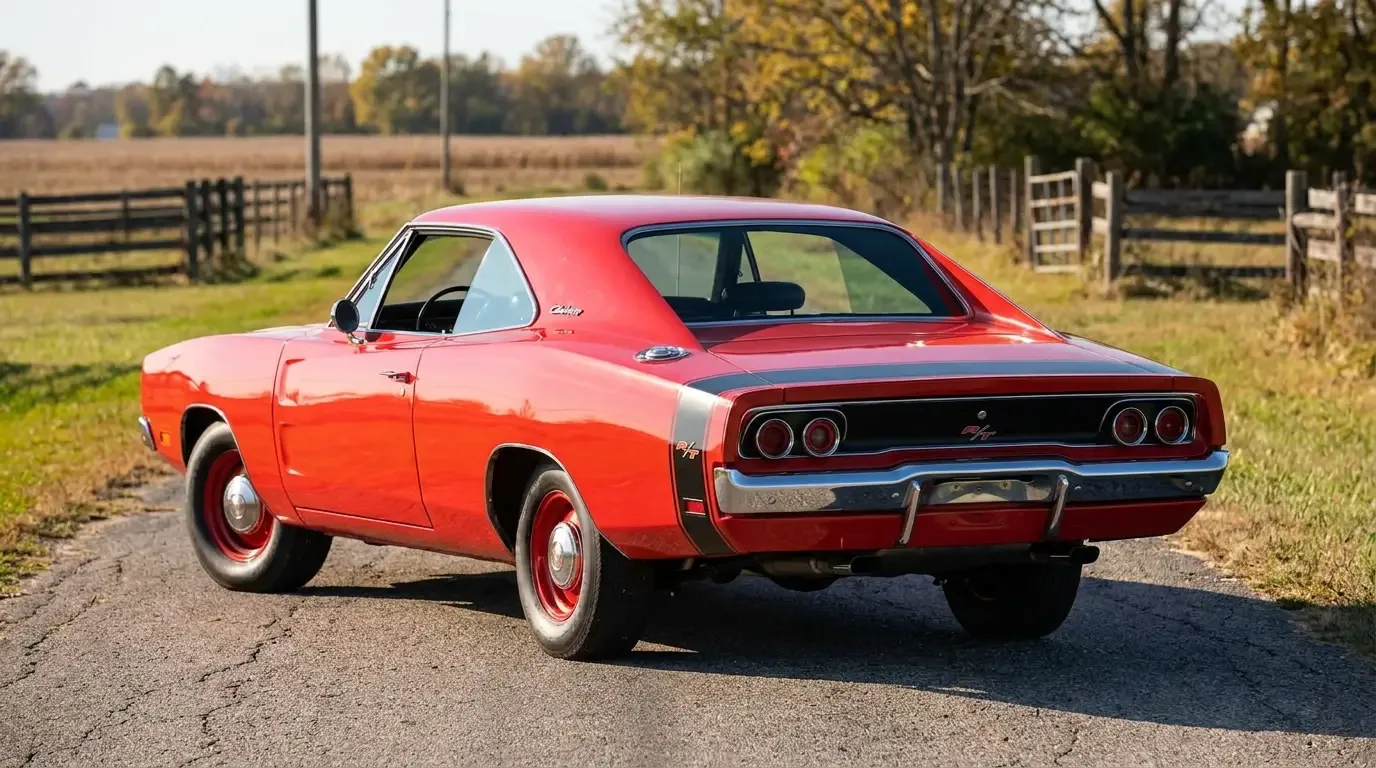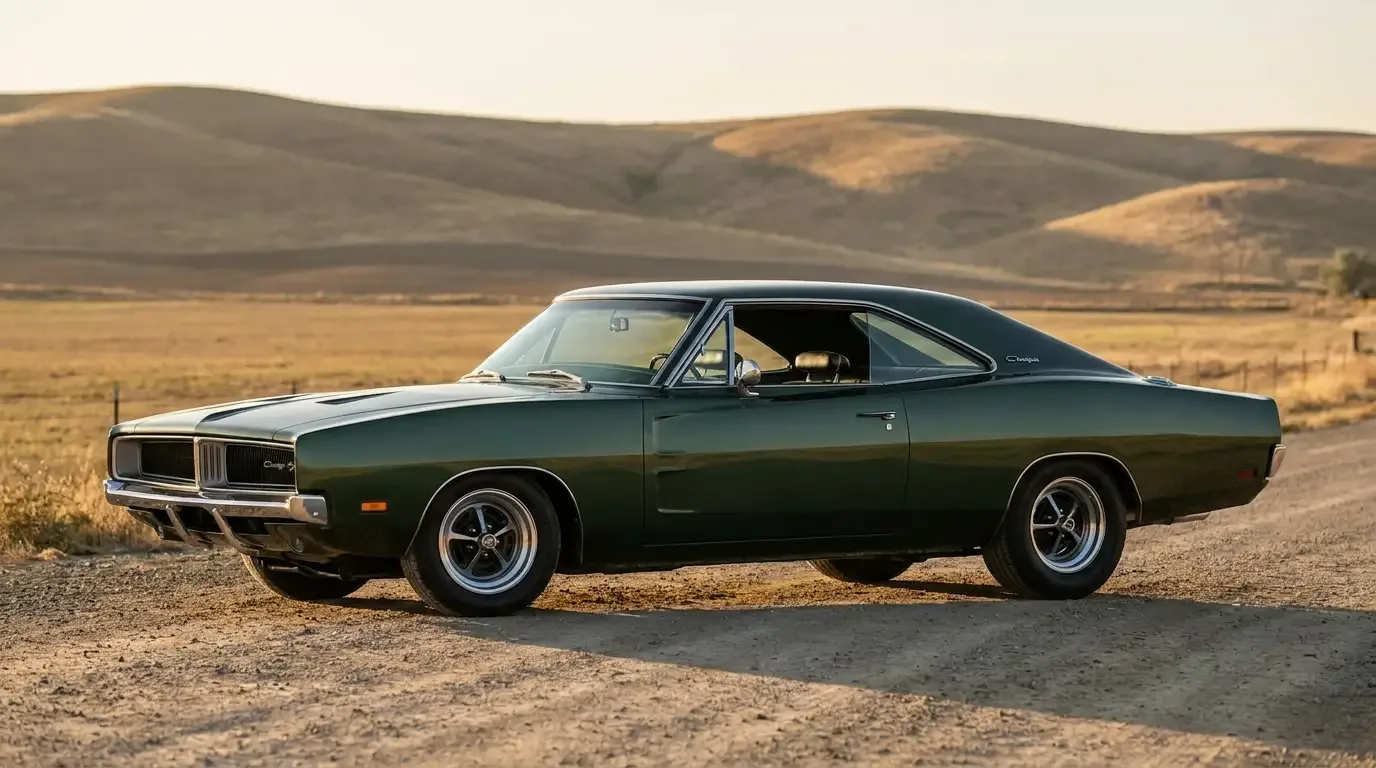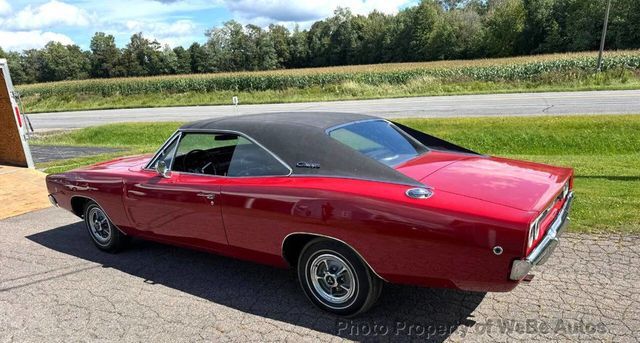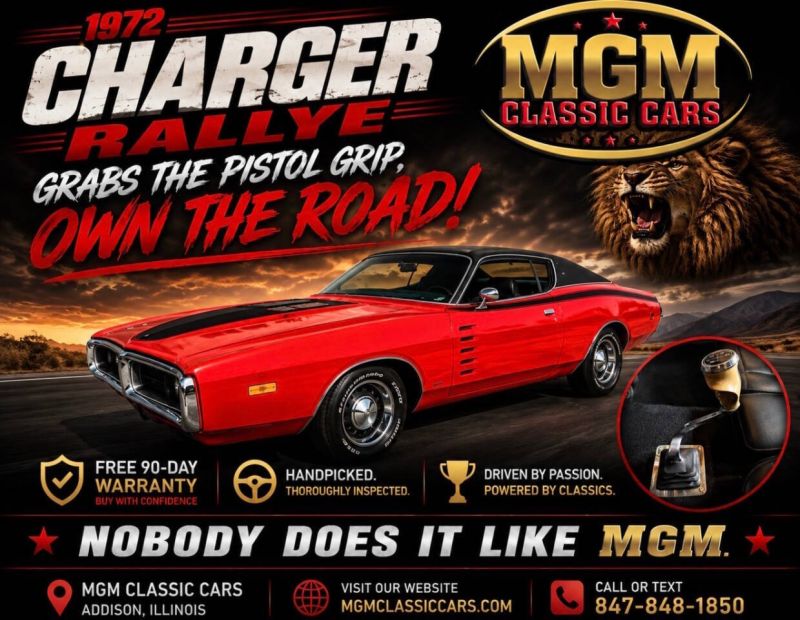
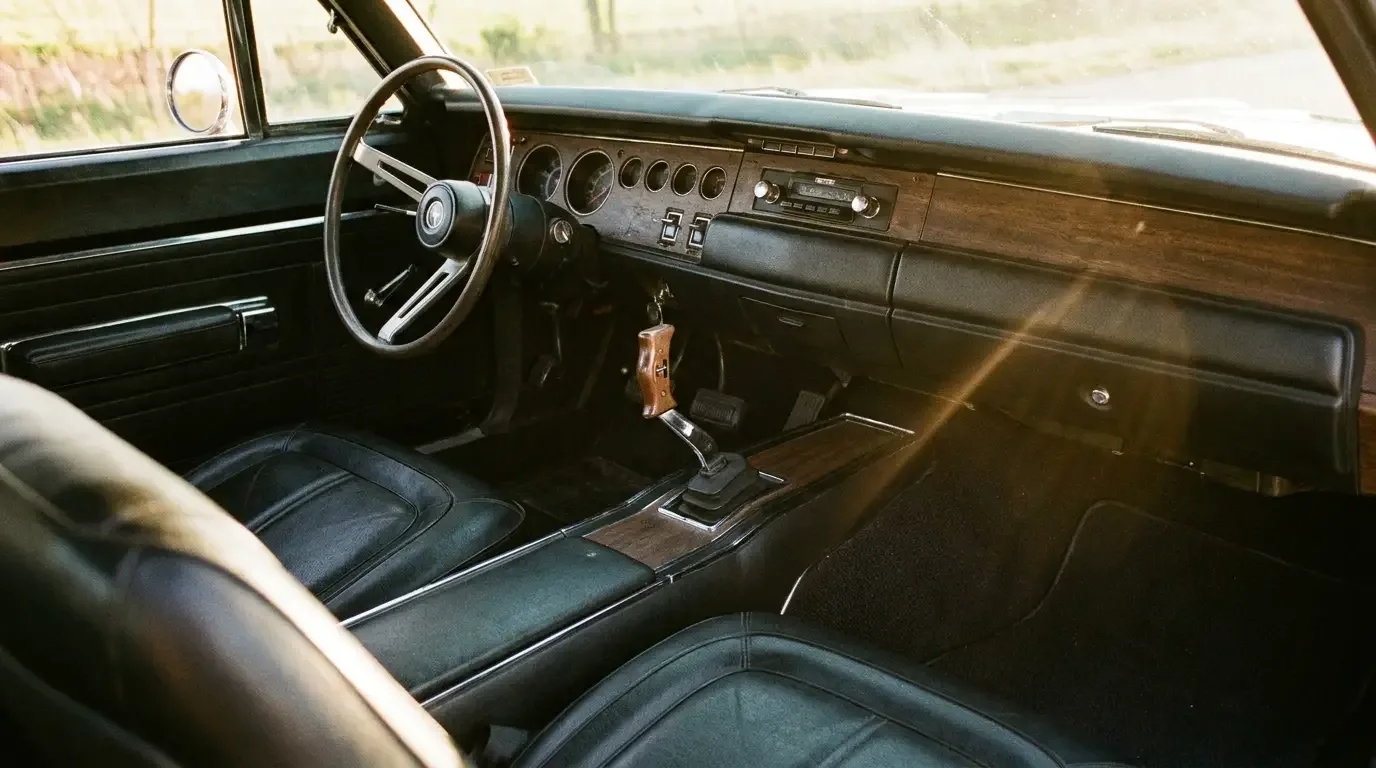
The pistol-grip shifter is the single most photographed detail on a second-gen Charger's interior, and it's also one of the most misunderstood. People treat it like a styling flourish. It wasn't. It was a functional piece tied to a specific transmission and option combination, and knowing which cars actually got one from the factory separates real documentation from wishful thinking.
The number that matters: which transmission it bolted to
The pistol-grip shifter, officially the Hurst-sourced shifter Chrysler fitted to manual-transmission Chargers, mounted to the four-speed manual transmission option. One timing detail worth pinning down before you argue about any specific car: the pistol-grip handle itself didn't arrive until the 1970 model year, so a 1968 or 1969 four-speed Charger left the factory with an earlier Hurst handle, not the pistol grip everyone pictures. From 1970 onward it became the signature piece. Automatic cars got a different shifter entirely, a console or column-mounted unit with nothing resembling the pistol-grip shape. If a car is showing you a pistol-grip handle and it's paired with an automatic, something's wrong. Either the shifter's been swapped in for looks, or the transmission's been swapped out at some point and the paperwork needs a closer look.
That's the number that actually matters here: four-speed take rate. On these cars, four-speed manuals were a minority of total production compared to automatics, and the exact percentage shifts by year and engine combination. A big-block car with a four-speed and the correct pistol-grip shifter is a meaningfully different car, in both driving character and collector value, than the same body style with a slushbox automatic. The shifter itself is a small part. The drivetrain behind it is the number that sets the price.
| Transmission | Shifter type | Typical pairing |
|---|---|---|
| 4-speed manual | Pistol-grip Hurst shifter | R/T and performance engine options |
| 3-speed TorqueFlite automatic | Console or column shifter, non-pistol-grip | Standard across most engine options |
| 3-speed manual | Column-mounted shifter | Base engine cars, low take rate on Chargers |
Dan Reeves, numbers guy: the blower looks great on the invoice, and a pistol-grip shifter looks great in a listing photo. Neither one tells you what's actually bolted underneath. You want the broadcast sheet or the fender tag transmission code before you pay a premium for "factory four-speed with pistol-grip."
Where the reproduction shifters fall short
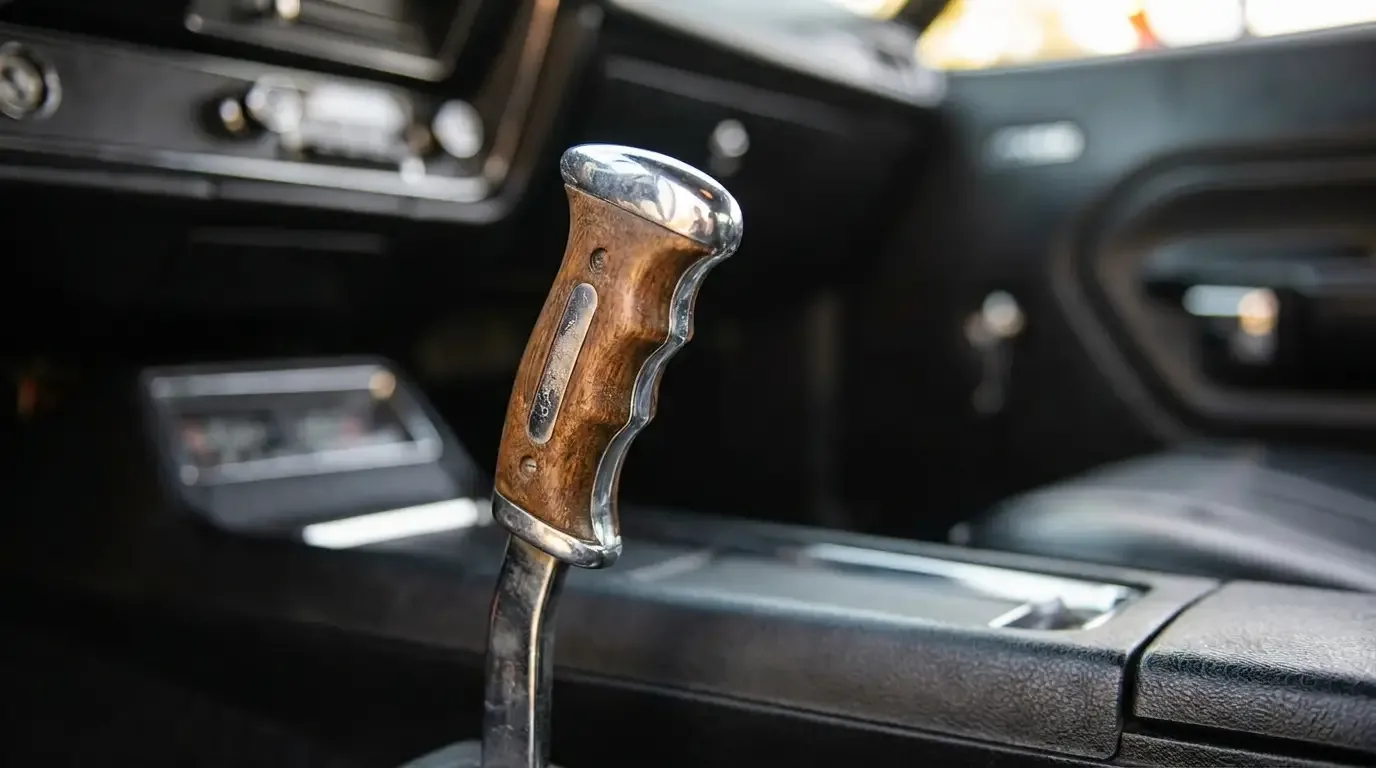
Because the pistol-grip look is so recognizable, it's also one of the most reproduced parts in the Mopar aftermarket. Reproduction handles range from genuinely excellent, dimensionally correct and using the right grain pattern, to cheap castings that get the rough shape right and nothing else. The stitching pattern on the vinyl-wrapped grip, if the car has one, and the weight and finish of the metal internals are where the cheap versions show themselves fastest.
None of that tells you whether the car is a real four-speed, though. A correct reproduction shifter bolted to a column that never had a four-speed behind it is still a car masquerading as something it isn't. I've seen plenty of Chargers with a beautifully restored pistol-grip shifter sitting on top of a transmission tunnel that was never cut for a four-speed linkage in the first place, meaning somebody did aftermarket surgery to make the shifter fit. That's a bigger red flag than a cheap reproduction handle. Check underneath, not just on top.
What the four-speed actually cost the buyer new
Ordering a four-speed manual in 1969 wasn't free, and it wasn't the default choice for most buyers walking into a Dodge dealership. The option carried a real price premium over the standard automatic, and it also carried a practical tradeoff most buyers considered before signing the order form. A four-speed demanded more from a daily driver, clutch work in stop-and-go traffic, a steeper learning curve for less experienced drivers, and a driving experience that rewarded someone who actually wanted to row their own gears rather than just look fast at a stoplight.
That upfront cost and inconvenience is exactly why the four-speed population skews toward buyers who ordered the car with genuine performance intent, often alongside a bigger engine option and a numerically higher rear axle ratio to match. It's a self-selecting group in the original buyer pool, which is part of why these cars command a premium today beyond just the mechanical rarity of the parts involved. The car tells you something about the original owner's priorities, not just its own specification sheet.
How to verify the combination is real
Start with the fender tag. The transmission code there should indicate manual or automatic and, on cars where Chrysler's coding gets specific enough, the transmission model. Cross-reference that against the broadcast sheet if one survives with the car, since it usually lists the transmission by part number or description directly. If both agree the car left the factory with a four-speed, you've got real documentation. If the tag says automatic and the car's sporting a pistol-grip today, ask when the swap happened and get any paperwork on the parts used.
None of this makes a converted car worthless. Plenty of legitimate builds swap in a four-speed and a correct shifter for driving enjoyment, and that's a fine choice for an owner who wants a different feel behind the wheel. The problem is when a converted car gets sold as factory-original without disclosure. That's the gap between an honest modification and a misrepresented one, and it's the gap that costs buyers real money.
- Confirm the transmission code on the fender tag before trusting a pistol-grip shifter as proof of a factory four-speed.
- Check the transmission tunnel for factory-cut linkage openings versus aftermarket modification.
- Compare reproduction shifter parts against known-correct originals for grip texture and internal weight.
- Ask directly whether a transmission swap has occurred, and request documentation on the work.
"The shifter looks great on the invoice. On the lift it's bolted to a tunnel that was never cut for a four-speed. That's the number that matters, not the handle."
— Dan Reeves
There's a broader case for why this transmission and shifter combination shows up so often on the cars people call the best of the breed, and that ties into the larger discussion around the best dodge charger generation question that keeps circulating in the hobby. Manual cars with the pistol-grip setup tend to anchor that argument more than any single styling detail does.
For a fuller picture of how this generation's options and engineering choices fit together, the Charger feature on Classic Cars Arena covers the broader context these individual components sit inside. The shifter's a small piece of a much bigger equation, but it's one buyers ask about constantly, and it's worth getting the verification right before the deal closes.
Sources and notes
- Summit Racing: Hurst pistol-grip handles for Dodge Charger - confirmed the pistol-grip handle was a Hurst part for 1970-and-later four-speed B-body applications.
- Holley/Hurst pistol-grip shifter stick - verified the pistol grip was fitted to Mopar four-speed cars beginning with the 1970 model year.
- Allpar: Dodge Charger 1968 - 1974 - background on the A833 four-speed option, TorqueFlite automatic, and column-shift base manual.
- Wikipedia: Dodge Charger (1966 - 1978) - cross-checked transmission availability and R/T equipment on the second-generation cars.
- For B Bodies Only forum: Hurst pistol-grip - enthusiast reference on grip variations and correct linkage between applications.