
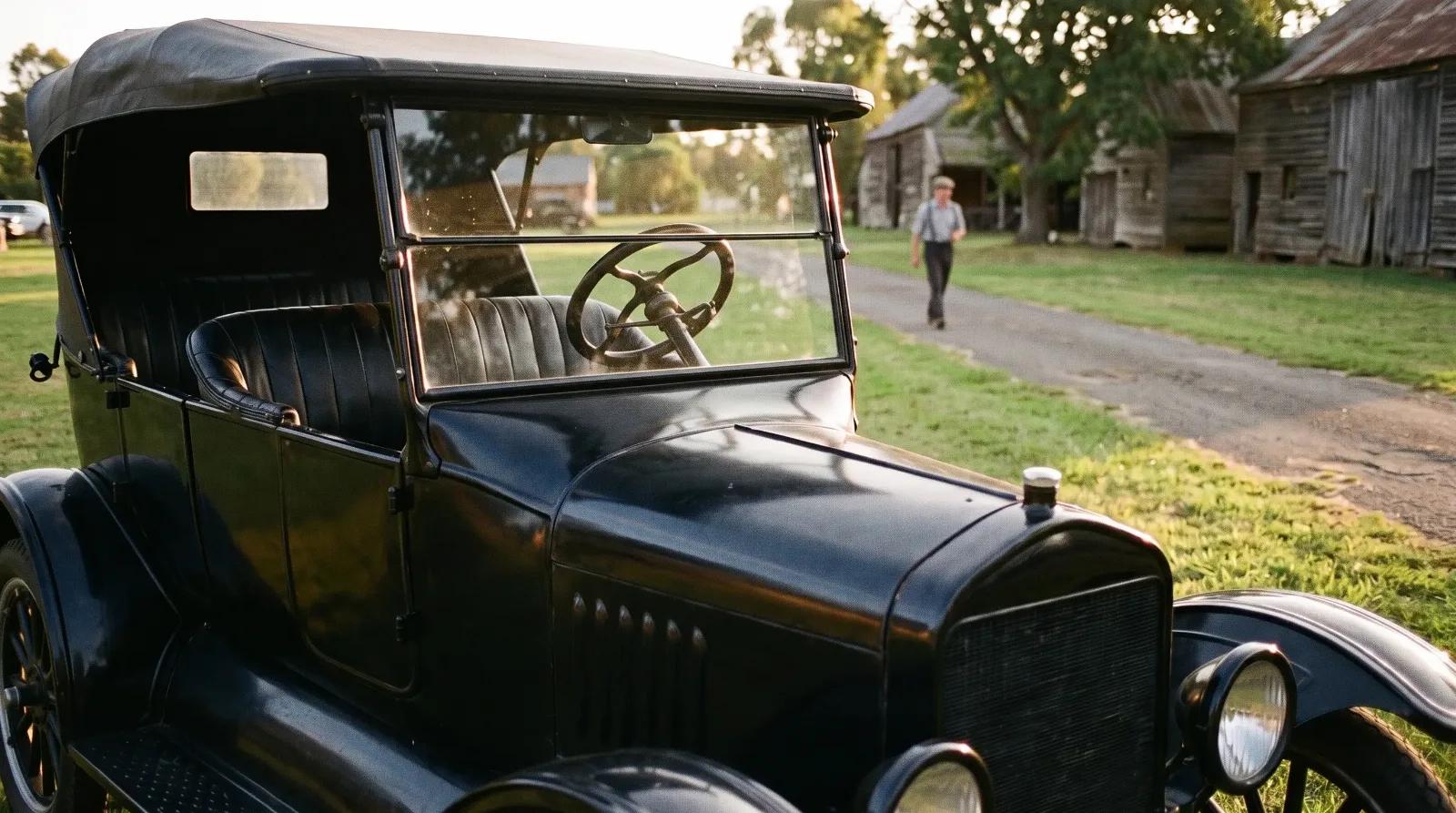
In May 2026, an industrial maintenance class in Priest River, Idaho, finished restoring a 1923 Model T, then learned to drive one. Members of the Inland Empire Model T Club lined up eight Model Ts in front of the school and taught them. Driving a Model T is like that for almost everyone who tries it: your feet and hands have spent years learning one set of rules, and this car was built before those rules existed. Every Model T is at least 99 years old in 2026, and most have passed 100. Each one still asks the same thing of a new driver, which is to forget what you know.
Car Features
7 min read
What It's Like to Drive a 100-Year-Old Model T
Three pedals, no gas pedal and a hand lever that can run you over. What driving a Model T feels like in 2026, from crank to cruise.
The hobby that keeps these cars running, the clubs, the museums and the people who teach, has the full story of its own. This is about the seat itself.
Before it moves: starting a century-old car
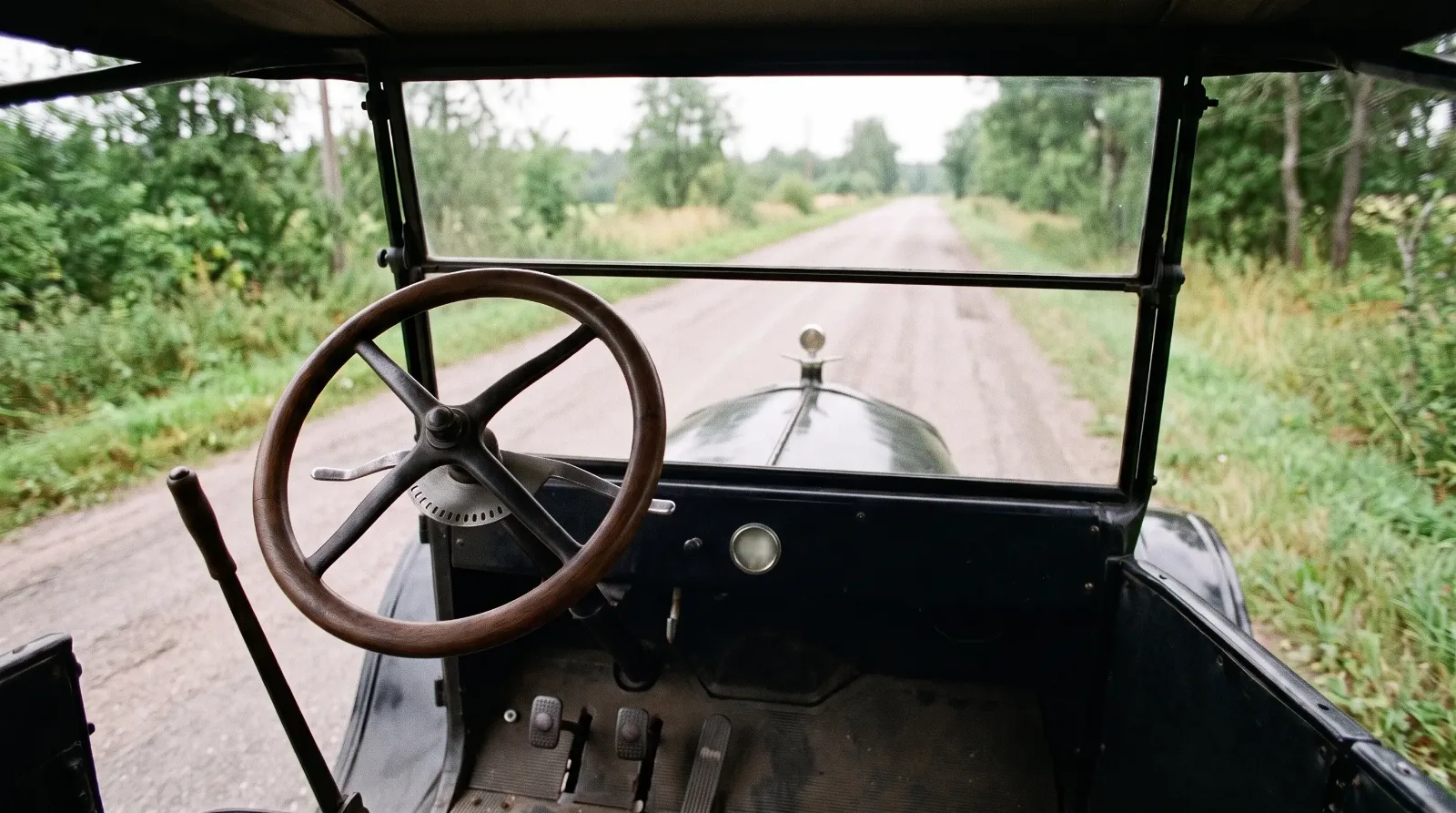
You do not turn a key. You begin with the long hand lever on the floor at your left. Pulled fully back, it holds the transmission in neutral and sets the rear brakes. It has to be set before anyone cranks the engine. If it is not, the car can lurch forward and run over the person standing at the front with the crank. Owners say this calmly, the way sailors talk about the boom.
Then the two small levers under the steering wheel. The one on the right is the throttle. The one on the left is the spark advance, which moves along a notched quadrant and changes when the spark fires. There is no gas pedal on the floor. Your right hand runs the engine.
Plenty of Model Ts start with a hand crank, because the crank was standard. Others have a floor button and a starter. The electric starter became an option in 1919 and was standard on every Model T by 1926, so whether you crank depends on the year and on what the car has had done to it since. When the engine catches, the whole car shivers.
Driving a Model T: three pedals and no gas pedal
Look down and you see three pedals. Not one of them is an accelerator.
The left pedal is the gear pedal. Pressed to the floor, it puts the car in low. Held halfway, it is neutral. Let it all the way up, with the hand lever pushed fully forward, and you are in high. The Model T has only those two forward speeds, low and high, through a planetary transmission. The center pedal is reverse. The right pedal is the brake.
So pulling away goes like this. Open the throttle a little with your right hand. Press the left pedal down to the floor and keep it there, then push the hand lever all the way forward to let go of the rear brakes. The car moves off in low, loud and slow. When it has some speed, ease the throttle back a touch and let the left pedal come all the way up, and the engine note drops as high gear takes over.
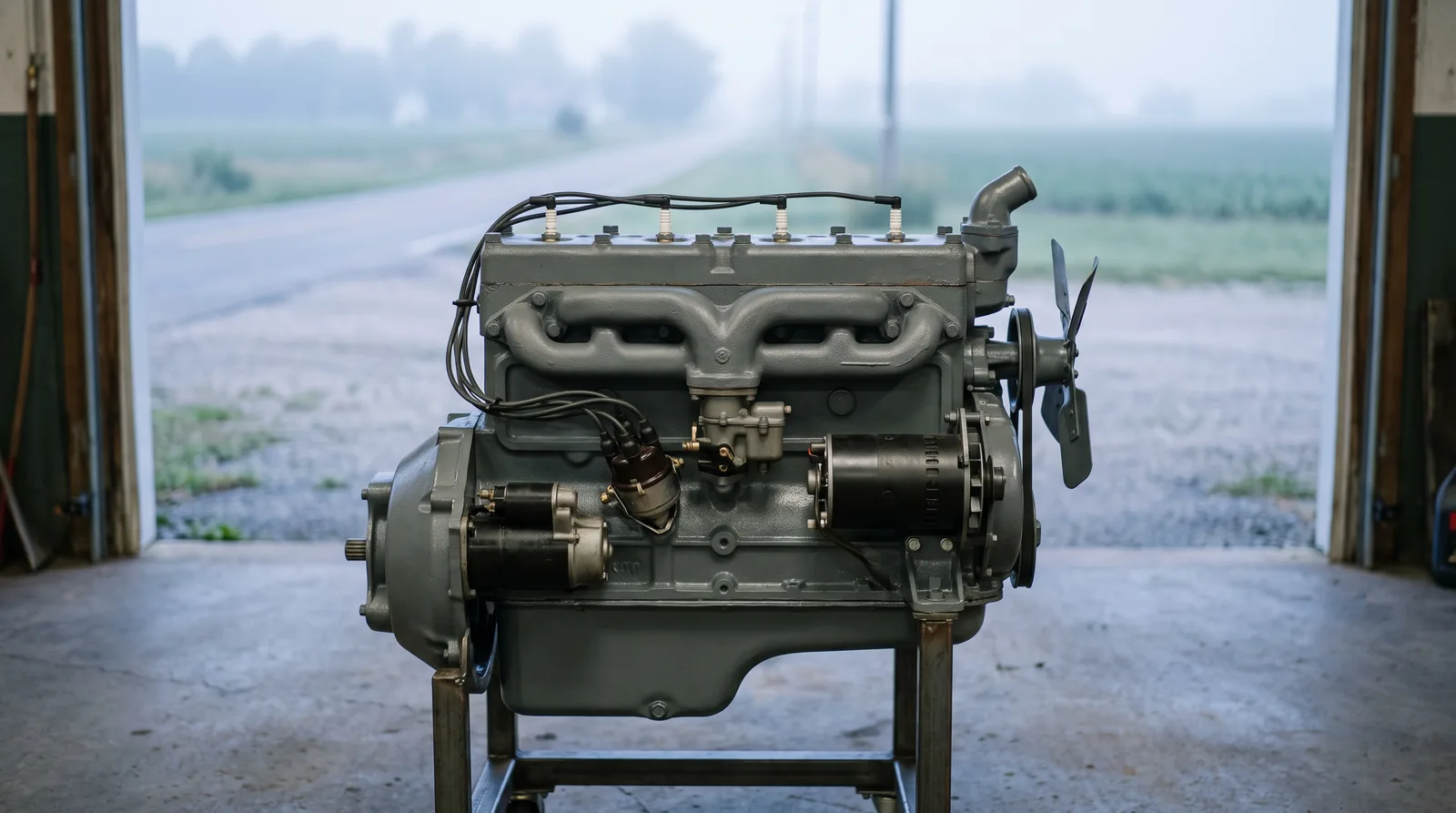
Nothing about this matches a modern car, and that is the hard part. Your right foot wants to press for gas and finds the brake. Your left foot wants to rest. Instructors spend a lot of time on that one habit. If you are curious what is happening under the floor while you do it, here is how the Model T engine worked, from the 177 cubic inch four to the magneto.
| Control | What it does |
|---|---|
| Left pedal | Down = low gear; halfway = neutral; up = high (with hand lever forward) |
| Center pedal | Reverse |
| Right pedal | Brake (a band inside the transmission) |
| Floor hand lever | Back = neutral and parking brake; forward = allows high gear |
| Right column lever | Throttle |
| Left column lever | Spark advance |
Stopping, and why it feels different
The brake pedal does not work on the wheels. It tightens a band inside the transmission, which slows the driveshaft and through it the rear wheels. The hand lever works the only brakes on the wheels themselves, the rear drums. There are no front brakes at all.
To stop, you hold the left pedal halfway in neutral and press the right pedal. You plan ahead. You leave room. On a downhill you feel the whole weight of the car pushing at that one band.
"The first time I drove one, I spent the whole mile thinking about my feet. The second time, I noticed the trees. That is the lesson, really. The car slows you down until you are moving at its speed."
Nora Beckett
How fast, and how it feels at speed
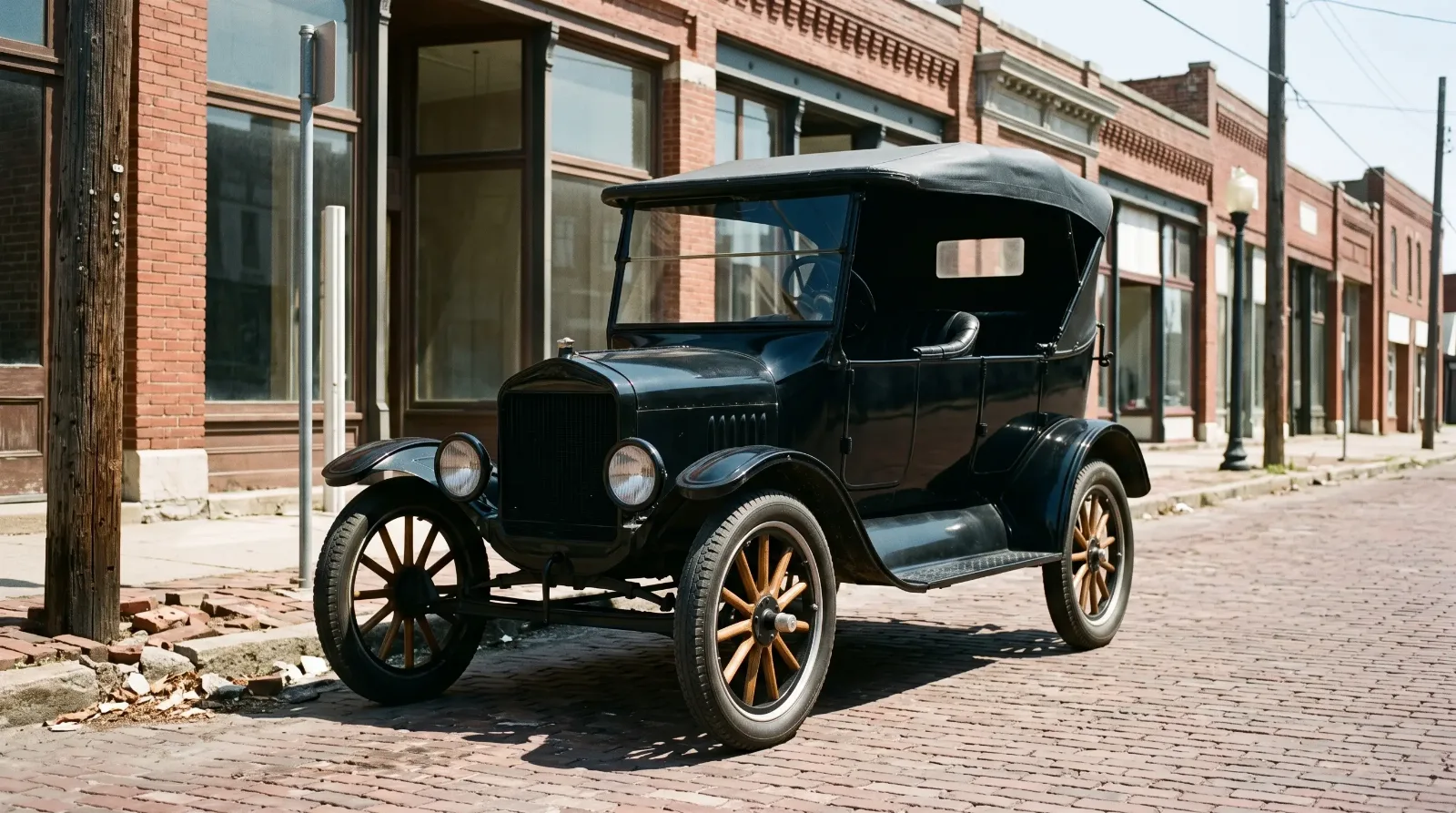
Ford rated the engine at 20 hp. The car weighs roughly 1,200 to 1,650 pounds, depending on the body. Top speed is usually given as about 42 mph, and on paved highways, with the standard 3.64 to 1 rear axle, an auction description says a good one could lope along at 40 to 45 mph for hour after hour.
Numbers on paper are not the experience. At 30 mph a Model T feels fast. You sit high and upright on a 100 inch wheelbase, and the narrow tires, 30 by 3 in front and 30 by 3.5 at the rear on the earlier clincher wheels, follow every groove in the road. Wind comes over the windshield. You hear the engine, the gears, the body, all of it at once. A modern car isolates you from the road. This one hands you the road.
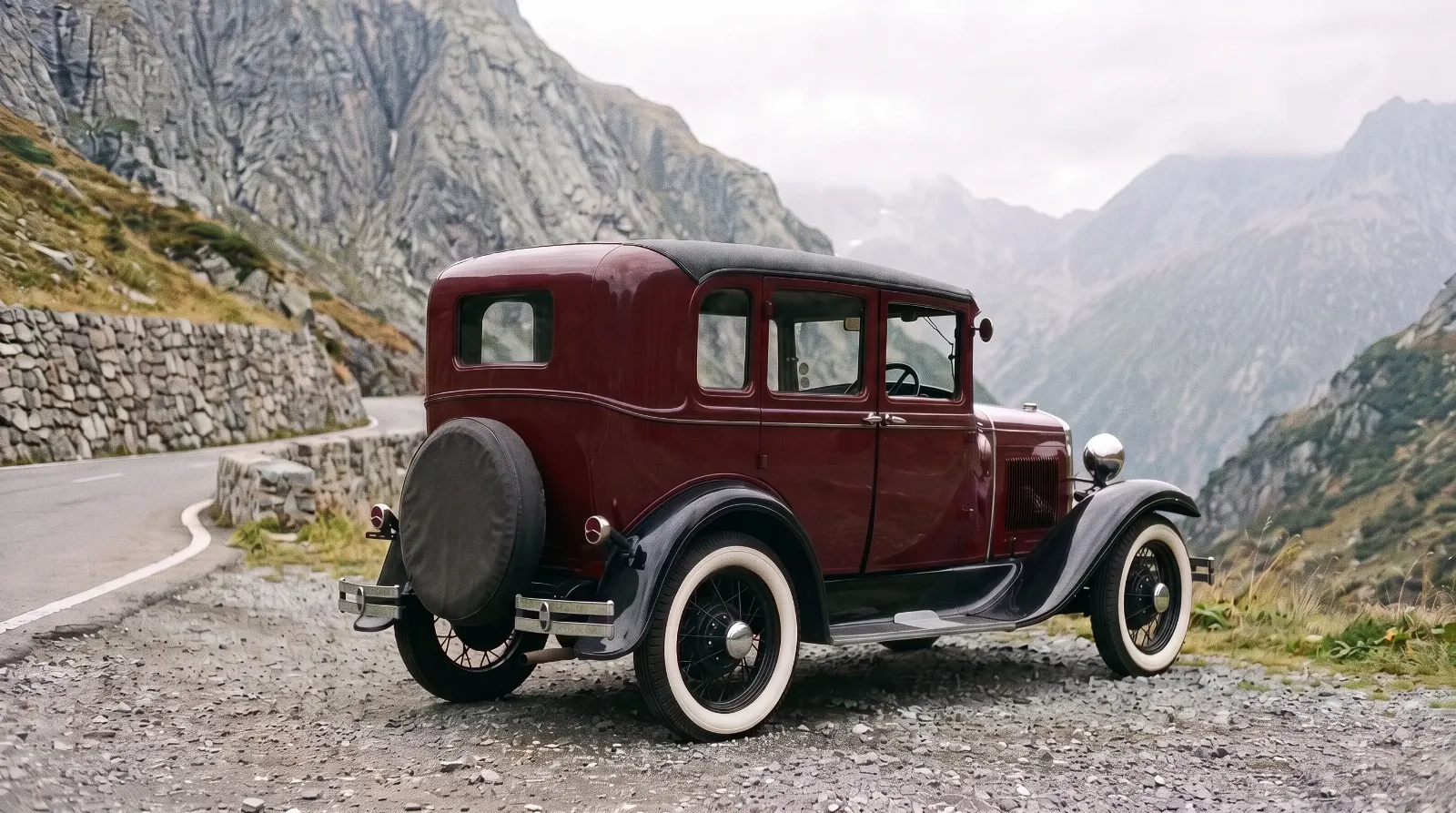
Ford changed all of it in the next car. The Model A brought the pedal layout drivers still use today: clutch, brake, gas. Anyone who wants to see the whole arc from one to the other can read the complete Model T and Model A story.
Where to try it, and why people keep doing it
You do not need to own one to drive one. Museums and clubs run classes for beginners. The Gilmore Car Museum in Hickory Corners, Michigan, charges $105 per person for its Model T Driving Experience, with one instructor for every three students and about 3 miles of driving on the museum campus. The AACA Museum in Hershey, Pennsylvania, runs a session of about four hours, classroom first, then the cars. There is more on driving schools and what each one asks of you.
Nobody knows exactly how many Model Ts still run. There is no census. But on any summer weekend, somewhere, a stranger is learning the left pedal for the first time, and the person next to them is saying, gently, not that one. If that turns into a habit, you may end up looking for a Model T of your own.
Sources and notes
Related Reading
Have a
Ford Model T
for Sale?
Reach thousands of serious classic car collectors across the US.
Sell It Here →
Selling a classic? Here's how: compare the places to sell classic cars
Are You a Classic Car Dealer?
List your full inventory and connect with targeted classic car buyers.
Join as a Dealer →
#ford model t
#planetary transmission
#Driving a Model T
#Model T controls
#Vintage car driving
#Model T driving experience

About the author
Nora Beckett
Automotive features writer and photographer who tells the human stories behind the cars, from show fields to cross-country road trips.
Related Listings - Ford Model T
More in Car Features
Comments
Be the first to comment on this article.