
Ask an old Ford man how the ford model t engine works and he will usually start with what it does not have. No oil pump. No water pump. No fuel pump. No battery needed to run. Then he grins, because the thing still starts on a cold morning and runs all day. The Model A that followed in 1928 doubled the power and added most of the pumps back. This is how both engines actually did their job, from the Model T's 20 horsepower to the Model A's 40, told the way the fellows who kept them running would tell it.
Car Features
9 min read
How the Model T and Model A Engines Worked: From 20 to 40 Horsepower
Magneto, trembler coils, thermo-syphon and gravity fuel: how the 20 hp Model T engine worked, and what the 40 hp Model A engine changed.
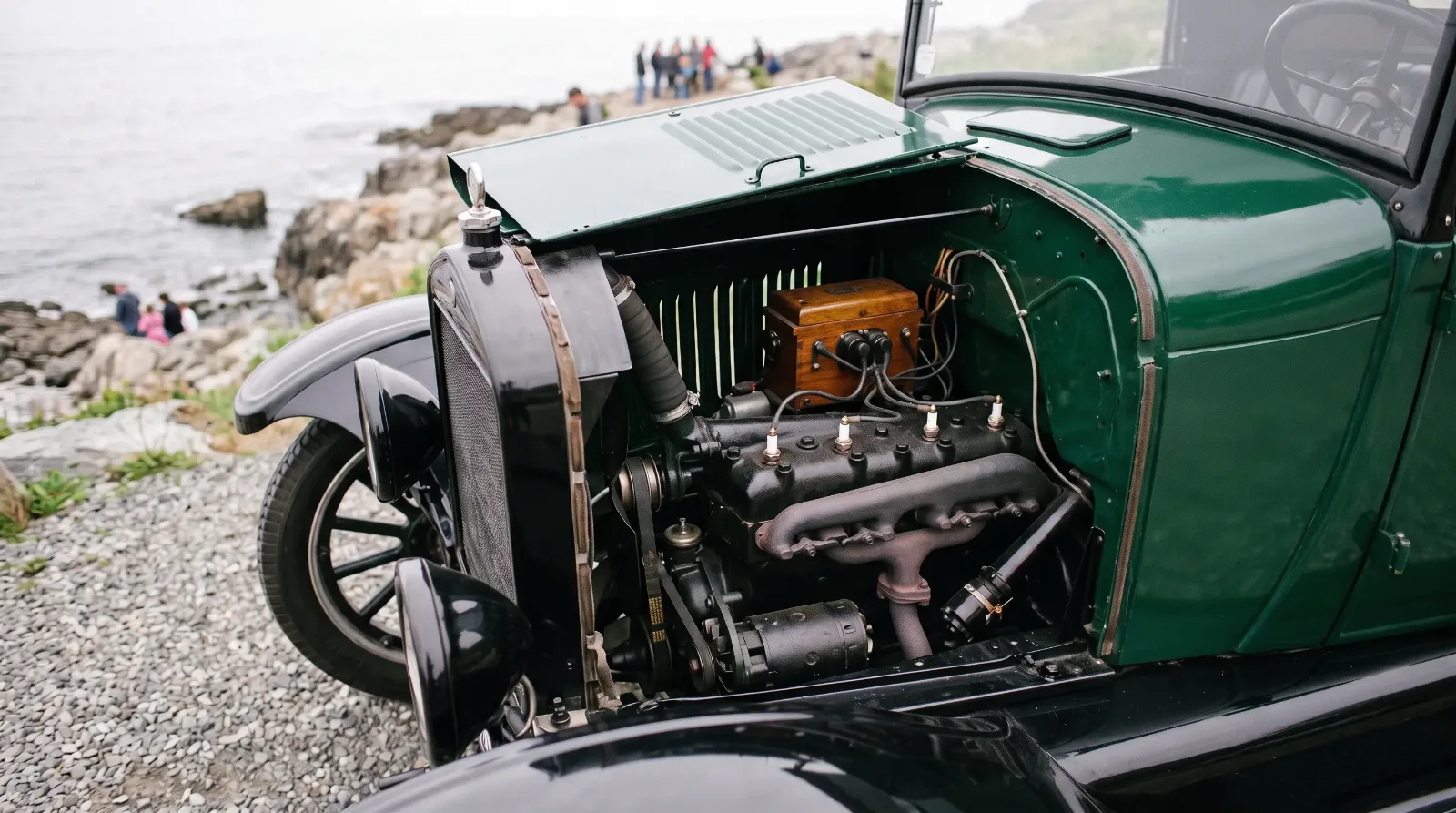
If you want the bigger picture of the cars these engines sat in, start with the complete Model T and Model A story. Here we stay under the hood.
The ford model t engine: 177 cubic inches and 20 horsepower
The Model T engine is a side-valve, or L-head, inline four of 177 cubic inches, about 2.9 liters. Bore is 3.75 inches and stroke is 4.0 inches. It stayed at that size for the whole run of the car, 1908 to 1927.
The block is a cast-iron monobloc, which means all four cylinders were cast in one piece instead of in pairs or singly. On top sits a detachable cast-iron head. That sounds ordinary now. It was not ordinary then, and it made valve work and carbon cleaning a job a farmer could do on a Saturday. The crankshaft rides in three main bearings.
Ford rated it at 20 brake horsepower. Some listings for the earliest cars quote 22, and that number shows up in auction catalogs, but 20 is the standard figure. Torque is given as 83 lb-ft. Compression was about 3.98:1 on most engines, with the earliest ones a bit higher, around 4.5:1. That low compression is why the engine would run on almost any gasoline a country store had in the barrel.
Top speed sits around 40 to 45 mph with the standard 3.64:1 rear axle. One auction description says a T could lope along at that pace for hour after hour on paved road. That matches what owners report. It is not fast. It was never meant to be.
Fire without a battery: magneto, coils and timer
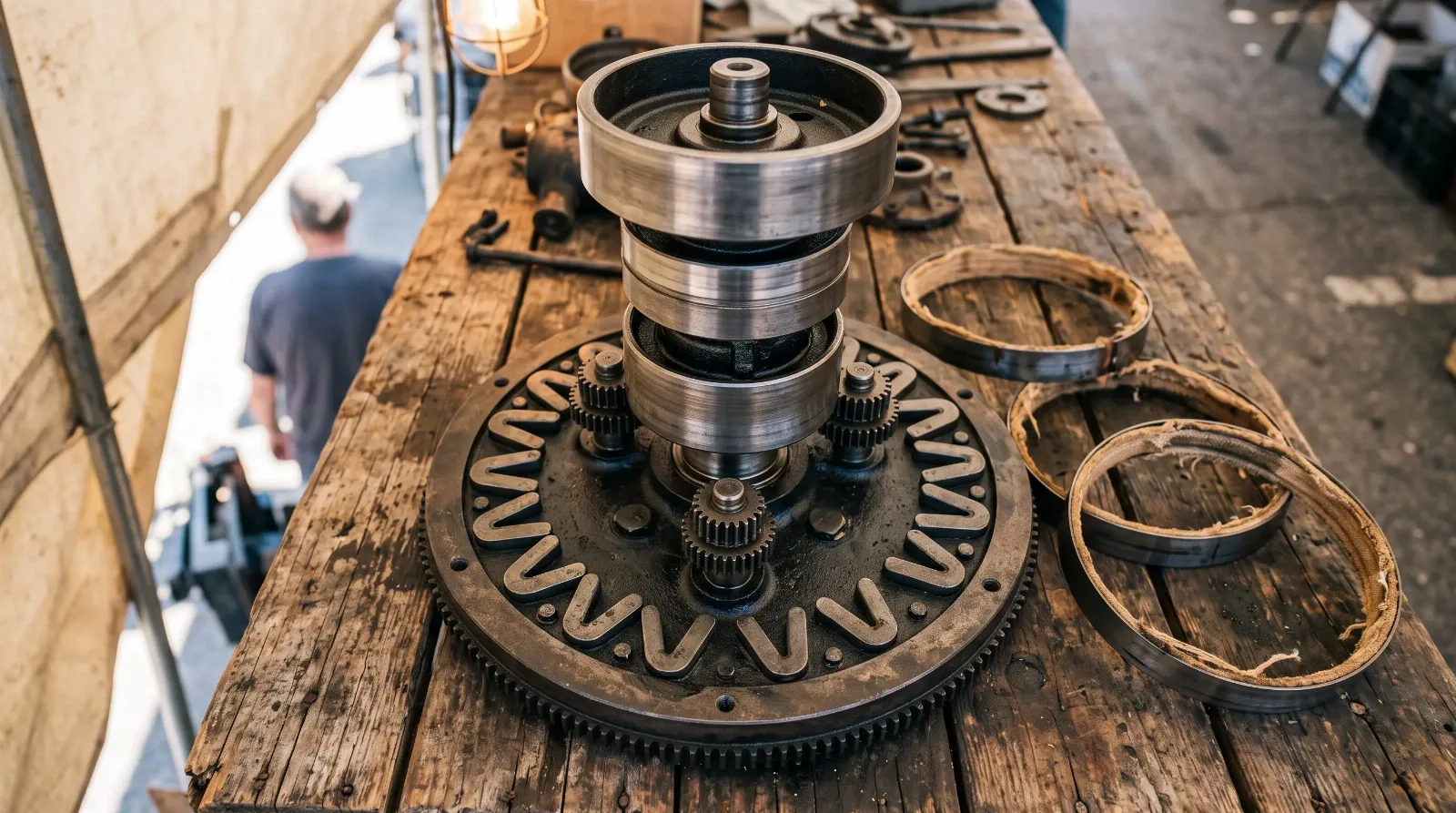
Here is the clever part, and the old guys deserve the credit for understanding it without a wiring diagram. The Model T makes its own electricity inside the engine. Bolted to the flywheel are 16 V-shaped permanent magnets. Fixed to the engine, just behind them, is a ring of 16 coils wound with copper ribbon. Spin the flywheel and the magnets sweep past the coils, and out comes low-voltage alternating current.
That magneto makes about 4 volts at low speed and over 30 volts when the engine is turning briskly. It cycles 8 times per crankshaft revolution. Ford never changed the position of the flywheel magnets in all those years of production, which tells you they got it right the first time.
Low voltage will not jump a spark plug gap, so the current goes to the coil box on the dash. Inside the wooden box are four trembler coils, one per cylinder, potted in pitch. Each coil has a vibrating contact that buzzes while it is energized, so the plug gets a stream of sparks rather than one. Anybody who has stood next to a T with the key on knows that buzz.
Which coil fires is decided by the timer, sometimes called the commutator, on the front end of the camshaft. A roller inside grounds each coil in turn. It is not a distributor, whatever some modern articles say. The high voltage goes straight from each coil to its own plug.
The driver controlled timing by hand. The left lever on the steering column sets spark advance, the right lever sets the throttle. The spark quadrant has 28 notches, each worth about 2.85 crankshaft degrees. Forget to retard the spark before you crank, and the engine can kick back hard. Many a sore wrist was earned that way.
One limit: the magneto's AC could run the ignition, and from 1915 the headlights, but it could not charge a battery. That is why the hand crank stayed standard for years. An electric starter became optional from 1919 and was standard on all cars by 1926, with a generator and battery to go with it.
"People laugh at the coil box until they see a T fire up with a dead battery. Henry's boys built a car that made its own spark. I'd like to see a modern car try that."
Gary Nowak
No pumps for oil or water
The Model T has no oil pump. It lives on splash lubrication. The flywheel and crank throw oil around the inside of the engine, and the engine shares that oil with the transmission. Keep the level right and it works. Let it run low on a long grade and you will hear about it.
Cooling works the same way, by nature instead of machinery. It is called thermo-syphon. Hot water rises out of the engine into the top of the radiator, cools as it falls through the core, and sinks back to the bottom of the block. The 1919 Ford manual says circulation begins around 180 degrees Fahrenheit. The system holds about 3 gallons.
The very first cars did use a water pump. The first 2,447 Model Ts had one, and thermo-syphon took over from car 2,448, with a few exceptions before about 2,500. So if somebody at a show tells you no T ever had a water pump, you can buy him a cup of coffee and set him straight.
Fuel by gravity, and why Ts backed up hills
The fuel system is just as plain. A 10-gallon tank sits under the front seat, and gravity feeds the carburetor. There is no fuel pump. The carburetor is a single side-draft unit, made at different times by Holley, Zenith or Kingston, with one adjustment: a gasoline needle valve worked from the dash.
Gravity has a catch. On a steep climb with little fuel in the tank, the carburetor could end up higher than the fuel level and starve. The fix was to turn around and back up the hill, which kept the tank above the engine. It looks foolish, and it worked. In 1926 Ford moved the tank forward and up, under the cowl on most models, and the trick became less necessary.
Fuel economy is given by Ford as 13 to 21 mpg. The Seal Cove Auto Museum claims 25 to 30 for its 1909 car. Your mileage, as they say, will vary with the hill and the driver.
Power reached the wheels through a planetary transmission with two forward speeds and reverse, worked by three pedals. That gearbox is its own story, and the changes that came with the new car are covered in what changed in 1927.
The Model A engine: 40 horsepower and the pumps come back
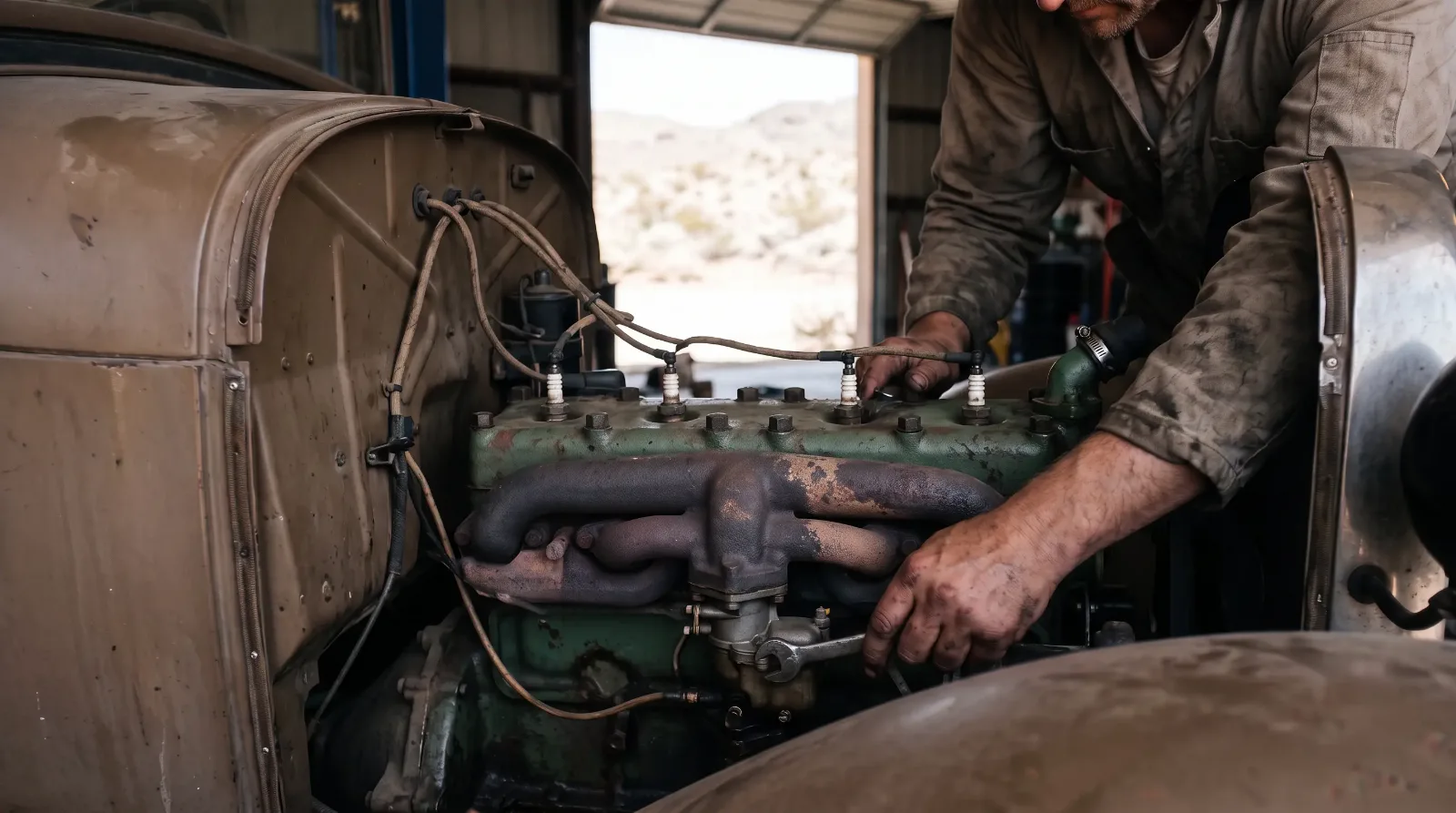
The Model A engine kept the basic recipe: an L-head inline four with three main bearings. Everything else grew. Displacement went to 200.5 cubic inches, about 3.3 liters, usually rounded to 201. Bore is 3.875 inches and stroke is 4.25 inches. The engine weighs about 350 pounds.
Laurence Sheldrick and Harold Hicks were chiefly responsible for the design, with Charles Sorensen and Peter Martin handling production. Edsel Ford worked on the styling of the car and is credited with spotting a problem with the intake manifold.
Output is 40 brake horsepower at 2,200 rpm, twice the Model T's rating. Torque is about 128 lb-ft at 1,000 rpm, though one source gives 120. Compression rose to 4.22:1 on 1929 to 1931 engines, with 4.3:1 for the 1928 head. The car would do about 65 mph and cruise at 45 to 50. That is a different kind of driving from the T.
The ignition changed completely. Out went the magneto and trembler coils. In came a 6-volt battery, a generator, a single coil and a breaker-point distributor, positive ground, firing order 1-2-4-3. The driver still had a manual spark advance worth 20 degrees.
Cooling got a centrifugal water pump on the cylinder head, something the T never had after those first cars. The system still held about 3 gallons and was not pressurized. Oiling got a pump too, though only part way: the pump lifts oil to the valve chamber, gravity carries it to the main bearings, and the rods still get it by splash. Capacity is 5 quarts.
Fuel still fell by gravity, now from a tank in the cowl between firewall and dash, with a gauge. It held 10 gallons on 1928 and 1929 cars and 11 gallons on 1930 and 1931 cars. The carburetor became a single-throat updraft unit. Zenith reportedly built them for about 3.5 million of the roughly 4.8 million cars, with Holley building many under licence and Ford making its own from 1931. Ford built 4,830,806 Model A engines between October 1927 and November 1931.
Model T and Model A engines side by side
| Item | Model T (1908 to 1927) | Model A (1928 to 1931) |
|---|---|---|
| Layout | Inline four, L-head | Inline four, L-head |
| Displacement | 177 cu in (2.9 L) | 200.5 cu in (3.3 L) |
| Bore x stroke | 3.75 x 4.0 in | 3.875 x 4.25 in |
| Power | 20 hp | 40 hp at 2,200 rpm |
| Torque | 83 lb-ft | About 128 lb-ft at 1,000 rpm |
| Compression | 3.98:1 (most engines) | 4.22:1 (1929 to 1931) |
| Ignition | Flywheel magneto, four trembler coils, timer | 6-volt battery, generator, coil, distributor |
| Cooling | Thermo-syphon, no pump | Centrifugal water pump |
| Lubrication | Splash, no oil pump | Pump to valve chamber, gravity and splash |
| Fuel feed | Gravity, 10 gal under seat (pre-1926) | Gravity, 10 or 11 gal in cowl |
| Top speed | About 40 to 45 mph | About 65 mph |
Look down that table and you can see where the Model A came from. Ford kept the four-cylinder side-valve idea, kept gravity fuel, kept three main bearings. What changed was everything a driver in 1928 was tired of living without: a real electrical system, a pump to keep the water moving, and enough power to keep up with traffic on paved roads.
Neither engine is hard to understand once you have had the covers off. That is the reason so many of them still run. The parts are simple, the principles are honest, and a careful owner with ordinary tools can keep running Model Ts and Model As on the road a century later. The old guys knew that. They just did not think it needed saying.
Sources and notes
Related Reading
Article
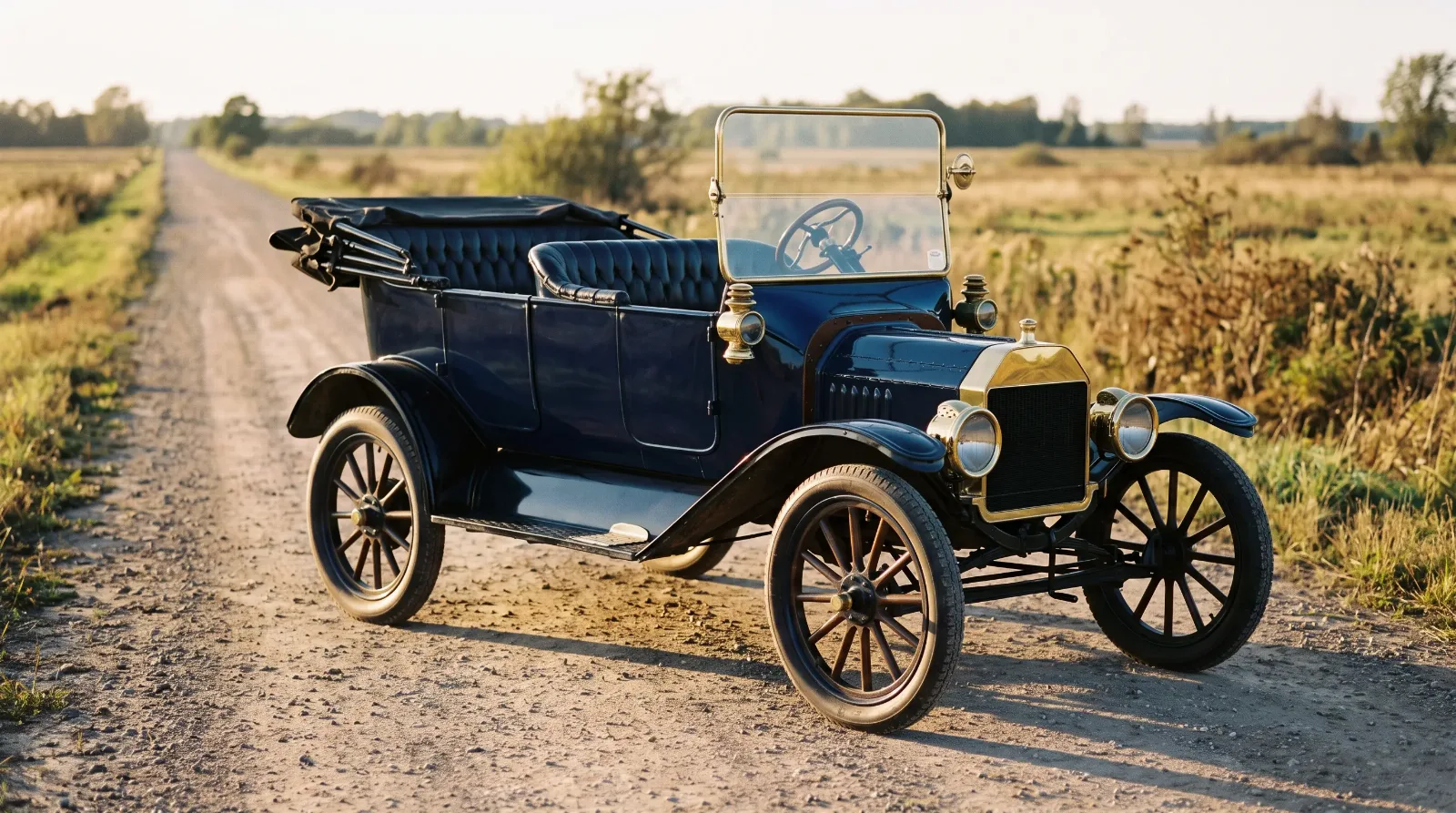
Ford Model T and Model A: The Complete Story of Henry Ford's Cars, 1908 to 1931
Article
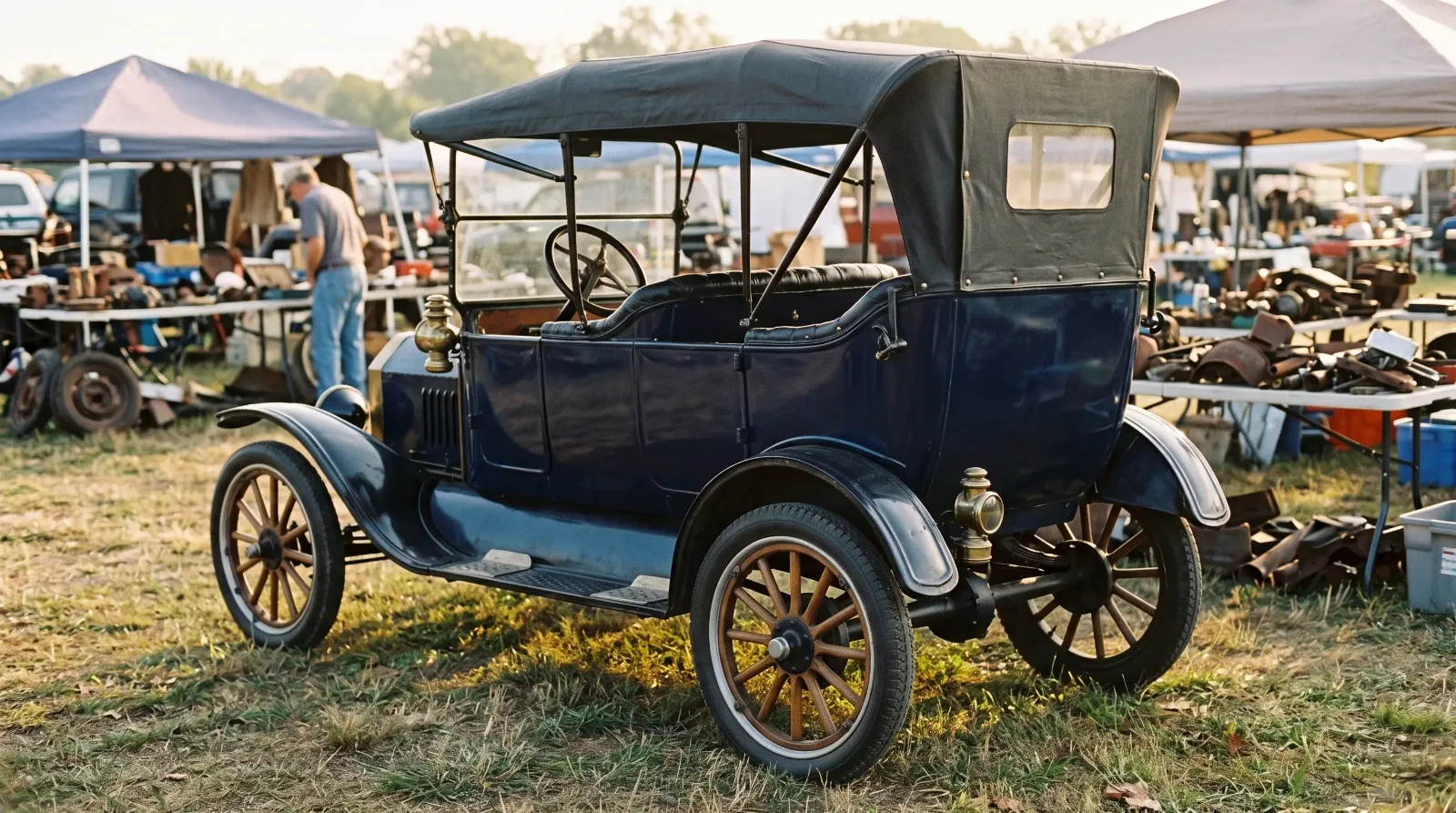
Henry Ford's Assembly Line: How the Model T Was Built

Article
From Model T to Model A: What Ford Changed in 1927
Article
How the Model T Planetary Transmission Worked
Article
Three Pedals and a Lever: How You Drive a Model T
Article
The Model T Magneto and Coil Box Ignition Explained
Article
How Fast Was a Model T? Top Speed and Real-World Pace
External
/ford/model-t
Have a
Ford Model T
for Sale?
Reach thousands of serious classic car collectors across the US.
Sell It Here →
Selling a classic? Here's how: sell my classic car
Are You a Classic Car Dealer?
List your full inventory and connect with targeted classic car buyers.
Join as a Dealer →
#automotive history
#ford model a
#ford model t
#vintage engines
#Model T engine
#Model A engine
#magneto ignition

About the author
Gary Nowak
Lifelong Midwest rodder who has been building and driving traditional pre-war hot rods since the 1970s.
Related Listings - Ford Model T

Comments
Be the first to comment on this article.