
In May 2026 a class of high school students in Priest River, Idaho, climbed into a 1923 Model T they had spent the year putting back together. They had worked through the carburetor, the coils, the front end and the body. Then members of the Inland Empire Model T Club showed them how to drive it. That scene is how the hobby survives in 2026: an old car, a club with the know-how, and new hands on the wheel. Behind local groups like that one stand two national bodies, the Model T Ford Club of America for the older car and two separate clubs for the Model A, plus a handful of museums that keep the cars where people can see them. If you want the history behind the cars first, start at the beginning. This piece is about what the cars mean to the people who keep them running now.
Model T and Model A Today: Clubs, Museums and the Hobby
The clubs, museums, driving classes and parts suppliers that keep the Ford Model T and Model A on the road a century later.
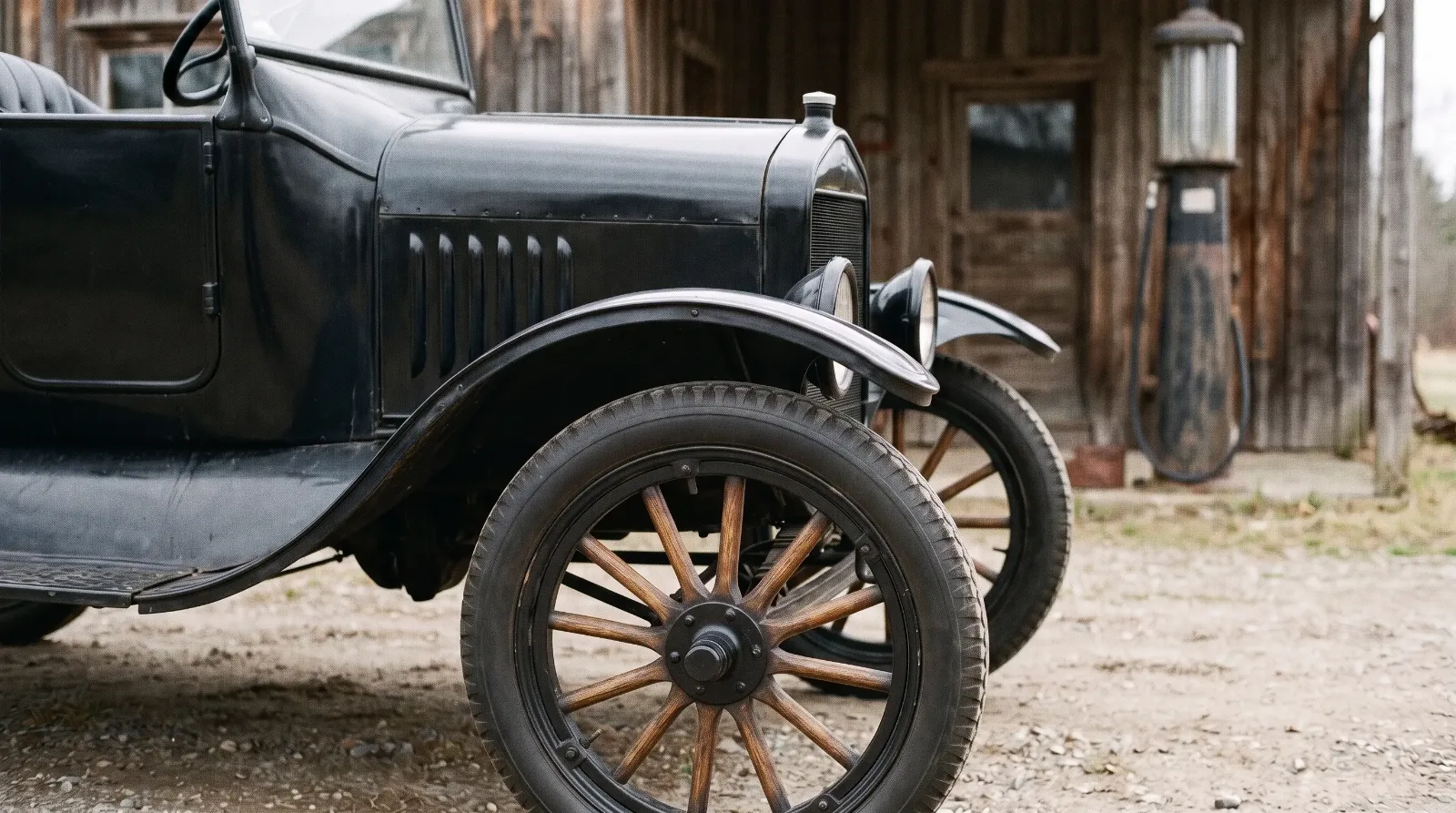
Every Model T on the road today is at least 99 years old, because the last one was built in May 1927. The newest Model A is well past 90. Tens of thousands still run because of clubs, parts suppliers, judges, instructors and a few curators, most of them volunteers.
Inside the Model T Ford Club of America
The Model T Ford Club of America calls itself the largest club of Model T owners, and its own brochure backs the claim with reach rather than a head count: members in all 50 states and in 41 foreign countries, organized into more than 130 chapters. The club dates its founding to 1965, the year implied by the 50th anniversary it marked in 2015. It is a 501(c)(3) nonprofit based in Centerville, Indiana, and it is not affiliated with Ford Motor Company.
The most interesting line in that brochure is the one about who can join. You do not need to own a Model T. Membership covers your immediate family, and it brings six issues a year of The Vintage Ford, the club magazine. Dues were listed at $40 in the US, $50 in Canada and $56 elsewhere, marked subject to change, and members get free entry to the club's museum in Richmond, Indiana.
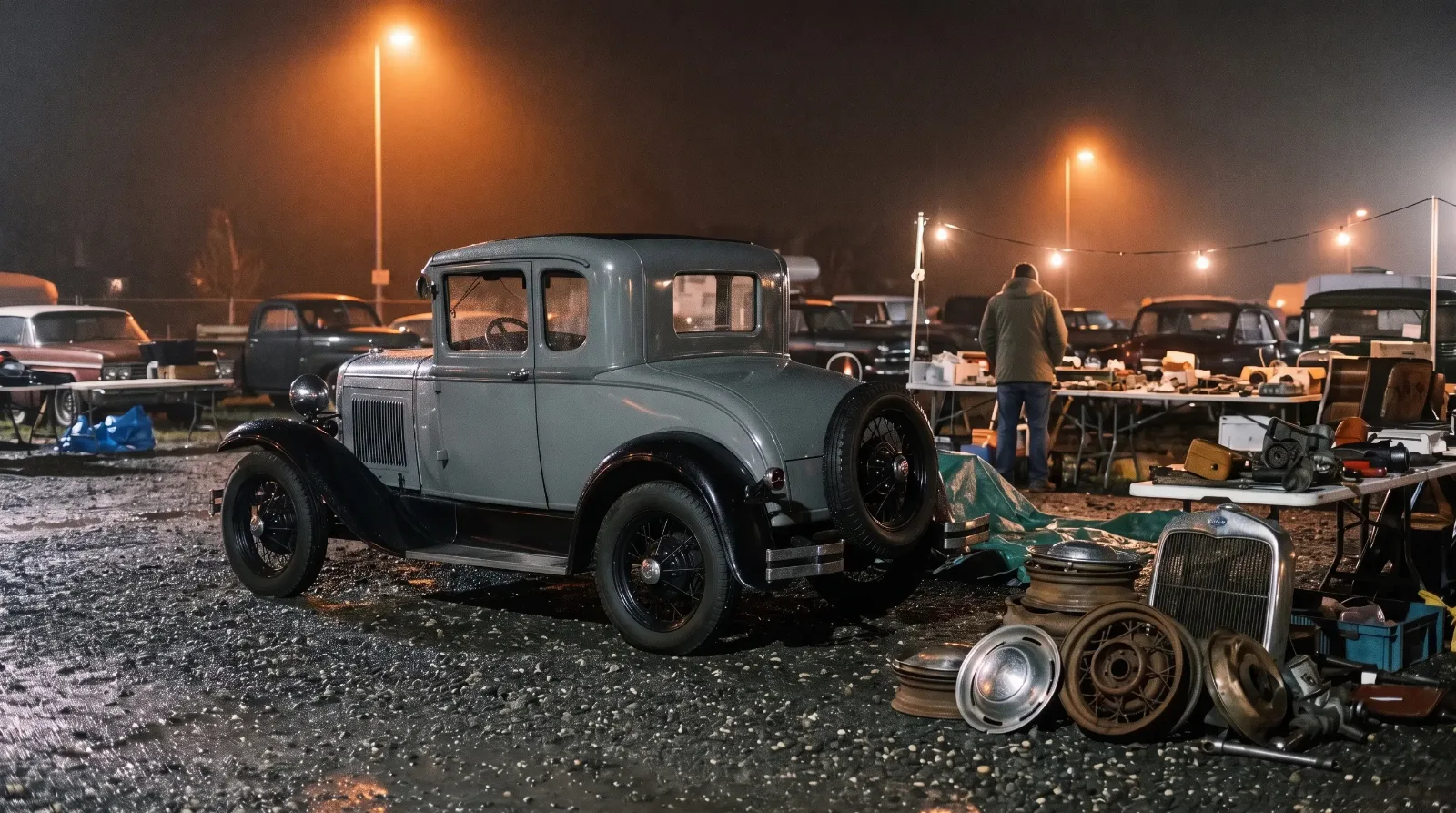
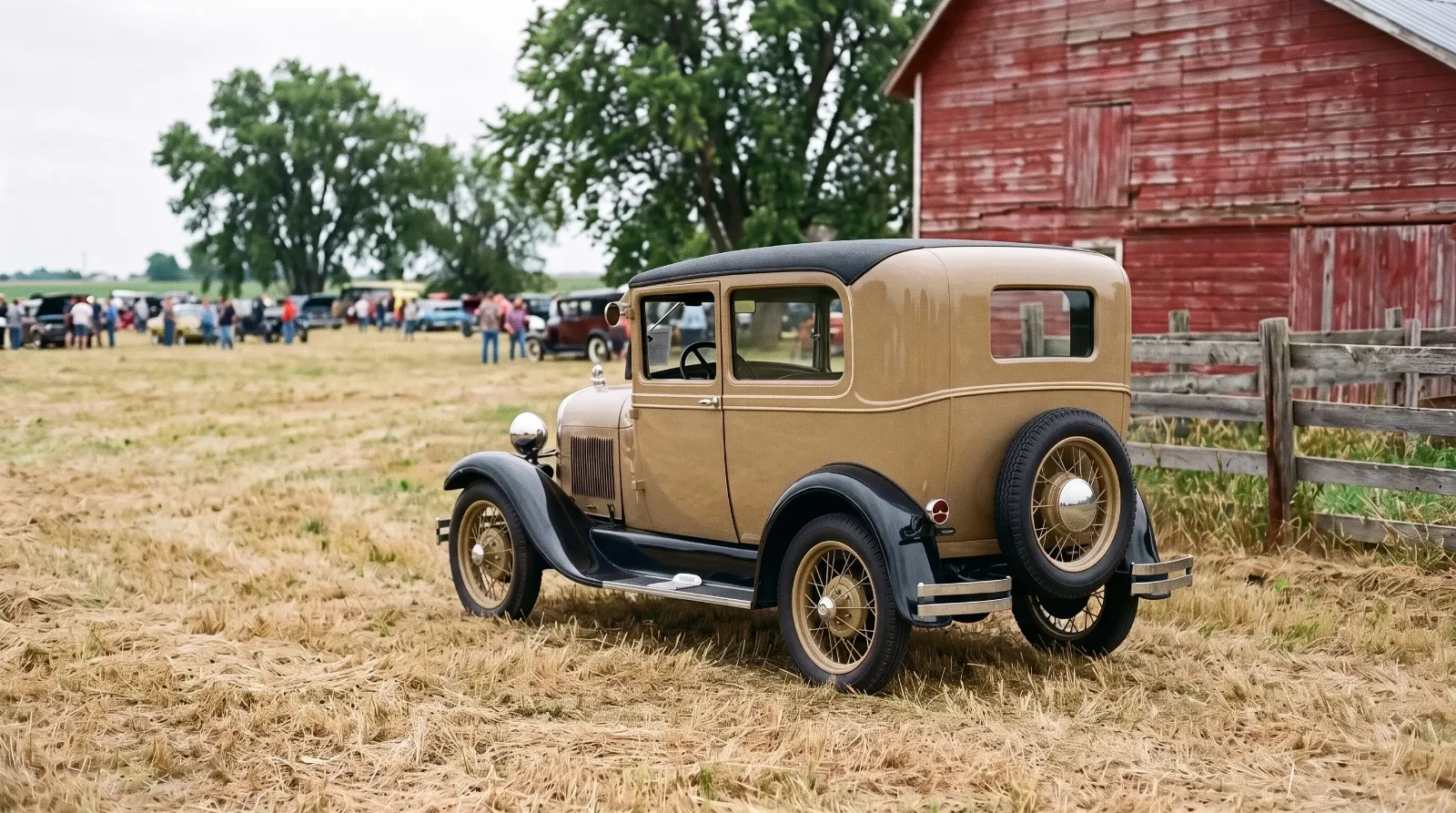
The club's year turns around Richmond. Every summer the club holds its homecoming there, open to the public (in June through 2025, in August in 2026), with a swap meet, seminars, demonstrations and a car show. Its national events can draw more than 100 Model Ts, and the Annual Meeting comes early in the year. For anyone curious about where the Model T story began, a June weekend in Richmond is a good place to see what it became.
Two Model A clubs and one rulebook
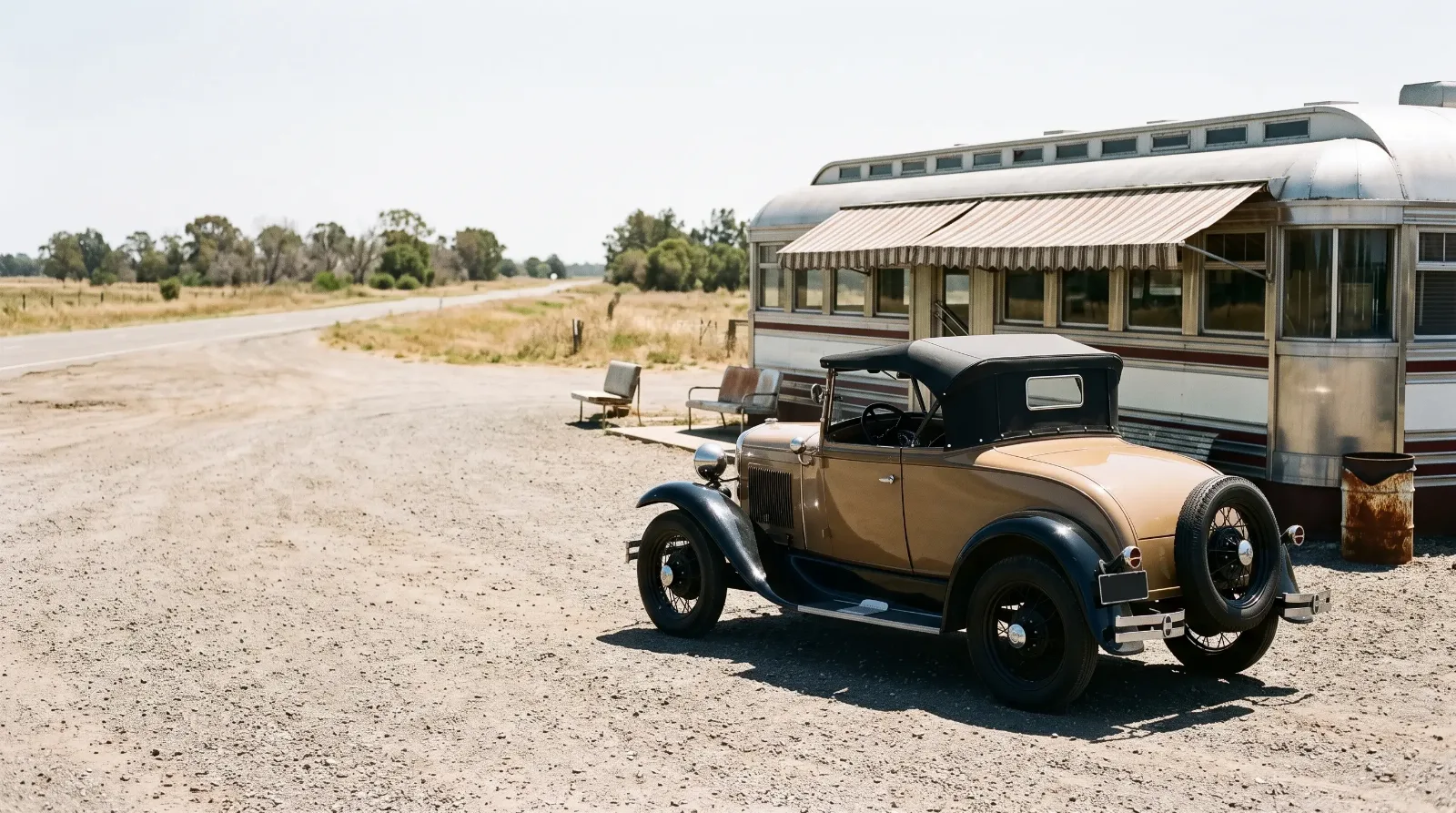
The Model A hobby grew from a single seed and then split in two. The Model A Restorers Club, known as MARC, formed in 1952 in West Hartford, Connecticut. In 1955 a group of members in Southern California met with Art Grow to begin forming a MARC regional club, and for a while they called themselves the Model A Restorers Club of Southern California. On September 23, 1957, in Glendale, that group was officially founded as the Model A Ford Club of America, or MAFCA, and it was incorporated on October 21, 1957.
Both national clubs began with the word "restorers" in their names. MAFCA's magazine still carries it: The Restorer, published every two months since its first issue in May 1956. Today MAFCA reports more than 10,000 members worldwide, over 250 local chapters and 16 Special Interest Groups, with headquarters in La Habra, California. Its national meets come every two years, in even years, and the 2026 National Convention ran from May 31 to June 7 in Pendleton, Oregon. MARC held its own 2026 National Tour from May 11 to 14, hosted by its Finger Lakes Region, and its 2012 convention in Oshkosh, Wisconsin, drew more than 400 cars.
The two clubs could have stayed rivals. Instead they share the one document every serious Model A owner eventually opens: the Model A Restoration Guidelines & Judging Standards. The book has a long paper trail. A one-page judging sheet appeared in 1961. The first joint MAFCA and MARC pamphlet followed in 1974, at 26 pages. Revision 5, the current edition, runs to 590 pages and took the two clubs' Judging Standards Committees five years to produce.
At a MAFCA national meet, judges score each Model A or AA truck against a maximum of 500 points. A restored, original or touring car that scores 400 or more earns the Award of Excellence. Cars are entered in four classes, each with its own ribbon color.
| MAFCA class | Ribbon | What it covers |
|---|---|---|
| Restored | Blue | Brought back to factory original |
| Original | White | Unrestored, as the car survived |
| Touring | Red | Restored and driven regularly, with limited listed changes |
| Modified | Green | At least five approved era alterations |
One rule says more about the culture than any score sheet. Cars in final judging must be driven on a tour, ideally about six miles, and only cars that finish it are eligible for awards. A Model A that cannot get itself around the block does not win, however perfect its paint.
The museums that keep the cars
Three museums form the core of any Model T and Model A trip, and they sit within a day's drive of each other across Indiana and Michigan.
| Museum | Where | What to look for |
|---|---|---|
| Model T Museum (owned by the MTFCA) | 309 N. 8th St., Richmond, Indiana | More than 40 vehicles in two buildings, a 1909 touring car, a 1927 coupe, a working machine shop |
| Model A Ford Museum | Gilmore Car Museum campus, Hickory Corners, Michigan | Nearly 30 Model As in a 12,000 sq ft building, opened May 18, 2013 |
| The Henry Ford | Dearborn, Michigan | A 1909 Model T touring car and a 1930 Model A touring car in Driving America; the 15 millionth Ford in Greenfield Village |
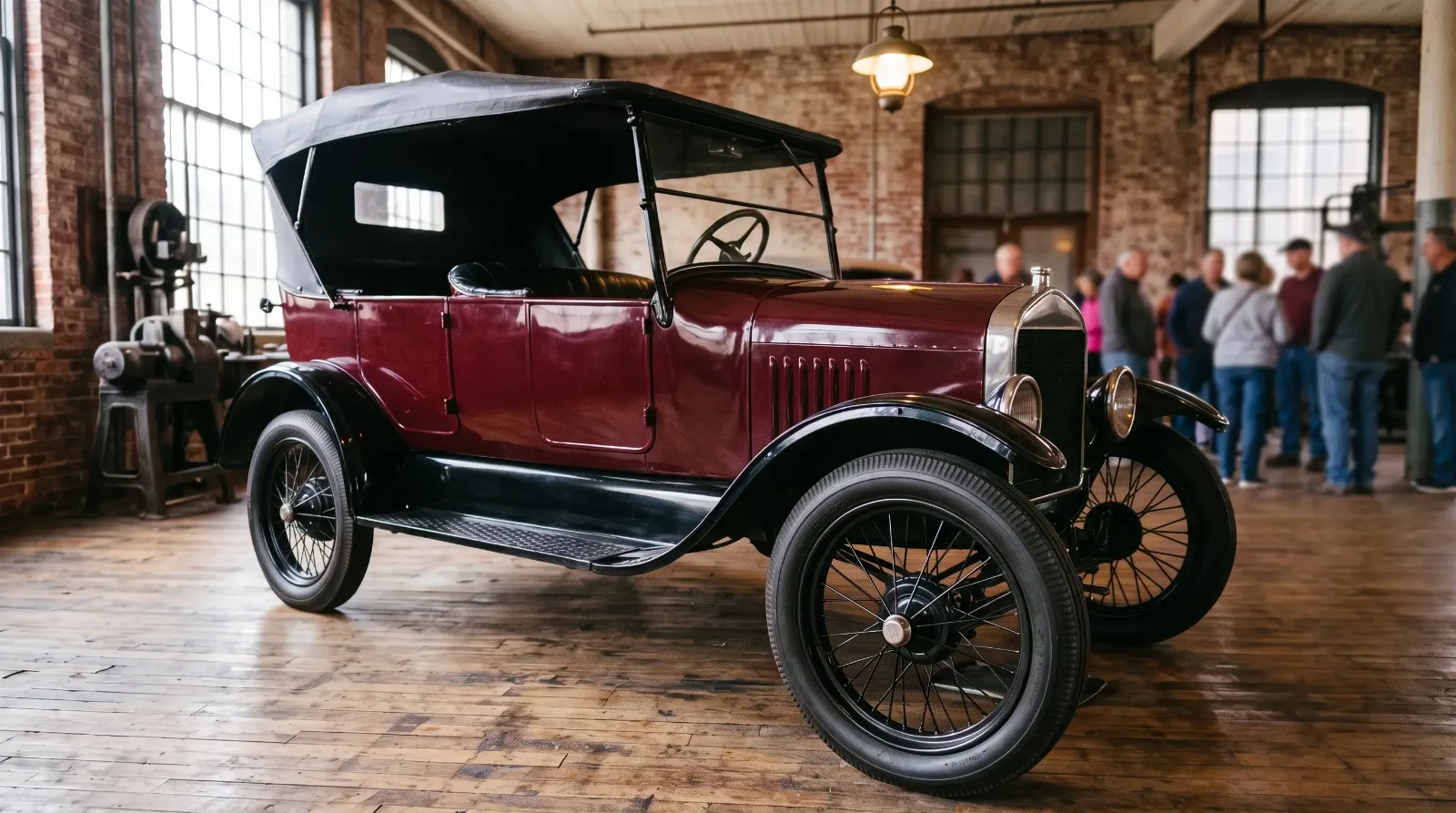
The Richmond museum sits in the city's Historic Depot District. Its collection runs from a 1909 touring car, one of the first Ts, to a 1927 coupe, one of the last, with an English-built 1923 town car, a 1925 fire truck and a cutaway chassis between them. The oddest object is a 1931 Pietenpol airplane with a Model T engine. Hours and admission vary by listing, so check the club's site before you go.
The Model A Ford Museum is a newer story. The Model A Ford Foundation raised more than $1 million to build it on the Gilmore campus, about 115 miles west of Detroit, and it bills itself as the world's largest public museum devoted to the Model A. One car there has a famous first owner. Henry Ford gave Thomas Edison what The Henry Ford's records call "the first example" of the 1928 Model A, rebuilt with an open touring body at Edison's request. Edison drove it until his death in 1931. The car belongs to The Henry Ford and is on loan to Hickory Corners.
In Dearborn, the Henry Ford Museum's Driving America exhibit opened on January 29, 2012, across 80,000 square feet and 130 vehicles. A red 1909 Model T touring car is one of senior curator Bob Casey's must-sees, and a 1930 Model A touring car stands nearby. Outside in Greenfield Village, in the Mack Avenue Plant building, is the 1927 touring car that Henry and Edsel Ford drove off the Highland Park line on May 26, 1927, the fifteen millionth Ford. The same museum holds Blue Bird No. 1, built in 1927 on a Model TT chassis and called the oldest surviving school bus in America.
"A museum car tells you what the Model T was. A club car, smoking a little on a June morning in Richmond, tells you what it still is. You need to see both."
Nora Beckett
Learning to drive a hundred-year-old Ford
The hardest part of joining this hobby is not money. It is the pedals. A Model T has three floor pedals, clutch, reverse and brake, no accelerator pedal at all, and a throttle lever on the steering column.
Several museums now teach it formally. The Gilmore Car Museum runs a Model T Driving Experience at $105 per person, with up to 24 students a class and one instructor for every three. Students drive about three miles around the campus in Ts built between 1908 and 1927, in morning and afternoon sessions from May to October, and need a driver's license or permit. The AACA Museum in Hershey, Pennsylvania, runs a class of about four hours, classroom first and then driving, for drivers 23 and older. The Museum of American Speed in Lincoln, Nebraska, has offered a full-day class with a tour and lunch, minimum age 21.
Greenfield Village is different. It sells Model T rides, not lessons, and runs daily driving demonstrations. Some of its cars are 1914 Model Ts that Ford hand-built for its 2003 centennial, fitted with electric starters the original car did not get until 1919.
How many survive, and what they cost
No census of either car exists. The figure most often quoted in the Model T community is about 50,000 running examples, from a production of more than 15 million. Russ Grunewald, then president of the Model T Ford Club of America, told an interviewer in 2008 that nobody really knows and that guesses run from 50,000 to 150,000. For the Model A, a MAFCA chapter flyer says "some estimate that 250,000 Model A's still exist," complete or in pieces, and a 2026 report repeats the figure as the most common estimate. Both are educated guesses.
Prices are easier to pin down, and they are lower than outsiders expect. Classic.com showed almost 300 Model T sales averaging just under $17,000 as of April 2025. An auction aggregator tracking 830 sales of the 1930 Model A puts the trimmed average at $22,225 and the median at $20,000, with a 2026 year-to-date average of $32,607. For the 1929 Model A, the same source shows 731 sales and a trimmed average of $20,754.
The top of the market is a different world. The 1908 serial number 2 touring car, the one bought for $400 in 1958, sold at Bonhams' Amelia Island auction on March 3, 2022, for $246,400 including premium. Even Bonhams noted that its history as car number 2 cannot be documented.
What keeps entry prices sane is parts. Snyder's Antique Auto Parts of New Springfield, Ohio, began in the late 1950s making small carburetor springs for Model Ts and has served the hobby since 1959. Reproduction bodies, fenders and rebuilt engines and transmissions are all available from specialty suppliers. For a car approaching its hundredth birthday, that is a remarkably deep shelf. If you are ready to look at real cars, browse Model A Fords for sale and compare asking prices against those auction averages.
The next generation behind the wheel
Every old car hobby worries about its age profile, and this one has more reason than most. The people who learned to drive a Model T from a parent who drove one new are long gone. Yet the evidence is not as grim as the worry. Hagerty's 2020 "Why Driving Matters" survey of 10,000 US drivers found interest in owning a collector car at 57% among Millennials and 53% among Generation Z, well above the 33% recorded for Baby Boomers. That survey covered collector cars in general, not the Model T, but the direction is clear.
The Idaho class is the American version of that trend in miniature. The Inland Empire Model T Club said it "would love to get more youth involved," and it did the thing that actually works: it put students behind the wheel of a car they had fixed themselves. MARC has run a youth division since at least 2018. The Model T Ford Club of America keeps its membership open to people who have never owned a car. None of these are grand programs. They are open doors, and in a hobby built on hand-me-down knowledge, an open door is most of what is needed.
These cars were built as cheap, everyday transport, never as heirlooms. A century later, a few volunteers with a judging manual, a parts catalog and a June weekend in Indiana have kept them from being either.
Sources and notes
- Model T Ford Club of America membership brochure
- MAFCA history, Model A Ford Club of America
- Background of the Model A judging standards, MAFCA
- Thomas Edison's 1928 Ford Model A, The Henry Ford
- Model T Driving Experience, Gilmore Car Museum
- Interview with Russ Grunewald, MTFCA president, Collectors Weekly
Related Reading

Automotive features writer and photographer who tells the human stories behind the cars, from show fields to cross-country road trips.
Related Listings - Ford Model T
Comments
Be the first to comment on this article.