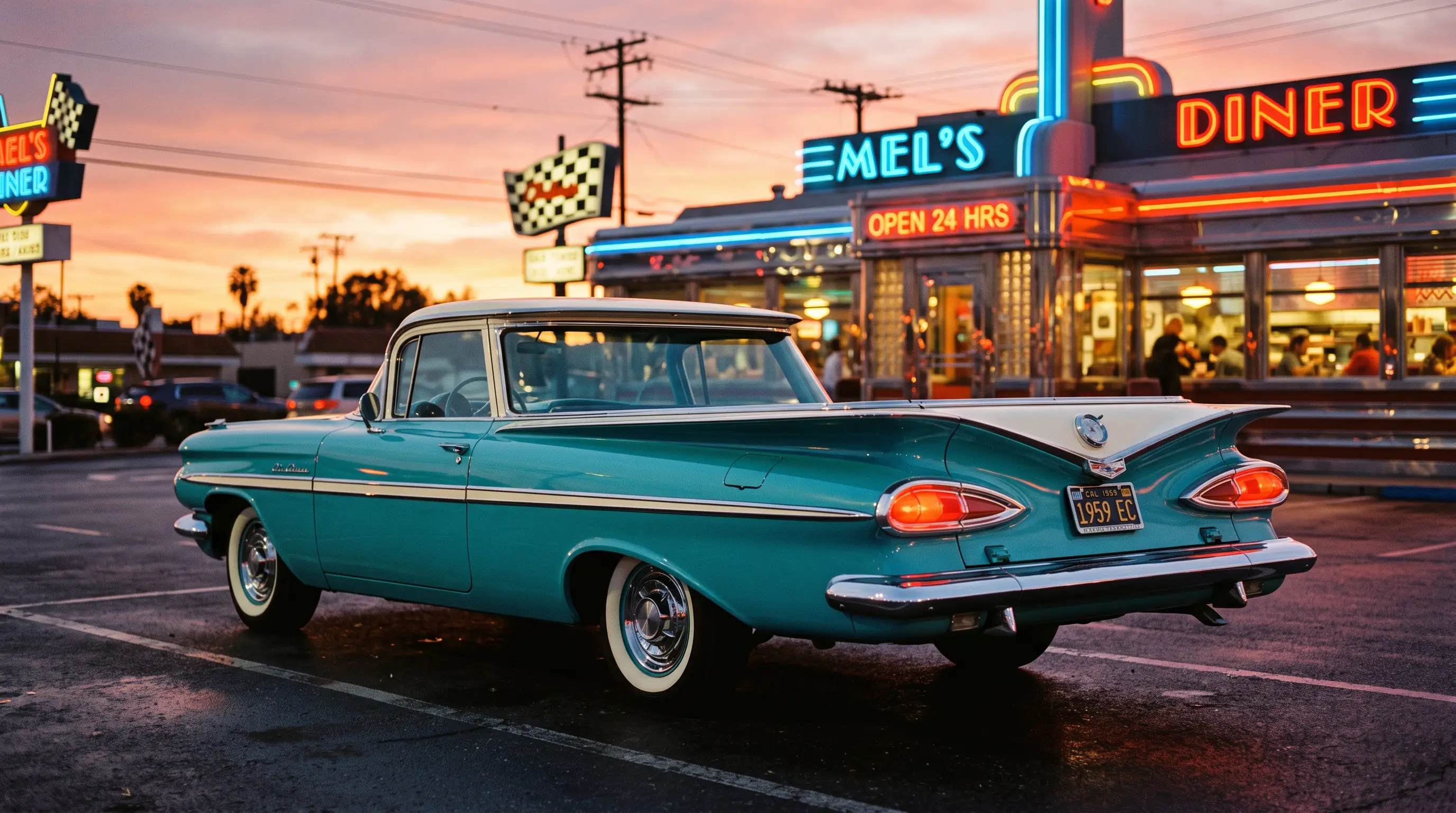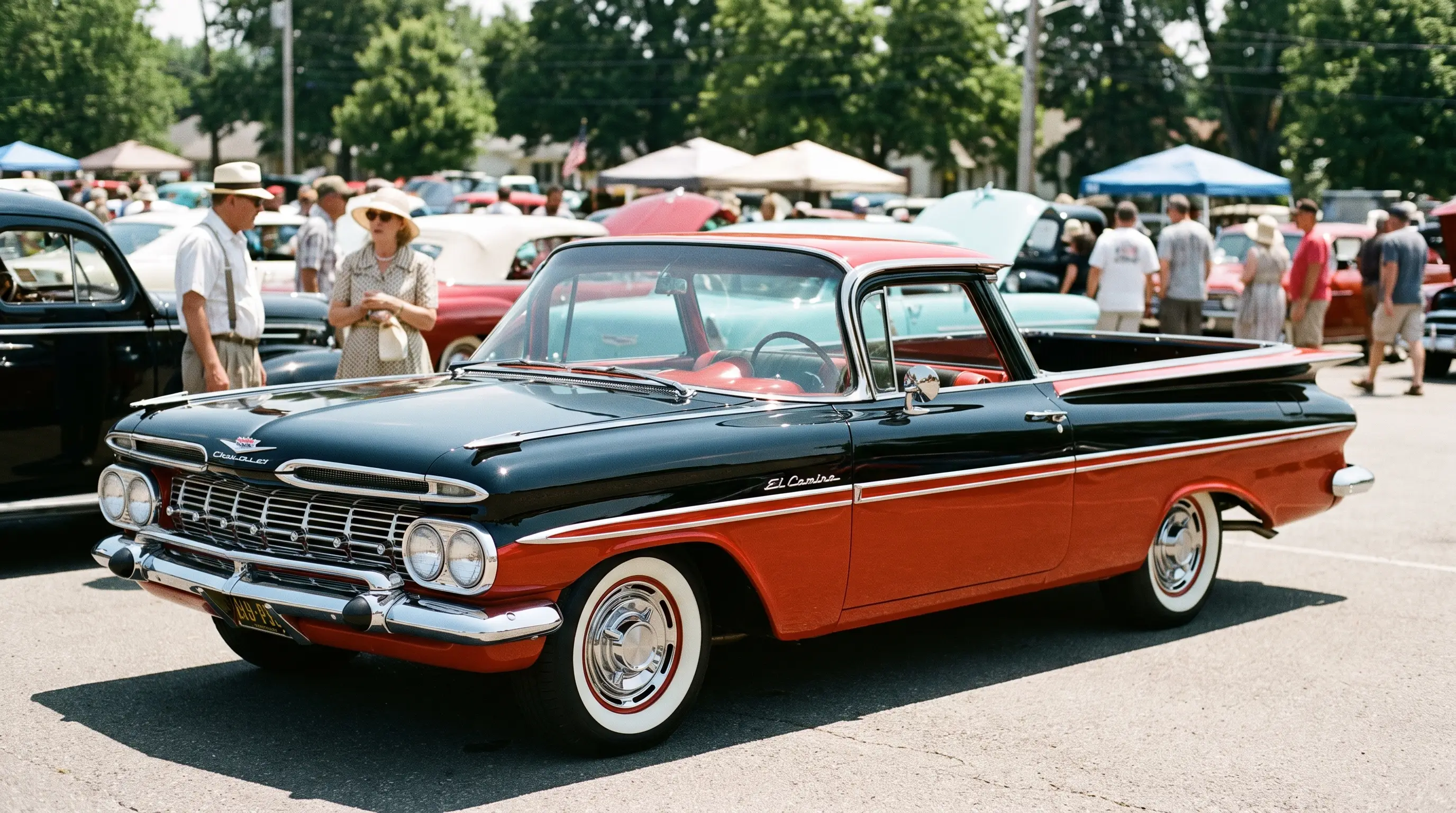
Most accounts of the El Camino 1959 birth of an idea reduce Chevrolet's decision to a single sentence: Ford built the Ranchero, so Chevrolet copied it. The archival record supports the competitive pressure part of that story, but it flattens a more interesting internal debate that took place inside General Motors before a single 1959 El Camino ever reached a dealer lot, and that debate is worth reconstructing properly rather than repeating the shorthand version.
The Ranchero pressure was real, but not the whole story
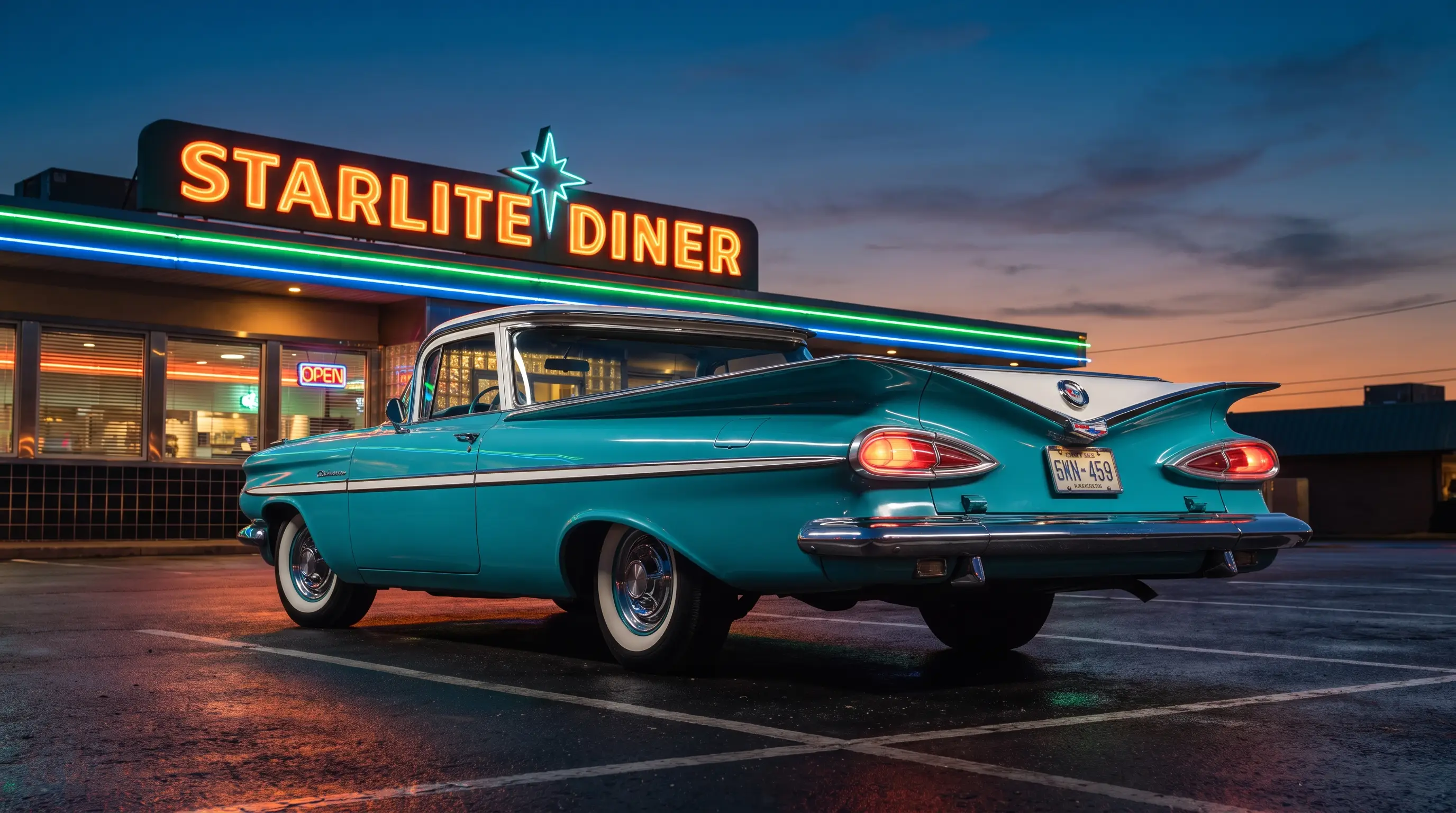
Ford's Ranchero, introduced for the 1957 model year, demonstrated genuine sales traction in a segment nobody had clearly defined before, a vehicle marketed as neither a full pickup nor a standard passenger car but something that borrowed credibility from both. Chevrolet's response took two full model years to reach production, and that gap reflects real internal deliberation rather than a rushed copycat reaction. GM's product planners had to decide whether a coupe utility fit within Chevrolet's existing full size passenger car architecture without requiring a dedicated platform, and the 1959 Chevrolet full size redesign, with its dramatic batwing rear styling, gave them a body they judged adaptable to the concept.
Why 1959 specifically
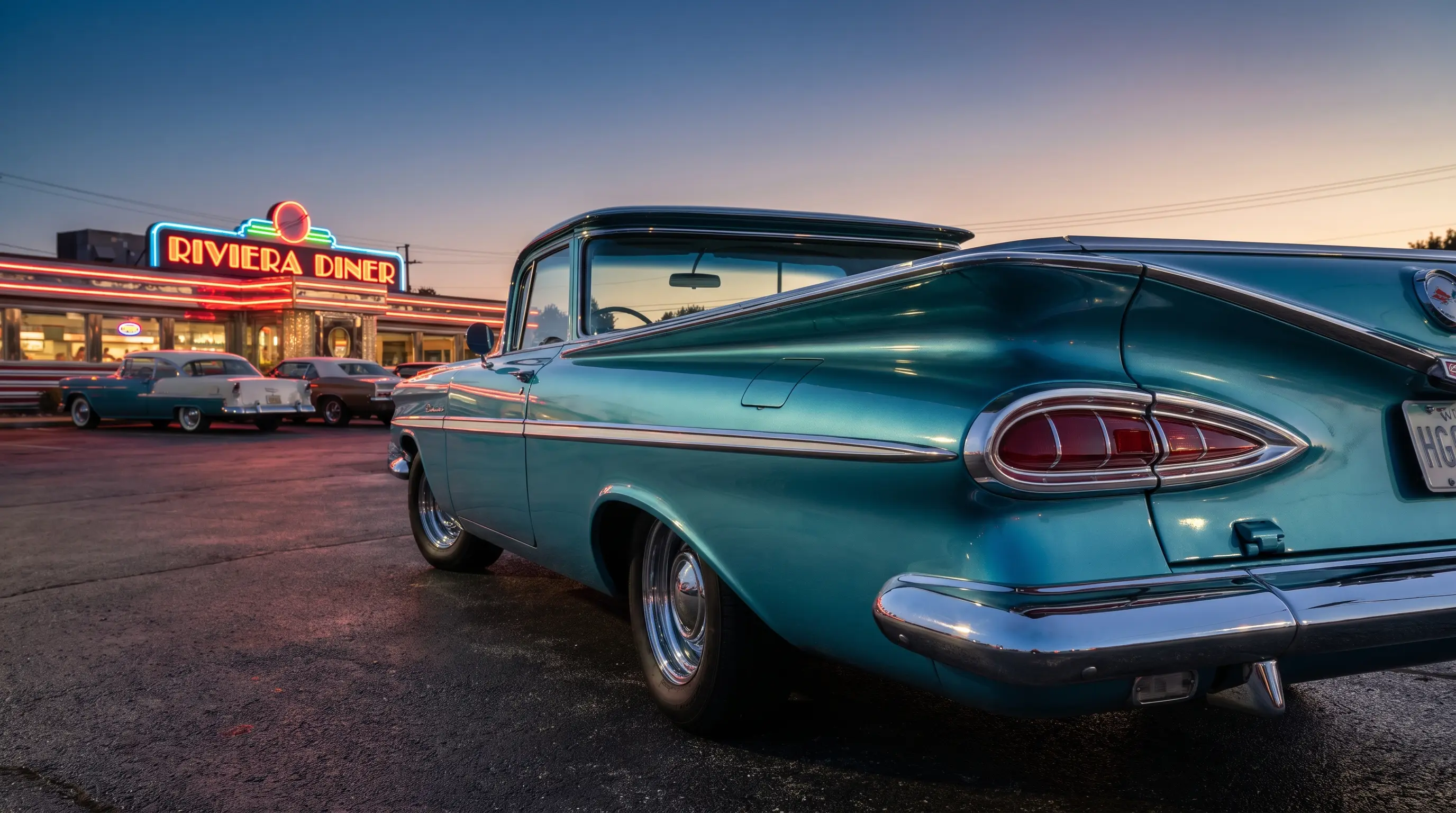
The timing was not arbitrary. Chevrolet's full line received a complete restyle for 1959, one of the most dramatically different redesigns in the brand's history up to that point, featuring the exaggerated wide rear fins that earned the batwing nickname among enthusiasts and collectors ever since. Introducing the El Camino on that same redesigned platform let Chevrolet fold the new model into an existing tooling and production investment rather than commissioning a separate one, a practical engineering decision as much as a marketing one. The El Camino essentially rode into showrooms on the back of a styling change Chevrolet was already committed to making regardless of the Ranchero's existence.
| Factor | 1959 El Camino detail |
|---|---|
| Platform | Full size 1959 Chevrolet passenger car chassis |
| Body | Shared batwing styling with the full line redesign |
| Competitive trigger | Ford Ranchero, introduced two model years earlier |
| Production span | 1959 through 1960 in this first generation |
Correcting the copycat framing
Describing the 1959 El Camino purely as a Ranchero clone undersells the engineering choice Chevrolet actually made. Ford built the Ranchero on its full size Fairlane platform as well, so both companies arrived at a similar conclusion through similar means, adapting an existing passenger car body rather than engineering a dedicated coupe utility chassis from scratch. That parallel path suggests both manufacturers were responding to a genuine gap in the market that either one could plausibly have identified independently, rather than one simply reacting defensively to the other. Chevrolet's two year development window between the Ranchero's debut and its own response supports a more deliberate read of the decision than the popular shorthand allows. 1959 el camino history goes deeper into the specific trim and engine choices offered across that first short generation.
"Calling the 1959 El Camino a copy of the Ranchero ignores two years of internal GM product planning. Chevrolet didn't stumble into this segment. They walked into it deliberately, on a platform they were already building anyway."
- Tom Ramirez
What the short first run tells us
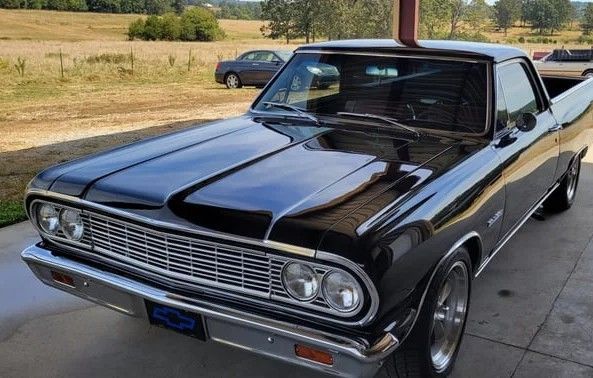
The two year production span of the original El Camino is sometimes read as evidence the concept failed commercially in its first attempt. Sales figures from the period suggest a more nuanced explanation. Chevrolet's full size cars underwent yet another significant redesign for 1961, moving toward a smaller, less exaggerated body style, and the El Camino simply did not carry over into that new generation immediately, not necessarily because demand had collapsed but because the coupe utility concept needed a new platform decision each time the full size cars changed direction. When Chevrolet revived the nameplate in 1964, it did so on the mid size Chevelle platform instead, a body style better suited to the coupe utility proportions than the increasingly large full size cars had become by the early sixties. a related story covers the styling details of that first batwing generation in more depth.
How the sales pitch differed from the truck lineup
Chevrolet's marketing literature from 1959 is careful about how it positions the El Camino relative to the company's existing truck line, and that positioning tells its own part of the story. Rather than folding it into truck advertising, dealer materials framed the El Camino alongside passenger car offerings, emphasizing car like ride quality and styling continuity with the rest of the 1959 lineup over hauling capacity or payload figures. That choice reflects an understanding, whether GM's marketing department stated it explicitly or not, that the buyer they were targeting wanted a car that could occasionally work, not a truck that could occasionally look nice. Positioning it any other way risked cannibalizing sales from Chevrolet's actual pickup line rather than opening genuinely new buyers to the brand.
That distinction between a car with a bed and a truck with car styling sounds like a small semantic point today, but it mattered enormously to how dealers actually sold the vehicle in 1959 and 1960. Salesmen were instructed to walk prospective buyers through the same features that sold the passenger car lineup, upholstery quality, ride comfort, styling details, before mentioning the bed at all. That approach shaped buyer expectations from day one and set a pattern that would carry through every later generation of the model, including the SS era over a decade later, where the same passenger car first pitch remained the dominant sales approach.
Why the origin story still matters to buyers
Understanding the actual sequence of decisions behind the 1959 debut matters to anyone shopping this earliest generation today, because it explains why these first year cars are mechanically and stylistically distinct from every El Camino that followed. They share nothing with the later Chevelle based cars beyond the name and the basic coupe utility concept, and collectors who understand that distinction tend to value the 1959 and 1960 cars as their own separate chapter rather than an early draft of the more famous SS models that came later. El Caminos for sale now is worth checking if this first, batwing bodied generation is the chapter you want to own.
Fifty plus years later, the internal debate that led to that first 1959 model is easy to forget behind the more famous SS cars that followed a decade on. But the decisions made inside Chevrolet during those two years of development, adapting an existing platform, positioning the car as a car first, and timing the launch to ride a redesign already underway, shaped every generation of El Camino that came after, right up through the final G-body cars built in the mid 1980s.
Sources and notes
- Chevrolet El Camino - Wikipedia
- Chevrolet Introduces the El Camino, 1959 - Mac's Motor City Garage
- Cowboy Cadillacs: The Chevrolet El Camino and Ford Ranchero - Ate Up With Motor
- Introduction to 1959-1960 Chevrolet El Camino - HowStuffWorks
- Ranchero Alternative: 1959 Chevrolet El Camino - Barn Finds