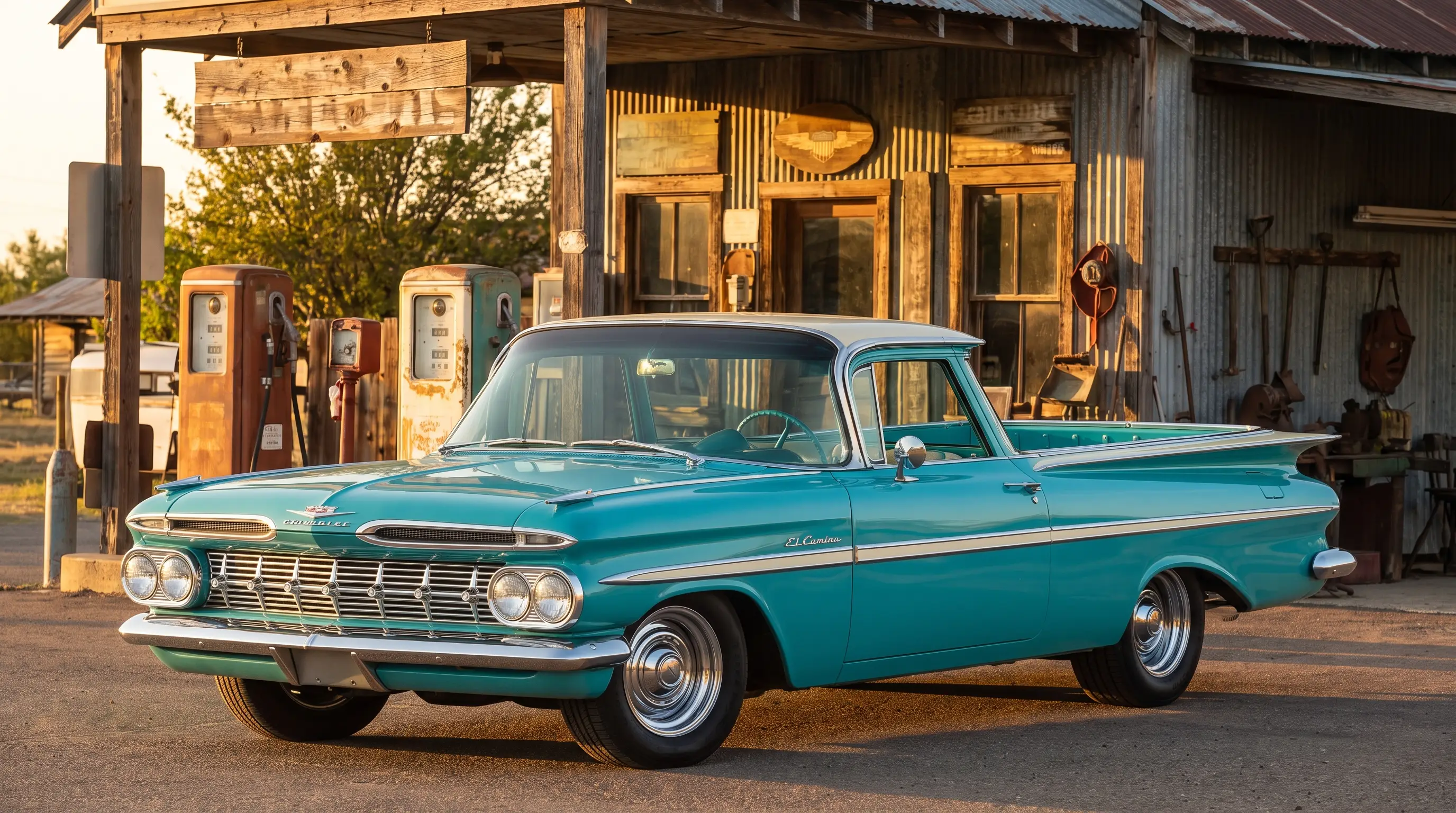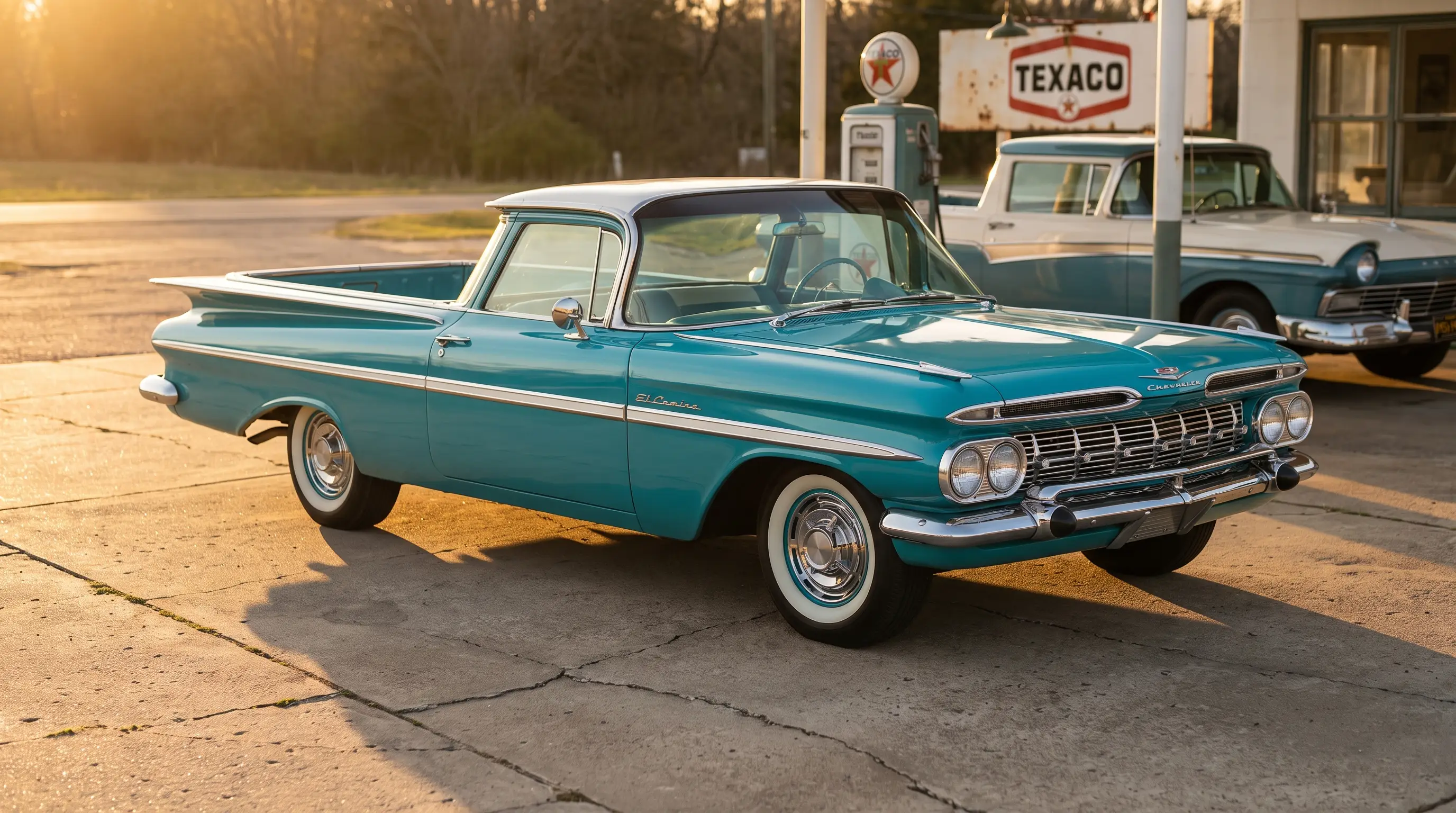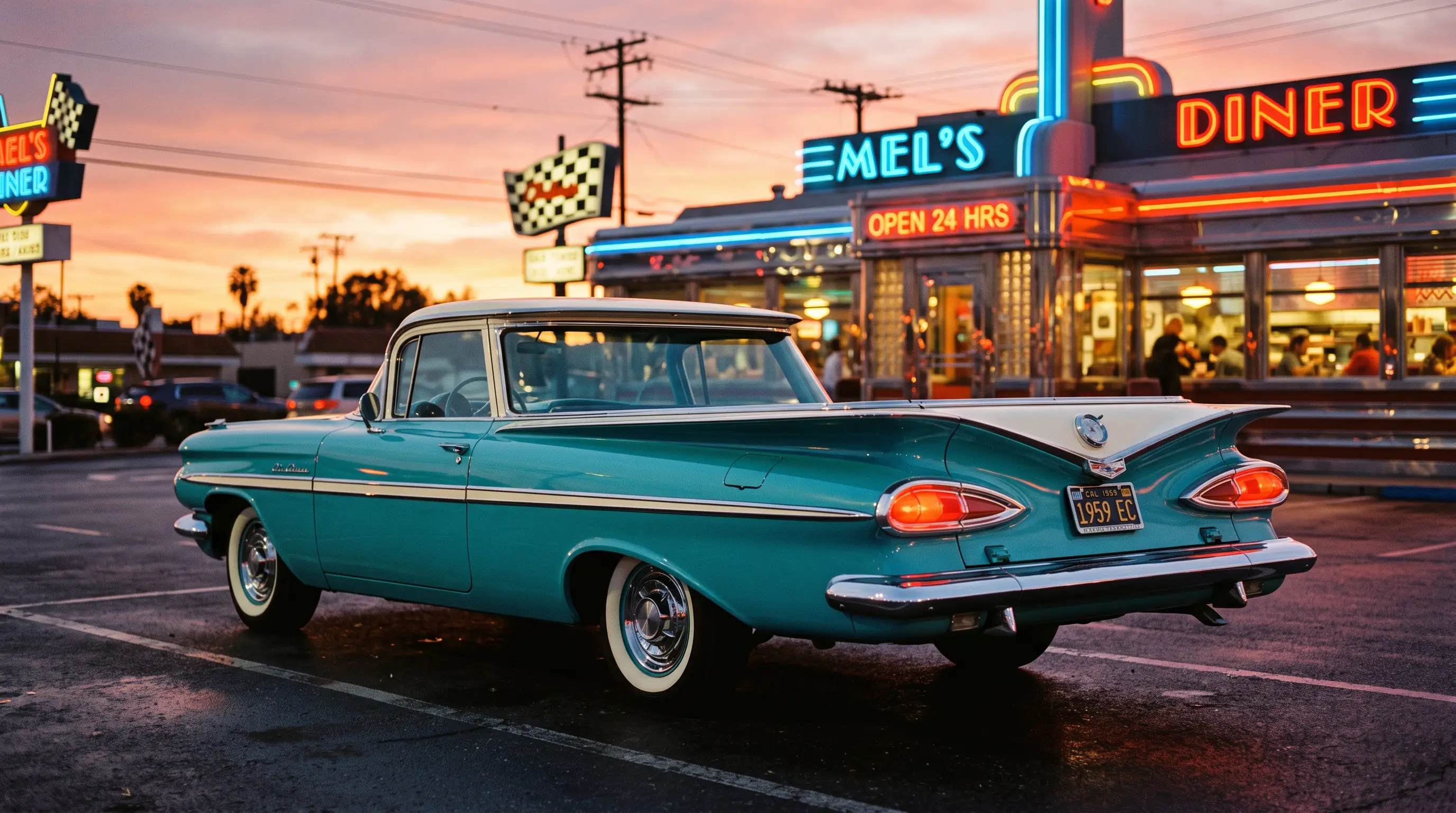
Let me correct a common belief before we go any further. The 1959 el camino was not the first car-based pickup, and Chevrolet knew it. Ford had beaten them to the idea by two model years with the Ranchero, introduced for 1957 and built on the full-size Ford platform. Chevrolet's answer arrived for 1959, and the paperwork of the period shows a company that had watched Ford create a segment and then decided to enter it with the wildest-looking body it had on the shelf. That body was the 1959 full-size Chevrolet, and it is the whole reason this first El Camino looks the way it does.
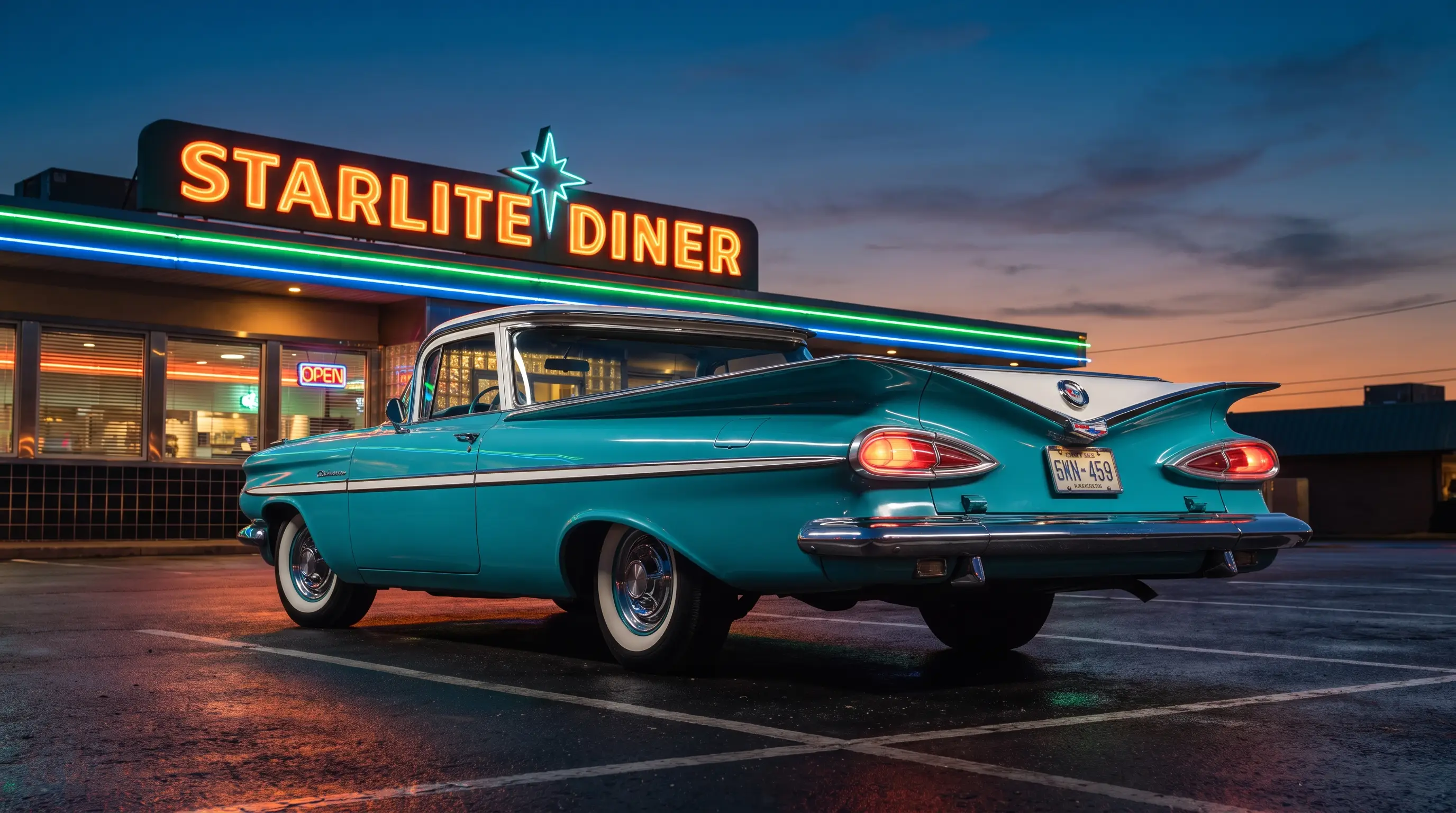
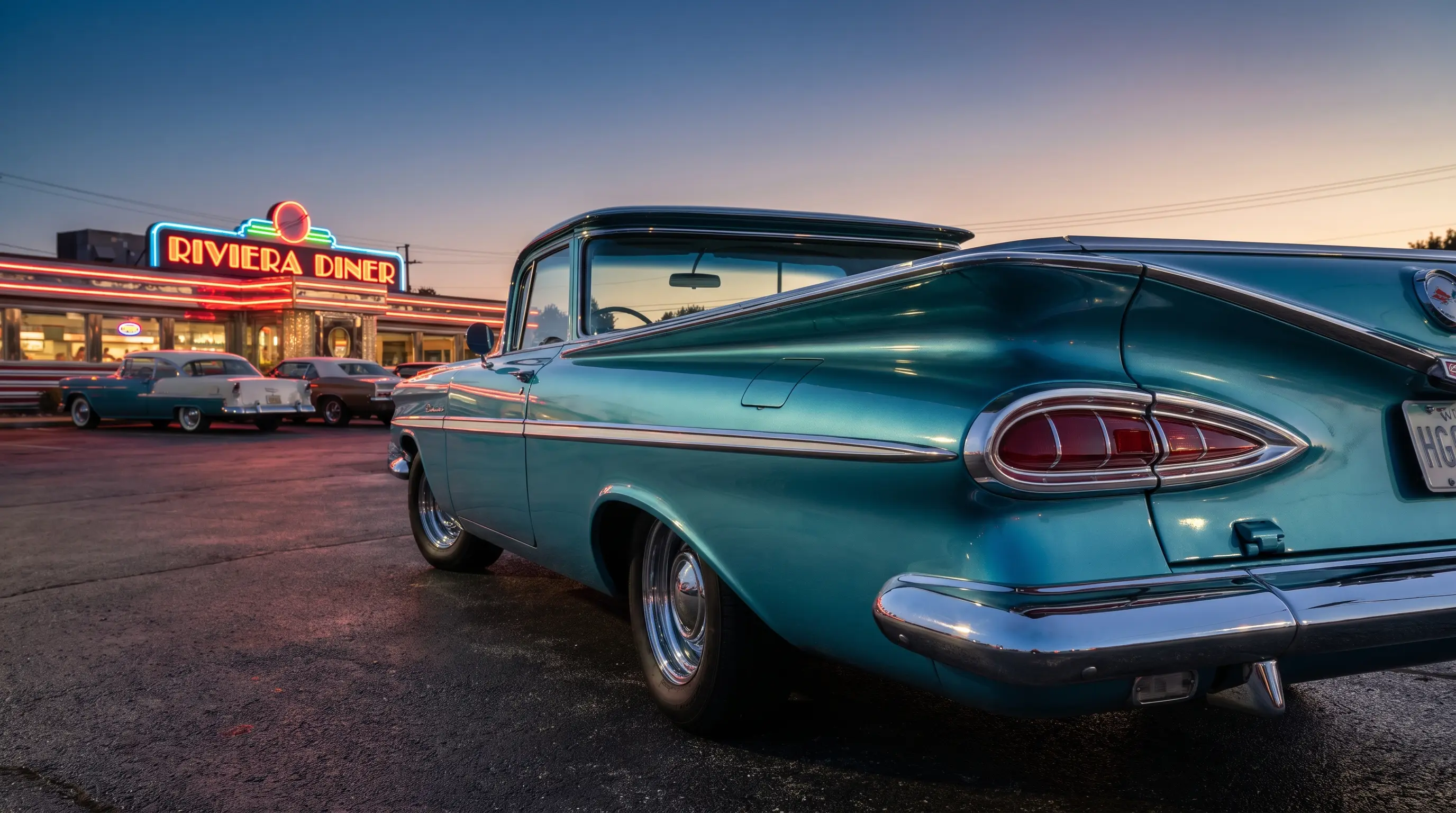
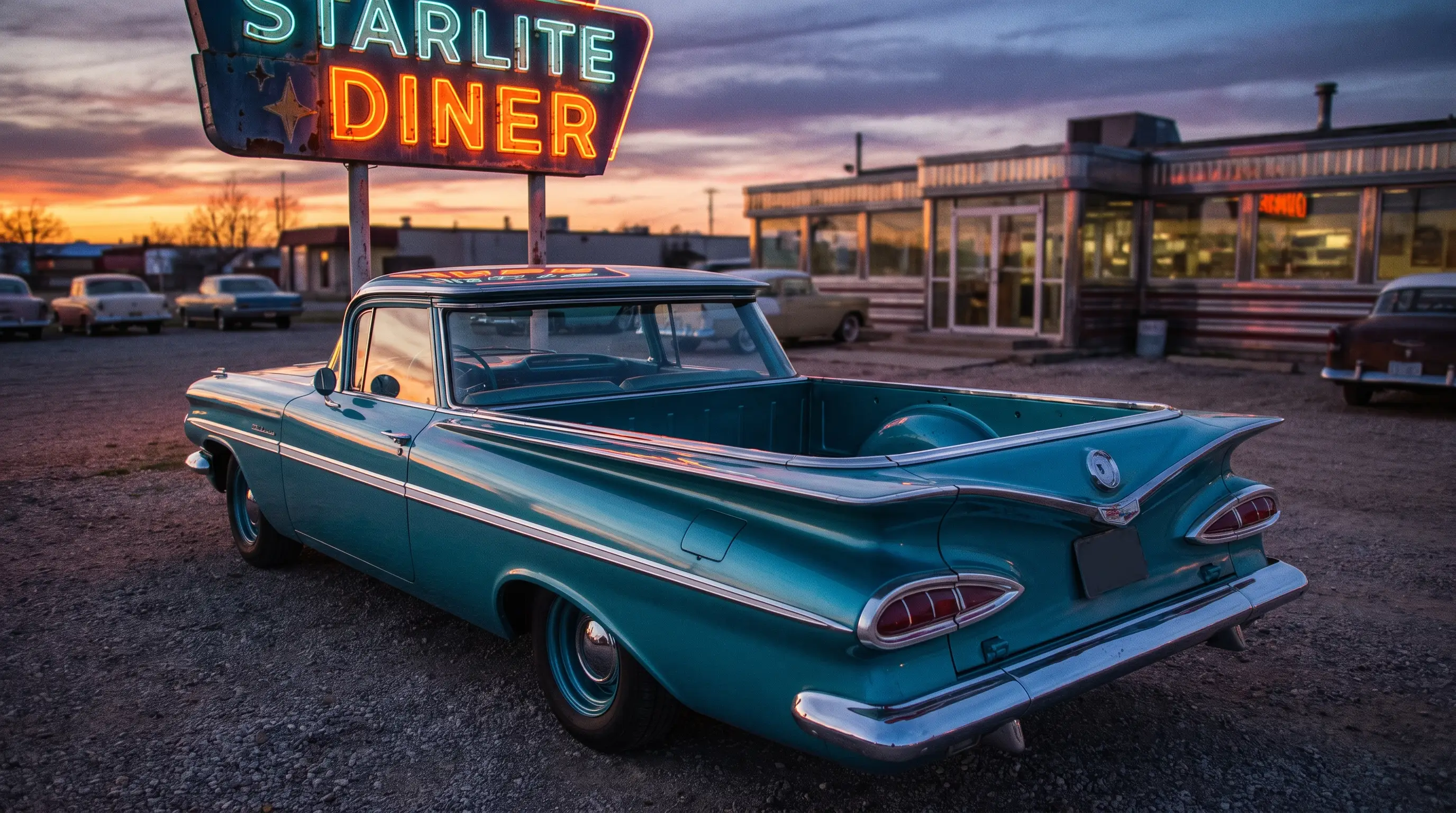
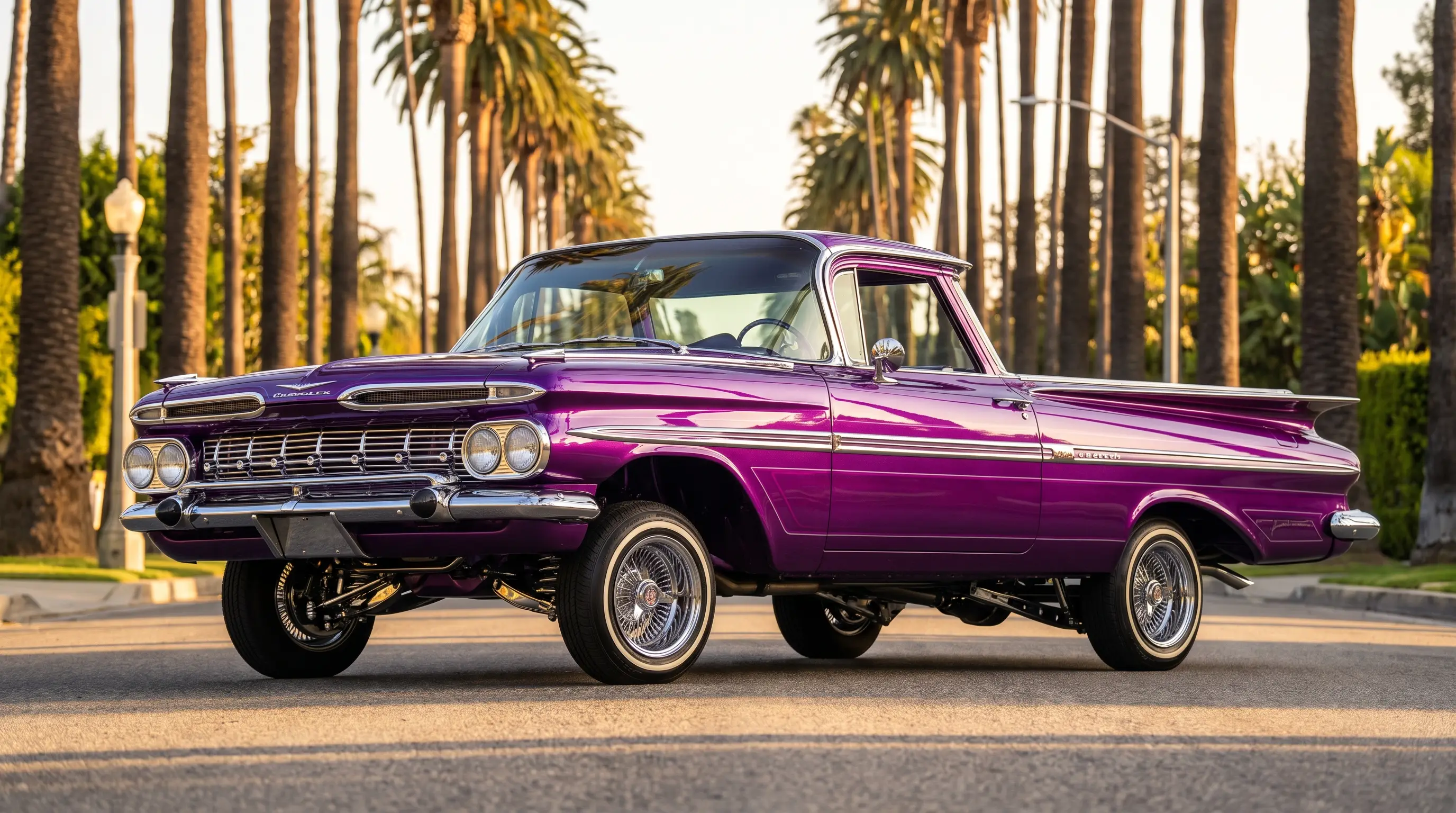
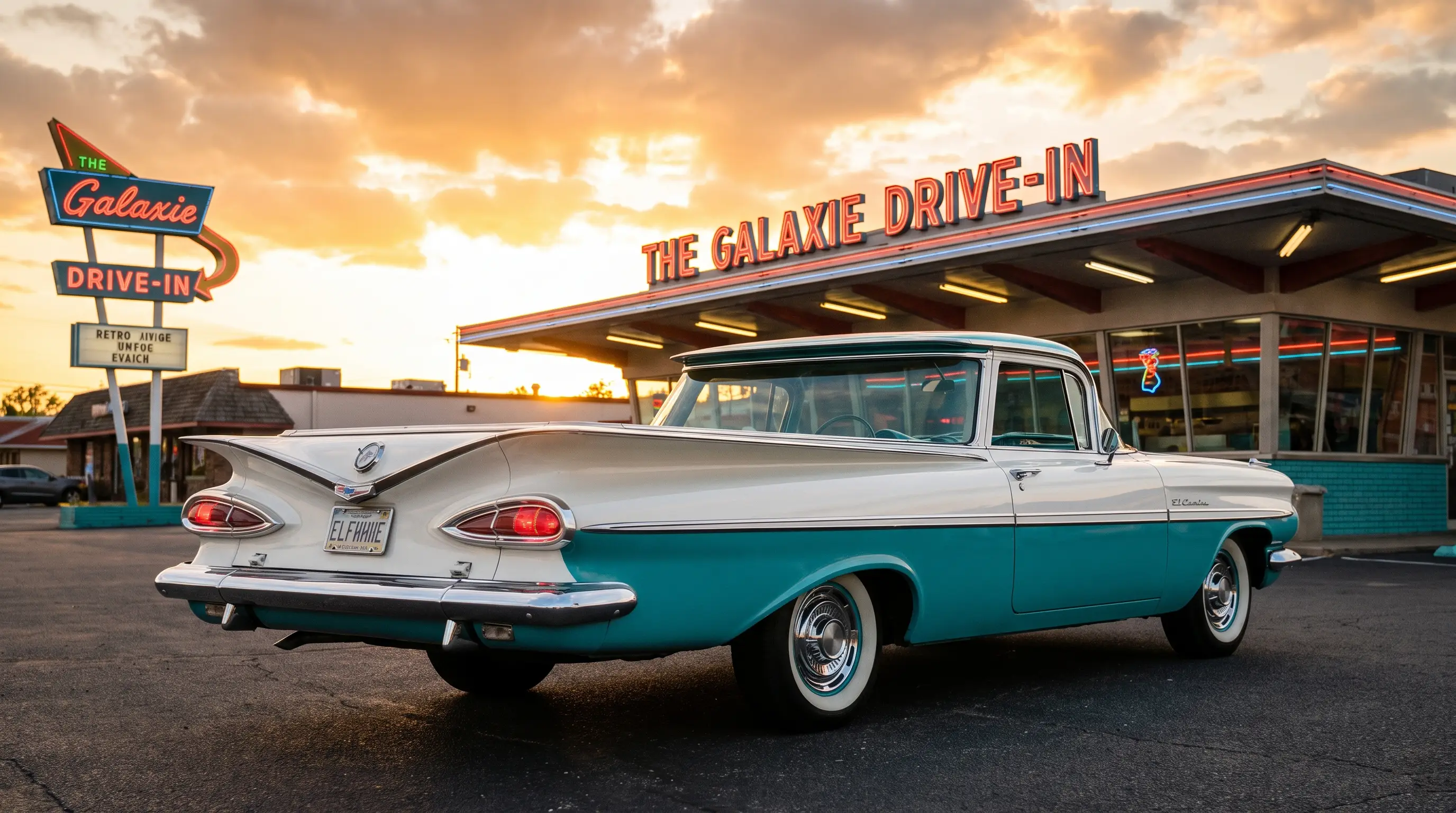
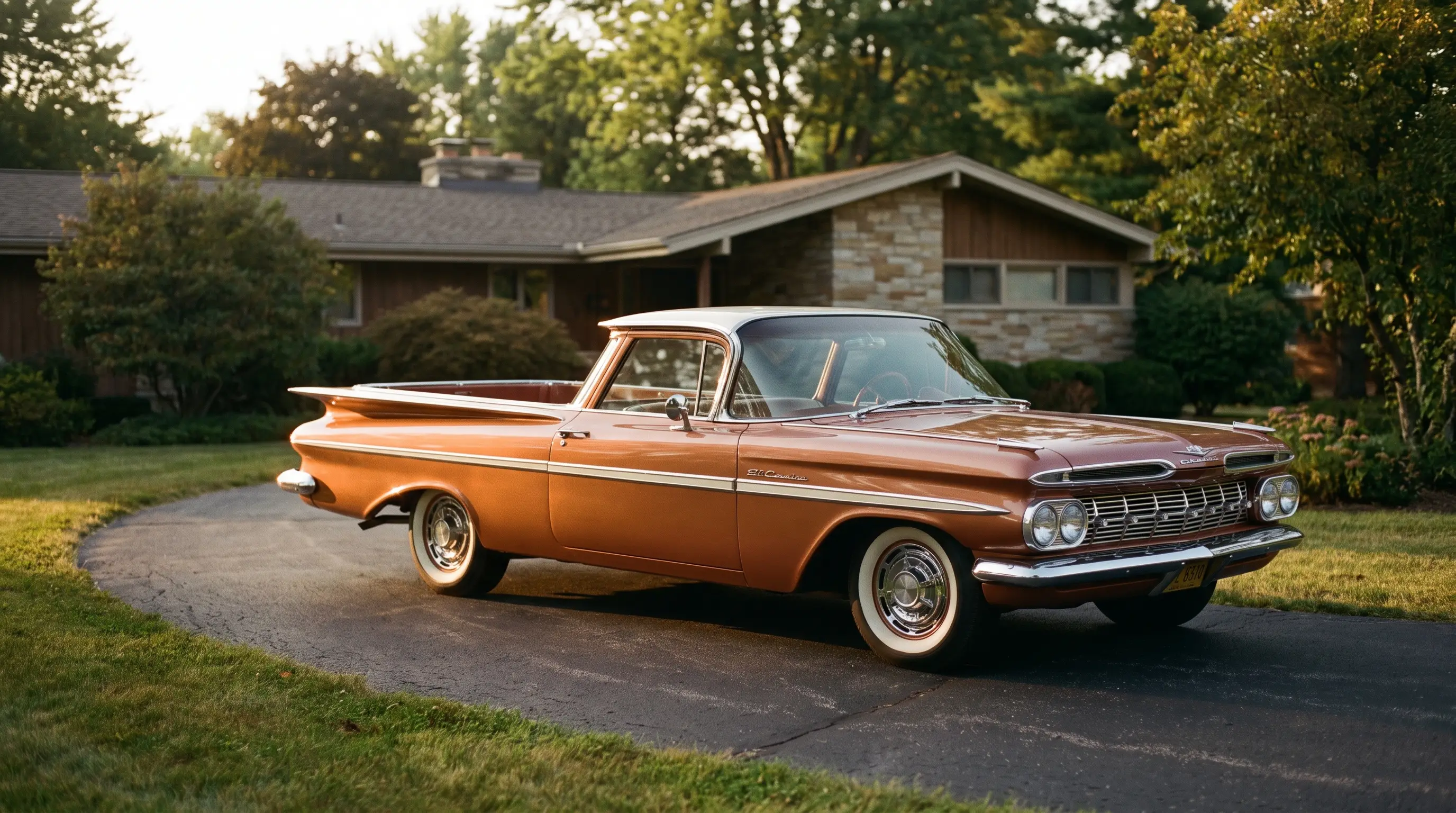
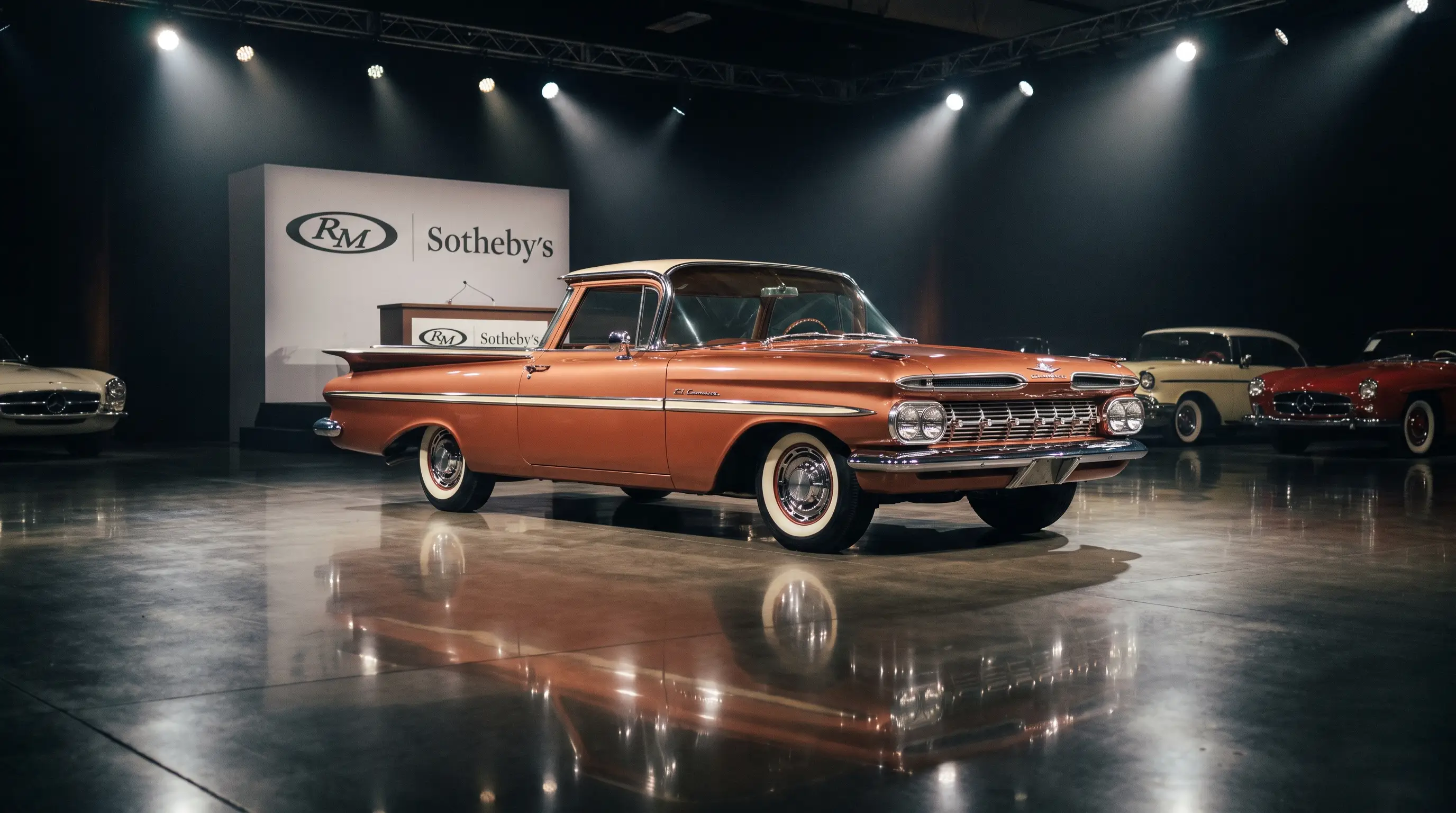
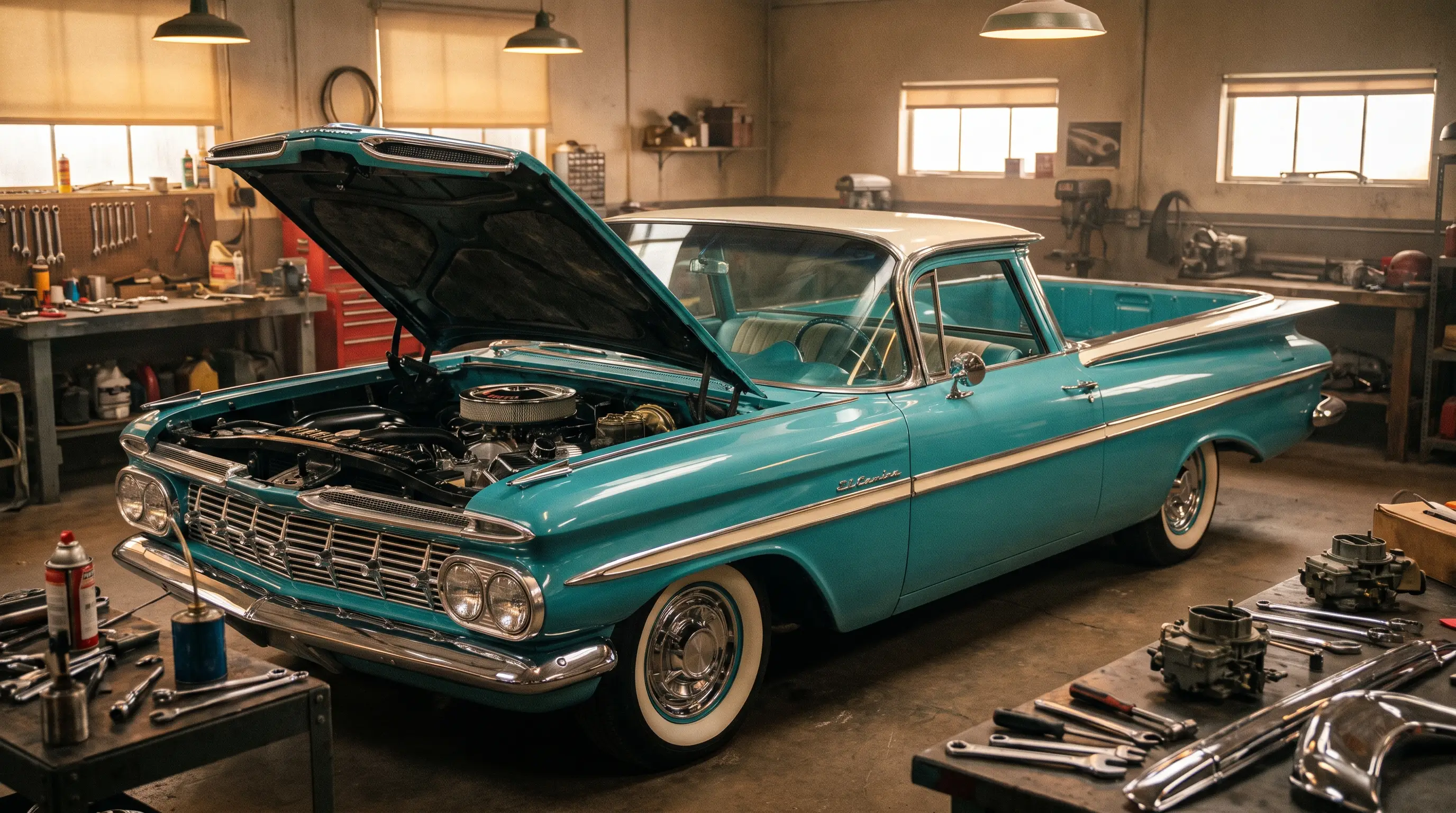
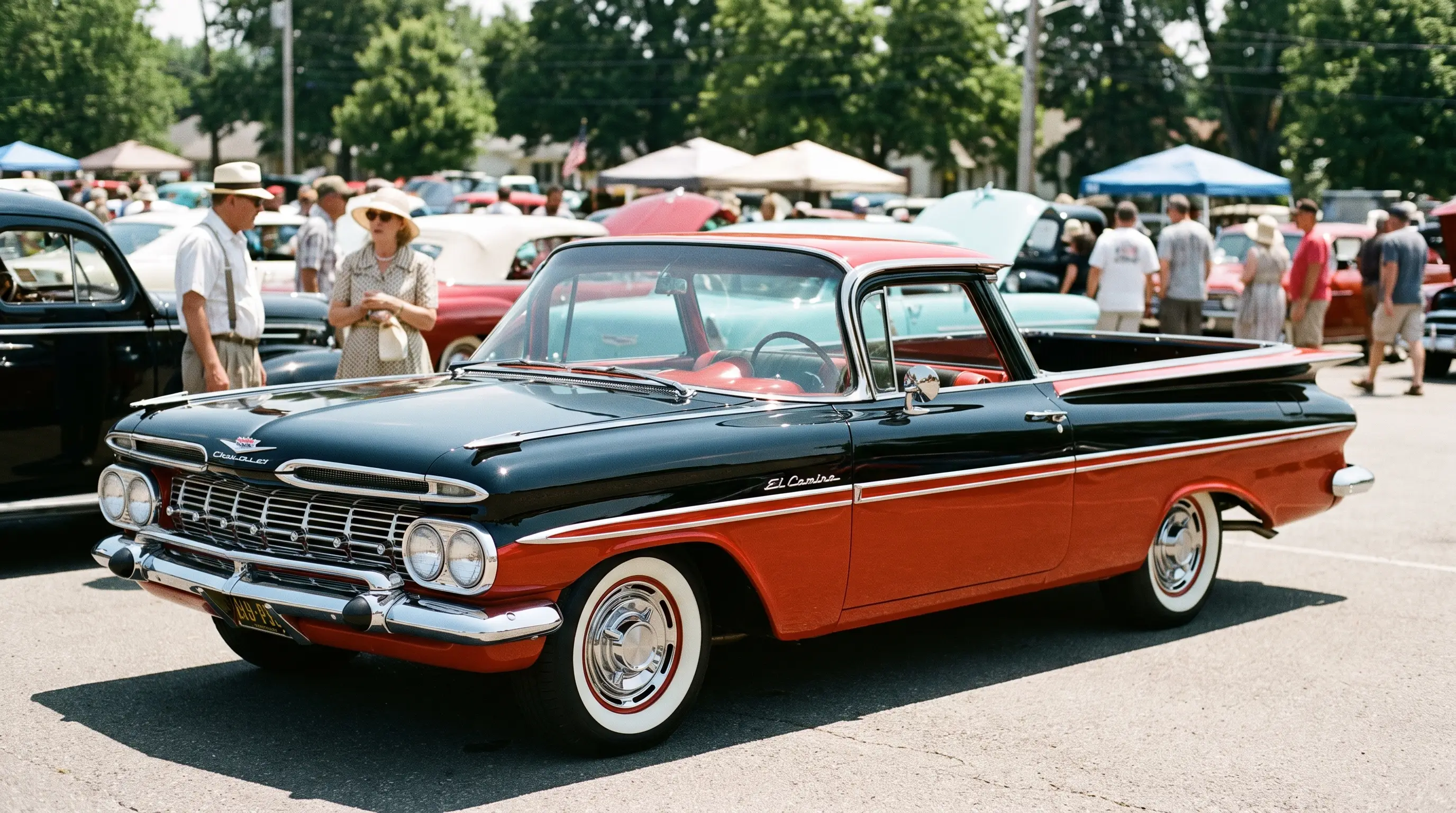
The 1959 Chevrolet is one of the most distinctive shapes the company ever put into production. The rear fenders spread into broad, flat "batwing" tailfins that ran nearly horizontal, and beneath them sat the teardrop or "cat's-eye" taillights that no other year used. When Chevrolet grafted a cargo bed onto that structure, the El Camino inherited every bit of the drama. The bed sides carried the fins. The tailgate sat between the cat's-eye lamps. It is, without exaggeration, the most flamboyant pickup any Detroit manufacturer built in that era, and it exists because of a styling decision made for the passenger cars.
What it was actually built on
The record is specific here, and it matters. The 1959 El Camino was based on the two-door Brookwood station wagon body, the entry-level full-size wagon, rather than on the top-trim Impala. That gave it the wagon's floor and structure aft of the cab, modified for an open bed with a load floor and a tailgate. Trim and interior appointments generally aligned with the mid-range Biscayne and Bel Air levels rather than the Impala, which suited a vehicle sold partly on utility.
This is the point people get wrong most often. They see the fins and assume Impala underpinnings. The primary-source parts and body documentation point to the Brookwood wagon as the donor structure. Understanding that helps explain the interior, the trim choices, and why the El Camino was positioned as a working vehicle with style rather than a luxury car with a bed. For the full generational picture, our chevrolet el camino retrospective traces how this starting point evolved across the decades.
Engines and drivetrain of the period
The 1959 El Camino offered the full spread of Chevrolet's full-size powertrains. The base engine was the 235 cubic-inch Blue Flame inline-six. Above it sat the V8 range built around the small-block, and at the top of the order sheet was the 348 cubic-inch W-series big-block, Chevrolet's large passenger-car V8 of the moment. Transmission choices followed the passenger-car catalog, including three-speed and available automatic options.
What the buyer got, then, was genuine full-size Chevrolet performance and comfort in a body that could also carry a load. This was the pitch of the whole segment. A tradesman or a rancher could buy one vehicle that drove like the family car on Sunday and worked on Monday. The 348 cars in particular gave the El Camino real capability for the era, though surviving records suggest most buyers ordered the six or a modest V8 rather than the top engine.
| Spec | 1959 El Camino detail |
|---|---|
| Introduced | 1959 model year |
| Body basis | Two-door Brookwood full-size wagon |
| Base engine | 235 cid Blue Flame inline-six |
| Top engine | 348 cid W-series V8 |
| Signature styling | Batwing fins, cat's-eye taillights |
| Rival | Ford Ranchero, in market since 1957 |
| First-generation run | 1959 and 1960 only |
The rivalry that created the segment
To understand why Chevrolet built the 1959 at all, you have to look at Ford. The Ranchero arrived for 1957, and it was a genuine sales success in a category nobody had formally defined. Ford had noticed that Australian buyers loved the "ute," the coupe utility that combined a passenger-car front with a pickup rear, a body style that had existed down there since the 1930s. Ford brought the concept to the American market, and the numbers justified it.
Chevrolet did not respond immediately, and the two-year gap tells you something about how the company operated. They watched. They confirmed the segment was real. Then they entered it with a body already committed to production for the passenger line, which minimized the tooling cost and let them field a competitor quickly. That is why the El Camino inherited the full-size platform rather than getting a bespoke structure. It was a shrewd, low-risk way to answer a rival who had proven the market existed.
The competition between the two shaped both vehicles for years. When Ford moved the Ranchero to the compact Falcon platform, and when the El Camino returned in 1964 on the intermediate Chevelle, both companies were reading the same lesson: a full-size car-pickup was more vehicle, and more cost, than the buyer of the segment actually wanted. The 1959 stands as the high-water mark of the full-size approach before both makers scaled the idea down to something more practical.
The 1960 restyle and the pause
Chevrolet restyled the full-size line for 1960, and the El Camino changed with it. The batwing fins were toned down into a more conventional shape, and the cat's-eye taillights gave way to round lamps. The 1960 car is mechanically similar to the 1959 but visually calmer, which is exactly why enthusiasts prize the 1959 more highly. The first year carries the styling that makes the model unmistakable.
Then Chevrolet stopped. After the 1960 model year the El Camino was discontinued. Production figures for both years were modest by full-size Chevrolet standards, and the company concluded the full-size car-pickup did not justify its place in the lineup at that time. Reported production sits at 22,246 units for 1959 and 14,163 units for 1960, per period Chevrolet production records.
The pause lasted three model years. When the El Camino returned for 1964, it came back on the new Chevelle intermediate platform, a smaller and more sensible package that matched the Ford Ranchero's own move to a compact base. That second beginning is a different story, and the retreat of the muscle era at the other end of the 1960s is a related story worth reading once you have the origin in hand. But the 1959 car stands alone as the full-size original.
Trim, color, and how they were ordered
Because the 1959 El Camino drew from the Biscayne and Bel Air trim tiers rather than the Impala, its interiors were relatively straightforward. Bench seats, functional instrumentation, and durable materials suited a vehicle expected to earn its keep. The exterior color palette followed the full-size Chevrolet range for 1959, a wide selection that included the soft pastels and the brighter hues typical of the late 1950s, and two-tone combinations were available.
Optioning followed the working-vehicle logic. Many buyers kept it simple. The examples that survive today with the 348, an automatic, and higher trim are the exception rather than the rule, which is part of what makes a well-optioned 1959 desirable now. The vehicle was sold as a tool that happened to look extraordinary, and most owners treated it accordingly, which brings us to the problem of survival.
Survival and what collectors chase
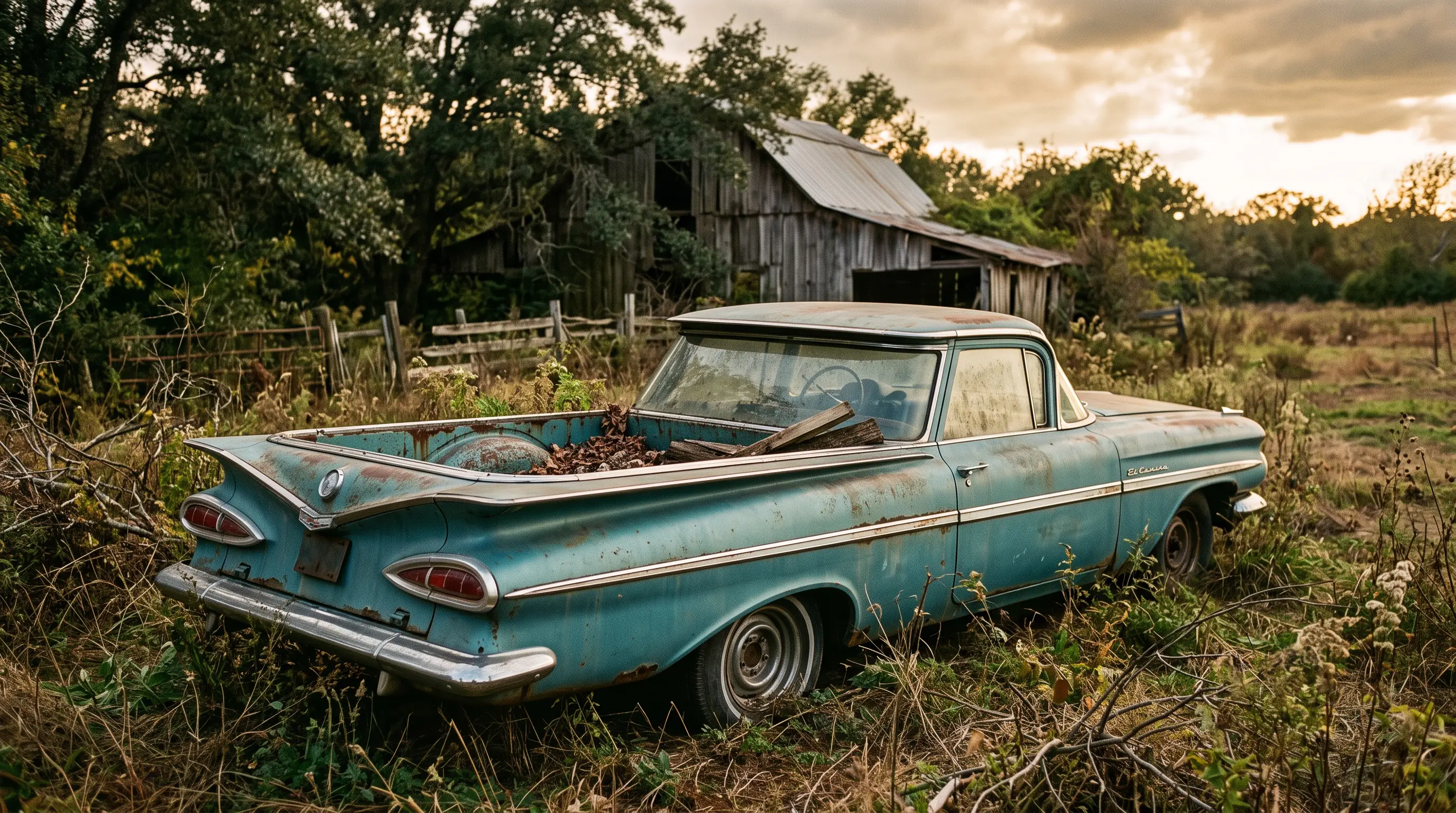
First-year vehicles built for work rarely survive in quantity, and the 1959 El Camino is no exception. Beds carried loads. Fenders took dents. The complex fin structure at the rear was prone to rust where it trapped moisture, and a hard-used utility vehicle from 1959 had every opportunity to be scrapped long before anyone thought of it as collectible. The clean survivors are therefore disproportionately valuable relative to their original modest positioning.
What collectors chase in a 1959 is originality and the completeness of that unmistakable styling. Correct cat's-eye taillights, straight fins, correct trim, and a documented engine matter more than a fresh repaint. Because the model shares so much with the far more numerous 1959 passenger cars, parts interchange is a mixed blessing. It keeps cars on the road, but it also makes verifying originality a job for someone who knows the specific El Camino details rather than the general full-size ones.
Reproduction support is thinner than it is for the muscle-era cars, which is worth understanding before you take one on. The 1970 SS has an entire aftermarket industry behind it. The 1959 does not, because the volumes were never there to justify tooling up reproduction fins and trim. That means a car missing its correct pieces can be genuinely difficult to complete, and it pushes the value of an already-correct, complete survivor even higher relative to a project. On this model, buying complete is not a luxury. It is close to a necessity, because the parts you need may simply not be for sale at any price.
There is also a small but serious community that treats the 1959 as the historically important car it is, and that community keeps the knowledge alive. The people who can tell a correct fin from a poorly repaired one, or spot the difference between a genuine 348 car and a small-block car wearing big-block valve covers, are the same people worth consulting before a purchase. The 1959 rewards research more than reflex. It always has, because so few were built and so few survived.
"People remember the muscle-era El Caminos and forget the model was born a full-size car with the wildest fins Chevrolet ever built. The 1959 is the one that matters historically, because it is the answer to the Ranchero and the reason the whole line exists. Judge it as an artifact of 1959, built on the Brookwood wagon, and you will value it correctly. Judge it against a 1970 SS and you will miss the point entirely."
- Tom Ramirez
There is a temptation to rank the El Caminos purely by horsepower, which puts the 1959 near the bottom and the 1970 at the top. That ranking answers a question about speed. It says nothing about significance. In the history of the model, the 1959 is the foundation, the year Chevrolet committed to the idea and gave it a face no one would forget. Everything that followed, including the muscle cars people prize most, grew from this full-size first attempt.
It is also worth remembering that in 1959 nobody thought of this as a collectible. It was a new tool with a striking shape, sold to people who needed to move things and liked the way it looked doing it. The reverence came later, once the fins of that single year became shorthand for an entire moment in American design. The car earned its place in retrospect, which is exactly how the most historically interesting vehicles usually arrive at their standing.
If you want to see how the survivors are described and priced today, look at what is offered and read the listings closely. A genuine first-year car with correct styling and honest documentation is a different proposition from a project with mismatched fins and a swapped drivetrain. You can find El Caminos for sale now and use the details above to separate the correct cars from the approximations. On a model this scarce and this specific, the details are the entire evaluation.