The 1959 El Camino wears its styling like a dare. Chevrolet's first car based hauler arrived wrapped in the most theatrical sheet metal the division ever built, and the batwing beauty of that debut year is still the reason collectors point at a 1959 before they point at anything from 1968 or later. This is not a subtle car. It was never meant to be.
What "batwing" actually means
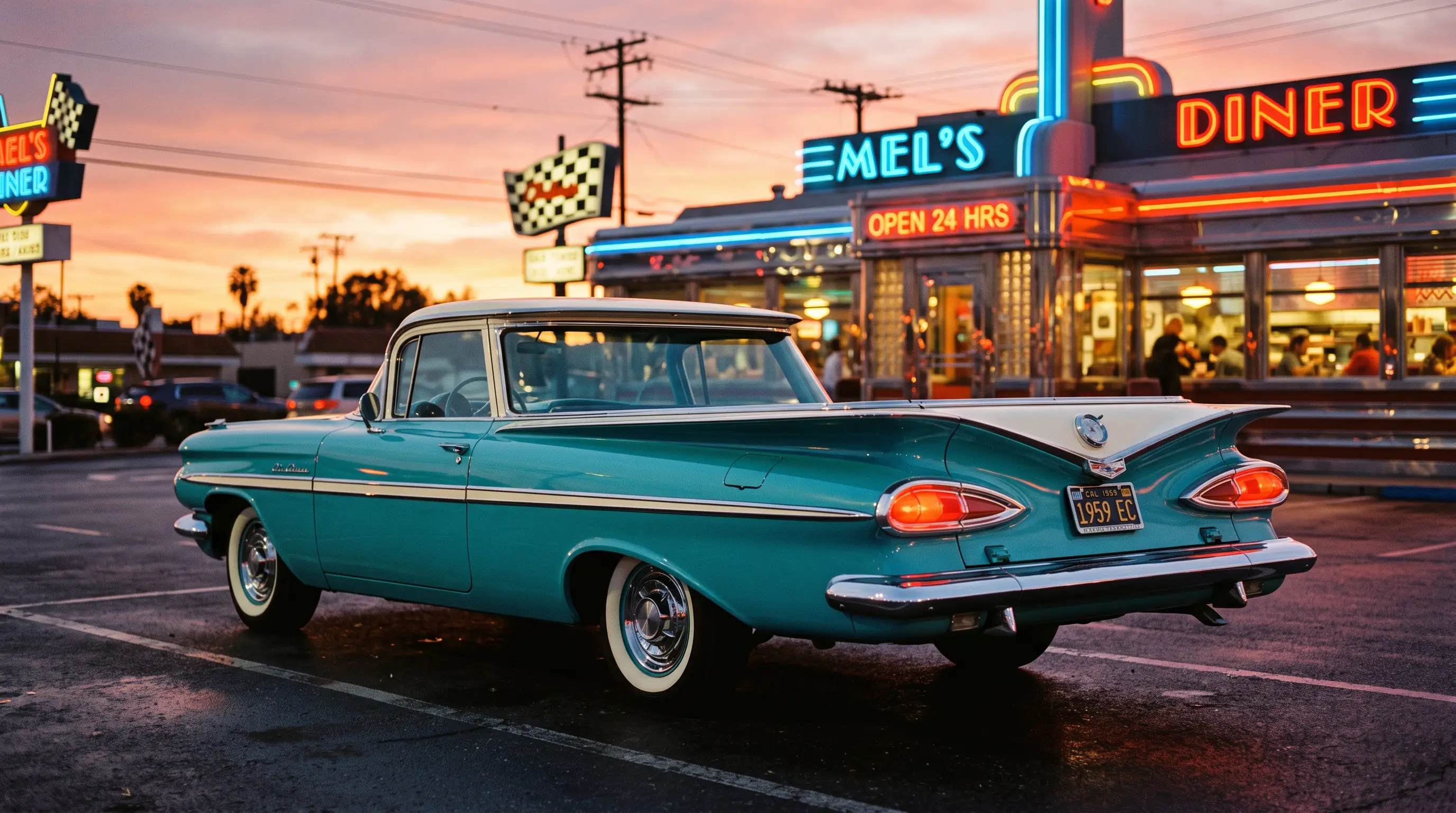
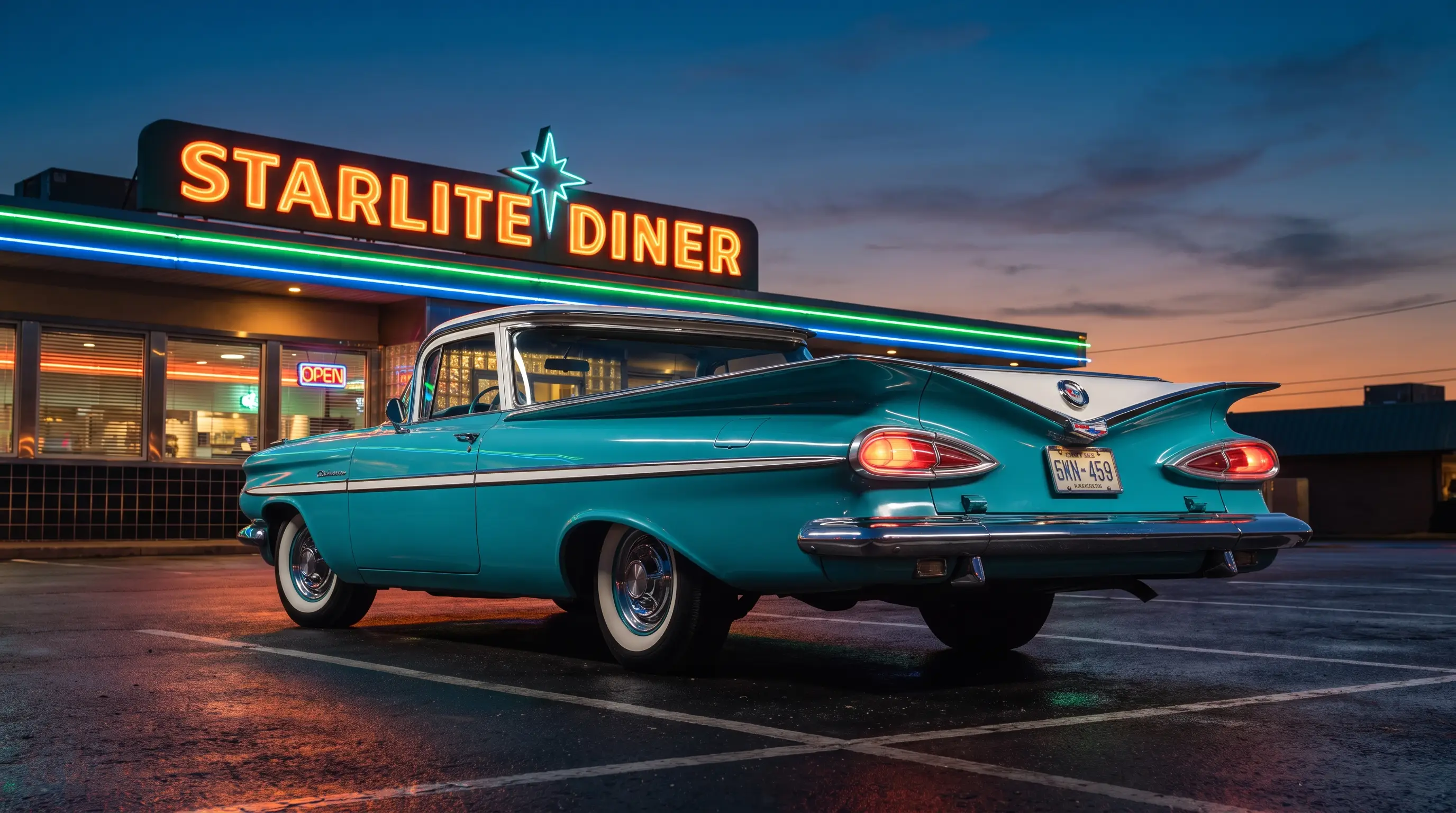
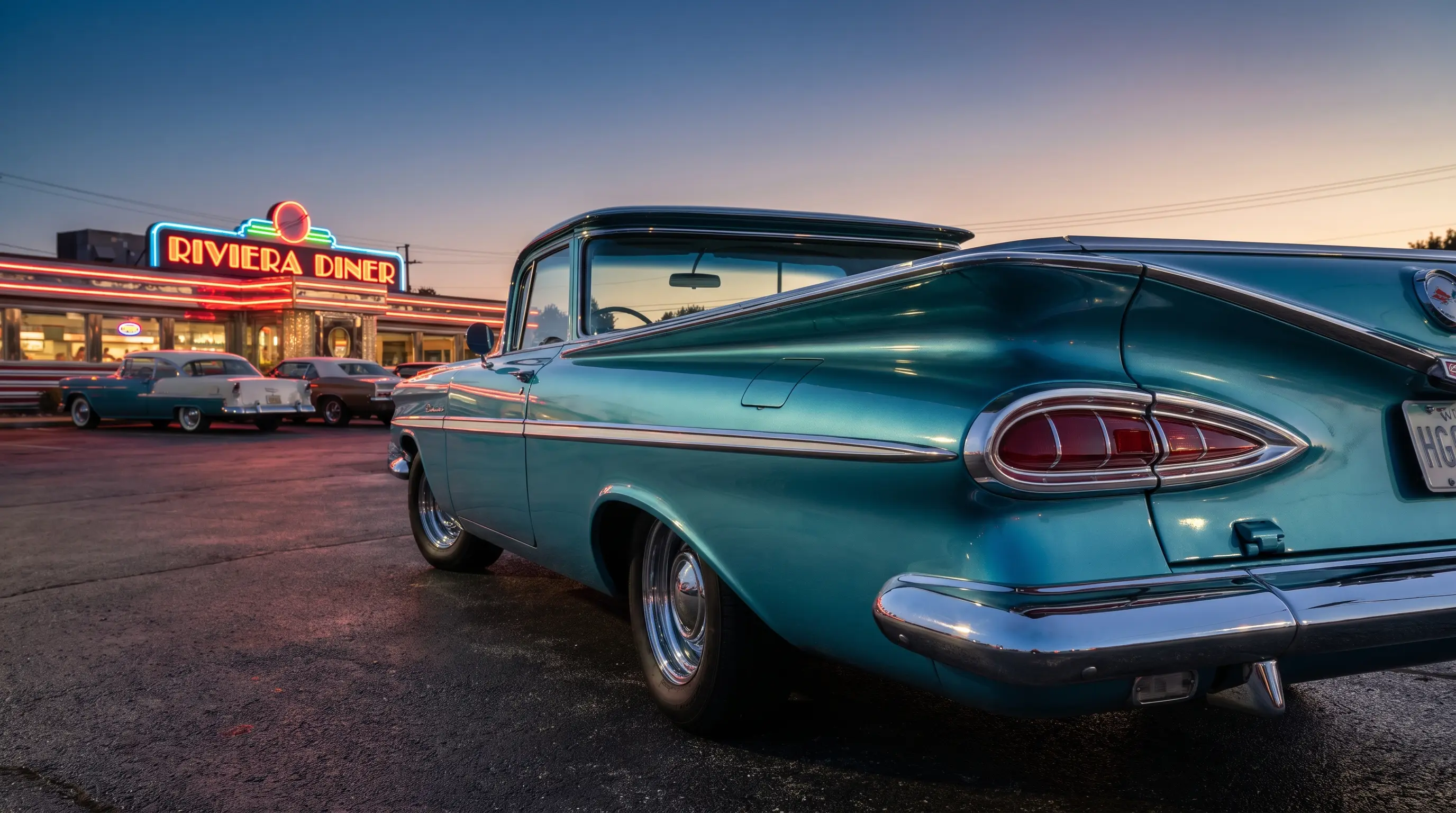
The nickname comes from the rear fenders, which do not simply taper into fins the way a 1957 Chevrolet does. Instead the whole rear quarter panel sweeps outward and flattens into two enormous horizontal wings, canted almost parallel to the ground, with the taillights sunk into the trailing edge like afterburners. Seen from directly behind, the car looks wider at the fenders than at the doors. Seen from the side, the fins seem to float, barely connected to the rest of the body by a thin structural rib. General Motors design chief Harley Earl signed off on this shape for the entire full-size Chevrolet line in 1959, and the El Camino, built on that same body, inherited every inch of it, then added a cargo bed behind the cab that made the rear wings look even more exaggerated because there was less trunk lid to visually anchor them.
Nothing about this styling was accidental restraint. 1959 was the year GM design abandoned the tall, narrow look of the mid-1950s and went wide and low across the board, and Chevrolet's stylists pushed the concept further on the El Camino than on the sedans, because a load-bed profile gave the fins a clean horizontal plane to launch from.
The front end tells a different story
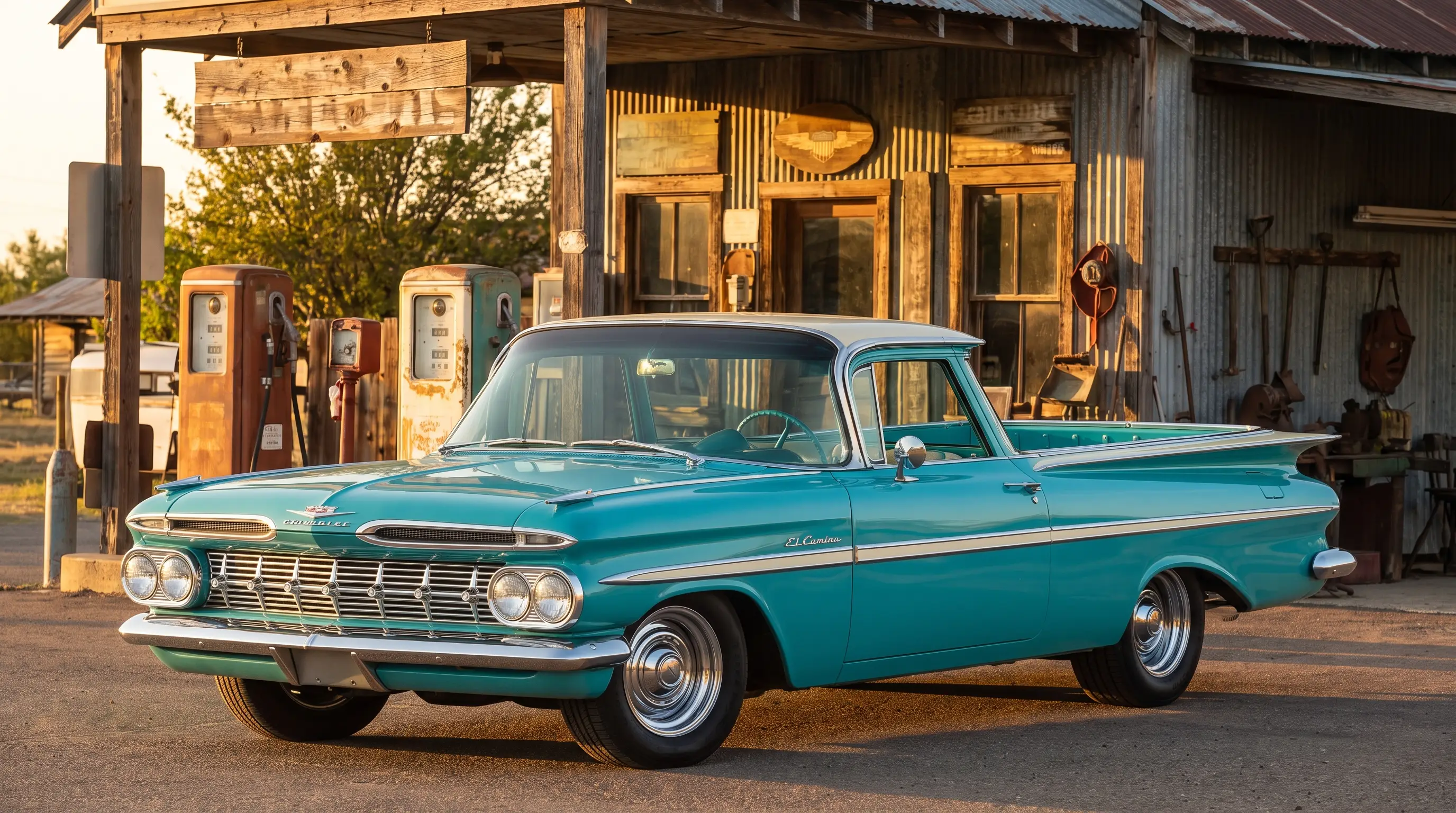
Where the rear is aggressive, the front is almost restrained by comparison. Twin round headlights sit in a fairly conventional grille, cat's-eye in shape but not outlandish next to the fins behind it. That contrast is deliberate. Earl's stylists wanted the eye to travel from a calm, symmetrical face to a wild, asymmetrical tail, and on the El Camino that journey is longer because the cargo bed stretches the wheelbase and gives the design more real estate to work with than a two-door sedan ever had.
Chrome trim runs the length of the body in a single sweeping spear, gathering at the front fender and terminating just above the taillight, which does double duty as a visual seam holding the wing in place. Take the trim spear away in your mind and the fin looks unfinished. Chevrolet's designers understood that and used brightwork as structure, not just decoration.
The windshield and roofline add a third act to that visual story. The wraparound windshield, carried over from the previous body language but reworked for 1959, pulls the A-pillar back at a sharp angle, so the cab reads low and fast even parked at the curb. On the El Camino that low cab sits directly ahead of the tall, flat bed rails, and the height difference between the two creates a stepped profile you do not see on the sedan or the wagon. Photographed from a three-quarter rear angle, that step is often the first thing a period brochure photographer chose to emphasize, because it made the car look like two different vehicles welded together at the B-pillar, a passenger car forward of the seam and a work vehicle behind it.
Color made the shape louder
Chevrolet's 1959 palette leaned into the styling rather than softening it. Two-tone combinations were common on the El Camino, and the factory encouraged buyers to run a light roof or upper body against a darker lower half, which had the effect of making the fin's horizontal plane read even flatter and wider. Colors like Aspen Green, Highland Green, and Snowcrest White turn up regularly on surviving cars, and a two-tone pairing Snowcrest White with Highland Green or Aspen Green with Classic Cream is arguably among the most photographed color combinations from the model year, in no small part because that kind of factory two-tone had never appeared on a Chevrolet-based hauler before.
The bed itself, unlike the tailfins, was pure function: a flat steel floor with a tailgate borrowed conceptually from the sedan trunk opening but reengineered to swing down and support cargo. That plain, honest bed sitting under those flamboyant wings is part of the joke of the car, and part of its charm. It looks like a showroom concept that someone decided to put actual lumber in.
Interior trim followed the exterior's lead rather than settling for something plainer, as many period trucks did. Buyers could order cloth and vinyl combinations lifted straight from the Bel Air and Impala option sheets, along with a two-spoke steering wheel and a dash featuring the same wide speedometer housing used across the passenger car range. That decision mattered to how the car sold. Chevrolet was not asking a work-truck buyer to accept a car's styling as a consolation prize. It was asking a car buyer to accept a small amount of hauling capability as a bonus feature bolted onto a vehicle that otherwise looked and felt exactly like the Impala parked next to it on the lot.
Why the styling did not survive
Chevrolet toned the fins down for 1960 and then discontinued the El Camino entirely after that model year, not returning to the nameplate until 1964 on a smaller Chevelle-based platform that shared nothing with this look. That makes the 1959 shape a one-year-only event in the truest sense, since even the 1960 that followed it softened the wings considerably. Collectors treat the 1959 as the definitive batwing year precisely because it never happened again in the same form.
"Every full-size Chevrolet from 1959 has presence, but put an El Camino next to a Biscayne and the truck wins. That flat bed gives the fins nothing to compete with. It is the purest expression of the shape Chevrolet built that year, whether the engineers who signed off on it intended that or not."
- Sarah Whitfield
Living with the look today
Restorers chasing a correct 1959 spend real effort on those rear quarters, since panel availability for the wing sections is far thinner than for a common sedan fender, and any dent or rust-through in the flattened part of the fin shows immediately because there is no crease to hide it behind. A straight, well-preserved wing is one of the clearest tells that a car has been cared for rather than repaired in a hurry.
For anyone drawn to this specific model year, our complete history traces the full run from launch through discontinuation and the eventual 1964 revival. And if the styling has you hunting for the real thing, you can find a classic El Camino from this era to see the batwing fenders in person, which is really the only way to appreciate how wide they actually are.