Every El Camino built after 1964 owes something to a decision Chevrolet made in the mid-1950s, and it is worth going back to the primary record to understand exactly what that decision was, because the popular version of the story tends to flatten a more interesting sequence of events into a single tidy sentence.
Ford forced Chevrolet's hand, not the other way around
The common shorthand is that Chevrolet simply invented the car-based hauler concept in 1959. The documented sequence tells a different story. Ford had already launched the Ranchero in 1957, building it on the full-size Ford platform and finding real sales success with a buyer who wanted a passenger car's ride and looks combined with genuine cargo capacity. Chevrolet's response came two model years later, arriving for 1959 built on that year's full-size Chevrolet body rather than as a rushed stopgap. Understanding that sequence matters because it reframes the El Camino correctly, not as an original idea Chevrolet dreamed up independently, but as a competitive answer built with the benefit of watching how the market responded to Ford's version first.
For the full production story of that first model, where this started covers the specific details of how the 1959 car came together.
Built on the platform, not a separate design exercise
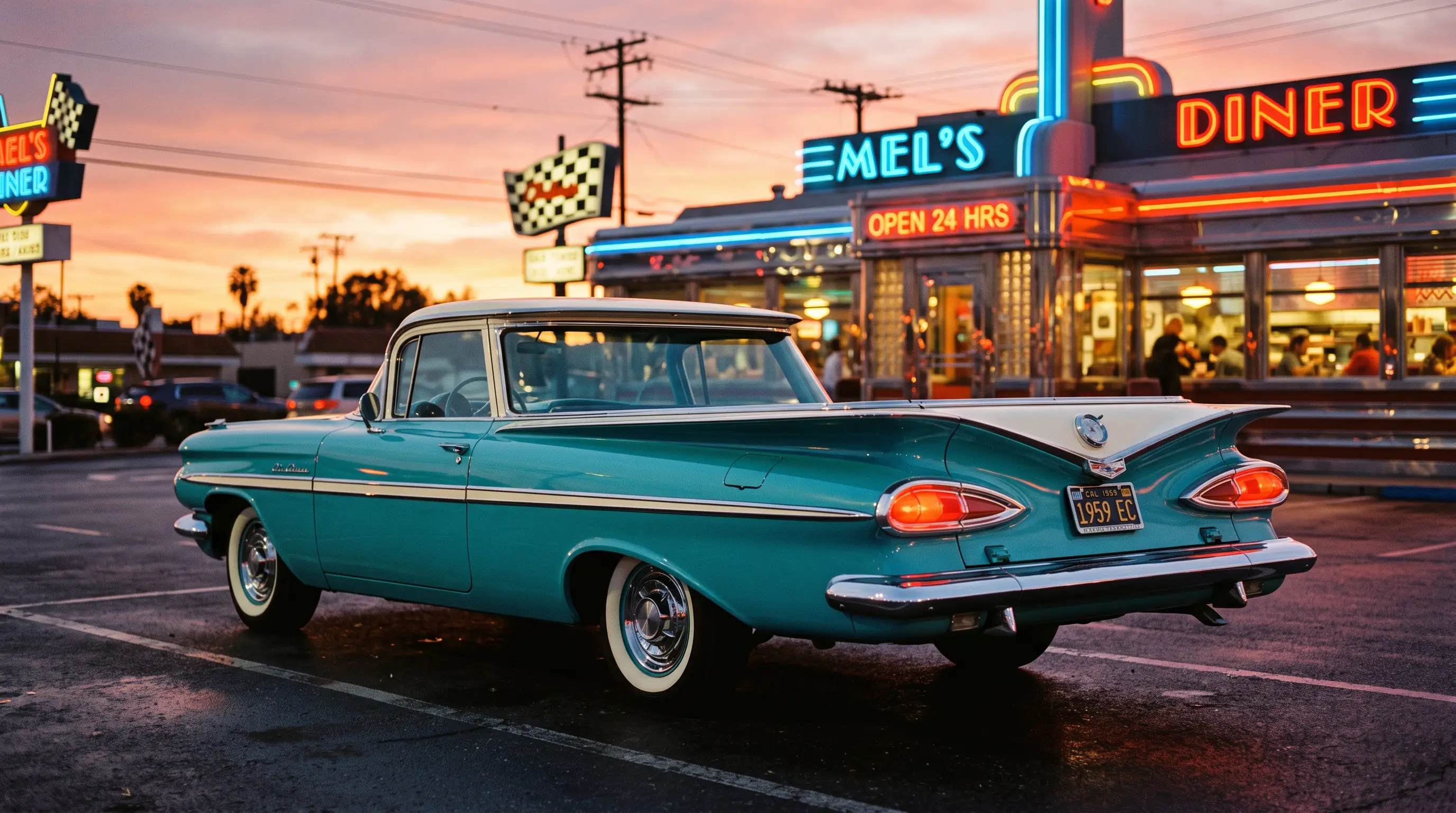
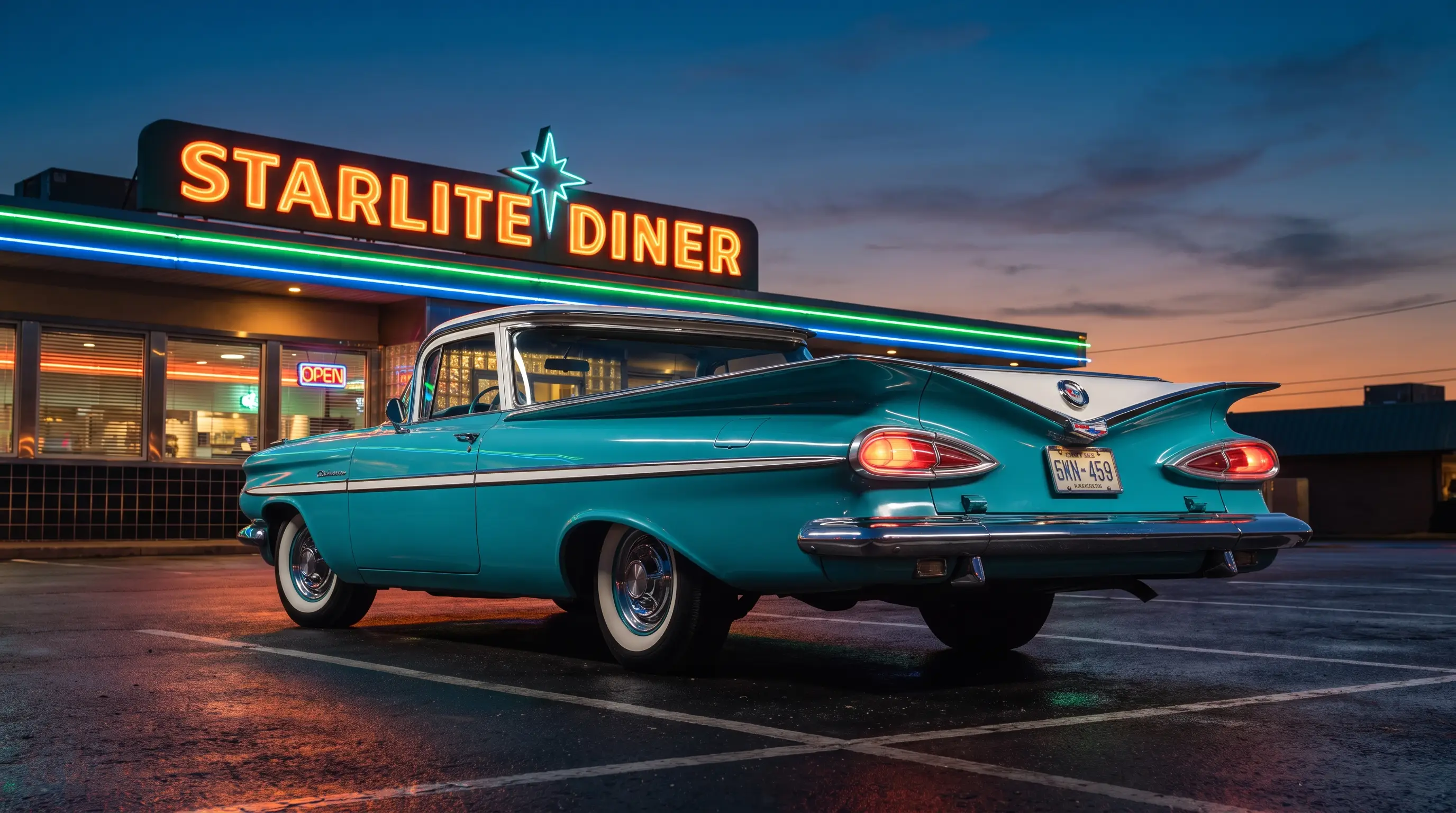
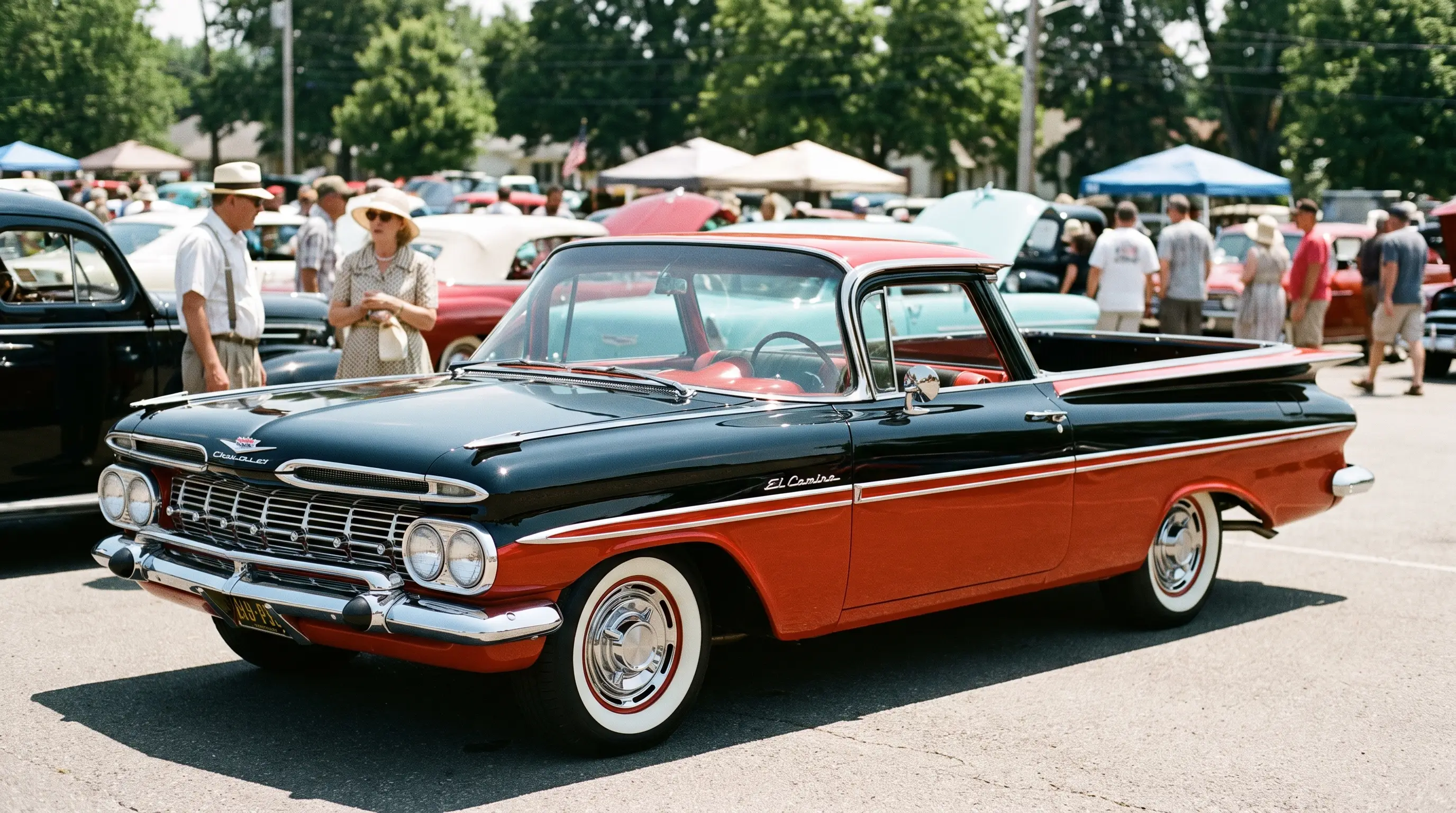
A misconception I still hear regularly is that the El Camino was engineered as its own distinct platform. It was not. Chevrolet built the 1959 El Camino on the same body as that year's full-size Brookwood and Biscayne station wagons, sharing the batwing rear fender styling and most front-end sheet metal with the rest of the 1959 full-size lineup. What made it distinct was the rear treatment, converting the wagon's cargo area into an open bed while retaining car-like proportions and trim up front. That platform-sharing approach kept tooling costs manageable for what was, in sales terms, a comparatively low-volume model, and it is the same basic strategy Chevrolet would return to years later when it revived the nameplate on the Chevelle platform for 1964.
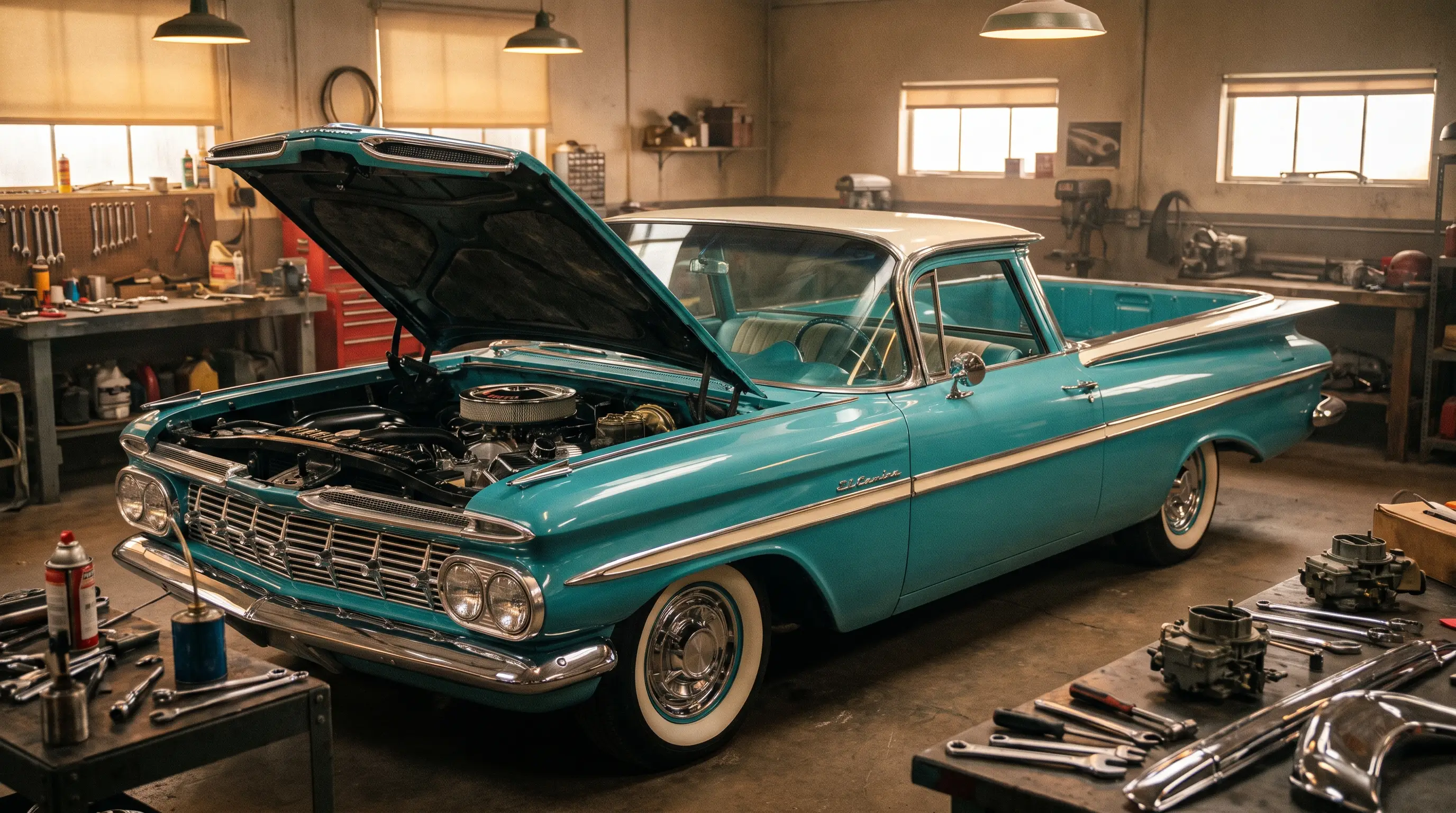
This platform-sharing detail also explains a lot of the parts interchange that restorers rely on today. Because the bulk of the El Camino's sheet metal, glass, and trim came straight off the full-size wagon and sedan tooling of the same model year, components from those more common cars remain useful reference points and, in some cases, direct sources for otherwise hard-to-find El Camino parts. Chevrolet's engineers were not building a bespoke vehicle from scratch. They were adapting an existing, thoroughly tested platform to a new body configuration, which is a much more conservative and, frankly, a much more sensible engineering approach than popular retellings of the story sometimes give the company credit for.
Two years, then a clean stop
Chevrolet discontinued the El Camino after the 1960 model year, and the historical record is clear that this was a full stop, not a gradual phase-out. Production numbers had declined from 22,246 units in the 1959 introduction year to 14,163 in 1960, and Chevrolet chose not to continue the nameplate into the redesigned full-size body that debuted for 1961. That gap lasted through the early 1960s until Chevrolet revived the concept for 1964 on the new Chevelle intermediate platform, a decision driven in part by Ford keeping the Ranchero in continuous production the entire time and by a shifting market that increasingly favored intermediate-sized cars over full-size ones for this kind of vehicle.
That four year absence is a detail that gets glossed over in a lot of casual retellings, but the primary sources are unambiguous about it. There was no El Camino you could order from a Chevrolet dealer in 1961, 1962, or 1963. Ford had that entire span of the market to itself with the continuously produced Ranchero, and Chevrolet's decision to sit out those years rather than simply carrying the full-size El Camino forward into the redesigned 1961 body suggests the company was reassessing the concept rather than treating it as an automatic annual continuation. When Chevrolet did come back to the segment in 1964, it came back with a fundamentally different platform strategy, choosing the new Chevelle intermediate rather than reviving the full-size approach, which tells you the four year gap was used for genuine reconsideration rather than simple corporate inertia.
Correcting the record on why it looks the way it does
Another misconception worth addressing directly involves the batwing styling itself. It is sometimes described as a feature designed specifically for the El Camino, when the historical record shows the opposite. The batwing rear fender treatment was a full-size Chevrolet styling theme for the entire 1959 model year, applied across sedans, wagons, and the El Camino alike, developed by GM Styling as part of that year's broader design direction rather than as something conceived to make the El Camino distinctive. The El Camino inherited that styling rather than originating it, which is an important distinction for anyone trying to understand where credit for the design actually belongs within Chevrolet's engineering and styling organization.
"People want the story to be simpler than the paperwork actually shows. Chevrolet did not invent this segment, and the styling was not built around the El Camino specifically. Getting those two facts straight changes how you understand everything that came after."
- Tom Ramirez
Why the origin story still matters today
Getting this history right is not just academic pedantry, it shapes how the model is valued and understood by today's collectors. A 1959 El Camino sold as though it were some singular Chevrolet invention misrepresents its actual place in industry history, while a 1959 example correctly framed as Chevrolet's answer to a market Ford had already proven out gives buyers and historians alike a clearer, more accurate picture of what they are looking at. That accurate framing also helps explain why the model was discontinued after only two years rather than nurtured into a long production run right away, and why it took Chevrolet until 1964 to commit to the concept permanently. Anyone shopping this era should look at shop classic El Camino listings with that fuller context in mind, since understanding the real sequence of decisions behind the car makes it easier to judge what a specific example is genuinely worth.
Every part of that origin story, from the response to Ford, to the shared platform, to the deliberate four year gap before the Chevelle-based revival, is documented in period records rather than being a matter of interpretation. Treating the 1959 El Camino as the accurate first chapter of a longer, more considered story rather than as a spontaneous stroke of genius gives the model the historical respect it actually deserves.
Sources and notes
- Chevrolet El Camino, Wikipedia
- El Camino Production Totals
- The Fabulous '59s: Inside Chevy Styling's Wildest Year, Mac's Motor City Garage
- Chevrolet El Camino 1959-1960-1964-1973, Engine Factory
- Introduction to 1959-1960 Chevrolet El Camino, HowStuffWorks
- 1959 Chevrolet El Camino, Hagerty Valuation Tools