When a client asks me why they should pay a premium for a 1959 El Camino instead of a more common Chevrolet from the same year, I give them the same answer every time. It is not sentiment. It is a specific combination of scarcity, distinctive design, and a two-year production window that closed for good, and every one of those factors shows up directly in what these cars actually sell for today. That is the honest source of first-generation El Camino collector appeal, not nostalgia dressed up as investment logic.
Scarcity that a spreadsheet can prove
The first thing I check on any collector car is how many were built and how many are realistically still around, because rarity claims get thrown around loosely in this hobby and most of them do not hold up under scrutiny. The 1959 El Camino's case does hold up. Chevrolet built it for exactly two model years before discontinuing the nameplate entirely until the Chevelle-based version returned in 1964, and production numbers for both years were modest next to a mainstream Chevrolet sedan run, 22,246 units for 1959 and just 14,163 for 1960. Add decades of hard work use, rust, and low collector values that led to plenty of cars being scrapped or run into the ground before anyone thought to save them, and the surviving population today is genuinely small. That is the kind of scarcity that supports a durable premium, not a manufactured one.
For the production history behind those numbers, 1959 el camino history lays out how the model came to exist and why it lasted only two years in its first form.
Design that reads as unmistakably its own
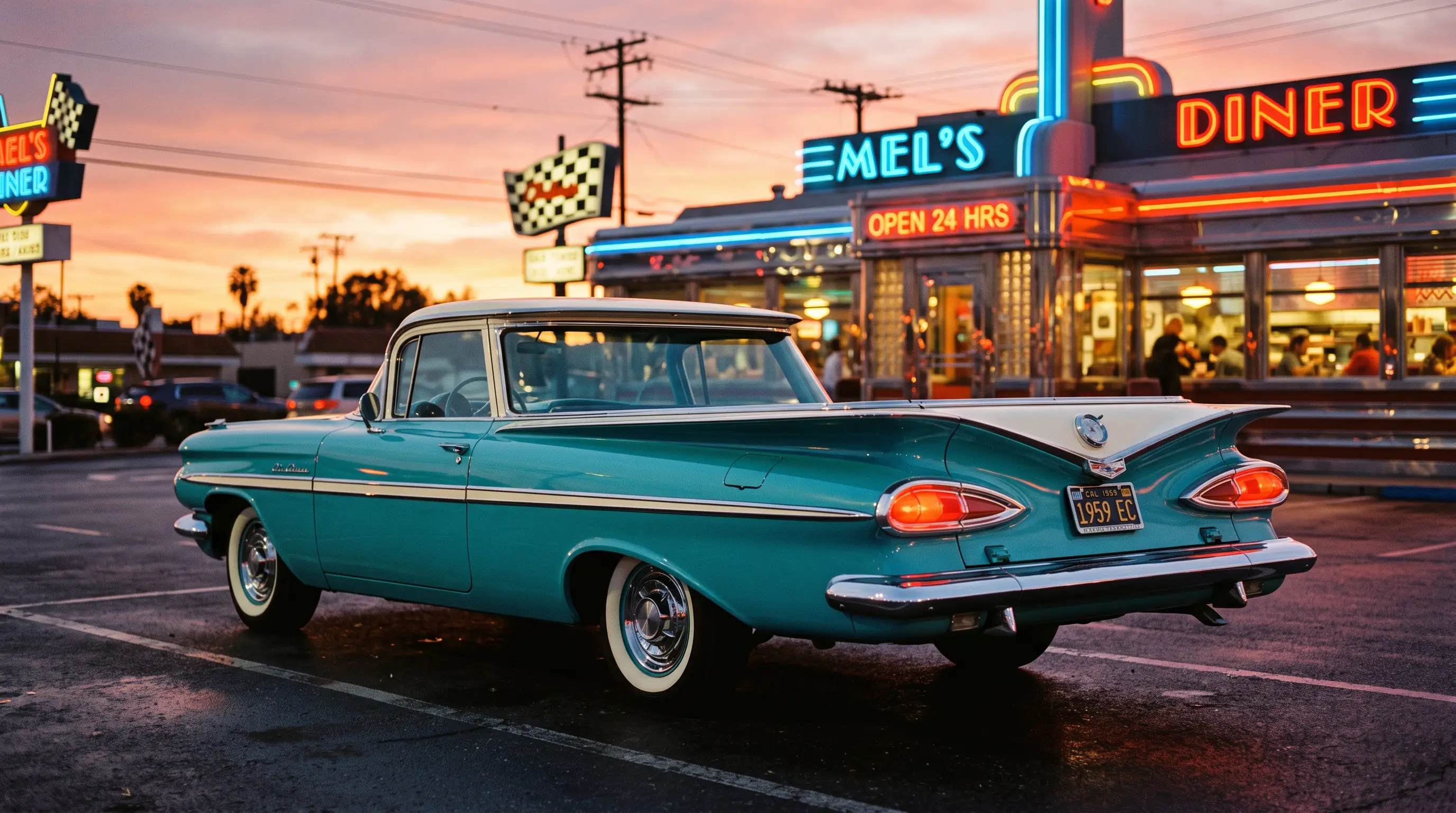
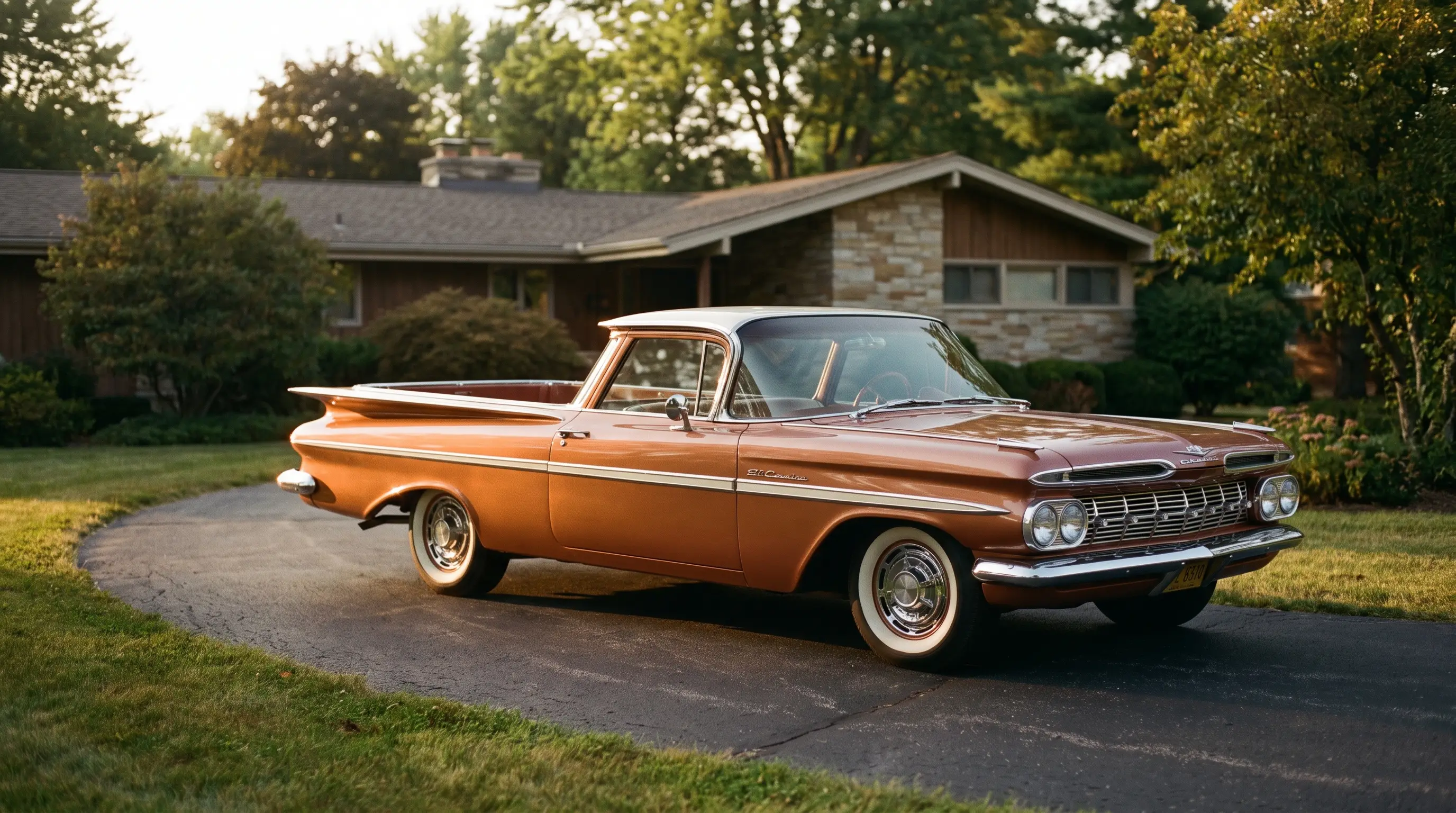
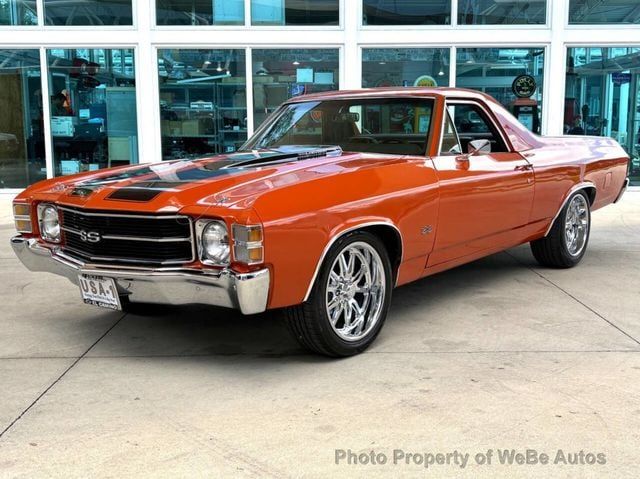
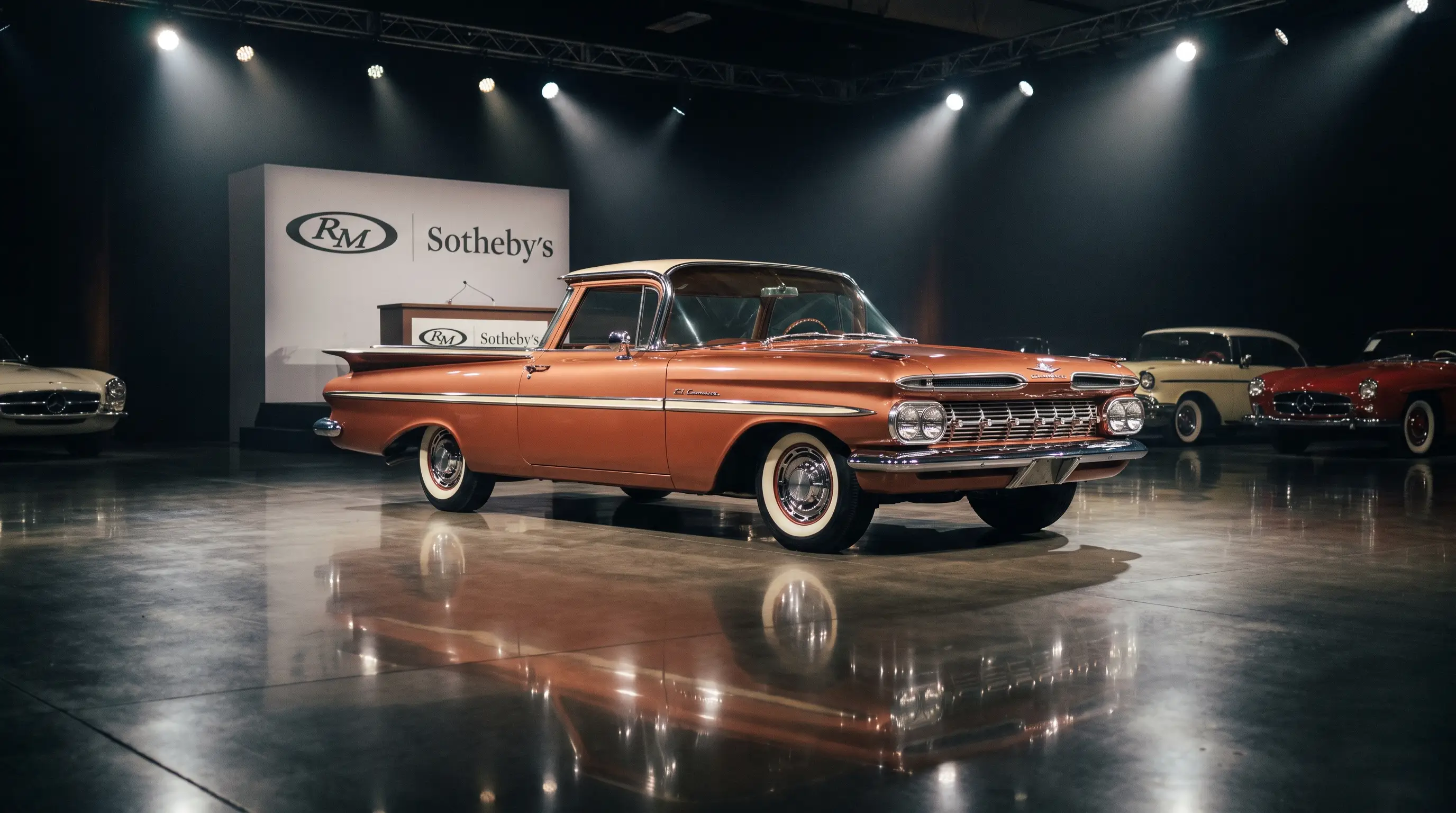
Collectors do not just pay for rarity, they pay for a car that looks like nothing else on the field, and the 1959 delivers that in spades. The batwing rear fender treatment, full-length chrome trim, and quad headlamp front end put it in a category distinct from both the tailfin era Cadillacs and Chryslers it competed against visually and the muscle-era El Caminos that followed it. That distinctiveness matters at auction and in private sale negotiations, because buyers competing for a genuinely unique silhouette behave differently than buyers choosing between a dozen similar-looking coupes. A car that stands out at a glance holds value more consistently across market cycles than one that blends into a crowd of similar-era Chevrolets.
Condition and documentation drive the real spread
Here is where I have to be blunt with clients. Scarcity and design set the ceiling, but condition and paperwork set where an actual car lands under that ceiling, and the spread between a rough survivor and a documented, correctly restored example is wide. A car with a clear ownership history, original build sheet or dealer documentation where available, and photographic evidence of its restoration commands a real premium over an equally rare car with no paper trail at all. I have seen buyers walk away from mechanically superior cars simply because the seller could not answer basic provenance questions, and on a model this scarce, that caution is justified rather than excessive.
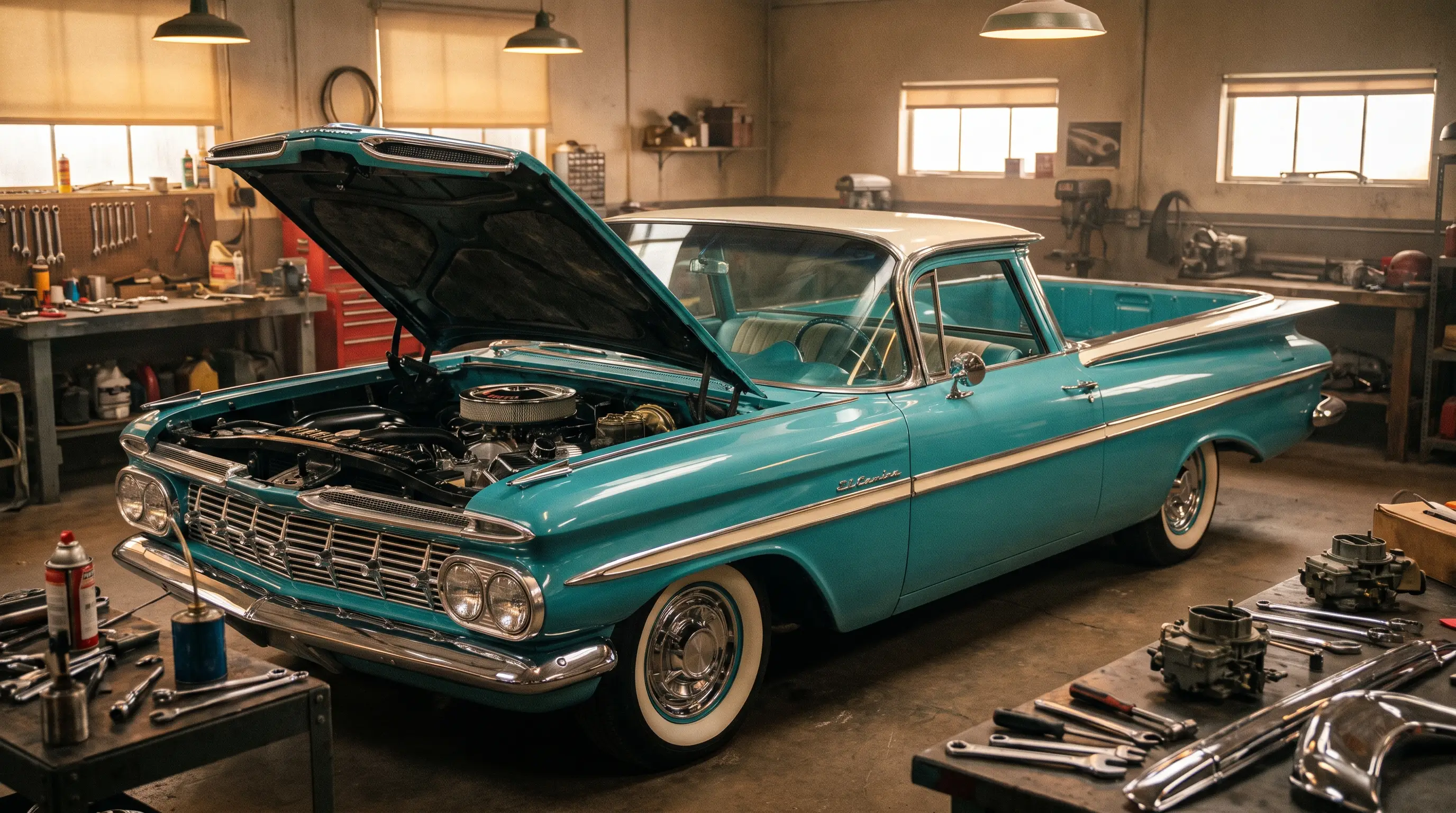
The spread widens further once you factor in how much labor and cost separates a driver-quality restoration from a concours-level one on this specific body style. Batwing fender panels, correct glass, and period-appropriate trim are all harder to source than parts for a more common Chevrolet, so a shop billing hours to chase down a single correct piece of brightwork adds real cost that a buyer eventually has to absorb somewhere. I tell clients to think of documentation less as a nice-to-have and more as a hedge against exactly that kind of expense, because a well-documented car lets a buyer verify what has already been sourced correctly rather than discovering gaps after the sale.
Liquidity is thinner than the hype suggests
One thing I always flag for clients considering this car as an investment rather than purely a passion purchase is liquidity. A genuinely scarce model does not automatically mean a fast or easy sale when the time comes. The buyer pool for a correctly documented 1959 El Camino is smaller and more specialized than the pool for a common muscle car from the 1960s or 1970s, which means finding the right buyer at the right price can take longer, even when the car itself is excellent. That is not a reason to avoid the model, but it is a reason to buy with eyes open and to understand that scarcity cuts both ways, protecting value on the way in while narrowing your exit options on the way out.
This is where I tell clients to separate emotional attachment from portfolio logic. If the goal is purely enjoyment and the car will be kept for decades, thin liquidity barely matters. If the goal includes eventually selling at a defined price target, a longer expected holding period needs to be built into the plan from the start rather than discovered under pressure. I have watched sellers accept a lower price than a car deserved simply because they needed liquidity faster than the specialized buyer pool for this model could reasonably supply it.
"Rarity alone does not make a car a good buy. What makes the 1959 El Camino a good buy is rarity backed by a design nobody else was doing and a documentation trail that lets you prove what you actually own. Take away any one of those three and the case gets a lot weaker."
- Marcus Feld
Reading the downside before you buy
Every collector car has a downside case, and mine for the 1959 El Camino centers on parts and body panel availability. Sourcing correct batwing-era trim, glass, and specific stampings is harder and slower than sourcing parts for more common Chevrolets from adjacent years, which means an unexpected repair can turn into a long search rather than a quick fix. Buyers should also read a related story on what a real restoration of this era actually involves before assuming a project car is a bargain. Anyone weighing a purchase seriously should look at what is actually changing hands right now among El Caminos for sale now before forming an opinion on where fair value sits for a specific example.
My bottom line for clients is straightforward. This is not a car I recommend for someone chasing a quick flip or a fast, easy exit. It is a car I recommend for a buyer who understands that a genuinely scarce, distinctively styled vehicle rewards patience, careful documentation, and a willingness to hold through a market cycle or two. Buy the best documented example the budget allows, verify the paperwork before the paint, and treat the thin liquidity as the price of owning something the next buyer cannot simply replace by shopping around.