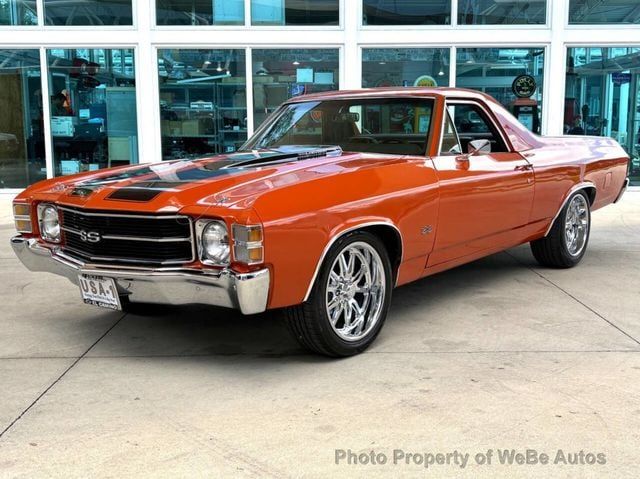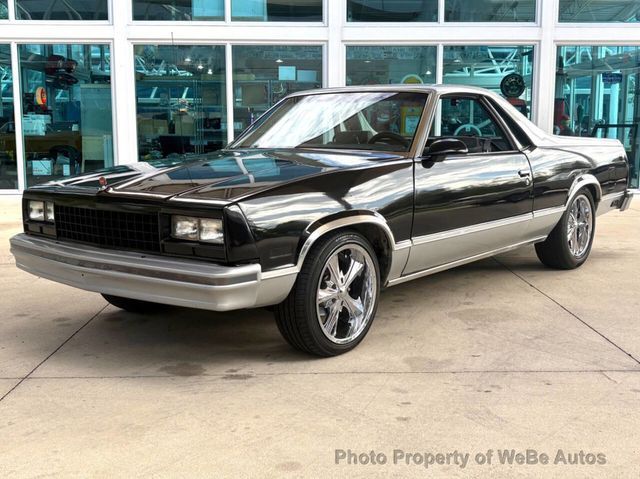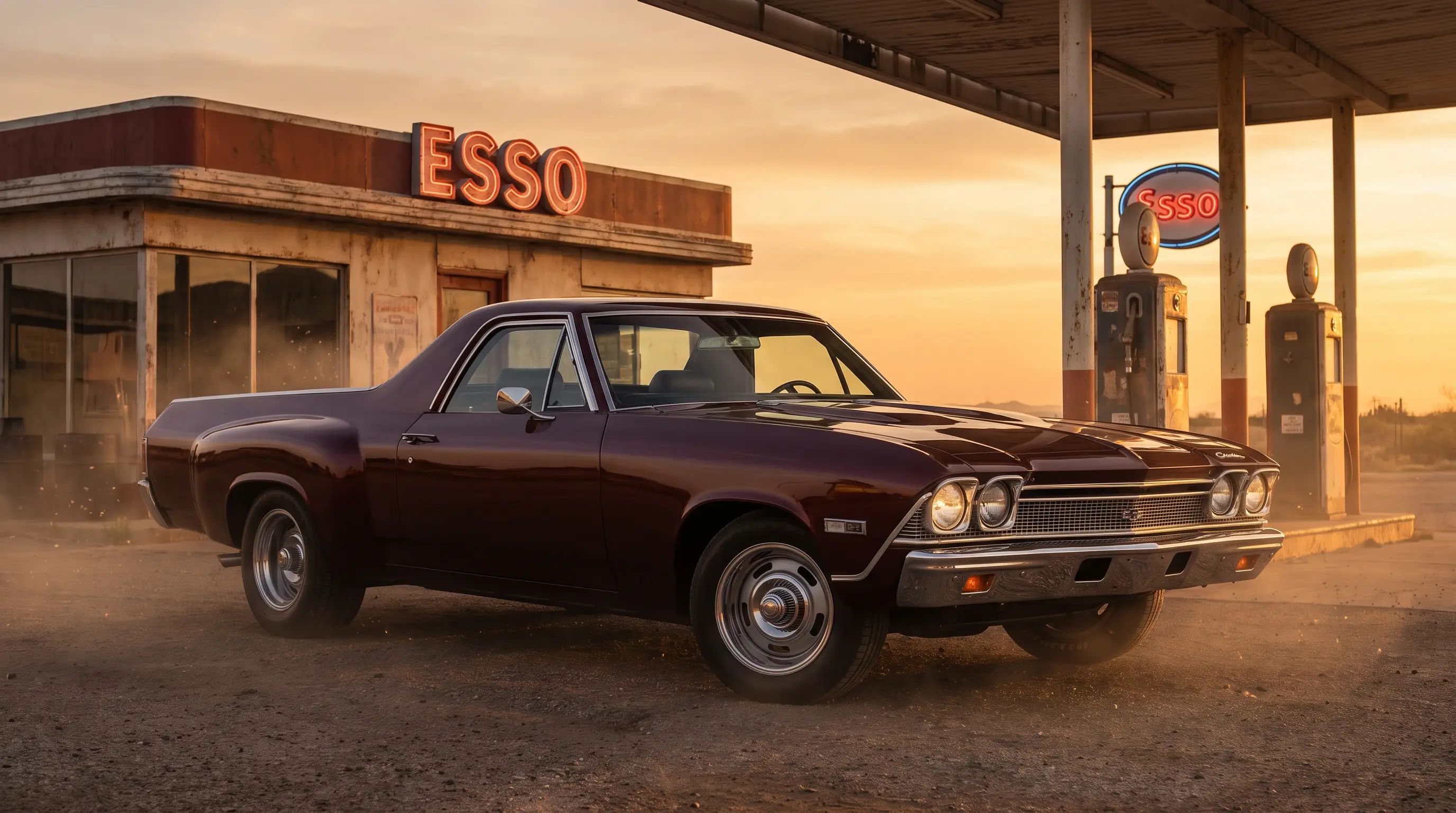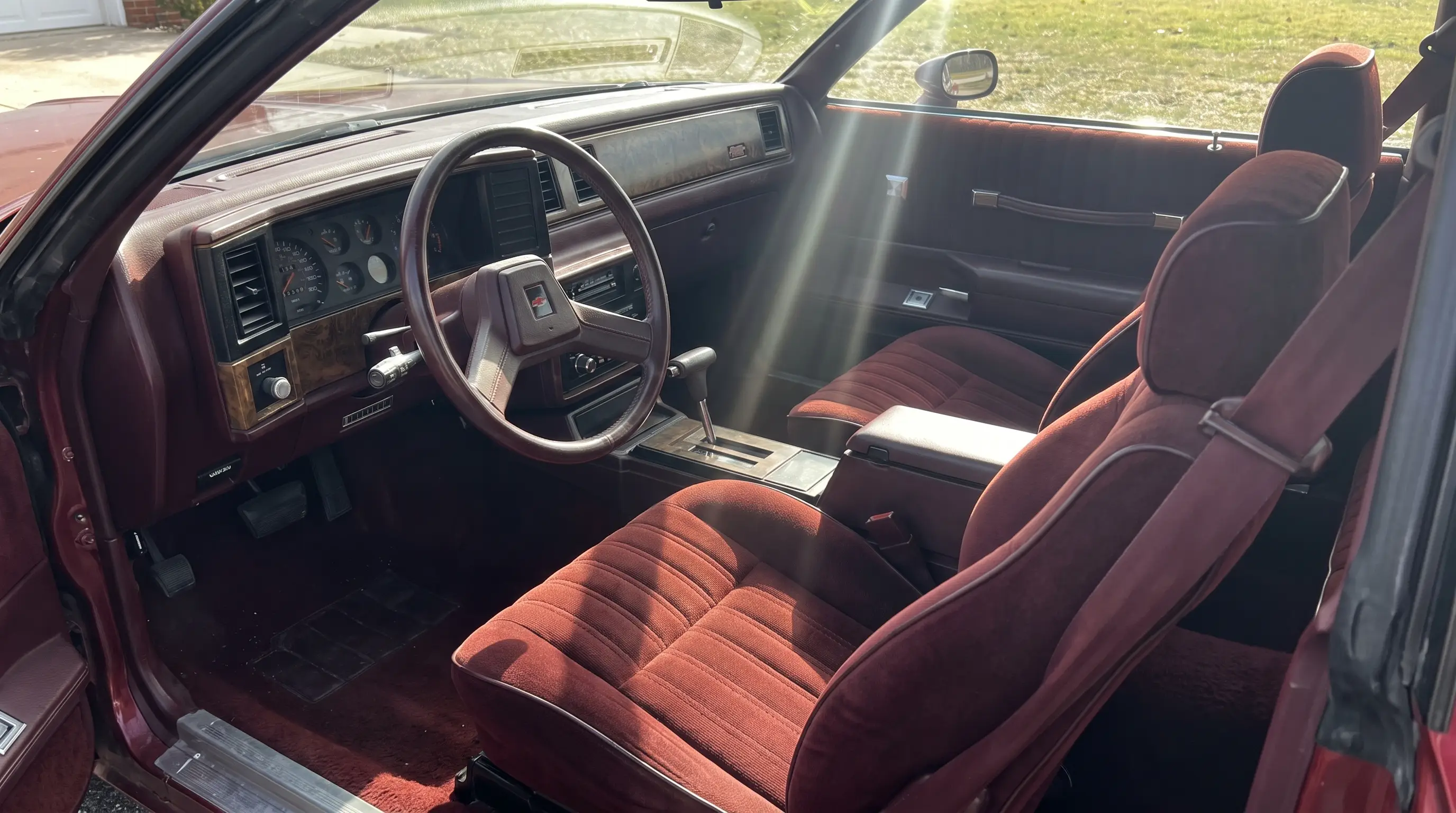
Ask a room full of car people to name a movie moment starring a 1959 El Camino and watch the silence stretch out. That silence is itself the story. The 1959 El Camino never became a Hollywood fixture the way the Chevelle-based SS models later did, and understanding why says as much about how pop culture picks its icons as it does about the car itself.
A car built for the driveway, not the marquee
Part of the reason the 1959 El Camino stayed out of the spotlight comes down to timing and image. It arrived as a practical answer to Ford's Ranchero, a car-based hauler aimed at buyers who wanted a wagon's utility with a coupe's looks, not at buyers chasing performance or outlaw cool. Filmmakers casting a car for a scene tend to reach for something that already carries a cultural shorthand, a muscle car for a rebel, a convertible for a summer romance, a wood-paneled wagon for domestic normalcy. The 1959 El Camino did not fit neatly into any of those boxes in 1959, and it fits even less neatly into them decades later, so it rarely got the call when a production needed a period Chevrolet with instant recognition.
For the fuller account of how the model got built and sold in the first place, our complete history covers the production side of the story in more depth.
Where the car actually shows up
The 1959 El Camino's real screen presence lives less in feature films and more in the photographic record of its own era, which is arguably a more honest window into how it was actually used and perceived. Period Chevrolet print advertising leaned hard into the same Space Age imagery that shaped the car's batwing styling, photographing the El Camino against rocket-adjacent backdrops and clean modern architecture to sell the idea of a car-truck that belonged in a forward-looking American driveway. Regional newspaper photography and small-town dealership promotional shots from 1959 and 1960 make up a large share of the surviving visual record, and those images tend to show the car exactly as it was sold, doing farm work, hauling a load, parked outside a hardware store, rather than staged for glamour.
Compare that to the Ranchero's slightly longer and more visible presence in commercial photography of the same period, and a pattern emerges. Ford had already established the car-truck concept two years earlier and had more time to build a photographic archive around it before Chevrolet's answer even launched. The El Camino spent its first two years playing catch-up in a category it did not invent, and that competitive position shaped how much promotional energy Chevrolet put behind documenting it visually compared to flagship models like the Impala, which got the lion's share of the company's photography budget and dealer showroom attention in 1959.
The vintage car show circuit as its own stage
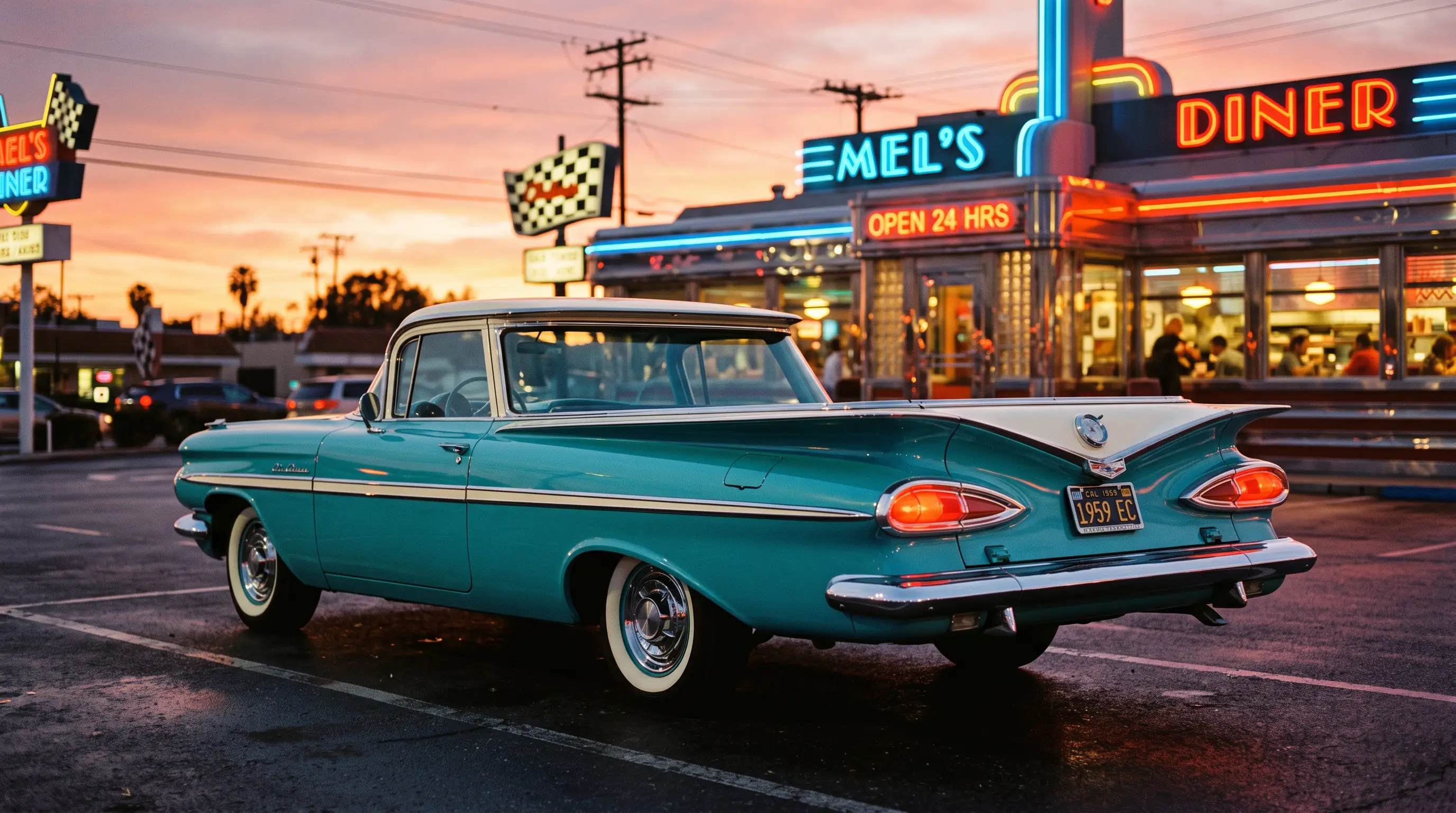
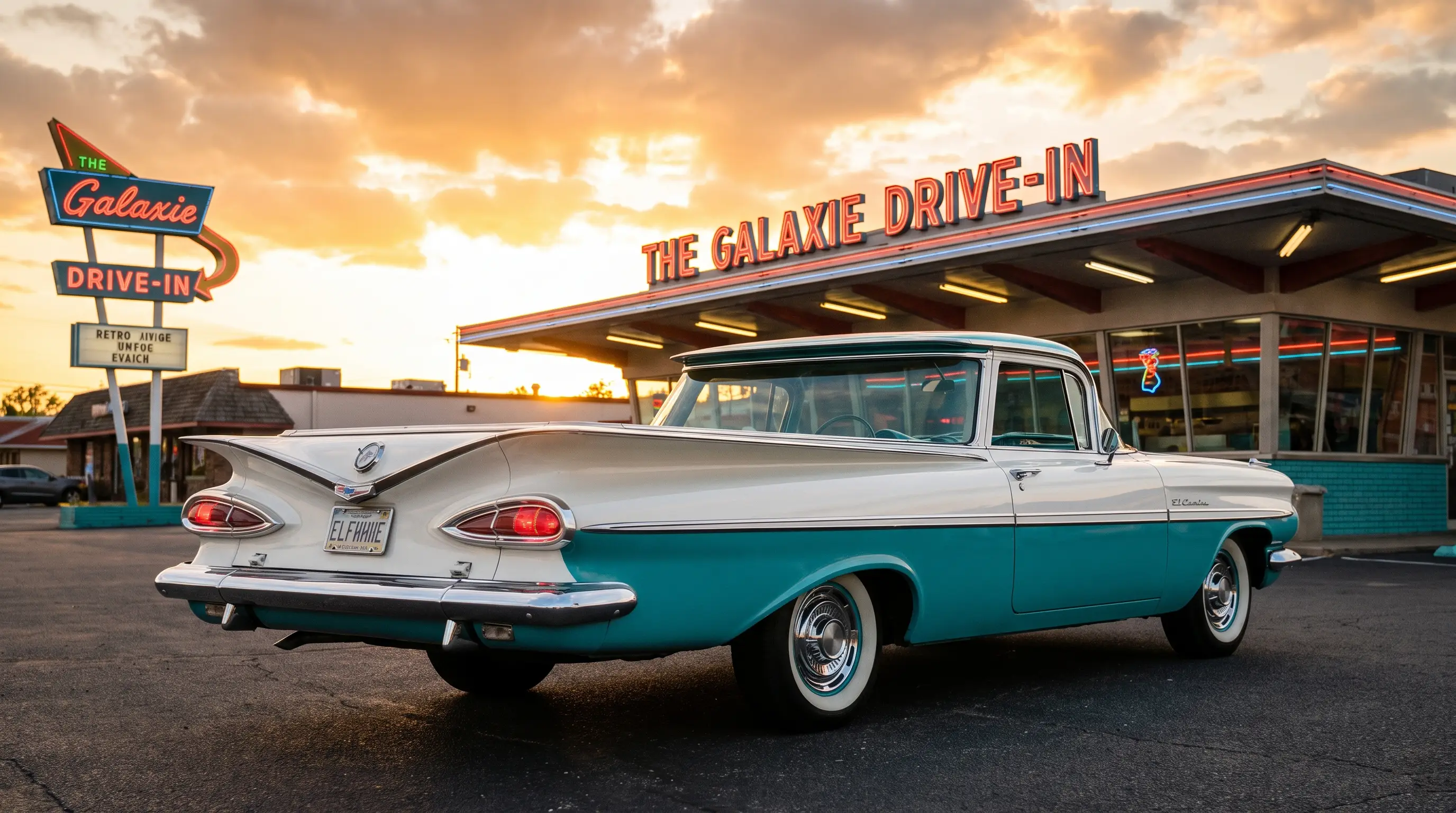
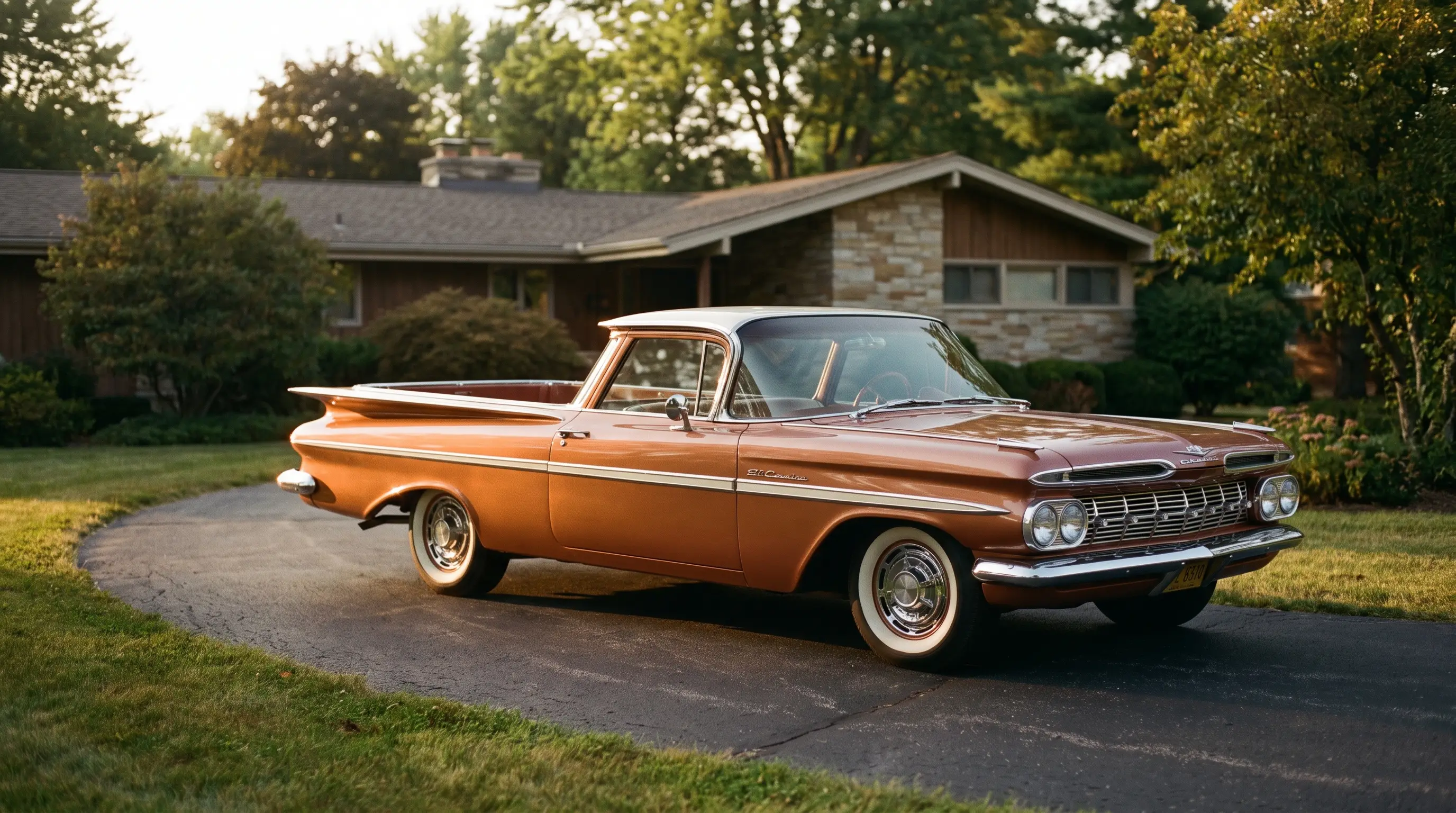
Where the 1959 El Camino does get real camera time today is on the modern car show and cruise night circuit, and that visibility has grown steadily as the car's rarity has become better known within the hobby. Photographers who specialize in shooting classic Americana gravitate toward the 1959 specifically because the batwing fenders photograph so distinctively next to more common tailfin designs from Cadillac or Chrysler, and a well-preserved or correctly restored example draws a crowd at any show it attends. Social media and enthusiast photography blogs have done more for the car's modern visual profile in the last fifteen years than any single film or television placement ever did, turning owners and photographers into the de facto documentarians of the model.
I have watched this play out firsthand at regional shows, where a 1959 sitting next to a row of common two-door hardtops pulls people over almost every time, simply because most attendees have never seen the batwing shape up close. That reaction, repeated show after show and shared across enthusiast photography accounts, has quietly built the car a reputation as a sleeper design classic among people who actually study the hobby, even without a single memorable line of movie dialogue attached to it. In a strange way, that grassroots visual reputation carries more credibility with serious collectors than a studio placement would, because it comes from people who genuinely know what they are looking at rather than a prop coordinator working off a budget and a shooting schedule.
Why the scarcity of screen time is not a knock against the car
It would be easy to read a thin filmography as a sign the 1959 El Camino was somehow a lesser or less interesting car, and that would be the wrong conclusion. Plenty of genuinely significant vehicles in automotive history never landed a memorable screen role simply because the story departments of film and television are not in the business of automotive preservation, they are in the business of quick visual shorthand. The 1959's absence from the marquee actually tracks with what makes it compelling to collectors now, a car that was bought and used on its own merits rather than chasing a cultural image, and one whose reputation has been built almost entirely by the people who actually owned, restored, and photographed it rather than by a studio prop department.
"I have covered car culture long enough to know that screen time and significance are not the same thing. The cars that end up meaning the most to real collectors are usually the ones nobody bothered to cast in a movie."
- Patrick Walsh
Documenting the car properly today
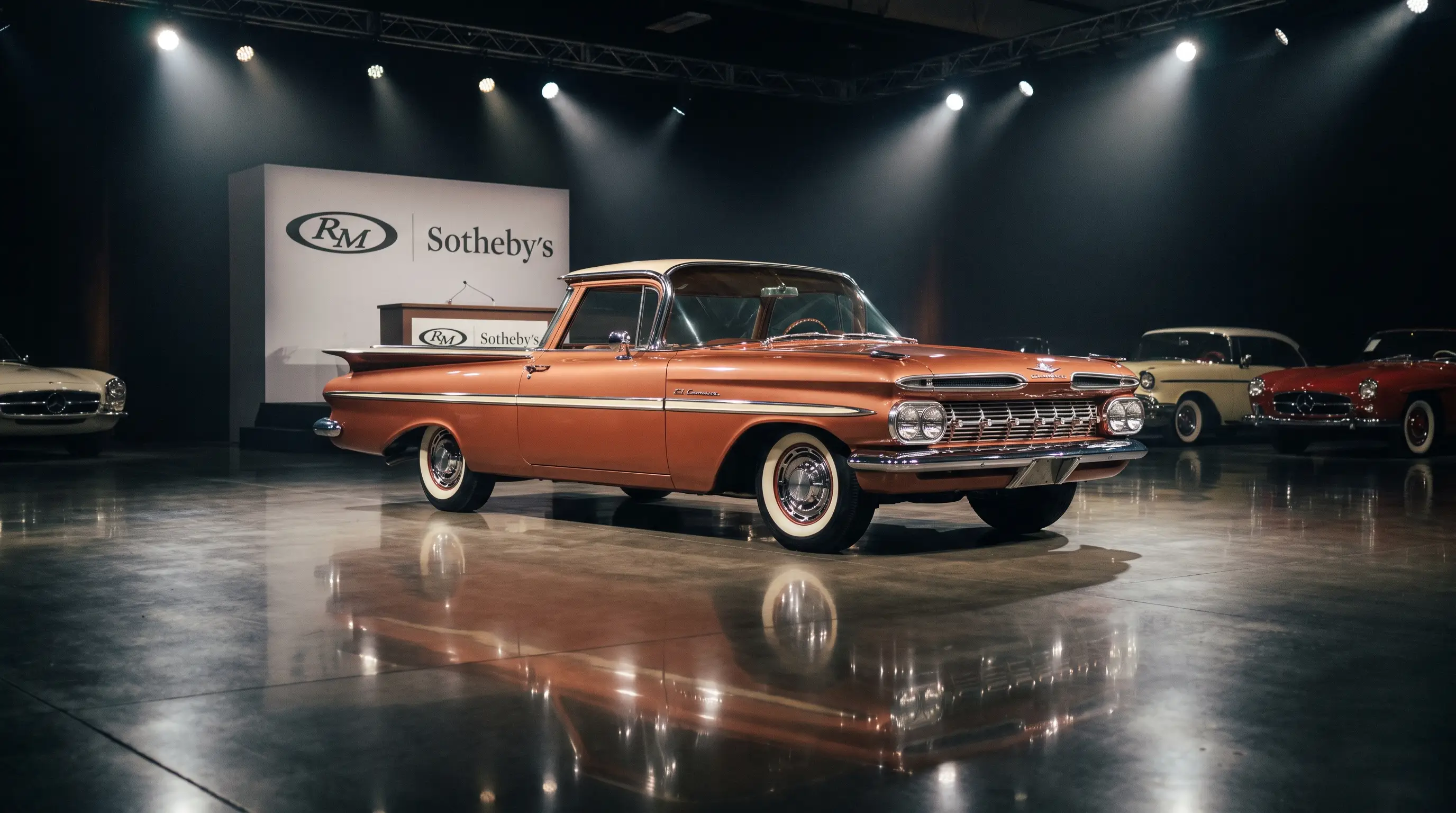
For anyone chasing a 1959 El Camino now, the photographic record still matters, just not the Hollywood kind. Period factory photography, original dealer brochures, and honest before-and-after restoration photos carry real weight with buyers who care about authenticity, arguably more weight than a fictional movie cameo ever could. A car with a documented photographic history, from its working days through to a modern restoration, tells a more convincing story to a serious collector than any prop credit would. If you want to see how that story continues today, browse classic El Camino listings and notice how often sellers lean on original photographs rather than any pop culture connection to make their case.
None of that photographic effort requires a Hollywood credit to matter. A clear, honest set of images spanning decades of a single car's life, farm work in the 1960s, a fading garage-kept decade in the 1980s, a careful restoration in more recent years, tells buyers something a fictional cameo never could. That kind of visual biography is exactly what serious collectors look for now, and it is a record the 1959 El Camino has quietly built for itself without ever needing a marquee moment to earn it.