Strip the paint off a 1959 El Camino and you still find the shape underneath talking. This is a car that came out of the same GM Styling section that gave America tailfins as tall as a toddler, and every panel on it was drawn to look like it was still moving after the engine shut off. I have laid hands on original sheet metal from this car and there is nothing accidental about a single crease in it.
The batwing that started arguments
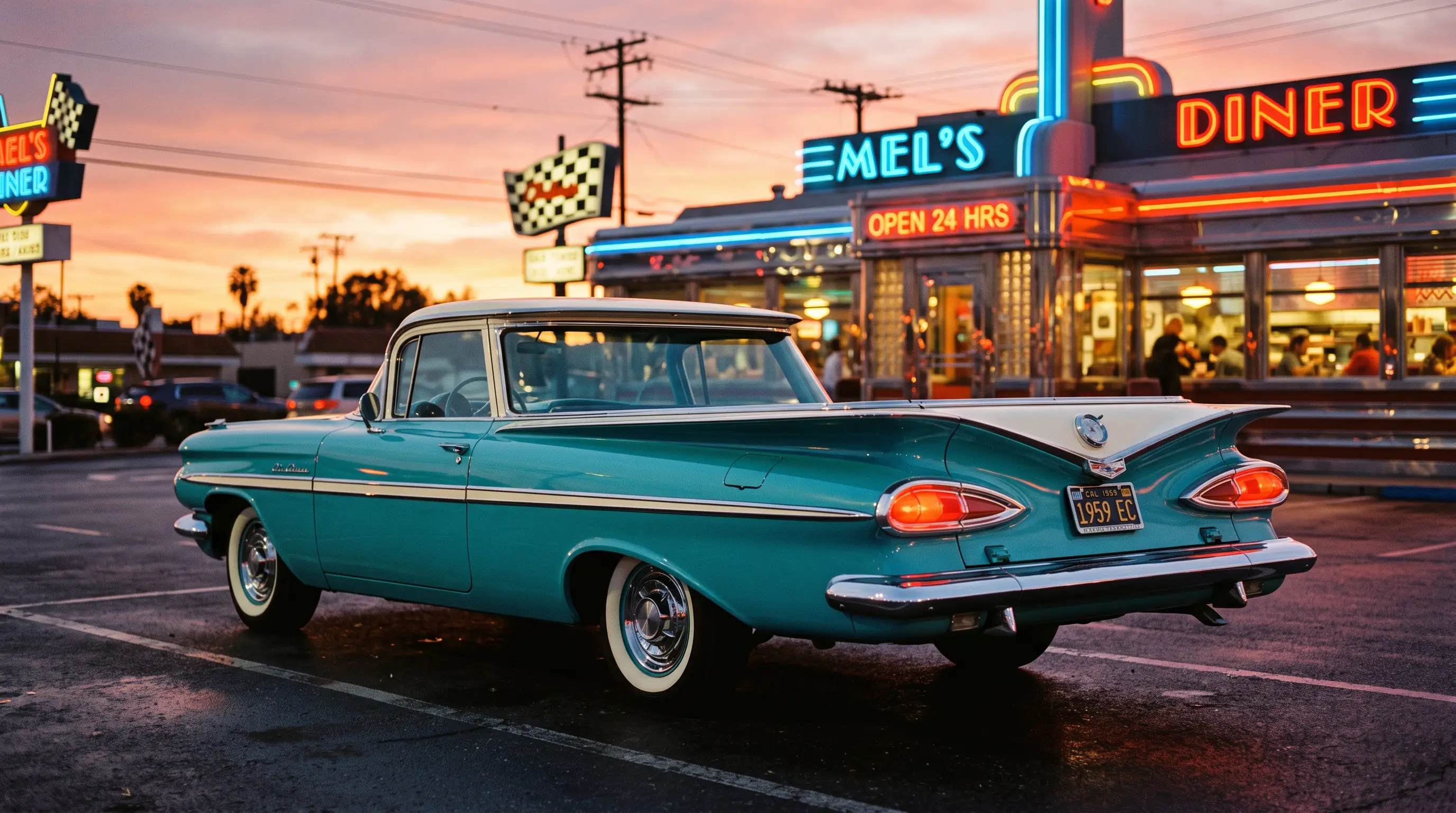
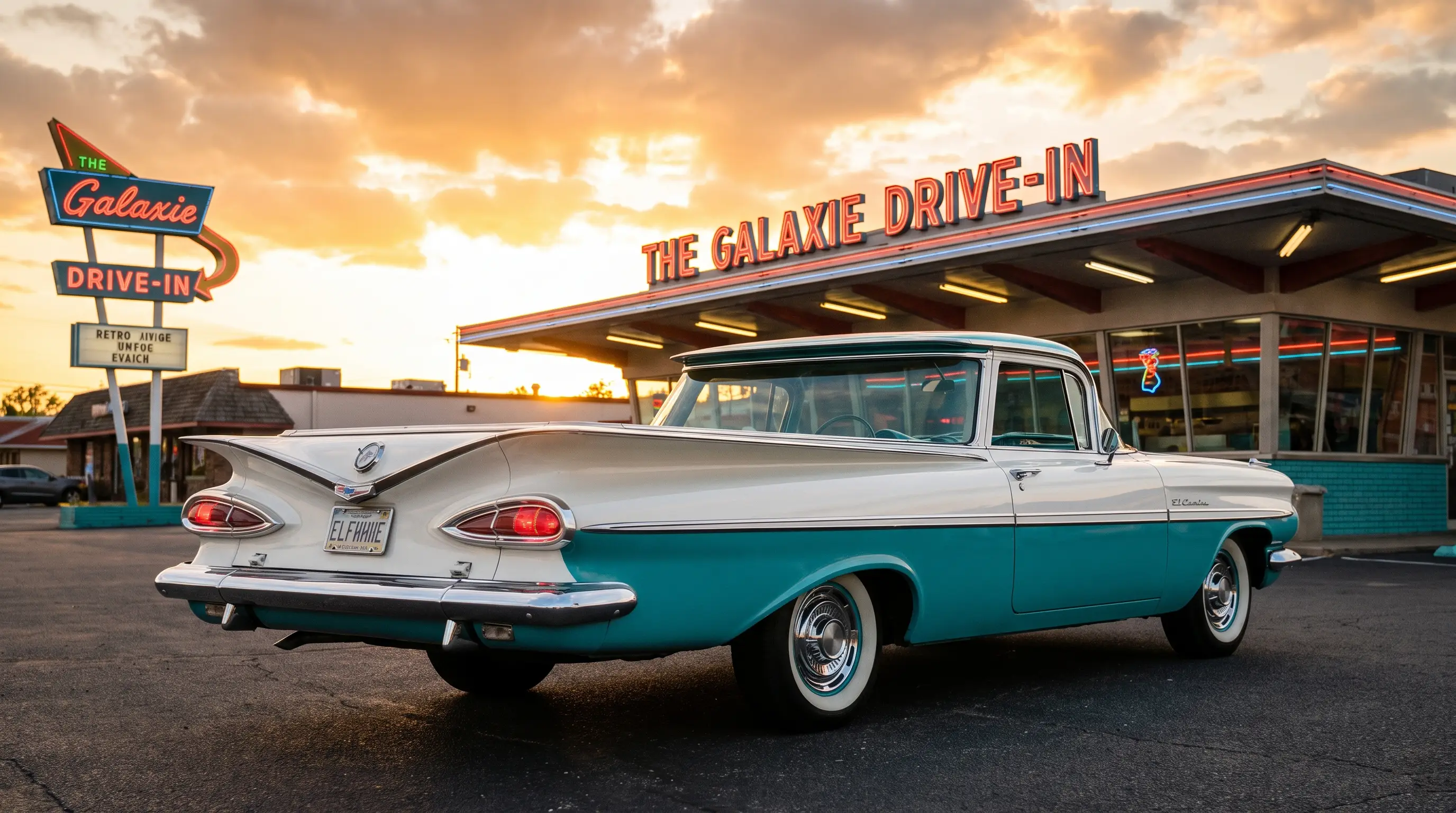
The signature move on the 1959 full-size Chevrolet, and by extension the El Camino built on that same body, is the rear fender treatment everybody in the hobby just calls the batwing. Instead of a conventional fin standing up off the quarter panel, the 1959 car flares its rear fenders out horizontally into a wide, cat's-eye shape with the taillight mounted low and centered in the sweep. It reads completely different from the 1957 and 1958 Chevrolets that came before it, and it reads nothing like the vertical fins Chrysler and Cadillac were still chasing that same model year. Some guys in the club love it, some think it looks like a Chevy trying too hard to be a Cadillac Eldorado, and honestly both of those reactions tell you it did its job. A design that gets debated sixty-five years later did not fade into the background.
You can read the full story of how the model itself came together if you want the production history to go with the sheet metal history.
Chrome as a load-bearing design element
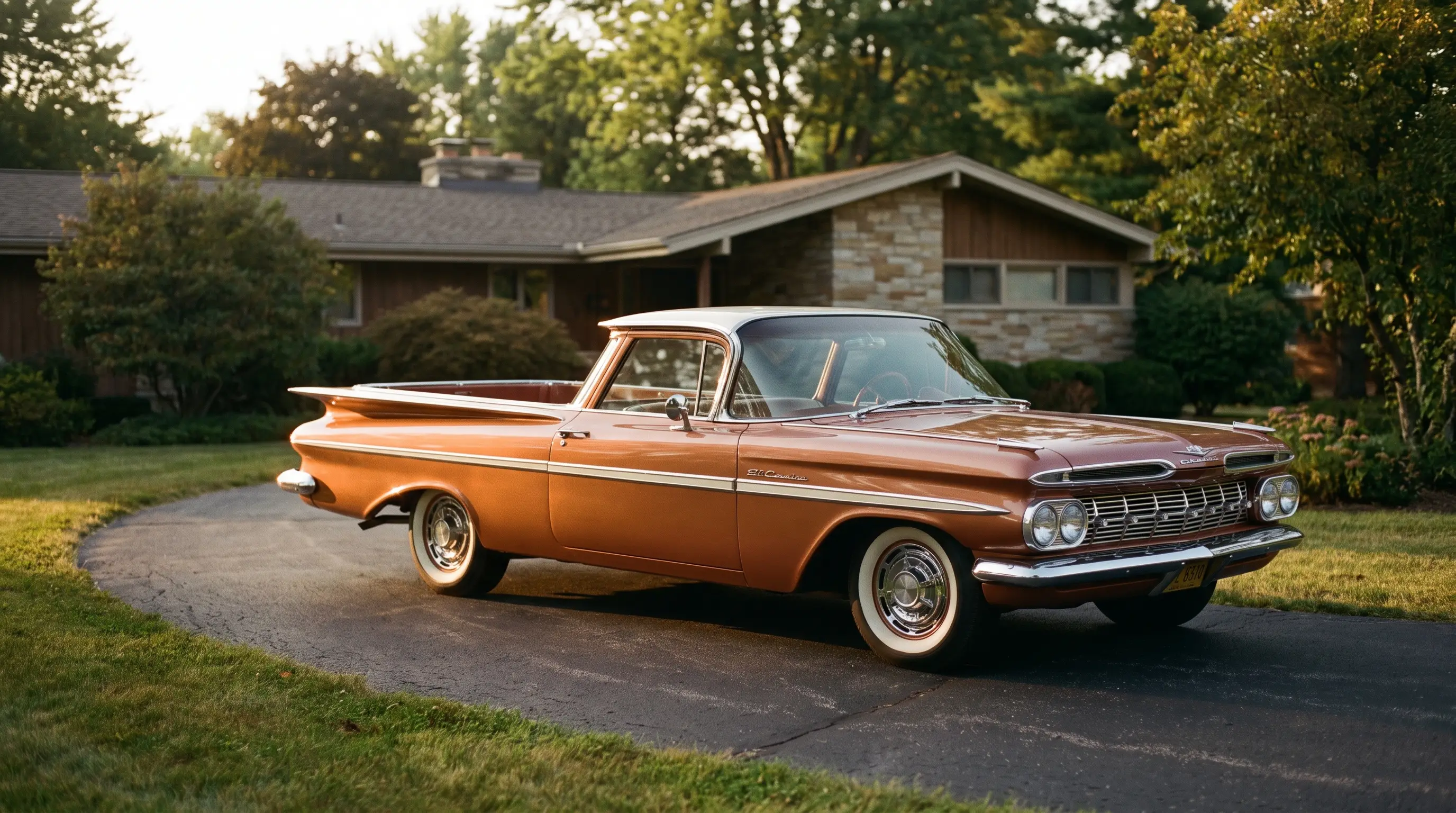
Nineteen fifty-nine was peak chrome for Detroit, and the El Camino did not hold back. The front end carries a wide grille with a full-width chrome bar, quad headlamps sitting in chrome bezels, and a hood ornament that would get you a lawsuit today. Side trim runs the full length of the car in a long spear that helps visually stretch an already long body, and the rear bumper wraps into those batwing fenders instead of sitting as a separate afterthought. None of that trim was cheap to produce and none of it was subtle, and that is the point. GM Styling under Bill Mitchell was building cars meant to look like jet fighters and rocket ships parked at a dealership, chasing the same Space Age imagery that had America's imagination in the late 1950s, and a work vehicle like the El Camino got the full treatment instead of a stripped-down commercial trim package.
Reading the details like a body man
What I notice working on these cars in the shop is how much the panel gaps and trim lines were designed to be seen from an angle, not straight on. Walk around the front quarter of a 1959 El Camino and the hood, fender, and headlamp bezel line up into one continuous sweep that only fully makes sense in three-quarter view, the same trick GM used on its show cars of the period. The deck lid and tailgate area, which on a lesser design would just be a flat panel to close up the bed, instead pick up the batwing shape and carry it across the back of the car so the whole rear end reads as one composition instead of a wagon rear end bolted onto a car front end. That is not accidental sheet metal stamping. That is a styling department that understood the El Camino needed to look like a genuine Chevrolet, not a truck wearing a car's face.
Color and trim as period costume
Factory color combinations from 1959 lean hard into the same optimism as the shape itself. Two-tone paint schemes were common and often split the car horizontally along that side trim spear, putting a bright color like Cameo Coral, Aztec Copper, or Frost Green above the trim and a contrasting shade below it, or vice versa. Interior trim followed the same instinct, with patterned cloth and vinyl combinations that would look loud on almost anything built today but read as completely normal for a Chevrolet showroom in 1959. None of this was arbitrary. The paint and trim catalog was built to match the shape of the car, bright and confident, because a subdued color scheme on a body this dramatic would have looked like a mismatch.
"You can tell a period-correct 1959 from a poseur job in about ten seconds just by looking at how the trim lines flow into the batwing. Guys who do not understand the design end up fighting the shape instead of following it, and it shows the second you step back from the car."
- Jim Vasquez
Why this design still matters to the market
Design is a big part of why the 1959 holds a different kind of appeal than the Chevelle-based El Caminos that came later. Those later cars, especially the SS versions, sell on performance and muscle car credentials. The 1959 sells on being a rolling piece of Space Age optimism that happens to also have a bed. That distinction matters if you are looking at buying one, because a rough original with intact trim and glass is worth chasing even if the drivetrain is tired, since the styling is the whole reason the car exists in the collector world at all. If you want to see what that design commands on today's market, take a look at classic El Camino for sale listings and pay attention to how much of the asking price is really about the shape of the sheet metal rather than the engine bay.
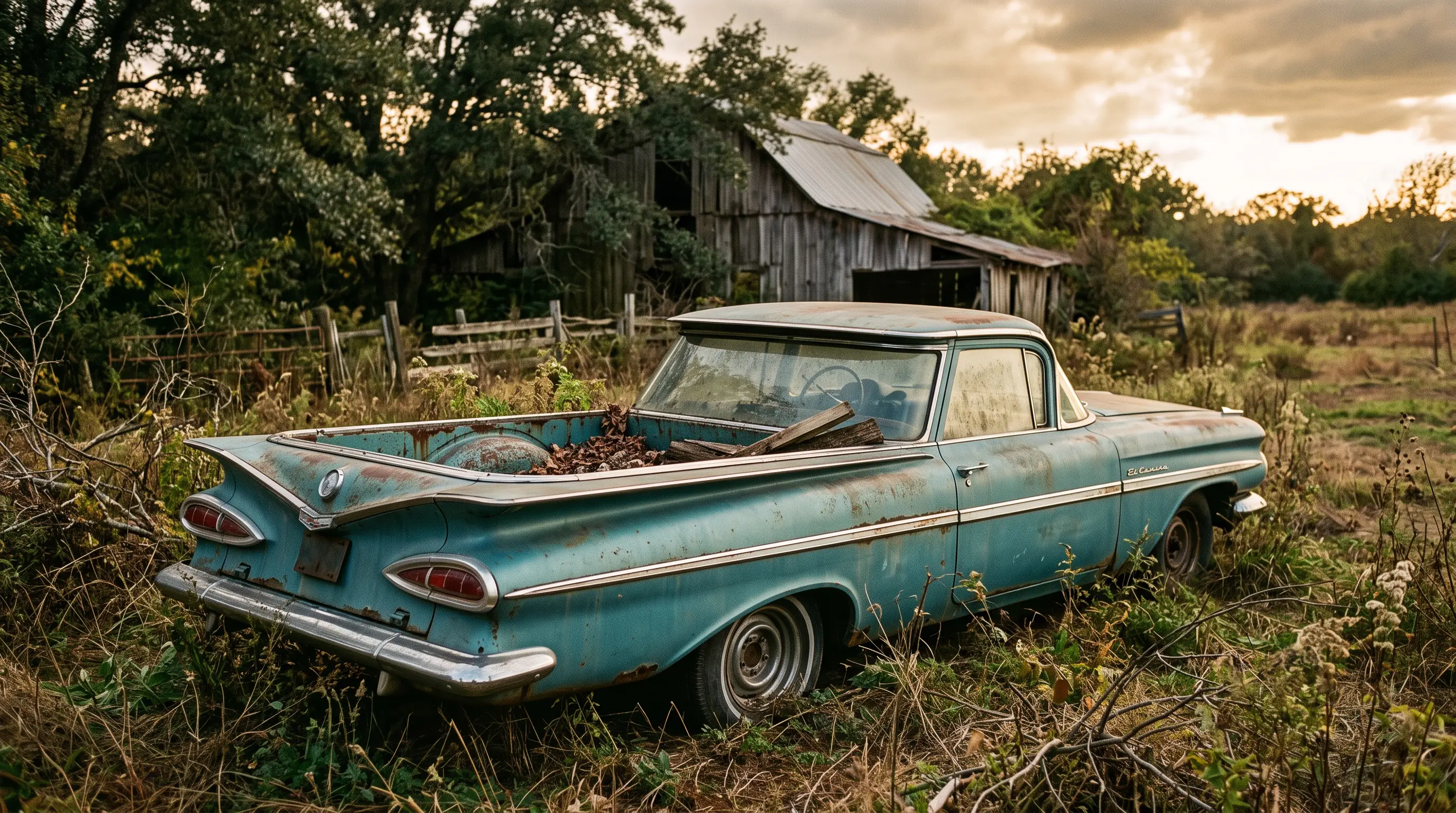
What separates a genuinely correct restoration from a decent-looking driver, in my shop anyway, comes down to whether the person doing the work respected the original design intent or just tried to make the panels straight and shiny. Reproduction trim exists for most of the common pieces now, but fitment on a batwing rear fender is unforgiving, and a trim spear installed a quarter inch off the factory line throws off the whole visual sweep the stylists worked hard to create. Original glass shape, the depth of the grille bar's chrome, and the stance of the car all play into whether it reads as a 1959 should or as a generic old Chevy with the right badges on it. Buyers who cannot tell the difference at a glance are exactly the buyers who end up overpaying for a car that looks close but is not actually correct.
Sources and notes
- The Fabulous '59s: Inside Chevy Styling's Wildest Year, Mac's Motor City Garage
- Chevrolet El Camino, Wikipedia
- Curbside Classic, 1959 Chevrolet Impala
- Late to the party, Chevy went wild on fins in '59, Times Colonist
- 1959 Chevrolet El Camino, Hagerty Valuation Tools
- Introduction to 1959-1960 Chevrolet El Camino, HowStuffWorks