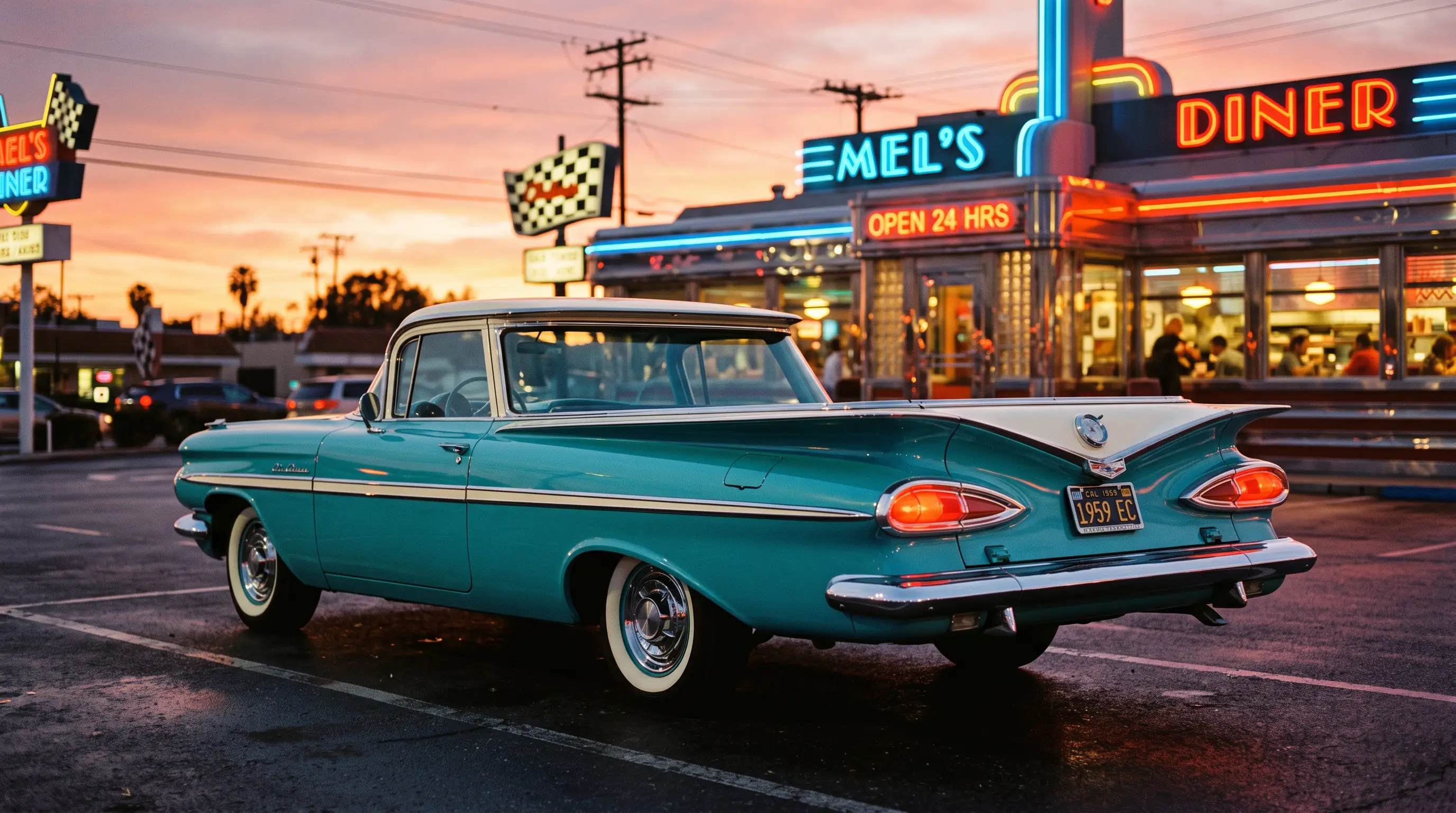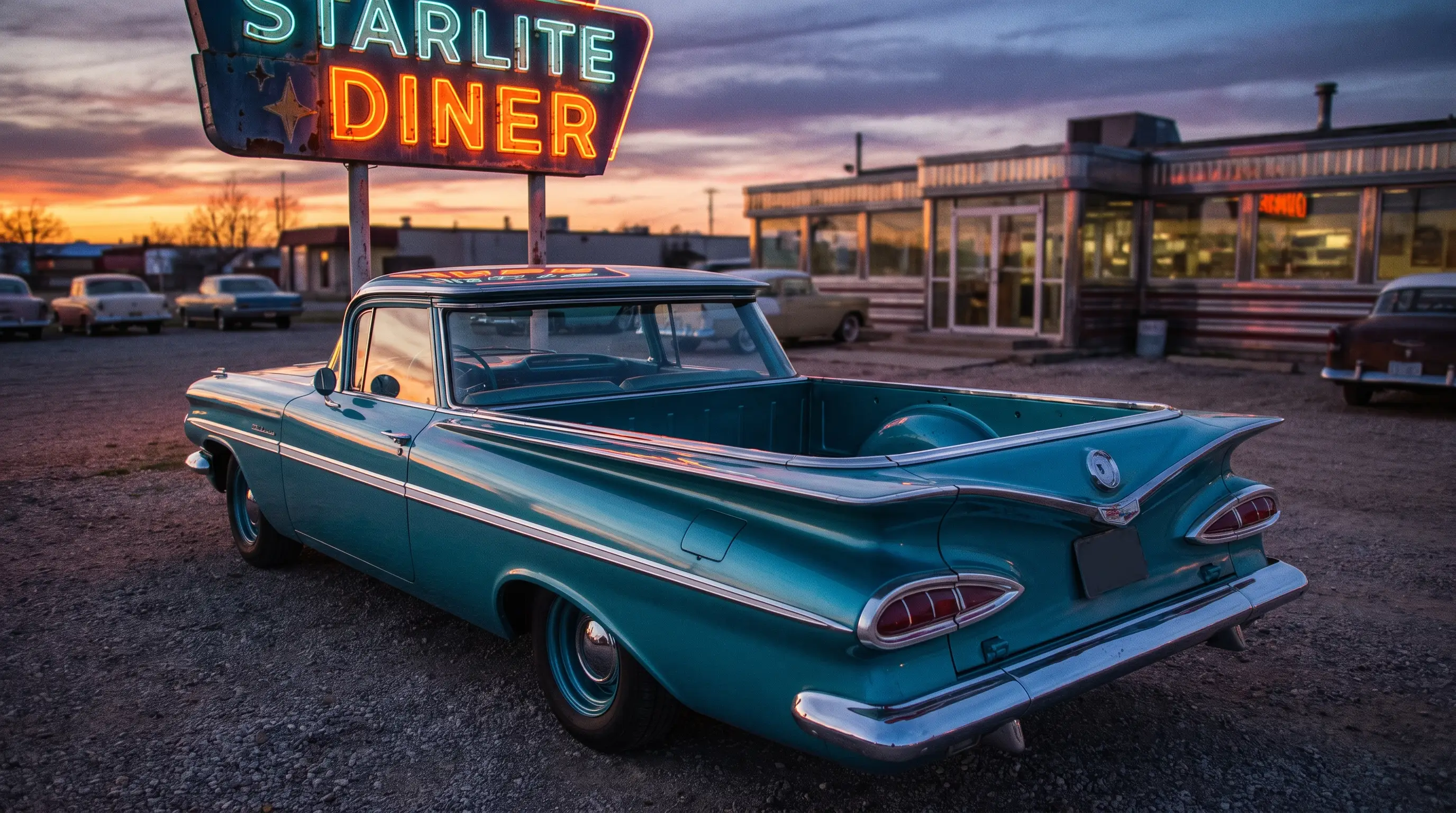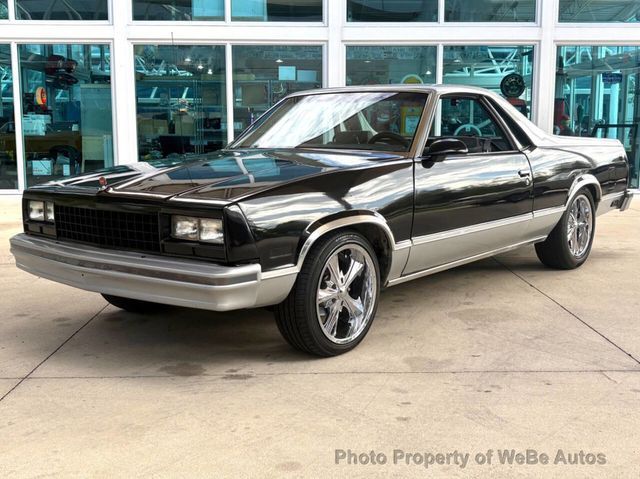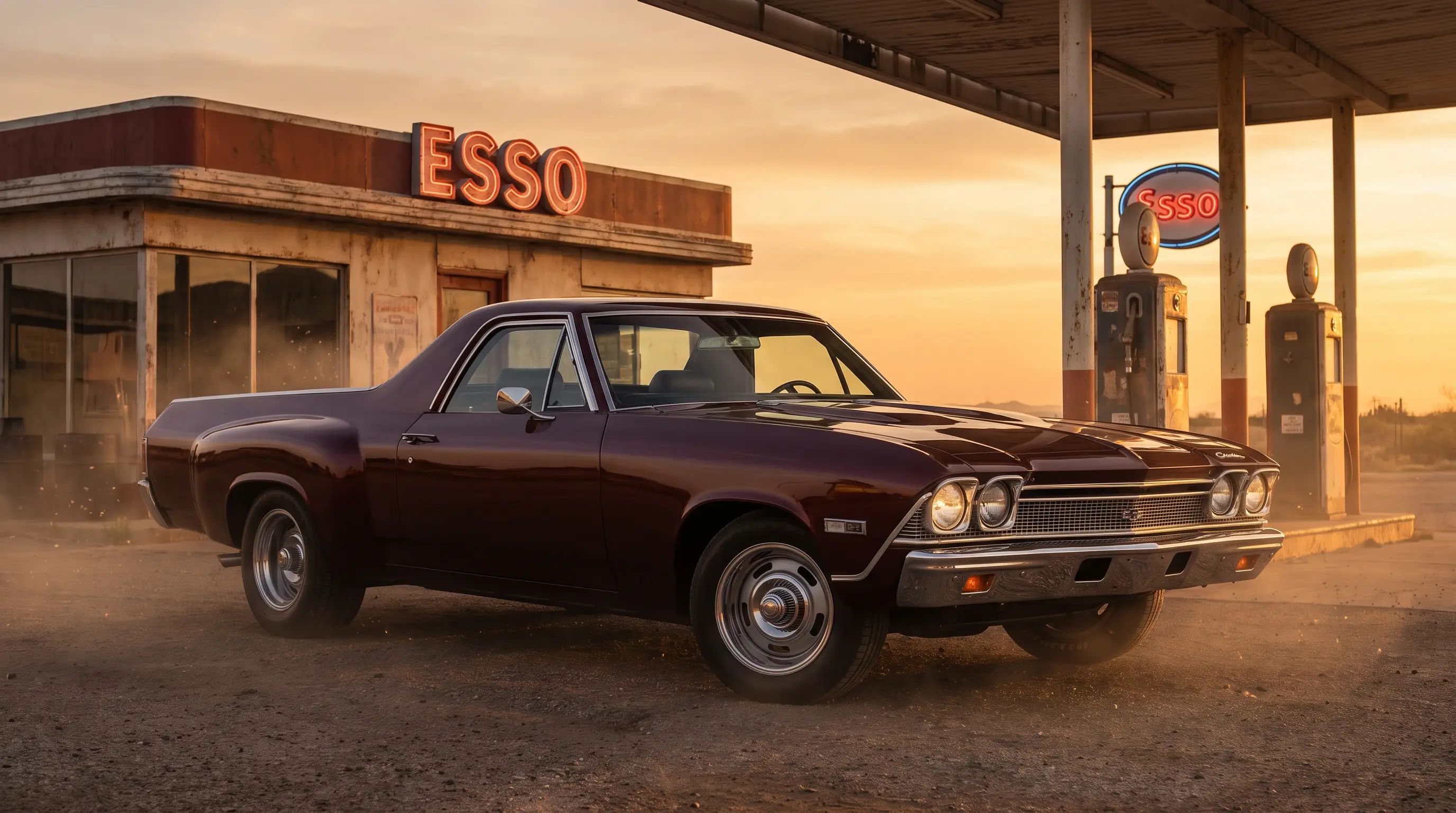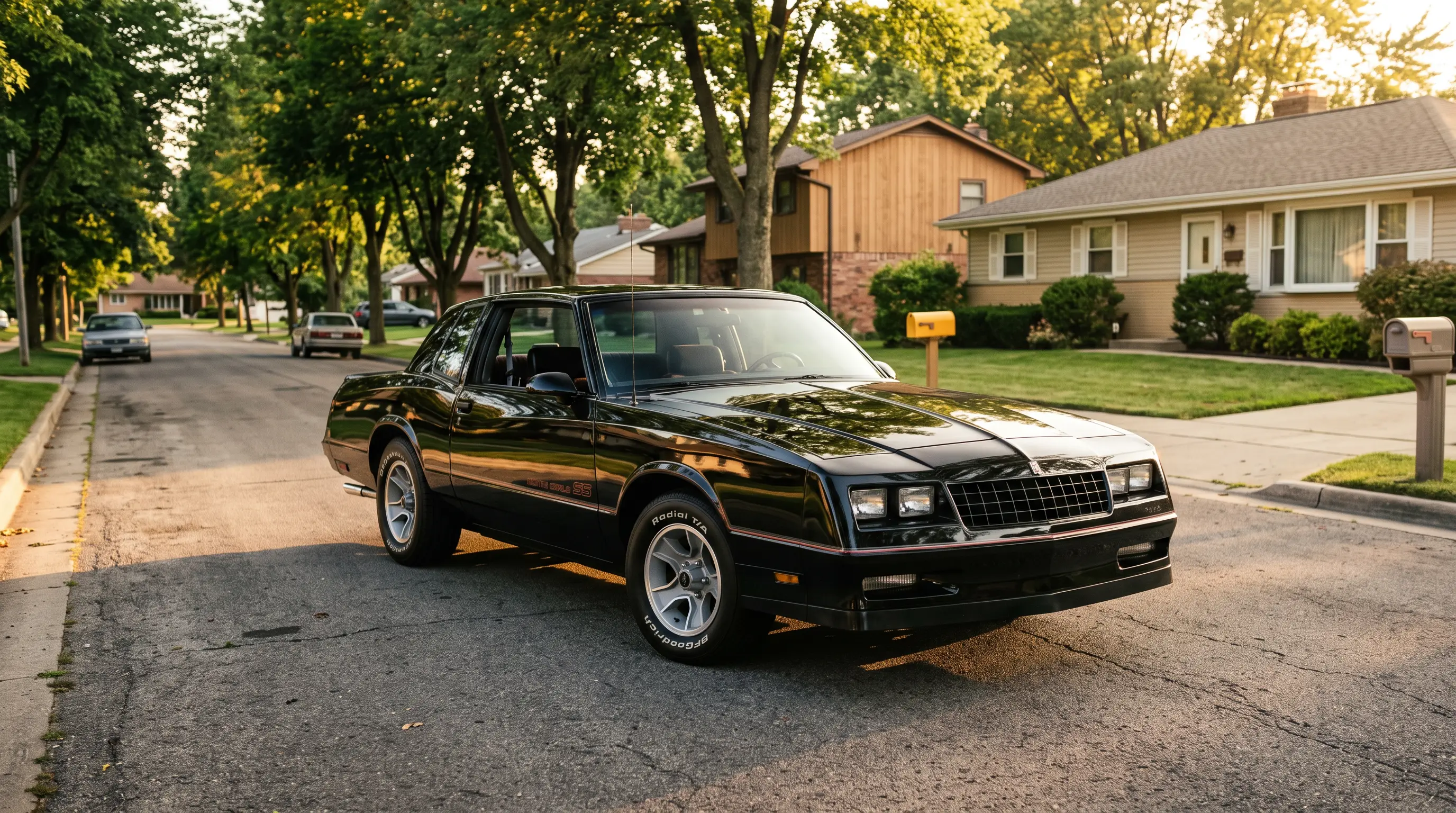

Park a 1959 El Camino next to a 1960 and, at first glance, someone unfamiliar with the model might not clock the difference. Look at the rear quarter panel for more than a few seconds, though, and the story splits in two. One year is a shout. The other is a considered reply. Both wear the El Camino name, share the same chassis and drivetrain choices, and were built barely twelve months apart, yet they read as two different eras of American design compressed into one short production run.
The fins tell the whole story by themselves
The 1959 car's rear fenders sweep outward into wide, flat, wing-like fins, nearly horizontal to the ground, with the taillights sunk into the trailing edge like something borrowed from an aircraft. It is an unapologetically theatrical shape, one that General Motors applied across its entire full-size Chevrolet lineup that year but which reads even bolder on the El Camino, since the cargo bed behind the cab leaves the fins with nothing to visually compete against. The 1960 car pulls that same shape in and up, trading the horizontal wing for a smaller, more upright fin and simpler round taillight lenses in place of the cat's-eye units. It is the difference between a design that wants to be looked at and one that simply wants to be driven.
Neither year is objectively wrong. The 1959 fins are the more photographed, more collected, more instantly recognizable shape, and they anchor most people's mental image of a batwing-era Chevrolet. But the 1960 restyle has its own quiet appeal, a design that has aged into something closer to timeless rather than of-its-moment, and that distinction matters to buyers weighing the two years against each other today.
Stand at the very back of each car and the difference becomes almost architectural. The 1959 fin, viewed dead on, presents a wide, nearly flat plane that catches light across its entire surface, so the car looks broader than it actually is at that angle. The 1960 fin, by contrast, is compact enough that the eye reads the whole rear of the car as one continuous shape rather than being pulled outward toward two dramatic wingtips. Photographers and show judges both notice this. A 1959 tends to dominate a lineup of parked cars from thirty feet away. A 1960 rewards a closer look, where its proportions and panel gaps hold up under scrutiny in a way the busier 1959 rear end sometimes does not.
Front-end details worth comparing side by side
Up front, the 1959 car wears a wide, heavily chromed grille running the full width of the nose, with substantial anodized aluminum trim and a hood crease that echoes the fender line running back toward the fins. The 1960 grille narrows that treatment considerably, with less brightwork and a simpler concave opening that puts less visual weight on the front fascia. Headlight surrounds, hood ornamentation, and bumper trim all follow the same pattern of restraint between the two years, small changes individually but a clearly different overall impression once you stand in front of both cars.
Color choices shifted too, if only in emphasis rather than in the palette itself. Chevrolet's 1959 buyers leaned toward higher-contrast two-tone combinations that played up the fin's horizontal plane, while 1960 paperwork and surviving cars suggest a slight move toward more subdued single-tone and lower-contrast two-tone pairings, matching the calmer overall design direction Chevrolet took that year.
| Detail | 1959 | 1960 |
|---|---|---|
| Rear fin | Wide horizontal batwing | Smaller, upright fin |
| Taillights | Horizontal cat's-eye | Round, simplified lens |
| Grille | Full-width, heavy chrome | Narrower, less ornamentation |
| Overall impression | Theatrical, jet-age | Restrained, tidy |
Why the comparison matters more than either car alone
Studying the two years side by side tells you something neither one reveals on its own: how quickly automotive styling could pivot in this period, and how much latitude Chevrolet's design studios had to reinterpret a single body within a single production cycle. Twelve months separate a shape that collectors now treat as one of the boldest in Detroit history from a shape that barely registers as remarkable next to it, and both came off the same assembly line, on the same platform, built by the same people.
"I always tell people to look at these two years back to back before deciding which one they love. The 1959 gets the attention, but the 1960 is the quieter, more confident version of the same idea, and quiet confidence ages well."
- Nora Beckett
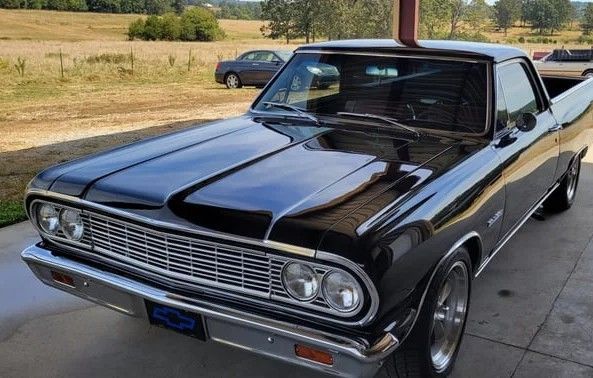
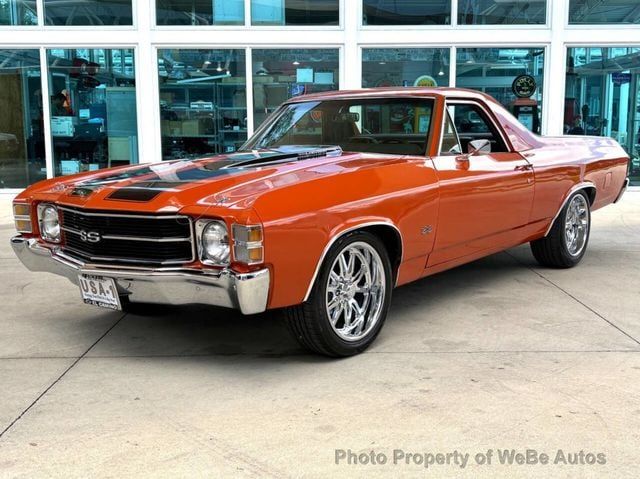
That pivot also closed out the first generation. Chevrolet did not build another full-size El Camino after 1960, returning to the nameplate in 1964 on the smaller Chevelle platform instead, so this fin comparison is really a comparison between the opening and closing chapters of a very short two-year story rather than a mid-generation stylistic drift.
Choosing between the two if you are shopping
For a buyer trying to decide which year suits them, the honest answer usually comes down to personal taste rather than any measurable performance or value gap, since both share mechanicals and general collectibility. Some people want the loudest, most photographed version of the story and gravitate toward 1959. Others want the same underlying car with a calmer face and are happy to let the 1960 be the quieter choice in their garage.
There is also a practical dimension worth weighing alongside taste. The 1959 fin's complex, cantilevered structure is harder and more expensive to restore correctly if it has suffered rust or collision damage, since the panel shapes are unique to that single year and were never reused. The 1960 fin, simpler in construction, is generally a more forgiving restoration project, which can matter a great deal to a buyer planning to actually drive and maintain the car rather than treat it as a static display piece. Neither consideration should override which car simply speaks to you the moment you see it, but it is worth knowing before you commit to either year.
What both years share, ultimately, is more important than what separates them. Underneath the sheet metal sits the same full-size Brookwood-derived chassis, the same range of six-cylinder and V8 engines, and the same basic cargo-hauling car-truck concept that made the nameplate notable in the first place. The styling argument between 1959 and 1960 is a family disagreement, not a fundamental difference, and that context is worth keeping in mind whenever the debate between the two years gets more heated than it probably needs to.
You can read the full story covering both years in detail, and when you are ready to see the difference in person rather than in photographs, you can browse classic El Camino listings spanning both model years.