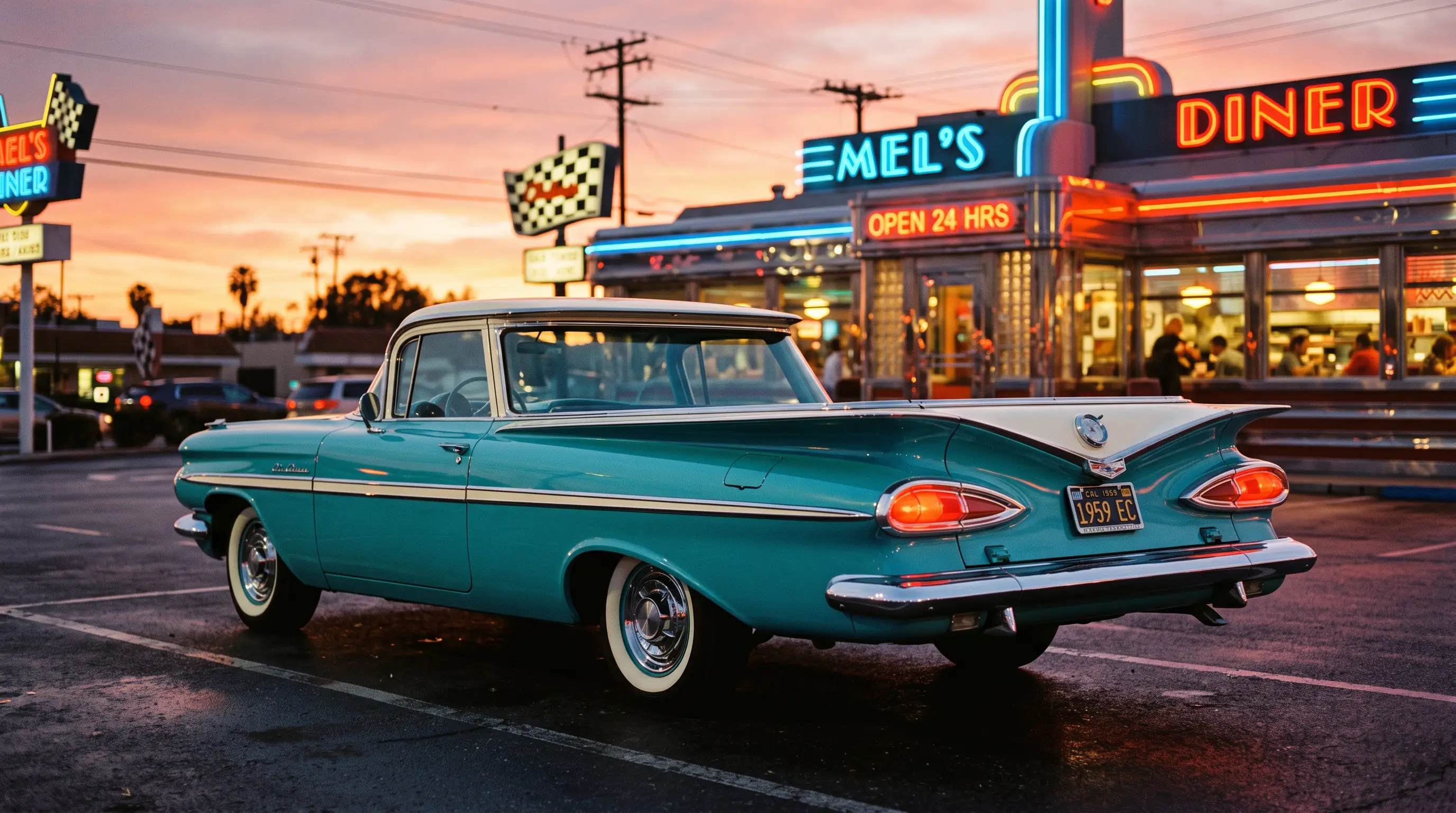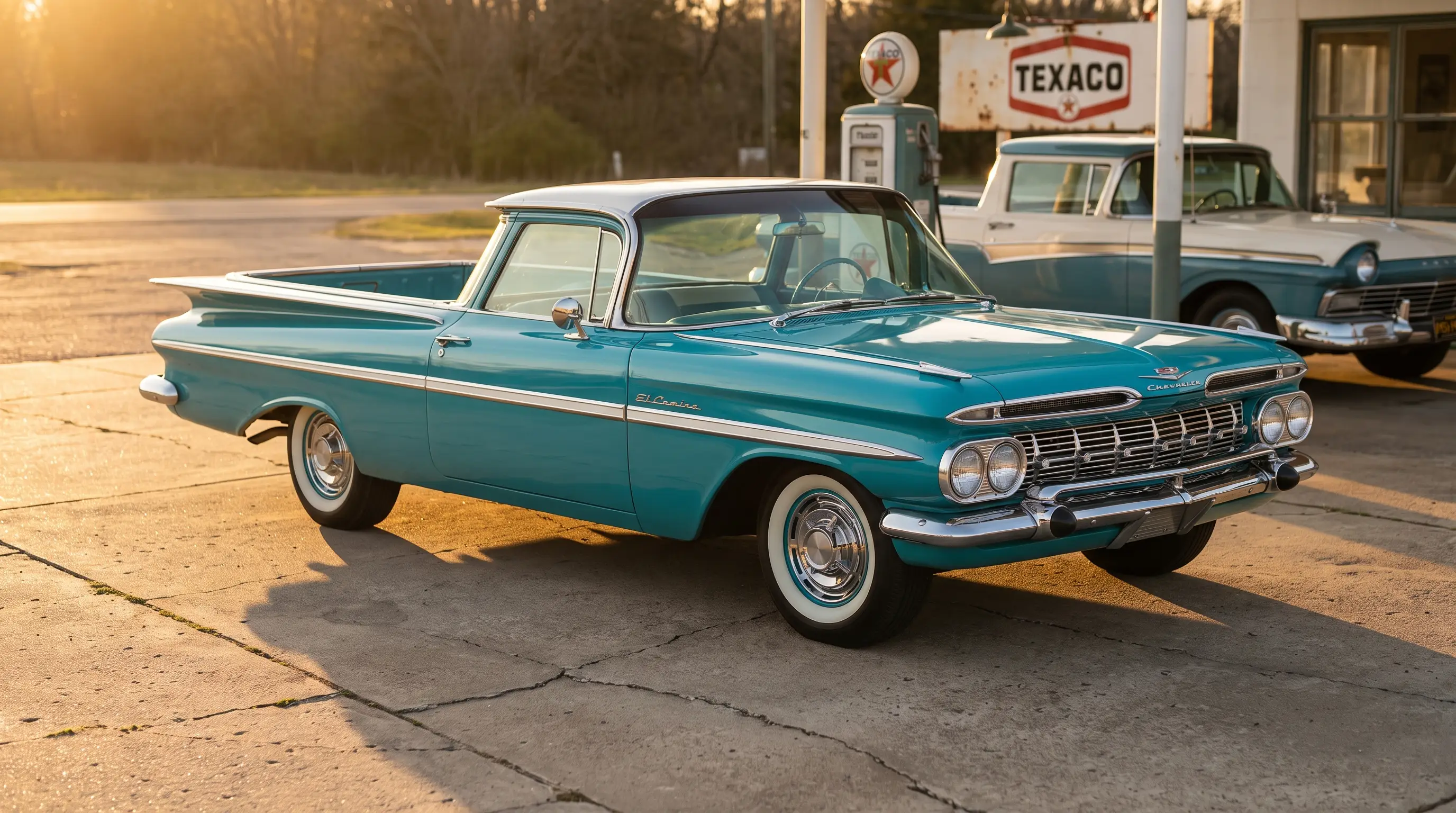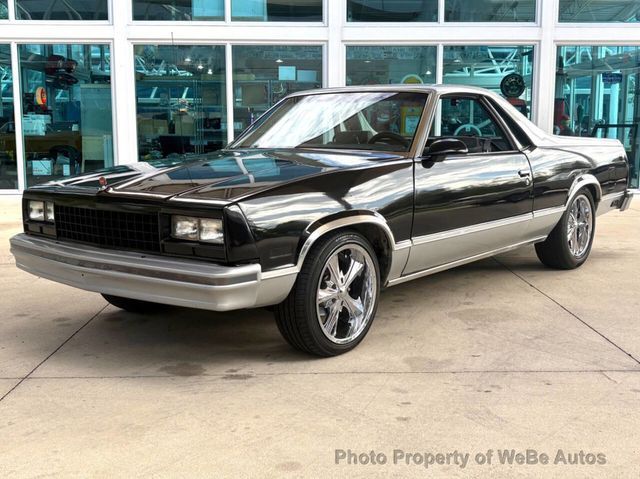

Chevrolet gave the El Camino exactly one wild year before pulling back. The 1960 model, built on the same full-size platform as its 1959 predecessor, arrived with the batwing tailfins clipped, the chrome reduced, and a noticeably calmer face up front. It is the same car underneath, sharing the frame, the drivetrain choices, and the basic proportions of the debut year, but 1960 is where Chevrolet decided that restraint sold better than spectacle, at least for one season.
What actually changed between the two years
The most obvious difference sits at the rear. The 1959 car's horizontal, wing-like fins gave way in 1960 to a flatter, more conventional fender line with much smaller, more upright fins and simplified round taillight lenses in place of the cat's-eye units. Chevrolet's stylists softened the sweep of the rear quarter panel considerably, trading the theatrical horizontal plane for something closer to what buyers would expect from a normal full-size Chevrolet a year or two later. The grille also lost some of its width and ornamentation, moving toward a simpler concave opening with less anodized aluminum trim than the 1959 car wore.
Mechanically, very little changed. The 1960 El Camino continued on the same full-size chassis, offered the same range of engines from the base 235 cubic inch inline six through the 283 and 348 cubic inch V8 options, and kept the same roughly six-foot steel cargo bed. Chevrolet was not re-engineering the car for 1960. It was re-skinning it, which is a common and inexpensive way for an automaker to freshen a model's appearance without touching the underlying investment in tooling and structure. That approach kept development costs low for a nameplate that, in hindsight, Chevrolet already knew it would shelve after this single season, making the modest 1960 revisions look less like a long-term investment and more like a final, tidy send-off for the full-size body style.
Interior trim followed a similar path of quiet refinement rather than dramatic change. Chevrolet carried over the same basic dashboard architecture and seating options, but the fabric and vinyl patterns offered for 1960 lean toward more subdued combinations than the brighter, higher-contrast choices common on 1959 cars. That shift mirrors the exterior story closely: nothing about the car's function changed, but the presentation moved from theatrical toward tasteful across nearly every visible surface a buyer would touch or sit on.
Why Chevrolet pulled back so quickly
Styling trends across the entire American auto industry were already shifting away from tailfins by 1960, and Chevrolet's full-size line, not just the El Camino, reflected that broader retreat. Design leadership at General Motors had pushed the 1959 fins about as far as they could reasonably go, and 1960 reads as a course correction across every full-size Chevrolet body style, sedans and wagons included, not something unique to the El Camino. The car-truck simply inherited whatever restraint Chevrolet's stylists applied to the shared full-size platform that year.
There is also a practical argument for the change. The complex, cantilevered 1959 fin structure was expensive to stamp and assemble, and enthusiast retrospectives on the 1959 body have long suggested the shape was difficult to produce reliably at volume, though no documented factory record spells out the specifics. A simpler 1960 rear end would have been cheaper to build and easier to keep in consistent panel alignment on the assembly line, a real consideration for a company producing hundreds of thousands of full-size cars a year.
| Feature | 1959 | 1960 |
|---|---|---|
| Rear fin shape | Wide horizontal batwing | Smaller, more upright fin |
| Taillights | Horizontal cat's-eye | Simplified round units |
| Grille width | Full-width, heavy chrome | Narrower, less ornamentation |
| Platform | Full-size Brookwood wagon chassis | Same platform, carried over |
| Engines offered | 235 I6, 283 V8, 348 V8 | Same lineup continued |
The last year of the first generation
1960 turned out to be the final season for this body style of El Camino. Chevrolet discontinued the nameplate entirely after the 1960 model year and did not revive it until 1964, on the smaller, unibody Chevelle platform, an entirely different engineering approach from the full-size cars of 1959 and 1960. That makes the 1960 El Camino the closing chapter of a very short first generation, only two model years long, and production dropped from the 1959 debut year's 22,246 units to 14,163 in 1960, which is typical for a niche vehicle in its final season before a multi-year hiatus.
That short production window is part of why the 1960 El Camino tends to get less attention than its flashier 1959 sibling among casual collectors, even though it carries genuine rarity of its own. A calmer face and simplified fins do not photograph as dramatically as the batwing year, but a well-preserved 1960 example represents the same short-lived first-generation story with its own distinct, and arguably more mature, styling statement.
Some collectors actually prefer the 1960 for exactly that reason. A calmer design ages better in the eyes of buyers who want a usable classic rather than a rolling styling exhibit, and the simplified rear end is arguably easier to keep straight and rust-free over decades of ownership than the more complex, multi-panel 1959 fin assembly. That practical argument does not show up in auction hype the way the batwing story does, but anyone who has actually owned both years tends to have an opinion on which one they would rather drive on a regular basis, and it is not always the flashier car.
"I get asked constantly why nobody talks about the 1960 El Camino the way they talk about 1959. The honest answer is that restraint does not sell magazine covers. But the factory records tell you 1960 is just as scarce, and in some trim details, scarcer."
- Tom Ramirez
Researching a 1960 versus a 1959
Buyers deciding between the two model years should focus less on which looks wilder and more on documentation and originality, since both share the same underlying chassis, engine options, and general build quality. Service records, matching numbers on the engine and body, and evidence of consistent storage matter far more to long-term value than which fin shape a given car happens to wear, and a well-documented 1960 will generally outperform a questionable, repainted 1959 in any serious appraisal. The styling difference is real and worth understanding on its own terms, and where this started covers the full first-generation story from 1959 through this final 1960 season in more depth. Shoppers weighing either year can classic El Camino for sale to compare trim and condition across both model years directly before deciding which one fits their own taste in Detroit styling.