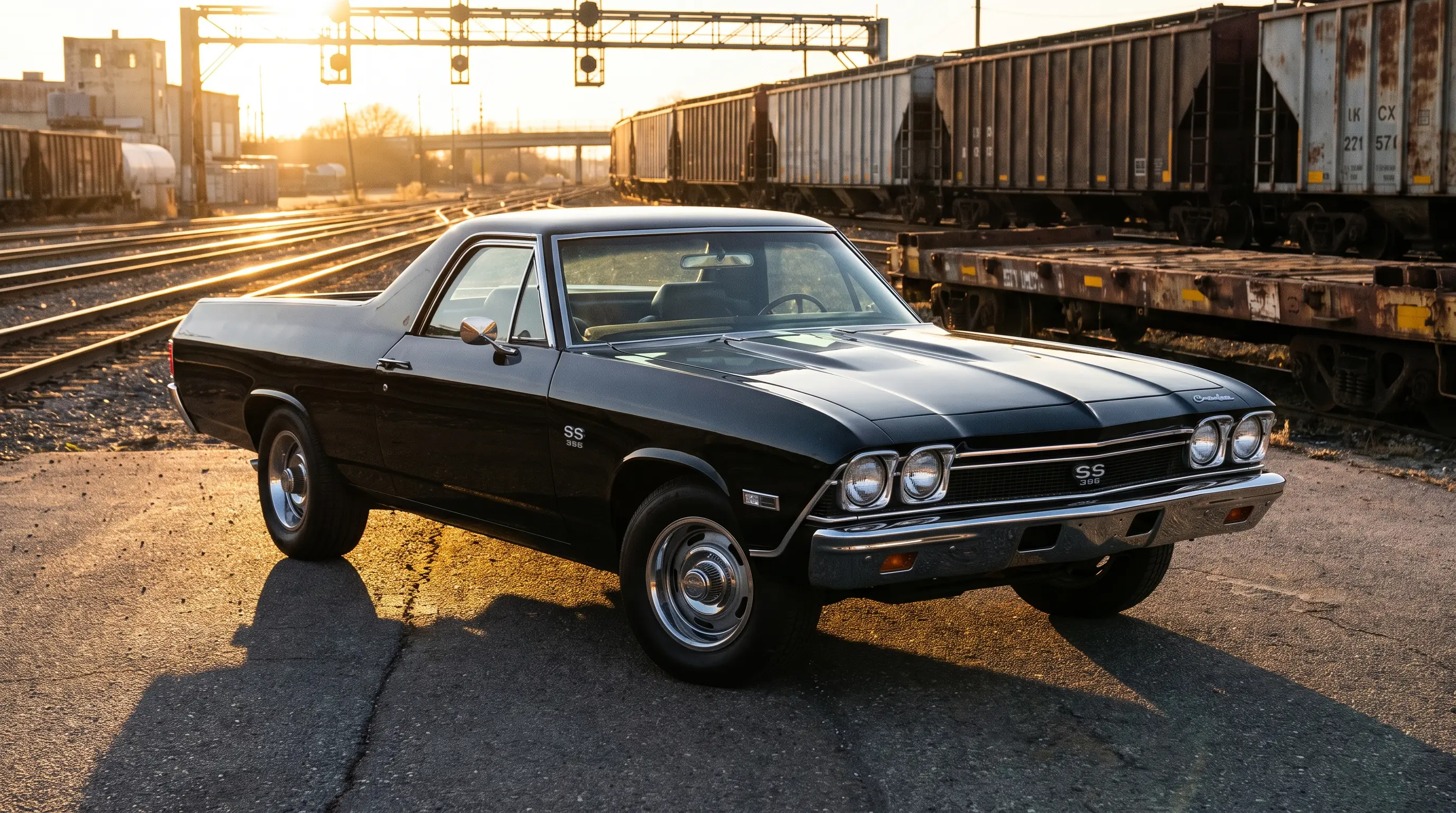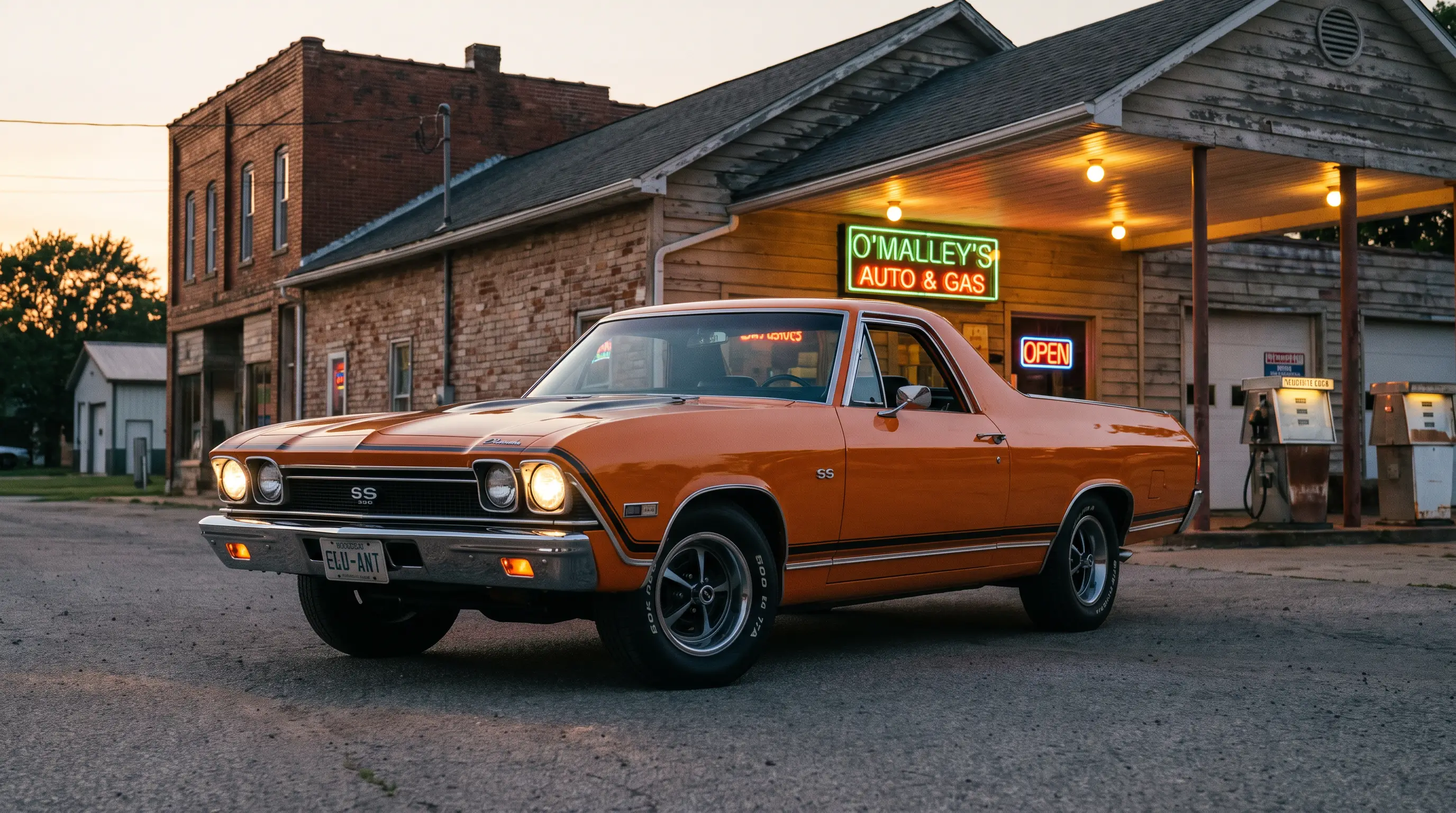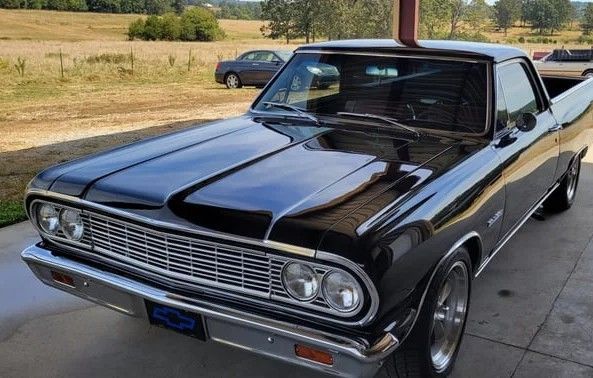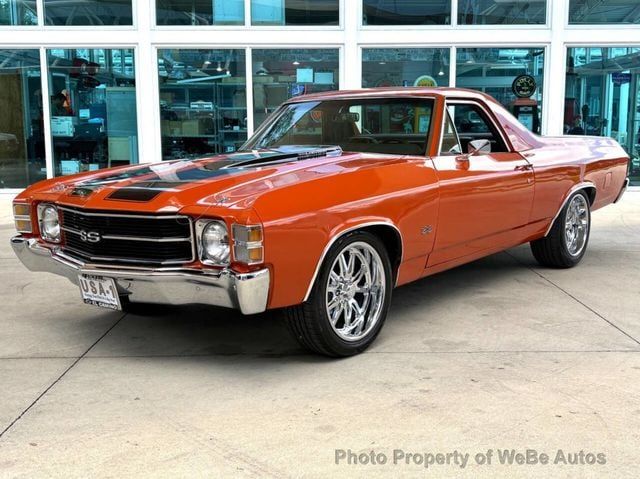
Every long-running nameplate has one redesign that actually changes its identity rather than just its sheetmetal, and for the Chevelle-based El Camino that year is 1968. The 1964 through 1967 trucks were handsome and capable, but they still read as a practical variant of a family car. The 1968 redesign turned the El Camino into something with genuine muscle car presence, and that shift set the template every subsequent year through 1972 would build on.
What actually changed for 1968
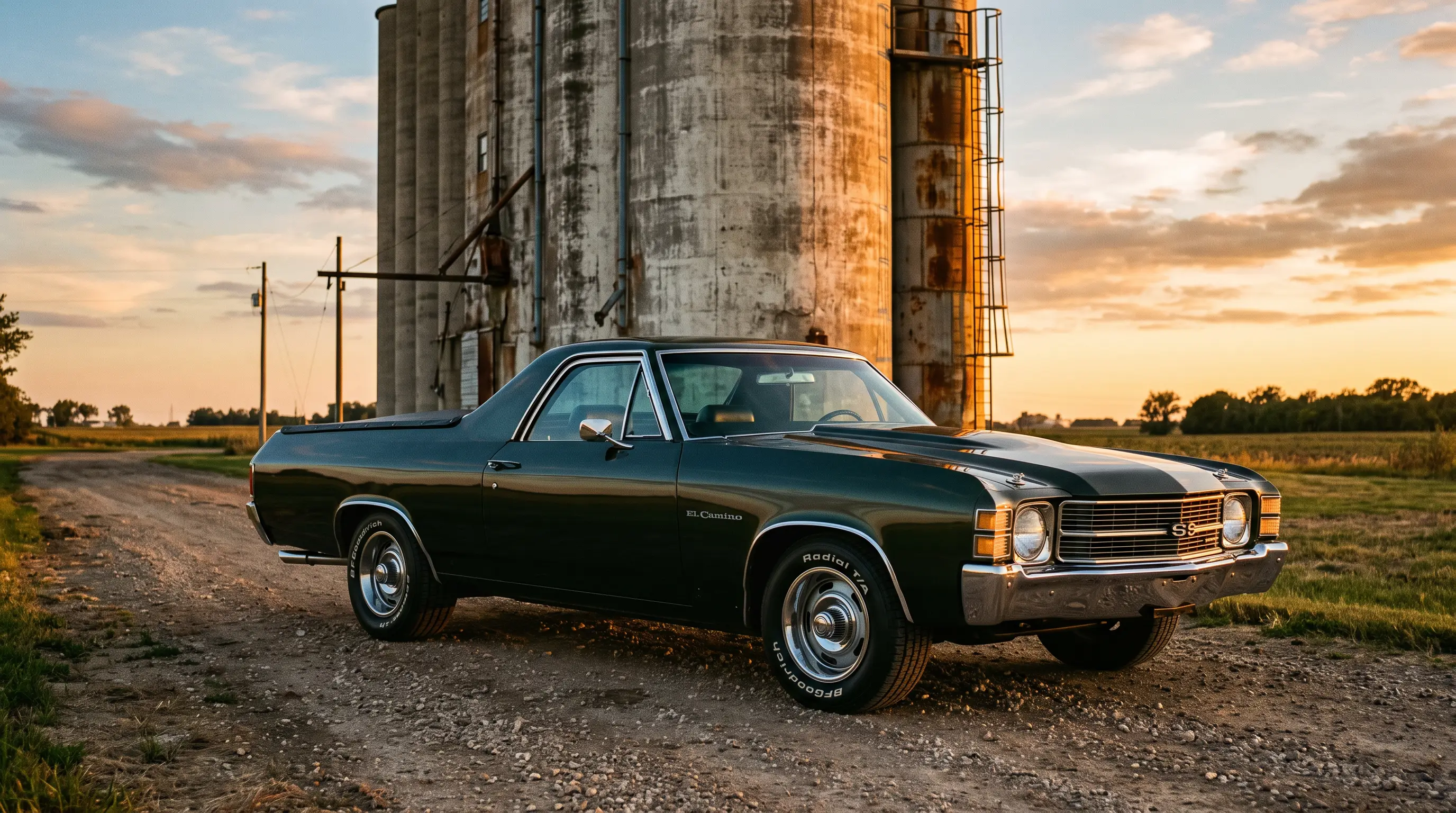
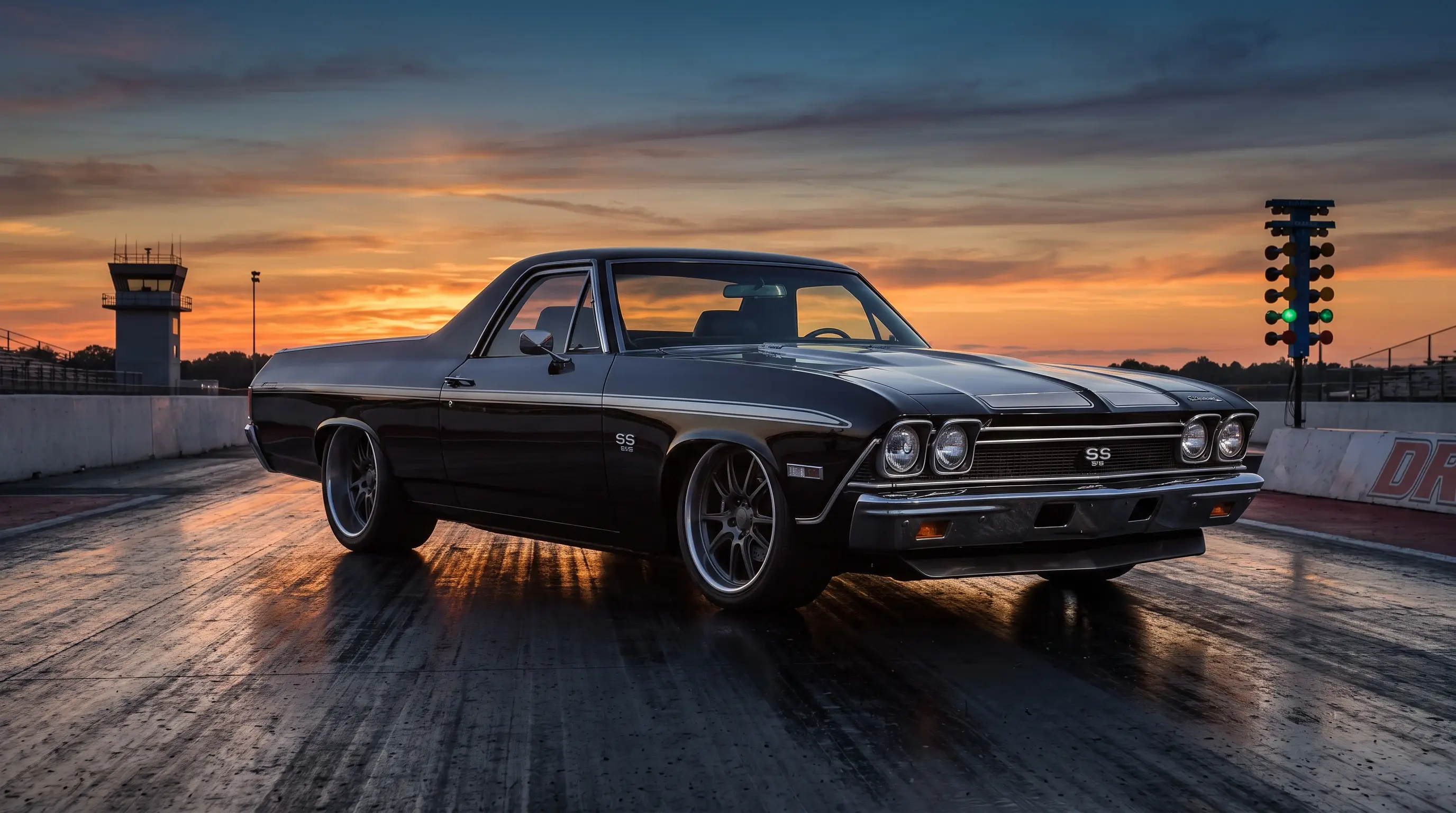
General Motors gave the entire mid-size lineup, Chevelle included, an all-new body for 1968, and the El Camino inherited every bit of it. The proportions stretched longer and lower than the outgoing generation, the roofline adopted a semi-fastback profile that read as sportier from every angle, and the front and rear fascias took on a more sculpted, aggressive shape than the boxier early-sixties design it replaced. The 1968 model carried single headlights per side within the new grille, and Chevrolet moved to quad headlights and a revised grille the following year in 1969, along with relocating the backup lights from the bumper to the tailgate, refinements to the same basic body Chevrolet had just introduced. Underneath the new skin, GM also moved to a fresh perimeter frame design for the mid-size platform, which improved ride quality without giving up the structural rigidity a performance-oriented buyer needed.
The result was a truck that no longer looked like an afterthought grafted onto a sedan platform. It looked, for the first time, like it belonged in the same conversation as the era's dedicated muscle coupes.
The bed itself changed shape too, adopting cleaner lines and a more integrated relationship with the cab than the earlier generation managed. Where the 1964 through 1967 trucks sometimes read as a sedan with an obvious modification bolted onto the back, the 1968 design treated the cargo area as part of the original concept rather than an afterthought, with sheetmetal creases and proportions that carried the coupe's design language all the way to the tailgate.
Why the styling shift mattered more than the numbers
Horsepower figures get most of the attention when people discuss muscle-era history, but the 1968 redesign mattered just as much on pure visual terms. A truck's cargo bed had always made it look at least partly utilitarian next to a two-door hardtop. The 1968 restyle narrowed that gap dramatically. The longer hood and lower stance made the bed look like a deliberate design choice rather than a compromise, and that shift in perception is exactly what let Chevrolet introduce a genuine SS package on the El Camino that same year and have it feel credible rather than gimmicky.
That credibility is the real legacy of 1968. Without the restyle, the SS badge would have been marketing dressed over an unchanged truck. With it, the badge described a vehicle that actually looked and felt like it deserved the name.
Competing manufacturers noticed the shift too. Rival car-based utility offerings from the same era struggled to escape a similar credibility gap, often because their own sheetmetal never fully committed to the performance-coupe look the way Chevrolet's 1968 redesign did. That gave the El Camino a visual head start in the segment that its direct competition spent years trying to close.
Setting up everything through 1972
Every visual and mechanical direction the El Camino took over the following four model years traces back to decisions made for 1968. The 1970 model, widely regarded as the peak of the muscle era for this nameplate, is fundamentally a refinement of the 1968 body rather than a fresh design. Even the 1972, the final year before the 1973 Colonnade redesign, still carried the core proportions and structural approach introduced in 1968. Readers who want the fuller mechanical and market context of that specific model year can find it in 1968 el camino history.
Look at the 1972 model specifically and the debt to 1968 becomes obvious. Strip away the badge differences and minor trim updates, and the core body structure, roofline, and greenhouse proportions on a 1972 are a direct continuation of what the 1968 redesign established. That continuity is precisely why the 1972, the last model year of this body style, still reads as a genuine muscle-era truck rather than a watered-down successor. The 1968 restyle did not just launch a new look for one year, it defined the visual and structural DNA for the entire run that followed.
| Generation change | What it introduced |
|---|---|
| 1964 | El Camino returns on the new Chevelle-based A-body platform |
| 1968 | All-new longer, lower body; semi-fastback roofline; first SS package |
| 1970 | Refinement of the 1968 body; peak available horsepower |
| 1972 | Final year of the 1968-derived body before the 1973 redesign |
"Find the year a nameplate stopped apologizing for what it was, and you have found the year that actually explains everything that came after it. For the El Camino, that year is 1968."
- Tom Ramirez
How buyers and dealers reacted at the time
Dealers reported that the new body drew showroom traffic from buyers who had never previously considered a car-based utility vehicle at all, drawn in by styling that stood on its own rather than reading as a compromise between two categories. That crossover appeal, pulling in buyers who came for the coupe-like styling and only afterward discovered the cargo bed, was new territory for the nameplate and proved that the redesign had genuinely broadened the model's audience rather than simply refreshing it for existing owners.
The SS package's arrival amplified that effect further, giving Chevrolet's marketing a genuine performance story to tell for the first time, rather than leaning purely on utility and value as the previous generation's trucks had. Print advertising from the period leaned into that new identity directly, positioning the redesigned truck alongside the era's performance coupes rather than treating it as a separate, lesser category of vehicle.
A restyle worth remembering on its own terms
It is easy to treat 1968 as a stepping stone toward the more famous 1970 model, but that undersells what actually happened that year. The redesign did not just make the El Camino look better, it changed what the truck was allowed to be in the marketplace, a genuine performance vehicle rather than a practical compromise. For collectors and historians tracing the model's full arc, the story of the first El Camino SS naturally follows from here, and readers curious about that specific milestone can find a related story covering exactly how that badge came to be. Anyone drawn to this exact era of design can browse El Caminos for sale now from the model year that made the muscle-era El Camino possible in the first place.
Every anniversary retrospective on this nameplate eventually circles back to 1970 for its raw output figures, and that focus is understandable. But the redesign that made 1970 possible, that gave the SS badge somewhere credible to sit and gave the whole model a fighting chance against dedicated muscle coupes, happened two years earlier. Give 1968 its due, and the rest of the model's muscle era reads less like a series of separate high points and more like the natural continuation of one genuinely well-executed decision.
Sources and notes
- Chevrolet El Camino overview and generations, Wikipedia
- 1968-1972 Chevrolet El Camino SS engine and generation guide, MotoGallery
- 1969 El Camino headlight parts reference, OPGi
- 1968 El Camino SS L34 production discussion, Team Chevelle Forum
- 1972 Chevrolet El Camino SS 454 listing, Hagerty Marketplace