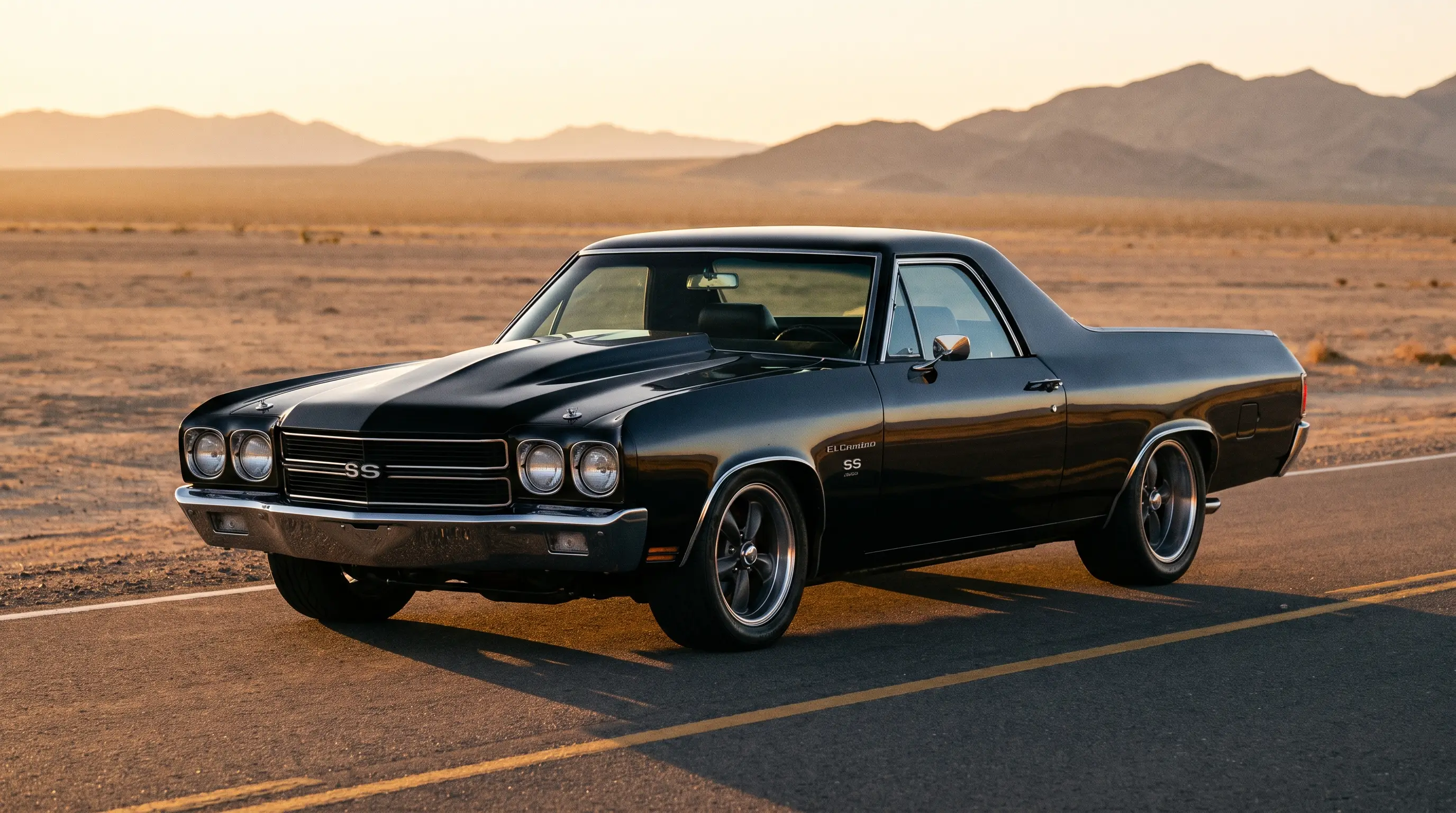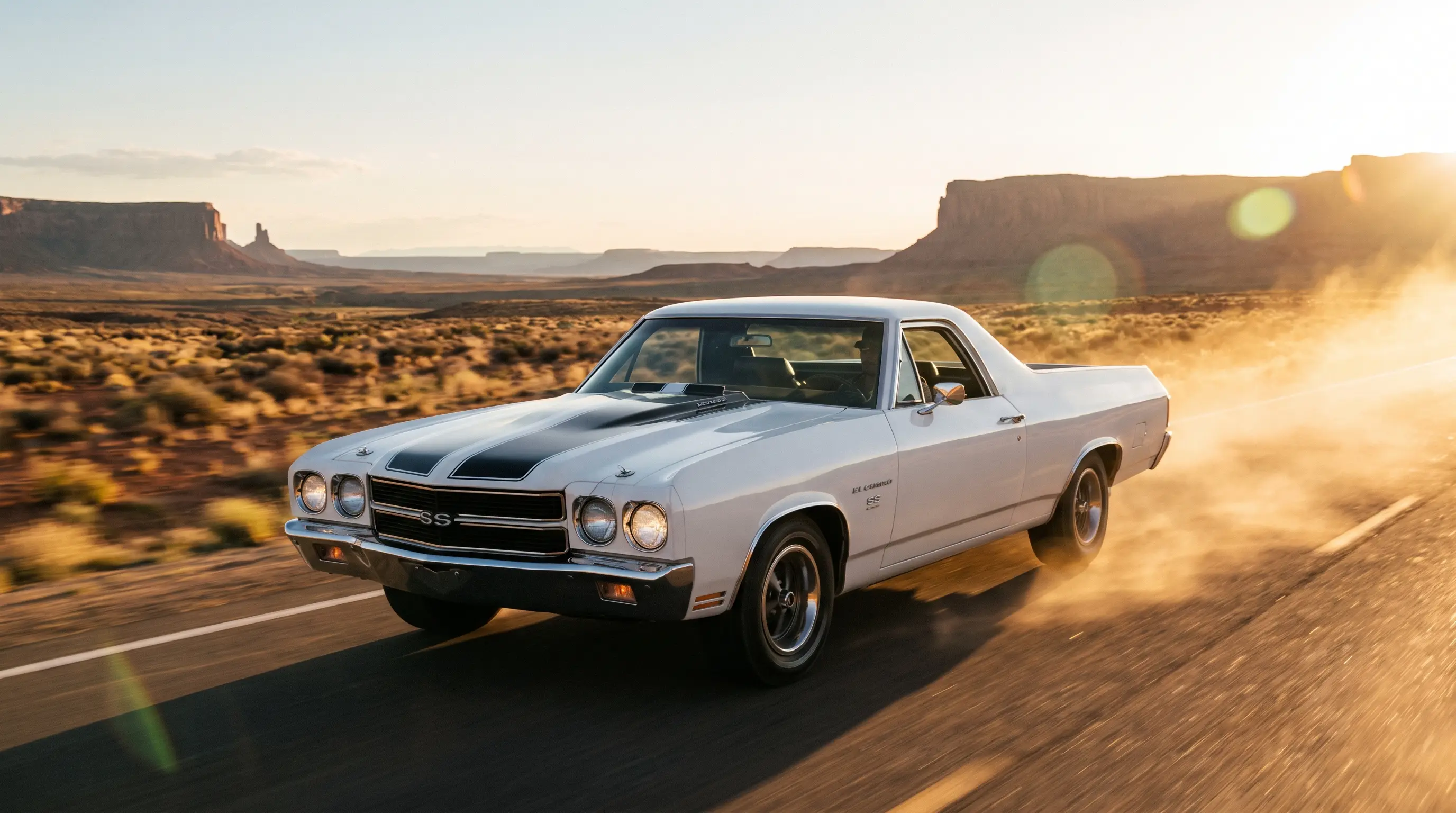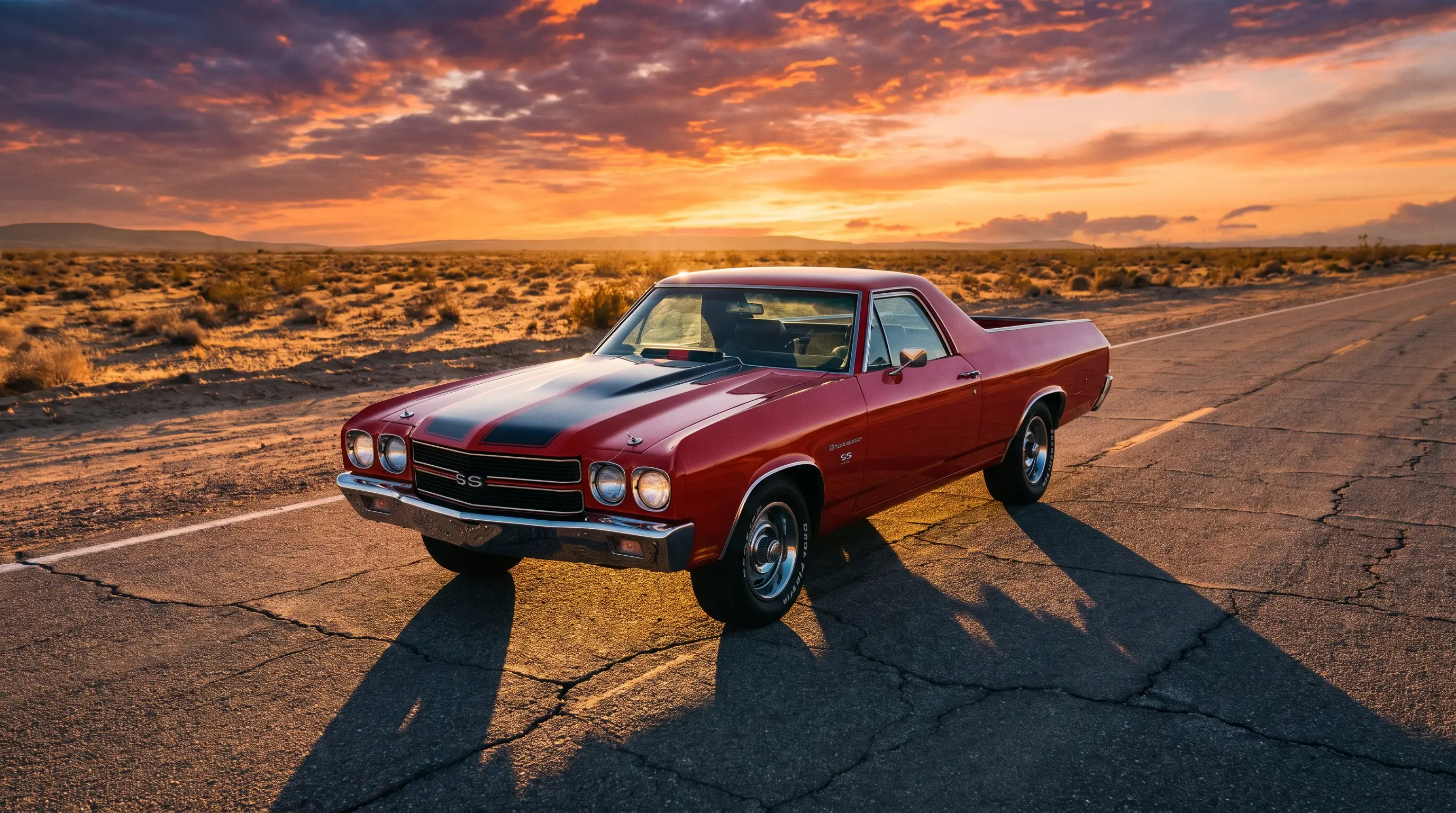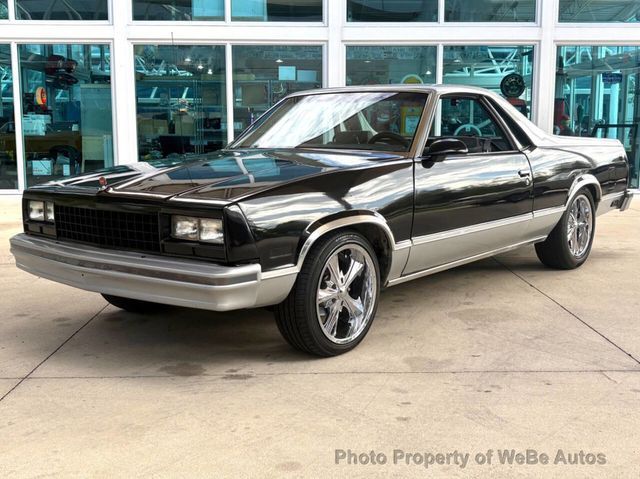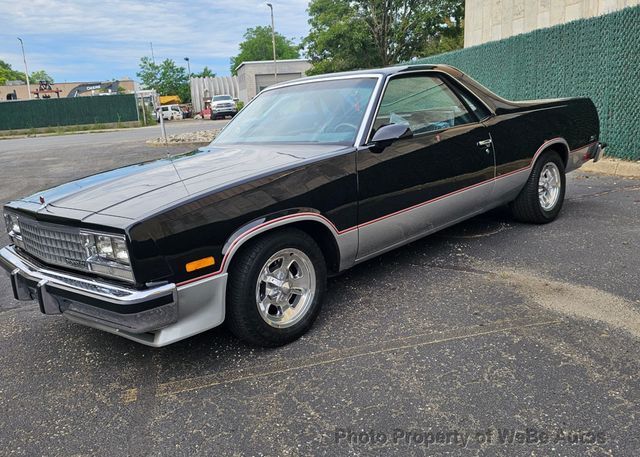
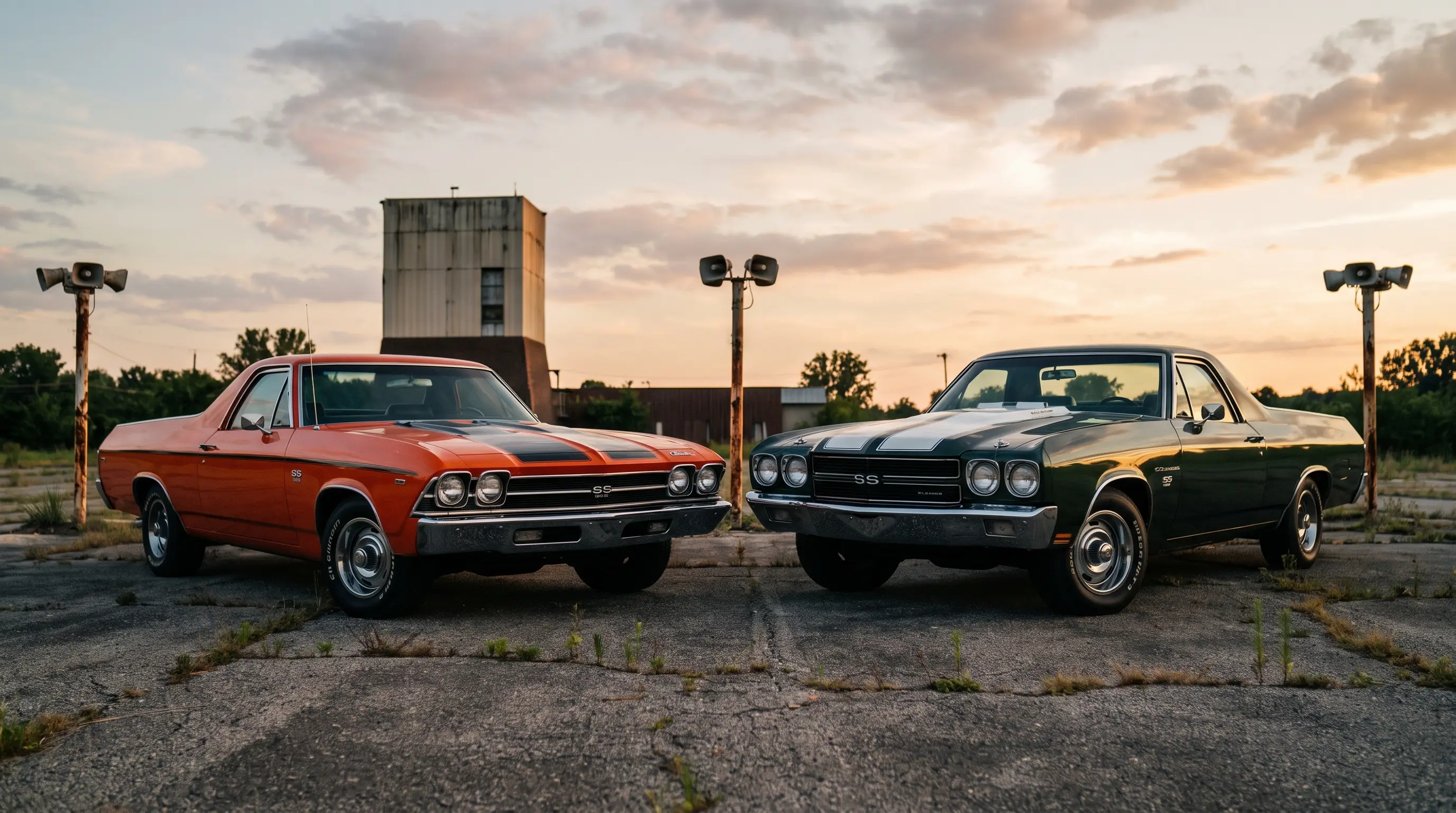
Park a 1969 El Camino SS next to a 1970 model and the casual observer sees two very similar cars separated by a minor facelift. That reading misses the more interesting story underneath the sheet metal. Between 1969 and 1970, the El Camino's muscle car recipe changed meaningfully, not through a redesign, but through what Chevrolet let buyers put under the hood, and understanding that shift is the difference between appreciating a car correctly and simply admiring a badge.
Setting the stage: two consecutive model years, one platform
Chevrolet introduced the second-generation El Camino for 1968 on a shared A-body platform with the Chevelle, and both the 1969 and 1970 model years continued that arrangement without a ground-up redesign. That continuity is exactly why a side-by-side comparison of these two specific years is so instructive. Unlike comparing, say, a first-generation car to a second-generation one, where an entirely new body and chassis changes nearly everything at once, the 1969 to 1970 transition isolates a single variable more clearly than almost any other consecutive pairing in the model's history: what Chevrolet was willing to let a buyer order under the hood.
The visual changes were modest by design
Both the 1969 and 1970 El Camino rode the same second-generation A-body platform introduced for 1968, and the two model years share far more sheet metal than they differ in. The 1970 refresh brought a revised grille and front fascia, along with new available SS stripe treatments and badging, but the fundamental proportions, roofline, and bed structure carried straight through from 1969. A period buyer cross-shopping the two model years on styling alone would have found little to separate them, and that visual continuity is precisely why the mechanical differences underneath deserve closer documentation than they usually receive.
The real change: what was under the hood
The 1969 El Camino SS topped out with the SS 396 as its performance engine option, available in multiple output tunes but with no 454 cubic inch big-block offered that model year in the El Camino line. The SS 454 did not arrive in the El Camino until 1970, bringing both the 360-horsepower LS5 and the 450-horsepower LS6 into the lineup for the first time on this platform. That is not a trim change or a badge update. It is an entirely new displacement class entering the model, and it moved the ceiling of what an El Camino SS buyer could order by a significant margin in a single model year.
the full story on the 1970 SS lineup documents how that 454 option arrived and what it meant for the model year's positioning within Chevrolet's broader performance range.
Compression and the closing window
1970 also represents close to the peak of compression ratios across the industry before emissions regulations began pushing manufacturers toward lower-compression engines designed to run on reduced-octane and eventually unleaded fuel. The LS6's 11.25:1 compression ratio, available for that single 1970 model year in this platform, sat near the top of what any factory engine offered across the industry at that point. A 1969 SS 396 buyer, by comparison, was working with a milder compression ratio and a more conservative overall tune, reflecting a lineup that had not yet reached for the 454's higher ceiling.
That one-year gap matters enormously to documentation and value today. A 1970 car with the LS6 option represents a specific, narrow window in Chevrolet's engineering history that a 1969 car, regardless of condition or trim level, simply cannot match on paper.
A note on how misattribution happens
Most misattributed 454 claims on 1969 El Caminos are not deliberate fraud. They usually stem from an engine swap performed decades ago by an owner who wanted more performance and simply installed whatever big-block was available at the time, with the paper trail lost long before the car changed hands to its current owner. A later seller, working only from what the current engine looks like rather than what the original cowl tag or broadcast sheet says, can genuinely believe the car is something it was never built as. That is precisely why documentation matters more than visual inspection alone, and why a buyer should always ask for the original paperwork rather than accepting a plausible-looking engine bay as proof of factory configuration.
What this means for documentation and value
For researchers and collectors, the 1969 versus 1970 distinction is not a stylistic footnote. It is a hard boundary in what is mechanically possible on a given car. Claims of a 454 cubic inch engine in a 1969 El Camino should be treated as a later installation rather than a factory configuration, and any documentation, cowl tag, or broadcast sheet review should confirm engine codes against what Chevrolet actually offered in that specific model year rather than assuming continuity between two visually similar cars.
This kind of precise, model-year-specific verification is exactly the discipline that separates a properly documented concours-quality car from one resting on an assumption. The two model years look similar enough from across a parking lot to invite exactly that kind of assumption, which is why the distinction is worth stating plainly rather than leaving implied.
"A 1969 and 1970 El Camino can share almost every body panel and still represent two entirely different chapters in what Chevrolet was willing to put under the hood. The sheet metal does not tell you which chapter you are looking at."
- Sarah Whitfield
What else changed between the two model years
Beyond the headline engine story, several smaller specification changes separate the two model years and deserve equal documentation rigor. Interior trim options expanded slightly for 1970, with new upholstery patterns and available features that had not been offered on the 1969 car. Exterior color offerings shifted as well, with several 1969 hues discontinued and new options introduced for 1970, meaning a paint code check is another useful, easily verifiable way to confirm a car's actual model year independent of any engine claims. Wheel and trim ring options also saw modest updates, part of the broader annual refresh pattern GM applied across its intermediate lineup during these years.
None of these secondary changes carry the weight of the 454 arrival, but together they reinforce the same point. The two model years are close cousins, not identical twins, and a careful researcher treats every claimed detail, engine, trim, color, and equipment alike, as something to verify against factory documentation rather than assume from a quick glance at the body style.
Cross-shopping the two years today
For buyers deciding between the two model years, the practical takeaway is straightforward. A 1969 SS 396 remains a legitimate, well-built factory muscle car with its own documented history, and it should not be treated as a lesser car simply because 1970 raised the ceiling. But a buyer specifically chasing the 454 experience, or the highest documented factory horsepower rating on this platform, needs a 1970 model year car, full stop. No amount of restoration or engine swapping on a 1969 car changes what left the factory that year, and any presentation suggesting otherwise deserves scrutiny before a purchase, not after one.
Buyers comparing both model years in person can browse classic El Camino listings to see how documented 1970 examples are currently priced against their 1969 counterparts.