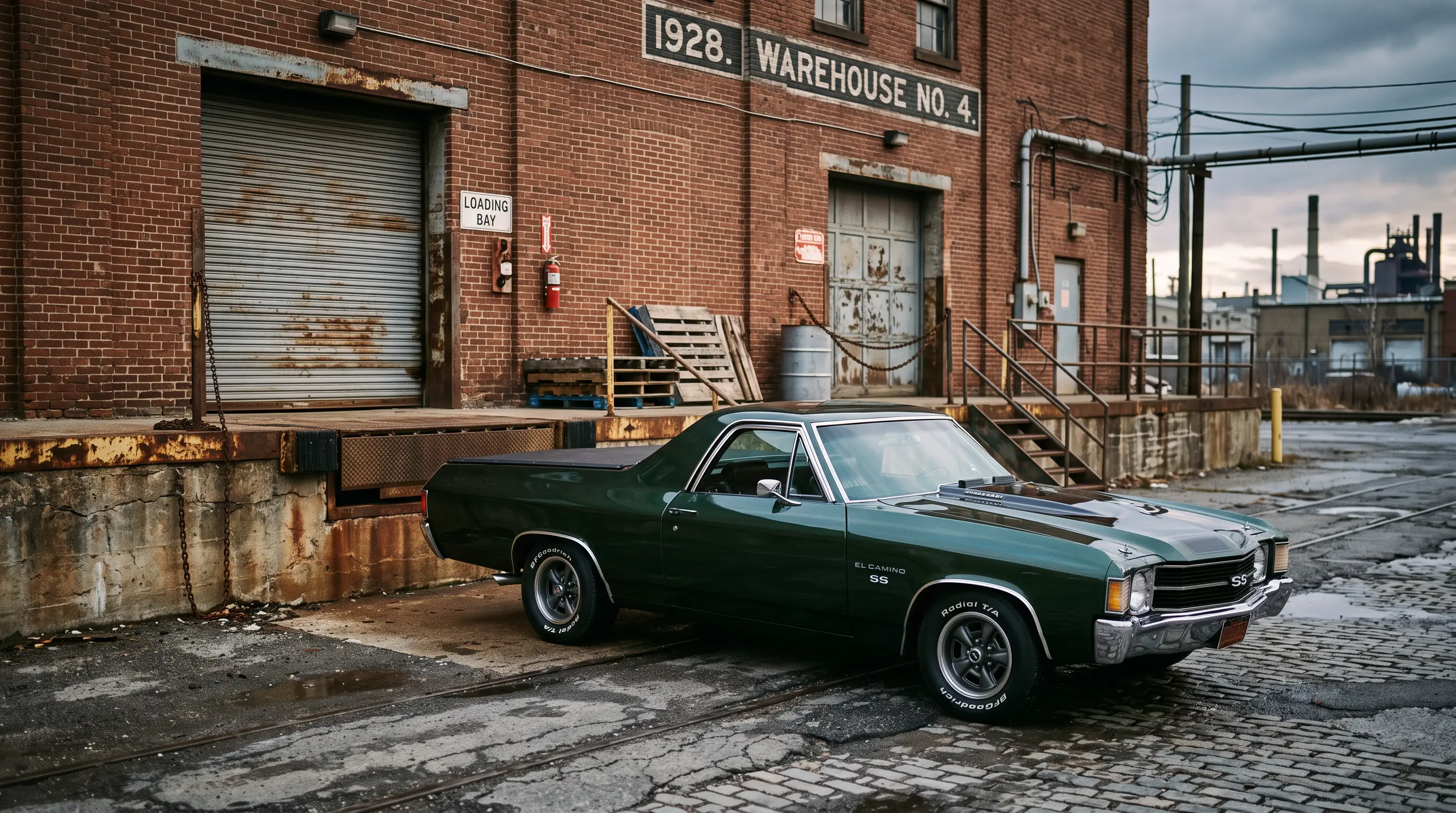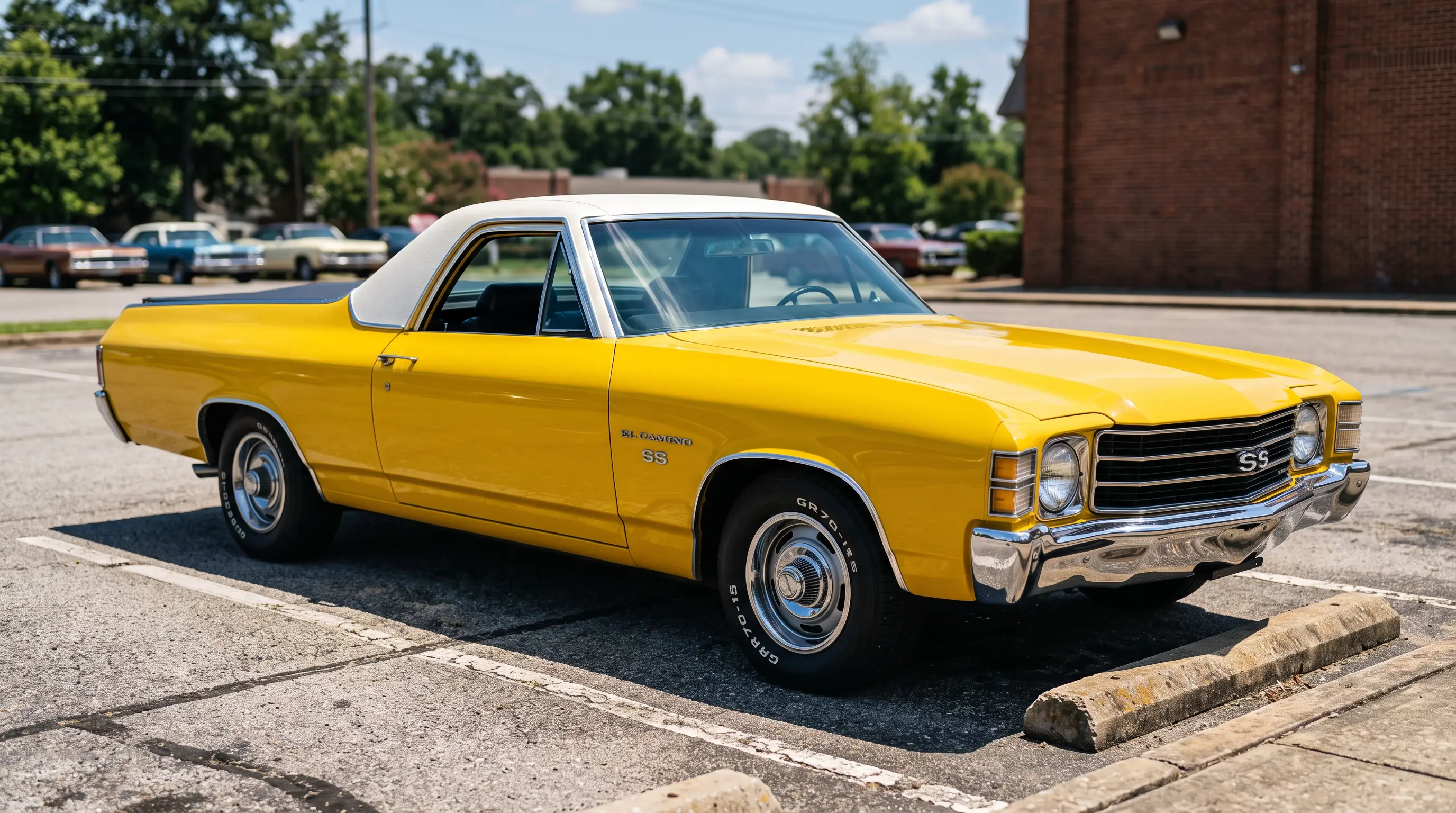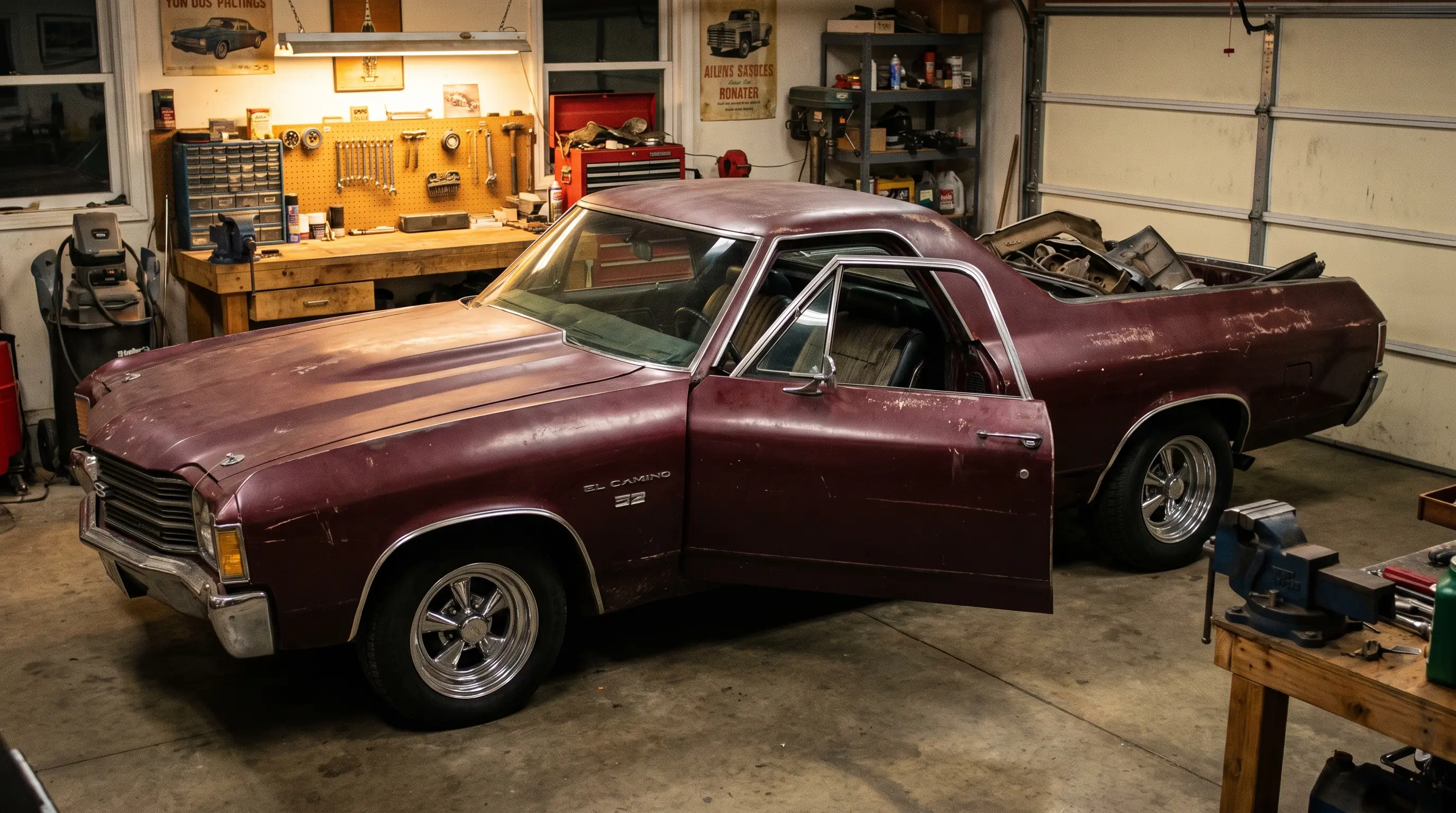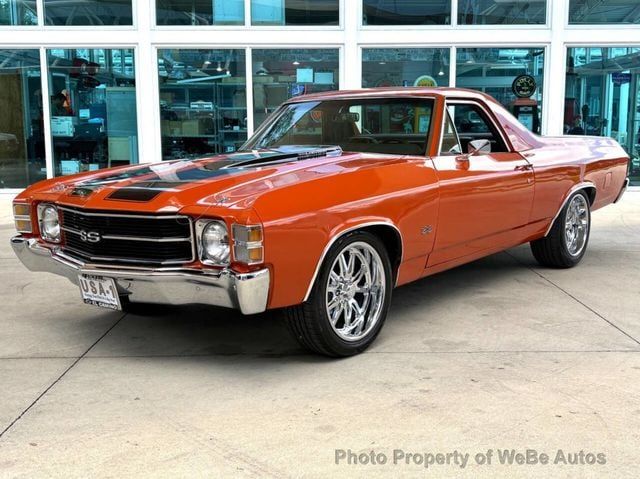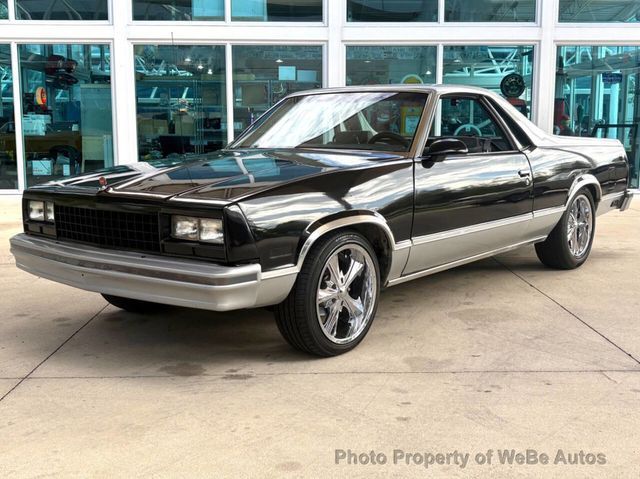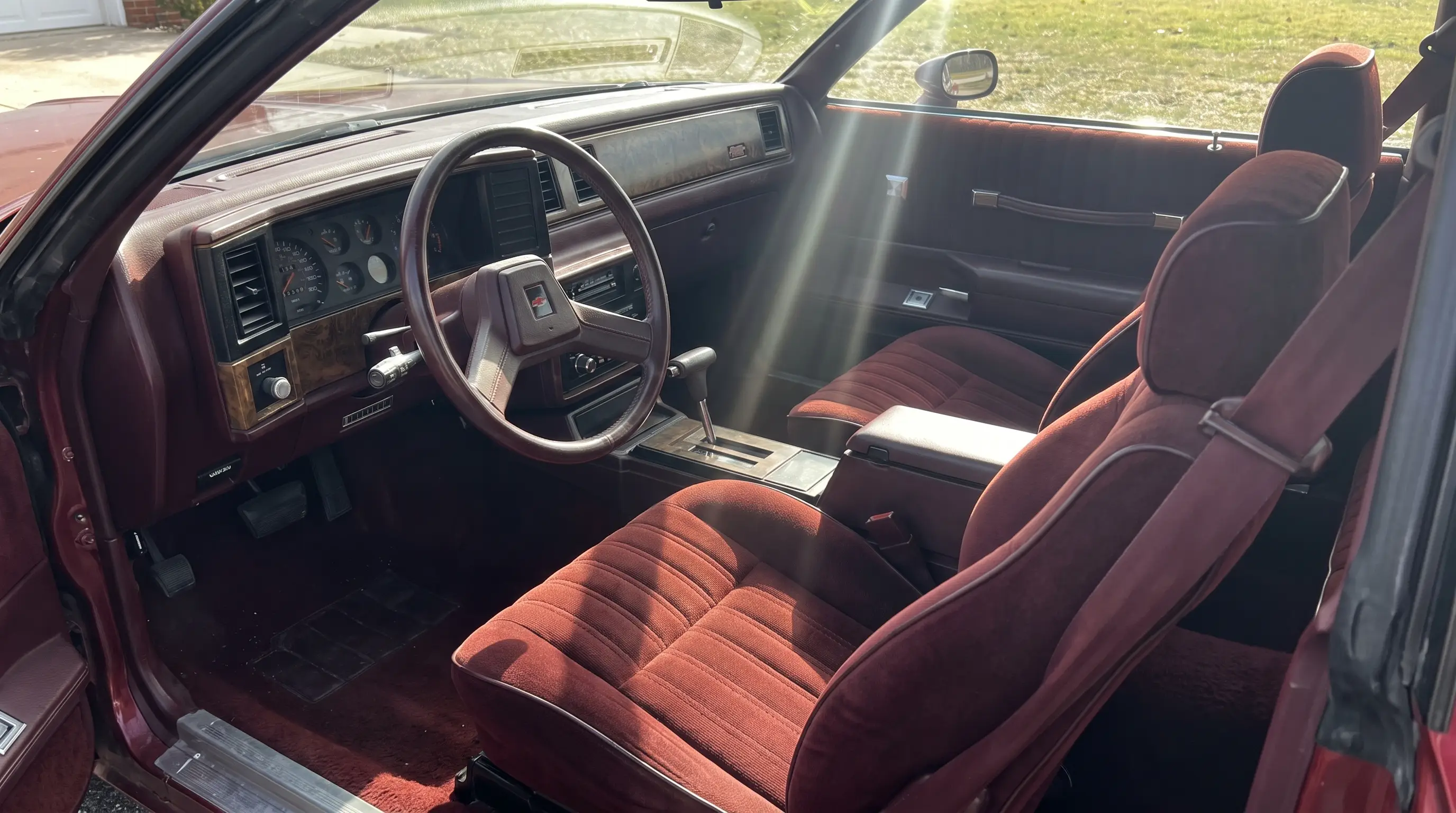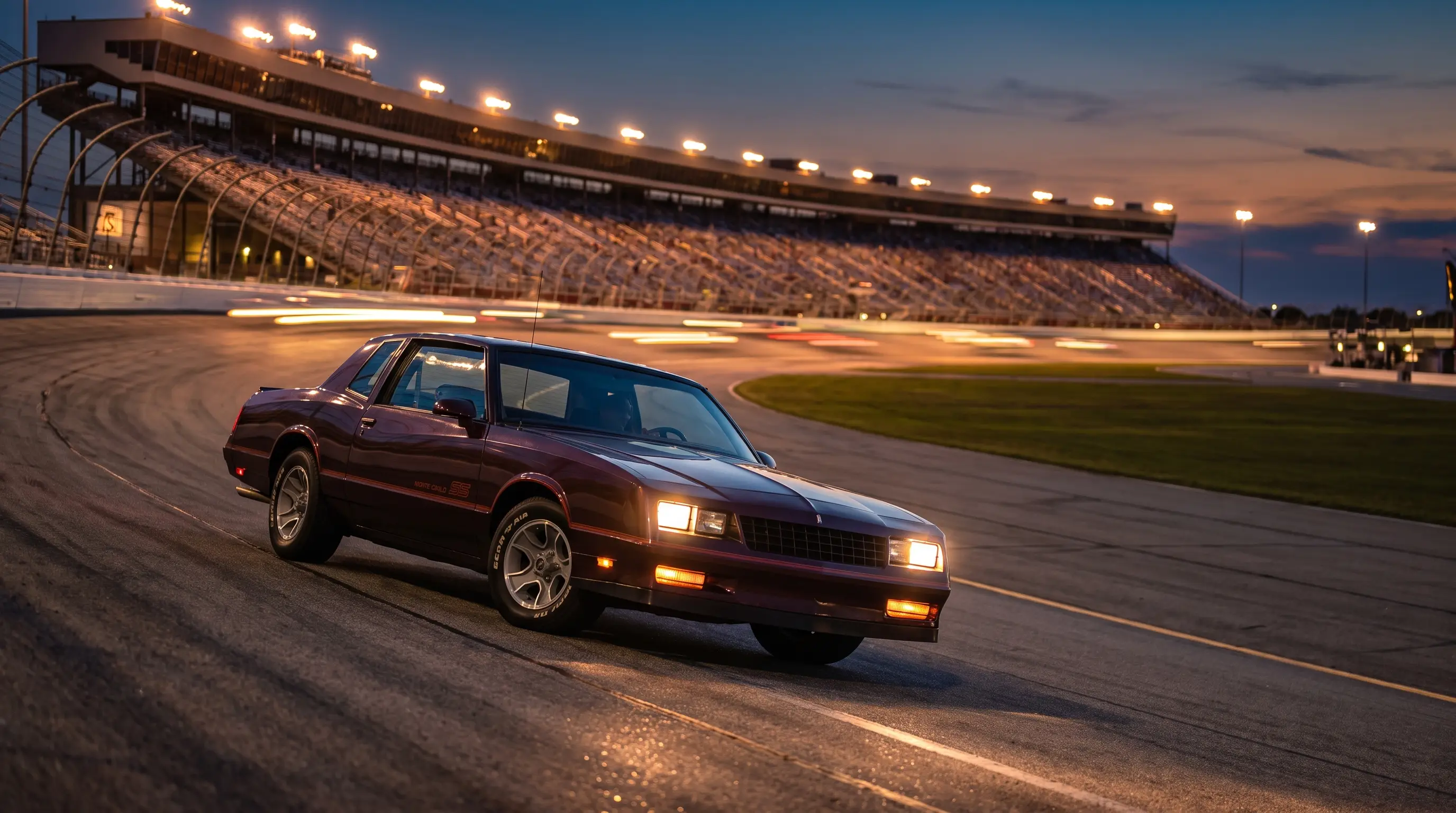
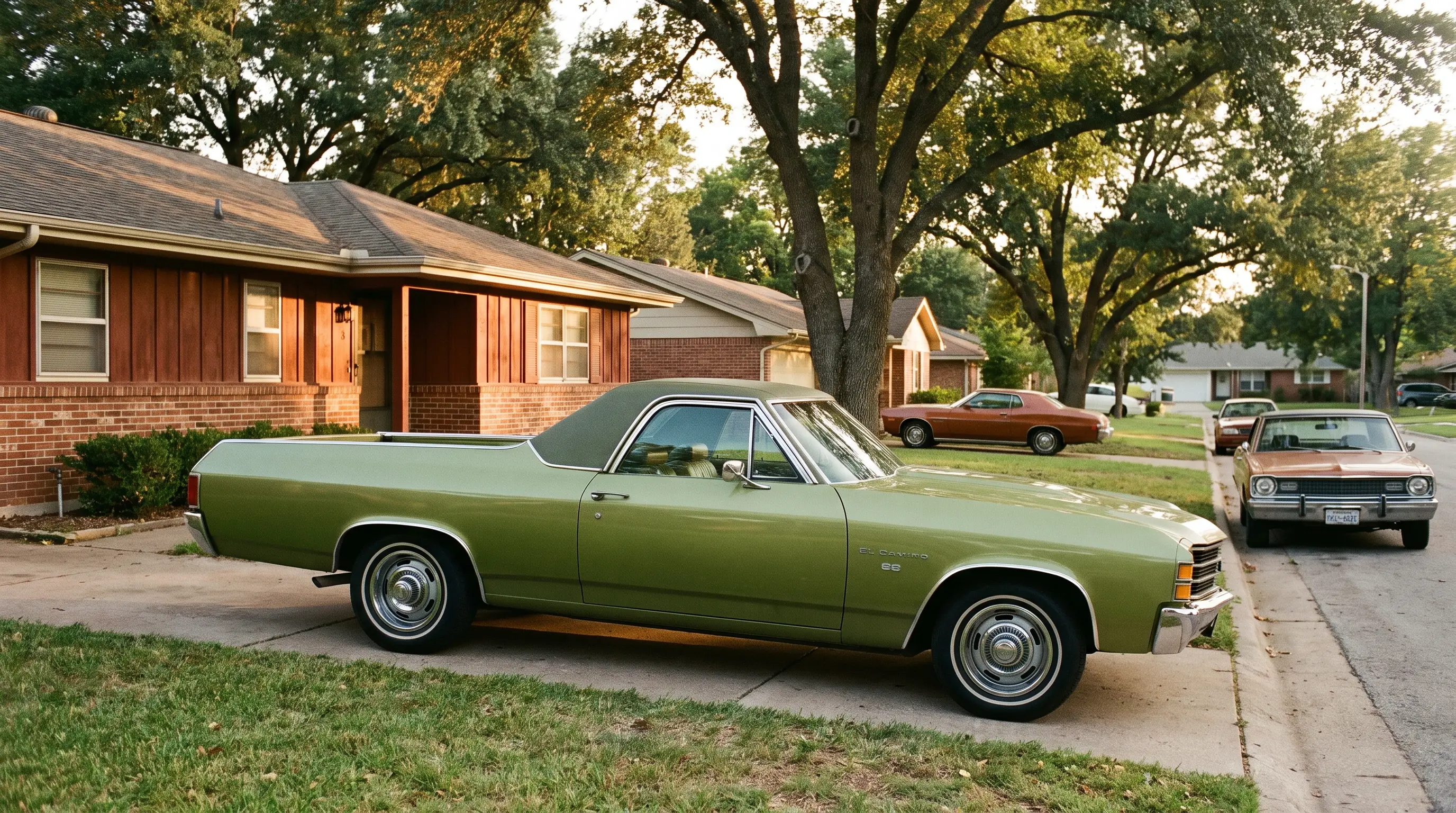
The 1972 El Camino never got the movie moment that later trucks and Trans Ams did, and that absence is itself part of the story. It arrived at the tail end of the muscle era, a year that Hollywood and popular music were mostly ignoring in favor of whatever felt new, which meant the 1972 El Camino spent its cultural life doing something quieter and arguably more honest: being the truck that ordinary working people actually drove.
A truck that lived outside the spotlight
Search for a famous film scene built around a 1972 El Camino and you will come up mostly empty, at least compared to what the 1970 SS 454 or the Trans Am of a few years later earned in car-chase folklore. That is not because the 1972 was obscure when new. It sold in real numbers to real buyers who wanted a vehicle that could handle a load of lumber on Saturday and still look sharp parked at a drive-in on Friday night. Its cultural footprint is less about a specific scene and more about what it represented broadly across small towns and suburbs in the early 1970s, a working vehicle with a muscle car's face.
That dual identity, part truck and part personal car, is precisely what pop culture struggled to use. A movie needs a clean symbol, and the El Camino refused to be one thing. It shows up in period photography and home movies far more often than in scripted film, which if anything makes it a more honest artifact of 1972 than a car built purely for the cameras ever could be.
Television fared slightly better at using vehicles like this than film did, since episodic shows had more room for a background character's daily-driver truck than a two-hour feature had for anything but its hero car. Even so, specific, verifiable 1972 El Camino appearances on screen are thin on the ground. Vehicle-spotting databases built specifically to catalog film and television cars turn up plenty of El Caminos across the model's run, but confirmed, dated sightings of the 1972 model specifically are scarce, and any claim naming a particular show or episode deserves a healthy dose of skepticism until confirmed against production records.
Where 1972 actually shows up
Look past feature films and the 1972 El Camino has a steadier, quieter presence. It turns up in period print advertising that leaned hard on the idea of versatility, the copy pitching a vehicle that could take the family on a Sunday drive and haul equipment on Monday. It shows up in local dealership photography and regional car show archives from the era, the kind of material collectors now dig through precisely because it was never staged for national attention. And it shows up, decades later, in the modern custom and lowrider scene, where 1970s A-body El Caminos including the 1972 have become a canvas painters and builders return to again and again.
For readers who want the fuller arc of that year, including how the 1972 fit into the broader run of the model, the 1972 el camino history covers the mechanical and market context that the cultural side of the story sits on top of.
Music offers a slightly different angle. Country and outlaw rock songwriters of the 1970s frequently reached for the pickup truck as a shorthand for freedom and working-class identity, and the El Camino, with its car-like ride and truck-like utility, fit that lyrical space naturally even when a specific model year was never named. The truck's presence in that broader songwriting tradition is cultural rather than literal, a symbol drawn from a category of vehicle rather than a single documented reference to 1972 specifically.
The nostalgia circuit finally catches up
What has changed in the last two decades is not the 1972 El Camino, it is the audience. Buyers who grew up around one, whether their father drove one to a job site or a neighbor had one parked in a driveway, are now the ones with the means and the motivation to restore or collect them. Nostalgia does not require a movie credit. It requires a generation old enough to miss what its childhood actually looked like, and that generation is squarely in the market now.
That shift has produced a steady stream of features in specialty publications and enthusiast videos built around ordinary 1972 El Caminos, often framed less as icons and more as time capsules. Readers curious about how other owners think about the model from this angle can find a related story that gathers exactly those perspectives.
Social media has accelerated that process further. Short video clips of a 1972 El Camino idling at a car meet, or a restoration progressing panel by panel, now reach an audience that has nothing to do with box office numbers. That kind of visibility, unscripted and often amateur, has done more to raise the truck's profile in the last decade than any single film credit could have, because it reaches exactly the nostalgic buyers who are actually in the market for one.
"The trucks that never made it into a movie are often the ones that made it into somebody's actual life, and that is a kind of fame too."
- Nora Beckett
The custom scene keeps the story alive
Beyond nostalgia for the stock truck, the 1972 El Camino has found a durable second life inside the custom and lowrider community, where builders treat the body's long hood and low stance as a canvas rather than a finished statement. That scene does not chase movie credits either. It generates its own kind of cultural visibility through car shows, magazine features, and word of mouth among builders, and a well-executed custom 1972 El Camino can earn the same kind of local legend status that a screen appearance might have given it in a different era.
What ties all of these threads together, the print advertising, the home movies, the songwriting shorthand, the modern social feeds, and the custom builds, is that none of them required a studio's approval. The 1972 El Camino built its cultural presence from the ground up, through the people who actually drove and modified it, rather than from the top down through a single famous placement. That is a slower, quieter path to relevance, but arguably a more resilient one.
Why the quiet years matter
A car does not need a chase scene to be culturally significant. The 1972 El Camino's real legacy in popular memory is as background texture, the truck parked outside the diner, the one hauling a boat to the lake, the one a friend's older brother drove. That kind of presence is harder to catalog than a film credit, but it may be more durable, because it is tied to lived memory rather than a script. For a buyer chasing that specific slice of Americana, El Caminos for sale now from this exact model year are as close as it gets to owning a piece of that quiet, unglamorous, thoroughly real 1972.