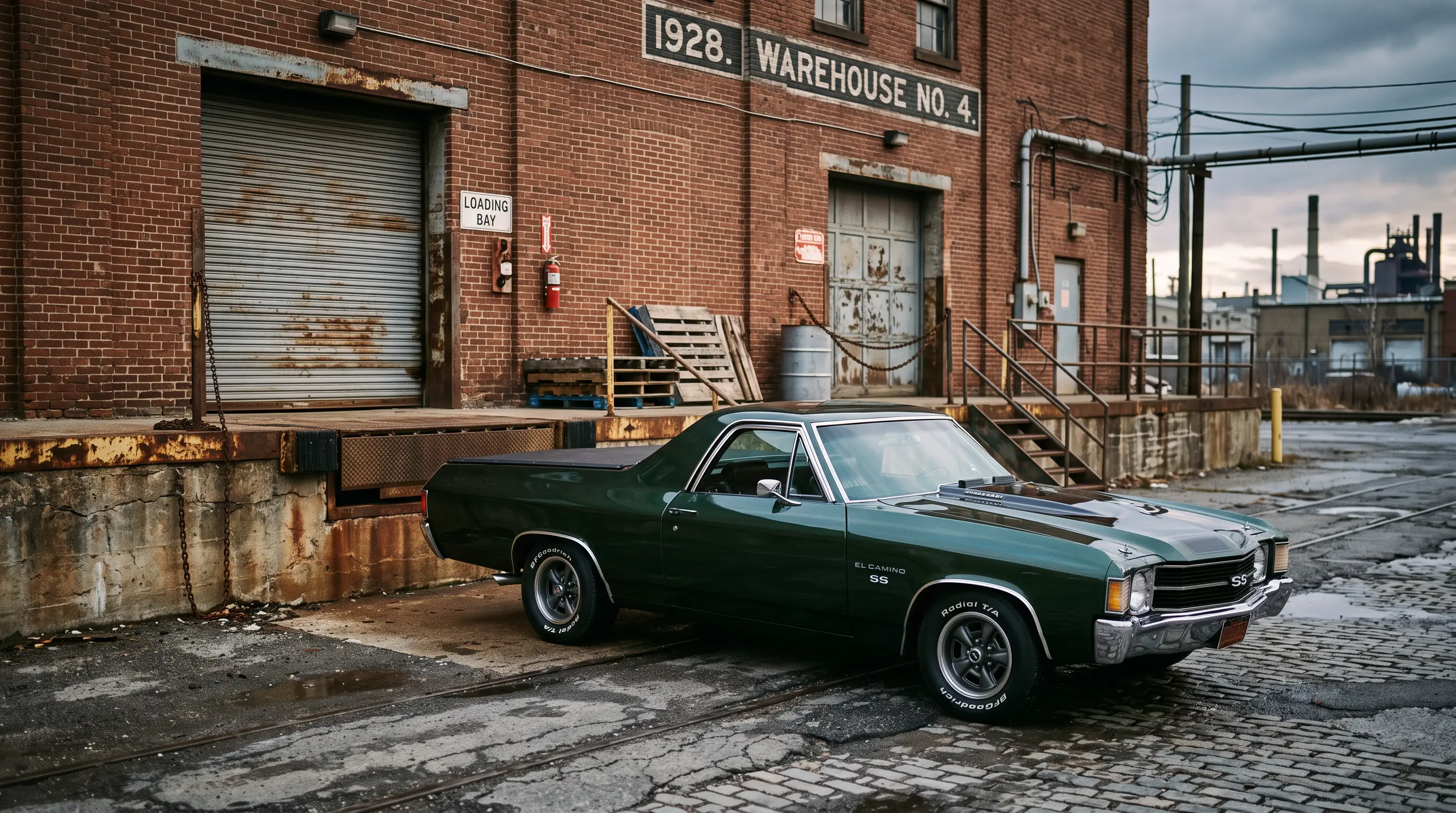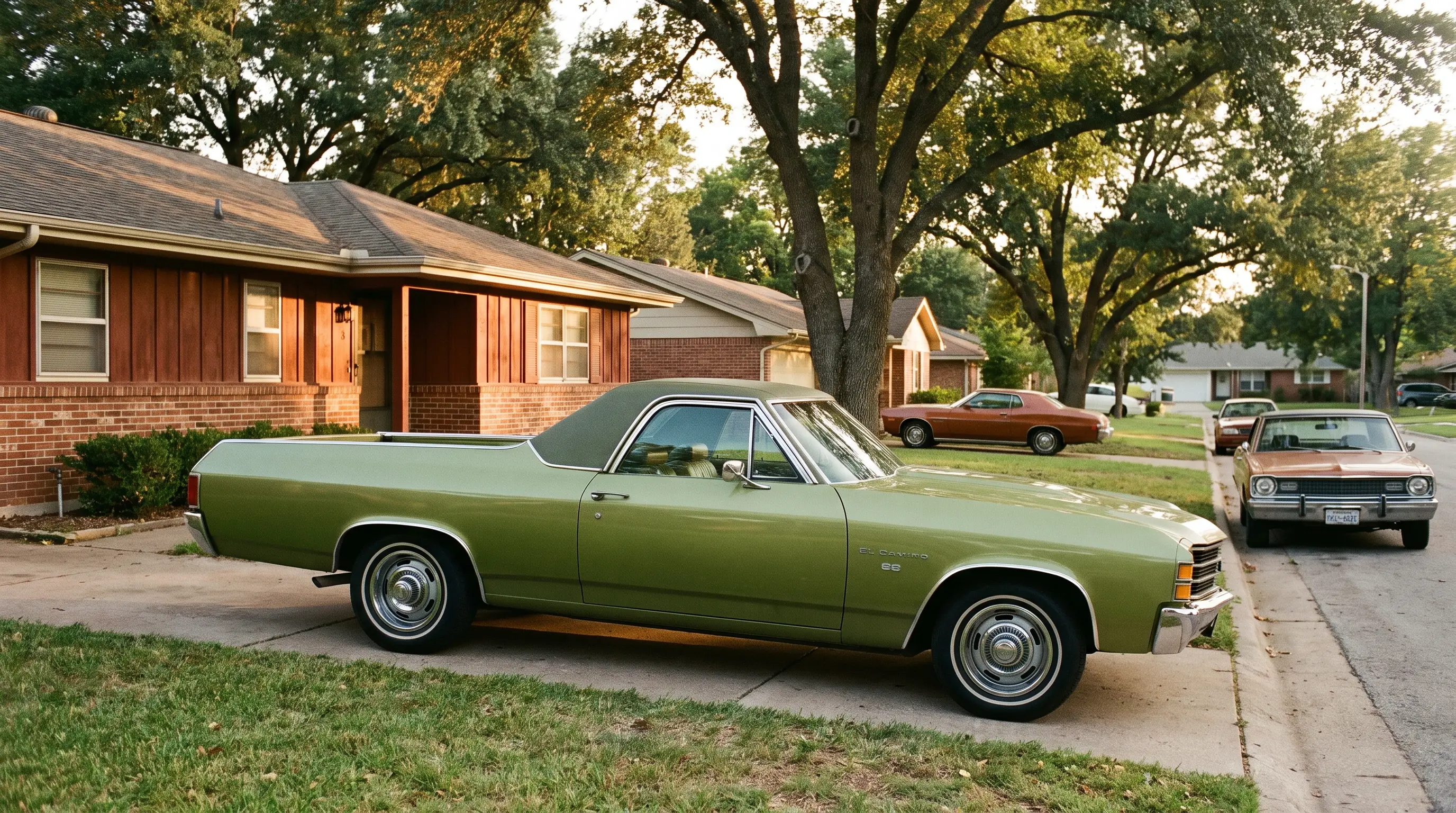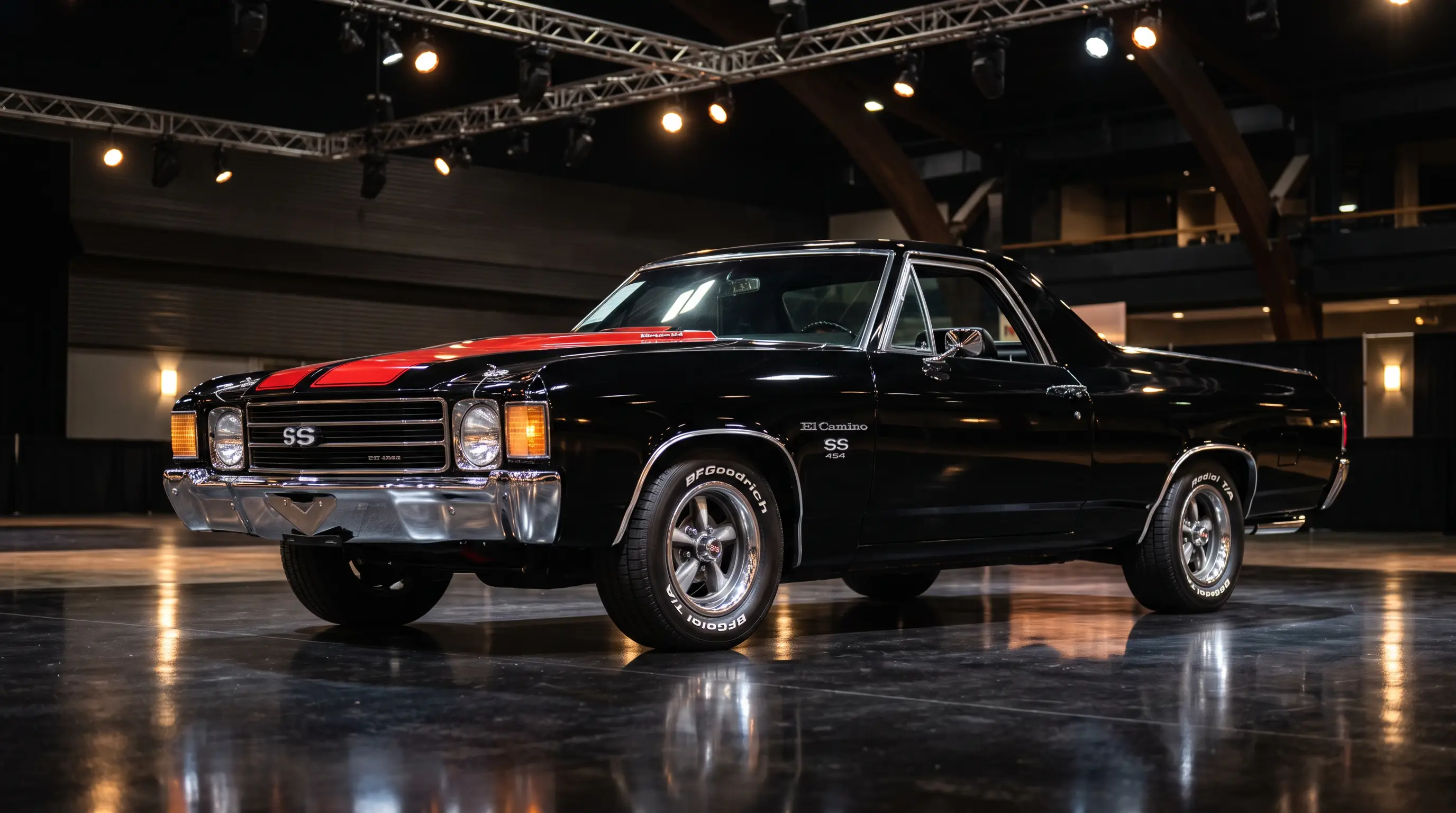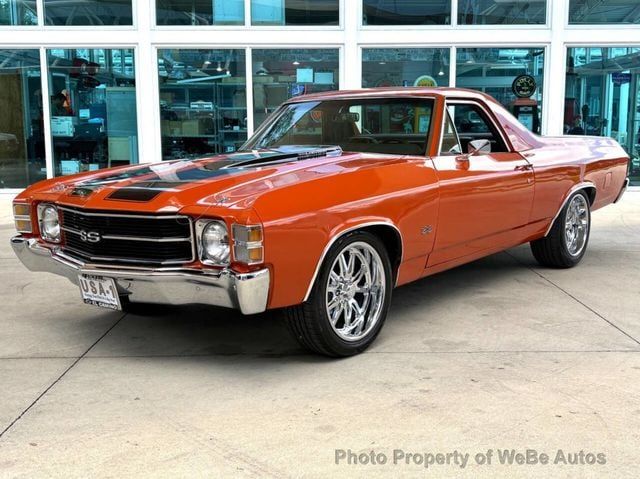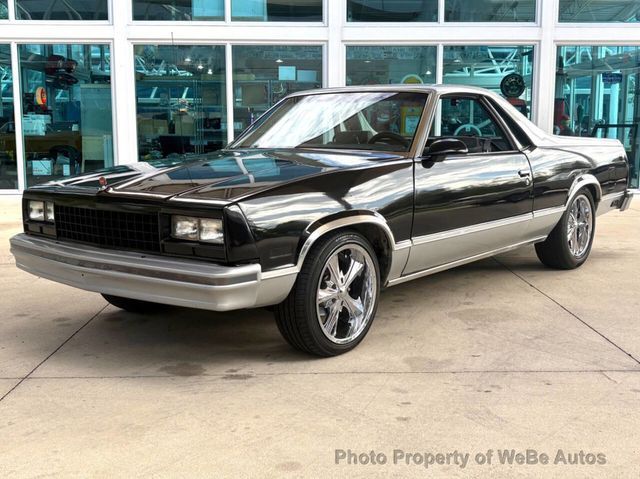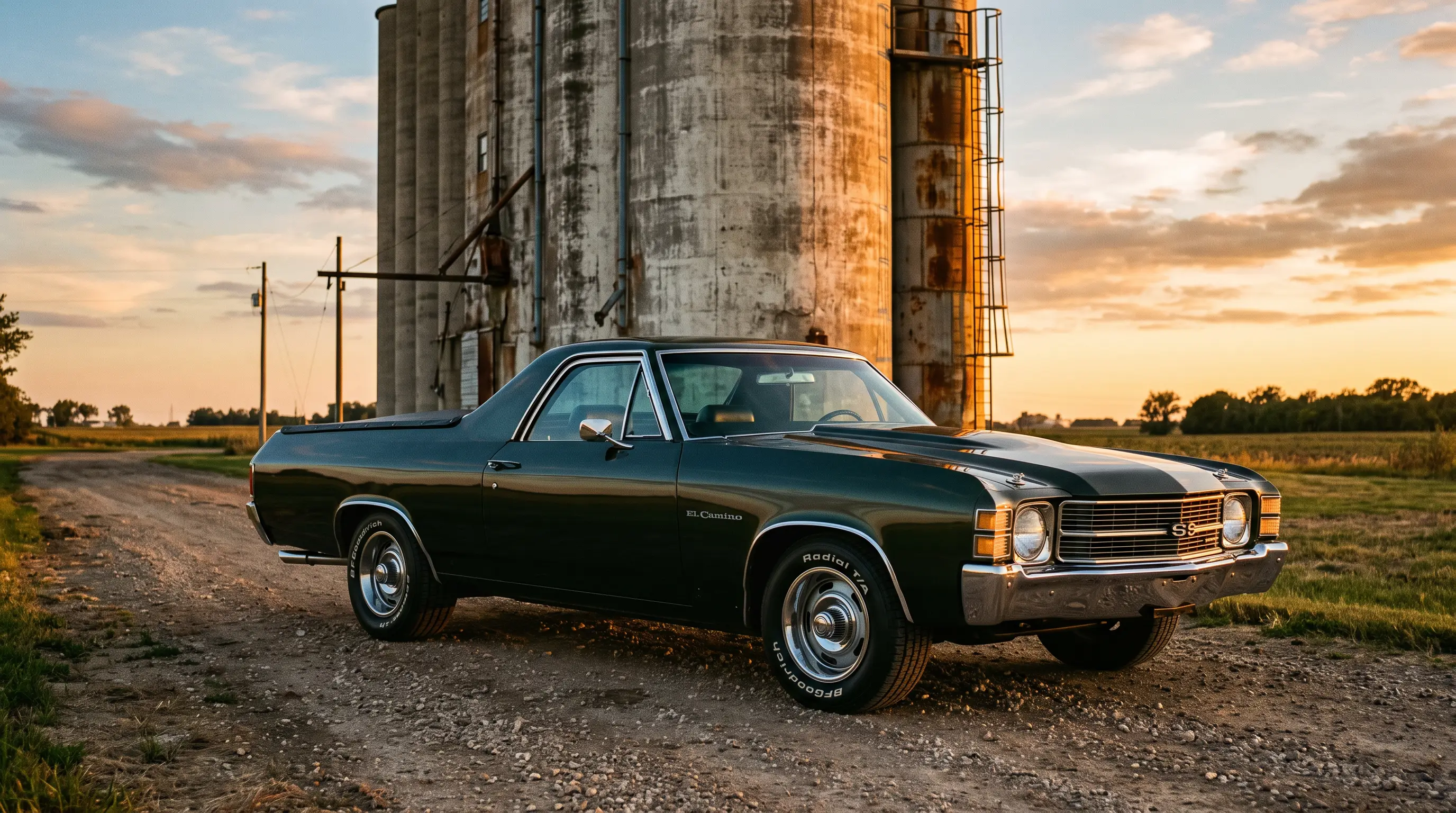
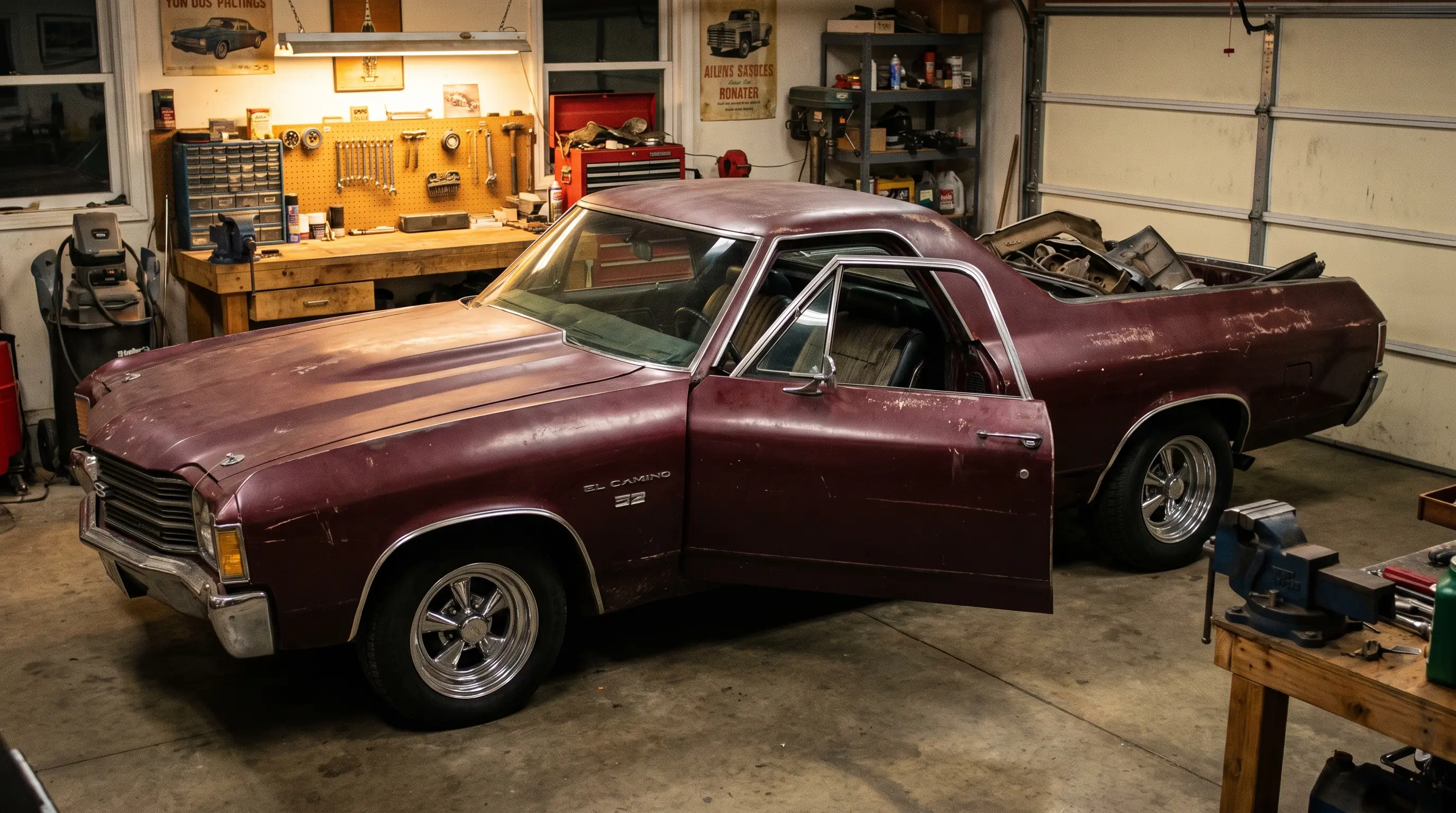
Talk to enough people who actually own a 1972 El Camino and a pattern emerges that the auction catalogs never quite capture. The people who chose this specific year, rather than the more celebrated 1970, tend to describe the same reasons in strikingly consistent language: a car that drives like the muscle-era icon it is, without the premium and the pressure that comes with owning the "peak" year.
The case owners make for themselves
Ownership circles and regional clubs consistently surface a few recurring threads when the subject of 1972 comes up. First is usability. A 454-equipped 1972 SS delivers essentially the driving experience of a 1970, the same chassis dynamics, the same big-block presence under the hood, without the anxiety of babying a car that has become a six-figure investment piece. Owners describe driving their 1972 to the grocery store or the weekend cruise-in without the constant awareness that a parking lot ding just cost them thousands in resale value.
Second is documentation confidence. Because 1972 cars were not chased as aggressively by speculators through the 1980s and 1990s, a smaller share of the surviving population has murky ownership histories, engine swaps disguised as original, or cosmetic upgrades passed off as factory. Owners who have done the trim tag and cowl tag research on their own cars report fewer surprises than friends who bought 1970 models assuming everything matched.
Third, and less expected, is a sense of community distinction. Owning a year that is not the year everyone else chases gives a truck its own identity within club circles. Several owners describe enjoying the conversation that follows when someone at a show assumes their car is a 1970 and then learns it is a 1972, because it opens a door to explain the net horsepower rating change, the model's final year status, and the value argument in a way a 1970 owner rarely gets asked to make. That kind of ownership becomes as much about telling the story as about driving the car.
What surprises new buyers
New owners moving into a 1972 often expect it to feel like a compromise compared to the 1970, and most report the opposite experience once they are behind the wheel. The structural and mechanical differences between the final years of this body style are minor. What differs is market perception, not the driving character. Several owners describe a specific moment, showing the car at a local cruise night and watching people assume it is a 1970 or 1971 until they check the grille details, as the point where they realized the reputation gap had nothing to do with how the car actually performs.
Maintenance costs surprise new owners in a good way as well. Because the platform is shared so closely across 1968 through 1972, parts availability for suspension components, brakes, trim, and engine hardware remains strong regardless of exactly which of those years a given truck is. An owner does not pay a scarcity premium for parts simply because they chose the final year of the body style rather than the most famous one. That practical reality matters as much to long-term satisfaction as any number on a spec sheet.
| Owner priority | Why 1972 satisfies it |
|---|---|
| Daily-drivable muscle feel | Same chassis and big-block options as 1970 |
| Lower financial pressure | Priced below the peak collector years |
| Cleaner provenance odds | Less speculative buying and selling in its history |
| Show presence | Visually near-identical to more celebrated years |
"An owner who bought the car nobody was bidding against usually knows more about it than the owner who won a bidding war. That is not an accident, it is what happens when a purchase is made with patience instead of adrenaline."
- Sarah Whitfield
The regret that almost never shows up
What is notable across owner accounts is what does not appear. Complaints about the 1972 feeling underpowered, cheaply built, or visually dated are rare to nonexistent. The regrets that do surface tend to be about paperwork and originality questions any classic car owner faces, not about the year itself. For readers who want the whole picture of what the 1972 model year actually offered mechanically and historically, that context explains why owner satisfaction runs as high as it does.
If there is a single sentiment that recurs most often among people who own one, it is a kind of quiet vindication, the sense of having found real value where the broader market was not looking. For anyone weighing whether to find a classic El Camino from this specific year, that owner consensus is worth taking seriously. It is not nostalgia talking. It is people who live with the car every week, comparing notes and arriving at the same conclusion independently.
Longtime owners who eventually sell their 1972 also describe a distinct kind of buyer showing up compared to what they hear from friends selling 1970 examples. Rather than a speculator running numbers on future appreciation, the typical buyer for a 1972 tends to be someone who wants to drive and enjoy the truck immediately, without treating it as a display piece. That buyer profile reinforces the whole community's sense that 1972 attracts people who genuinely want the ownership experience rather than the trophy.
How club culture treats the year
Regional El Camino and Chevelle clubs generally do not draw a hard line between the model years within the 1970 through 1972 stretch when it comes to event participation or judging categories, since the differences are cosmetic rather than mechanical. That inclusiveness matters to owners. A 1972 SS parked next to a 1970 SS at a show gets judged on condition, correctness, and presentation, not on which specific model year happened to sell better new. Several longtime club members describe this as one of the healthier aspects of the hobby, where enthusiasm for the platform as a whole outweighs the narrower reputation hierarchy that auction houses and price guides tend to reinforce.
That club-level parity also shapes how newer owners are welcomed into the community. A buyer showing up with a 1972 rarely faces the kind of gentle condescension that can surround a lesser-known model year in other hobbies, because the people already invested in this platform understand exactly how close the 1972 sits to the truck everyone reveres. That welcome goes a long way toward explaining why so many 1972 owners describe genuine satisfaction rather than a nagging sense of having settled for second best.
A verdict earned through daily use, not auction results
Auction prices measure what speculators will pay in a single dramatic moment. Owner satisfaction measures something slower and arguably more reliable, whether a car keeps earning its keep after the sale is done and the car simply has to be lived with. On that measure, the 1972 El Camino performs exactly as well as its more famous siblings, and its owners are among the most consistent group of advocates in the entire model's history.