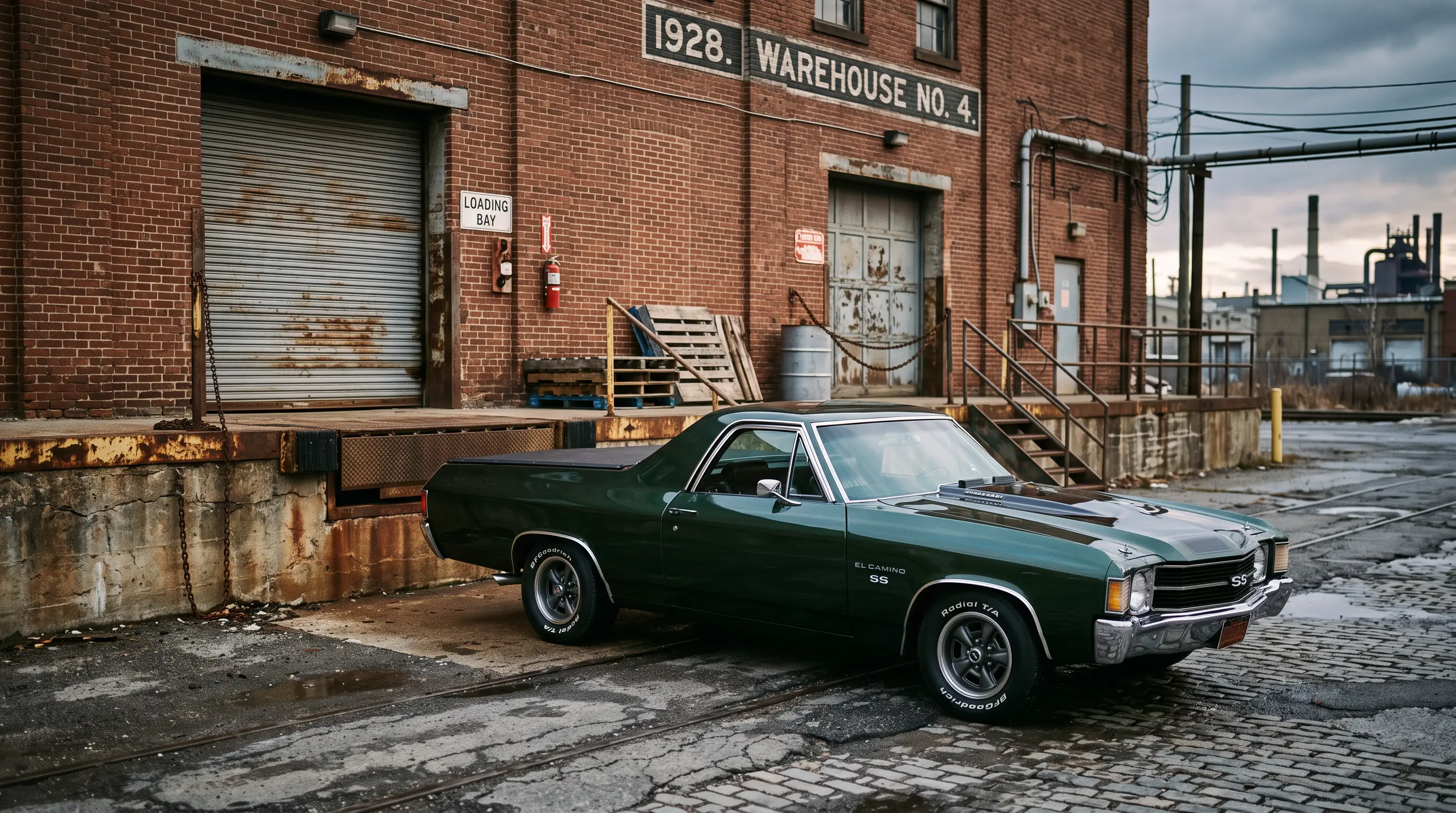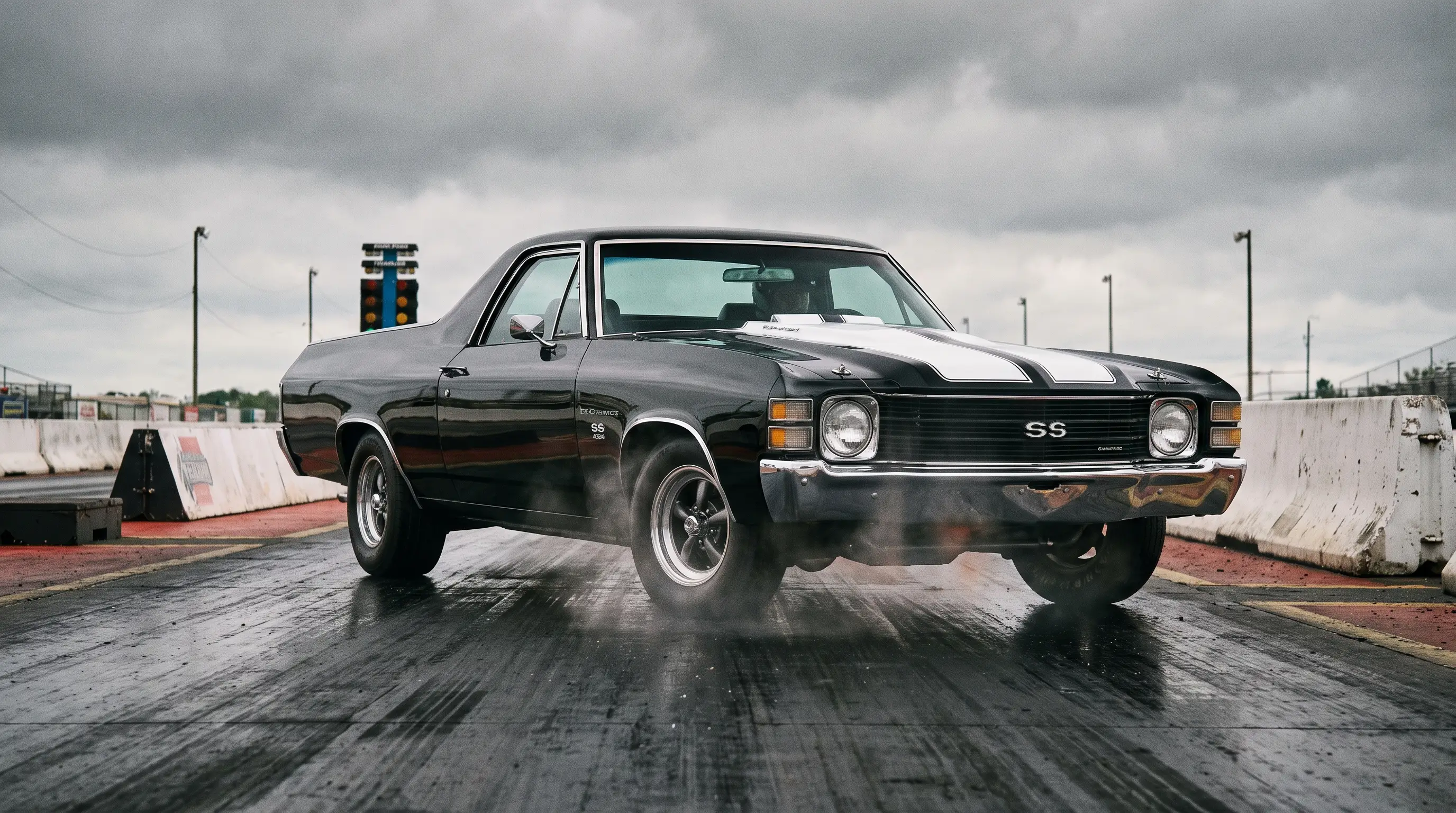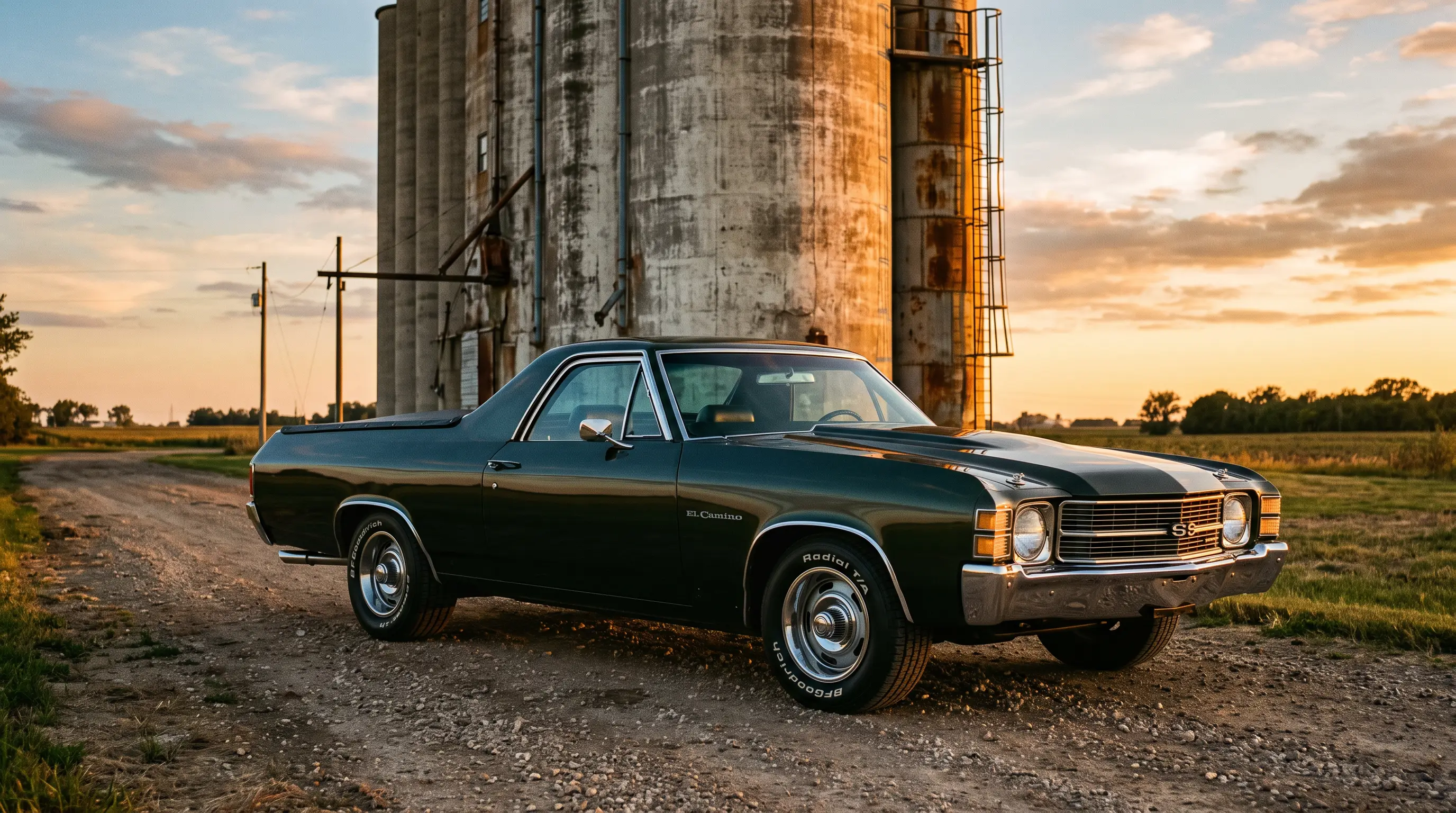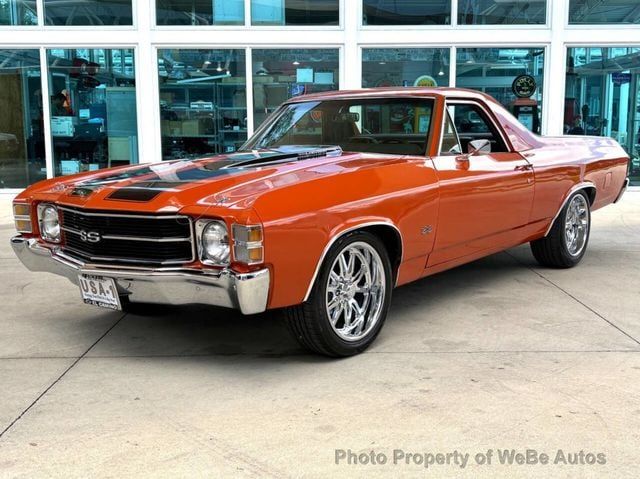
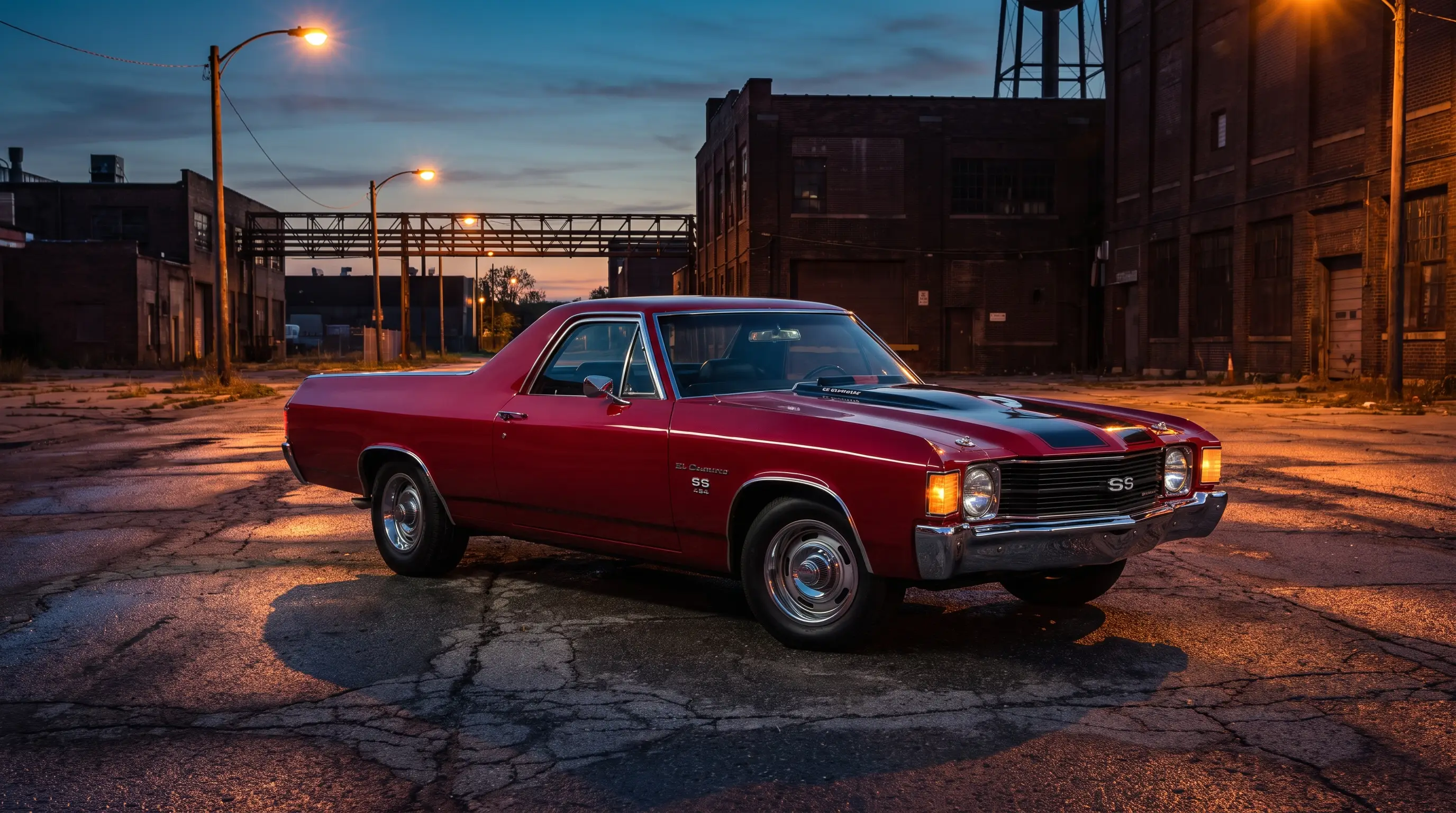
The paperwork for 1972 tells a story that the sales brochure never admitted out loud. Somewhere between the factory floor and the dealer lot, the El Camino, along with the rest of Detroit's muscle car lineup, quietly crossed a line it would not get to cross back over. The 1972 model year is the last time a factory El Camino could genuinely be called muscle without an asterisk, and the documented reasons why are worth laying out plainly.
The switch to net horsepower changed the conversation
Starting with the 1972 model year, the entire domestic auto industry moved from gross horsepower ratings, measured with an engine stripped of accessories on a test stand, to SAE net ratings, measured with the engine dressed as it would actually sit in a car, complete with accessories, exhaust system, and emissions equipment. That single accounting change made every big-block engine in Detroit's lineup look dramatically weaker on paper overnight, even in cases where the actual hardware had not changed as much as the number suggested. The 1972 El Camino's big-block options carried net ratings well below what the same or similar engines had posted under the old gross system just a year or two earlier, and casual buyers comparing brochure numbers across model years without understanding that measurement shift came away with a badly distorted picture of how much the car had actually declined.
For the fuller production history of this specific model year, 1972 el camino history covers the details in depth.
Insurance surcharges did real damage before emissions rules finished the job
Net horsepower ratings were only part of the pressure bearing down on the muscle car segment by 1972. Insurance companies had spent the previous several years steadily raising premiums on high-performance models, applying surcharges specifically targeted at big-block engines and SS-badged cars that made them meaningfully more expensive to insure than a comparable base model. That surcharge structure pushed a real share of the traditional muscle car buyer, often a younger driver who insurers considered higher risk to begin with, toward smaller engines or away from performance trim altogether. Combined with tightening federal emissions requirements that forced compression ratio reductions across the board, the economic and regulatory environment by 1972 was actively working against the kind of unapologetic big-block performance that had defined the segment just two or three years earlier.
What actually separated 1972 from the years right before it
By 1972, Chevrolet had already discontinued the LS6 454 option that had briefly represented the top of the big-block El Camino lineup, leaving the LS5 454 as the strongest factory engine still available, now rated at 270 net horsepower and 390 lb-ft of torque. Compression ratios across the big-block lineup had been reduced from the previous few years specifically to accommodate lower-octane unleaded fuel requirements that were coming into effect, a change that further reduced output independent of the net versus gross measurement issue. Put together, a 1972 buyer ordering the top available big-block still got a genuinely quick car by the standards of ordinary traffic, but the specific combination of a discontinued top engine option, reduced compression, and a switch in how the remaining engine's output was reported meant the car on paper looked like a shadow of what a 1970 or 1971 buyer could have ordered.
"The temptation is to read the horsepower numbers on a 1972 window sticker and assume the car had gotten dramatically weaker in one year. The real story is a stack of separate factors, a measurement change, an engine option getting dropped, and a compression reduction, all landing in the same model year at once."
- Tom Ramirez
The SS badge still meant something that year
It would be easy to assume that once horsepower numbers started dropping across the board, the SS package itself became mostly cosmetic, trading on a reputation the hardware could no longer fully back up. The 1972 El Camino SS does not quite fit that assumption. The suspension and handling package that came with the SS designation, along with the heavier duty components tied to big-block engine selection, still delivered a genuinely different driving experience from a base model El Camino, even as the raw horsepower figure on the window sticker had come down from where it stood two years earlier. Buyers who dismiss 1972 purely on the net horsepower number miss that the SS package as a whole, not just the engine output figure in isolation, was still a meaningfully different car to drive than an ordinary six-cylinder work truck version of the same body.
Why 1972 still earns the last real muscle title
Despite all of that regulatory and insurance pressure, the 1972 El Camino still qualifies as genuine muscle in a way that the years immediately following it increasingly did not. It was the final model year before emissions requirements tightened further and insurance pressure intensified to the point that Chevrolet and its competitors began pulling back big-block options from these platforms altogether, shifting toward smaller displacement engines marketed more on styling and trim than outright power. A 1972 buyer could still walk into a Chevrolet dealership and order a car with a genuine big-block under the hood and SS badges to back it up, an option that would simply not exist in the same form within just a few more model years. That makes 1972 less a diminished echo of the muscle car era and more its documented closing chapter, the last point at which the full factory formula, big-block power, SS branding, and genuine performance intent, still existed together in one showroom car. Anyone researching the platform should also read a related story on the specific SS 454 that closed out that formula, and buyers actively shopping the era can review El Caminos for sale now to see how that history is reflected in today's market.
Understanding 1972 as the closing chapter rather than a diminished afterthought changes how the model should be evaluated by collectors today. A 1972 SS with the big-block option should be judged against the regulatory reality it was built into, not against a 1970 LS6 car that existed under an entirely different set of insurance, emissions, and measurement conditions. Treating every year of the SS lineup as though it should be benchmarked against the single best year the platform ever produced sets up 1972 to look worse than it actually was in its own historical context. A more accurate frame recognizes 1972 as the last factory attempt to deliver genuine performance credibility within a rapidly closing window, which is a distinct and defensible position in the model's history rather than simply a lesser version of what came before it.
Sources and notes
- OPGI's 1972 El Camino SS, OPGI Blog
- '72 454 horsepower, Team Chevelle
- 1970 Chevy Chevelle LS6 vs 1970 Chevy El Camino LS6, GM Authority
- Chevrolet El Camino, Wikipedia
- 1968-1972 Chevrolet El Camino SS: 3rd-Gen Deep Dive, MotoGallery
- Anybody know of a real 1970 LS6 equipped El Camino?, El Camino Central Forum