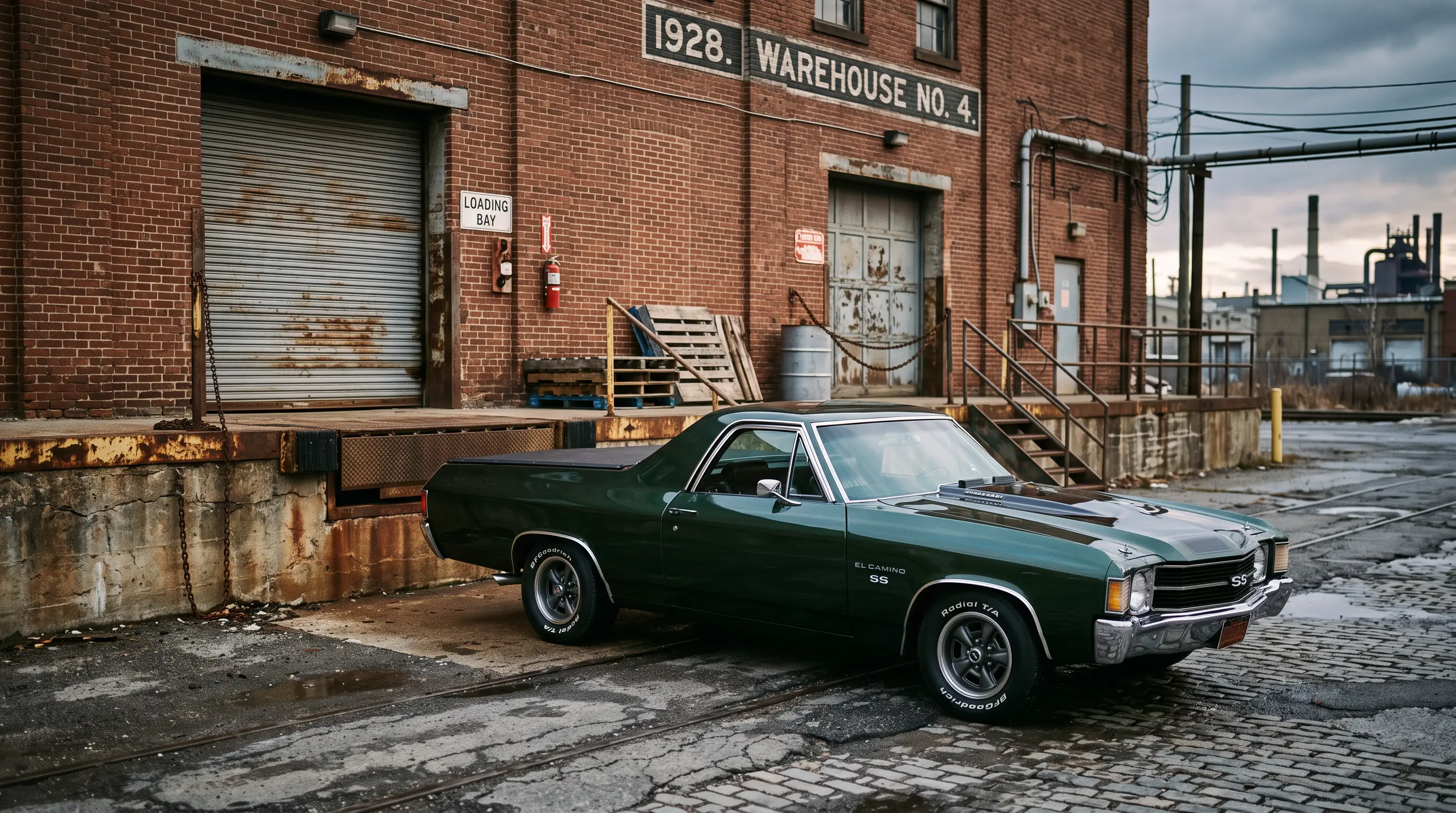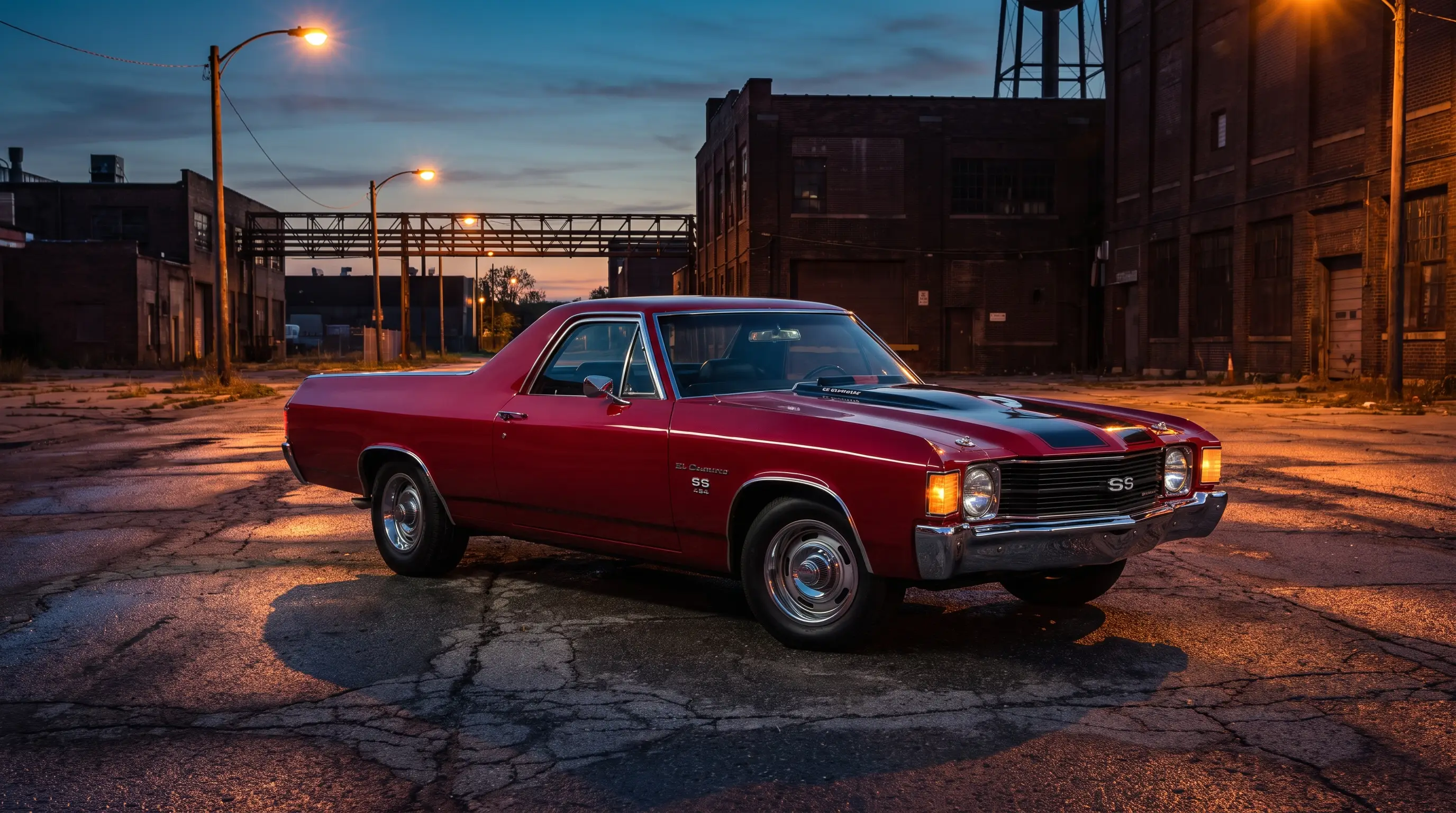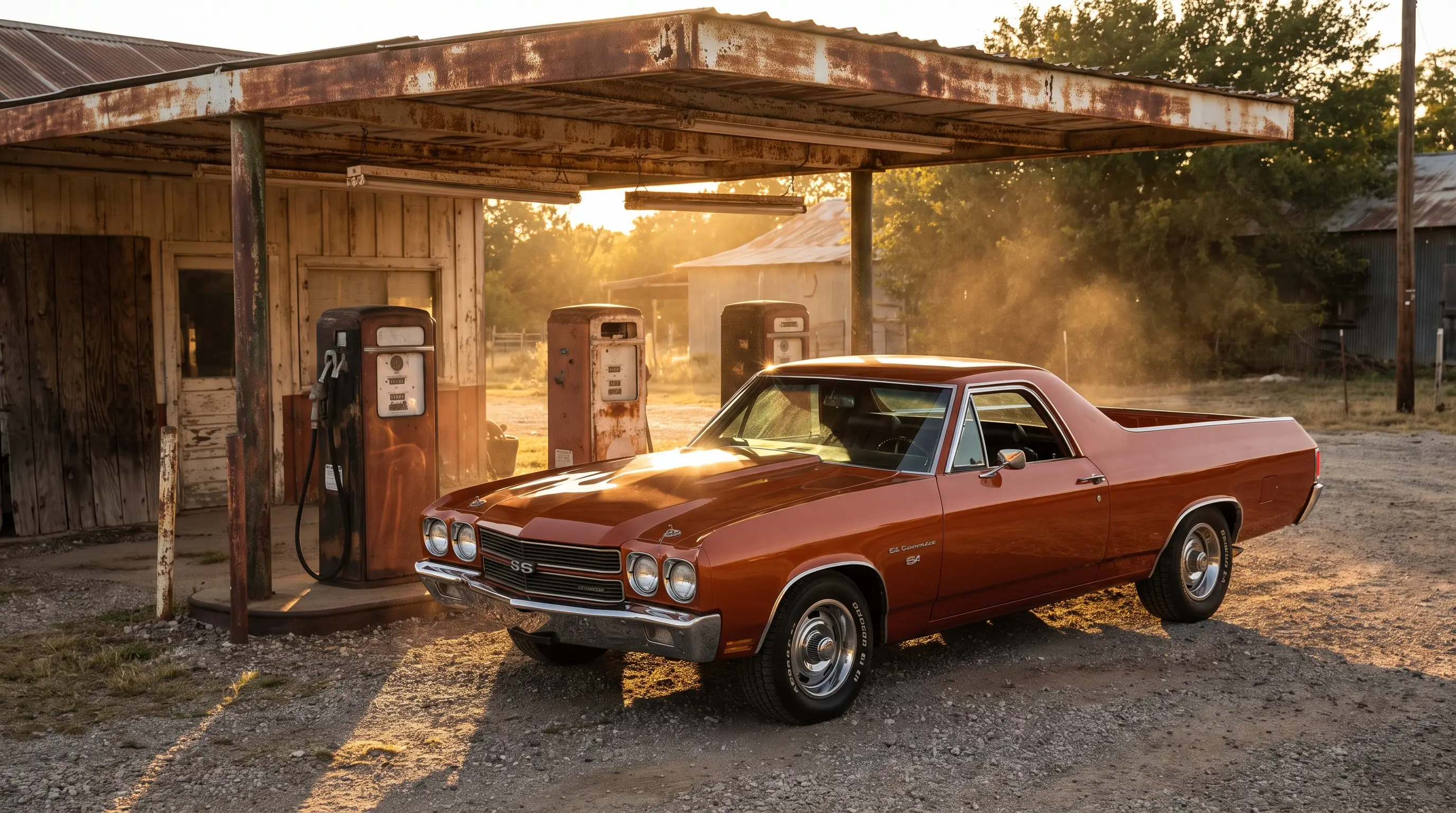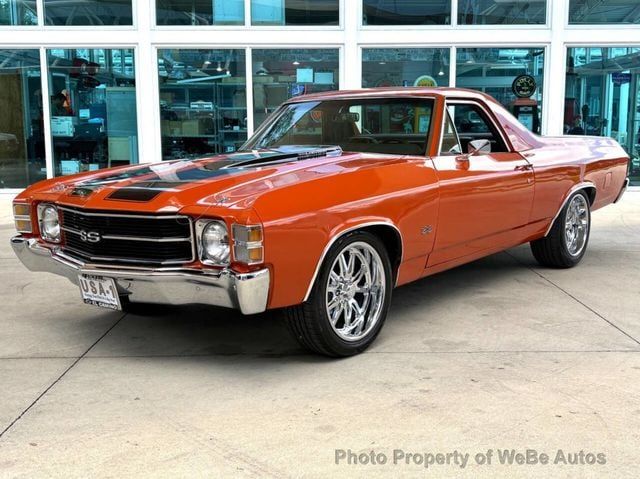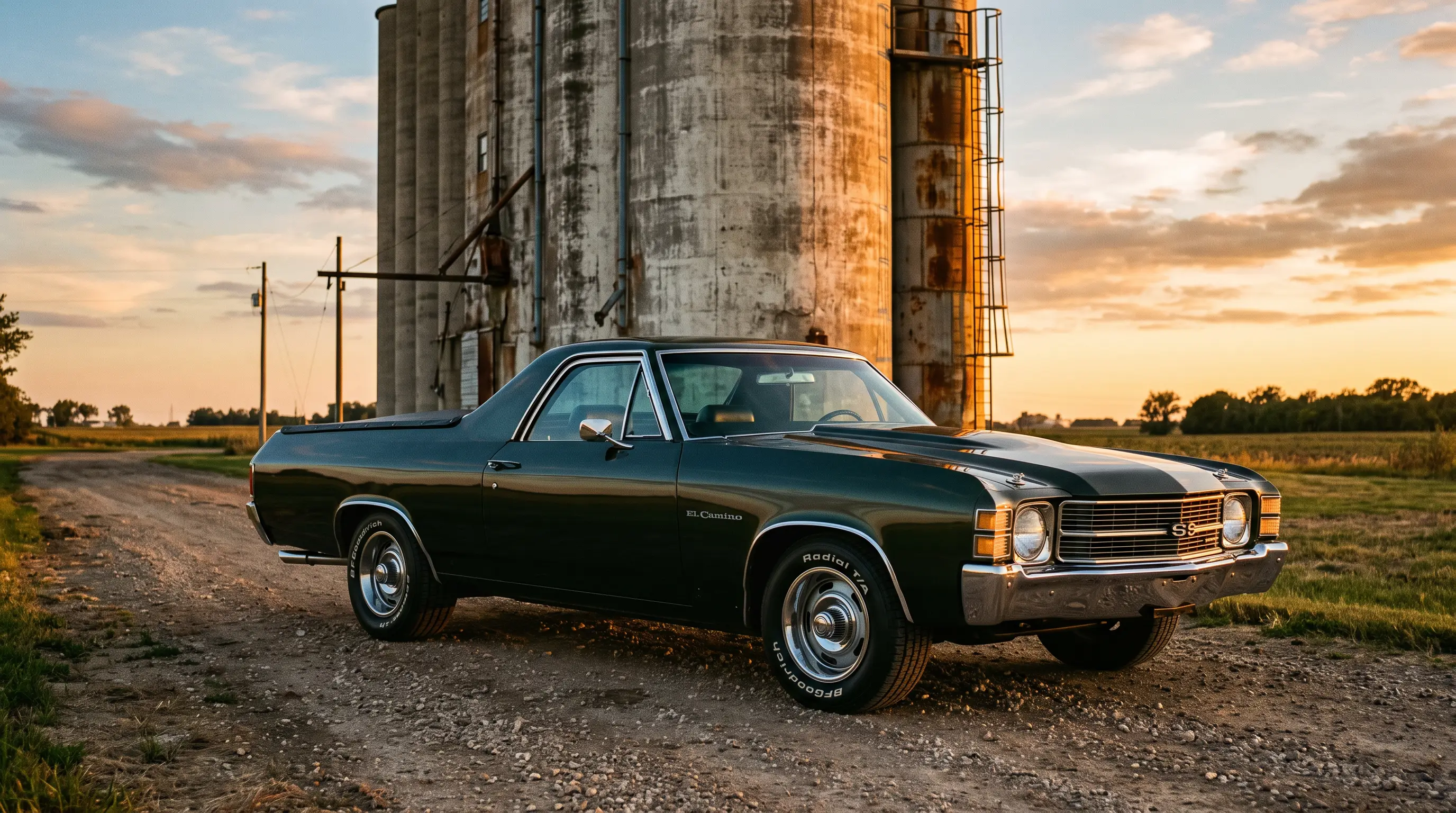
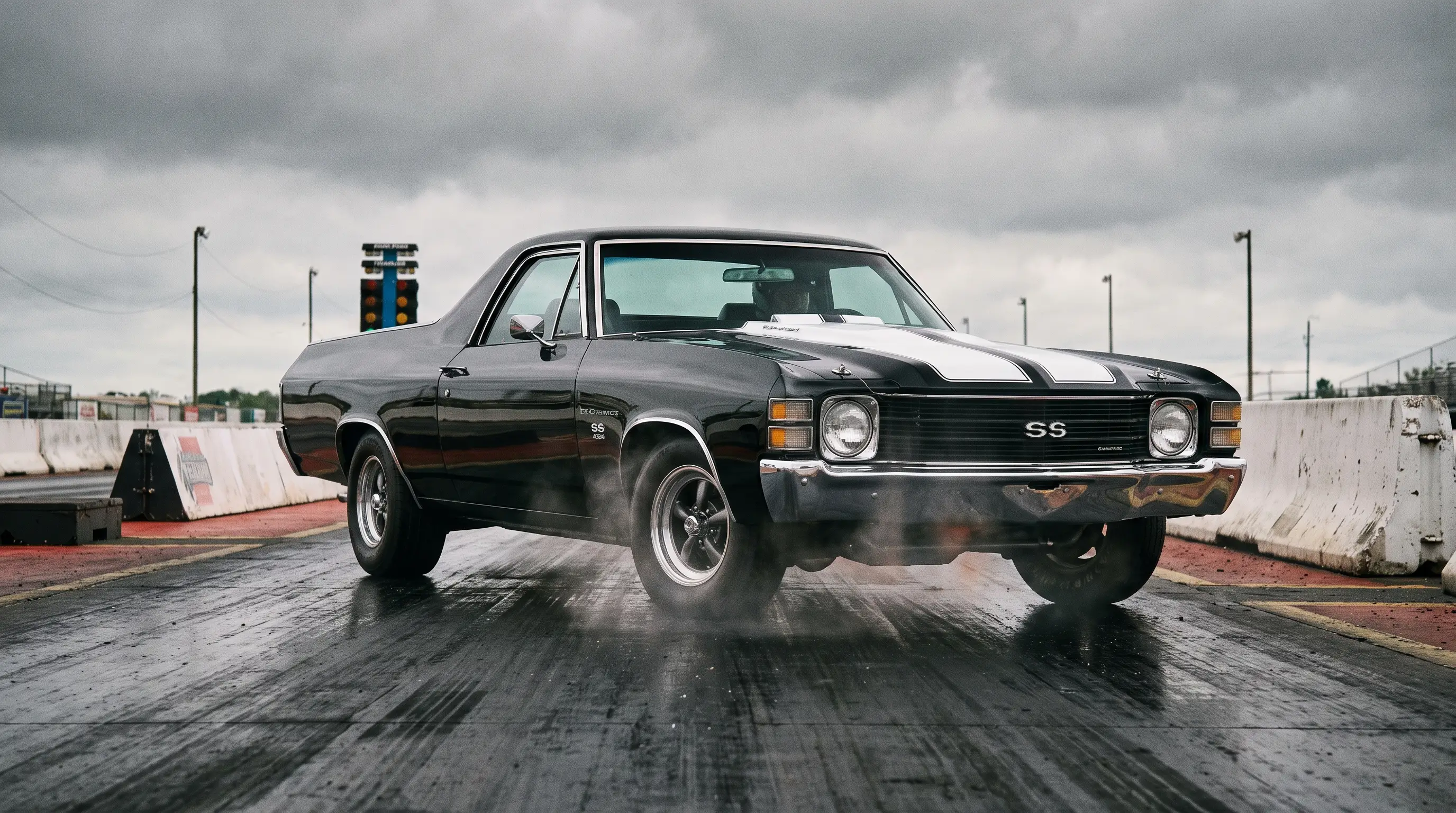
Numbers do not lie, but they do get misread constantly, and the 1972 El Camino SS 454 is one of the more commonly misread cases in the whole muscle car story. Look at the horsepower figure on a 1972 window sticker next to a 1970 sticker and the conclusion looks obvious, that the LS5's 1972 rating marks a defeated swan song for the big-block El Camino rather than a genuine performer in its own right. The actual engineering explanation is more layered than that, and it is worth working through methodically.
Same displacement, different measurement standard
The 454 cubic inch big-block in the 1972 El Camino SS shares its basic architecture with the engine that powered the car in 1970 and 1971, but the rating attached to it changed for reasons that have almost nothing to do with the hardware itself. Starting in 1972, the entire domestic industry switched from SAE gross horsepower, measured on a test stand with the engine stripped of the accessories, exhaust, and emissions equipment it would actually carry on the road, to SAE net horsepower, measured with all of that equipment installed and functioning as it would in a customer's driveway. That single measurement change alone accounts for a meaningful chunk of the apparent horsepower drop between the earlier LS6-equipped cars and the 1972 LS5, independent of any actual reduction in the engine's real output.
For more on how this model year fits into the broader story, our complete history covers the full production picture.
What actually changed versus what only appeared to change
Separating the real engineering changes from the accounting change requires looking at three separate variables independently rather than treating the single horsepower number as one clean data point. First, compression ratios across GM's big-block lineup were reduced starting around 1971 and carried into 1972 to accommodate the industry-wide shift toward lower-octane unleaded fuel, and lower compression genuinely does reduce an engine's real output, not just its measured rating. Second, the LS6 option, which had briefly represented the strongest factory big-block available for this platform, was discontinued after the 1970 model year, leaving the LS5 as the top available big-block for 1972, a genuine reduction in what was on the order sheet rather than a measurement artifact. Third, and separate from both of those, sits the net versus gross measurement change itself, which affects the number on paper without necessarily reflecting an equivalent real-world power loss. Treating all three of these as a single undifferentiated decline oversimplifies what was actually three distinct factors compounding in the same model year.
The insurance and emissions context around the numbers
None of these engineering variables existed in a vacuum, and a full accounting of the 1972 LS5's position has to include the regulatory and economic pressure surrounding it. Insurance companies had spent the preceding several years applying meaningful premium surcharges to big-block and SS-badged vehicles specifically, a cost that fell disproportionately on younger buyers already facing higher base rates, and that pressure was actively discouraging manufacturers from continuing to push maximum output as a selling point. At the same time, tightening federal emissions standards were driving the compression reductions already discussed, with more restrictive rules still to come in following model years. Chevrolet's engineering decisions for the 1972 LS5 sat squarely inside that convergence of insurance economics and emissions regulation, which means the engine's specification should be read as a rational response to a specific set of external constraints rather than as evidence of declining engineering ambition or quality on Chevrolet's part.
Reading the LS5's real-world performance honestly
Stripped of the confusion around measurement standards, the honest engineering assessment of the 1972 LS5 454 is that it remained a genuinely strong performer for its era, even if its 270 net horsepower and 390 lb-ft rating no longer represented the outright ceiling of big-block output the platform had briefly reached with the LS6. A big-block displacing 454 cubic inches, even with reduced compression and net rather than gross reporting, still delivered substantially more torque and real-world acceleration than any six-cylinder or small-block option available in the same showroom that year. The failure mode in most casual assessments of this car is comparing it against an idealized memory of 1970 rather than against the actual lineup it was sold against in 1972, where it still stood out clearly from anything else on the lot.
"If you only look at the horsepower number on the sticker, 1972 looks like a collapse. If you separate out the measurement change, the compression change, and the discontinued LS6 option as three distinct variables, you get a much more honest picture of what this engine actually was."
- Emily Chen
What this means for evaluating a 1972 SS 454 today
For anyone assessing a 1972 El Camino SS 454 now, the practical takeaway is straightforward. Judge the car against its actual 1972 context and its documented specifications, not against a flattened, oversimplified comparison to the 1970 LS6 that ignores the measurement standard change entirely. A well-documented, mechanically sound 1972 LS5 example represents a legitimate, honestly rated closing chapter of the El Camino's factory big-block era, not a diminished imitation of an earlier, unrelated engine option. Buyers and appraisers who understand the three separate variables at play, net versus gross reporting, reduced compression, and the discontinued LS6, are equipped to evaluate this car on its actual engineering merits rather than on a misleading surface-level number comparison. For those ready to look at examples currently on the market, find a classic El Camino and ask sellers specifically which factors they are accounting for when they describe a given car's horsepower rating.
The broader lesson from the 1972 LS5, applicable well beyond this one engine, is that horsepower comparisons across a measurement standard change require a documented conversion, not an assumption. Owners clubs and technical references have published rough gross-to-net conversion approaches over the years, and while none of them are perfectly precise given that the conversion depends on the specific accessories and exhaust configuration of an individual engine, they are far more defensible than simply comparing raw numbers across the 1971 to 1972 boundary as though nothing else had changed. Anyone doing serious comparative analysis of muscle era engines across this period should treat the 1972 model year as a hard boundary requiring extra methodological care, the same way an analyst would flag a change in accounting standards before comparing two companies' reported earnings across that transition. That discipline is what separates a fair market valuation of a 1972 SS 454 from a lowball offer built on a misread number, and it is the same discipline any serious appraiser or buyer should apply before writing off an entire model year as a lesser car simply because of a single misread specification.
Sources and notes
- OPGI's 1972 El Camino SS, OPGI Blog
- '72 454 horsepower, Team Chevelle
- 1968-1972 Chevrolet El Camino SS: 3rd-Gen Deep Dive, MotoGallery
- 1970 Chevy Chevelle LS6 vs 1970 Chevy El Camino LS6, GM Authority
- Chevrolet El Camino, Wikipedia
- Anybody know of a real 1970 LS6 equipped El Camino?, El Camino Central Forum