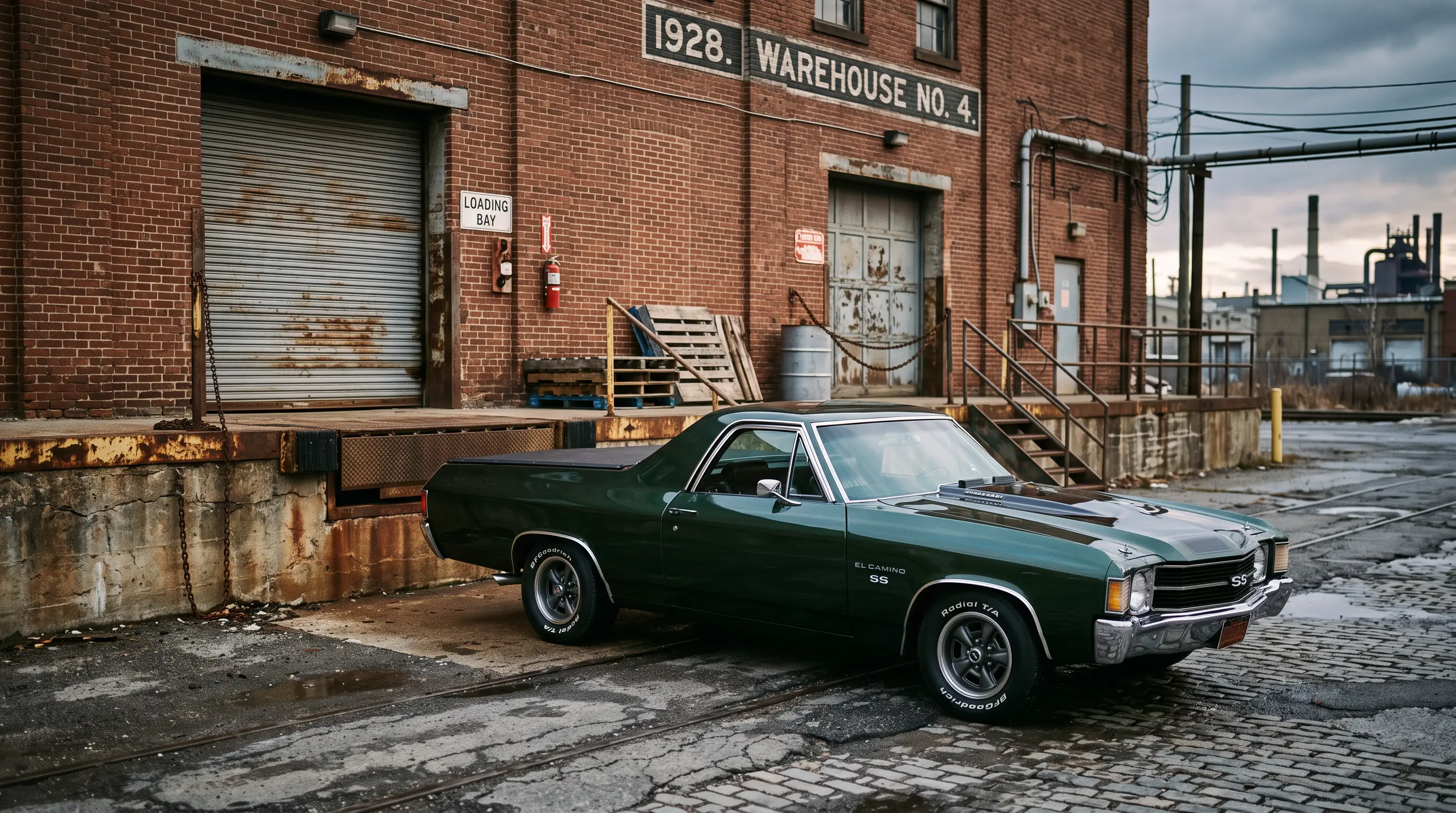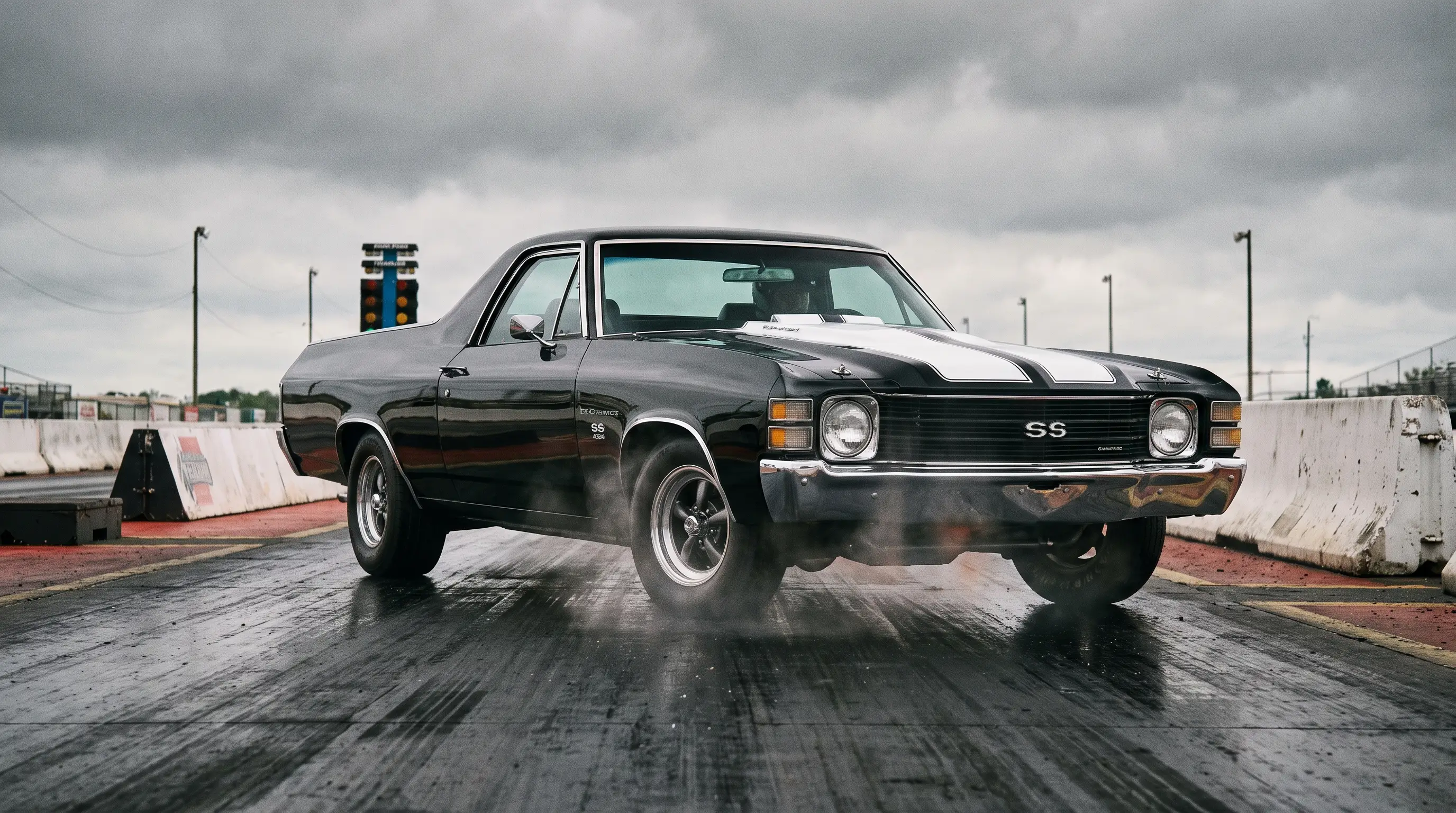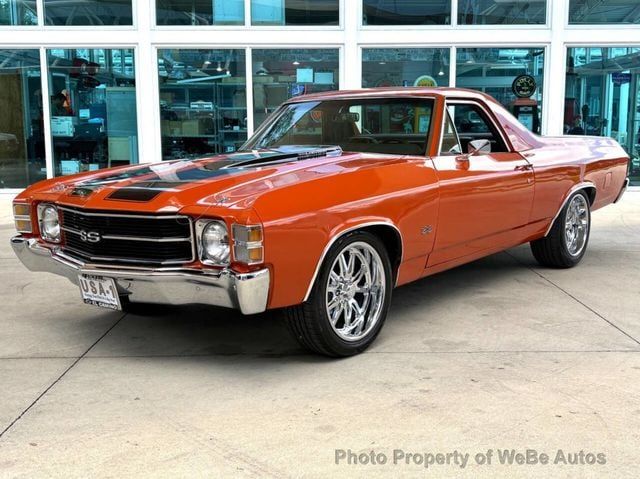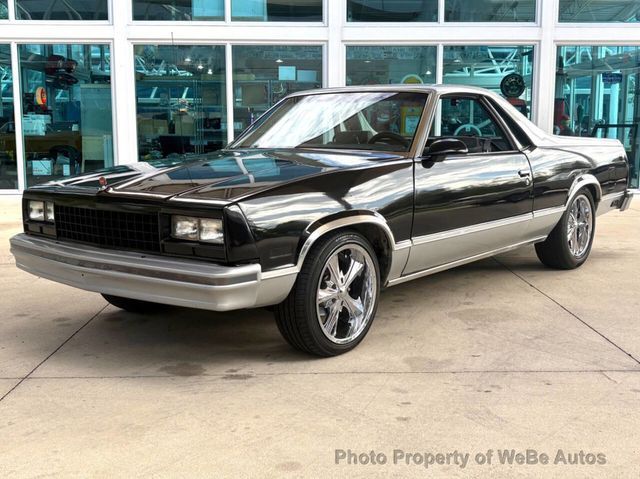
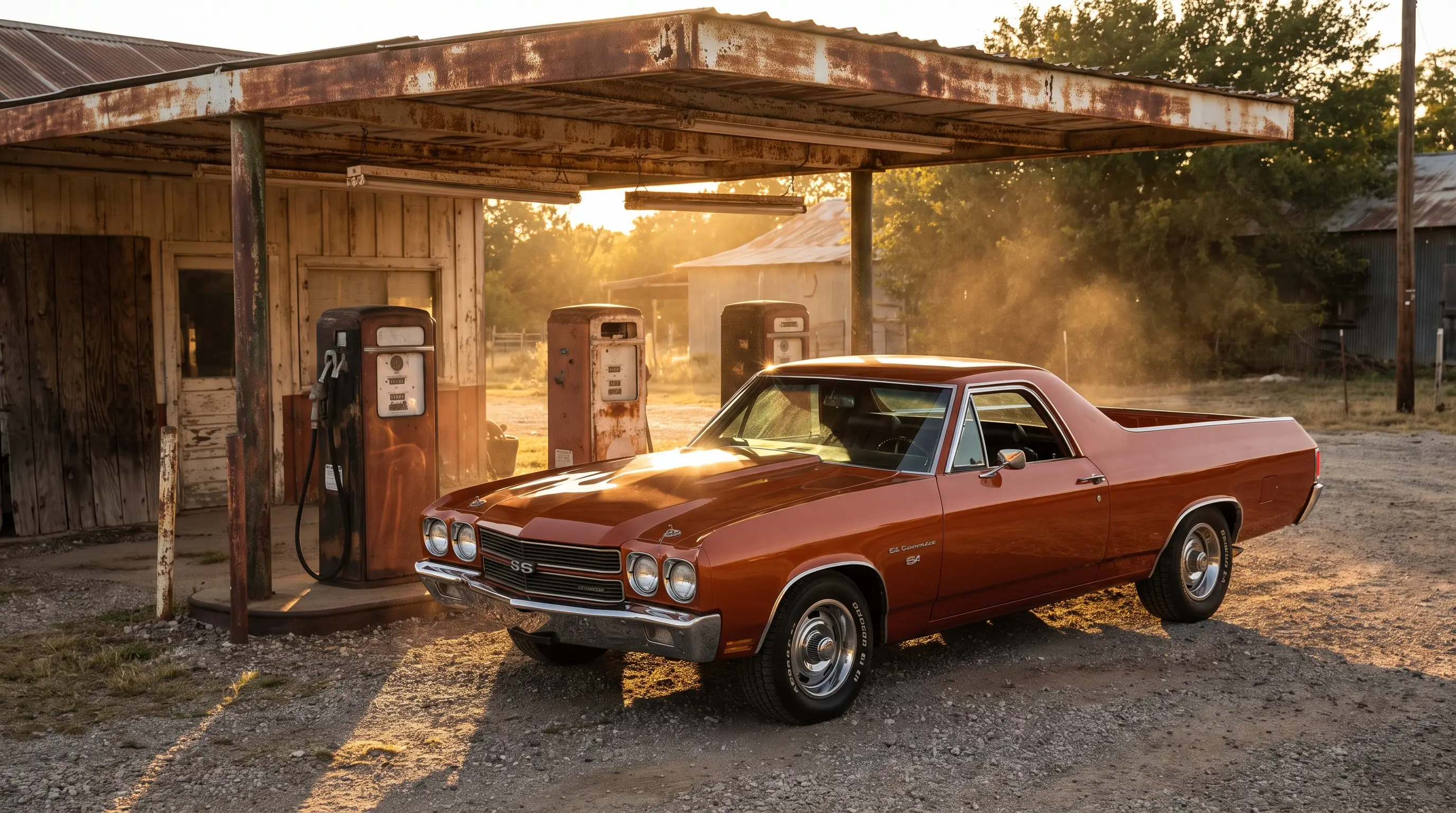
The 1972 El Camino did not get slower overnight. It just started telling the truth. That year Chevrolet switched from gross horsepower ratings to SAE net ratings across the board, and the numbers stamped on the window sticker fell hard even though the engines underneath were barely touched. If you only look at the sticker, the 1972 El Camino 1972 net horsepower shift looks like a car that lost its nerve. It did not. It lost an accounting method.
Gross versus net, in plain terms
Gross horsepower was measured on a dyno with no accessories bolted on: no alternator, no air cleaner, no full exhaust, no fan. Net horsepower is measured with the engine dressed the way it actually sits in the car, running everything it has to run to move down the road. Strip the accessories off any engine and the number goes up. Bolt them back on and it comes back down to reality. That is the whole story behind the number drop, and it applies to every GM product that year, not just this one.
Chevrolet had already started publishing some net figures alongside gross ones in 1971 as a preview. By 1972 gross ratings were gone completely. A big-block that wore a gross rating of well over 300 hp in 1970 could show up rated in the 200s for 1972 with nothing more than a different dyno setup and a different accessory list. Owners who did not follow the switch assumed Chevrolet had detuned everything. Some of it was real detuning for emissions and fuel quality. Most of it was paperwork.
What actually changed under the hood
Compression ratios did drop across GM's 1971-72 engine lineup to run on lower-octane unleaded fuel, and that part is real, not an accounting trick. So there was a genuine performance loss layered on top of the rating-method change, just a smaller one than the sticker suggests. The 454 in the El Camino SS, still available as an option in 1972 under RPO LS5, carried a net rating of 270 hp at 4,000 rpm, down from a gross rating in the 360s just two seasons earlier. Torque held up better than horsepower did, because low-rpm grunt survives an accessory load far better than peak power does.
Buyers cross-shopping a 1970 and a 1972 El Camino side by side at a dealer lot in period would have seen wildly different numbers on paper for cars that performed closer to each other than the stickers implied. That mismatch is exactly why 1972 versus 1970 comparison is worth reading if you want the fuller picture beyond horsepower alone, and read the background on the model year as a whole.
| Engine | 1970 gross rating | 1972 net rating |
|---|---|---|
| 454 cu in V8 (SS, LS5) | 360 gross hp | 270 net hp |
| 402 cu in V8 (LS3) | 300 gross hp | 240 net hp |
| 350 cu in V8 (L65/L48) | 245-270 gross hp | 165-175 net hp |
Why the number on paper fooled a generation of buyers
Car magazines of the era ran comparison tests that quietly acknowledged the ratings switch, but casual buyers reading a classified ad years later had no such context. A used-car shopper in 1976 comparing a 1970 SS 454 rated at 360 gross hp to a 1972 SS 454 rated at 270 net hp would reasonably conclude the newer car was down nearly a hundred horsepower. In real-world seat time the gap was much smaller. This confusion followed these cars for decades and still shows up in forum arguments today, usually from people who never learned the net-versus-gross history in the first place.
The practical effect on collector value was real even if the mechanical difference was not. Cars wearing the bigger gross numbers from 1970 command a premium partly because the number itself sounds better, regardless of whether the actual driving experience justifies it. That is a market quirk, not an engineering fact, but markets do not always price things on engineering facts.
Reading a 1972 spec sheet correctly today
If you are researching a 1972 El Camino now, treat any horsepower figure from that year as a net number and compare it only to other net numbers, never to a 1968-71 gross figure. Compare torque figures too, since torque survived the accessory-load math better than horsepower did and gives a truer sense of how the car actually pulls. Anyone judging a 1972 by its horsepower number alone next to a 1970 sticker is comparing two different measurement systems and calling it a comparison of two cars.
"People see a number drop from 360 to 270 and assume the engine got weaker. The engine barely changed. The ruler changed."
- Dan Reeves
How this played out across the whole GM lineup, and what to compare instead
The El Camino was not singled out. Every division ran the same switch the same year, so a 1972 Chevelle, a 1972 Monte Carlo, and a 1972 GTO all took the same paper hit for the same reason. That consistency actually helps a researcher today, because it means the drop from 1970 to 1972 is roughly proportional across the board. If a Chevelle small-block dropped by a similar percentage as the El Camino small-block, that is confirmation the shift was systemic rather than a Chevrolet-specific weakening of this one nameplate.
Insurance companies noticed the lower numbers too, and some underwriters used the new net ratings to justify easing surcharges on muscle-car policies, even though the cars were not meaningfully safer or slower. That is a small footnote in a much bigger story, but it shows how far the ripple from a paperwork change can travel. A number on a spec sheet touched sales brochures, showroom banter, insurance tables, and eventually decades of secondhand market perception, all from the same root cause.
When you are cross-shopping model years, pull the factory torque figures, not just horsepower, and note whether you are looking at a gross or net rating before drawing any conclusion. Torque numbers moved far less than horsepower numbers did in the gross-to-net transition, so torque is the more honest yardstick for judging how a 1972 actually feels next to an earlier car. A seller who quotes a bare horsepower number without stating gross or net is not lying, necessarily, but they are leaving out the one detail that makes the number mean anything at all.
The bottom line on the 1972 numbers
The 1972 El Camino is not the underachiever its horsepower rating implies. It is a car caught in the middle of an industry-wide switch to honest, real-world ratings, wearing a lower number for reasons that have almost nothing to do with how it actually drives. If you want to see how these cars trade today with that context in mind, shop classic El Camino listings, and if you want the single-headlight styling story from this generation, worth a look too.