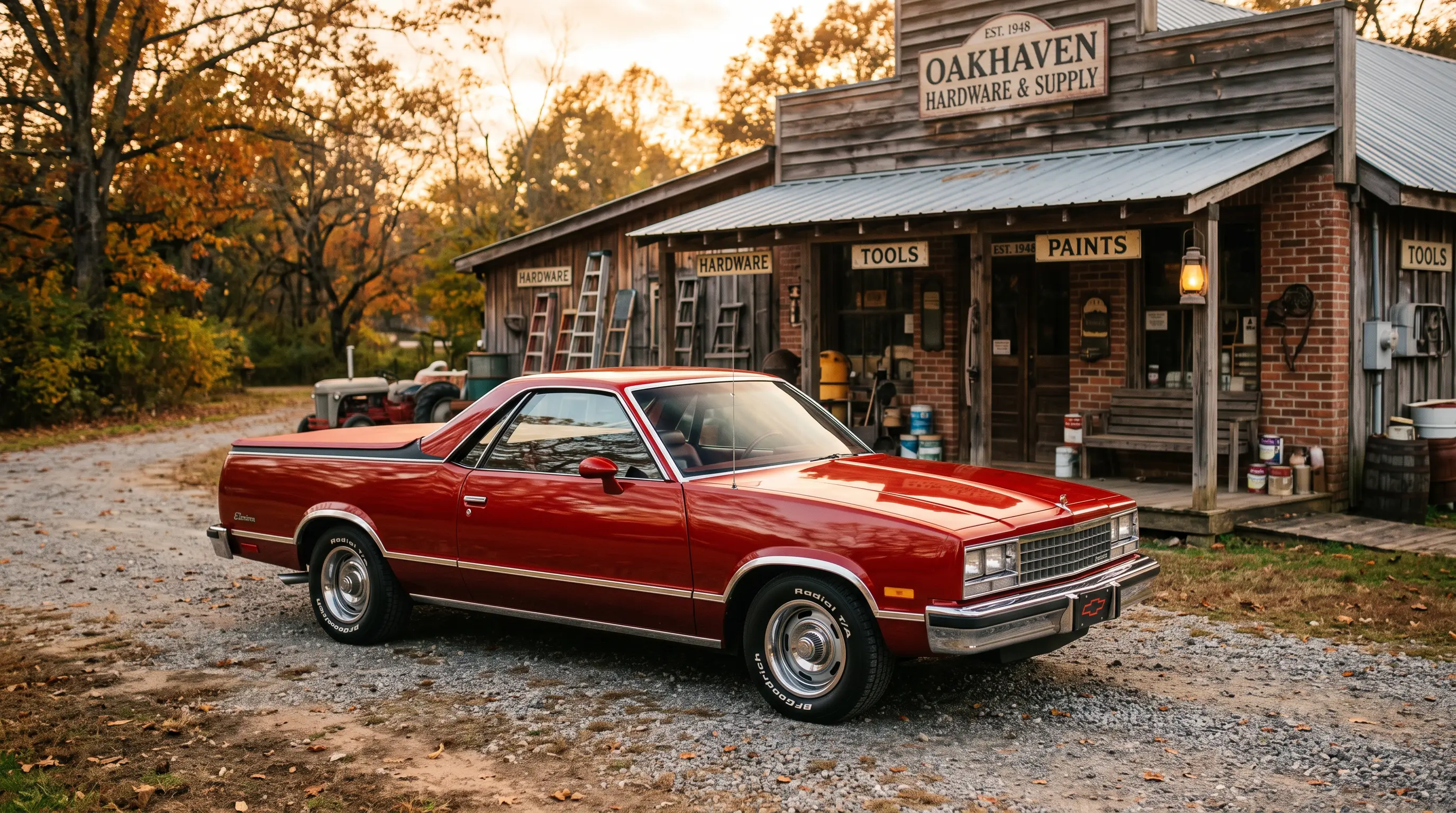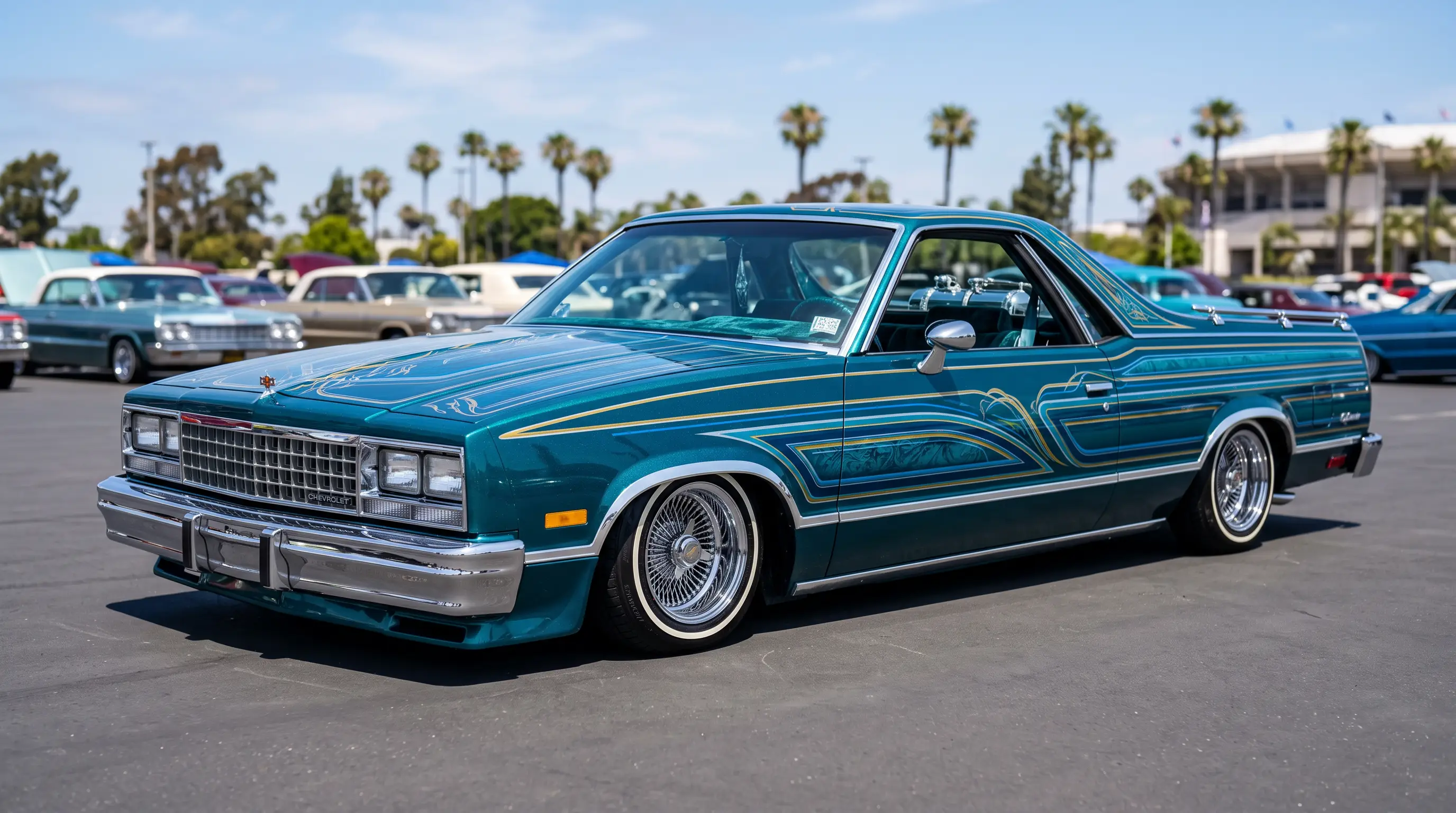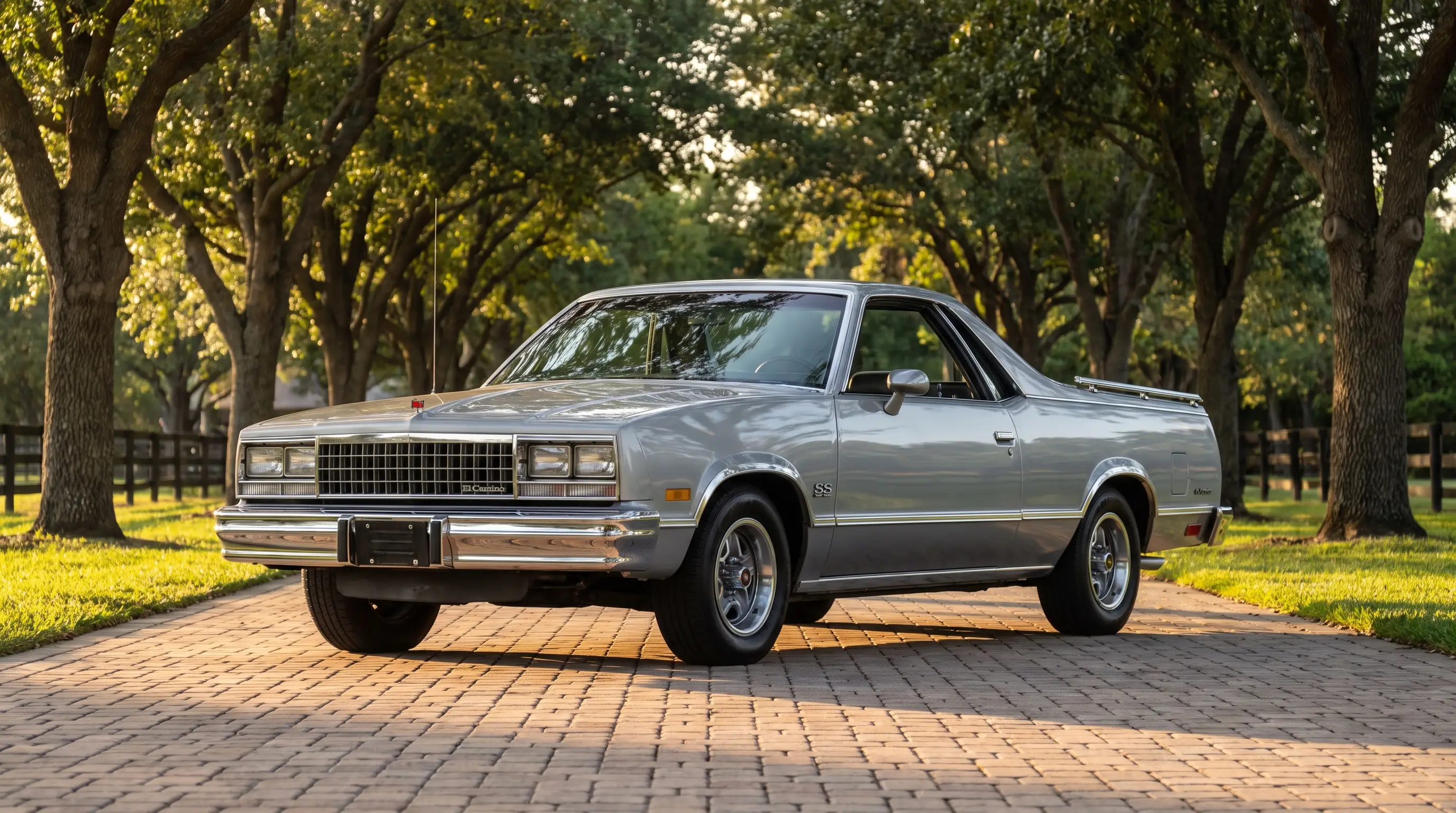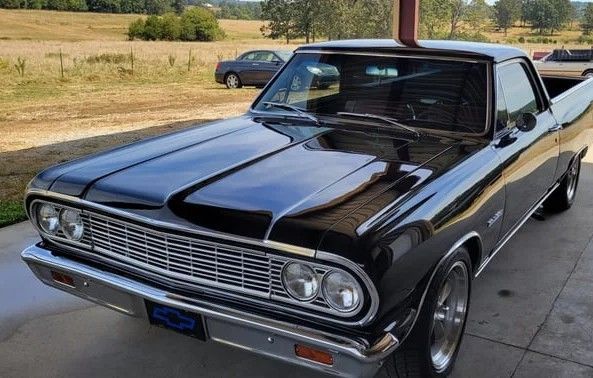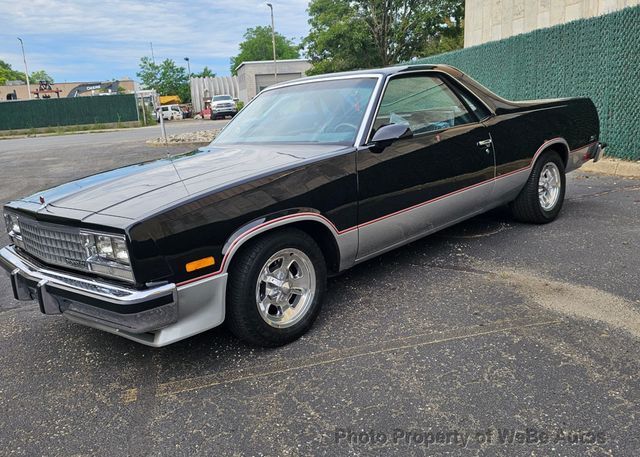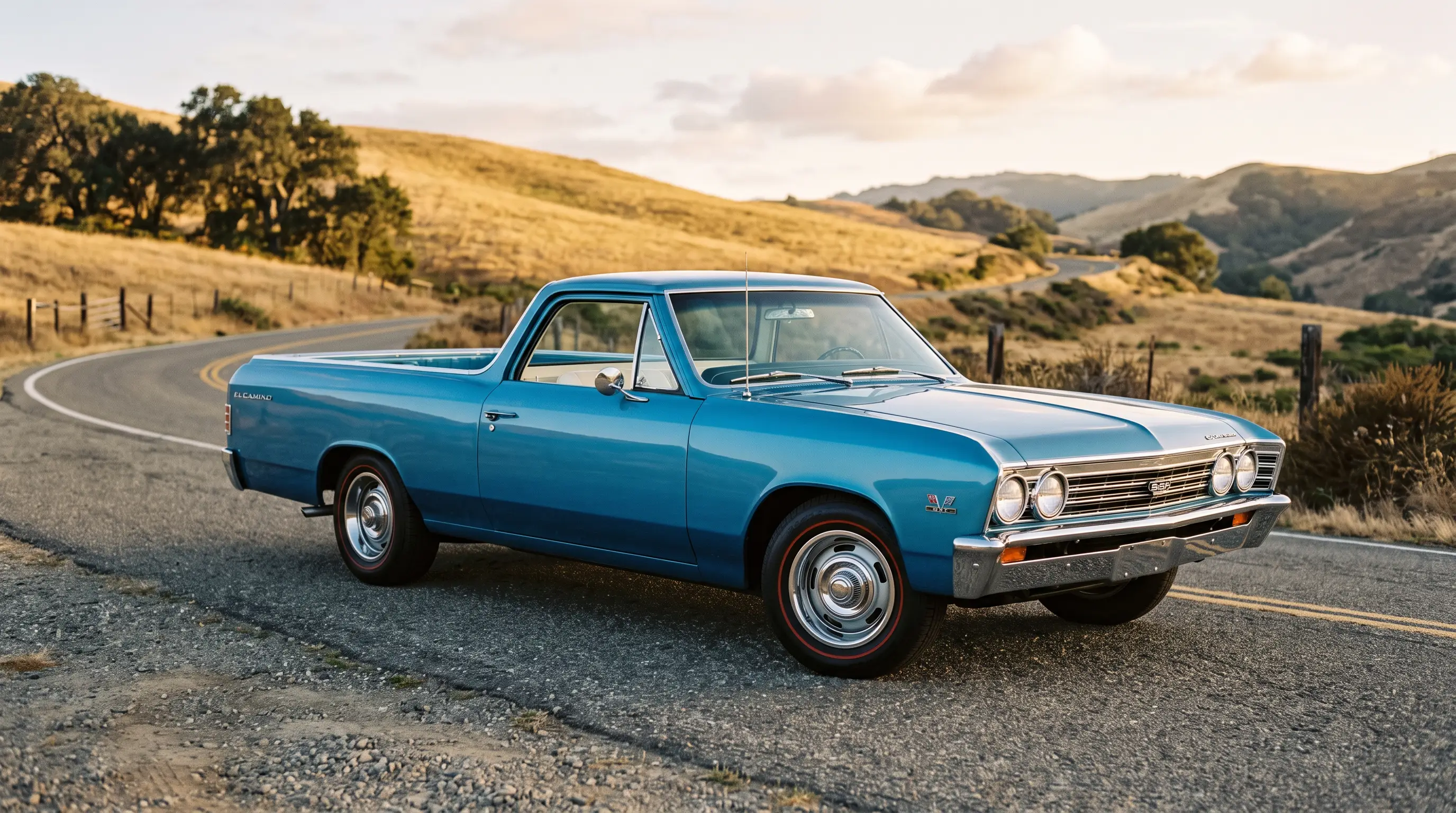
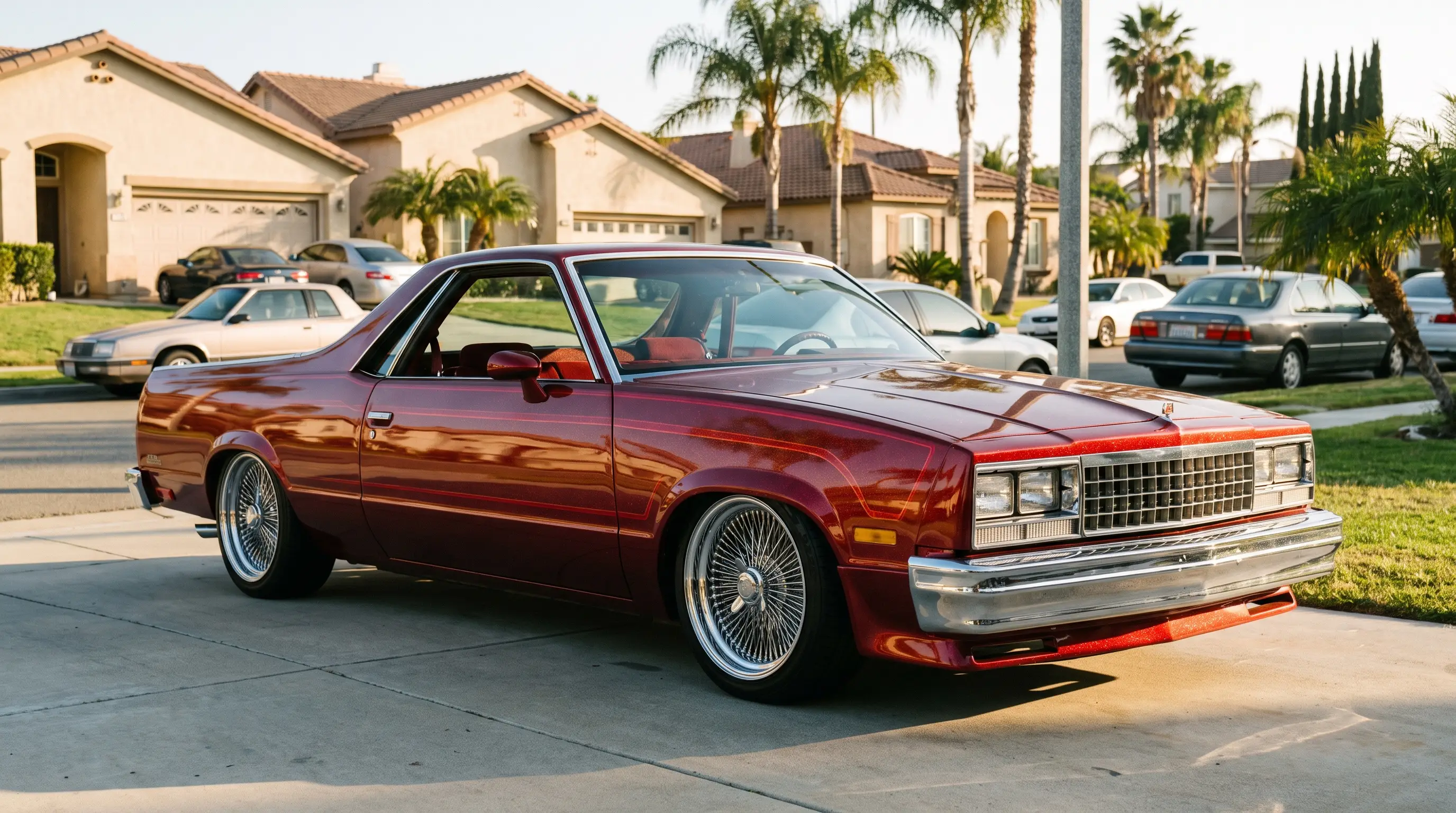
The 1985 El Camino never asked to be a custom car. General Motors built it as a G-body work vehicle with a bench seat and a bed liner, aimed at contractors and ranchers who wanted a truck bed with a car's ride. But somewhere between the showroom and the swap meet, the 1985 El Camino custom scene builds turned that plain utility platform into one of the most recognizable canvases in American car culture, and the story of how that happened says as much about the builders as it does about the car.
A G-body built to be modified
Part of the reason the 1985 El Camino took so easily to customization is structural. The G-body platform it shared with the Monte Carlo and Malibu was simple, front engine, rear drive, body on frame, with a wide aftermarket parts bin already in circulation from those siblings. Anyone who had learned to swap a 305 or a 350 into a Monte Carlo already knew the El Camino's engine bay by heart. The frame was forgiving of lowering kits, the cab was roomy enough for stereo work, and the bed offered a blank stage that a sedan or coupe simply could not match.
That accessibility mattered more than raw performance ever did. By 1985 the factory small block was tuned for economy and emissions compliance, not bragging rights, so builders who wanted attention had to find it elsewhere. Paint, wheels, hydraulics, and audio became the language of the car, and the El Camino's flat panels and unbroken beltline gave that language plenty of room to be spoken.
Lowriders and the El Camino's second life
Nowhere did the 1985 El Camino find a more devoted audience than in the lowrider community. The car's proportions, a long hood, a short deck, and that unmistakable half truck silhouette, made it a favorite for builders who wanted something distinct from the Impalas and Monte Carlos already crowding the boulevard cruises. Hydraulics kits went in, wire wheels went on, and multi stage candy paint turned factory sheet metal into rolling artwork. The El Camino's utilitarian bed became a display case rather than a liability, often finished to match the cab rather than hidden under a tonneau cover.
This culture did not treat the El Camino as a curiosity. It treated it as a legitimate platform worthy of the same craft applied to full size sedans, and that respect is a large part of why clean 1985 examples are prized today, not despite their custom history but often because of it.
Stereo culture and the El Camino cab
Car audio competitions exploded in the mid 1980s, and the El Camino's cab, shorter than a full sedan but still enclosed, made it an appealing platform for builders chasing decibels rather than horsepower. Kick panels were reworked, rear cab walls hid amplifiers, and the bed sometimes carried a fiberglass enclosure loaded with subwoofers positioned to fire straight up. None of this came from the factory, and none of it needed to. It came from builders treating the car as raw material.
Sarah Whitfield has spent years documenting these builds as part of the broader G-body record, and she is careful to note that the aftermarket work often tells us more about regional car culture than the factory build sheet ever could. If you want read the background on the stock 1985 El Camino before it met a fabricator's torch, that history explains why the platform was so willing to be reshaped in the first place.
"A stock 1985 El Camino tells you what General Motors intended. A customized one tells you what a specific owner, in a specific city, in a specific year, actually wanted. Both versions belong in the historical record."
- Sarah Whitfield
Wheels, paint, and the visual signature of the era
Wire wheels with knock off style caps, deep dish Cragars, and later, boxy multi spoke aluminum wheels all cycled through El Camino builds over the decade, each one a visible marker of when a particular car was finished. Paint told a similar story. Early 1980s builds leaned on straightforward metallics and simple two tone treatments, while later in the decade candy and pearl finishes, often applied in a dozen thin coats for depth, became the mark of a serious build rather than a weekend respray.
None of these choices were arbitrary. Builders working on a 1985 El Camino were reading the same visual cues as builders working on any full size GM sedan of the period, and the El Camino simply gave them a different shape to apply those ideas to. That is why period photographs of these trucks, when dated correctly, can serve almost as a timeline of custom car trends within a single model line.
| Custom element | Typical era | Common source |
|---|---|---|
| Hydraulic suspension | Early to mid 1980s | Lowrider aftermarket kits |
| Wire wheels | Throughout the decade | Aftermarket wheel suppliers |
| Candy and pearl paint | Mid to late 1980s | Independent body shops |
| Competition audio systems | Mid 1980s onward | Car audio specialty shops |
Regional differences in the build style
Southern California builders leaned heavily on the lowrider tradition, favoring hydraulics, wire wheels, and multi stage paint applied by shops that had spent decades refining their craft on full size Impalas before the El Camino ever entered the picture. Texas builders, by contrast, often kept the ride height stock but pushed harder on drivetrain work and wheel choice, treating the truck bed as a place for tool boxes and toys rather than a showpiece. In the Midwest, El Caminos frequently split the difference, staying closer to factory trim while gaining a stereo upgrade and a set of aftermarket wheels that signaled the owner's taste without committing to a full build.
These regional habits are not incidental details. They explain why two 1985 El Caminos built the same year, on the same platform, with the same factory options, can look like they came from entirely different eras once their custom histories are accounted for. A researcher trying to date a build from photographs alone has to weigh paint style, wheel choice, and suspension height against these regional patterns, not just against a national timeline.
Why these builds still matter to collectors
A documented, well built custom 1985 El Camino occupies an unusual place in the market. It is not a numbers matching restoration candidate, and it was never meant to be judged against a factory build sheet. Its value instead rests on craftsmanship, provenance, and how faithfully it represents the custom scene it came from. A car with photographs tracing its build history, its original builder, and its show record often commands more genuine interest than a mediocre stock survivor, because it tells a complete story rather than a partial one.
For anyone drawn to that history, the search usually starts the same way it always has, by finding a car with a story attached rather than just a clean title. Buyers who want to see what is currently available can browse classic El Camino listings and judge for themselves how many of these cars still carry visible traces of their custom past.
The 1985 El Camino custom scene builds were never a footnote to the model's history. They were a parallel career the car lived alongside its factory identity, and one that arguably did more to keep the El Camino visible in popular culture through the late 1980s and beyond than any brochure ever did.