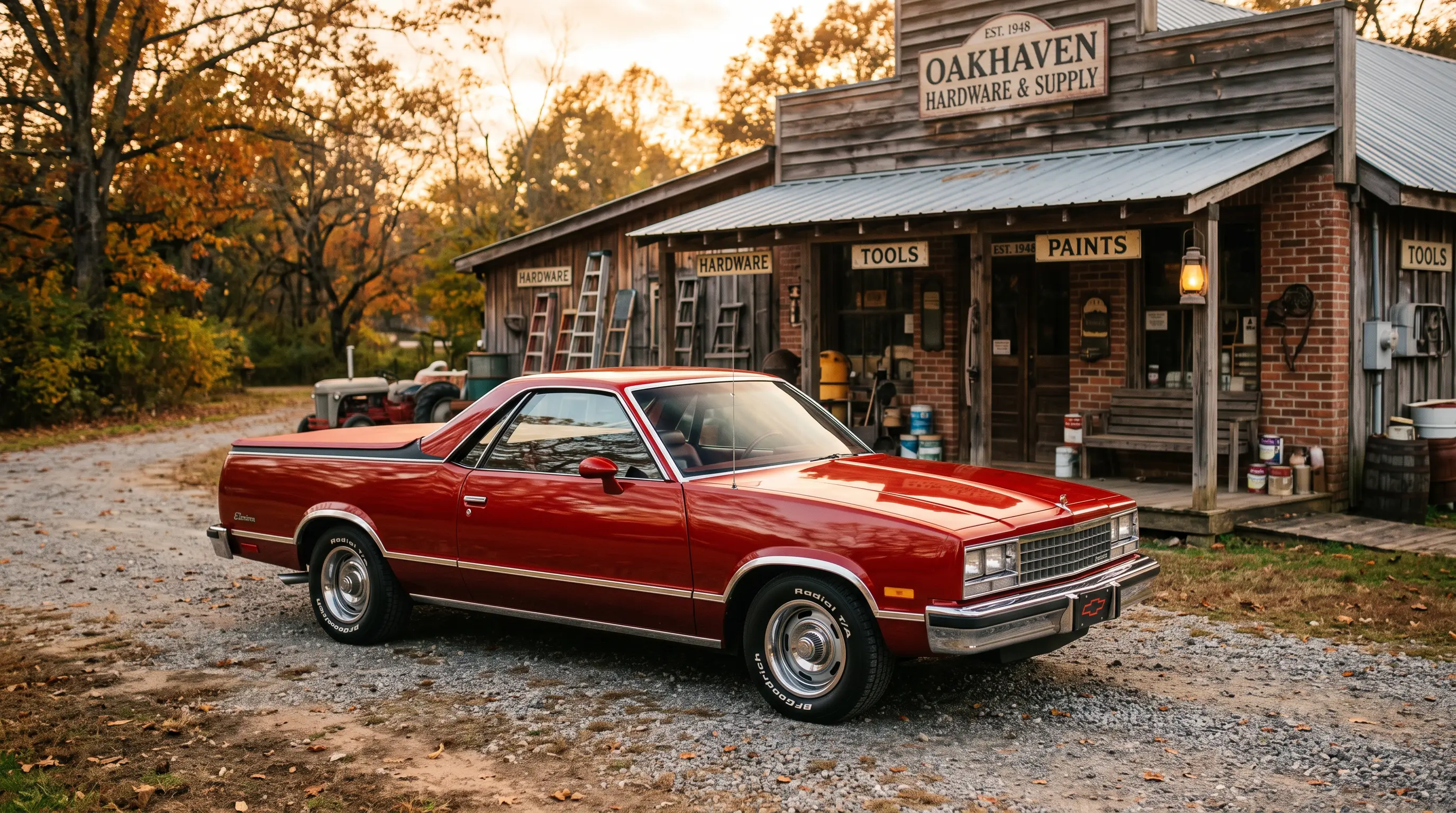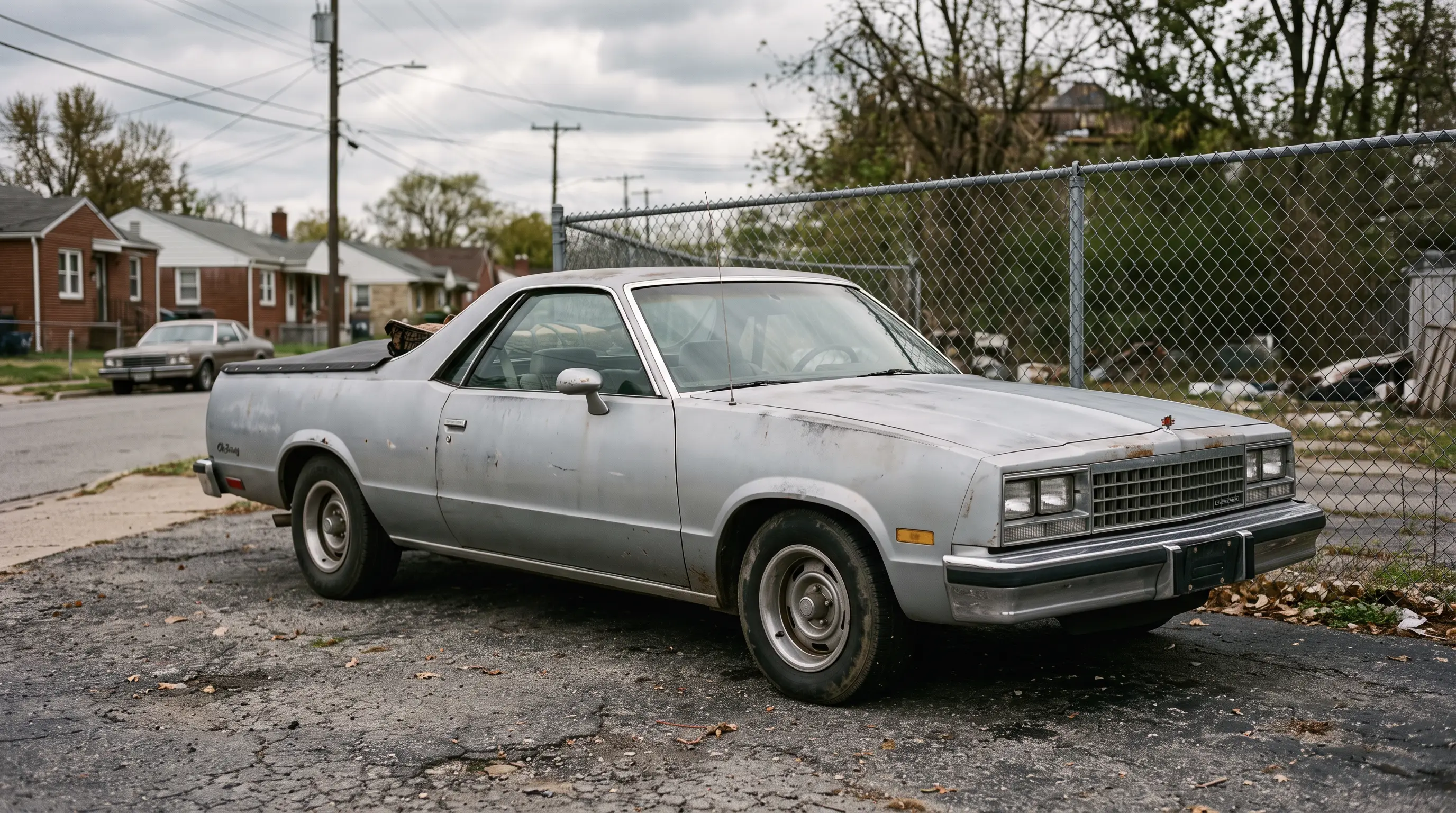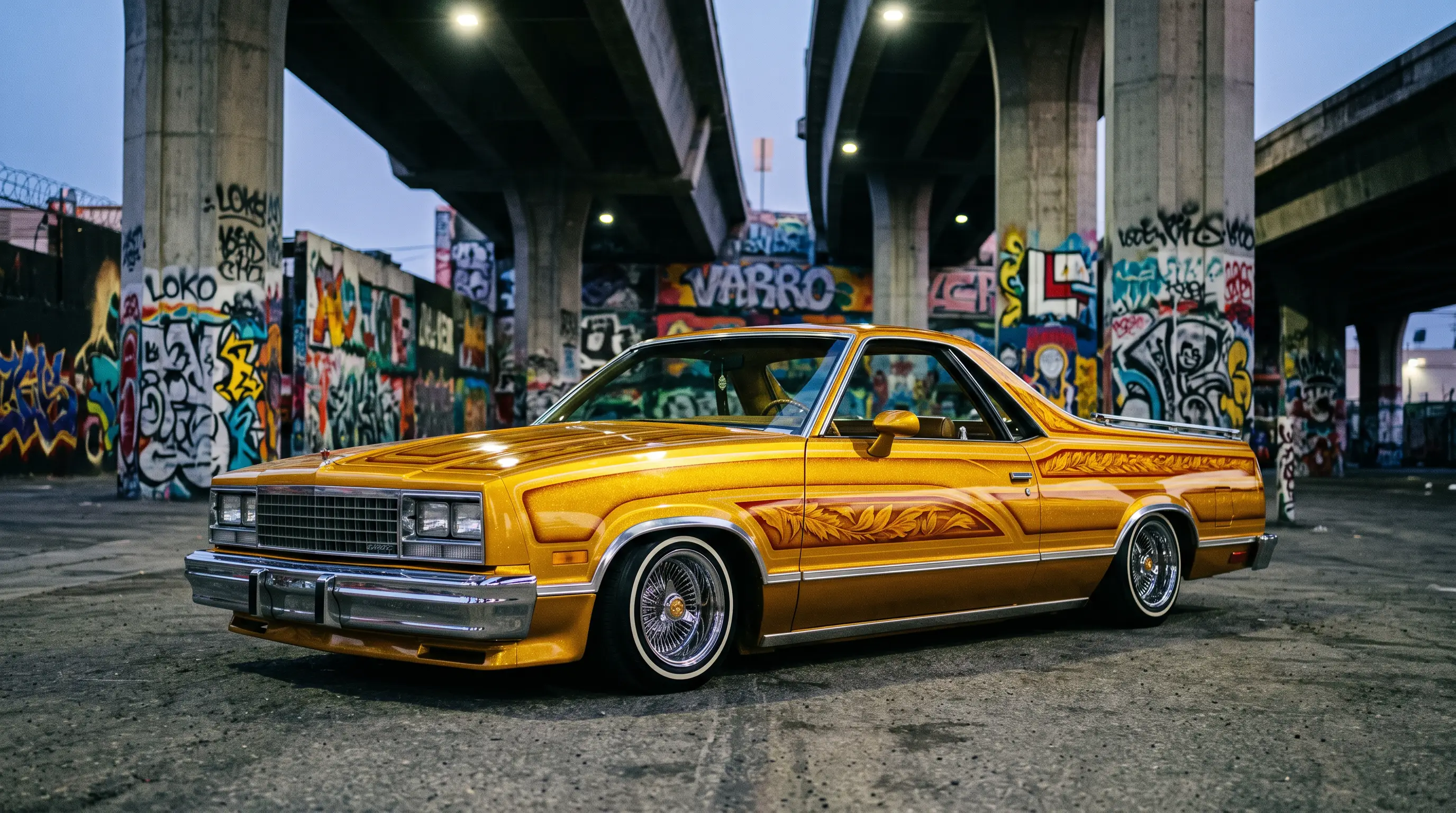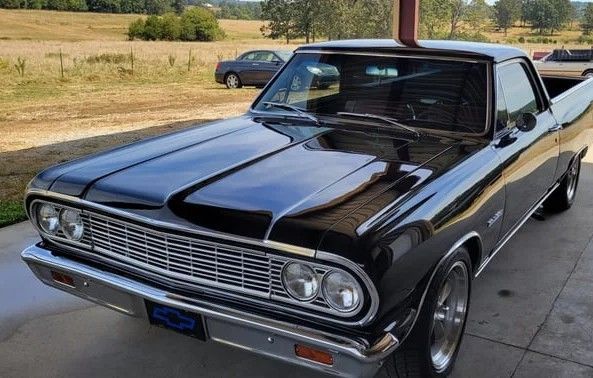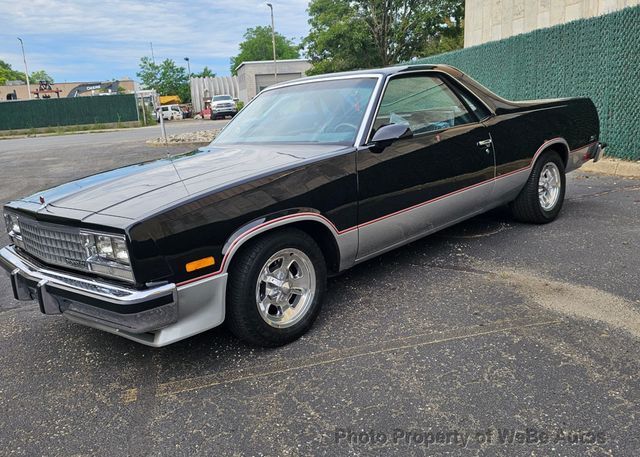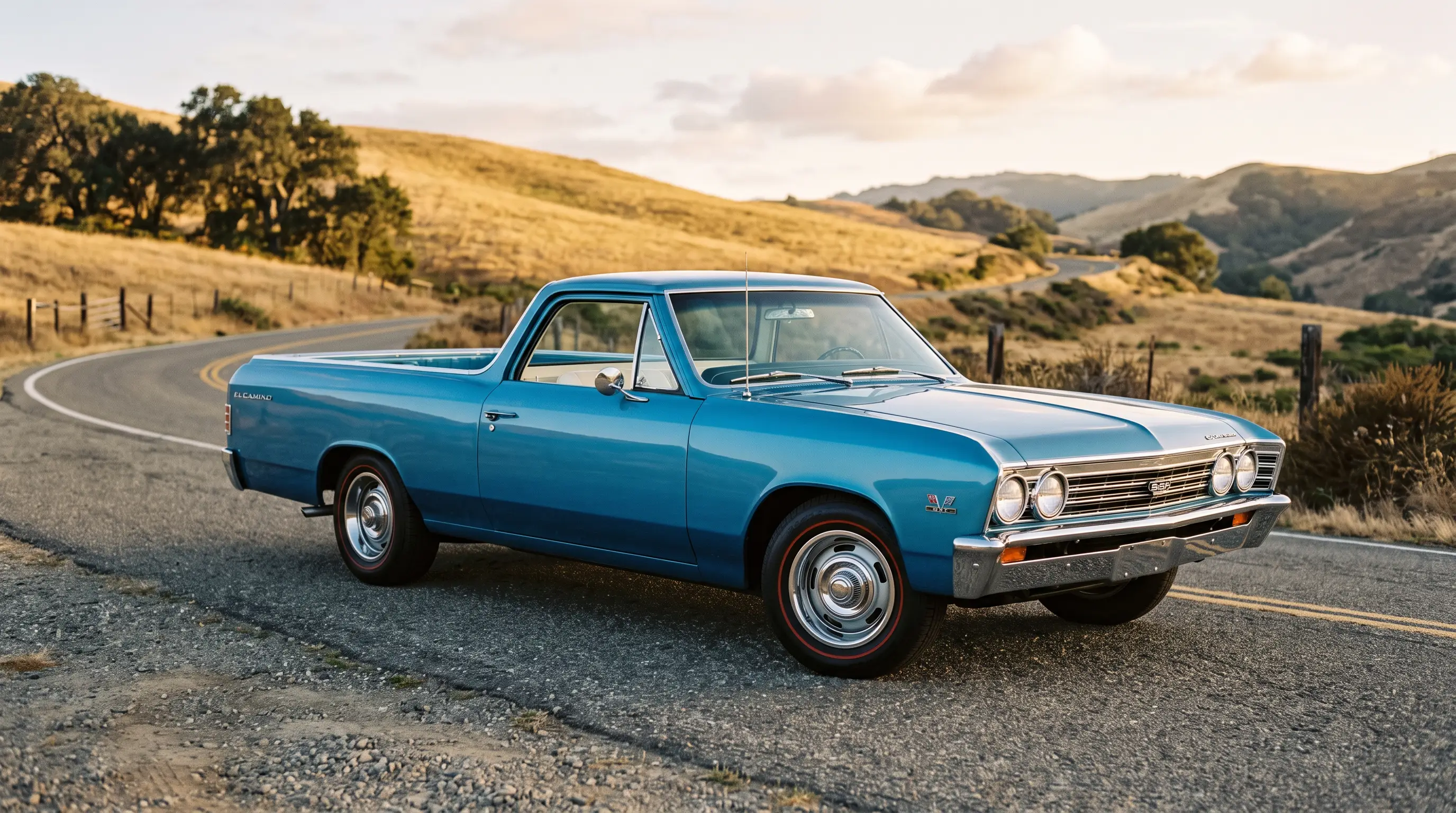
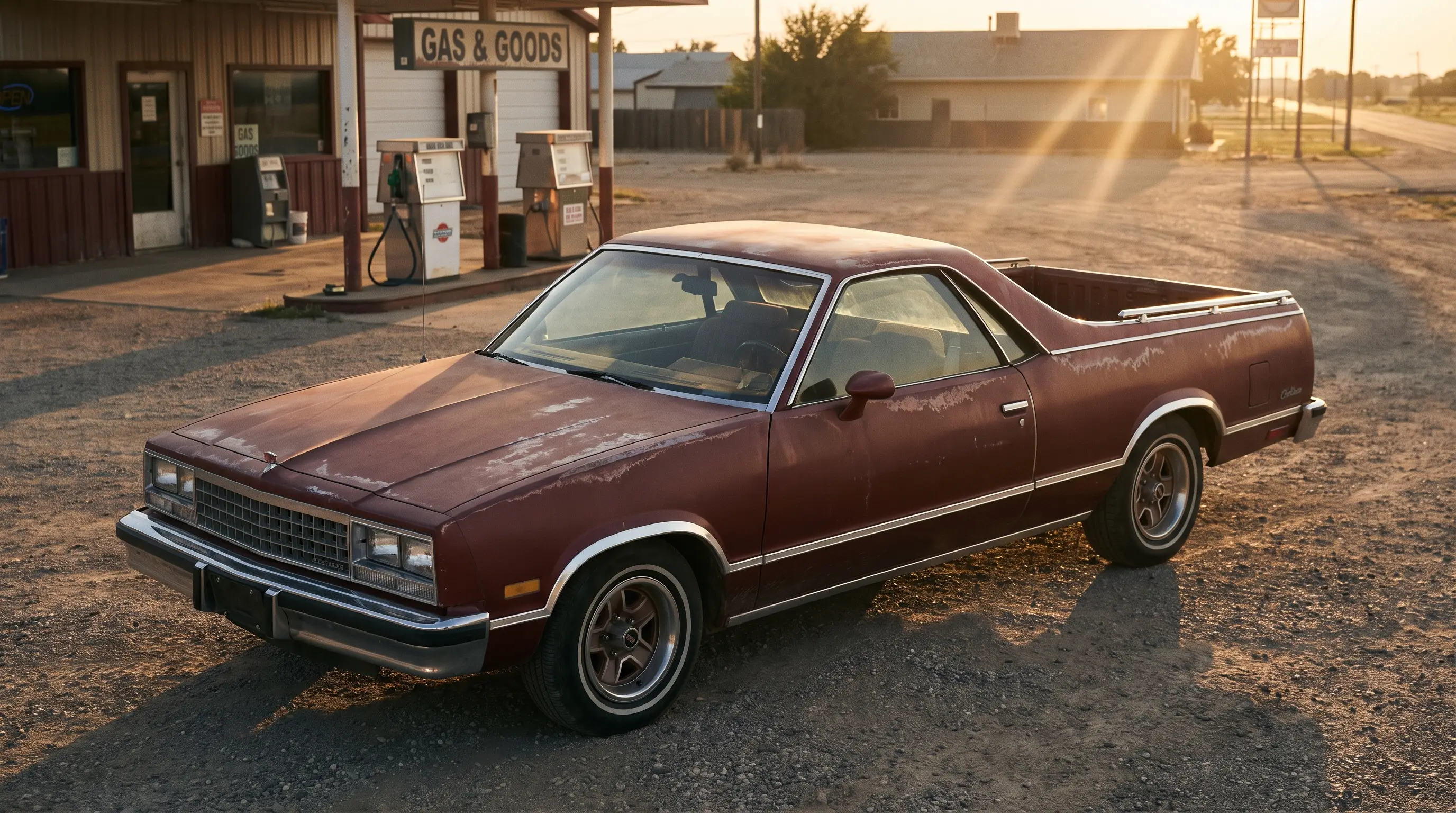
The last El Camino rolled off an assembly line in 1987, and almost nobody at the time treated it as an occasion worth marking. No commemorative badge, no special edition, no farewell advertising campaign. As a researcher who spends a great deal of time reconstructing exactly what happened to production vehicles in their final years, I find that quiet ending more historically interesting than a grand send-off would have been. The record of 1986 and 1987 tells a precise, almost clinical story of a nameplate winding down.
What actually changed between 1985 and the final cars
By 1986, the El Camino had been on the G-body platform for eight model years, and the changes made in these final two seasons were incremental rather than dramatic. The engine lineup carried forward largely unchanged from the mid-decade specification, with the standard fuel-injected 4.3-liter V6 (now around 145 horsepower with the automatic transmission) joined by the 305 cubic inch small-block, offered in a roughly 150-horsepower version and, on Super Sport-trimmed cars, a roughly 190-horsepower L69 High Output version, while a 5.7-liter 350 V8 was also available in these final years, rated at around 160 horsepower. Trim and appearance updates were modest, consistent with a platform that General Motors was managing toward an orderly conclusion rather than investing in for the long term.
This is a pattern concours researchers see across many nameplates in their twilight years. Engineering resources get reallocated toward whatever replacement program is in development, and the outgoing model receives just enough attention to remain saleable without meaningful investment in updates. The El Camino's final two years fit that pattern closely, and reading the documentation from this period, you can sense a company managing an ending rather than building toward a future.
The question of where the last cars were built
One detail that comes up repeatedly in discussions of these final years concerns the assembly location for the last El Caminos. Production was consolidated at GM's Ramos Arizpe plant in Coahuila, Mexico starting with the 1985 model year, and the car continued to be built there through the end of the run in 1987. Documentation on exactly which build sequences and option combinations came out of that plant in these final two years is thinner than for earlier model years, and I would encourage any owner or researcher chasing a specific build sheet to pursue factory records directly rather than relying on secondhand accounts, which vary in their details across different corners of the hobby.
What is better documented is the broader industry context. The rear-drive, mid-size platform that underpinned the El Camino was aging out across the entire GM lineup by the mid-1980s, as front-wheel-drive architecture took over the volume segments the company had once filled with cars like this one. The El Camino's discontinuation was not an isolated decision about one nameplate. It was part of a broader platform retirement affecting the Monte Carlo, the Cutlass, and several other G-body siblings around the same period.
Why the final cars are underdocumented
A persistent challenge in researching 1986 and 1987 El Caminos specifically is the relative scarcity of surviving factory paperwork compared to earlier, more celebrated model years. Cars from the muscle era attracted attention from collectors and historians early, which meant original documentation, from window stickers to dealer invoices, was more likely to be preserved by owners who suspected the car might matter someday. Nobody extended that courtesy to a 1986 or 1987 El Camino at the time. These were simply used cars, bought and sold and eventually scrapped without anyone thinking to keep the paperwork.
That gap in the record is frustrating for anyone trying to establish precise production figures or option availability for these final two years with full confidence. It also means that surviving examples with intact original documentation, however modest that documentation might be, carry real research value now, filling in details about a period the hobby largely ignored while it was happening.
"The muscle-era cars have decades of loving over-documentation behind them. The final G-body years have almost the opposite problem, and that makes every surviving build sheet from 1986 or 1987 more valuable to a researcher than people realize."
- Sarah Whitfield
Placing the ending in the full arc of the nameplate
Understanding 1986 and 1987 properly requires seeing them as the final chapter of a much longer story rather than an isolated footnote. The G-body era as a whole, including the specific detail of the 1985 model year that sits just before this final stretch, is covered in the whole picture, and reading that alongside the production record for these last two years gives a more complete sense of how deliberately, if quietly, the nameplate was wound down rather than simply abandoned.
What strikes me most, researching this period, is how ordinary the ending was. No dramatic final run, no marketing fanfare, just a platform reaching the natural end of its economic life while the company's attention moved elsewhere. That is how most production histories actually conclude, whatever the enthusiast mythology later constructs around a nameplate's final year.
What a researcher looks for when dating a final-year car
Establishing whether a given example is genuinely a 1986 or 1987 model, rather than a slightly earlier car with later cosmetic updates applied afterward, requires the same methodical approach a concours judge would bring to any authentication question. The VIN sequence and build plate remain the primary source of truth, cross-referenced against whatever factory documentation survives for that specific vehicle. Trim details and option codes from these final years, while less exhaustively catalogued than earlier model years, still follow a documented structure that a patient researcher can work through.
Owners sometimes assume that because the final years are underdocumented in secondary sources, verification is impossible. That is not accurate. It simply requires going to primary sources rather than relying on hobby folklore, which tends to accumulate errors as stories get repeated across forums and swap meets without anyone checking the original paperwork. A researcher who takes the time to track down factory build sheets, dealer invoices, or period registration records can usually establish a clear picture, even for a car from a stretch of production history that nobody thought to document carefully at the time.
This matters practically, not just academically. A correctly dated and documented final-year El Camino carries genuine, if modest, historical significance simply by virtue of representing the closing chapter of a nameplate that ran, on and off, for nearly three decades. That significance is easy to overstate, and I would caution against treating any 1986 or 1987 example as inherently rare in a market sense. But as a historical artifact marking the precise end of a production run, a well-documented final-year car earns a small, specific kind of respect that a mid-run example from a more common year simply does not carry.
For collectors and researchers interested specifically in these final cars, and for anyone hoping to find a classic El Camino from this exact stretch of production, the honest record matters more than any story assembled after the fact to make the ending sound more significant than it actually was.