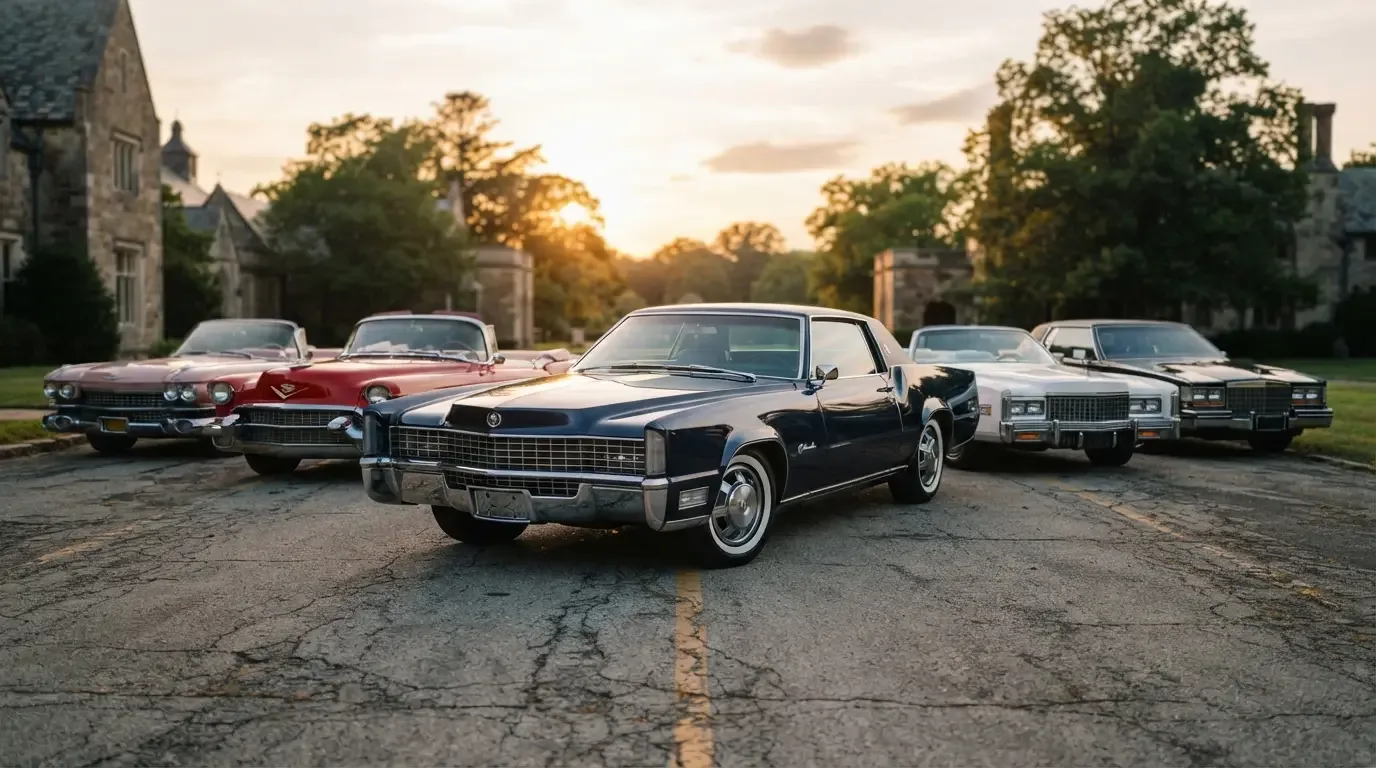
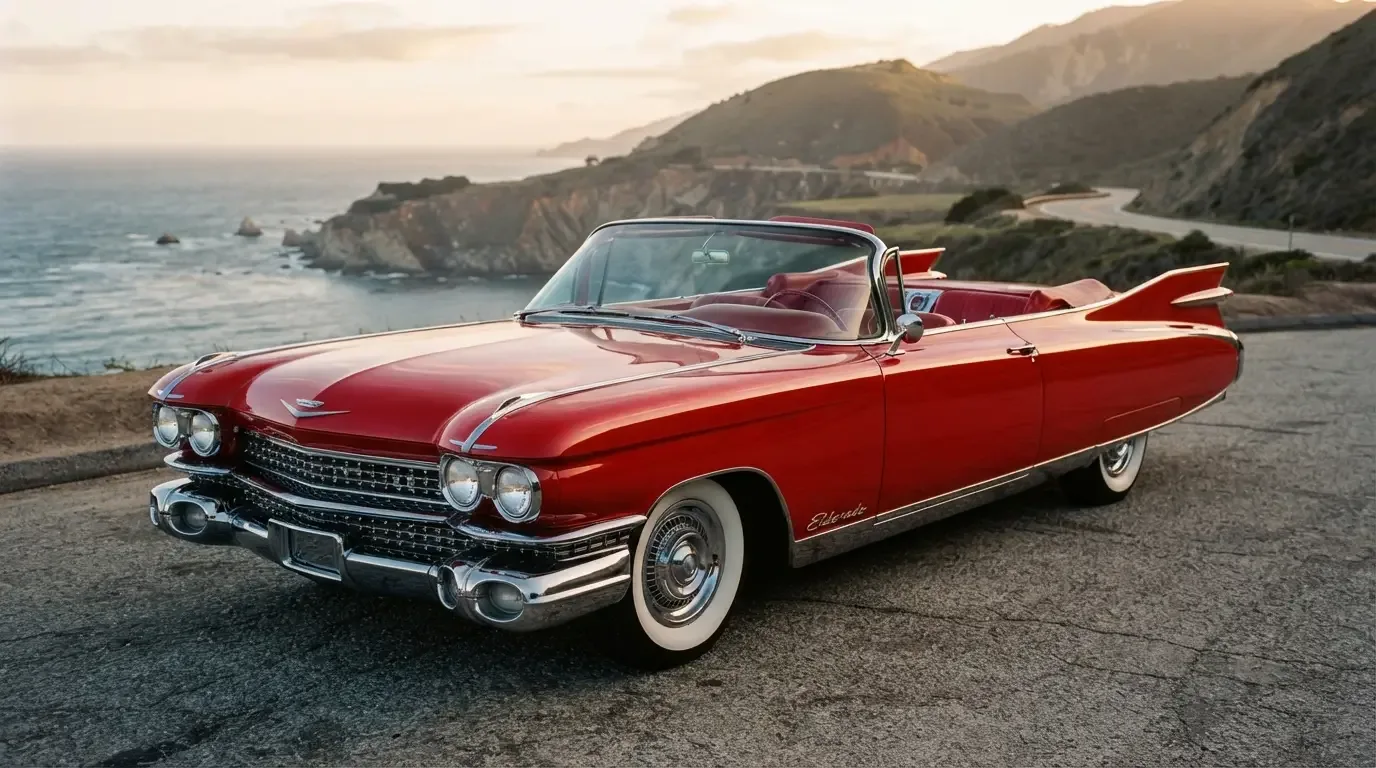
On a spring afternoon in 1953, a small crowd gathered at a Cadillac showroom in New York and watched a salesman peel the dust cover off a car that cost as much as a suburban house. The Cadillac Eldorado had arrived, and nobody in that room quite knew what to make of it. It was too expensive to be sensible and too beautiful to ignore. Over the next half century that same tension followed the car everywhere it went. The Eldorado was always the Cadillac that did the most, spent the most, and said the most about the moment it was built in. If you want to read America from behind a windshield, this is the car to do it in.
The name came from a company contest, and the story goes that a secretary in the merchandising department suggested it. Eldorado, the mythical city of gold that Spanish explorers chased across two continents and never found. It fit. Cadillac had spent decades building the standard by which luxury cars were measured, and the Eldorado was the version of that idea with the volume turned up. What follows is the whole run, from the tailfin years to the last car off the line in 2002, told the way it actually happened.
The 1953 debut and the fintail years
The first Eldorado was a limited-edition convertible, and Cadillac built only 532 of them for 1953. That was on purpose. The car existed to sit at the top of the range and make everything below it look attainable. It shared a stage with the Buick Skylark and the Oldsmobile Fiesta, three General Motors halo convertibles that all wore the wraparound windshield and the low, cut-down look that Harley Earl's design studio was pushing hard that year. The Eldorado was the most expensive of the three at around $7,750, roughly double the price of a standard Cadillac convertible.
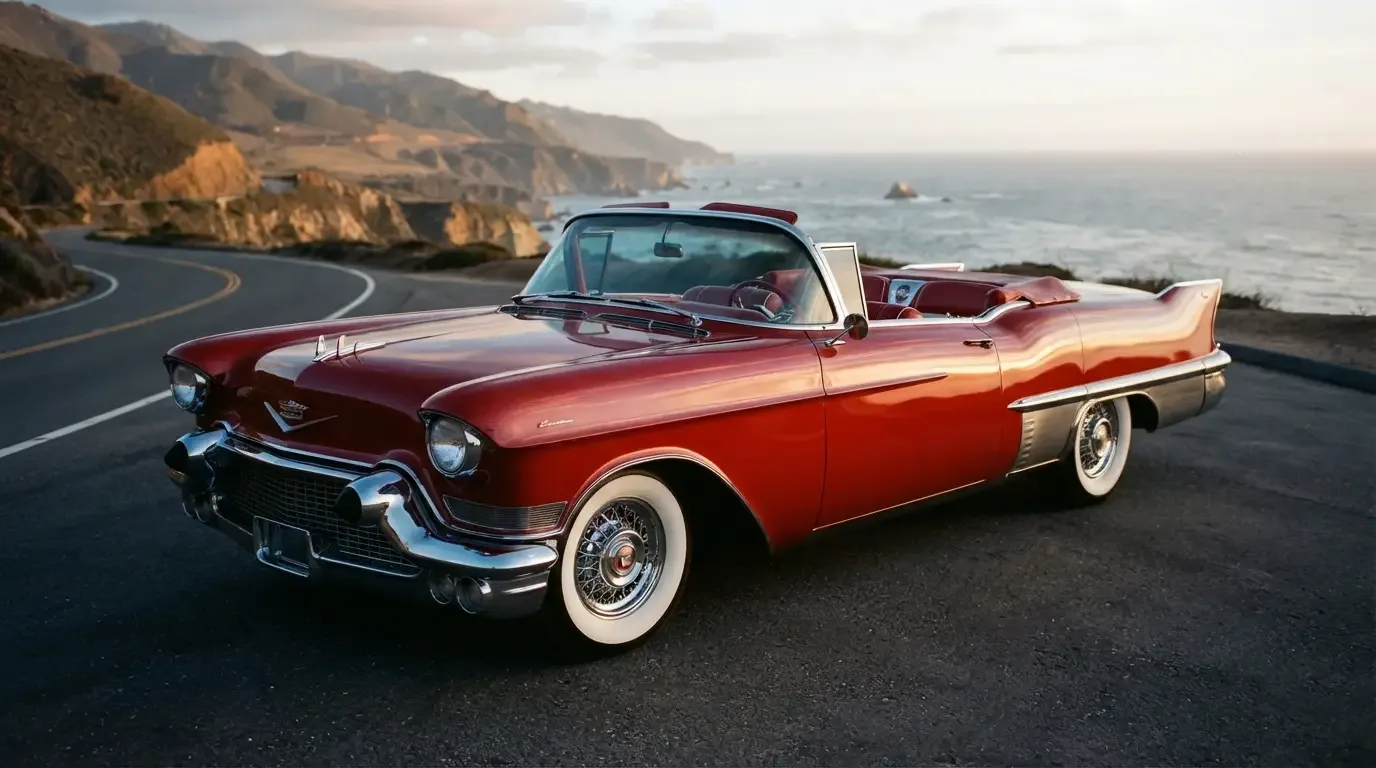
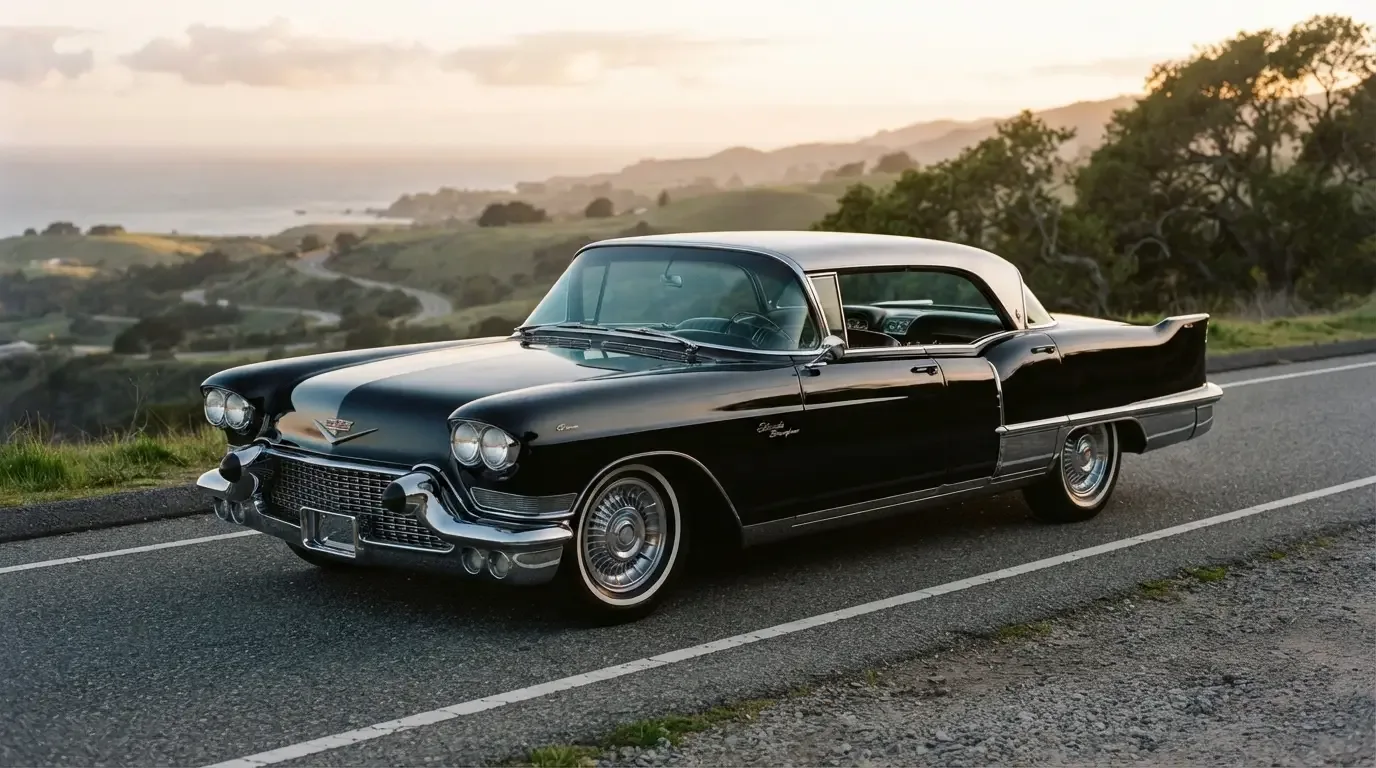
Prices came down and volume went up over the following seasons, but the Eldorado kept its role as the show car you could actually buy. By 1955 and 1956 the range split into the Eldorado Biarritz convertible and the Eldorado Seville hardtop, names borrowed from a French resort town and a Spanish city because that was the vocabulary of glamour at the time. Then came 1957 and the Eldorado Brougham, a hand-built four-door hardtop with a brushed stainless steel roof, quad headlights, air suspension, and a price tag of $13,074, more than a Rolls-Royce of the day. Cadillac reportedly lost money on every one. The Brougham was the company proving it could out-build anyone on earth, cost be damned.
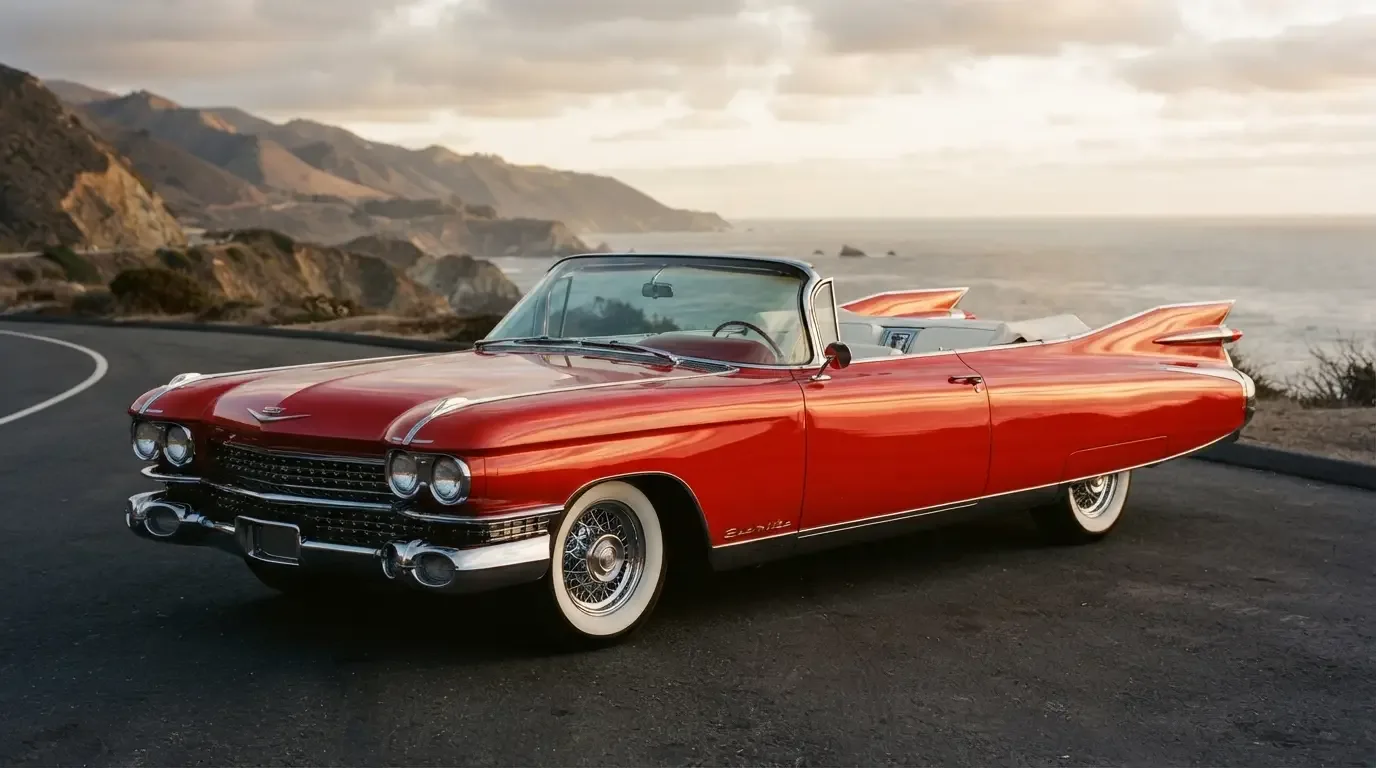
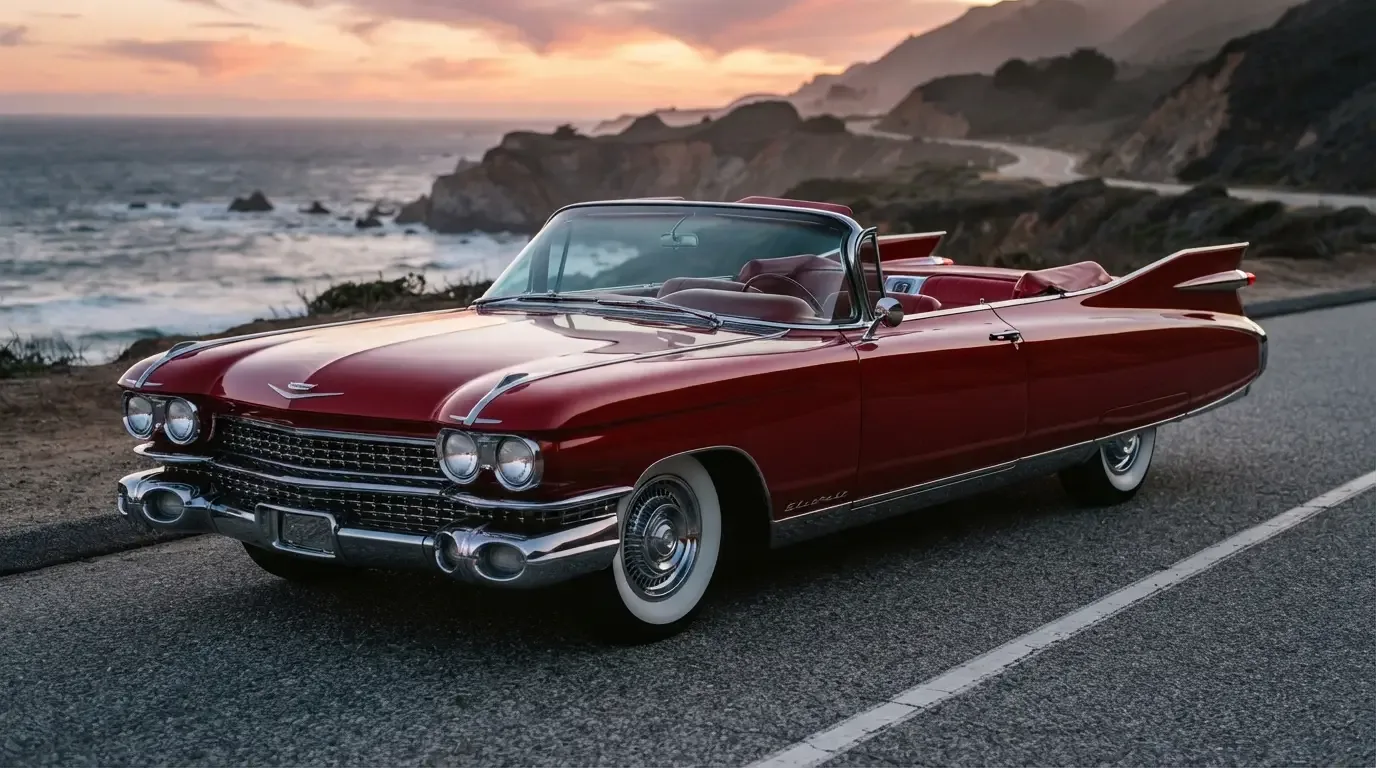
The tailfins reached their full height in 1959. That year's Eldorado carried the tallest fins Cadillac ever produced, twin bullet taillights set into blades of chrome and steel, and a front end full of bright metal. People either love the 1959 car or think it went too far, and both camps are right. It is the purest expression of jet-age American optimism ever bolted to a chassis. Nothing before or since committed so completely to the idea that a car should look like it was about to take off.
"The 1959 Eldorado is not a subtle car and it was never trying to be. It is a country that just won a world war and put a man on the moon's short list, rendered in two tons of steel and chrome. You do not analyze a car like that. You just stand back and let it happen to you."
- Patrick Walsh
1967 and the front-drive revolution
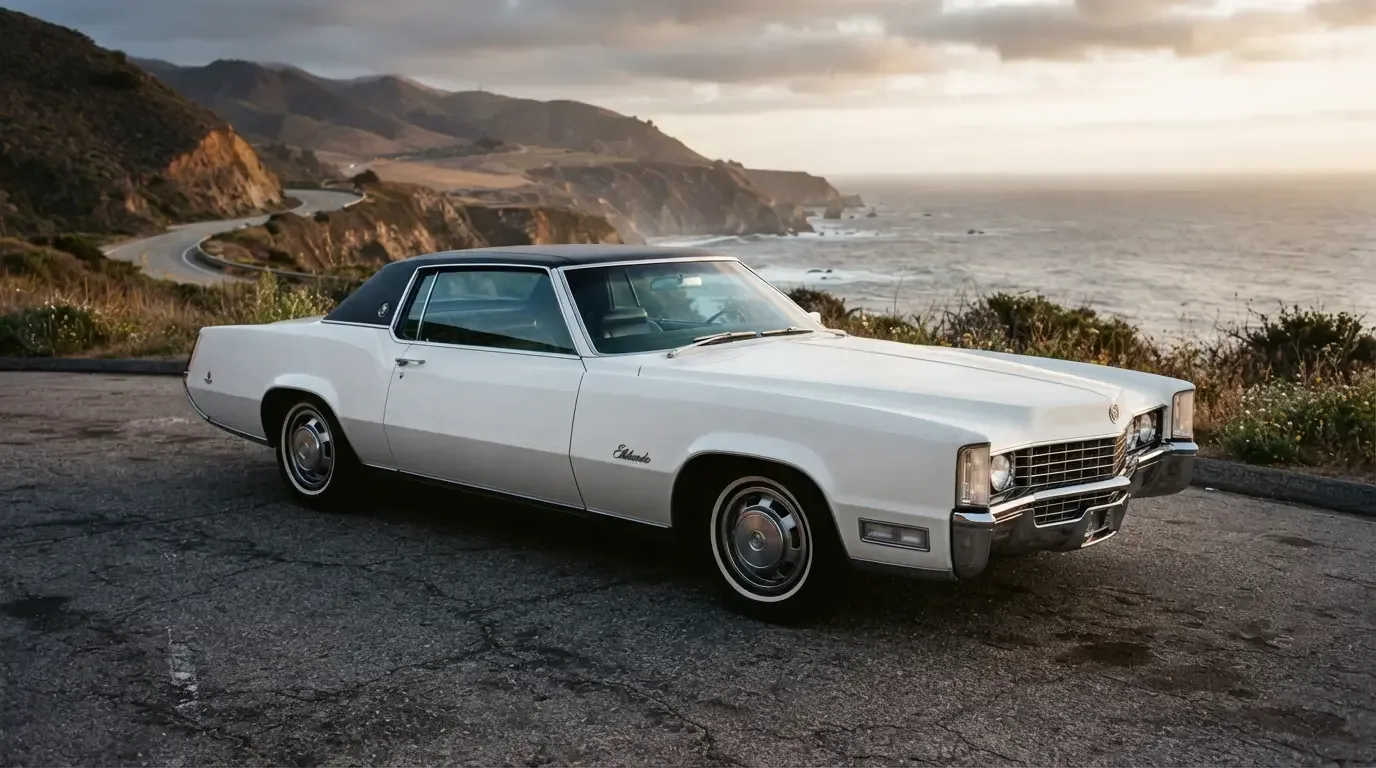
Everything changed in 1967. Cadillac took the Eldorado in a direction no American luxury coupe had gone before and gave it front-wheel drive. The car shared its underpinnings with the Oldsmobile Toronado and the Buick Riviera as part of General Motors' E-body program, but the Eldorado wore a sharp, folded-paper body designed under Bill Mitchell that looked like nothing else on the road. Hidden headlights, a knife-edge profile, and a long hood over a transverse torsion-bar setup that pulled the car instead of pushing it.
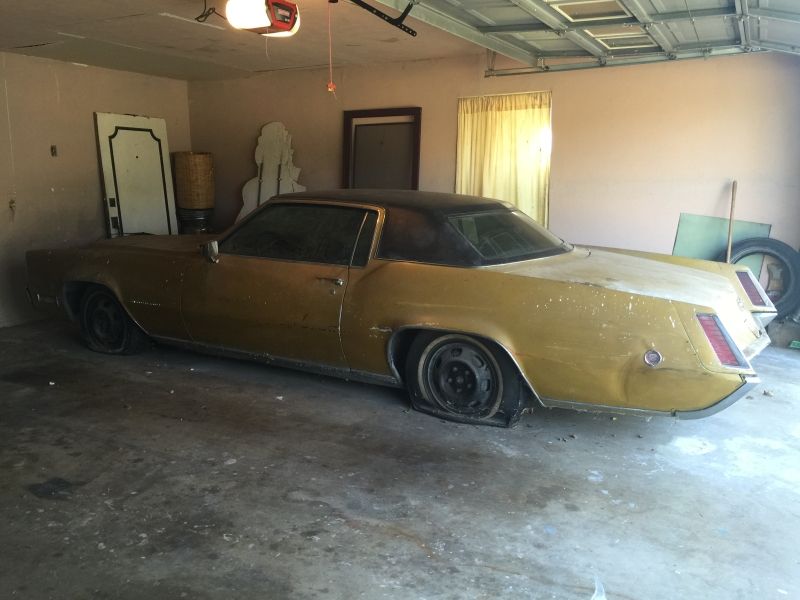
The front-drive layout was not a gimmick. It let the designers drop the floor and give the cabin a flat, open feel that a driveshaft tunnel would have ruined. It also gave the Eldorado a personality all its own inside the Cadillac lineup. This was the personal luxury coupe at its sharpest, a two-door for someone who wanted to drive rather than be driven. The 1967 through 1970 cars are some of the cleanest designs the brand ever put its name on, and enthusiasts have spent decades quietly appreciating them while flashier Cadillacs got the attention.
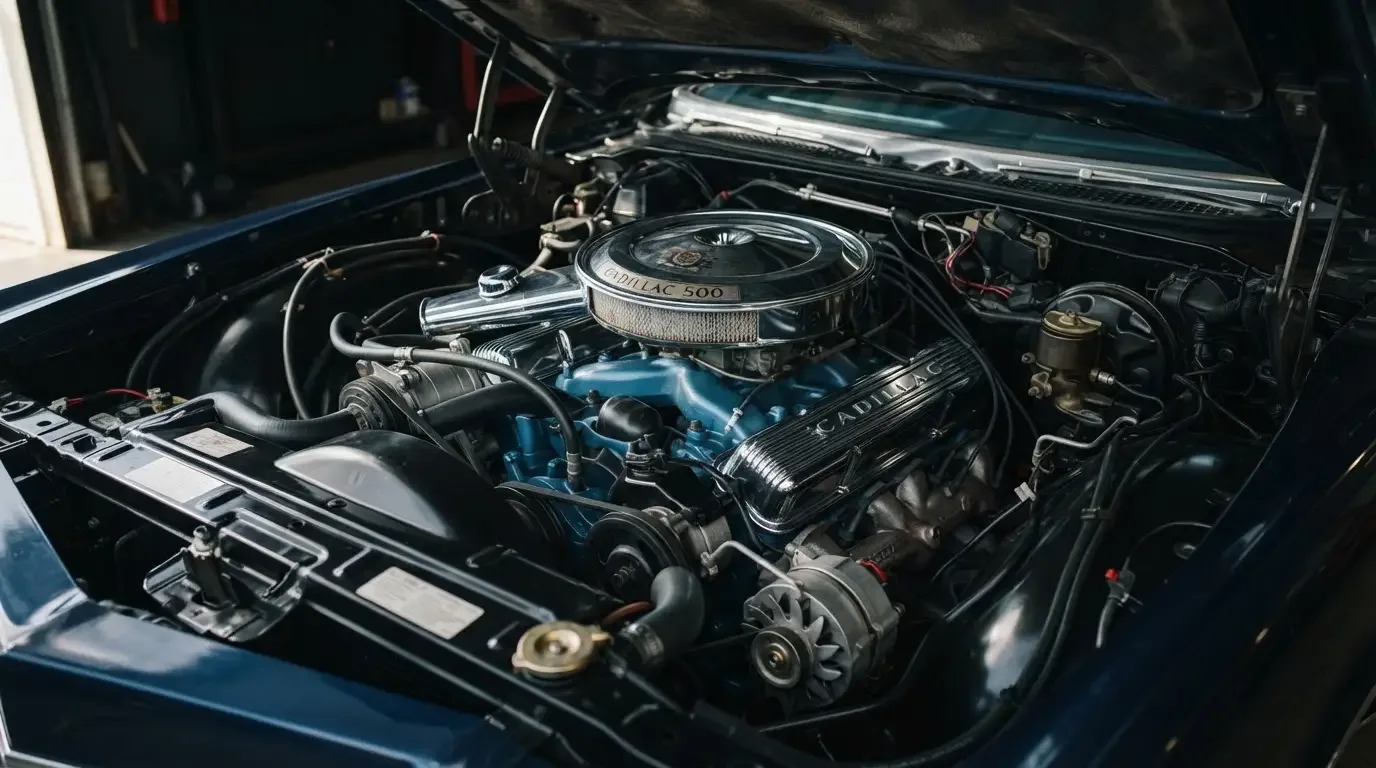
Under the hood the numbers kept climbing. By 1970 the Eldorado carried a 500 cubic inch V8, the largest production V8 in the world at the time, rated at 400 gross horsepower and 550 pound-feet of torque. That engine defined the next chapter as much as the styling did. If you have ever wondered what a factory-built American coupe felt like with nearly eight and a half liters of displacement pulling the front wheels, the answer is unhurried and unbothered, the way a heavyweight walks to the ring.
The land yacht era and the 1976 convertible
The 1971 redesign made the Eldorado bigger, softer, and more openly indulgent, and it brought the convertible back after a gap in the body style. These are the land yachts, the cars that people picture when they hear the word Cadillac from that decade. Broad hoods, plush interiors, and a ride tuned to iron out the whole world. The Eldorado of the early to mid seventies was rolling proof that comfort could be a stated engineering goal rather than a side effect.
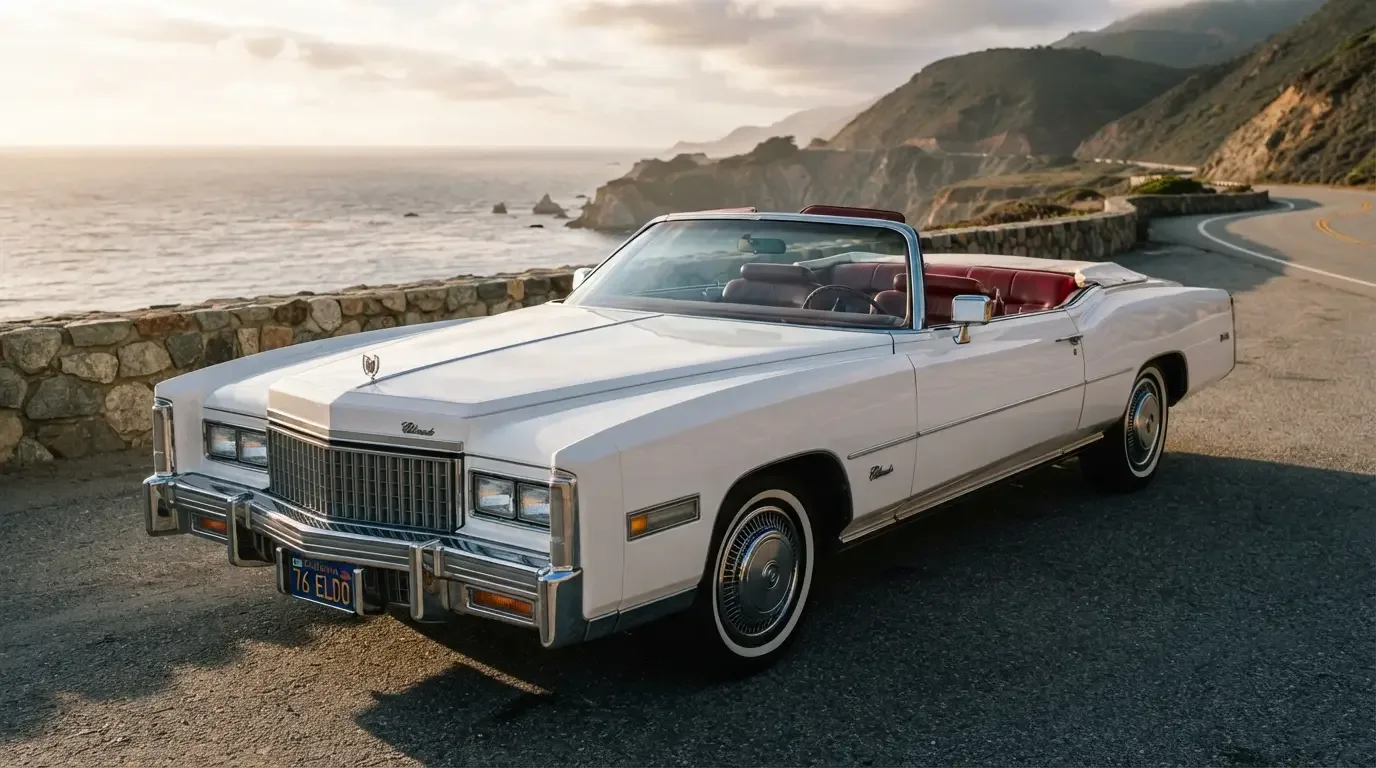
Then came 1976 and one of the most talked-about model years in the car's history. Cadillac announced that the 1976 Eldorado convertible would be the last American convertible, full stop, as the industry braced for rollover regulations that everyone assumed would outlaw open cars. It was not quite true in the long run, but nobody knew that yet. Buyers who wanted the final drop-top American luxury car rushed the dealerships, and a run of 200 white Bicentennial edition cars became instant collector bait. Some owners parked them new and never drove them, betting on the last-convertible story.
The regulations never arrived, convertibles came back within a few years, and the speculators who paid over sticker learned an old lesson about buying a car as an investment. Still, the 1976 Eldorado convertible remains a genuine milestone, a car that captured a real moment of anxiety in the American auto industry and turned it into showroom drama. As a piece of history it earns its reputation even if the money story ended in a shrug.
"The 1976 last-convertible saga is the most American car story I know. A company sells you the end of an era, thousands of people believe it, and the era refuses to end. The cars are wonderful anyway. The lesson underneath them, about hype and patience, is worth the price of admission on its own."
- Patrick Walsh
Downsizing and the 1979 restyle
The energy crises of the 1970s did what regulators could not, and they forced Cadillac to rethink what a flagship coupe should be. The 1979 Eldorado came in nearly a foot and a half shorter and roughly a thousand pounds lighter than the barge it replaced, and it kept front-wheel drive on a new, tighter platform. Independent rear suspension arrived, four-wheel disc brakes became standard, and the car traded sheer mass for a crisper, more European sense of proportion.
Purists argued about it then and still do. Something was lost when the Eldorado stopped being the biggest thing in the lot, but something was gained too. The 1979 through 1985 cars drove better than any Eldorado before them and packed real technology, including an available digital fuel injection system and, briefly, a diesel V8 that has become a cautionary tale among the faithful. The infamous V8-6-4 variable-displacement engine also lived here, a good idea that arrived a decade before the electronics could keep up with it.
This generation is where the Eldorado's story gets complicated in the most interesting way. It is the moment the car stopped chasing size and started chasing sophistication, and the results were uneven in exactly the way that makes a car worth arguing about at a show. The people who love these cars love them with their eyes open.
| Generation | Years | Defining trait | Signature engine |
|---|---|---|---|
| First Eldorado | 1953-1956 | Limited halo convertible | 331 and 365 V8 |
| Brougham and fintail | 1957-1966 | Hand-built luxury, tallest fins in 1959 | 365 to 429 V8 |
| E-body front drive | 1967-1970 | Front-wheel drive, folded-paper styling | 472 and 500 V8 |
| Land yacht | 1971-1978 | Convertible returns, 1976 last drop-top | 500 and 425 V8 |
| Downsized | 1979-1985 | Shorter, lighter, IRS, tech-heavy | 368, HT4100, diesel |
| Bustleback and beyond | 1986-1991 | Radical downsize, then a stretch | HT4100 and 4.5 V8 |
| Northstar coupe | 1992-2002 | Return to size, dual-cam power | Northstar 4.6 V8 |
The 1986 gamble and the recovery
Cadillac's boldest miscalculation with the Eldorado came in 1986. Reading the market as one that wanted small, efficient, and modern, the company shrank the car dramatically, and the new Eldorado looked so much like the smaller Cadillacs in the range that buyers could not tell what they were paying extra for. Sales collapsed. A flagship coupe that had always been about presence had lost the one thing it could not afford to lose.
The response was quick and honest. For 1988 Cadillac stretched the car back out, added length to the hood and the deck, and restored some of the visual weight the 1986 car had thrown away. It worked well enough to keep the model alive through the end of the decade, and the later cars of this generation drive pleasantly and can be found for reasonable money today. This is the Eldorado at its most humble, a car that got a hard lesson about what its own customers actually wanted and adjusted in real time.
There is a version of car history that only celebrates the winners, and it misses the point. The 1986 through 1991 Eldorado matters precisely because it shows a proud company getting something wrong in public and owning it. The cars that came out of that scramble are underrated, and the ones sorted out and cared for are quietly good drivers.
The Northstar coupes and the final act
The Eldorado went out on a high note. The 1992 redesign gave the car real length and presence again, and in 1993 Cadillac dropped in the Northstar V8, a dual-overhead-cam 4.6 liter engine that finally gave the Eldorado modern power to match its ambitions. The Eldorado Touring Coupe, the ETC, made 295 horsepower when it arrived for 1993 and 300 in its strongest later tune, and could move down a highway with an authority the nameplate had not felt in years. These are proper grand tourers, big two-doors built to cross states in an afternoon.
Front-wheel drive stayed, the styling grew cleaner and more confident, and for a while it looked like the coupe had found its footing for the long haul. The market had other ideas. American buyers were walking away from big luxury coupes and toward sport utilities as fast as the factories could build them, and a two-door flagship no longer fit the plan. Cadillac read the writing and made the ending count.
For 2002 the company built a run of 1,596 Collector Series cars to close the book, offered only in red or white to echo the colors of the 1953 debut, with commemorative badging and a plaque marking each one. The last Eldorado rolled off the line in Lansing, Michigan, in April 2002, ending a run that had lasted just shy of half a century. A nameplate that started as an impossible dream of a car in 1953 signed off as a well-sorted modern coupe, and the distance between those two points is the whole story of American luxury in miniature.
Colors, culture, and the Eldorado in the public eye
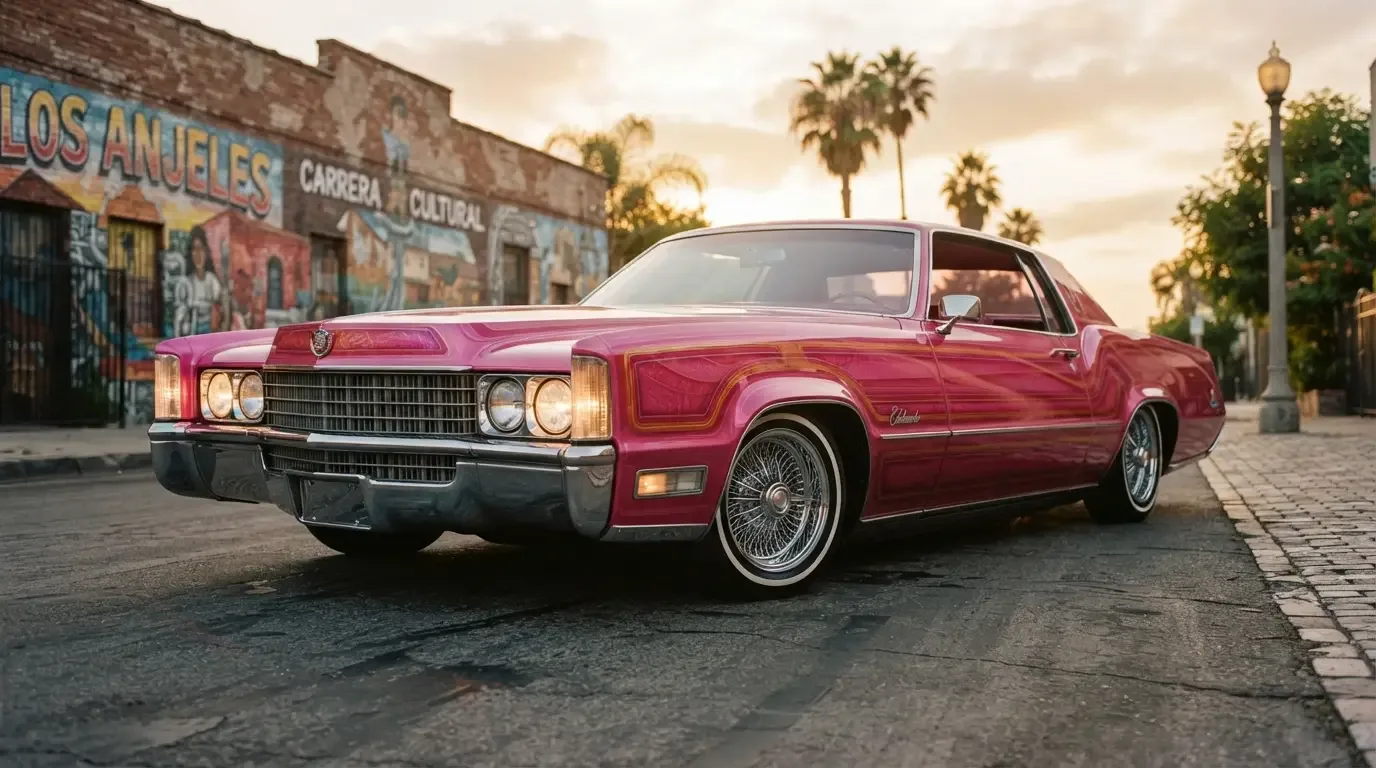
No Eldorado conversation is complete without the colors. Cadillac's palette across the decades reads like a mood ring for the country. The pinks and turquoises of the fifties, the fire-engine reds and the golds, the endless variations of white on white on white. Elvis Presley bought Cadillacs by the fistful and gave them away, and the pink Cadillac became shorthand for arrival long before any songwriter put it to music. The Eldorado sat at the center of that image, the specific car that said you had made it and wanted the neighbors to notice.
The car turned up everywhere the culture looked at money and dreams. It rolled through films and album covers and driveways in every neighborhood that aspired to something. The convertible with the top down and a family in Sunday clothes, the low-slung coupe idling at a curb, the fintail monster parked outside a diner. The Eldorado was a prop and a symbol and, for the people who bought them, a real reward for real work. That double life, part object and part idea, is why the car still stops traffic at any show it attends.
"Show me a driveway with an Eldorado in it and I will tell you a story about the person who parked it there. This car was never just transportation. It was a statement you could sit inside, and every generation of it said the same thing in a different accent."
- Patrick Walsh
For collectors coming to the car now, the range is the gift. You can chase a six-figure 1957 Brougham or a tidy 1990s Northstar coupe for the price of a used commuter, and both wear the same crest. That spread means the Eldorado story is one almost anyone can join. If the history in this piece has you looking, there is a healthy market of a classic Cadillac Eldorado for sale across every generation covered here, from tailfin convertibles to the final Collector Series cars.
Why the Eldorado still matters
Fifty years is a long life for any car name, and almost nothing survives that long without changing into something unrecognizable. The Eldorado managed the trick of staying itself while the world around it turned over completely. It was a tailfin fever dream and a folded-paper front-drive coupe and a land yacht and a downsized experiment and a Northstar grand tourer, and every one of those cars believed the same thing. A flagship should be the most car the company knew how to build, and it should not apologize for wanting to be seen.
That conviction is why the Eldorado reads as a history of American ambition rather than just a list of model years. Follow it from 1953 to 2002 and you follow the country through its swagger, its crises, its second-guessing, and its late confidence. The car got it magnificently right and occasionally got it wrong, and it did all of it in public with its name in chrome across the deck. There is no better single thread to pull if you want to understand what the American luxury car was, and the Cadillac Eldorado pulled that thread for half a century. That is a run worth remembering, and a garage worth walking through one generation at a time.