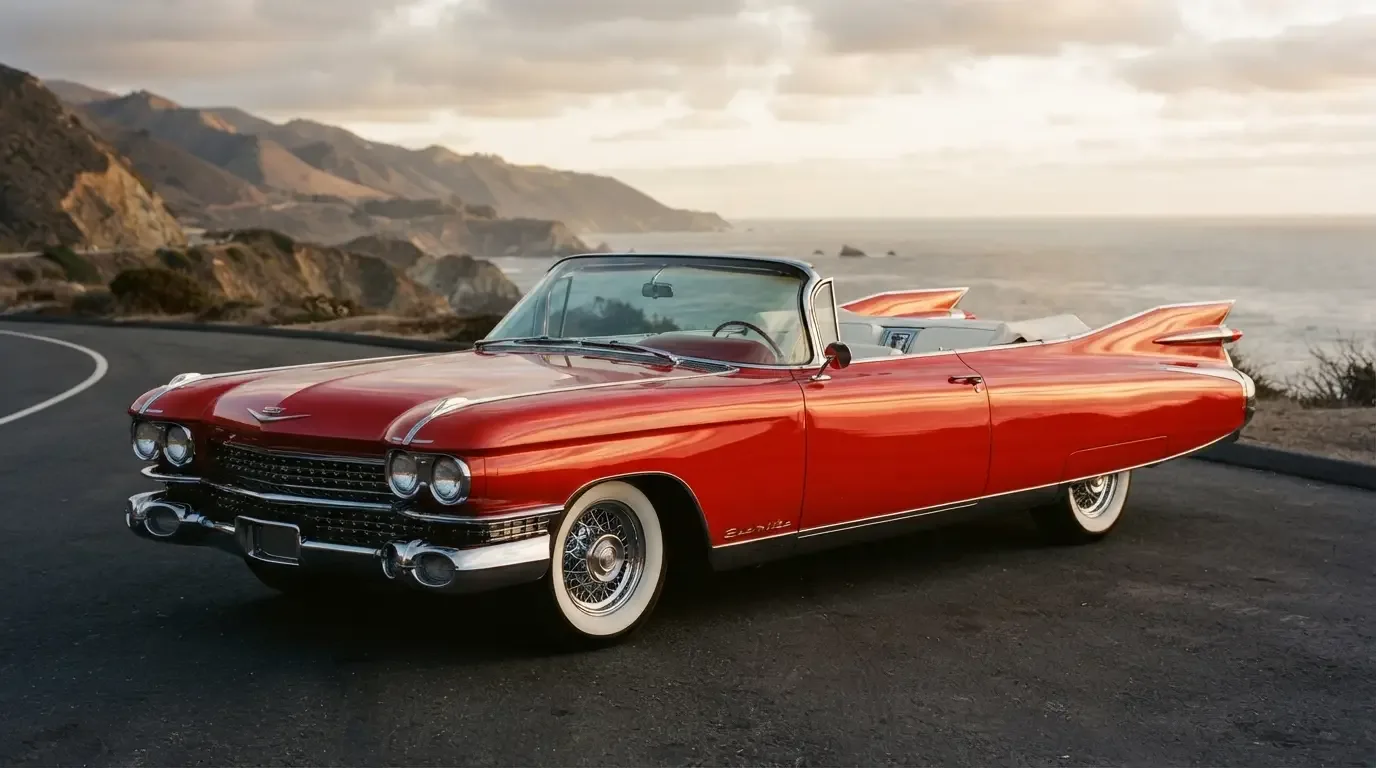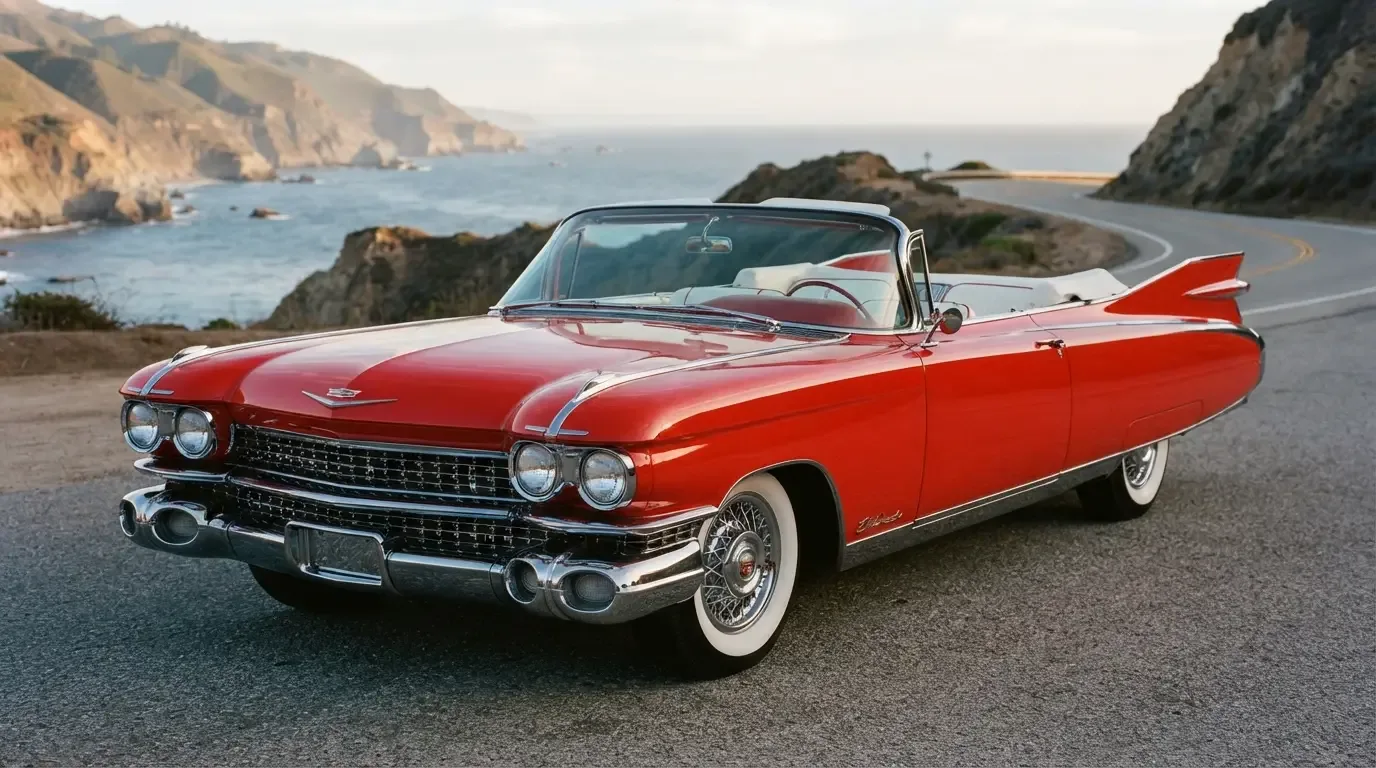
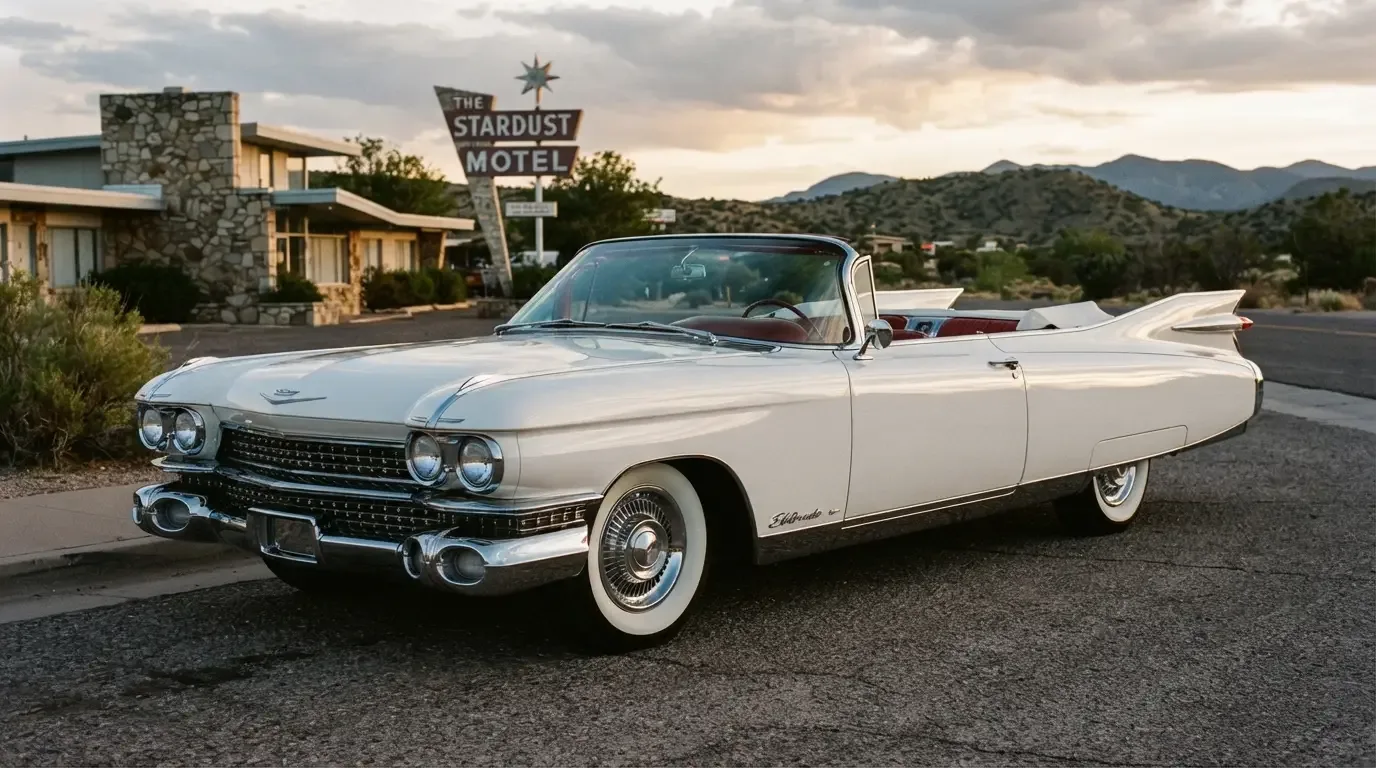
I have had a 1959 Cadillac Eldorado fin panel on my bench more than once, and every time it goes back on the car I get a better appreciation for what the body shop crews in Detroit were actually pulling off in metal back then. The fin design on that car is not a bolt-on flourish. It is structural sheet metal, shaped in compound curves that modern panel beaters still study, and understanding how it came together tells you more about the car than any spec sheet does. For the wider picture on the model year this fin belongs to, where this started covers the rest of the 1959 Eldorado story.
Rocket-age design was not just a marketing phrase
By the late 1950s, American car styling was pulling directly from aviation and early space program imagery, and Cadillac's design studio was doing that as literally as anyone in the industry. The fin lineage traces back to 1948 under stylist Franklin Hershey, whose team looked at the twin-boom tail of the Lockheed P-38 fighter and translated it, however loosely, into a rear fender treatment. By 1959, that translation had been through a decade of annual refinement, and what landed on the Eldorado was the tallest, most aggressive version Cadillac ever built.
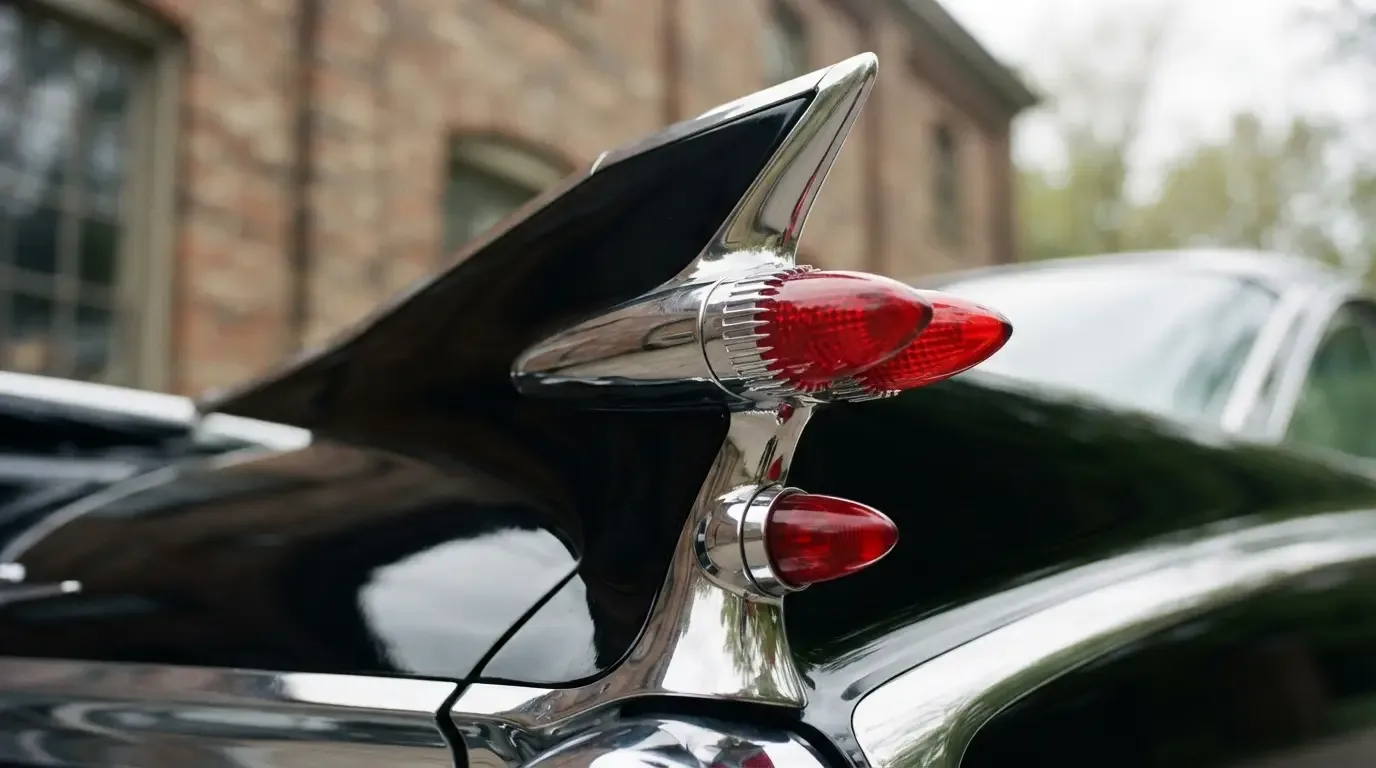
What a lot of writeups miss is that "rocket age" was not just a styling theme applied on top of the sheet metal. It shaped the actual panel geometry. The fin on a 1959 Eldorado is a genuinely complex three-dimensional shape, tapering in section as it rises off the rear fender and twisting slightly to carry the bullet taillight housing at the correct angle. That is not a shape you stamp once and call finished. It took real tooling investment and real skill on the assembly line to get those panels to match side to side.
What building or repairing one actually involves
Anyone who has worked metal on one of these fins knows the panel is unforgiving. There is very little flat surface to hide a mistake in. The compound curve runs the full length of the fender, and a low spot or a wave that would disappear on a plainer 1950s fender shows up immediately under the fin's long, reflective surface. Getting the fin's crown line straight and the taillight bezel seated correctly is where a lot of amateur restorations fall apart, because the panel punishes anything less than careful work.
Original fin sections were stamped, not hand-formed, which means factory-correct replacement panels or donor sections are the right call whenever they can be sourced, rather than trying to hand-hammer a fin from scratch. A hand-built fin can look right from ten feet away and still be visibly wrong up close to anyone who has actually studied the factory geometry. That gap between "close enough" and correct is exactly where period-correct builders and poseurs part ways on this car.
| Detail | Note |
|---|---|
| Fin origin | 1948 Cadillac, P-38 fighter influence |
| 1959 fin height | Tallest in Cadillac history |
| Taillight design | Dual bullet lenses integrated into fin tip |
| Panel construction | Stamped compound-curve steel |
| Restoration difficulty | High, due to lack of flat reference surface |
Bullet taillights as an engineering problem, not just a styling one
The dual bullet taillights are the detail everyone remembers, and they deserve the attention, but from a builder's chair they are also a genuine fitment challenge. Each lens housing has to seat into the fin tip at a precise angle so the light reads correctly from behind the car, and the chrome bezel around each bullet has almost no room for error before a misalignment becomes visible. Reproduction lens housings exist today, and the good ones are a close match to factory geometry, but the cheap ones sit slightly proud or slightly recessed in a way that a trained eye catches from across a parking lot.
That is really the throughline with this whole fin assembly. Everything about it was engineered to look effortless, which is exactly why it is so hard to reproduce correctly. The panel gaps, the trim alignment, the taillight seating, all of it has to come together within tight tolerances or the whole rear end reads as slightly off, even to someone who could not tell you exactly why.
"People think the fin is the easy part because it is just a big panel. It is the hardest panel on the car to get right. There is nowhere to hide a mistake on a surface that long and that curved."
- Jim Vasquez
Why the fin still commands respect from builders today
Modern sheet metal work has better tools than a Detroit body shop had in 1958, better computer modeling, better hydraulic presses, better measuring equipment. None of that changes the fact that the 1959 Eldorado fin is still treated as one of the harder panels to reproduce correctly in the classic Cadillac world. Part of that is simply scale. The panel is long, the curve is continuous, and there is no trim break to interrupt the eye and forgive a small inconsistency the way there is on a shorter, more segmented design.
I have talked to more than one panel shop that will take on a full frame-off restoration but quietly farm out fin work on a 1959 Eldorado to someone who specializes in it, because the margin for error is that tight. That is not a knock on general restoration shops. It is a genuine acknowledgment that this particular panel rewards specialization in a way most 1950s Cadillac bodywork does not. Anyone shopping a restored car is well served asking directly who handled the fin panels and quarters, because that answer tells you more than a glossy paint job ever will.
What to look for on a real one
If you are evaluating a 1959 Eldorado with restoration work already done, the fin area is where I look first. Check the panel gap consistency between the fin and the quarter panel below it, check that the stainless trim sits flush without waviness, and check that both bullet taillights sit at matching heights and angles when viewed from directly behind the car. Any car that gets those details right almost certainly got the harder mechanical work right too, because a shop that takes the fin seriously does not cut corners elsewhere.
The fin on the 1959 Eldorado earned its reputation honestly, both as a styling statement and as a genuine piece of body engineering. Respect for the work that went into it is the difference between admiring the car from a photograph and actually understanding what you are looking at. If you are shopping for one, take that understanding with you when you go look at classic Eldorado for sale listings, because the fin will tell you more about the quality of a restoration than almost any other panel on the car.